
Camille Claudel
(1864–1943)
Artworks by Camille Claudel

About Camille Claudel
Camille Claudel (1864–1943) was a French sculptor whose emotionally charged and technically accomplished work established her as one of the most compelling artists of the late nineteenth and early twentieth centuries. Born in Fère-en-Tardenois, France, she showed remarkable artistic talent from a young age and pursued formal training in Paris, where she studied sculpture at the Académie Colarossi—one of the few institutions at the time open to women.
In the early 1880s, Claudel met Auguste Rodin, becoming both his student and collaborator. Their artistic partnership was intense and influential, with Claudel contributing to some of Rodin’s major projects while also developing her own independent style. Her work is distinguished by its expressive modeling, sensitivity to movement, and psychological depth, often exploring themes of passion, intimacy, and human struggle.
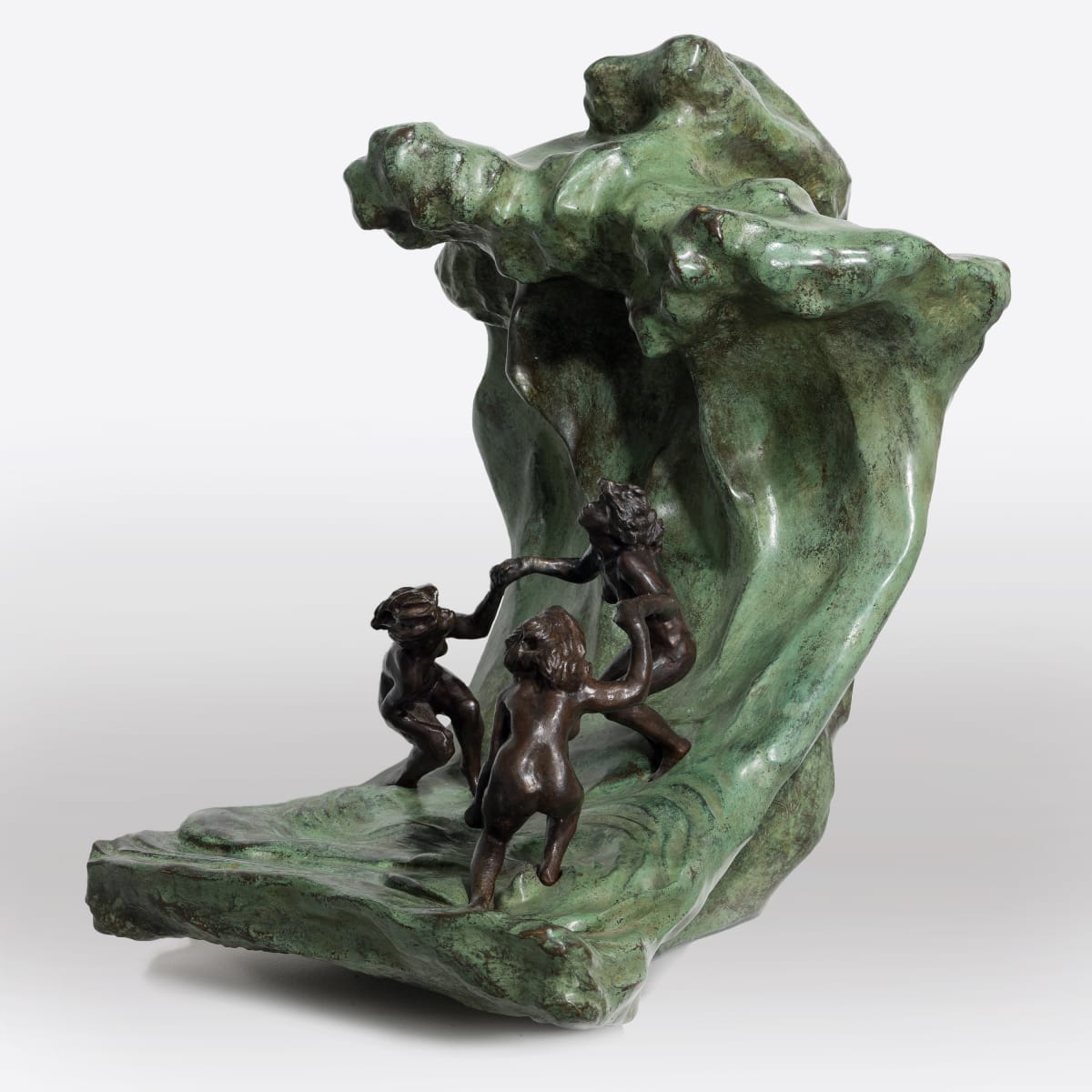
Claudel achieved recognition during her lifetime, exhibiting at major salons and receiving commissions, yet her career was frequently overshadowed by her association with Rodin. By the 1890s, she had broken away from him both personally and artistically, producing some of her most original works, including The Waltz and The Age of Maturity, which reflect a deeply personal and symbolic approach to form.
Despite her artistic achievements, Claudel faced increasing personal and financial difficulties. In 1913, she was committed to a psychiatric institution by her family, where she remained for the last thirty years of her life, largely cut off from the art world.
Today, Camille Claudel is recognized as a major sculptor in her own right, whose work bridges academic tradition and modern expression, and whose legacy continues to be reevaluated and celebrated for its originality and emotional power.