
Andy Warhol Polaroids
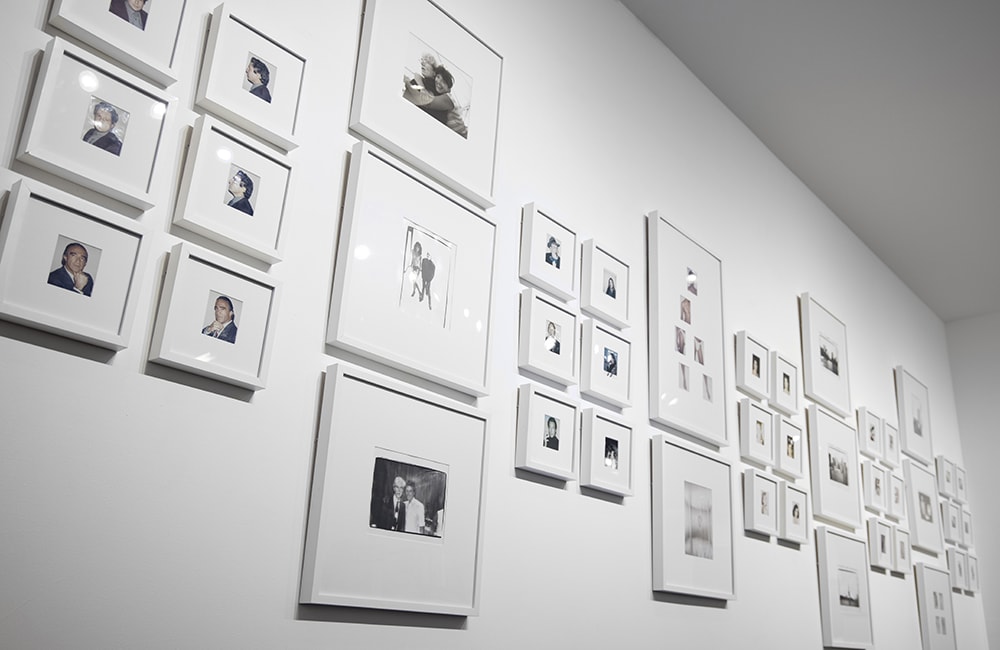
Andy Warhol has become inextricably tied to American art, let alone Pop Art. His precise ability to capture the values of American society filtered through a glamorous lens have captured our collective imagination while also infiltrating our visual landscape. Despite his association with lavish parties, Warhol was always observing. As Diana Vreeland, a friend of Warhol and herself represented in this exhibition, said, “The eye has to travel.”
It is no surprise, then, that Warhol carried a Polaroid camera from the 1950s until his death in 1987. In ways that echoed our current habits with smart phones, Warhol’s polaroids are instant and numerous. It is no coincidence that early filters on social media apps like Instagram mimicked the polaroid. In his images of everyday objects, Warhol’s influence can be seen in photographers today including Wolfgang Tillmans and Juergen Teller. The photographs, taken on the spur of the moment and developed within minutes, also speak to the transience and ephemera of culture.
Warhol would use these polaroids for his paintings and referred to the photographs as his “pencil and paper”. It is important to note that the polaroids stayed with Warhol, despite pleas from his subjects. They are a record of his life and his practice while reflecting the idea of inclusion and exclusion, glamour and desolation.
Capturing the bright and the beautiful, the famous and infamous, Warhol’s polaroids are an unfiltered look into society while being a record of the life of one of America’s most important artist. They speak to the power of image and illusion.
The exhibition spans three sections – "Bring it to the Runway", "All That Glitters", and "Me, Myself & I" – focusing on different subjects within the polaroids as a whole.
Bring it to the Runway

Andy Warhol, "Cheryl Tiegs" (1990), Polaroid, 4 1/4 x 3 3/8 in.
In the future, everyone will be famous for 15 minutes. - Andy Warhol
One of the areas that Warhol has seen the most influence has the been the world of fashion. This section brings together the glamorous and outrageous personas that inhabit that often rarefied universe.
At the juncture of impractical art and practical use wrapped up in its ability to project both an image and illusion and the capricious nature of the industry, the fashion world perfectly encapsulates many of Warhol’s obsessions and the themes that his overall body of work illuminates.
Featured in this section are fashion models from Cheryl Tiegs to Jerry Hall as well as the most important designers including Jean-Paul Gaultier, Roy Halston, Yves Saint-Laurent, and more. Also within the realms of couture are Vogue Editor Diana Vreeland, actor and musician Diana Ross, and the incomparable Grace Jones.
Special mention goes to Wilhelmina Ross who provided the basis for the majority of Warhol’s esteemed “Ladies & Gentlemen” series. Ross was part of the drag troupe Hot Peaches. Warhol was no stranger to drag. Perhaps it was the idea of illusion and image-crafting that attracted Warhol to the art form and to these performers. Fashion and drag have influenced each other for decades and give inspiration to this section’s subtitle.
All That Glitters
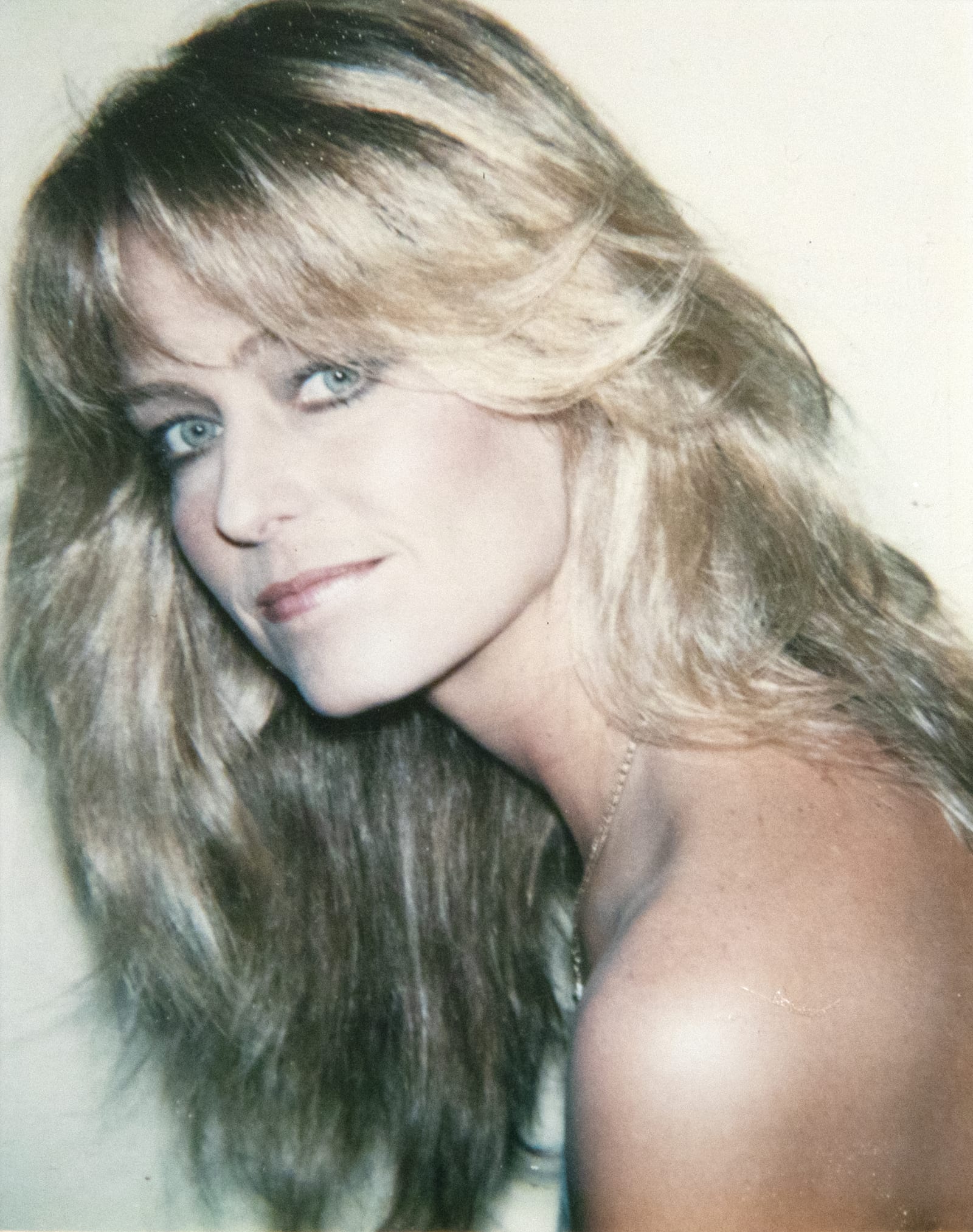
Andy Warhol, "Farrah Fawcett" (1980), Polaroid, 4 1/4 x 3 3/8 in.
No other artist is as closely associated with celebrity as Andy Warhol. His observations on fame have resonated to today as we grapple with the power and politics involved with the rich, the famous, and the infamous.
Celebrity was and is more than fame. Through Warhol we can experience the glamour, the beautiful, the loneliness, and the traumatic that being a celebrity can occupy. In these polaroids aren’t just the subjects themselves but evidence of Warhol’s perceptive eye so that everything, to paraphrase Oscar Wilde, is at once surface and symbol.
Where else but around Warhol could you find Princess Caroline of Monaco, Bill Wyman, Farrah Fawcett, and even John Denver? Despite the party and celebrity obsession tied to Warhol, he was a shy outsider. The polaroids in this section perhaps best reflect that blurred boundary between exclusion and inclusion while giving us a snapshot of American culture and values.
It is important to think deeper on Warhol’s “fifteen minutes of fame”. Like a good party, fame comes to an end.
Me, Myself, & I

Andy Warhol, "Self-Portrait in a Platinum Wig; Self-Portrait in a Platinum Pageboy Wig (FA03.00044, AWL149)" (1981), Polaroid, 4 1/4 x 3 3/8 in. ea.
I paint pictures of myself to remind myself that I’m still around. - Andy Warhol
This section is perhaps the most reflective as it tackles the artist himself. Unlike the other polaroids, these images grapple with how the artist sees himself and the image he has crafted – both reinforcing them while simultaneously knocking them down.
Warhol’s work is much more than the objects and subjects of popular culture. It has always been around the image-crafting involved. And so, too, in the most obvious examples are these polaroids of the artist. As mentioned in “Bring It to the Runway”, Warhol was long interested in drag and the role-playing involved and Warhol’s self-portraits in drag reflect this. Moreover, they harken back to Man Ray’s photographs of the artist Duchamp in drag as Rose Sélavy.
But this section also sees Warhol in a variety of environments and different levels of vulnerability. Even next to celebrities, there is an awkwardness to Warhol. Armed with this knowledge, when we turn to the other polaroids of himself, we are simultaneously aware of Warhol as artist, Warhol as image-maker, and Warhol as human. We see both the brand and the effort to create that brand.
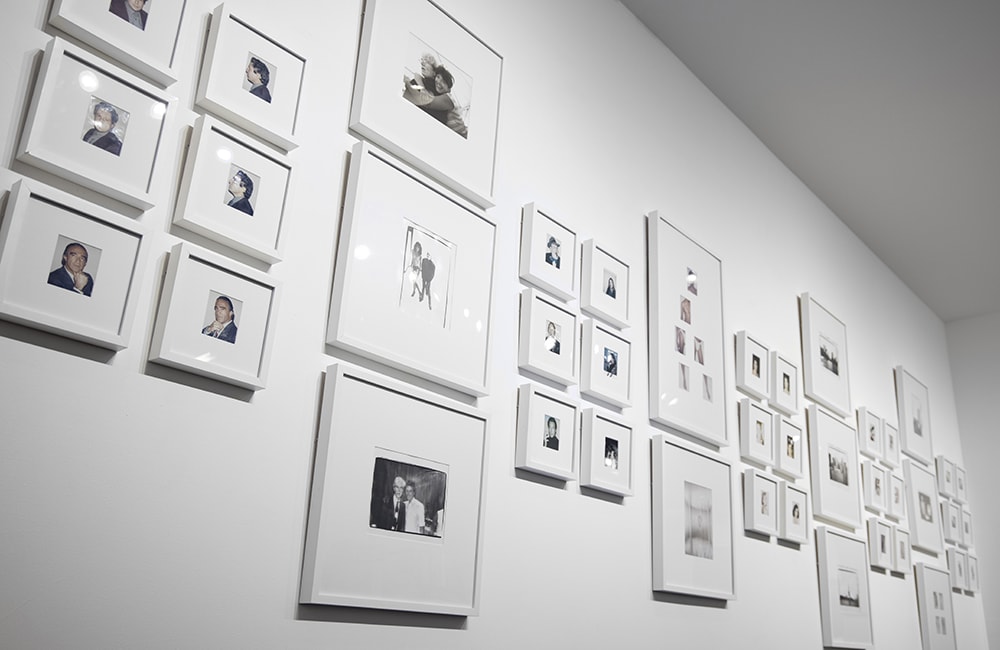
"Andy Warhol Polaroids" on view at Heather James Palm Desert
