


作品詳細
Stuart Pivar, New York
Doyle, New York, May 14, 2019, lot 1007
Private Collection, acquired from the above sale
Heather James, California
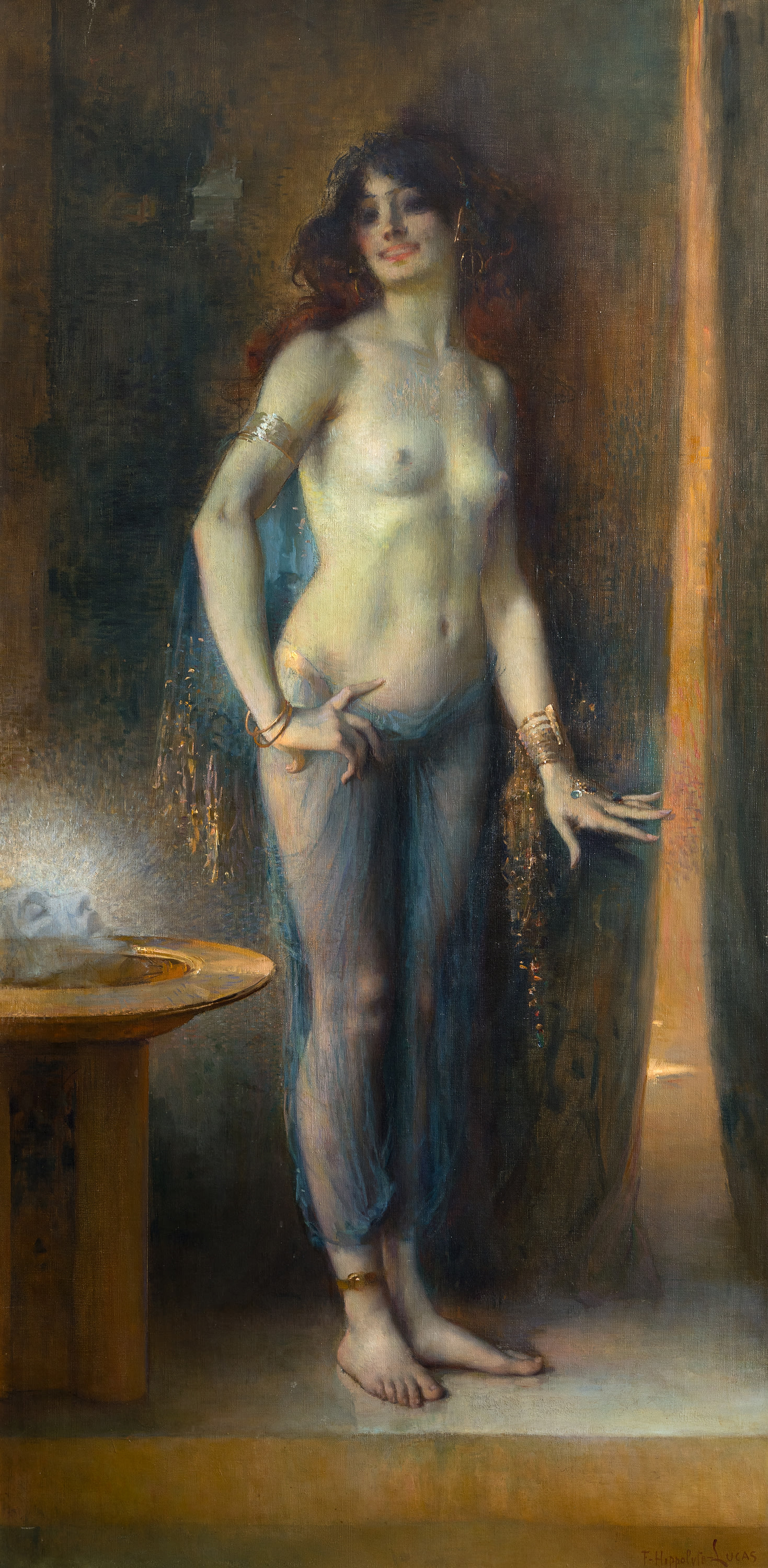
Marie-Félix Hippolyte-Lucas's Salome (The Mimic Dancer of Naxos) marks a striking departure for an artist celebrated for luminous portraits of aristocratic women. Submitted to the Paris Salon of 1912 — where Hippolyte-Lucas had exhibited regularly since 1877 — this canvas stands among the most theatrically ambitious works of his career.
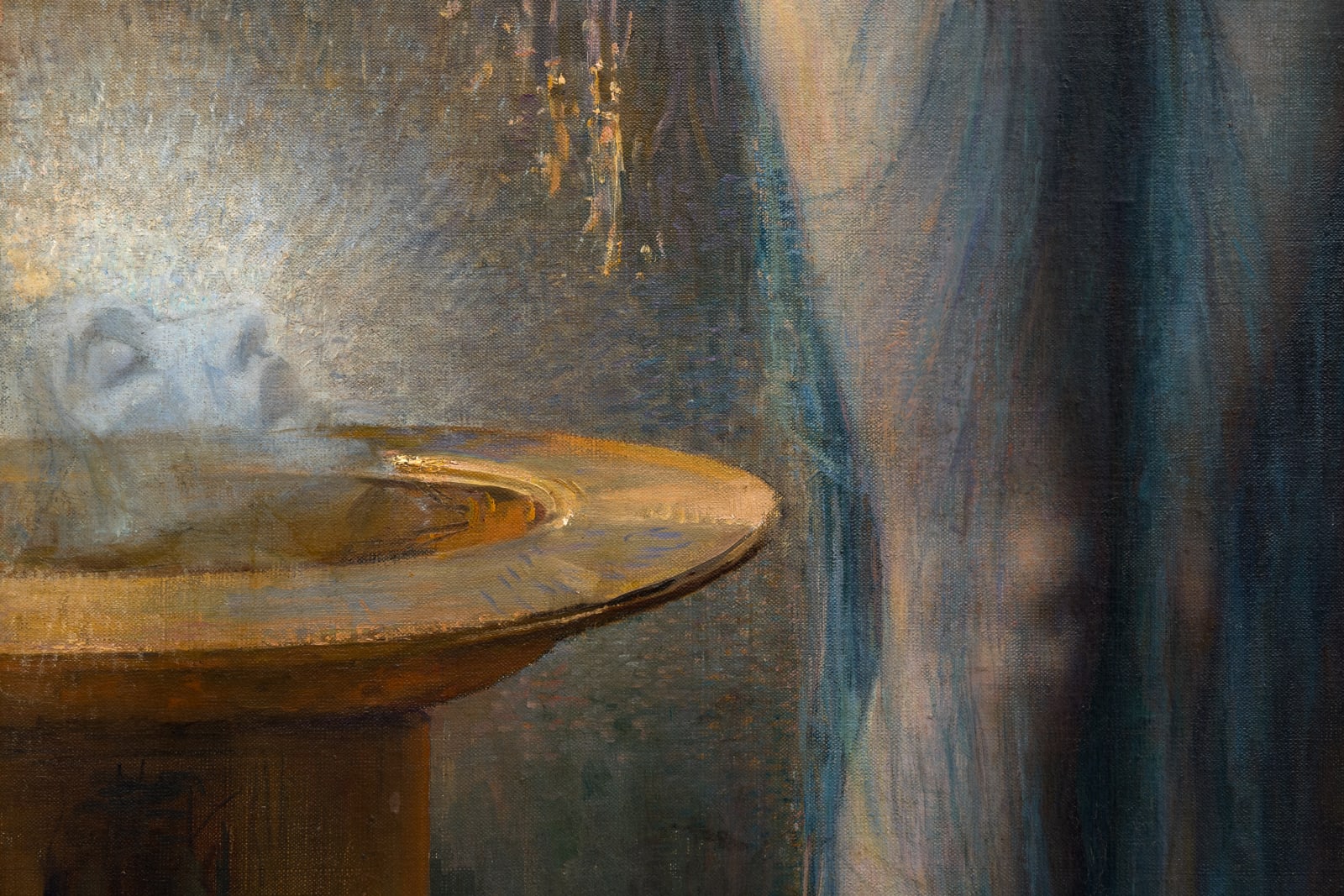
Painted in oil on a tall, narrow canvas — 77 by 38 inches — the composition presents Salome at full length: pale, self-possessed, draped in sheer blue-grey fabric. Gold armlets, bracelets, and an ankle cuff catch the ambient light; her hands rest loosely at her waist, a faint smile on her lips. To her left, the severed head of John the Baptist lies on a gold platter. The figure's cool luminosity against a smoky olive-grey background reflects Hippolyte-Lucas's rigorous Academic training under Pils, Lehmann, and Luminais.
By 1912, the Salome story — amplified by Oscar Wilde's 1893 tragedy and decades of Symbolist fascination — had become one of European art's defining subjects. Hippolyte-Lucas's version stands apart for its psychological stillness: rather than depicting the dance or the horror, he gives us the aftermath, Salome already composed and unbothered. A distinguished muralist whose commissions included the Monte Carlo Casino and the Paris Stock Exchange, he brought monumental confidence to this Salon centerpiece.
“Dance for me, Salomé, I beseech you. If you dance for me you may ask of me what you will, and I will give it you, even unto the half of my kingdom.”— Oscar Wilde, "Salomé" (1891)
この作品についてさらに詳しく
お問い合わせいただければ、詳細をご案内いたします Marie Felix Hippolyte-Lucas's Salome 専門スタッフよりご連絡申し上げます:

他の作家をお探しですか?
Heather Jamesでは数千点の作品を取り扱っておりますが、そのすべてをウェブサイトに掲載することはできません。特定の作家や作品にご関心がございましたら、どうぞお気軽にお問い合わせください。お客様のコレクションを完成させるお手伝いをさせていただきます。