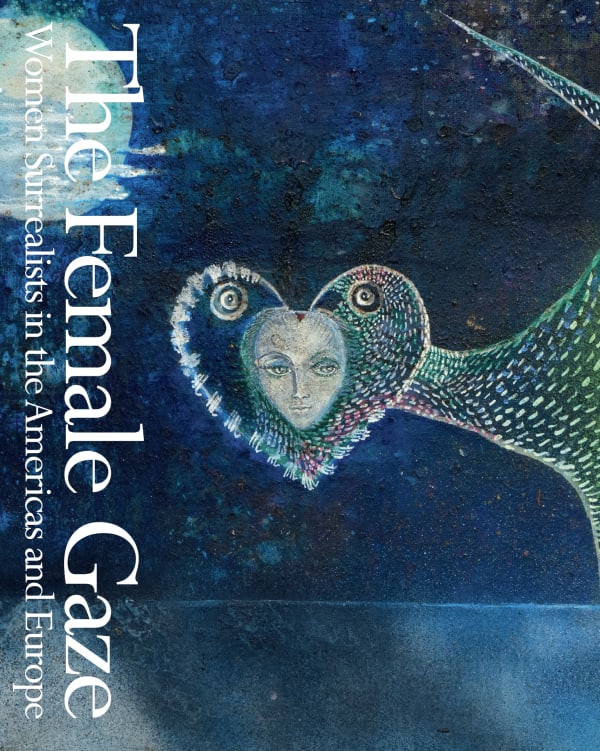
The Female Gaze
Women Surrealists in the Americas and Europe
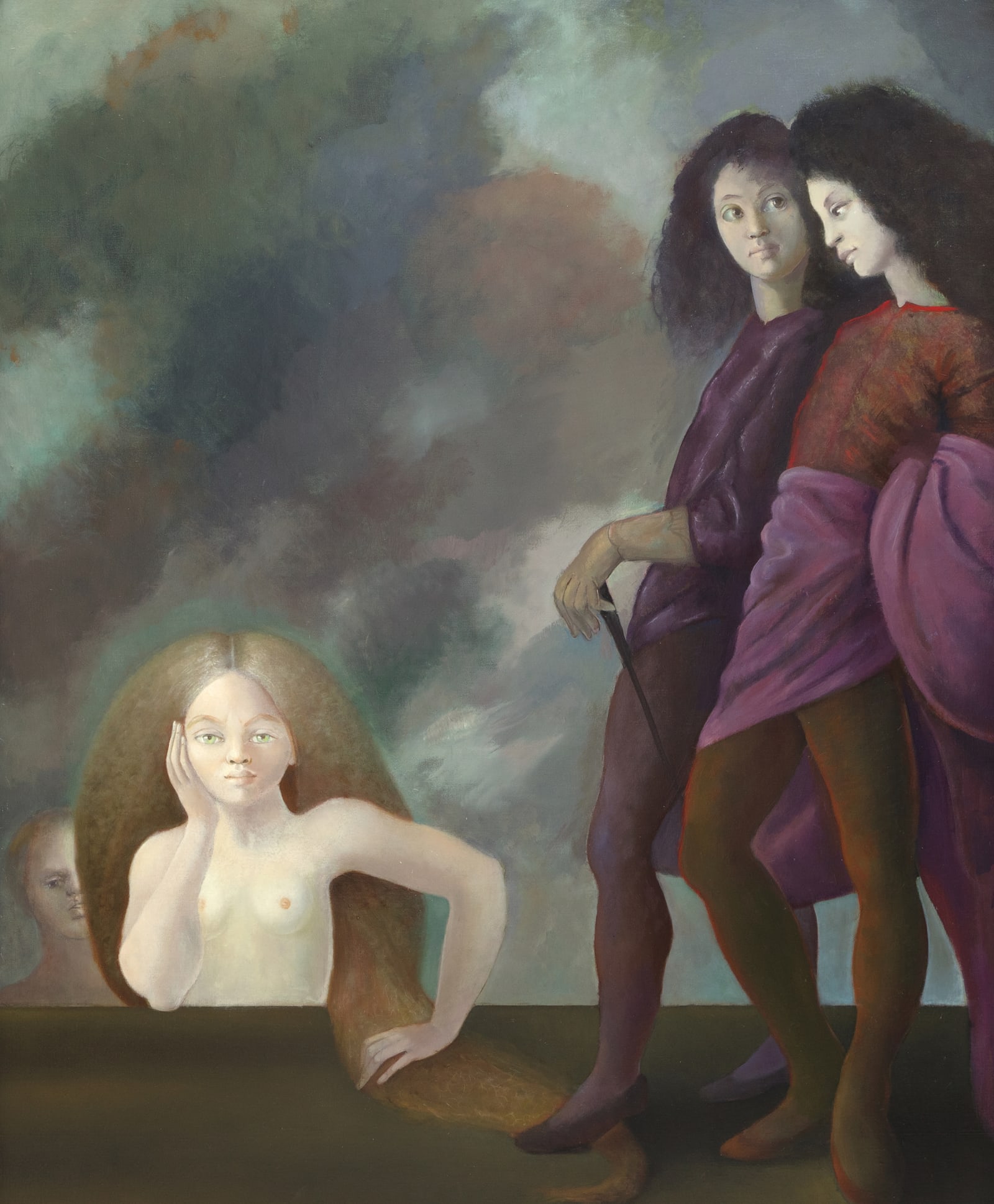
Leonor Fini, "Les jumeaux ingrats" (1982)
The Female Gaze features the fantastic imagery developed in the
works of female surrealists. Organized by region, the exhibition shows how women
working around the world at the same time developed a language of surrealism
separate to and intertwined with the mainstream narrative that André Breton
tightly controlled. Despite geographic and cultural distance, these women
became the subverts of the subverts.
It is not an imagined female essentialness that separated these artists and shaped their artistic viewpoints but the political, social, and cultural attitude that shaped the ideas of gender. If the thrust of surrealism is the focus of the inner worlds and subconscious mind, how could it not be influenced by gender?
For a movement that embraced and was embraced by a global audience and promoted revolutions, there is a stark contrast to its treatment of its female participants. Many women artists were marginalized and their contributions diminished. For the male surrealists embracing Sigmund Freud’s theory of the Dream Work, the female body became a site for condensation and displacement—bodies disfigured and dismembered, fragments built up to represent and satiate male desire.
Nevertheless, it is a mistake to frame the female artists as victims. These artists themselves fought against the male gaze. As Leonora Carrington cautioned, “I warn you, I refuse to be an object”. Their work became a rejoinder while at the same time becoming windows to express their own psyche, their own desire, their own gaze into an inner world. Across decades the images dreamt up and made real by this group of artists speaks to us today in their pointed depiction of female bodies and the phantasms of their subconscious mind. In the words of Leonor Fini, “I paint pictures which do not exist and which I would like to see”.
The Female Gaze is an opportunity to consider and re-consider the history of surrealism through what theorist Gayatri Spivak terms as “strategic essentialism”. Until recently, the artists in the exhibition existed as palimpsests, their artwork erased and written over by their relationship to the male surrealists. The exhibition brings forth these traces to demonstrate the important contributions these artists made to the mainstream narrative and more importantly, their own history and language of surrealism.
If surrealism could
spark a political revolution, why should it not also spark a social one?

"The Female Gaze" installed at Heather James New York, 219
Participating Artists
“I warn you, I refuse to be an object.”
Leonor Fini