


JAPONÉS
$9,500
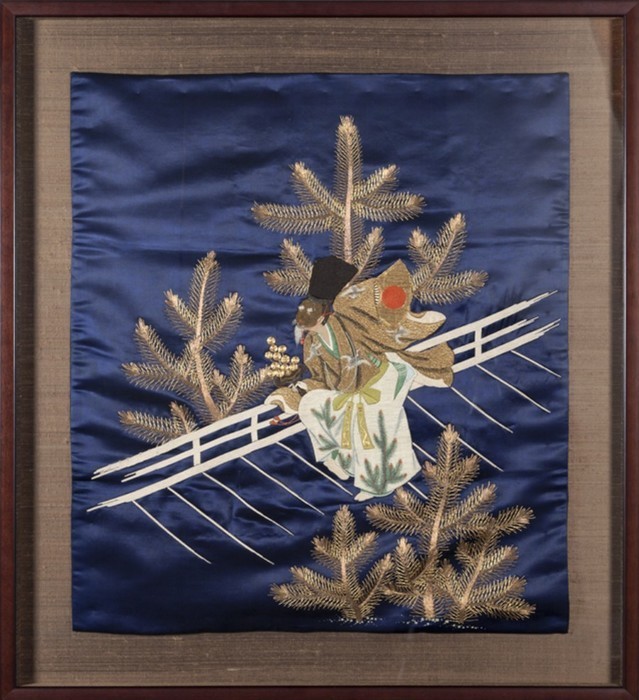
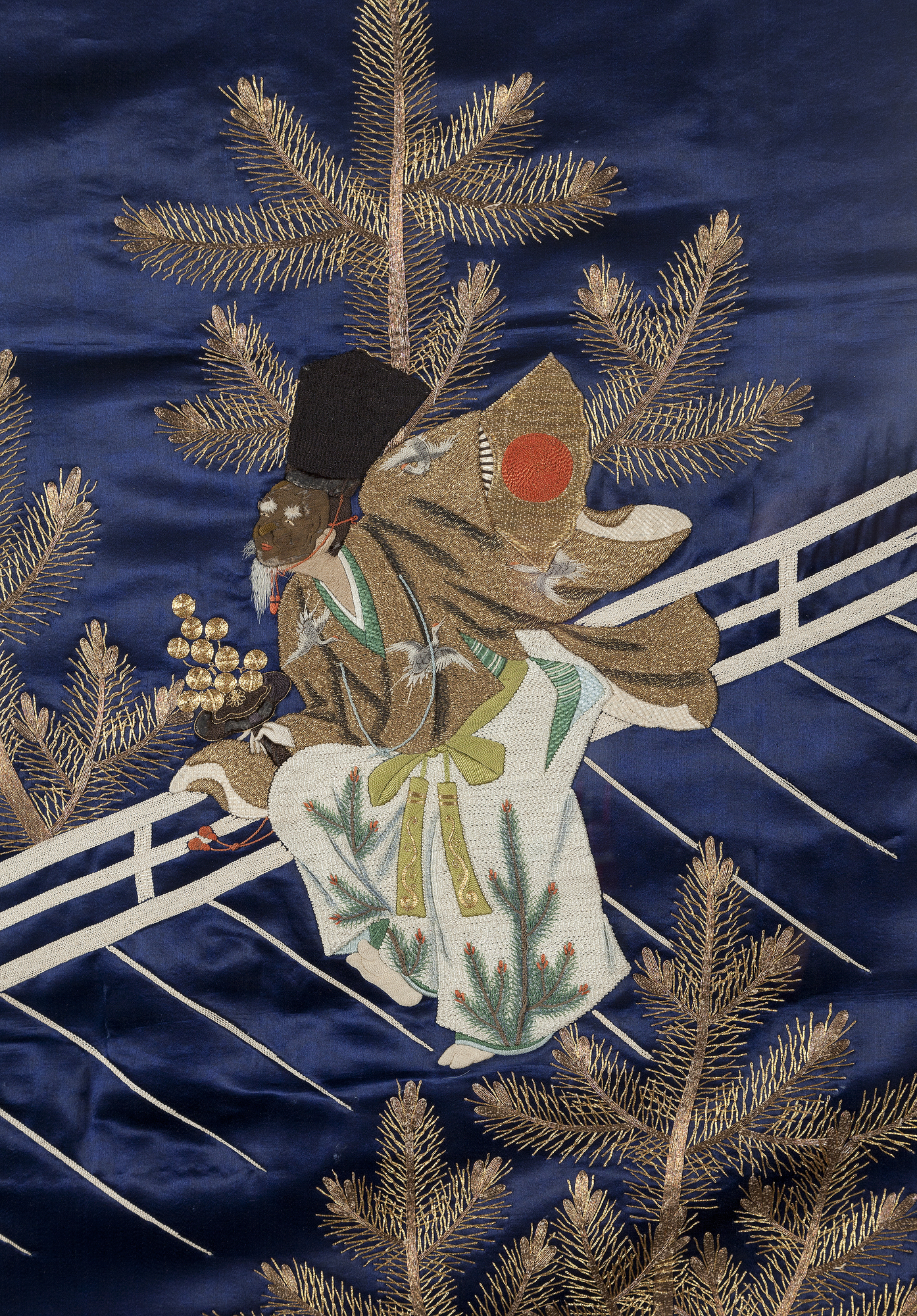
Actor de teatro NohPeríodo Meiji (1868-1912)27 1/2 x 25 pulgadas(69,85 x 63,5 cm) Bordado en seda con hilo de oro y seda
Procedencia
Heather James Fine Art, CaliforniaAquí, un actor de teatro Noh con traje y máscara completos cruza el ala de un escenario Noh. El escenario está flanqueado por pinos, y los pinos también son un motivo en su kimono. Normalmente, se pinta un pino en la pared trasera de los escenarios Noh para representar el árbol a través del cual, según la leyenda, esta forma teatral fue transmitida del cielo a la humanidad. En la cultura japonesa, el pino, siempre verde, se ha convertido en un importante símbolo de longevidad y firmeza.
La costumbre de colocar fukusa sobre los regalos colocados en bandejas de madera o lacadas se extendió durante el periodo Edo (siglos XVII al XIX). Lo que comenzó como una práctica funcional para proteger los regalos de los elementos, adquirió una vida decorativa propia. Las familias acomodadas poseían un gran número de fukusa y a menudo encargaban a artistas famosos de la época
diseños exclusivos para ellas. Los dibujos se creaban mediante técnicas como el teñido anudado, el estarcido, el bordado con hendiduras, el tapiz, la pintura con bordado y combinaciones de todos estos métodos. Cada vez que se necesitaba un fukusa, se elegía no solo para la ocasión, sino también para la estación del año, el regalo en sí y el estatus del donante y del destinatario. Los fukusa también formaban parte del ajuar de las novias y podían regalarse con motivo de una boda. Los fukusa estaban hechos de piezas cuadradas u oblongas de seda, forradas y a menudo adornadas con borlas, y en ocasiones llevaban el monograma o el escudo familiar en el reverso. La etiqueta dictaba que los fukusa no se consideraban parte del regalo en sí y debían devolverse cubriendo un regalo simbólico o un agradecimiento por el regalo. Sin embargo, algunos destinatarios, como los burócratas, que aceptaban regalos de personas que buscaban favores, optaban por quedarse con los fukusa junto con los regalos que cubrían, aumentando así su propia colección de envoltorios para regalos.
La costumbre de colocar fukusa sobre los regalos colocados en bandejas de madera o lacadas se extendió durante el periodo Edo (siglos XVII al XIX). Lo que comenzó como una práctica funcional para proteger los regalos de los elementos, adquirió una vida decorativa propia. Las familias acomodadas poseían un gran número de fukusa y a menudo encargaban a artistas famosos de la época
diseños exclusivos para ellas. Los dibujos se creaban mediante técnicas como el teñido anudado, el estarcido, el bordado con hendiduras, el tapiz, la pintura con bordado y combinaciones de todos estos métodos. Cada vez que se necesitaba un fukusa, se elegía no solo para la ocasión, sino también para la estación del año, el regalo en sí y el estatus del donante y del destinatario. Los fukusa también formaban parte del ajuar de las novias y podían regalarse con motivo de una boda. Los fukusa estaban hechos de piezas cuadradas u oblongas de seda, forradas y a menudo adornadas con borlas, y en ocasiones llevaban el monograma o el escudo familiar en el reverso. La etiqueta dictaba que los fukusa no se consideraban parte del regalo en sí y debían devolverse cubriendo un regalo simbólico o un agradecimiento por el regalo. Sin embargo, algunos destinatarios, como los burócratas, que aceptaban regalos de personas que buscaban favores, optaban por quedarse con los fukusa junto con los regalos que cubrían, aumentando así su propia colección de envoltorios para regalos.