JOANNA POUSETTE-DART (nacido en 1947)

 
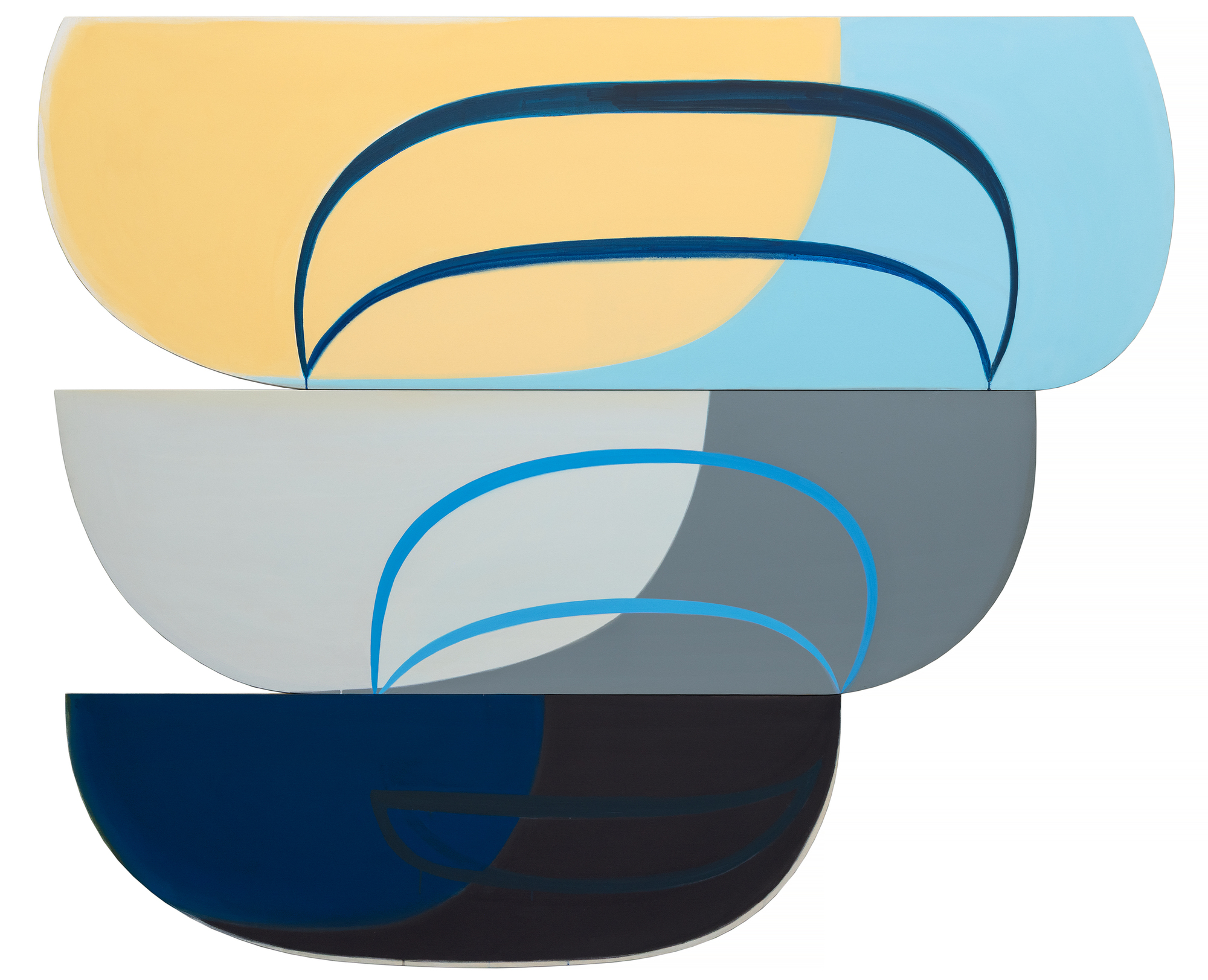
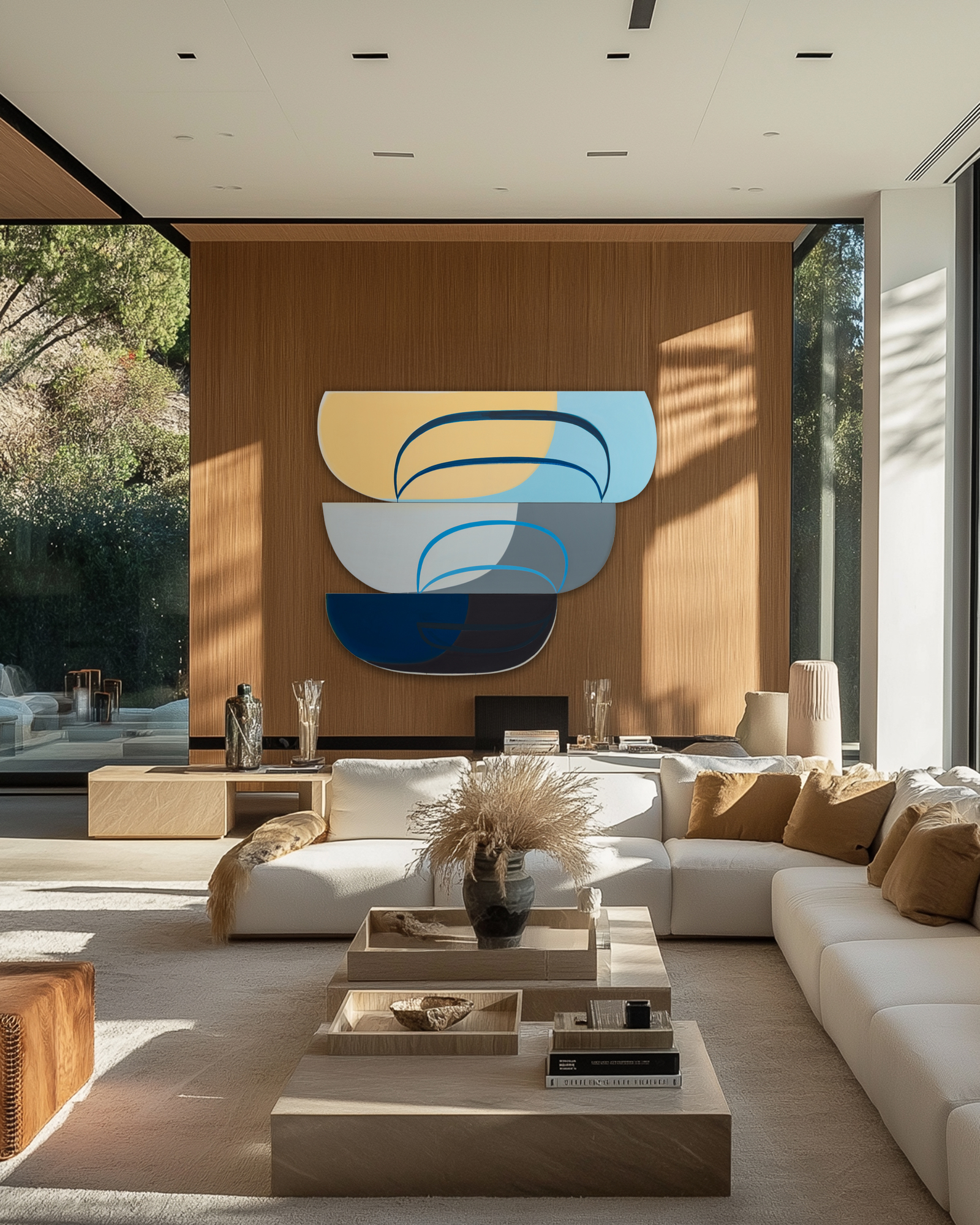
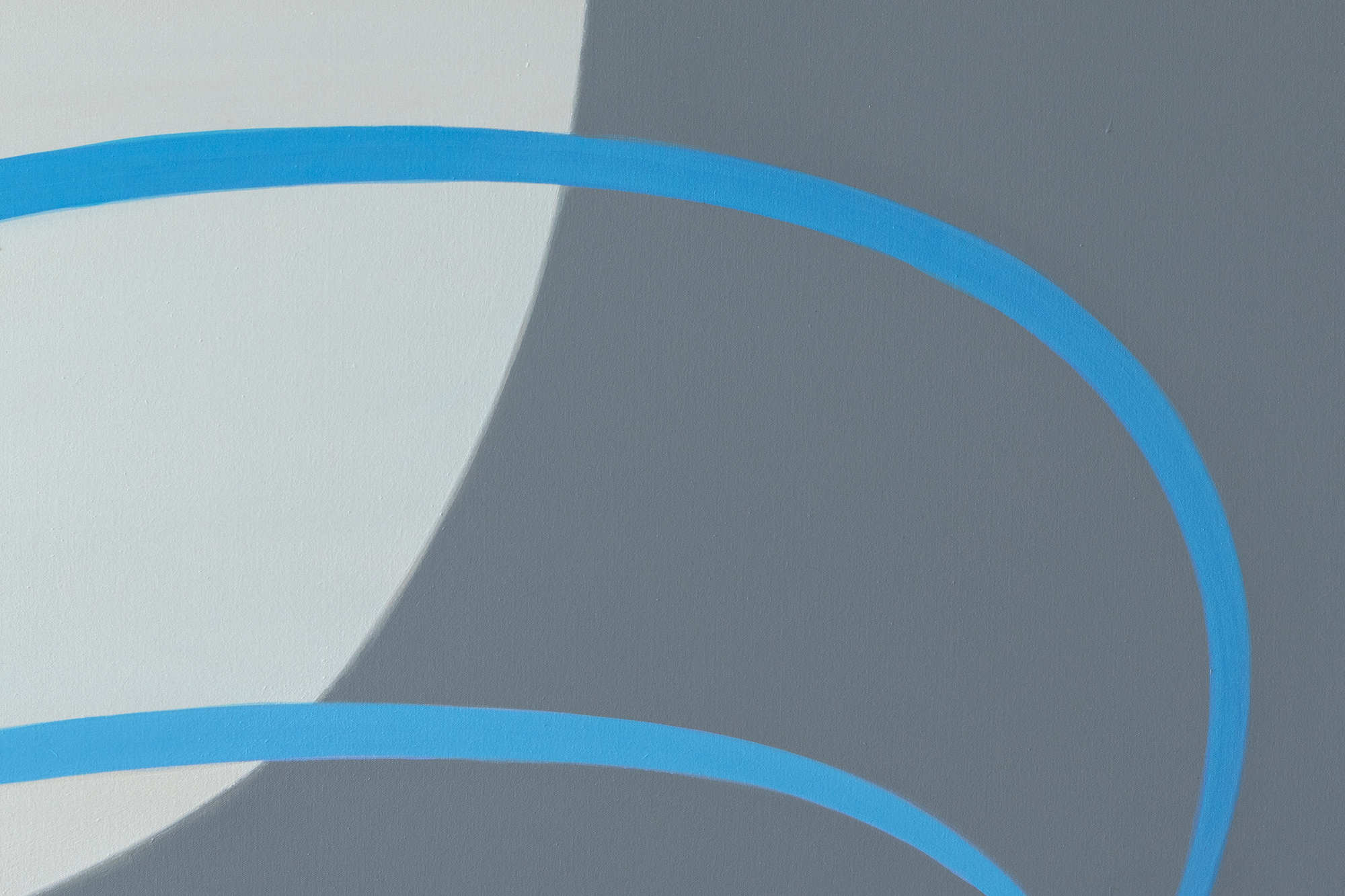
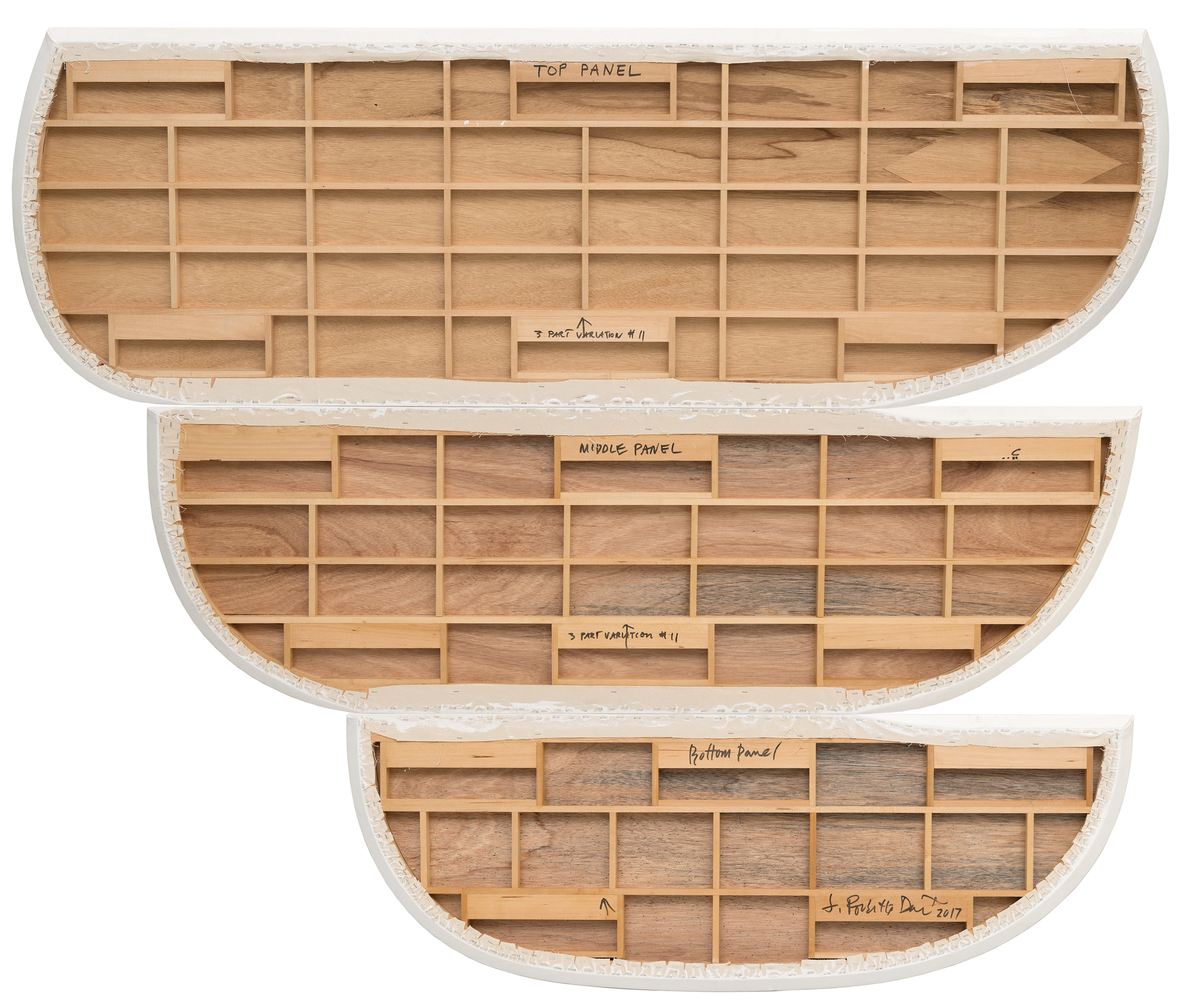
<div>Joanna Pousette-Dart’s 3 Part Variation No. 11 (2017) is composed of three stacked, curvilinear canvases—forms that resemble canoe hulls or slices of a circle—rising in scale from bottom to top. Each panel has its own restrained palette of blues, yellows, and grays, distinct yet resonant with the others. The proportions and curves echo from one to the next, yet no two forms are alike. </div><br><br><div> </div><br><br><div>Within each panel, broad areas of flat color are bisected by rounded shapes whose outer contours align with the painting’s edge. Layered over these are linear arabesque-like structures that visually rhyme—but never directly repeat—the panels’ curves, creating a dynamic interplay between inner drawing and outer shape. The result is both lyrical and precise, a composition where subtle variations generate a complex harmony. </div><br><br><div> </div><br><br><div>The beauty of 3 Part Variation No. 11 lies in these relationships: how forms mirror, diverge, and converge across the three canvases. The effect is meditative, like a visual equation that is at once architectural and deeply personal. </div> <div>Joanna Pousette-Dart’s 3 Part Variation No. 11 (2017) is composed of three stacked, curvilinear canvases—forms that resemble canoe hulls or slices of a circle—rising in scale from bottom to top. Each panel has its own restrained palette of blues, yellows, and grays, distinct yet resonant with the others. The proportions and curves echo from one to the next, yet no two forms are alike. </div><br><br><div> </div><br><br><div>Within each panel, broad areas of flat color are bisected by rounded shapes whose outer contours align with the painting’s edge. Layered over these are linear arabesque-like structures that visually rhyme—but never directly repeat—the panels’ curves, creating a dynamic interplay between inner drawing and outer shape. The result is both lyrical and precise, a composition where subtle variations generate a complex harmony. </div><br><br><div> </div><br><br><div>The beauty of 3 Part Variation No. 11 lies in these relationships: how forms mirror, diverge, and converge across the three canvases. The effect is meditative, like a visual equation that is at once architectural and deeply personal. </div> <div>Joanna Pousette-Dart’s 3 Part Variation No. 11 (2017) is composed of three stacked, curvilinear canvases—forms that resemble canoe hulls or slices of a circle—rising in scale from bottom to top. Each panel has its own restrained palette of blues, yellows, and grays, distinct yet resonant with the others. The proportions and curves echo from one to the next, yet no two forms are alike. </div><br><br><div> </div><br><br><div>Within each panel, broad areas of flat color are bisected by rounded shapes whose outer contours align with the painting’s edge. Layered over these are linear arabesque-like structures that visually rhyme—but never directly repeat—the panels’ curves, creating a dynamic interplay between inner drawing and outer shape. The result is both lyrical and precise, a composition where subtle variations generate a complex harmony. </div><br><br><div> </div><br><br><div>The beauty of 3 Part Variation No. 11 lies in these relationships: how forms mirror, diverge, and converge across the three canvases. The effect is meditative, like a visual equation that is at once architectural and deeply personal. </div> <div>Joanna Pousette-Dart’s 3 Part Variation No. 11 (2017) is composed of three stacked, curvilinear canvases—forms that resemble canoe hulls or slices of a circle—rising in scale from bottom to top. Each panel has its own restrained palette of blues, yellows, and grays, distinct yet resonant with the others. The proportions and curves echo from one to the next, yet no two forms are alike. </div><br><br><div> </div><br><br><div>Within each panel, broad areas of flat color are bisected by rounded shapes whose outer contours align with the painting’s edge. Layered over these are linear arabesque-like structures that visually rhyme—but never directly repeat—the panels’ curves, creating a dynamic interplay between inner drawing and outer shape. The result is both lyrical and precise, a composition where subtle variations generate a complex harmony. </div><br><br><div> </div><br><br><div>The beauty of 3 Part Variation No. 11 lies in these relationships: how forms mirror, diverge, and converge across the three canvases. The effect is meditative, like a visual equation that is at once architectural and deeply personal. </div> <div>Joanna Pousette-Dart’s 3 Part Variation No. 11 (2017) is composed of three stacked, curvilinear canvases—forms that resemble canoe hulls or slices of a circle—rising in scale from bottom to top. Each panel has its own restrained palette of blues, yellows, and grays, distinct yet resonant with the others. The proportions and curves echo from one to the next, yet no two forms are alike. </div><br><br><div> </div><br><br><div>Within each panel, broad areas of flat color are bisected by rounded shapes whose outer contours align with the painting’s edge. Layered over these are linear arabesque-like structures that visually rhyme—but never directly repeat—the panels’ curves, creating a dynamic interplay between inner drawing and outer shape. The result is both lyrical and precise, a composition where subtle variations generate a complex harmony. </div><br><br><div> </div><br><br><div>The beauty of 3 Part Variation No. 11 lies in these relationships: how forms mirror, diverge, and converge across the three canvases. The effect is meditative, like a visual equation that is at once architectural and deeply personal. </div> <div>Joanna Pousette-Dart’s 3 Part Variation No. 11 (2017) is composed of three stacked, curvilinear canvases—forms that resemble canoe hulls or slices of a circle—rising in scale from bottom to top. Each panel has its own restrained palette of blues, yellows, and grays, distinct yet resonant with the others. The proportions and curves echo from one to the next, yet no two forms are alike. </div><br><br><div> </div><br><br><div>Within each panel, broad areas of flat color are bisected by rounded shapes whose outer contours align with the painting’s edge. Layered over these are linear arabesque-like structures that visually rhyme—but never directly repeat—the panels’ curves, creating a dynamic interplay between inner drawing and outer shape. The result is both lyrical and precise, a composition where subtle variations generate a complex harmony. </div><br><br><div> </div><br><br><div>The beauty of 3 Part Variation No. 11 lies in these relationships: how forms mirror, diverge, and converge across the three canvases. The effect is meditative, like a visual equation that is at once architectural and deeply personal. </div> <div>Joanna Pousette-Dart’s 3 Part Variation No. 11 (2017) is composed of three stacked, curvilinear canvases—forms that resemble canoe hulls or slices of a circle—rising in scale from bottom to top. Each panel has its own restrained palette of blues, yellows, and grays, distinct yet resonant with the others. The proportions and curves echo from one to the next, yet no two forms are alike. </div><br><br><div> </div><br><br><div>Within each panel, broad areas of flat color are bisected by rounded shapes whose outer contours align with the painting’s edge. Layered over these are linear arabesque-like structures that visually rhyme—but never directly repeat—the panels’ curves, creating a dynamic interplay between inner drawing and outer shape. The result is both lyrical and precise, a composition where subtle variations generate a complex harmony. </div><br><br><div> </div><br><br><div>The beauty of 3 Part Variation No. 11 lies in these relationships: how forms mirror, diverge, and converge across the three canvases. The effect is meditative, like a visual equation that is at once architectural and deeply personal. </div> <div>Joanna Pousette-Dart’s 3 Part Variation No. 11 (2017) is composed of three stacked, curvilinear canvases—forms that resemble canoe hulls or slices of a circle—rising in scale from bottom to top. Each panel has its own restrained palette of blues, yellows, and grays, distinct yet resonant with the others. The proportions and curves echo from one to the next, yet no two forms are alike. </div><br><br><div> </div><br><br><div>Within each panel, broad areas of flat color are bisected by rounded shapes whose outer contours align with the painting’s edge. Layered over these are linear arabesque-like structures that visually rhyme—but never directly repeat—the panels’ curves, creating a dynamic interplay between inner drawing and outer shape. The result is both lyrical and precise, a composition where subtle variations generate a complex harmony. </div><br><br><div> </div><br><br><div>The beauty of 3 Part Variation No. 11 lies in these relationships: how forms mirror, diverge, and converge across the three canvases. The effect is meditative, like a visual equation that is at once architectural and deeply personal. </div> <div>Joanna Pousette-Dart’s 3 Part Variation No. 11 (2017) is composed of three stacked, curvilinear canvases—forms that resemble canoe hulls or slices of a circle—rising in scale from bottom to top. Each panel has its own restrained palette of blues, yellows, and grays, distinct yet resonant with the others. The proportions and curves echo from one to the next, yet no two forms are alike. </div><br><br><div> </div><br><br><div>Within each panel, broad areas of flat color are bisected by rounded shapes whose outer contours align with the painting’s edge. Layered over these are linear arabesque-like structures that visually rhyme—but never directly repeat—the panels’ curves, creating a dynamic interplay between inner drawing and outer shape. The result is both lyrical and precise, a composition where subtle variations generate a complex harmony. </div><br><br><div> </div><br><br><div>The beauty of 3 Part Variation No. 11 lies in these relationships: how forms mirror, diverge, and converge across the three canvases. The effect is meditative, like a visual equation that is at once architectural and deeply personal. </div> <div>Joanna Pousette-Dart’s 3 Part Variation No. 11 (2017) is composed of three stacked, curvilinear canvases—forms that resemble canoe hulls or slices of a circle—rising in scale from bottom to top. Each panel has its own restrained palette of blues, yellows, and grays, distinct yet resonant with the others. The proportions and curves echo from one to the next, yet no two forms are alike. </div><br><br><div> </div><br><br><div>Within each panel, broad areas of flat color are bisected by rounded shapes whose outer contours align with the painting’s edge. Layered over these are linear arabesque-like structures that visually rhyme—but never directly repeat—the panels’ curves, creating a dynamic interplay between inner drawing and outer shape. The result is both lyrical and precise, a composition where subtle variations generate a complex harmony. </div><br><br><div> </div><br><br><div>The beauty of 3 Part Variation No. 11 lies in these relationships: how forms mirror, diverge, and converge across the three canvases. The effect is meditative, like a visual equation that is at once architectural and deeply personal. </div>
Variación en 3 partes n.º 11201776 3/4 x 91 1/2 x 1 1/12 pulgadas(194,31 x 232,41 x 3,81 cm) acrílico, lienzo, paneles de madera
Procedencia
Colección del artista
Colección privada, adquirida directamente al artista.
La obra 3 Part Variation No. 11 (2017) de Joanna Pousette-Dart está compuesta por tres lienzos curvilíneos apilados, con formas que recuerdan a los cascos de una canoa o a secciones de un círculo, cuyo tamaño aumenta de abajo hacia arriba. Cada panel tiene su propia paleta de colores sobrios, con tonos azules, amarillos y grises, distintos pero en armonía con los demás. Las proporciones y las curvas se repiten de uno a otro, pero no hay dos formas iguales.


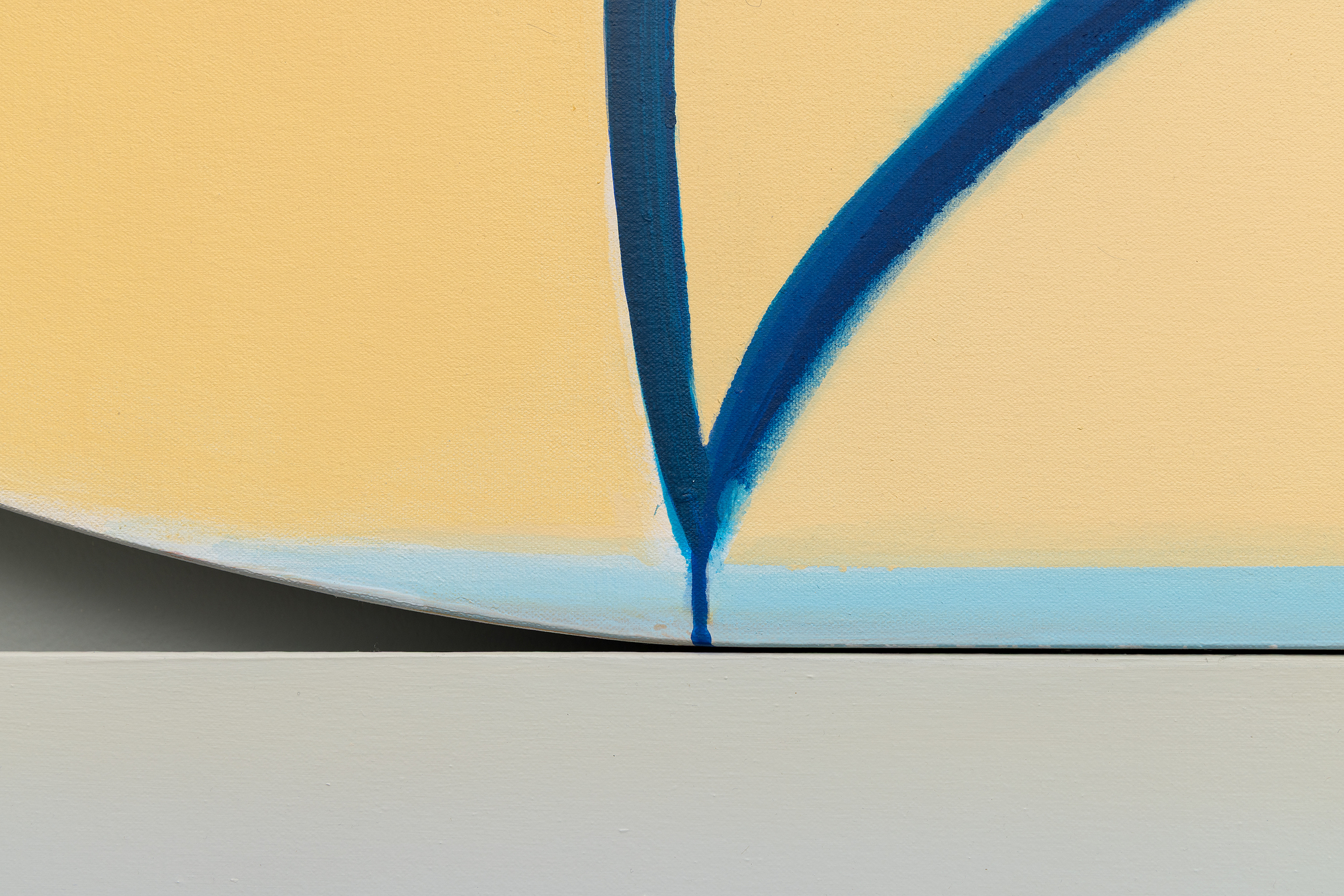
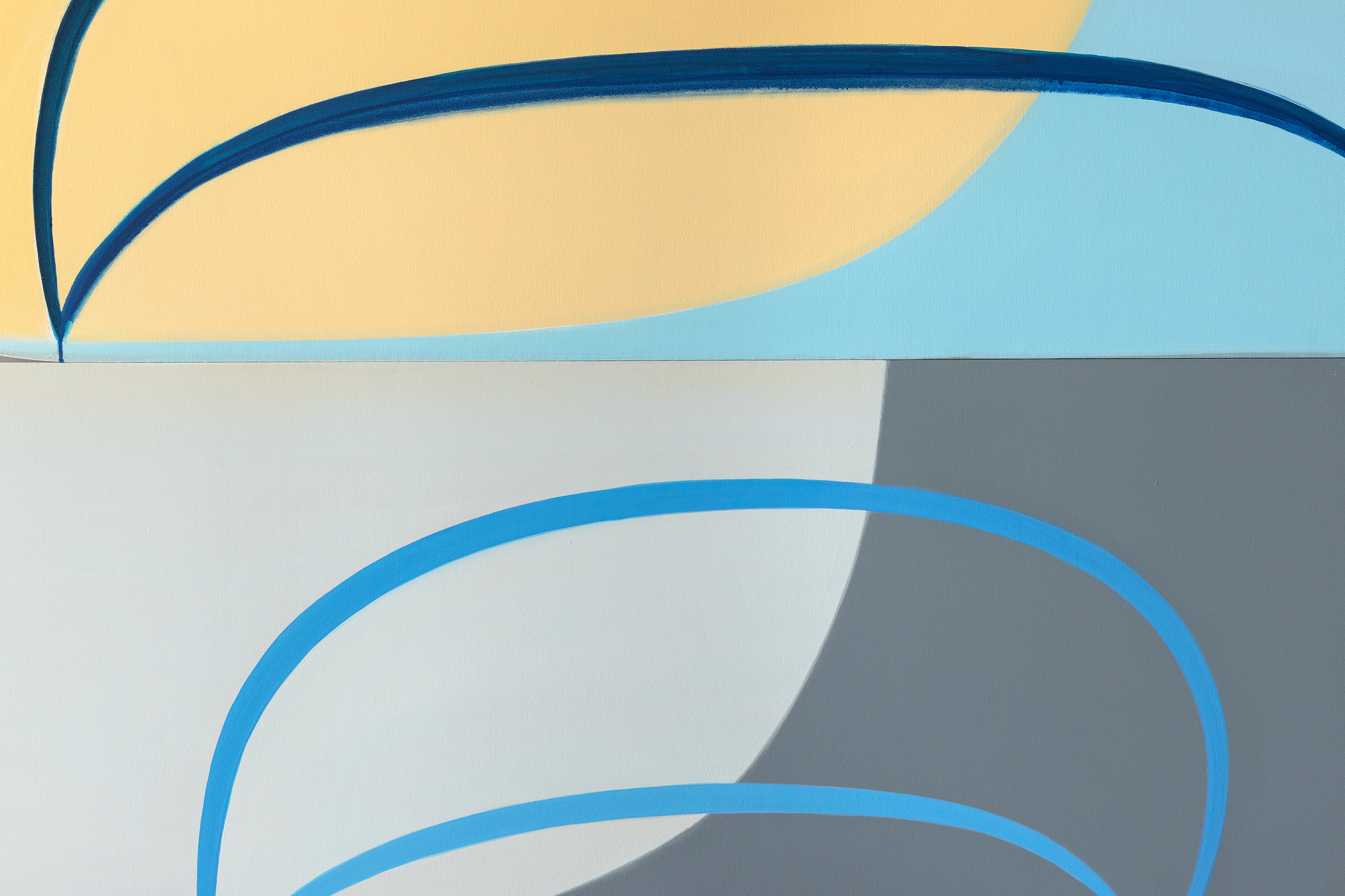
Dentro de cada panel, amplias áreas de color plano están divididas en dos por formas redondeadas cuyos contornos exteriores se alinean con el borde del cuadro. Sobre ellas se superponen estructuras lineales similares a arabescos que riman visualmente —pero nunca se repiten directamente— con las curvas de los paneles, creando una interacción dinámica entre el dibujo interior y la forma exterior. El resultado es a la vez lírico y preciso, una composición en la que las sutiles variaciones generan una armonía compleja.


La belleza de 3 Part Variation No. 11 reside en estas relaciones: cómo las formas se reflejan, divergen y convergen en los tres lienzos. El efecto es meditativo, como una ecuación visual que es a la vez arquitectónica y profundamente personal.
Preguntar