JOHN SINGER SARGENT (1856-1925)

 
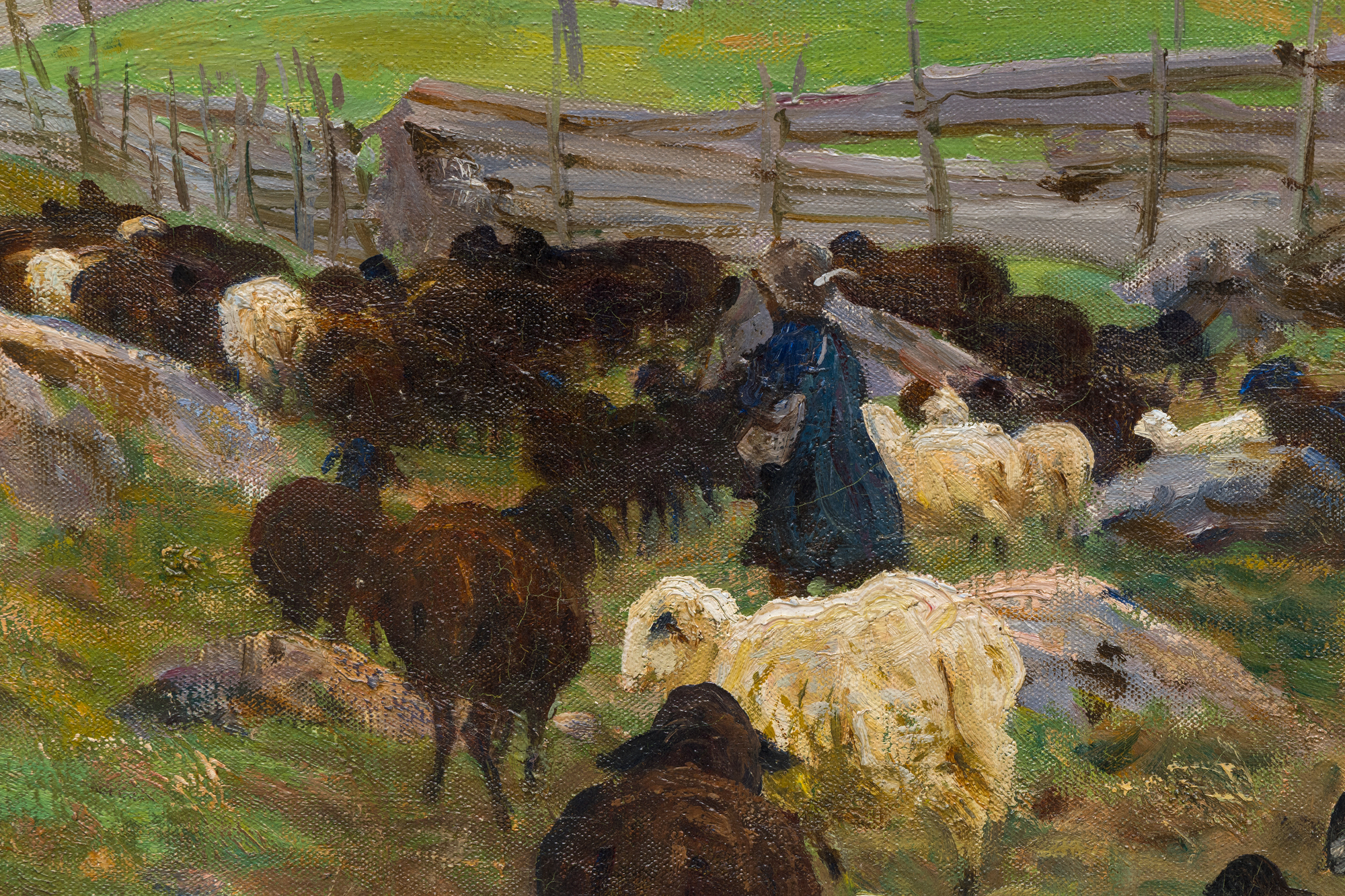
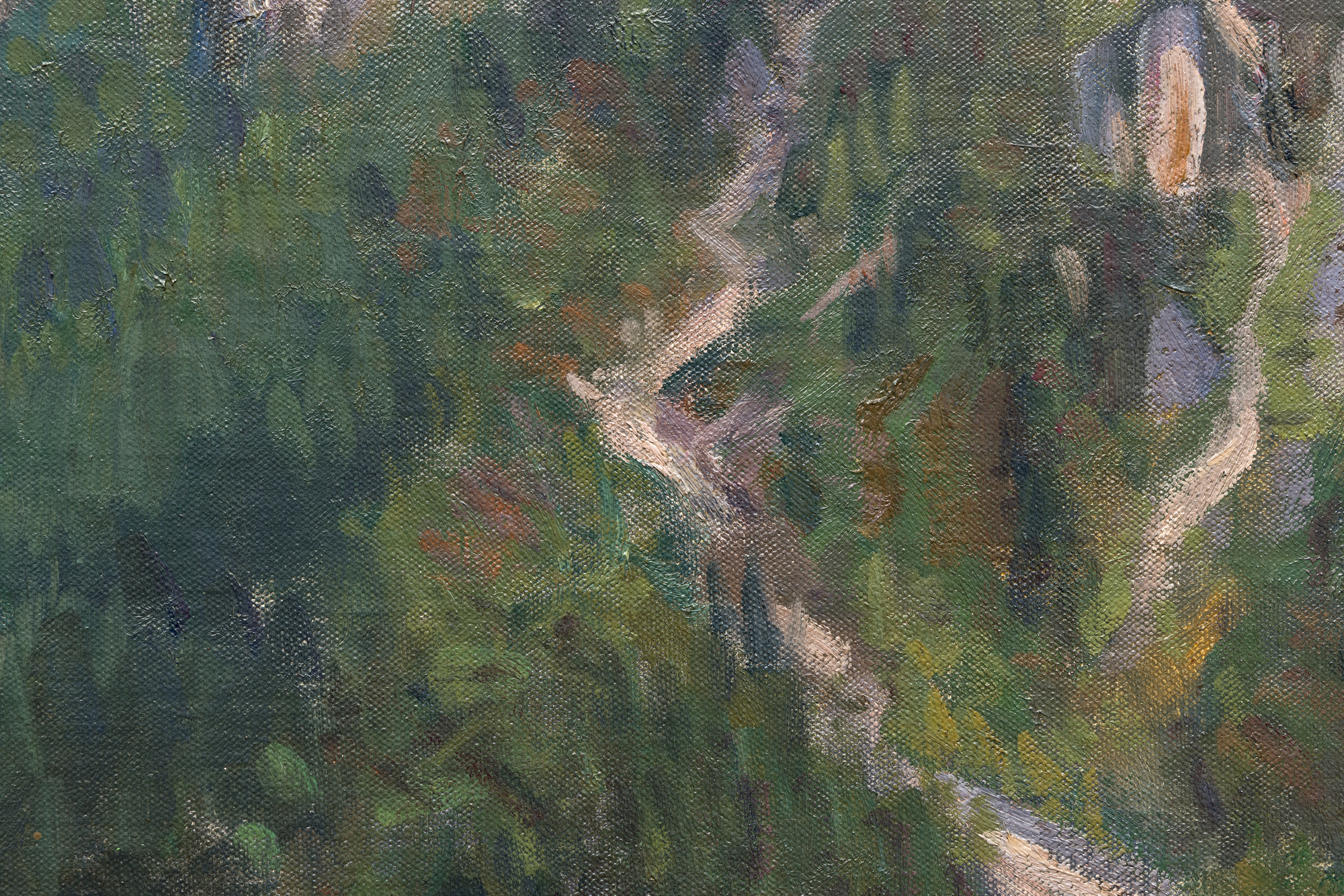
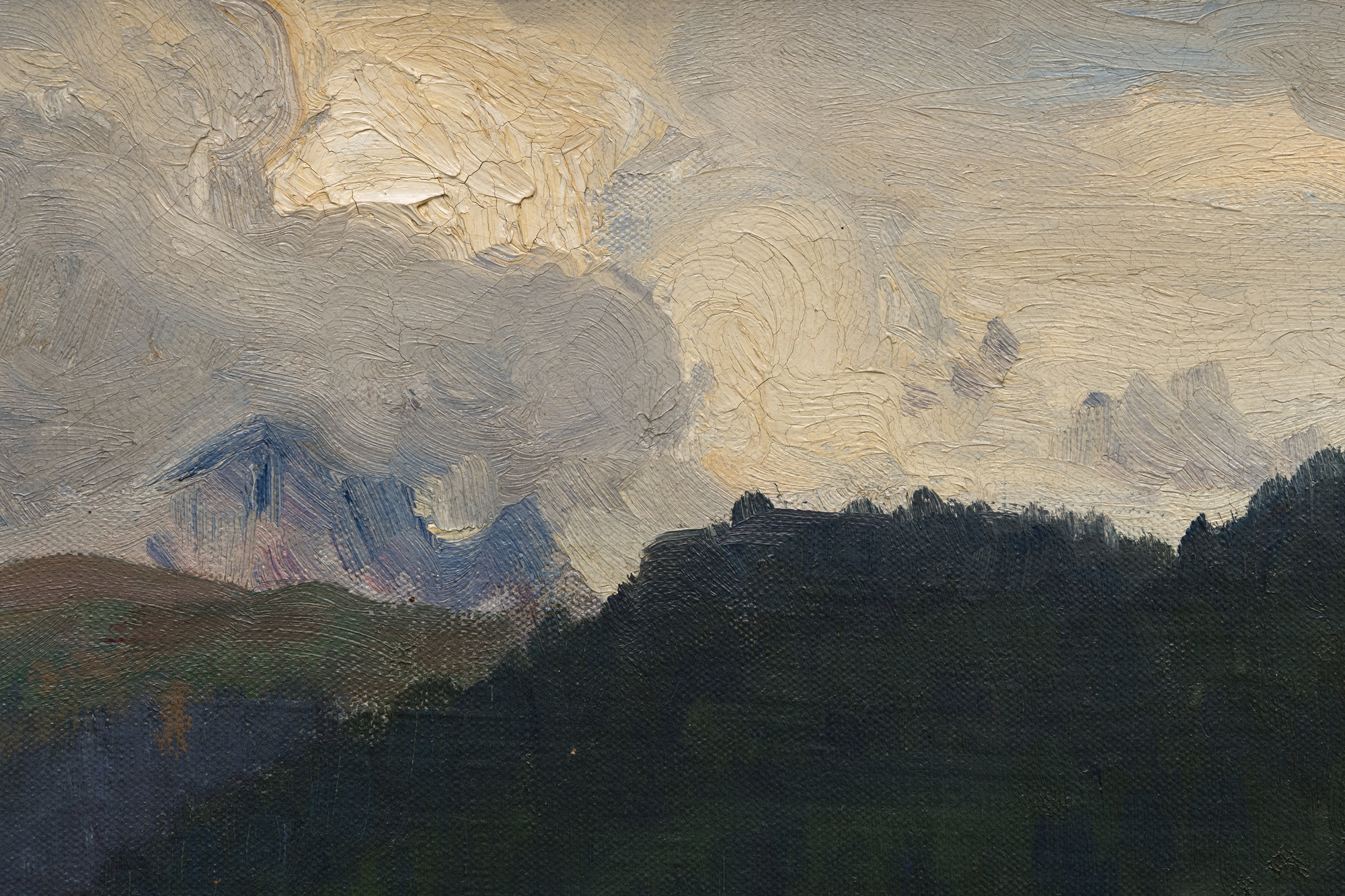
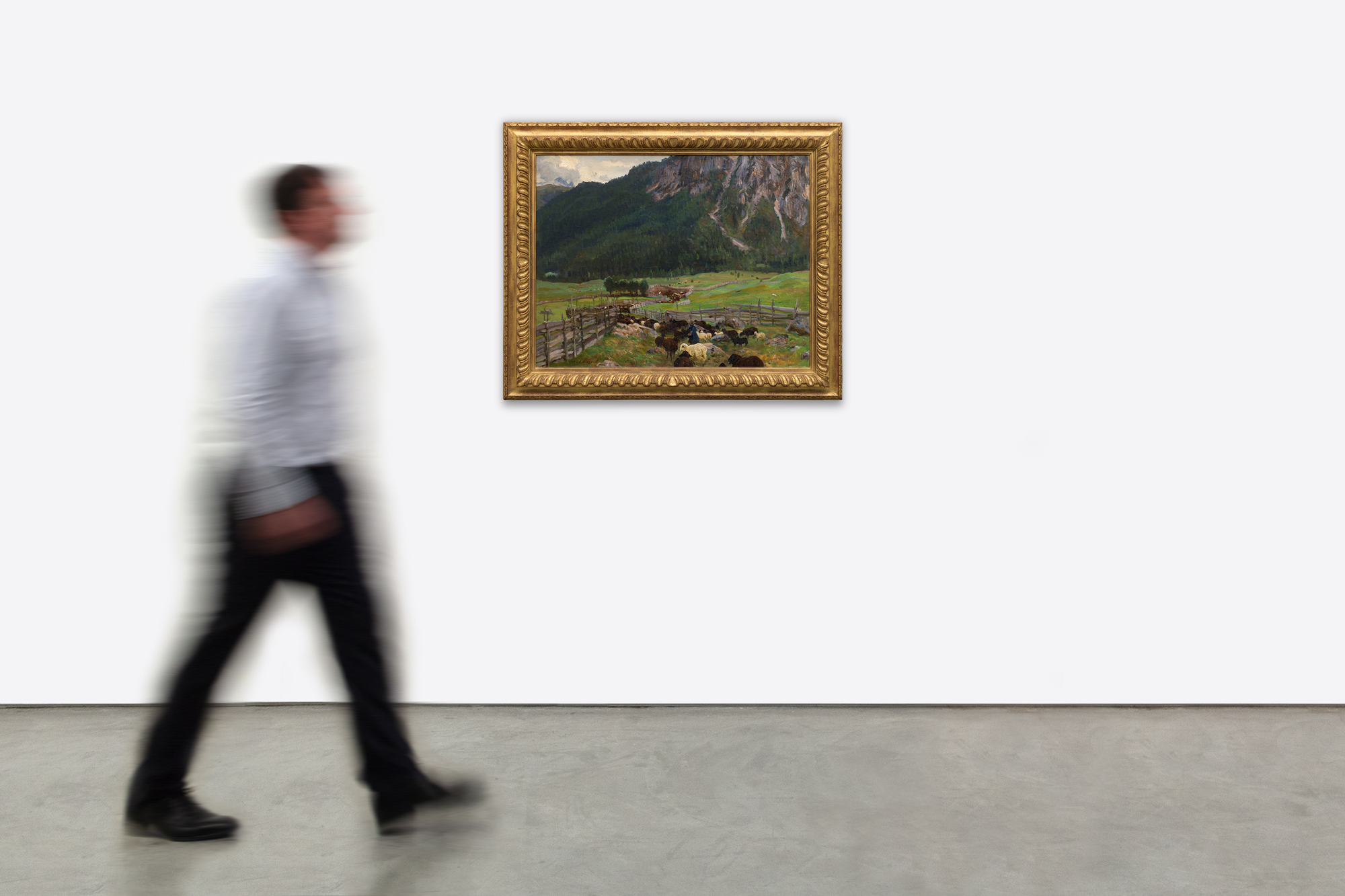
<div><font face=Lato size=3>Painted during John Singer Sargent's trip to the Austrian Tyrol in the summer of 1914, this work captures a moment of profound historical tension as Austria declared war on Serbia that July, placing Sargent at the threshold of the First World War. The painting offers a strikingly intimate and unexpected view of the Alpine landscape, framed from within a sheep pen with the mountain itself largely cropped from sight. This choice of vantage point shifts the viewers focus to the meeting point of the valley and the rising slope, where deep verdant greens anchor the composition and an overcast sky suggests a subtle sense of unease beyond the tranquil pastoral foreground.</font></div><br><br><div> </div><br><br><div><font face=Lato size=3>The work is included in the Sargent catalogue raisonne by Richard Ormond and Elaine Kilmurray, confirming its secure place within the artists documented production. Sargent created several related works during his 1914 stay in the Tyrol across both oil and watercolor, including <em>Tyrolese Interior </em>at The Metropolitan Museum of Art, <em>Woodsheds Tyrol</em> at the Art Institute of Chicago, and <em>Trout Stream</em> <em>in the Tyrol</em> at the de Young Museum. Together these works demonstrate Sargent's sustained engagement with the region and its distinctive light, atmosphere, and rural architecture during this pivotal year.</font></div><br><br><div> </div><br><br><div><font face=Lato size=3>This painting also carries distinguished provenance, having been previously held in the collection of Henry Clay Frick, the American industrialist and founder of the Frick Collection, before being given as a gift to his friend and lawyer Louis Cass Ledyard, who also served as counsel to J P Morgan. Its rarity within Sargents mature Tyrolean subjects is further underscored by the small number of comparable works that have reached the market, with only one closely related painting from this period, A Tyrolese Crucifix from 1915, having appeared at auction in recent decades.</font></div><br><br><div> </div><br><br><div><font face=Lato size=3>Sargents work continues to receive major institutional recognition, including the forthcoming exhibition Sargent Dazzling Paris at the Musee d Orsay in 2025 to 2026, reaffirming the ongoing relevance of his mature European landscapes within the broader narrative of early twentieth century art.</font></div> <div><font face=Lato size=3>Painted during John Singer Sargent's trip to the Austrian Tyrol in the summer of 1914, this work captures a moment of profound historical tension as Austria declared war on Serbia that July, placing Sargent at the threshold of the First World War. The painting offers a strikingly intimate and unexpected view of the Alpine landscape, framed from within a sheep pen with the mountain itself largely cropped from sight. This choice of vantage point shifts the viewers focus to the meeting point of the valley and the rising slope, where deep verdant greens anchor the composition and an overcast sky suggests a subtle sense of unease beyond the tranquil pastoral foreground.</font></div><br><br><div> </div><br><br><div><font face=Lato size=3>The work is included in the Sargent catalogue raisonne by Richard Ormond and Elaine Kilmurray, confirming its secure place within the artists documented production. Sargent created several related works during his 1914 stay in the Tyrol across both oil and watercolor, including <em>Tyrolese Interior </em>at The Metropolitan Museum of Art, <em>Woodsheds Tyrol</em> at the Art Institute of Chicago, and <em>Trout Stream</em> <em>in the Tyrol</em> at the de Young Museum. Together these works demonstrate Sargent's sustained engagement with the region and its distinctive light, atmosphere, and rural architecture during this pivotal year.</font></div><br><br><div> </div><br><br><div><font face=Lato size=3>This painting also carries distinguished provenance, having been previously held in the collection of Henry Clay Frick, the American industrialist and founder of the Frick Collection, before being given as a gift to his friend and lawyer Louis Cass Ledyard, who also served as counsel to J P Morgan. Its rarity within Sargents mature Tyrolean subjects is further underscored by the small number of comparable works that have reached the market, with only one closely related painting from this period, A Tyrolese Crucifix from 1915, having appeared at auction in recent decades.</font></div><br><br><div> </div><br><br><div><font face=Lato size=3>Sargents work continues to receive major institutional recognition, including the forthcoming exhibition Sargent Dazzling Paris at the Musee d Orsay in 2025 to 2026, reaffirming the ongoing relevance of his mature European landscapes within the broader narrative of early twentieth century art.</font></div> <div><font face=Lato size=3>Painted during John Singer Sargent's trip to the Austrian Tyrol in the summer of 1914, this work captures a moment of profound historical tension as Austria declared war on Serbia that July, placing Sargent at the threshold of the First World War. The painting offers a strikingly intimate and unexpected view of the Alpine landscape, framed from within a sheep pen with the mountain itself largely cropped from sight. This choice of vantage point shifts the viewers focus to the meeting point of the valley and the rising slope, where deep verdant greens anchor the composition and an overcast sky suggests a subtle sense of unease beyond the tranquil pastoral foreground.</font></div><br><br><div> </div><br><br><div><font face=Lato size=3>The work is included in the Sargent catalogue raisonne by Richard Ormond and Elaine Kilmurray, confirming its secure place within the artists documented production. Sargent created several related works during his 1914 stay in the Tyrol across both oil and watercolor, including <em>Tyrolese Interior </em>at The Metropolitan Museum of Art, <em>Woodsheds Tyrol</em> at the Art Institute of Chicago, and <em>Trout Stream</em> <em>in the Tyrol</em> at the de Young Museum. Together these works demonstrate Sargent's sustained engagement with the region and its distinctive light, atmosphere, and rural architecture during this pivotal year.</font></div><br><br><div> </div><br><br><div><font face=Lato size=3>This painting also carries distinguished provenance, having been previously held in the collection of Henry Clay Frick, the American industrialist and founder of the Frick Collection, before being given as a gift to his friend and lawyer Louis Cass Ledyard, who also served as counsel to J P Morgan. Its rarity within Sargents mature Tyrolean subjects is further underscored by the small number of comparable works that have reached the market, with only one closely related painting from this period, A Tyrolese Crucifix from 1915, having appeared at auction in recent decades.</font></div><br><br><div> </div><br><br><div><font face=Lato size=3>Sargents work continues to receive major institutional recognition, including the forthcoming exhibition Sargent Dazzling Paris at the Musee d Orsay in 2025 to 2026, reaffirming the ongoing relevance of his mature European landscapes within the broader narrative of early twentieth century art.</font></div> <div><font face=Lato size=3>Painted during John Singer Sargent's trip to the Austrian Tyrol in the summer of 1914, this work captures a moment of profound historical tension as Austria declared war on Serbia that July, placing Sargent at the threshold of the First World War. The painting offers a strikingly intimate and unexpected view of the Alpine landscape, framed from within a sheep pen with the mountain itself largely cropped from sight. This choice of vantage point shifts the viewers focus to the meeting point of the valley and the rising slope, where deep verdant greens anchor the composition and an overcast sky suggests a subtle sense of unease beyond the tranquil pastoral foreground.</font></div><br><br><div> </div><br><br><div><font face=Lato size=3>The work is included in the Sargent catalogue raisonne by Richard Ormond and Elaine Kilmurray, confirming its secure place within the artists documented production. Sargent created several related works during his 1914 stay in the Tyrol across both oil and watercolor, including <em>Tyrolese Interior </em>at The Metropolitan Museum of Art, <em>Woodsheds Tyrol</em> at the Art Institute of Chicago, and <em>Trout Stream</em> <em>in the Tyrol</em> at the de Young Museum. Together these works demonstrate Sargent's sustained engagement with the region and its distinctive light, atmosphere, and rural architecture during this pivotal year.</font></div><br><br><div> </div><br><br><div><font face=Lato size=3>This painting also carries distinguished provenance, having been previously held in the collection of Henry Clay Frick, the American industrialist and founder of the Frick Collection, before being given as a gift to his friend and lawyer Louis Cass Ledyard, who also served as counsel to J P Morgan. Its rarity within Sargents mature Tyrolean subjects is further underscored by the small number of comparable works that have reached the market, with only one closely related painting from this period, A Tyrolese Crucifix from 1915, having appeared at auction in recent decades.</font></div><br><br><div> </div><br><br><div><font face=Lato size=3>Sargents work continues to receive major institutional recognition, including the forthcoming exhibition Sargent Dazzling Paris at the Musee d Orsay in 2025 to 2026, reaffirming the ongoing relevance of his mature European landscapes within the broader narrative of early twentieth century art.</font></div> <div><font face=Lato size=3>Painted during John Singer Sargent's trip to the Austrian Tyrol in the summer of 1914, this work captures a moment of profound historical tension as Austria declared war on Serbia that July, placing Sargent at the threshold of the First World War. The painting offers a strikingly intimate and unexpected view of the Alpine landscape, framed from within a sheep pen with the mountain itself largely cropped from sight. This choice of vantage point shifts the viewers focus to the meeting point of the valley and the rising slope, where deep verdant greens anchor the composition and an overcast sky suggests a subtle sense of unease beyond the tranquil pastoral foreground.</font></div><br><br><div> </div><br><br><div><font face=Lato size=3>The work is included in the Sargent catalogue raisonne by Richard Ormond and Elaine Kilmurray, confirming its secure place within the artists documented production. Sargent created several related works during his 1914 stay in the Tyrol across both oil and watercolor, including <em>Tyrolese Interior </em>at The Metropolitan Museum of Art, <em>Woodsheds Tyrol</em> at the Art Institute of Chicago, and <em>Trout Stream</em> <em>in the Tyrol</em> at the de Young Museum. Together these works demonstrate Sargent's sustained engagement with the region and its distinctive light, atmosphere, and rural architecture during this pivotal year.</font></div><br><br><div> </div><br><br><div><font face=Lato size=3>This painting also carries distinguished provenance, having been previously held in the collection of Henry Clay Frick, the American industrialist and founder of the Frick Collection, before being given as a gift to his friend and lawyer Louis Cass Ledyard, who also served as counsel to J P Morgan. Its rarity within Sargents mature Tyrolean subjects is further underscored by the small number of comparable works that have reached the market, with only one closely related painting from this period, A Tyrolese Crucifix from 1915, having appeared at auction in recent decades.</font></div><br><br><div> </div><br><br><div><font face=Lato size=3>Sargents work continues to receive major institutional recognition, including the forthcoming exhibition Sargent Dazzling Paris at the Musee d Orsay in 2025 to 2026, reaffirming the ongoing relevance of his mature European landscapes within the broader narrative of early twentieth century art.</font></div> <div><font face=Lato size=3>Painted during John Singer Sargent's trip to the Austrian Tyrol in the summer of 1914, this work captures a moment of profound historical tension as Austria declared war on Serbia that July, placing Sargent at the threshold of the First World War. The painting offers a strikingly intimate and unexpected view of the Alpine landscape, framed from within a sheep pen with the mountain itself largely cropped from sight. This choice of vantage point shifts the viewers focus to the meeting point of the valley and the rising slope, where deep verdant greens anchor the composition and an overcast sky suggests a subtle sense of unease beyond the tranquil pastoral foreground.</font></div><br><br><div> </div><br><br><div><font face=Lato size=3>The work is included in the Sargent catalogue raisonne by Richard Ormond and Elaine Kilmurray, confirming its secure place within the artists documented production. Sargent created several related works during his 1914 stay in the Tyrol across both oil and watercolor, including <em>Tyrolese Interior </em>at The Metropolitan Museum of Art, <em>Woodsheds Tyrol</em> at the Art Institute of Chicago, and <em>Trout Stream</em> <em>in the Tyrol</em> at the de Young Museum. Together these works demonstrate Sargent's sustained engagement with the region and its distinctive light, atmosphere, and rural architecture during this pivotal year.</font></div><br><br><div> </div><br><br><div><font face=Lato size=3>This painting also carries distinguished provenance, having been previously held in the collection of Henry Clay Frick, the American industrialist and founder of the Frick Collection, before being given as a gift to his friend and lawyer Louis Cass Ledyard, who also served as counsel to J P Morgan. Its rarity within Sargents mature Tyrolean subjects is further underscored by the small number of comparable works that have reached the market, with only one closely related painting from this period, A Tyrolese Crucifix from 1915, having appeared at auction in recent decades.</font></div><br><br><div> </div><br><br><div><font face=Lato size=3>Sargents work continues to receive major institutional recognition, including the forthcoming exhibition Sargent Dazzling Paris at the Musee d Orsay in 2025 to 2026, reaffirming the ongoing relevance of his mature European landscapes within the broader narrative of early twentieth century art.</font></div> <div><font face=Lato size=3>Painted during John Singer Sargent's trip to the Austrian Tyrol in the summer of 1914, this work captures a moment of profound historical tension as Austria declared war on Serbia that July, placing Sargent at the threshold of the First World War. The painting offers a strikingly intimate and unexpected view of the Alpine landscape, framed from within a sheep pen with the mountain itself largely cropped from sight. This choice of vantage point shifts the viewers focus to the meeting point of the valley and the rising slope, where deep verdant greens anchor the composition and an overcast sky suggests a subtle sense of unease beyond the tranquil pastoral foreground.</font></div><br><br><div> </div><br><br><div><font face=Lato size=3>The work is included in the Sargent catalogue raisonne by Richard Ormond and Elaine Kilmurray, confirming its secure place within the artists documented production. Sargent created several related works during his 1914 stay in the Tyrol across both oil and watercolor, including <em>Tyrolese Interior </em>at The Metropolitan Museum of Art, <em>Woodsheds Tyrol</em> at the Art Institute of Chicago, and <em>Trout Stream</em> <em>in the Tyrol</em> at the de Young Museum. Together these works demonstrate Sargent's sustained engagement with the region and its distinctive light, atmosphere, and rural architecture during this pivotal year.</font></div><br><br><div> </div><br><br><div><font face=Lato size=3>This painting also carries distinguished provenance, having been previously held in the collection of Henry Clay Frick, the American industrialist and founder of the Frick Collection, before being given as a gift to his friend and lawyer Louis Cass Ledyard, who also served as counsel to J P Morgan. Its rarity within Sargents mature Tyrolean subjects is further underscored by the small number of comparable works that have reached the market, with only one closely related painting from this period, A Tyrolese Crucifix from 1915, having appeared at auction in recent decades.</font></div><br><br><div> </div><br><br><div><font face=Lato size=3>Sargents work continues to receive major institutional recognition, including the forthcoming exhibition Sargent Dazzling Paris at the Musee d Orsay in 2025 to 2026, reaffirming the ongoing relevance of his mature European landscapes within the broader narrative of early twentieth century art.</font></div> <div><font face=Lato size=3>Painted during John Singer Sargent's trip to the Austrian Tyrol in the summer of 1914, this work captures a moment of profound historical tension as Austria declared war on Serbia that July, placing Sargent at the threshold of the First World War. The painting offers a strikingly intimate and unexpected view of the Alpine landscape, framed from within a sheep pen with the mountain itself largely cropped from sight. This choice of vantage point shifts the viewers focus to the meeting point of the valley and the rising slope, where deep verdant greens anchor the composition and an overcast sky suggests a subtle sense of unease beyond the tranquil pastoral foreground.</font></div><br><br><div> </div><br><br><div><font face=Lato size=3>The work is included in the Sargent catalogue raisonne by Richard Ormond and Elaine Kilmurray, confirming its secure place within the artists documented production. Sargent created several related works during his 1914 stay in the Tyrol across both oil and watercolor, including <em>Tyrolese Interior </em>at The Metropolitan Museum of Art, <em>Woodsheds Tyrol</em> at the Art Institute of Chicago, and <em>Trout Stream</em> <em>in the Tyrol</em> at the de Young Museum. Together these works demonstrate Sargent's sustained engagement with the region and its distinctive light, atmosphere, and rural architecture during this pivotal year.</font></div><br><br><div> </div><br><br><div><font face=Lato size=3>This painting also carries distinguished provenance, having been previously held in the collection of Henry Clay Frick, the American industrialist and founder of the Frick Collection, before being given as a gift to his friend and lawyer Louis Cass Ledyard, who also served as counsel to J P Morgan. Its rarity within Sargents mature Tyrolean subjects is further underscored by the small number of comparable works that have reached the market, with only one closely related painting from this period, A Tyrolese Crucifix from 1915, having appeared at auction in recent decades.</font></div><br><br><div> </div><br><br><div><font face=Lato size=3>Sargents work continues to receive major institutional recognition, including the forthcoming exhibition Sargent Dazzling Paris at the Musee d Orsay in 2025 to 2026, reaffirming the ongoing relevance of his mature European landscapes within the broader narrative of early twentieth century art.</font></div> <div><font face=Lato size=3>Painted during John Singer Sargent's trip to the Austrian Tyrol in the summer of 1914, this work captures a moment of profound historical tension as Austria declared war on Serbia that July, placing Sargent at the threshold of the First World War. The painting offers a strikingly intimate and unexpected view of the Alpine landscape, framed from within a sheep pen with the mountain itself largely cropped from sight. This choice of vantage point shifts the viewers focus to the meeting point of the valley and the rising slope, where deep verdant greens anchor the composition and an overcast sky suggests a subtle sense of unease beyond the tranquil pastoral foreground.</font></div><br><br><div> </div><br><br><div><font face=Lato size=3>The work is included in the Sargent catalogue raisonne by Richard Ormond and Elaine Kilmurray, confirming its secure place within the artists documented production. Sargent created several related works during his 1914 stay in the Tyrol across both oil and watercolor, including <em>Tyrolese Interior </em>at The Metropolitan Museum of Art, <em>Woodsheds Tyrol</em> at the Art Institute of Chicago, and <em>Trout Stream</em> <em>in the Tyrol</em> at the de Young Museum. Together these works demonstrate Sargent's sustained engagement with the region and its distinctive light, atmosphere, and rural architecture during this pivotal year.</font></div><br><br><div> </div><br><br><div><font face=Lato size=3>This painting also carries distinguished provenance, having been previously held in the collection of Henry Clay Frick, the American industrialist and founder of the Frick Collection, before being given as a gift to his friend and lawyer Louis Cass Ledyard, who also served as counsel to J P Morgan. Its rarity within Sargents mature Tyrolean subjects is further underscored by the small number of comparable works that have reached the market, with only one closely related painting from this period, A Tyrolese Crucifix from 1915, having appeared at auction in recent decades.</font></div><br><br><div> </div><br><br><div><font face=Lato size=3>Sargents work continues to receive major institutional recognition, including the forthcoming exhibition Sargent Dazzling Paris at the Musee d Orsay in 2025 to 2026, reaffirming the ongoing relevance of his mature European landscapes within the broader narrative of early twentieth century art.</font></div> <div><font face=Lato size=3>Painted during John Singer Sargent's trip to the Austrian Tyrol in the summer of 1914, this work captures a moment of profound historical tension as Austria declared war on Serbia that July, placing Sargent at the threshold of the First World War. The painting offers a strikingly intimate and unexpected view of the Alpine landscape, framed from within a sheep pen with the mountain itself largely cropped from sight. This choice of vantage point shifts the viewers focus to the meeting point of the valley and the rising slope, where deep verdant greens anchor the composition and an overcast sky suggests a subtle sense of unease beyond the tranquil pastoral foreground.</font></div><br><br><div> </div><br><br><div><font face=Lato size=3>The work is included in the Sargent catalogue raisonne by Richard Ormond and Elaine Kilmurray, confirming its secure place within the artists documented production. Sargent created several related works during his 1914 stay in the Tyrol across both oil and watercolor, including <em>Tyrolese Interior </em>at The Metropolitan Museum of Art, <em>Woodsheds Tyrol</em> at the Art Institute of Chicago, and <em>Trout Stream</em> <em>in the Tyrol</em> at the de Young Museum. Together these works demonstrate Sargent's sustained engagement with the region and its distinctive light, atmosphere, and rural architecture during this pivotal year.</font></div><br><br><div> </div><br><br><div><font face=Lato size=3>This painting also carries distinguished provenance, having been previously held in the collection of Henry Clay Frick, the American industrialist and founder of the Frick Collection, before being given as a gift to his friend and lawyer Louis Cass Ledyard, who also served as counsel to J P Morgan. Its rarity within Sargents mature Tyrolean subjects is further underscored by the small number of comparable works that have reached the market, with only one closely related painting from this period, A Tyrolese Crucifix from 1915, having appeared at auction in recent decades.</font></div><br><br><div> </div><br><br><div><font face=Lato size=3>Sargents work continues to receive major institutional recognition, including the forthcoming exhibition Sargent Dazzling Paris at the Musee d Orsay in 2025 to 2026, reaffirming the ongoing relevance of his mature European landscapes within the broader narrative of early twentieth century art.</font></div>
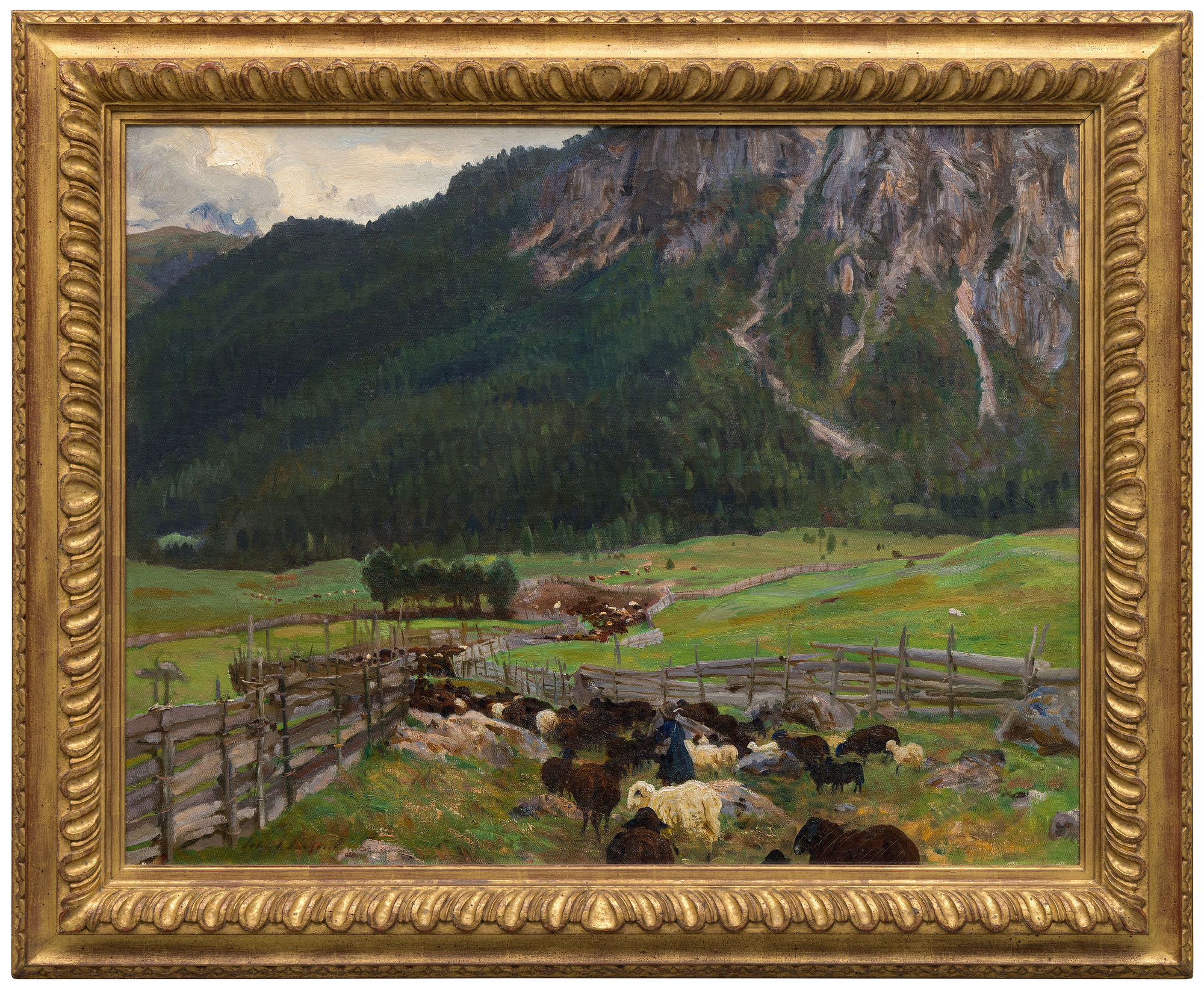
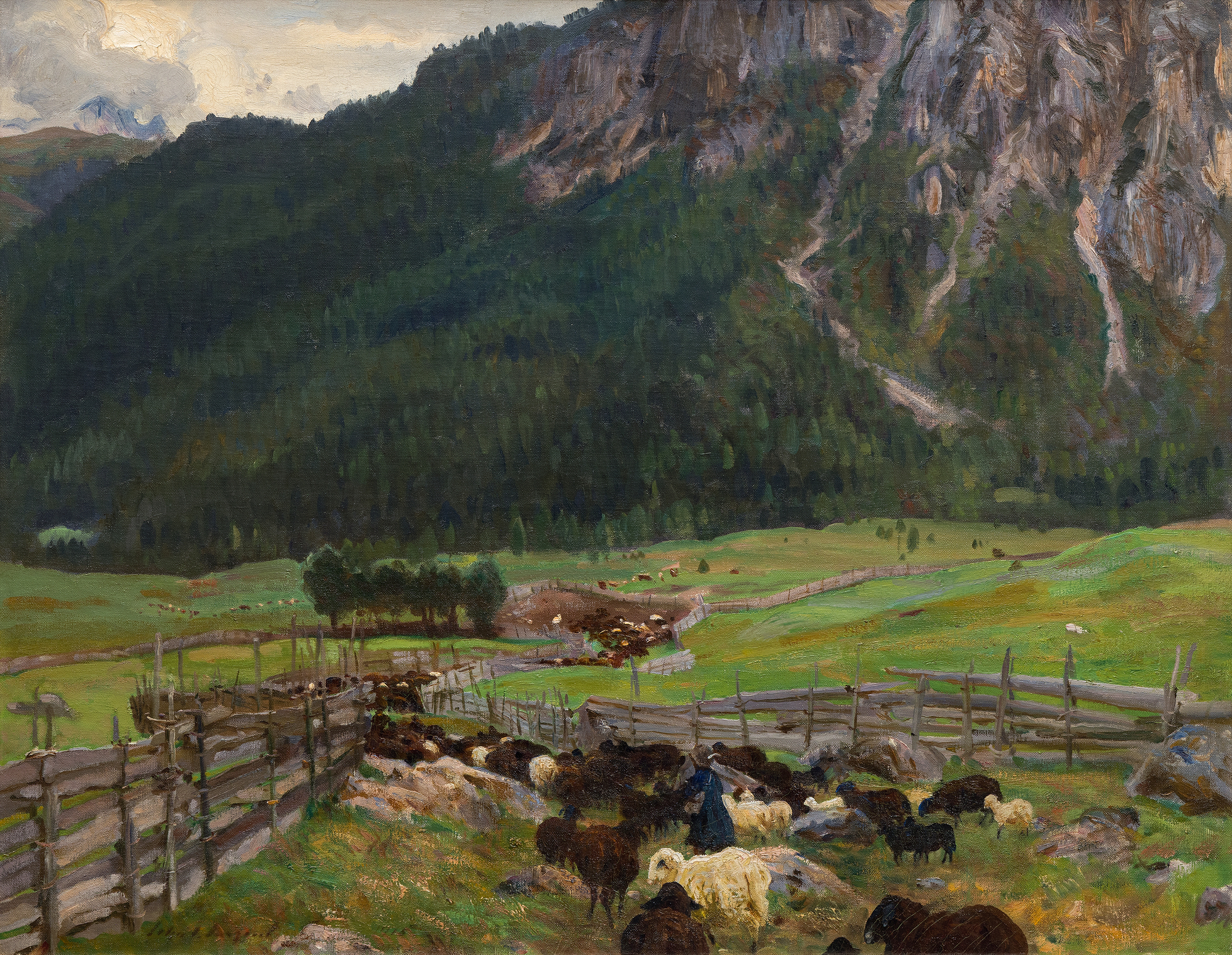
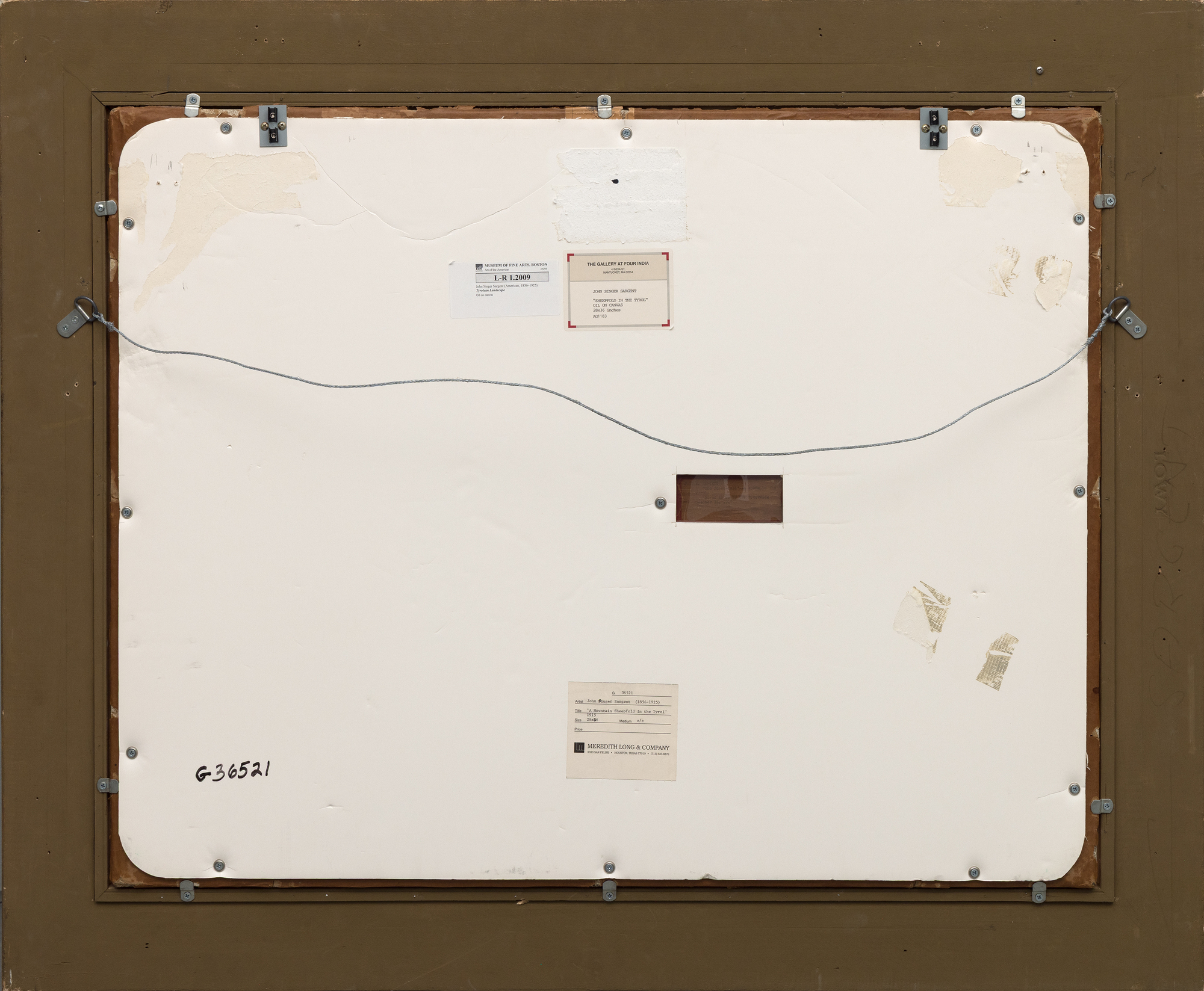
Un redil de montaña en el Tirol1914-1528 1/4 x 36 pulgadas(71,12 x 91,44 cm) Óleo sobre lienzo
Procedencia
Knoedler & Co., directamente del artista, 1915
Henry Clay Frick, Nueva York, Nueva York, 1916
Louis Cass Ledyard, donación de arriba
Colección Massachusetts, c. 1985
Colección privada
Exposición
Nueva York, Nueva York, M. Knoedler & Co., 1915, cedido por el artista
Houston, Texas, Meredith Long, década de 1980
Nueva York, Nueva York, Adelson Galleries, c. 1990
Literatura
Nathaniel Pousette-Dart y Lee Woodward Ziegler, Distinguished American artists, John Singer Sargent, Nueva York, 1924, sin paginar, ilustrado
William Howe Downes, John Singer Sargent
...Más...., Su vida y obra, Boston, 1925, p. 248, 300
Richard Ormond y Elaine Kilmurray, John Singer Sargent: Pinturas completas, volumen 9: Figuras y paisajes, 1914-1925, Londres, 2017, n.º 1758.
...MENOS....
Pintada durante el viaje de John Singer Sargent al Tirol austriaco en el verano de 1914, esta obra captura un momento de profunda tensión histórica, ya que Austria declaró la guerra a Serbia en julio de ese año, situando a Sargent en los albores de la Primera Guerra Mundial. La pintura ofrece una vista sorprendentemente íntima e inesperada del paisaje alpino, enmarcada desde el interior de un redil de ovejas, con la montaña en gran parte oculta a la vista. Esta elección del punto de vista desplaza la atención del espectador hacia el punto de encuentro entre el valle y la pendiente ascendente, donde los verdes intensos anclan la composición y un cielo nublado sugiere una sutil sensación de inquietud más allá del tranquilo primer plano pastoral.


La obra está incluida en el catálogo razonado de Sargent de Richard Ormond y Elaine Kilmurray, lo que confirma su lugar seguro dentro de la producción documentada del artista. Sargent creó varias obras relacionadas durante su estancia en el Tirol en 1914, tanto en óleo como en acuarela, entre las que se incluyen Interior tirolés, en el Museo Metropolitano de Arte; Leñaderos del Tirol, en el Instituto de Arte de Chicago, y Arroyo truchero en el Tirol, en el Museo de Young. En conjunto, estas obras demuestran el compromiso sostenido de Sargent con la región y su luz, atmósfera y arquitectura rural distintivas durante este año crucial.


Esta pintura también tiene una procedencia distinguida, ya que anteriormente formaba parte de la colección de Henry Clay Frick, industrial estadounidense y fundador de la Frick Collection, antes de ser regalada a su amigo y abogado Louis Cass Ledyard, que también fue asesor de J. P. Morgan. Su rareza dentro de los temas tiroleses maduros de Sargent se ve aún más subrayada por el pequeño número de obras comparables que han salido al mercado, con solo un cuadro estrechamente relacionado de este periodo, Un crucifijo tirolés de 1915, que ha aparecido en subasta en las últimas décadas.


La obra de Sargent sigue recibiendo un importante reconocimiento institucional, incluida la próxima exposición Sargent Dazzling Paris en el Museo de Orsay en 2025 y 2026, lo que reafirma la relevancia actual de sus paisajes europeos maduros dentro de la narrativa más amplia del arte de principios del siglo XX.
Preguntar