MARINO MARINI (1901-1980)

$55,000

 
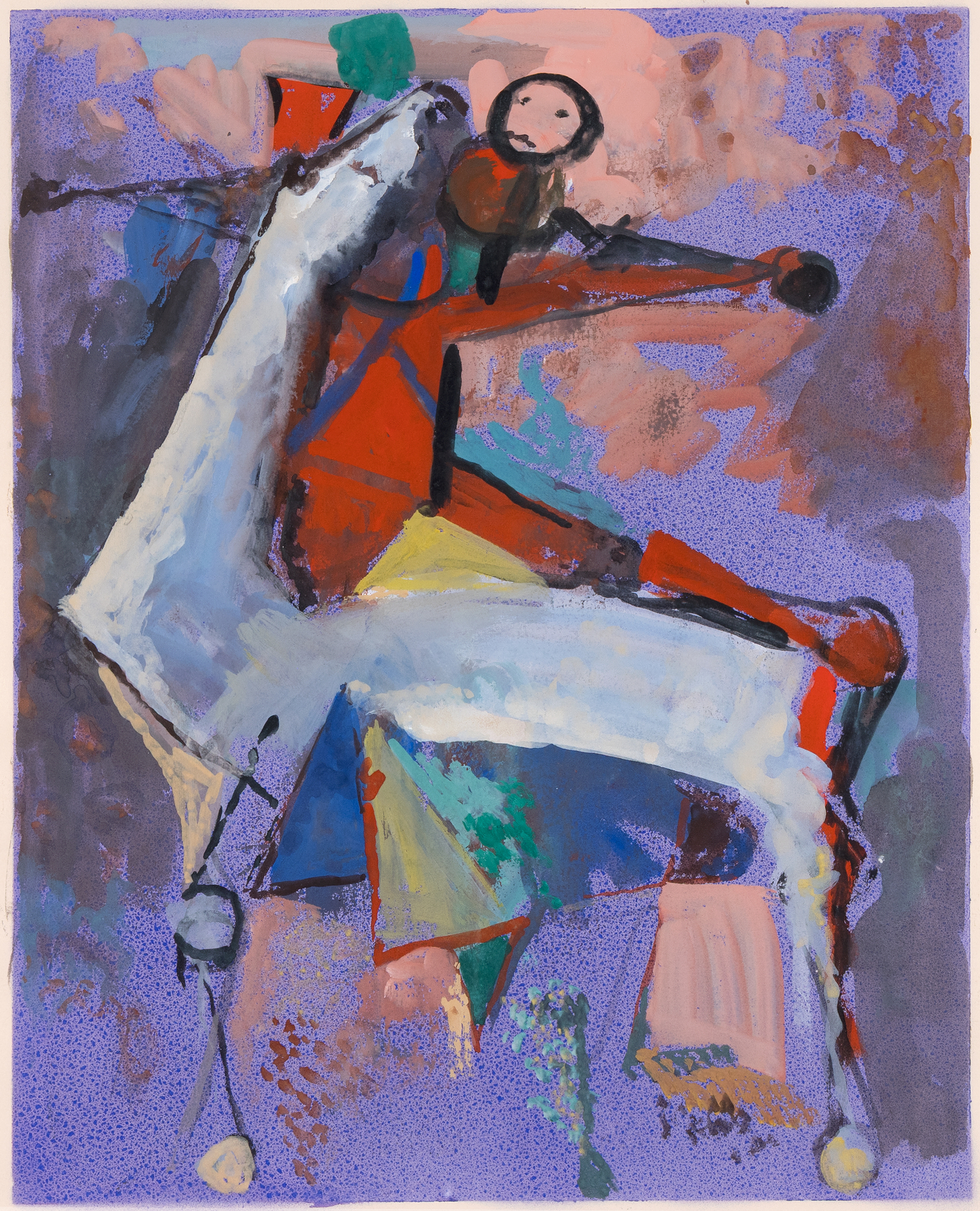
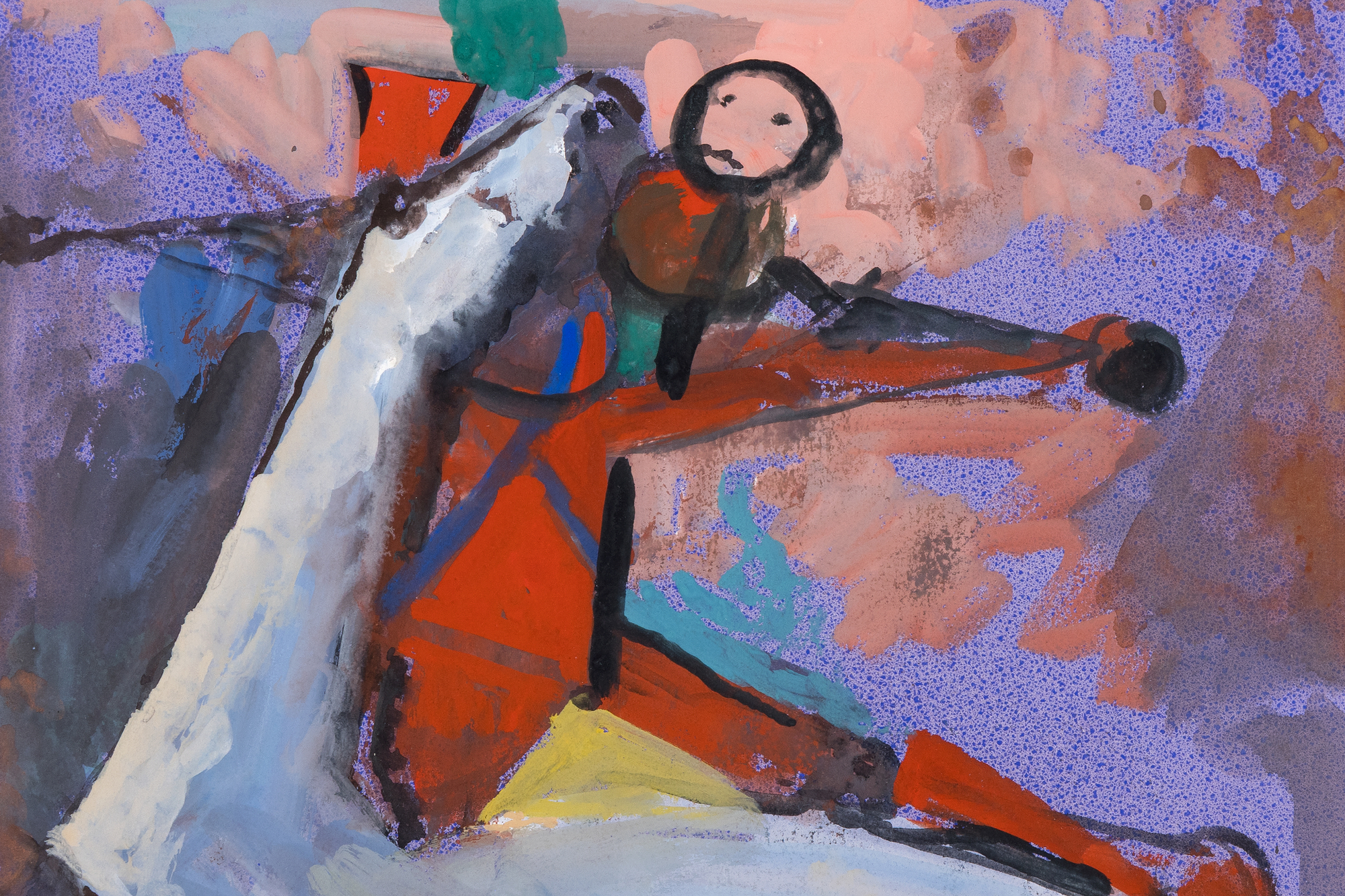
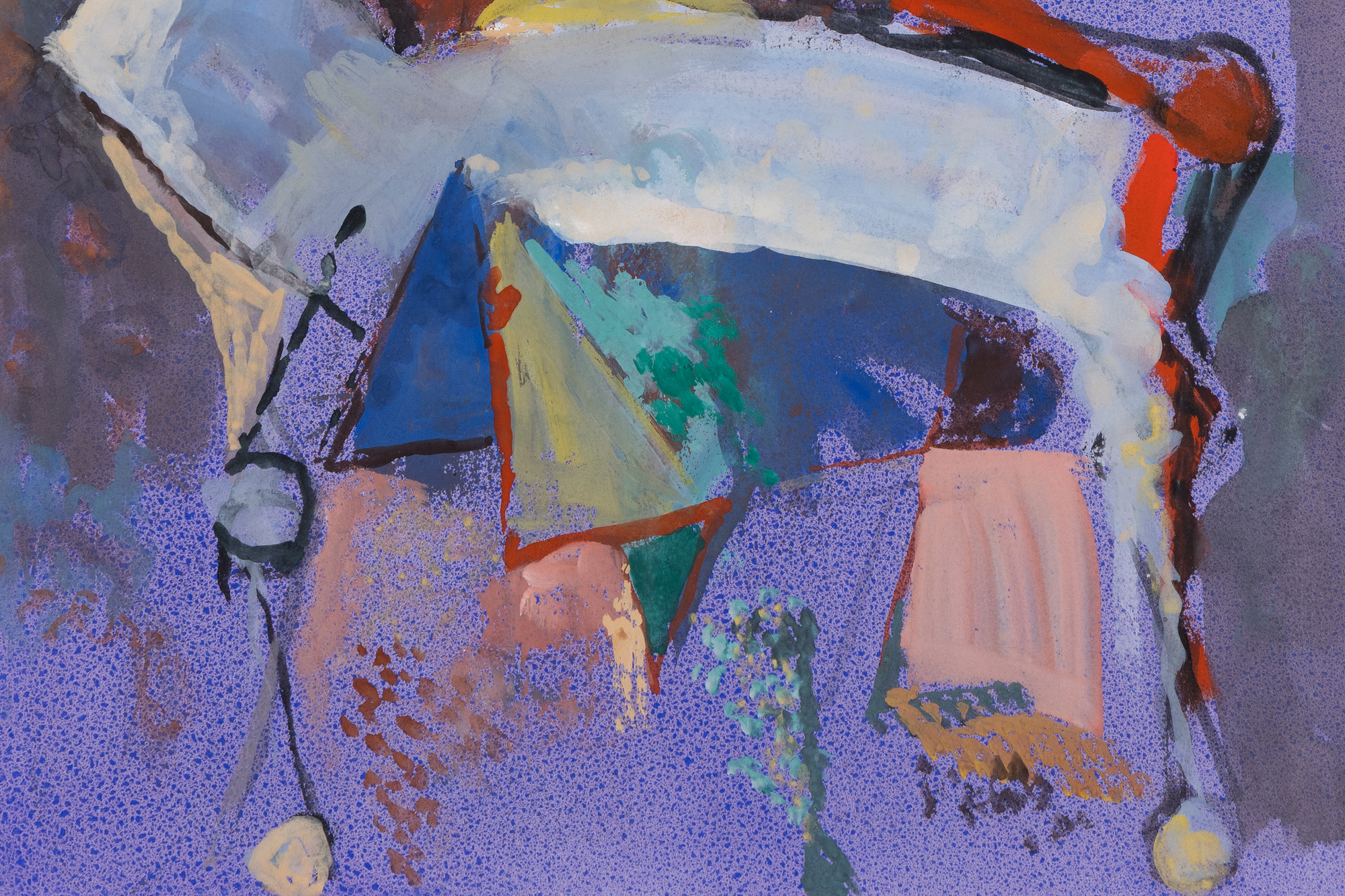
<div>Marino Marini’s <em>Marino from Shakespeare I</em> (1977) is a vivid and psychologically charged work on paper, executed in tempera over aquatint and drawn from the artist’s celebrated Marino from Shakespeare portfolio. In this variation, the equestrian figure is pushed to the foreground, its white, angular horse rearing across the composition with a sense of precarious motion. The rider is pared down to a mask-like head and simplified body, a formal reduction that places the figure in a state of fragile balance between control and collapse. </div><br><br><div> </div><br><br><div>The chromatic structure is bold and instinctive. Fields of violet, coral, and blue form a textured ground, against which the stark white of the horse and the warm reds and oranges of the rider assert themselves with dramatic clarity. Marini’s use of tempera over aquatint allows him to combine tonal depth with painterly immediacy: granular passages of aquatint dissolve into expressive sweeps of color, while linear accents stabilize the composition just enough to prevent it from tipping into chaos. </div><br><br><div> </div><br><br><div>As in many of his most significant works, the equestrian motif functions symbolically rather than narratively. Though inspired in spirit by Shakespeare, the image does not illustrate a specific text, instead channeling the emotional intensity and existential unease associated with tragic drama. Marini famously described his horse-and-rider figures as expressions of modern anxiety, stating, “My equestrian figures are symbols of the anguish that I feel when I survey contemporary events.” Here, that anguish is palpable in the strained geometry, unstable balance, and urgent movement of the forms. The print stands as a compelling demonstration of Marini’s ability to translate his sculptural language into graphic form, using color and gesture to confront the fragility of human authority and control. </div> <div>Marino Marini’s <em>Marino from Shakespeare I</em> (1977) is a vivid and psychologically charged work on paper, executed in tempera over aquatint and drawn from the artist’s celebrated Marino from Shakespeare portfolio. In this variation, the equestrian figure is pushed to the foreground, its white, angular horse rearing across the composition with a sense of precarious motion. The rider is pared down to a mask-like head and simplified body, a formal reduction that places the figure in a state of fragile balance between control and collapse. </div><br><br><div> </div><br><br><div>The chromatic structure is bold and instinctive. Fields of violet, coral, and blue form a textured ground, against which the stark white of the horse and the warm reds and oranges of the rider assert themselves with dramatic clarity. Marini’s use of tempera over aquatint allows him to combine tonal depth with painterly immediacy: granular passages of aquatint dissolve into expressive sweeps of color, while linear accents stabilize the composition just enough to prevent it from tipping into chaos. </div><br><br><div> </div><br><br><div>As in many of his most significant works, the equestrian motif functions symbolically rather than narratively. Though inspired in spirit by Shakespeare, the image does not illustrate a specific text, instead channeling the emotional intensity and existential unease associated with tragic drama. Marini famously described his horse-and-rider figures as expressions of modern anxiety, stating, “My equestrian figures are symbols of the anguish that I feel when I survey contemporary events.” Here, that anguish is palpable in the strained geometry, unstable balance, and urgent movement of the forms. The print stands as a compelling demonstration of Marini’s ability to translate his sculptural language into graphic form, using color and gesture to confront the fragility of human authority and control. </div> <div>Marino Marini’s <em>Marino from Shakespeare I</em> (1977) is a vivid and psychologically charged work on paper, executed in tempera over aquatint and drawn from the artist’s celebrated Marino from Shakespeare portfolio. In this variation, the equestrian figure is pushed to the foreground, its white, angular horse rearing across the composition with a sense of precarious motion. The rider is pared down to a mask-like head and simplified body, a formal reduction that places the figure in a state of fragile balance between control and collapse. </div><br><br><div> </div><br><br><div>The chromatic structure is bold and instinctive. Fields of violet, coral, and blue form a textured ground, against which the stark white of the horse and the warm reds and oranges of the rider assert themselves with dramatic clarity. Marini’s use of tempera over aquatint allows him to combine tonal depth with painterly immediacy: granular passages of aquatint dissolve into expressive sweeps of color, while linear accents stabilize the composition just enough to prevent it from tipping into chaos. </div><br><br><div> </div><br><br><div>As in many of his most significant works, the equestrian motif functions symbolically rather than narratively. Though inspired in spirit by Shakespeare, the image does not illustrate a specific text, instead channeling the emotional intensity and existential unease associated with tragic drama. Marini famously described his horse-and-rider figures as expressions of modern anxiety, stating, “My equestrian figures are symbols of the anguish that I feel when I survey contemporary events.” Here, that anguish is palpable in the strained geometry, unstable balance, and urgent movement of the forms. The print stands as a compelling demonstration of Marini’s ability to translate his sculptural language into graphic form, using color and gesture to confront the fragility of human authority and control. </div> <div>Marino Marini’s <em>Marino from Shakespeare I</em> (1977) is a vivid and psychologically charged work on paper, executed in tempera over aquatint and drawn from the artist’s celebrated Marino from Shakespeare portfolio. In this variation, the equestrian figure is pushed to the foreground, its white, angular horse rearing across the composition with a sense of precarious motion. The rider is pared down to a mask-like head and simplified body, a formal reduction that places the figure in a state of fragile balance between control and collapse. </div><br><br><div> </div><br><br><div>The chromatic structure is bold and instinctive. Fields of violet, coral, and blue form a textured ground, against which the stark white of the horse and the warm reds and oranges of the rider assert themselves with dramatic clarity. Marini’s use of tempera over aquatint allows him to combine tonal depth with painterly immediacy: granular passages of aquatint dissolve into expressive sweeps of color, while linear accents stabilize the composition just enough to prevent it from tipping into chaos. </div><br><br><div> </div><br><br><div>As in many of his most significant works, the equestrian motif functions symbolically rather than narratively. Though inspired in spirit by Shakespeare, the image does not illustrate a specific text, instead channeling the emotional intensity and existential unease associated with tragic drama. Marini famously described his horse-and-rider figures as expressions of modern anxiety, stating, “My equestrian figures are symbols of the anguish that I feel when I survey contemporary events.” Here, that anguish is palpable in the strained geometry, unstable balance, and urgent movement of the forms. The print stands as a compelling demonstration of Marini’s ability to translate his sculptural language into graphic form, using color and gesture to confront the fragility of human authority and control. </div> <div>Marino Marini’s <em>Marino from Shakespeare I</em> (1977) is a vivid and psychologically charged work on paper, executed in tempera over aquatint and drawn from the artist’s celebrated Marino from Shakespeare portfolio. In this variation, the equestrian figure is pushed to the foreground, its white, angular horse rearing across the composition with a sense of precarious motion. The rider is pared down to a mask-like head and simplified body, a formal reduction that places the figure in a state of fragile balance between control and collapse. </div><br><br><div> </div><br><br><div>The chromatic structure is bold and instinctive. Fields of violet, coral, and blue form a textured ground, against which the stark white of the horse and the warm reds and oranges of the rider assert themselves with dramatic clarity. Marini’s use of tempera over aquatint allows him to combine tonal depth with painterly immediacy: granular passages of aquatint dissolve into expressive sweeps of color, while linear accents stabilize the composition just enough to prevent it from tipping into chaos. </div><br><br><div> </div><br><br><div>As in many of his most significant works, the equestrian motif functions symbolically rather than narratively. Though inspired in spirit by Shakespeare, the image does not illustrate a specific text, instead channeling the emotional intensity and existential unease associated with tragic drama. Marini famously described his horse-and-rider figures as expressions of modern anxiety, stating, “My equestrian figures are symbols of the anguish that I feel when I survey contemporary events.” Here, that anguish is palpable in the strained geometry, unstable balance, and urgent movement of the forms. The print stands as a compelling demonstration of Marini’s ability to translate his sculptural language into graphic form, using color and gesture to confront the fragility of human authority and control. </div> <div>Marino Marini’s <em>Marino from Shakespeare I</em> (1977) is a vivid and psychologically charged work on paper, executed in tempera over aquatint and drawn from the artist’s celebrated Marino from Shakespeare portfolio. In this variation, the equestrian figure is pushed to the foreground, its white, angular horse rearing across the composition with a sense of precarious motion. The rider is pared down to a mask-like head and simplified body, a formal reduction that places the figure in a state of fragile balance between control and collapse. </div><br><br><div> </div><br><br><div>The chromatic structure is bold and instinctive. Fields of violet, coral, and blue form a textured ground, against which the stark white of the horse and the warm reds and oranges of the rider assert themselves with dramatic clarity. Marini’s use of tempera over aquatint allows him to combine tonal depth with painterly immediacy: granular passages of aquatint dissolve into expressive sweeps of color, while linear accents stabilize the composition just enough to prevent it from tipping into chaos. </div><br><br><div> </div><br><br><div>As in many of his most significant works, the equestrian motif functions symbolically rather than narratively. Though inspired in spirit by Shakespeare, the image does not illustrate a specific text, instead channeling the emotional intensity and existential unease associated with tragic drama. Marini famously described his horse-and-rider figures as expressions of modern anxiety, stating, “My equestrian figures are symbols of the anguish that I feel when I survey contemporary events.” Here, that anguish is palpable in the strained geometry, unstable balance, and urgent movement of the forms. The print stands as a compelling demonstration of Marini’s ability to translate his sculptural language into graphic form, using color and gesture to confront the fragility of human authority and control. </div> <div>Marino Marini’s <em>Marino from Shakespeare I</em> (1977) is a vivid and psychologically charged work on paper, executed in tempera over aquatint and drawn from the artist’s celebrated Marino from Shakespeare portfolio. In this variation, the equestrian figure is pushed to the foreground, its white, angular horse rearing across the composition with a sense of precarious motion. The rider is pared down to a mask-like head and simplified body, a formal reduction that places the figure in a state of fragile balance between control and collapse. </div><br><br><div> </div><br><br><div>The chromatic structure is bold and instinctive. Fields of violet, coral, and blue form a textured ground, against which the stark white of the horse and the warm reds and oranges of the rider assert themselves with dramatic clarity. Marini’s use of tempera over aquatint allows him to combine tonal depth with painterly immediacy: granular passages of aquatint dissolve into expressive sweeps of color, while linear accents stabilize the composition just enough to prevent it from tipping into chaos. </div><br><br><div> </div><br><br><div>As in many of his most significant works, the equestrian motif functions symbolically rather than narratively. Though inspired in spirit by Shakespeare, the image does not illustrate a specific text, instead channeling the emotional intensity and existential unease associated with tragic drama. Marini famously described his horse-and-rider figures as expressions of modern anxiety, stating, “My equestrian figures are symbols of the anguish that I feel when I survey contemporary events.” Here, that anguish is palpable in the strained geometry, unstable balance, and urgent movement of the forms. The print stands as a compelling demonstration of Marini’s ability to translate his sculptural language into graphic form, using color and gesture to confront the fragility of human authority and control. </div> <div>Marino Marini’s <em>Marino from Shakespeare I</em> (1977) is a vivid and psychologically charged work on paper, executed in tempera over aquatint and drawn from the artist’s celebrated Marino from Shakespeare portfolio. In this variation, the equestrian figure is pushed to the foreground, its white, angular horse rearing across the composition with a sense of precarious motion. The rider is pared down to a mask-like head and simplified body, a formal reduction that places the figure in a state of fragile balance between control and collapse. </div><br><br><div> </div><br><br><div>The chromatic structure is bold and instinctive. Fields of violet, coral, and blue form a textured ground, against which the stark white of the horse and the warm reds and oranges of the rider assert themselves with dramatic clarity. Marini’s use of tempera over aquatint allows him to combine tonal depth with painterly immediacy: granular passages of aquatint dissolve into expressive sweeps of color, while linear accents stabilize the composition just enough to prevent it from tipping into chaos. </div><br><br><div> </div><br><br><div>As in many of his most significant works, the equestrian motif functions symbolically rather than narratively. Though inspired in spirit by Shakespeare, the image does not illustrate a specific text, instead channeling the emotional intensity and existential unease associated with tragic drama. Marini famously described his horse-and-rider figures as expressions of modern anxiety, stating, “My equestrian figures are symbols of the anguish that I feel when I survey contemporary events.” Here, that anguish is palpable in the strained geometry, unstable balance, and urgent movement of the forms. The print stands as a compelling demonstration of Marini’s ability to translate his sculptural language into graphic form, using color and gesture to confront the fragility of human authority and control. </div> <div>Marino Marini’s <em>Marino from Shakespeare I</em> (1977) is a vivid and psychologically charged work on paper, executed in tempera over aquatint and drawn from the artist’s celebrated Marino from Shakespeare portfolio. In this variation, the equestrian figure is pushed to the foreground, its white, angular horse rearing across the composition with a sense of precarious motion. The rider is pared down to a mask-like head and simplified body, a formal reduction that places the figure in a state of fragile balance between control and collapse. </div><br><br><div> </div><br><br><div>The chromatic structure is bold and instinctive. Fields of violet, coral, and blue form a textured ground, against which the stark white of the horse and the warm reds and oranges of the rider assert themselves with dramatic clarity. Marini’s use of tempera over aquatint allows him to combine tonal depth with painterly immediacy: granular passages of aquatint dissolve into expressive sweeps of color, while linear accents stabilize the composition just enough to prevent it from tipping into chaos. </div><br><br><div> </div><br><br><div>As in many of his most significant works, the equestrian motif functions symbolically rather than narratively. Though inspired in spirit by Shakespeare, the image does not illustrate a specific text, instead channeling the emotional intensity and existential unease associated with tragic drama. Marini famously described his horse-and-rider figures as expressions of modern anxiety, stating, “My equestrian figures are symbols of the anguish that I feel when I survey contemporary events.” Here, that anguish is palpable in the strained geometry, unstable balance, and urgent movement of the forms. The print stands as a compelling demonstration of Marini’s ability to translate his sculptural language into graphic form, using color and gesture to confront the fragility of human authority and control. </div> <div>Marino Marini’s <em>Marino from Shakespeare I</em> (1977) is a vivid and psychologically charged work on paper, executed in tempera over aquatint and drawn from the artist’s celebrated Marino from Shakespeare portfolio. In this variation, the equestrian figure is pushed to the foreground, its white, angular horse rearing across the composition with a sense of precarious motion. The rider is pared down to a mask-like head and simplified body, a formal reduction that places the figure in a state of fragile balance between control and collapse. </div><br><br><div> </div><br><br><div>The chromatic structure is bold and instinctive. Fields of violet, coral, and blue form a textured ground, against which the stark white of the horse and the warm reds and oranges of the rider assert themselves with dramatic clarity. Marini’s use of tempera over aquatint allows him to combine tonal depth with painterly immediacy: granular passages of aquatint dissolve into expressive sweeps of color, while linear accents stabilize the composition just enough to prevent it from tipping into chaos. </div><br><br><div> </div><br><br><div>As in many of his most significant works, the equestrian motif functions symbolically rather than narratively. Though inspired in spirit by Shakespeare, the image does not illustrate a specific text, instead channeling the emotional intensity and existential unease associated with tragic drama. Marini famously described his horse-and-rider figures as expressions of modern anxiety, stating, “My equestrian figures are symbols of the anguish that I feel when I survey contemporary events.” Here, that anguish is palpable in the strained geometry, unstable balance, and urgent movement of the forms. The print stands as a compelling demonstration of Marini’s ability to translate his sculptural language into graphic form, using color and gesture to confront the fragility of human authority and control. </div>
Marino de Shakespeare I1977imagen: 19 1/8 x 15 1/2 pulgadas(48,58 x 39,37 cm) tempera sobre aguatinta sobre papel
Procedencia
Fondazione Marino Marini, Pistoia
Colección privada, adquirida de la anterior, 2006
Sotheby's, Nueva York, 14 de noviembre de 2023, lote 117
Colección privada, adquirida de la anterior
Literatura
Pierre Casè, ed., Marino Marini, Milán, 1999, p. 94, ilustrado.
Marino Marini, Marino from Shakespeare I (1977), es una obra vívida y cargada de psicología sobre papel, realizada en témpera sobre aguatinta y extraída de la célebre carpeta Marino from Shakespeare del artista. En esta variación, la figura ecuestre se sitúa en primer plano, con su caballo blanco y anguloso encabritándose a lo largo de la composición con una sensación de movimiento precario. El jinete se reduce a una cabeza con forma de máscara y un cuerpo simplificado, una reducción formal que sitúa a la figura en un estado de frágil equilibrio entre el control y el colapso.


La estructura cromática es audaz e instintiva. Campos de violeta, coral y azul forman un fondo texturizado, contra el cual el blanco intenso del caballo y los cálidos rojos y naranjas del jinete se imponen con dramática claridad. El uso de la témpera sobre aguatinta permite a Marini combinar la profundidad tonal con la inmediatez pictórica: los pasajes granulares de la aguatinta se disuelven en expresivos trazos de color, mientras que los acentos lineales estabilizan la composición lo suficiente como para evitar que caiga en el caos.


Como en muchas de sus obras más significativas, el motivo ecuestre funciona de forma simbólica más que narrativa. Aunque inspirada en el espíritu de Shakespeare, la imagen no ilustra un texto específico, sino que canaliza la intensidad emocional y la inquietud existencial asociadas al drama trágico. Marini describió famosamente sus figuras de caballos y jinetes como expresiones de la ansiedad moderna, afirmando: «Mis figuras ecuestres son símbolos de la angustia que siento cuando observo los acontecimientos contemporáneos». Aquí, esa angustia es palpable en la geometría tensa, el equilibrio inestable y el movimiento urgente de las formas. El grabado es una demostración convincente de la capacidad de Marini para traducir su lenguaje escultórico a la forma gráfica, utilizando el color y el gesto para confrontar la fragilidad de la autoridad y el control humanos.
Preguntar