Atrás

MAURICE DE VLAMINCK (1876-1958)

 
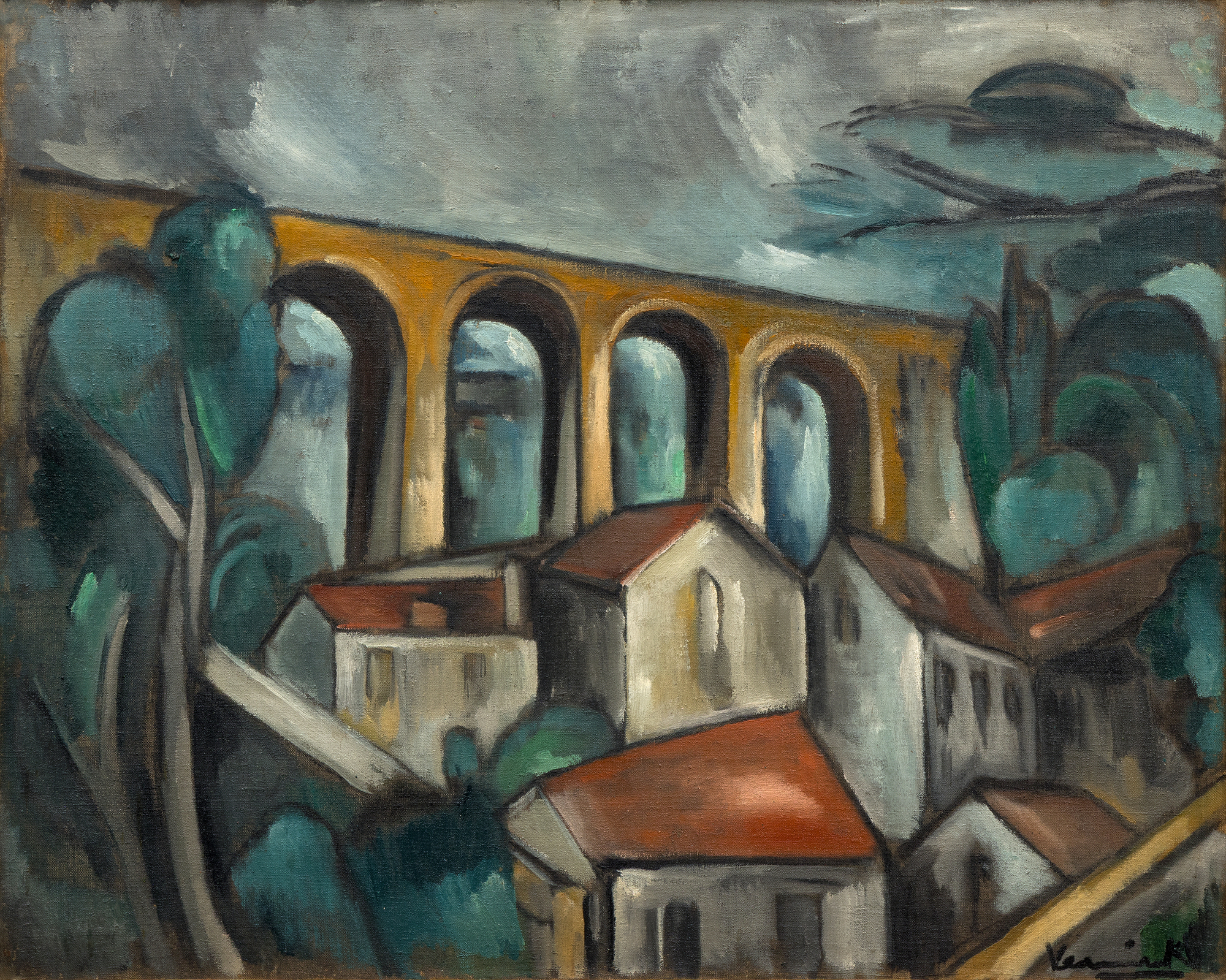
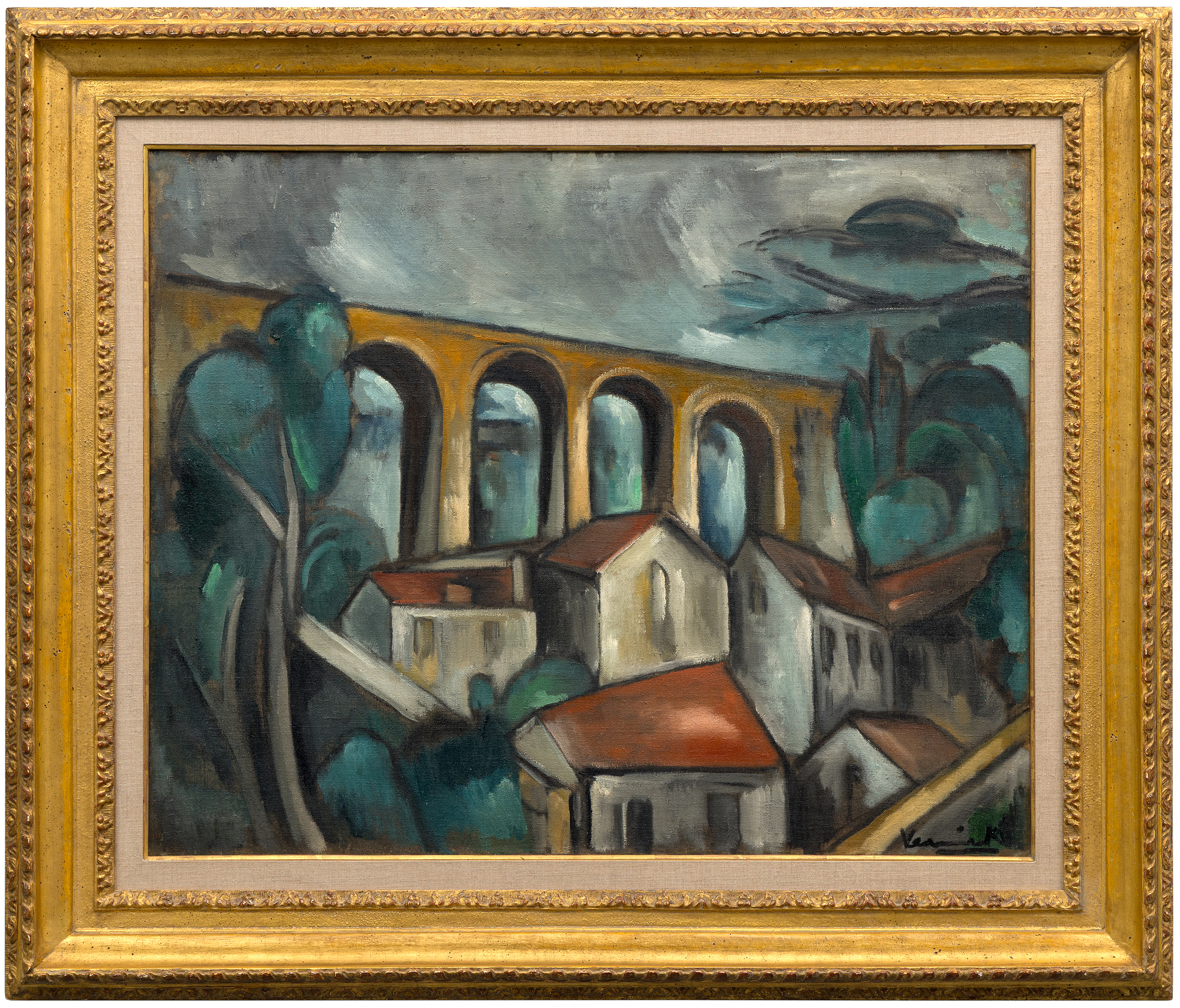
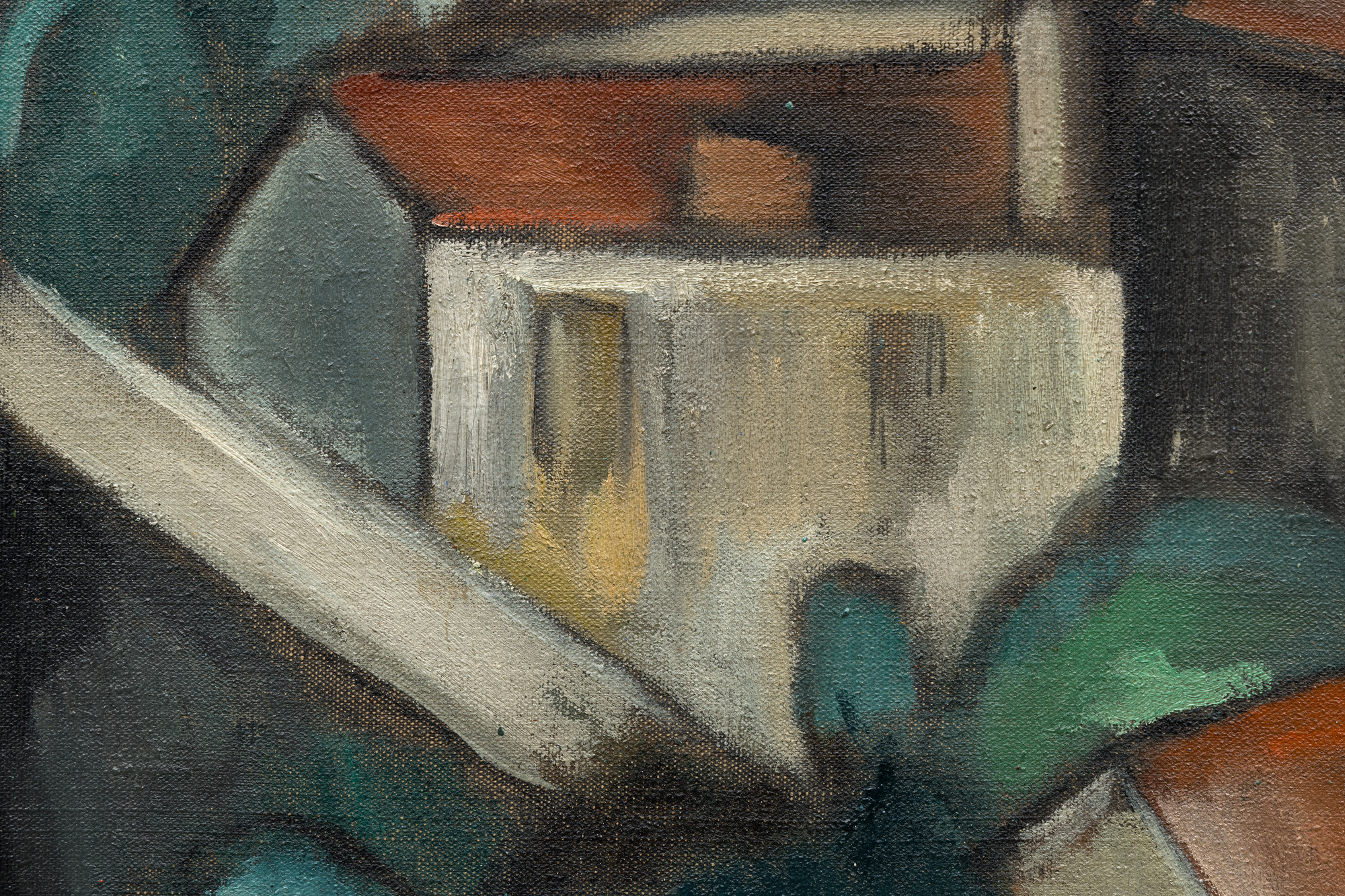
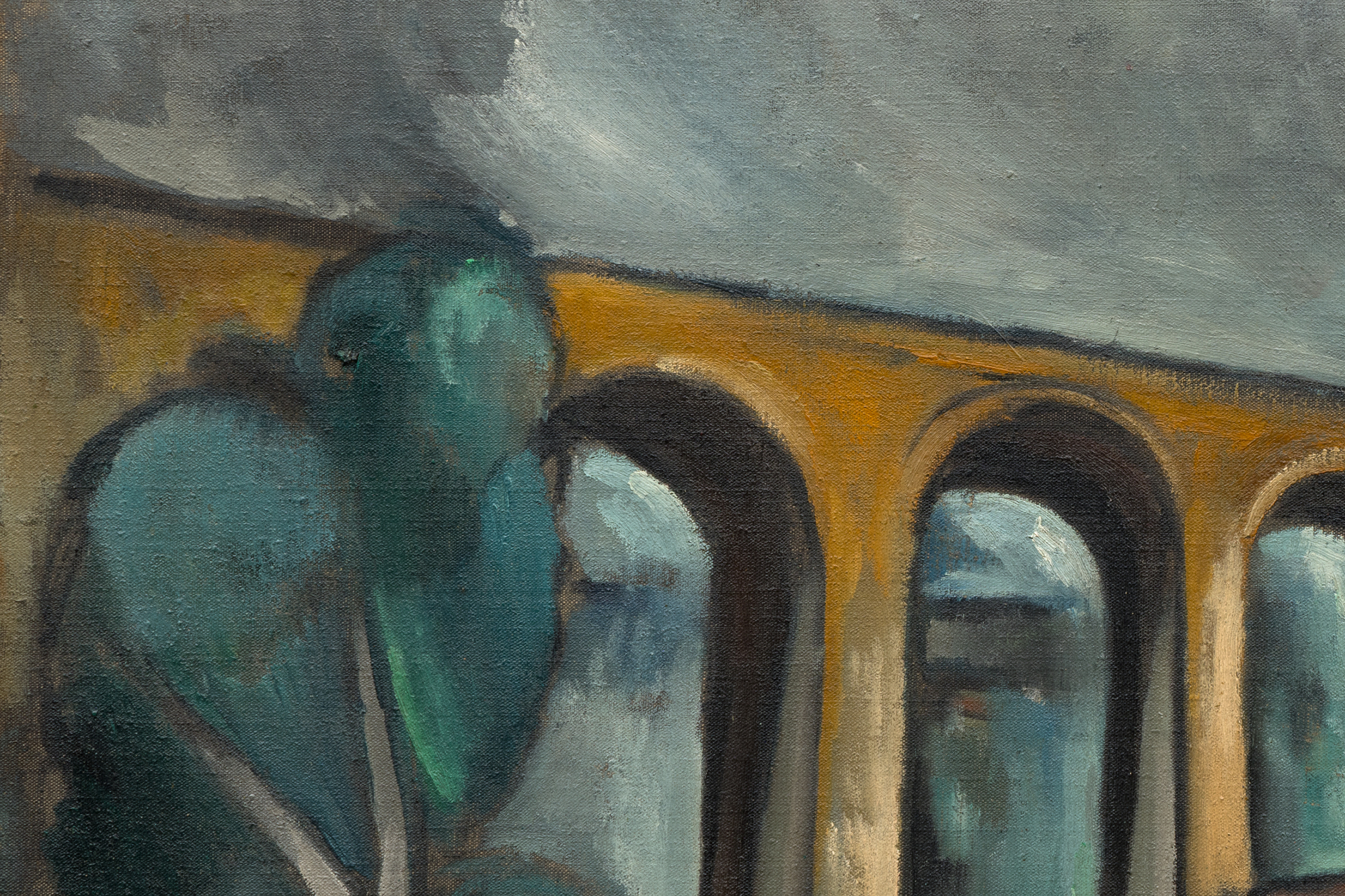
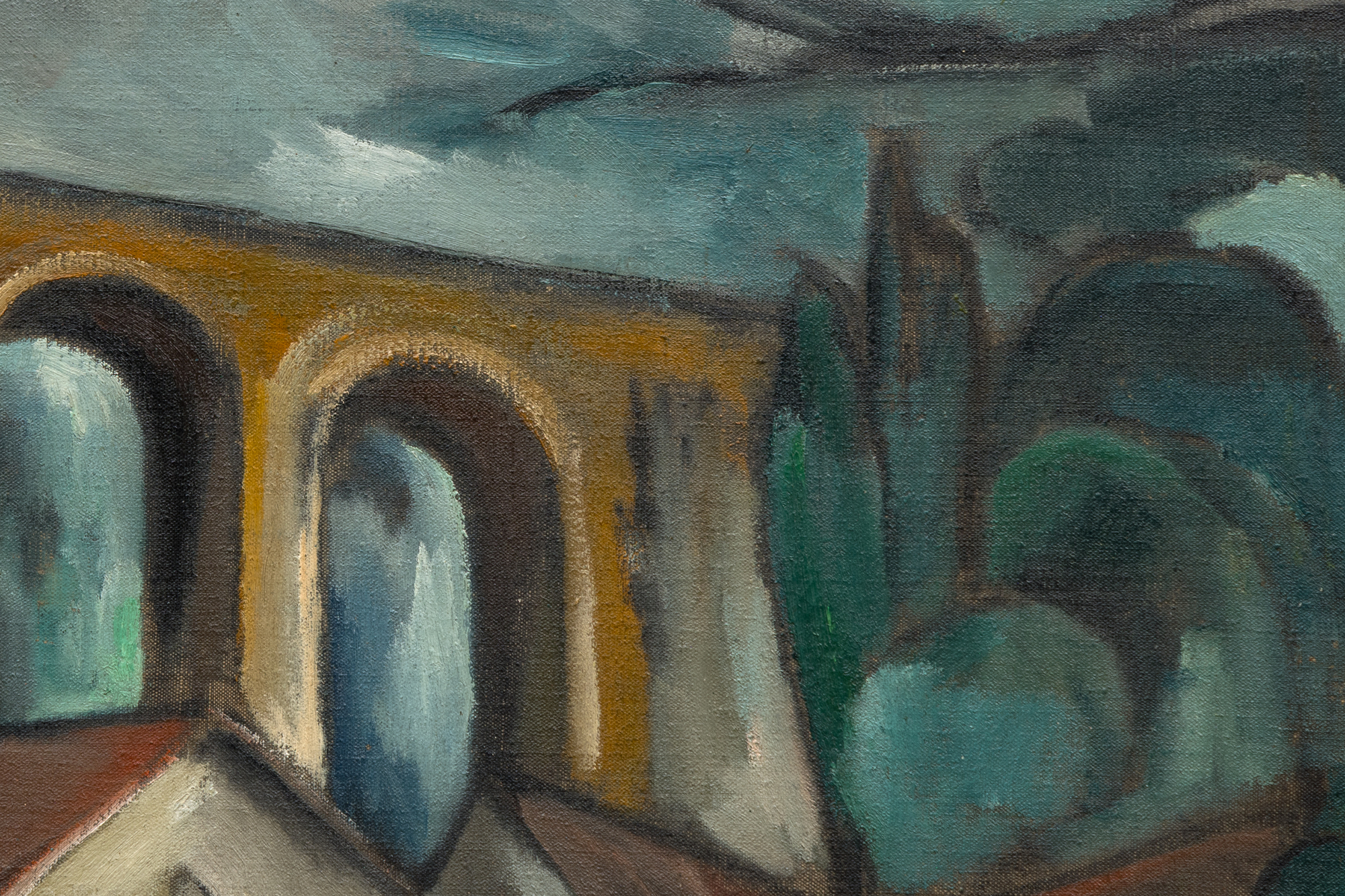
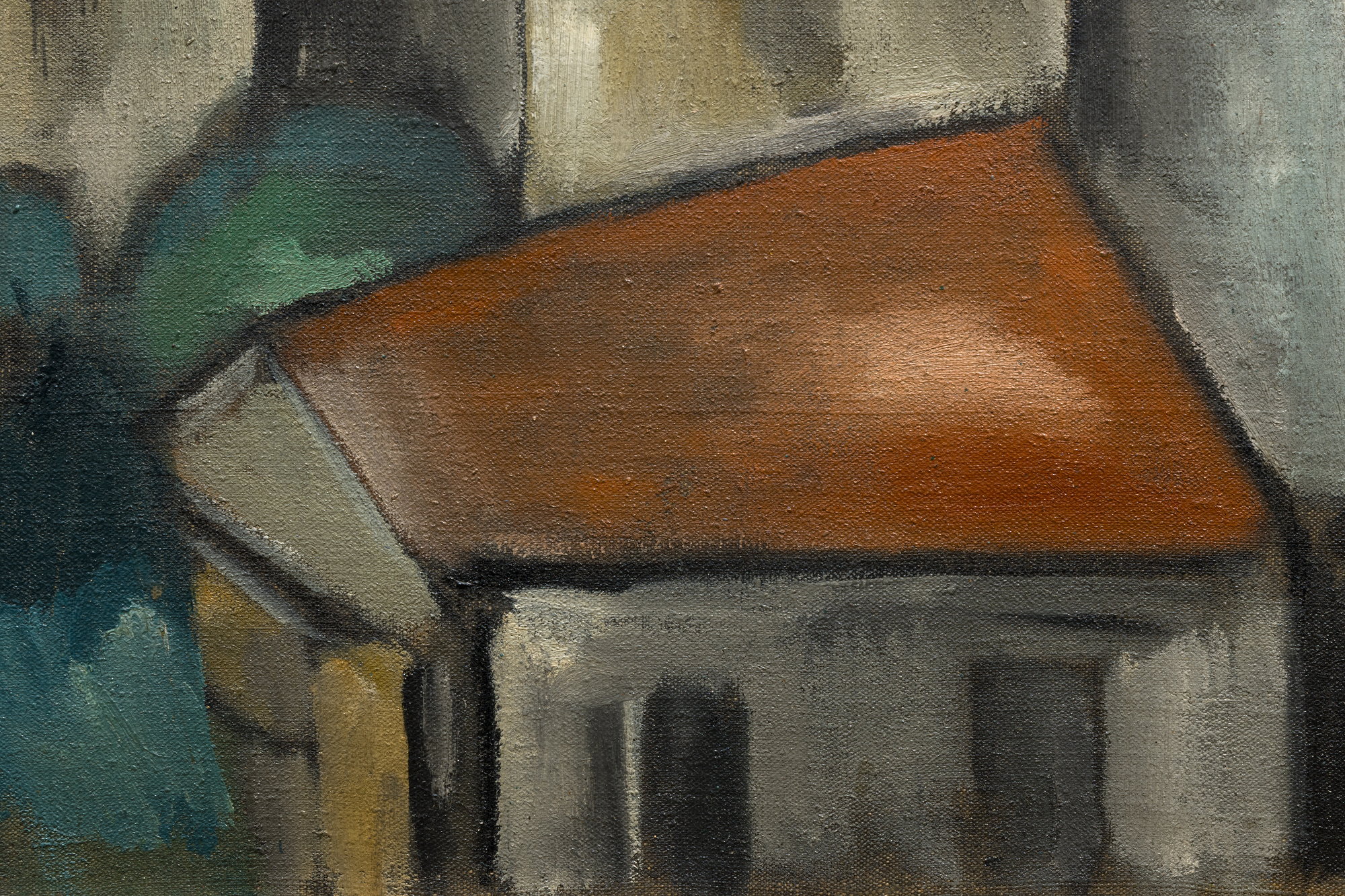
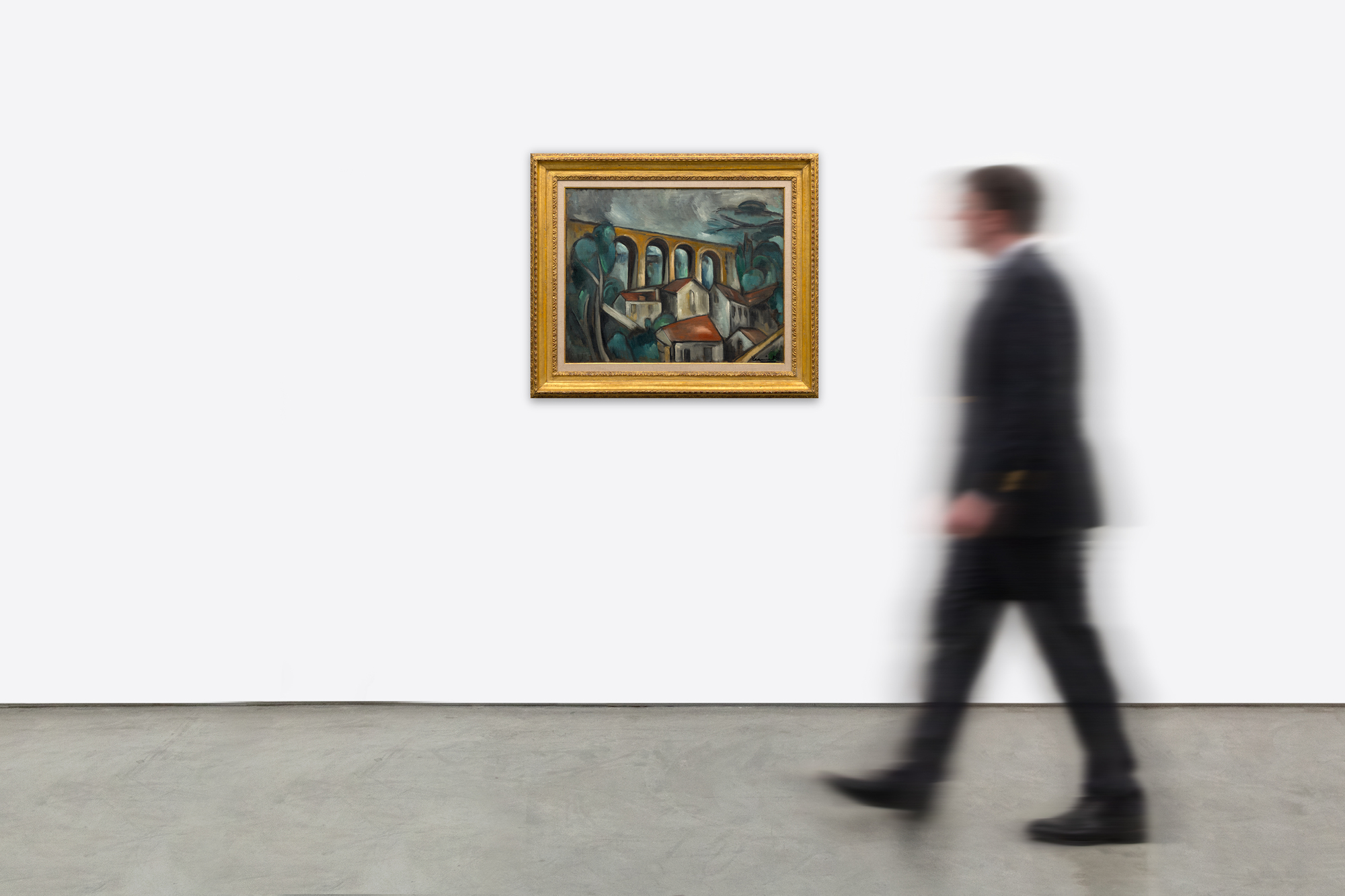
<div><font face=Lato size=3>Maurice de Vlaminck’s <em>Le Viaduc de Saint-Germain-en-Laye</em> (circa 1910-1911), an arresting oil on canvas framed in ornate gold, captures the industrial elegance of a viaduct west of Paris. This work, set to be included in the forthcoming catalogue raisonné by the Wildenstein Plattner Institute, reflects Vlaminck’s fascination with the Saint-Germain area. Known for painting its urban landscapes and Seine-side scenes, he infused this particular scene with angular Cubist elements gaining traction in early 20th-century art. The viaduct, built in the 1880s to carry the Paris-Saint-Germain railway line, looms with golden arches against a turbulent gray sky, its unyielding structure juxtaposed with the fractured rooflines of quaint village houses. </font></div><br><br><div><font face=Lato size=3> </font></div><br><br><div><font face=Lato size=3>Vlaminck’s bold brushstrokes and muted palette create a textured, almost sculptural effect, with trees and rooftops rendered in dynamic, faceted shapes. The overcast sky enhances the scene’s ambient intensity, while the viaduct’s arches dominate, symbolizing modernity amid rural charm. This work exemplifies his early Fauvist roots evolving into Cubist influences, showcasing a pioneering style. </font></div><br><br><div><font face=Lato size=3> </font></div><br><br><div><font face=Lato size=3>A resident of the region, Vlaminck frequently depicted its evolving landscape, blending tradition with innovation. "Le Viaduc de Saint-Germain-en-Laye" offers collectors a rare glimpse into his transformative period. Its striking composition and historical context make it a compelling addition to any collection, celebrating Vlaminck’s contribution to modern art’s development. </font></div> <div><font face=Lato size=3>Maurice de Vlaminck’s <em>Le Viaduc de Saint-Germain-en-Laye</em> (circa 1910-1911), an arresting oil on canvas framed in ornate gold, captures the industrial elegance of a viaduct west of Paris. This work, set to be included in the forthcoming catalogue raisonné by the Wildenstein Plattner Institute, reflects Vlaminck’s fascination with the Saint-Germain area. Known for painting its urban landscapes and Seine-side scenes, he infused this particular scene with angular Cubist elements gaining traction in early 20th-century art. The viaduct, built in the 1880s to carry the Paris-Saint-Germain railway line, looms with golden arches against a turbulent gray sky, its unyielding structure juxtaposed with the fractured rooflines of quaint village houses. </font></div><br><br><div><font face=Lato size=3> </font></div><br><br><div><font face=Lato size=3>Vlaminck’s bold brushstrokes and muted palette create a textured, almost sculptural effect, with trees and rooftops rendered in dynamic, faceted shapes. The overcast sky enhances the scene’s ambient intensity, while the viaduct’s arches dominate, symbolizing modernity amid rural charm. This work exemplifies his early Fauvist roots evolving into Cubist influences, showcasing a pioneering style. </font></div><br><br><div><font face=Lato size=3> </font></div><br><br><div><font face=Lato size=3>A resident of the region, Vlaminck frequently depicted its evolving landscape, blending tradition with innovation. "Le Viaduc de Saint-Germain-en-Laye" offers collectors a rare glimpse into his transformative period. Its striking composition and historical context make it a compelling addition to any collection, celebrating Vlaminck’s contribution to modern art’s development. </font></div> <div><font face=Lato size=3>Maurice de Vlaminck’s <em>Le Viaduc de Saint-Germain-en-Laye</em> (circa 1910-1911), an arresting oil on canvas framed in ornate gold, captures the industrial elegance of a viaduct west of Paris. This work, set to be included in the forthcoming catalogue raisonné by the Wildenstein Plattner Institute, reflects Vlaminck’s fascination with the Saint-Germain area. Known for painting its urban landscapes and Seine-side scenes, he infused this particular scene with angular Cubist elements gaining traction in early 20th-century art. The viaduct, built in the 1880s to carry the Paris-Saint-Germain railway line, looms with golden arches against a turbulent gray sky, its unyielding structure juxtaposed with the fractured rooflines of quaint village houses. </font></div><br><br><div><font face=Lato size=3> </font></div><br><br><div><font face=Lato size=3>Vlaminck’s bold brushstrokes and muted palette create a textured, almost sculptural effect, with trees and rooftops rendered in dynamic, faceted shapes. The overcast sky enhances the scene’s ambient intensity, while the viaduct’s arches dominate, symbolizing modernity amid rural charm. This work exemplifies his early Fauvist roots evolving into Cubist influences, showcasing a pioneering style. </font></div><br><br><div><font face=Lato size=3> </font></div><br><br><div><font face=Lato size=3>A resident of the region, Vlaminck frequently depicted its evolving landscape, blending tradition with innovation. "Le Viaduc de Saint-Germain-en-Laye" offers collectors a rare glimpse into his transformative period. Its striking composition and historical context make it a compelling addition to any collection, celebrating Vlaminck’s contribution to modern art’s development. </font></div> <div><font face=Lato size=3>Maurice de Vlaminck’s <em>Le Viaduc de Saint-Germain-en-Laye</em> (circa 1910-1911), an arresting oil on canvas framed in ornate gold, captures the industrial elegance of a viaduct west of Paris. This work, set to be included in the forthcoming catalogue raisonné by the Wildenstein Plattner Institute, reflects Vlaminck’s fascination with the Saint-Germain area. Known for painting its urban landscapes and Seine-side scenes, he infused this particular scene with angular Cubist elements gaining traction in early 20th-century art. The viaduct, built in the 1880s to carry the Paris-Saint-Germain railway line, looms with golden arches against a turbulent gray sky, its unyielding structure juxtaposed with the fractured rooflines of quaint village houses. </font></div><br><br><div><font face=Lato size=3> </font></div><br><br><div><font face=Lato size=3>Vlaminck’s bold brushstrokes and muted palette create a textured, almost sculptural effect, with trees and rooftops rendered in dynamic, faceted shapes. The overcast sky enhances the scene’s ambient intensity, while the viaduct’s arches dominate, symbolizing modernity amid rural charm. This work exemplifies his early Fauvist roots evolving into Cubist influences, showcasing a pioneering style. </font></div><br><br><div><font face=Lato size=3> </font></div><br><br><div><font face=Lato size=3>A resident of the region, Vlaminck frequently depicted its evolving landscape, blending tradition with innovation. "Le Viaduc de Saint-Germain-en-Laye" offers collectors a rare glimpse into his transformative period. Its striking composition and historical context make it a compelling addition to any collection, celebrating Vlaminck’s contribution to modern art’s development. </font></div> <div><font face=Lato size=3>Maurice de Vlaminck’s <em>Le Viaduc de Saint-Germain-en-Laye</em> (circa 1910-1911), an arresting oil on canvas framed in ornate gold, captures the industrial elegance of a viaduct west of Paris. This work, set to be included in the forthcoming catalogue raisonné by the Wildenstein Plattner Institute, reflects Vlaminck’s fascination with the Saint-Germain area. Known for painting its urban landscapes and Seine-side scenes, he infused this particular scene with angular Cubist elements gaining traction in early 20th-century art. The viaduct, built in the 1880s to carry the Paris-Saint-Germain railway line, looms with golden arches against a turbulent gray sky, its unyielding structure juxtaposed with the fractured rooflines of quaint village houses. </font></div><br><br><div><font face=Lato size=3> </font></div><br><br><div><font face=Lato size=3>Vlaminck’s bold brushstrokes and muted palette create a textured, almost sculptural effect, with trees and rooftops rendered in dynamic, faceted shapes. The overcast sky enhances the scene’s ambient intensity, while the viaduct’s arches dominate, symbolizing modernity amid rural charm. This work exemplifies his early Fauvist roots evolving into Cubist influences, showcasing a pioneering style. </font></div><br><br><div><font face=Lato size=3> </font></div><br><br><div><font face=Lato size=3>A resident of the region, Vlaminck frequently depicted its evolving landscape, blending tradition with innovation. "Le Viaduc de Saint-Germain-en-Laye" offers collectors a rare glimpse into his transformative period. Its striking composition and historical context make it a compelling addition to any collection, celebrating Vlaminck’s contribution to modern art’s development. </font></div> <div><font face=Lato size=3>Maurice de Vlaminck’s <em>Le Viaduc de Saint-Germain-en-Laye</em> (circa 1910-1911), an arresting oil on canvas framed in ornate gold, captures the industrial elegance of a viaduct west of Paris. This work, set to be included in the forthcoming catalogue raisonné by the Wildenstein Plattner Institute, reflects Vlaminck’s fascination with the Saint-Germain area. Known for painting its urban landscapes and Seine-side scenes, he infused this particular scene with angular Cubist elements gaining traction in early 20th-century art. The viaduct, built in the 1880s to carry the Paris-Saint-Germain railway line, looms with golden arches against a turbulent gray sky, its unyielding structure juxtaposed with the fractured rooflines of quaint village houses. </font></div><br><br><div><font face=Lato size=3> </font></div><br><br><div><font face=Lato size=3>Vlaminck’s bold brushstrokes and muted palette create a textured, almost sculptural effect, with trees and rooftops rendered in dynamic, faceted shapes. The overcast sky enhances the scene’s ambient intensity, while the viaduct’s arches dominate, symbolizing modernity amid rural charm. This work exemplifies his early Fauvist roots evolving into Cubist influences, showcasing a pioneering style. </font></div><br><br><div><font face=Lato size=3> </font></div><br><br><div><font face=Lato size=3>A resident of the region, Vlaminck frequently depicted its evolving landscape, blending tradition with innovation. "Le Viaduc de Saint-Germain-en-Laye" offers collectors a rare glimpse into his transformative period. Its striking composition and historical context make it a compelling addition to any collection, celebrating Vlaminck’s contribution to modern art’s development. </font></div> <div><font face=Lato size=3>Maurice de Vlaminck’s <em>Le Viaduc de Saint-Germain-en-Laye</em> (circa 1910-1911), an arresting oil on canvas framed in ornate gold, captures the industrial elegance of a viaduct west of Paris. This work, set to be included in the forthcoming catalogue raisonné by the Wildenstein Plattner Institute, reflects Vlaminck’s fascination with the Saint-Germain area. Known for painting its urban landscapes and Seine-side scenes, he infused this particular scene with angular Cubist elements gaining traction in early 20th-century art. The viaduct, built in the 1880s to carry the Paris-Saint-Germain railway line, looms with golden arches against a turbulent gray sky, its unyielding structure juxtaposed with the fractured rooflines of quaint village houses. </font></div><br><br><div><font face=Lato size=3> </font></div><br><br><div><font face=Lato size=3>Vlaminck’s bold brushstrokes and muted palette create a textured, almost sculptural effect, with trees and rooftops rendered in dynamic, faceted shapes. The overcast sky enhances the scene’s ambient intensity, while the viaduct’s arches dominate, symbolizing modernity amid rural charm. This work exemplifies his early Fauvist roots evolving into Cubist influences, showcasing a pioneering style. </font></div><br><br><div><font face=Lato size=3> </font></div><br><br><div><font face=Lato size=3>A resident of the region, Vlaminck frequently depicted its evolving landscape, blending tradition with innovation. "Le Viaduc de Saint-Germain-en-Laye" offers collectors a rare glimpse into his transformative period. Its striking composition and historical context make it a compelling addition to any collection, celebrating Vlaminck’s contribution to modern art’s development. </font></div> <div><font face=Lato size=3>Maurice de Vlaminck’s <em>Le Viaduc de Saint-Germain-en-Laye</em> (circa 1910-1911), an arresting oil on canvas framed in ornate gold, captures the industrial elegance of a viaduct west of Paris. This work, set to be included in the forthcoming catalogue raisonné by the Wildenstein Plattner Institute, reflects Vlaminck’s fascination with the Saint-Germain area. Known for painting its urban landscapes and Seine-side scenes, he infused this particular scene with angular Cubist elements gaining traction in early 20th-century art. The viaduct, built in the 1880s to carry the Paris-Saint-Germain railway line, looms with golden arches against a turbulent gray sky, its unyielding structure juxtaposed with the fractured rooflines of quaint village houses. </font></div><br><br><div><font face=Lato size=3> </font></div><br><br><div><font face=Lato size=3>Vlaminck’s bold brushstrokes and muted palette create a textured, almost sculptural effect, with trees and rooftops rendered in dynamic, faceted shapes. The overcast sky enhances the scene’s ambient intensity, while the viaduct’s arches dominate, symbolizing modernity amid rural charm. This work exemplifies his early Fauvist roots evolving into Cubist influences, showcasing a pioneering style. </font></div><br><br><div><font face=Lato size=3> </font></div><br><br><div><font face=Lato size=3>A resident of the region, Vlaminck frequently depicted its evolving landscape, blending tradition with innovation. "Le Viaduc de Saint-Germain-en-Laye" offers collectors a rare glimpse into his transformative period. Its striking composition and historical context make it a compelling addition to any collection, celebrating Vlaminck’s contribution to modern art’s development. </font></div> <div><font face=Lato size=3>Maurice de Vlaminck’s <em>Le Viaduc de Saint-Germain-en-Laye</em> (circa 1910-1911), an arresting oil on canvas framed in ornate gold, captures the industrial elegance of a viaduct west of Paris. This work, set to be included in the forthcoming catalogue raisonné by the Wildenstein Plattner Institute, reflects Vlaminck’s fascination with the Saint-Germain area. Known for painting its urban landscapes and Seine-side scenes, he infused this particular scene with angular Cubist elements gaining traction in early 20th-century art. The viaduct, built in the 1880s to carry the Paris-Saint-Germain railway line, looms with golden arches against a turbulent gray sky, its unyielding structure juxtaposed with the fractured rooflines of quaint village houses. </font></div><br><br><div><font face=Lato size=3> </font></div><br><br><div><font face=Lato size=3>Vlaminck’s bold brushstrokes and muted palette create a textured, almost sculptural effect, with trees and rooftops rendered in dynamic, faceted shapes. The overcast sky enhances the scene’s ambient intensity, while the viaduct’s arches dominate, symbolizing modernity amid rural charm. This work exemplifies his early Fauvist roots evolving into Cubist influences, showcasing a pioneering style. </font></div><br><br><div><font face=Lato size=3> </font></div><br><br><div><font face=Lato size=3>A resident of the region, Vlaminck frequently depicted its evolving landscape, blending tradition with innovation. "Le Viaduc de Saint-Germain-en-Laye" offers collectors a rare glimpse into his transformative period. Its striking composition and historical context make it a compelling addition to any collection, celebrating Vlaminck’s contribution to modern art’s development. </font></div> <div><font face=Lato size=3>Maurice de Vlaminck’s <em>Le Viaduc de Saint-Germain-en-Laye</em> (circa 1910-1911), an arresting oil on canvas framed in ornate gold, captures the industrial elegance of a viaduct west of Paris. This work, set to be included in the forthcoming catalogue raisonné by the Wildenstein Plattner Institute, reflects Vlaminck’s fascination with the Saint-Germain area. Known for painting its urban landscapes and Seine-side scenes, he infused this particular scene with angular Cubist elements gaining traction in early 20th-century art. The viaduct, built in the 1880s to carry the Paris-Saint-Germain railway line, looms with golden arches against a turbulent gray sky, its unyielding structure juxtaposed with the fractured rooflines of quaint village houses. </font></div><br><br><div><font face=Lato size=3> </font></div><br><br><div><font face=Lato size=3>Vlaminck’s bold brushstrokes and muted palette create a textured, almost sculptural effect, with trees and rooftops rendered in dynamic, faceted shapes. The overcast sky enhances the scene’s ambient intensity, while the viaduct’s arches dominate, symbolizing modernity amid rural charm. This work exemplifies his early Fauvist roots evolving into Cubist influences, showcasing a pioneering style. </font></div><br><br><div><font face=Lato size=3> </font></div><br><br><div><font face=Lato size=3>A resident of the region, Vlaminck frequently depicted its evolving landscape, blending tradition with innovation. "Le Viaduc de Saint-Germain-en-Laye" offers collectors a rare glimpse into his transformative period. Its striking composition and historical context make it a compelling addition to any collection, celebrating Vlaminck’s contribution to modern art’s development. </font></div>
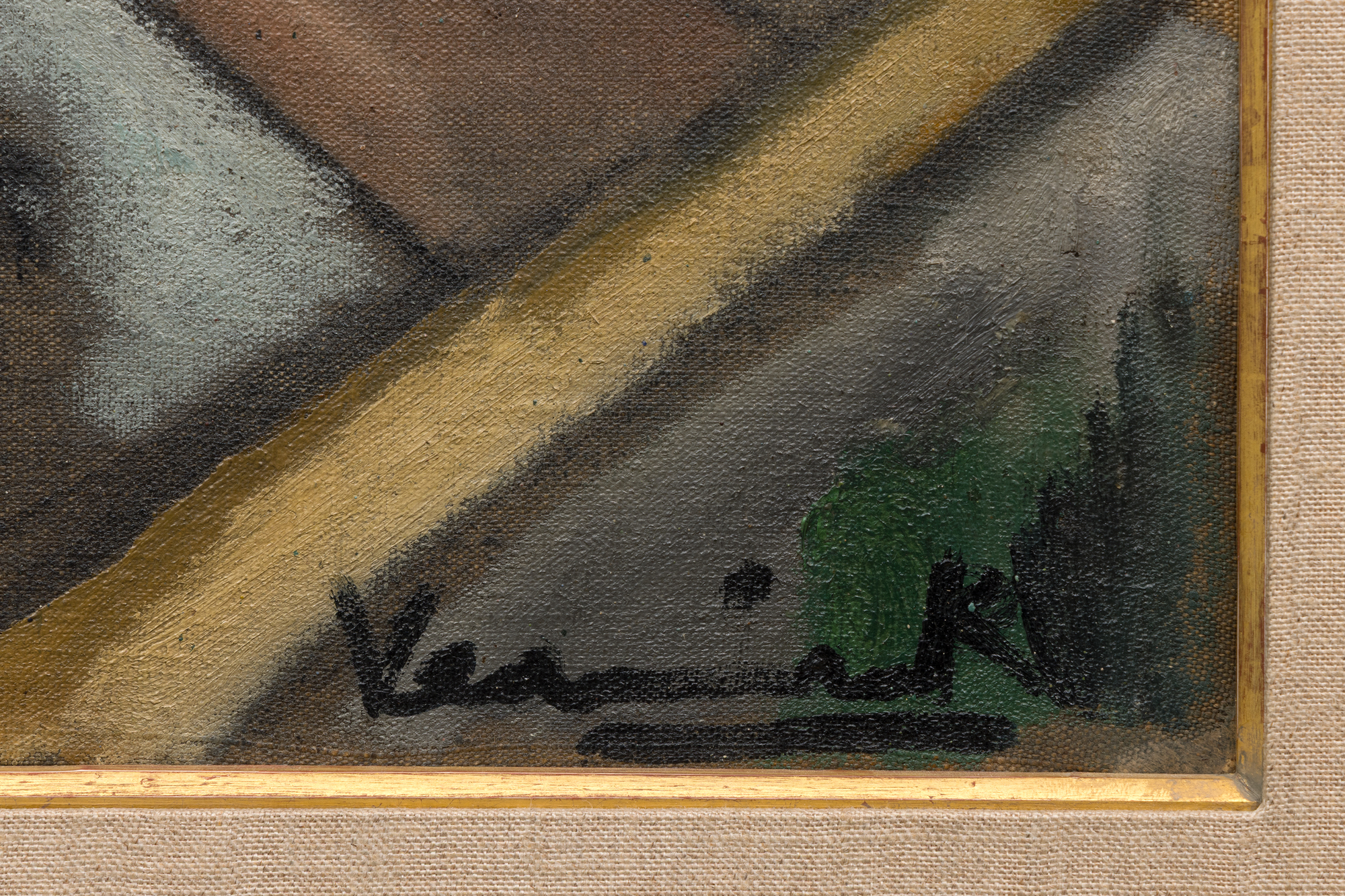
El Viaducto de Saint-Germain-en-Laye1910-191126 x 32 x 1 pulg.(66,04 x 81,28 x 2,54 cm) óleo sobre lienzo
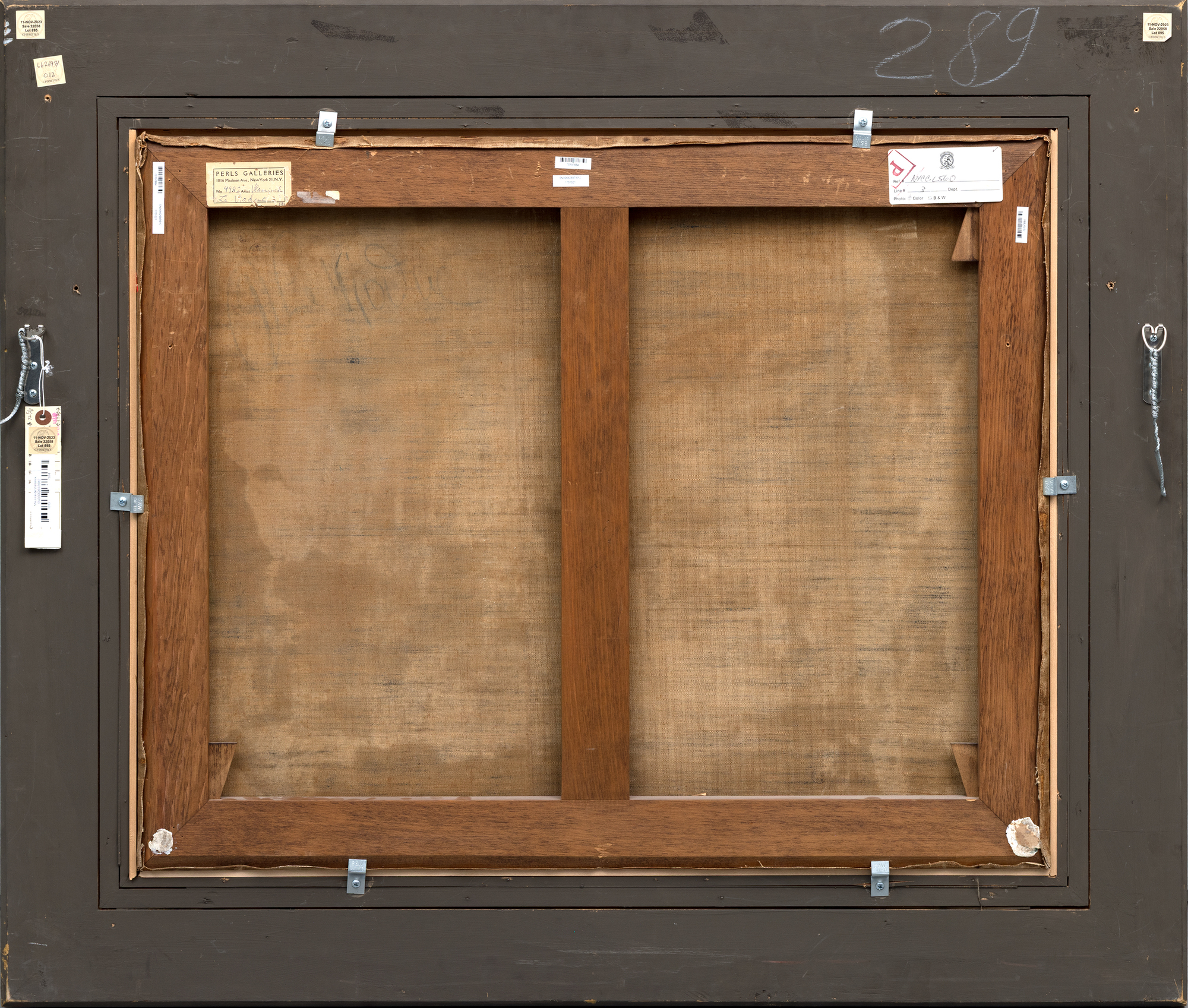
Procedencia
Werner Ruscher, Colonia
Parke-Bernet Galleries, Inc., Nueva York, 17 de abril de 1969, lote 143
Galería Marcel Bernheim, París
Perls Galleries, Nueva York
Colección privada, adquirida a los anteriores, c. 1993
Exposición
Tokio, Galerie Nichido y Osaka, Shin Daibiru, Vlaminck, octubre-noviembre 1966, nº 10
Literatura
Galerie Nichido, Vlaminck, Tokio, 1966, nº 10, ilustrado (fechado en 1918 y titulado Viaduc)
Le Viaduc de Saint-Germain-en-Laye (hacia 1910-1911), de Maurice de Vlaminck, un impresionante óleo sobre lienzo enmarcado en oro ornamentado, capta la elegancia industrial de un viaducto al oeste de París. Esta obra, que se incluirá en el próximo catálogo razonado del Instituto Wildenstein Plattner, refleja la fascinación de Vlaminck por la zona de Saint-Germain. Conocido por pintar sus paisajes urbanos y escenas junto al Sena, infundió a esta escena en particular elementos cubistas angulosos que ganaban terreno en el arte de principios del siglo XX. El viaducto, construido en la década de 1880 para transportar la línea de ferrocarril París-Saint-Germain, se alza con sus arcos dorados sobre un cielo gris turbulento, su estructura inflexible yuxtapuesta a los tejados fracturados de las pintorescas casas del pueblo.


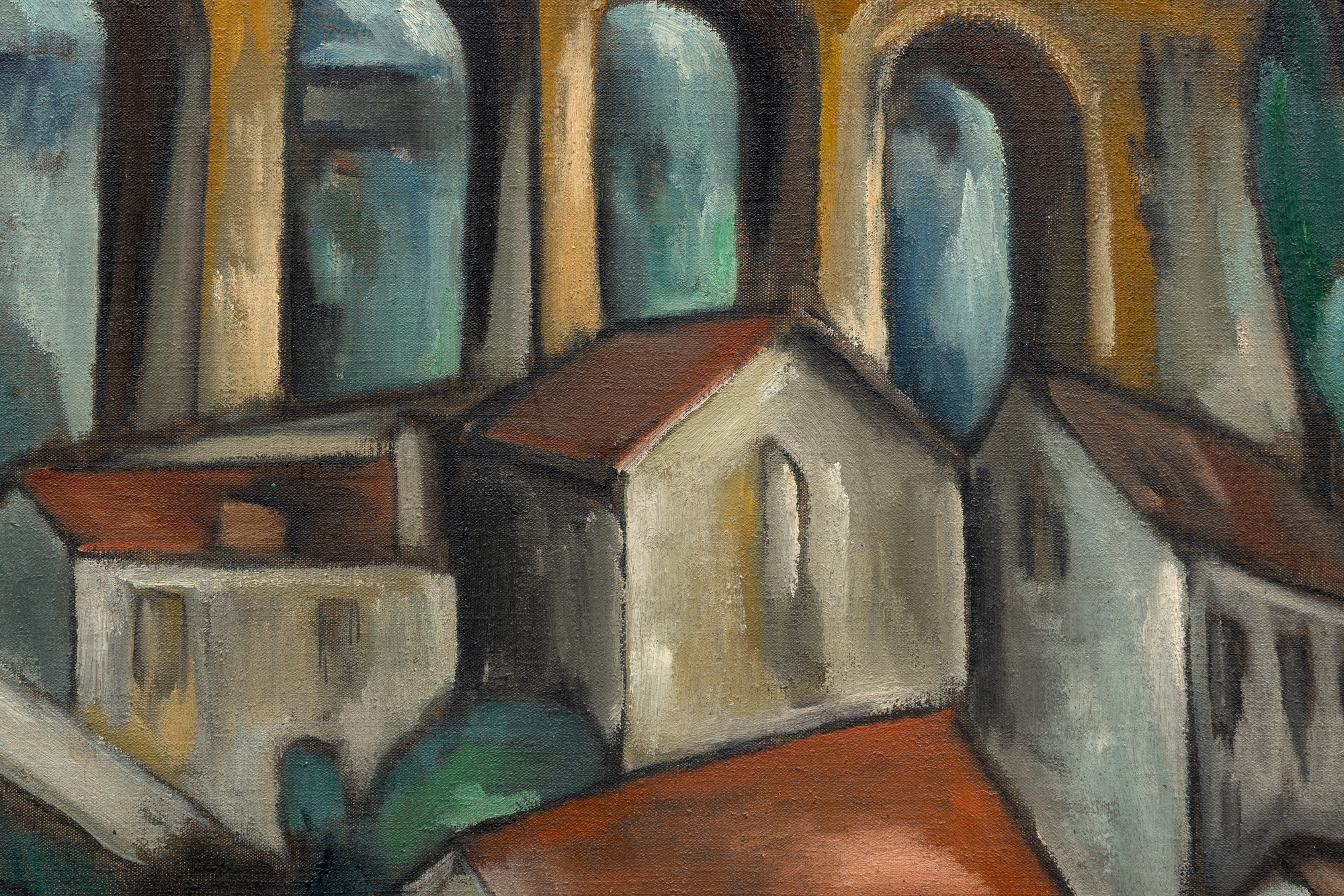
Las pinceladas audaces y la paleta apagada de Vlaminck crean un efecto texturizado, casi escultórico, con árboles y tejados de formas dinámicas y facetadas. El cielo encapotado realza la intensidad ambiental de la escena, mientras que los arcos del viaducto dominan la escena, simbolizando la modernidad en medio del encanto rural. Esta obra ejemplifica sus tempranas raíces fauvistas que evolucionan hacia influencias cubistas, mostrando un estilo pionero.


Residente en la región, Vlaminck representó con frecuencia su paisaje en evolución, mezclando tradición e innovación. "Le Viaduc de Saint-Germain-en-Laye" ofrece a los coleccionistas una rara visión de su periodo de transformación. Su impactante composición y su contexto histórico lo convierten en una atractiva adición a cualquier colección, celebrando la contribución de Vlaminck al desarrollo del arte moderno.
Preguntar