Atrás

JOHN MARIN (1870-1953)

 
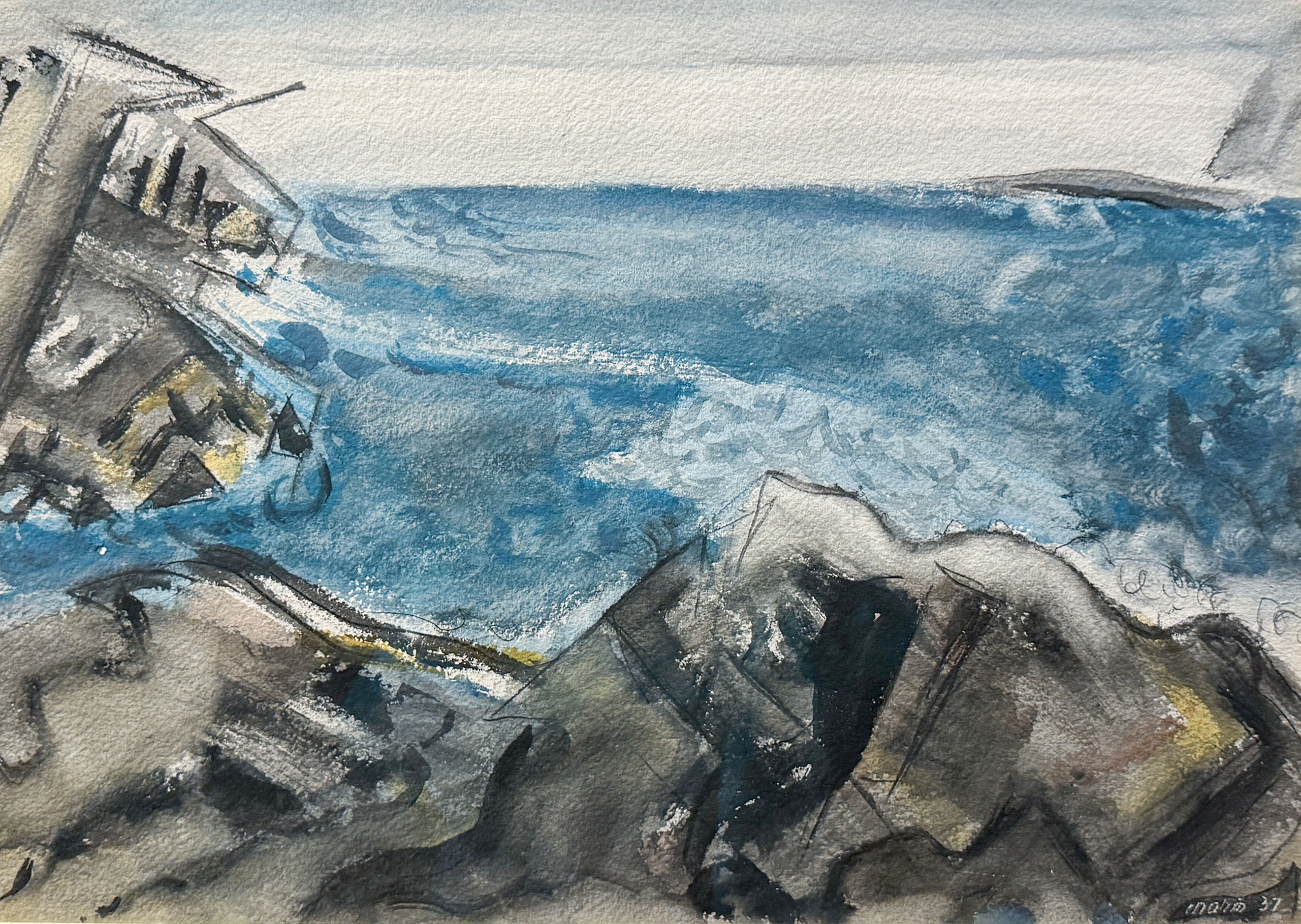
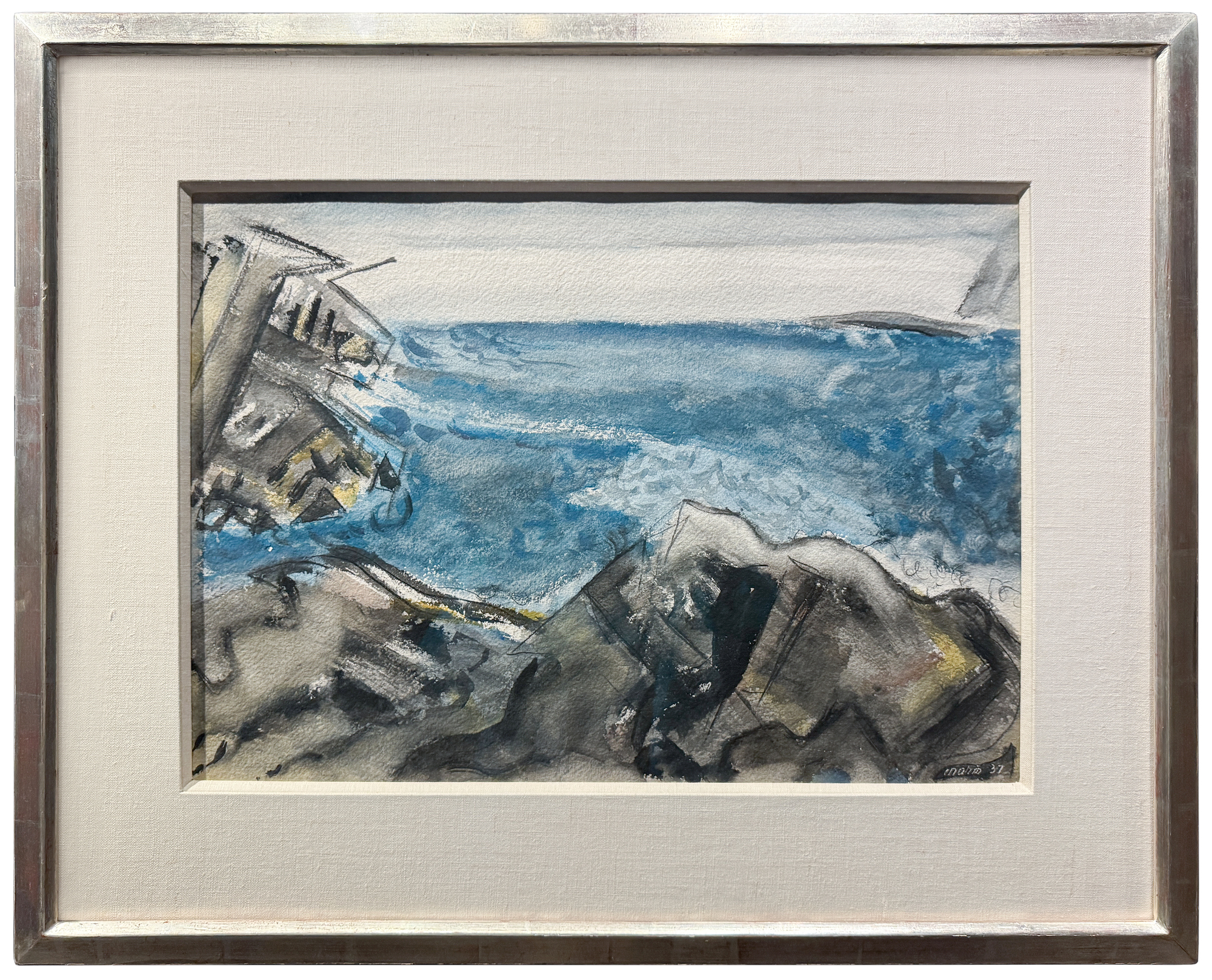
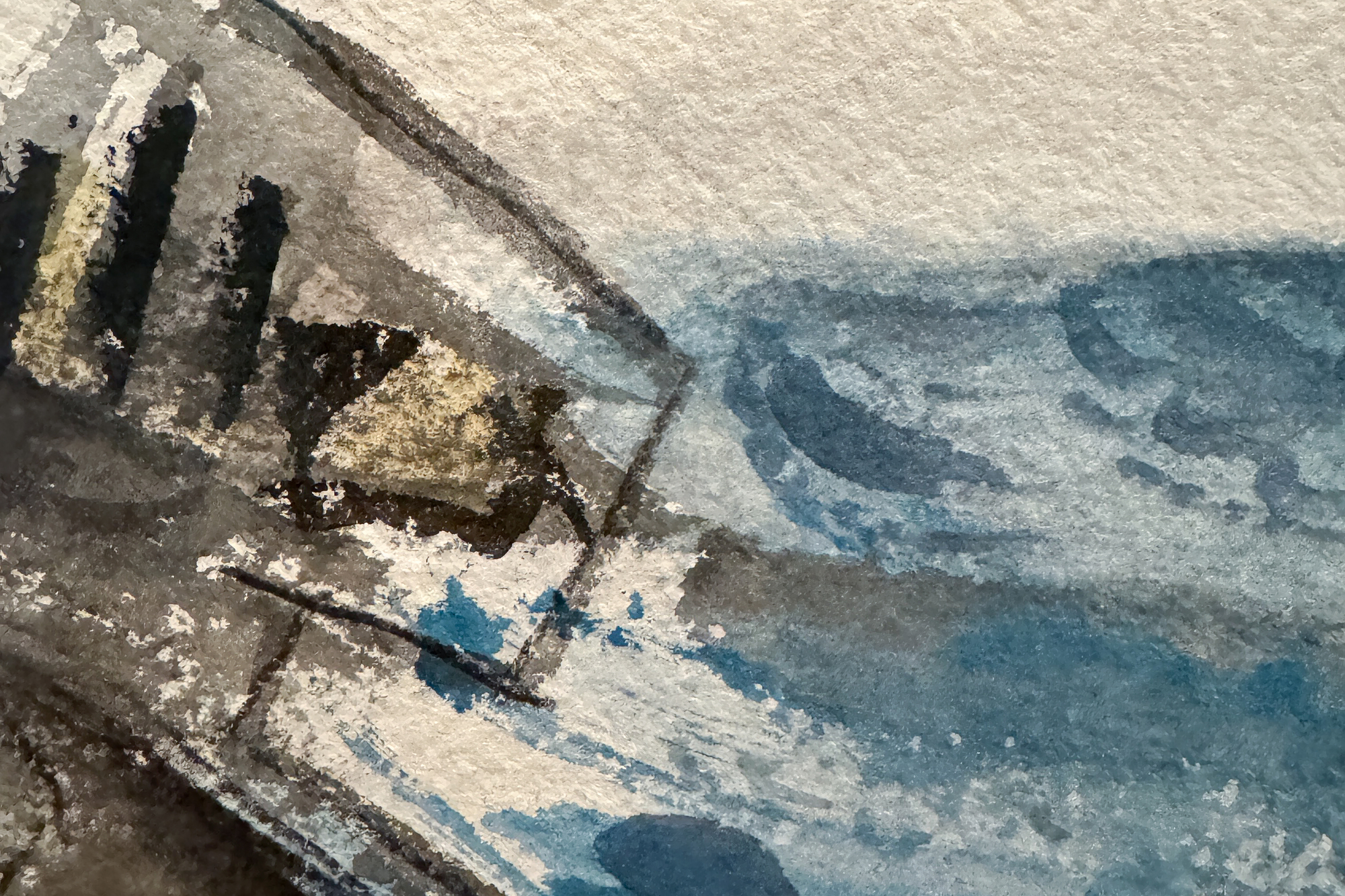
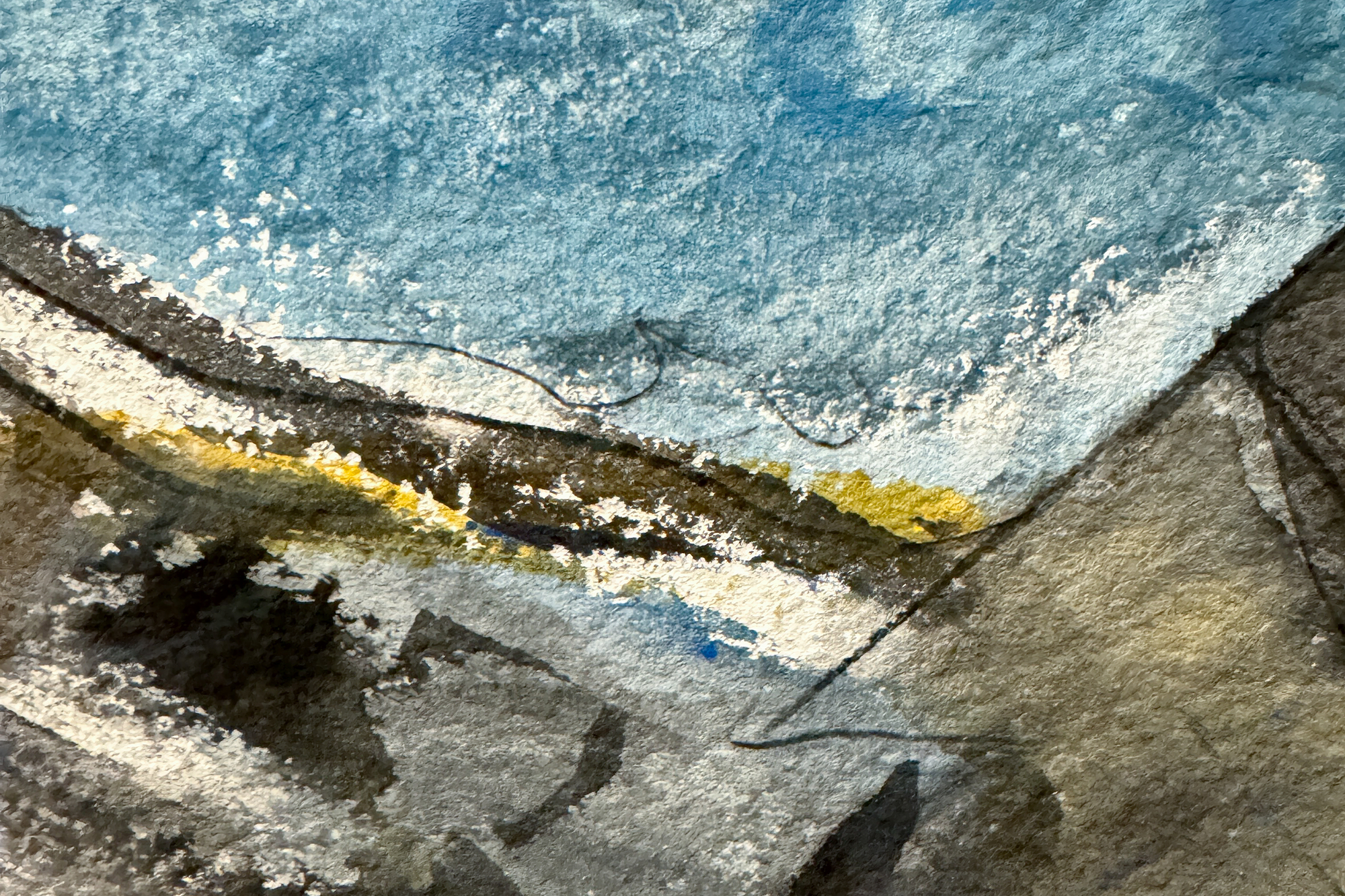
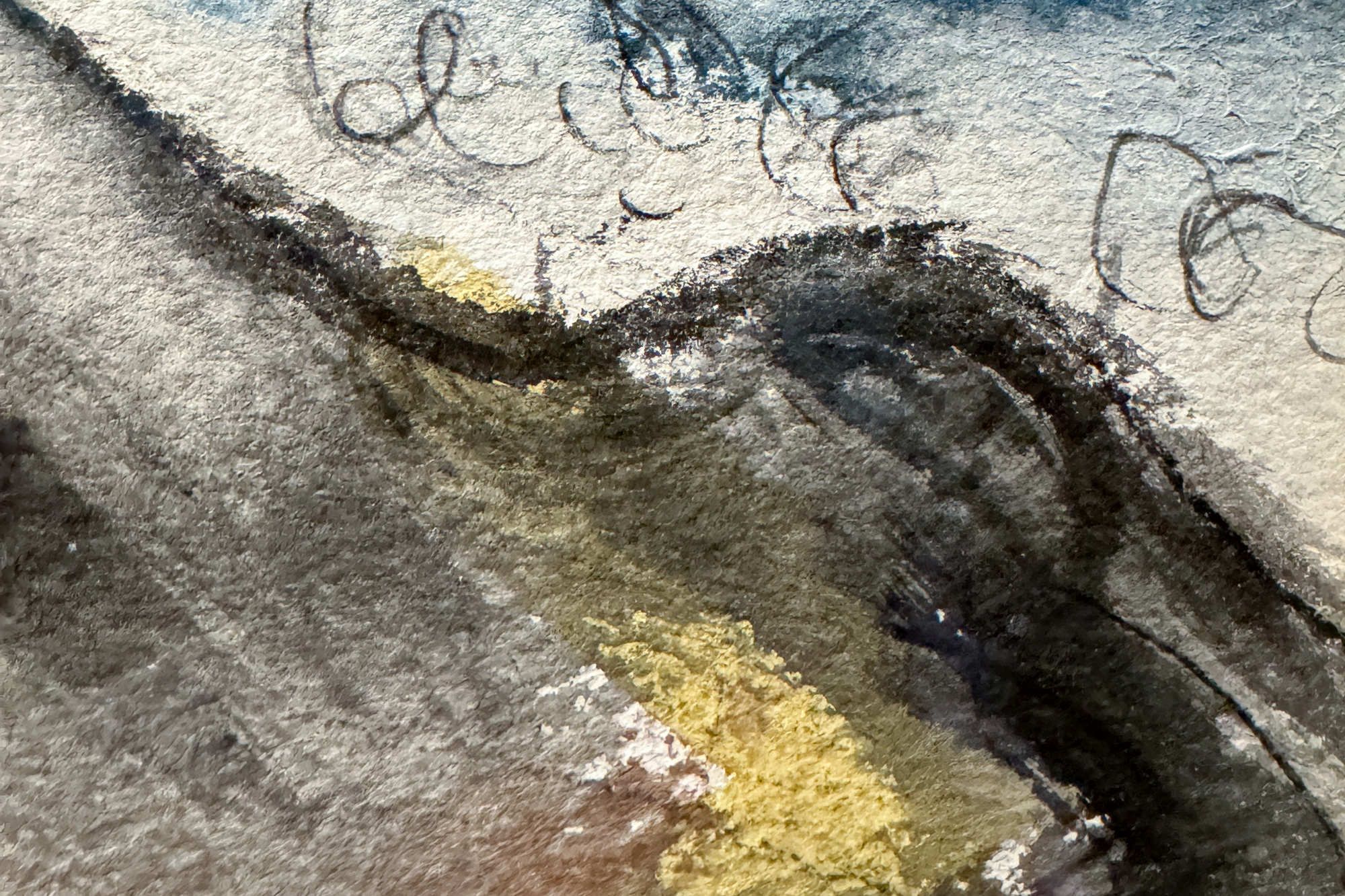
<div>John Marin’s "Sea Movement, Maine" (1937) exemplifies his dynamic approach to watercolor, a medium he transformed into one of the most expressive vehicles of early American modernism. Painted during his mature period, the work captures the restless energy of the Maine coast—a subject Marin returned to repeatedly as a source of inspiration. Quick, gestural strokes convey the surging sea and jagged rocks, while washes of deep blue, gray, and black evoke both immediacy and atmosphere. Marin’s hallmark ability to fuse abstraction with observation is evident here: the composition is at once faithful to the rhythms of the natural world and liberated in its expressive freedom. </div> <br> <br><div> </div> <br> <br><div>The significance of this work is underscored by its inclusion in Sheldon Reich’s 1970 catalogue raisonné (no. 37.19) and its exhibition history in two museum shows, affirming its place within Marin’s celebrated body of Maine seascapes. "Sea Movement, Maine" stands as a vivid testament to the artist’s lifelong pursuit of translating nature’s vitality into painterly form. </div> <div>John Marin’s "Sea Movement, Maine" (1937) exemplifies his dynamic approach to watercolor, a medium he transformed into one of the most expressive vehicles of early American modernism. Painted during his mature period, the work captures the restless energy of the Maine coast—a subject Marin returned to repeatedly as a source of inspiration. Quick, gestural strokes convey the surging sea and jagged rocks, while washes of deep blue, gray, and black evoke both immediacy and atmosphere. Marin’s hallmark ability to fuse abstraction with observation is evident here: the composition is at once faithful to the rhythms of the natural world and liberated in its expressive freedom. </div> <br> <br><div> </div> <br> <br><div>The significance of this work is underscored by its inclusion in Sheldon Reich’s 1970 catalogue raisonné (no. 37.19) and its exhibition history in two museum shows, affirming its place within Marin’s celebrated body of Maine seascapes. "Sea Movement, Maine" stands as a vivid testament to the artist’s lifelong pursuit of translating nature’s vitality into painterly form. </div> <div>John Marin’s "Sea Movement, Maine" (1937) exemplifies his dynamic approach to watercolor, a medium he transformed into one of the most expressive vehicles of early American modernism. Painted during his mature period, the work captures the restless energy of the Maine coast—a subject Marin returned to repeatedly as a source of inspiration. Quick, gestural strokes convey the surging sea and jagged rocks, while washes of deep blue, gray, and black evoke both immediacy and atmosphere. Marin’s hallmark ability to fuse abstraction with observation is evident here: the composition is at once faithful to the rhythms of the natural world and liberated in its expressive freedom. </div> <br> <br><div> </div> <br> <br><div>The significance of this work is underscored by its inclusion in Sheldon Reich’s 1970 catalogue raisonné (no. 37.19) and its exhibition history in two museum shows, affirming its place within Marin’s celebrated body of Maine seascapes. "Sea Movement, Maine" stands as a vivid testament to the artist’s lifelong pursuit of translating nature’s vitality into painterly form. </div> <div>John Marin’s "Sea Movement, Maine" (1937) exemplifies his dynamic approach to watercolor, a medium he transformed into one of the most expressive vehicles of early American modernism. Painted during his mature period, the work captures the restless energy of the Maine coast—a subject Marin returned to repeatedly as a source of inspiration. Quick, gestural strokes convey the surging sea and jagged rocks, while washes of deep blue, gray, and black evoke both immediacy and atmosphere. Marin’s hallmark ability to fuse abstraction with observation is evident here: the composition is at once faithful to the rhythms of the natural world and liberated in its expressive freedom. </div> <br> <br><div> </div> <br> <br><div>The significance of this work is underscored by its inclusion in Sheldon Reich’s 1970 catalogue raisonné (no. 37.19) and its exhibition history in two museum shows, affirming its place within Marin’s celebrated body of Maine seascapes. "Sea Movement, Maine" stands as a vivid testament to the artist’s lifelong pursuit of translating nature’s vitality into painterly form. </div> <div>John Marin’s "Sea Movement, Maine" (1937) exemplifies his dynamic approach to watercolor, a medium he transformed into one of the most expressive vehicles of early American modernism. Painted during his mature period, the work captures the restless energy of the Maine coast—a subject Marin returned to repeatedly as a source of inspiration. Quick, gestural strokes convey the surging sea and jagged rocks, while washes of deep blue, gray, and black evoke both immediacy and atmosphere. Marin’s hallmark ability to fuse abstraction with observation is evident here: the composition is at once faithful to the rhythms of the natural world and liberated in its expressive freedom. </div> <br> <br><div> </div> <br> <br><div>The significance of this work is underscored by its inclusion in Sheldon Reich’s 1970 catalogue raisonné (no. 37.19) and its exhibition history in two museum shows, affirming its place within Marin’s celebrated body of Maine seascapes. "Sea Movement, Maine" stands as a vivid testament to the artist’s lifelong pursuit of translating nature’s vitality into painterly form. </div> <div>John Marin’s "Sea Movement, Maine" (1937) exemplifies his dynamic approach to watercolor, a medium he transformed into one of the most expressive vehicles of early American modernism. Painted during his mature period, the work captures the restless energy of the Maine coast—a subject Marin returned to repeatedly as a source of inspiration. Quick, gestural strokes convey the surging sea and jagged rocks, while washes of deep blue, gray, and black evoke both immediacy and atmosphere. Marin’s hallmark ability to fuse abstraction with observation is evident here: the composition is at once faithful to the rhythms of the natural world and liberated in its expressive freedom. </div> <br> <br><div> </div> <br> <br><div>The significance of this work is underscored by its inclusion in Sheldon Reich’s 1970 catalogue raisonné (no. 37.19) and its exhibition history in two museum shows, affirming its place within Marin’s celebrated body of Maine seascapes. "Sea Movement, Maine" stands as a vivid testament to the artist’s lifelong pursuit of translating nature’s vitality into painterly form. </div> <div>John Marin’s "Sea Movement, Maine" (1937) exemplifies his dynamic approach to watercolor, a medium he transformed into one of the most expressive vehicles of early American modernism. Painted during his mature period, the work captures the restless energy of the Maine coast—a subject Marin returned to repeatedly as a source of inspiration. Quick, gestural strokes convey the surging sea and jagged rocks, while washes of deep blue, gray, and black evoke both immediacy and atmosphere. Marin’s hallmark ability to fuse abstraction with observation is evident here: the composition is at once faithful to the rhythms of the natural world and liberated in its expressive freedom. </div> <br> <br><div> </div> <br> <br><div>The significance of this work is underscored by its inclusion in Sheldon Reich’s 1970 catalogue raisonné (no. 37.19) and its exhibition history in two museum shows, affirming its place within Marin’s celebrated body of Maine seascapes. "Sea Movement, Maine" stands as a vivid testament to the artist’s lifelong pursuit of translating nature’s vitality into painterly form. </div> <div>John Marin’s "Sea Movement, Maine" (1937) exemplifies his dynamic approach to watercolor, a medium he transformed into one of the most expressive vehicles of early American modernism. Painted during his mature period, the work captures the restless energy of the Maine coast—a subject Marin returned to repeatedly as a source of inspiration. Quick, gestural strokes convey the surging sea and jagged rocks, while washes of deep blue, gray, and black evoke both immediacy and atmosphere. Marin’s hallmark ability to fuse abstraction with observation is evident here: the composition is at once faithful to the rhythms of the natural world and liberated in its expressive freedom. </div> <br> <br><div> </div> <br> <br><div>The significance of this work is underscored by its inclusion in Sheldon Reich’s 1970 catalogue raisonné (no. 37.19) and its exhibition history in two museum shows, affirming its place within Marin’s celebrated body of Maine seascapes. "Sea Movement, Maine" stands as a vivid testament to the artist’s lifelong pursuit of translating nature’s vitality into painterly form. </div> <div>John Marin’s "Sea Movement, Maine" (1937) exemplifies his dynamic approach to watercolor, a medium he transformed into one of the most expressive vehicles of early American modernism. Painted during his mature period, the work captures the restless energy of the Maine coast—a subject Marin returned to repeatedly as a source of inspiration. Quick, gestural strokes convey the surging sea and jagged rocks, while washes of deep blue, gray, and black evoke both immediacy and atmosphere. Marin’s hallmark ability to fuse abstraction with observation is evident here: the composition is at once faithful to the rhythms of the natural world and liberated in its expressive freedom. </div> <br> <br><div> </div> <br> <br><div>The significance of this work is underscored by its inclusion in Sheldon Reich’s 1970 catalogue raisonné (no. 37.19) and its exhibition history in two museum shows, affirming its place within Marin’s celebrated body of Maine seascapes. "Sea Movement, Maine" stands as a vivid testament to the artist’s lifelong pursuit of translating nature’s vitality into painterly form. </div> <div>John Marin’s "Sea Movement, Maine" (1937) exemplifies his dynamic approach to watercolor, a medium he transformed into one of the most expressive vehicles of early American modernism. Painted during his mature period, the work captures the restless energy of the Maine coast—a subject Marin returned to repeatedly as a source of inspiration. Quick, gestural strokes convey the surging sea and jagged rocks, while washes of deep blue, gray, and black evoke both immediacy and atmosphere. Marin’s hallmark ability to fuse abstraction with observation is evident here: the composition is at once faithful to the rhythms of the natural world and liberated in its expressive freedom. </div> <br> <br><div> </div> <br> <br><div>The significance of this work is underscored by its inclusion in Sheldon Reich’s 1970 catalogue raisonné (no. 37.19) and its exhibition history in two museum shows, affirming its place within Marin’s celebrated body of Maine seascapes. "Sea Movement, Maine" stands as a vivid testament to the artist’s lifelong pursuit of translating nature’s vitality into painterly form. </div>
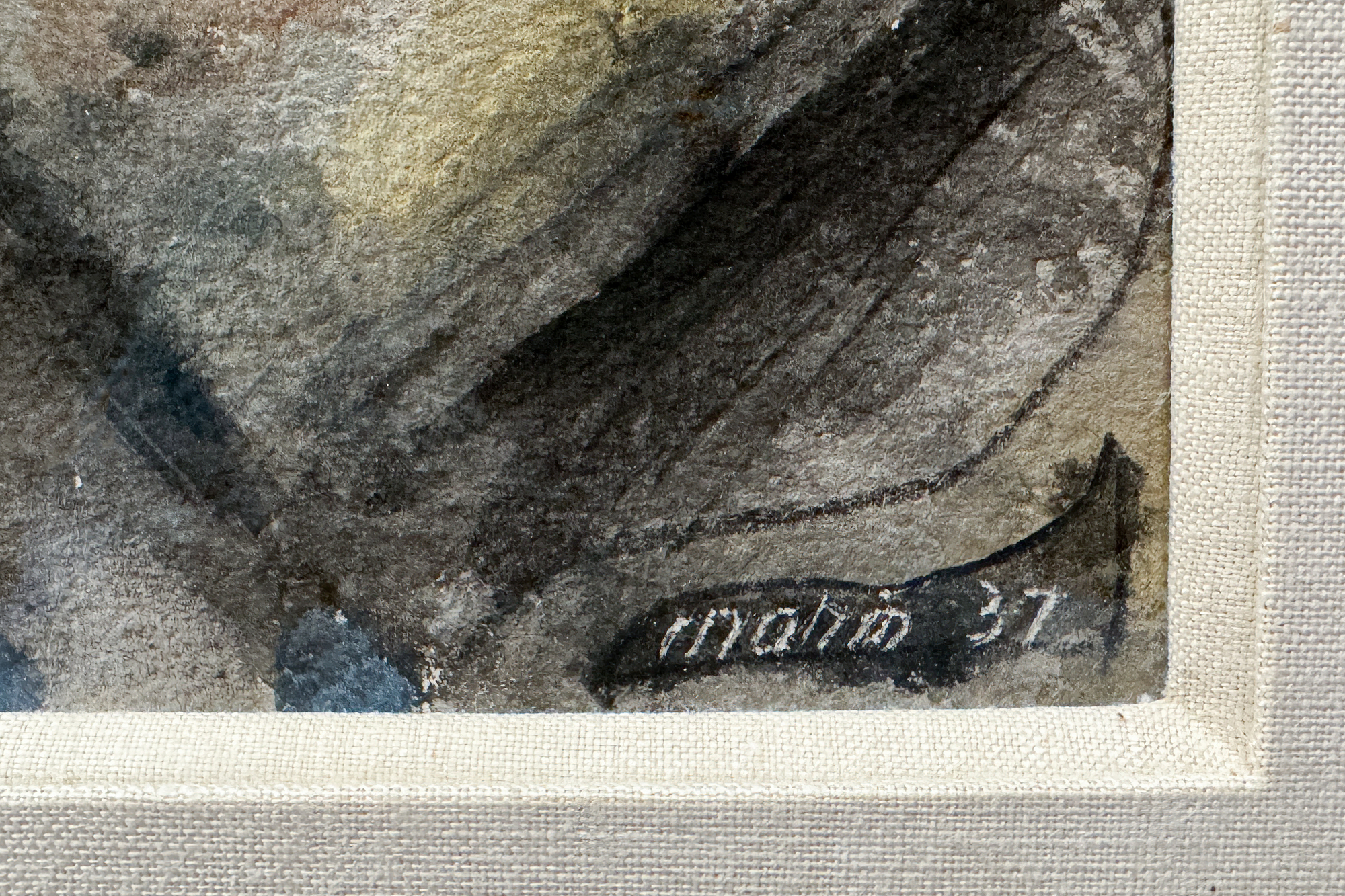
Movimiento marítimo, Maine193739,37 x 52,07 cm(39,37 x 52,07 cm) Acuarela sobre papel
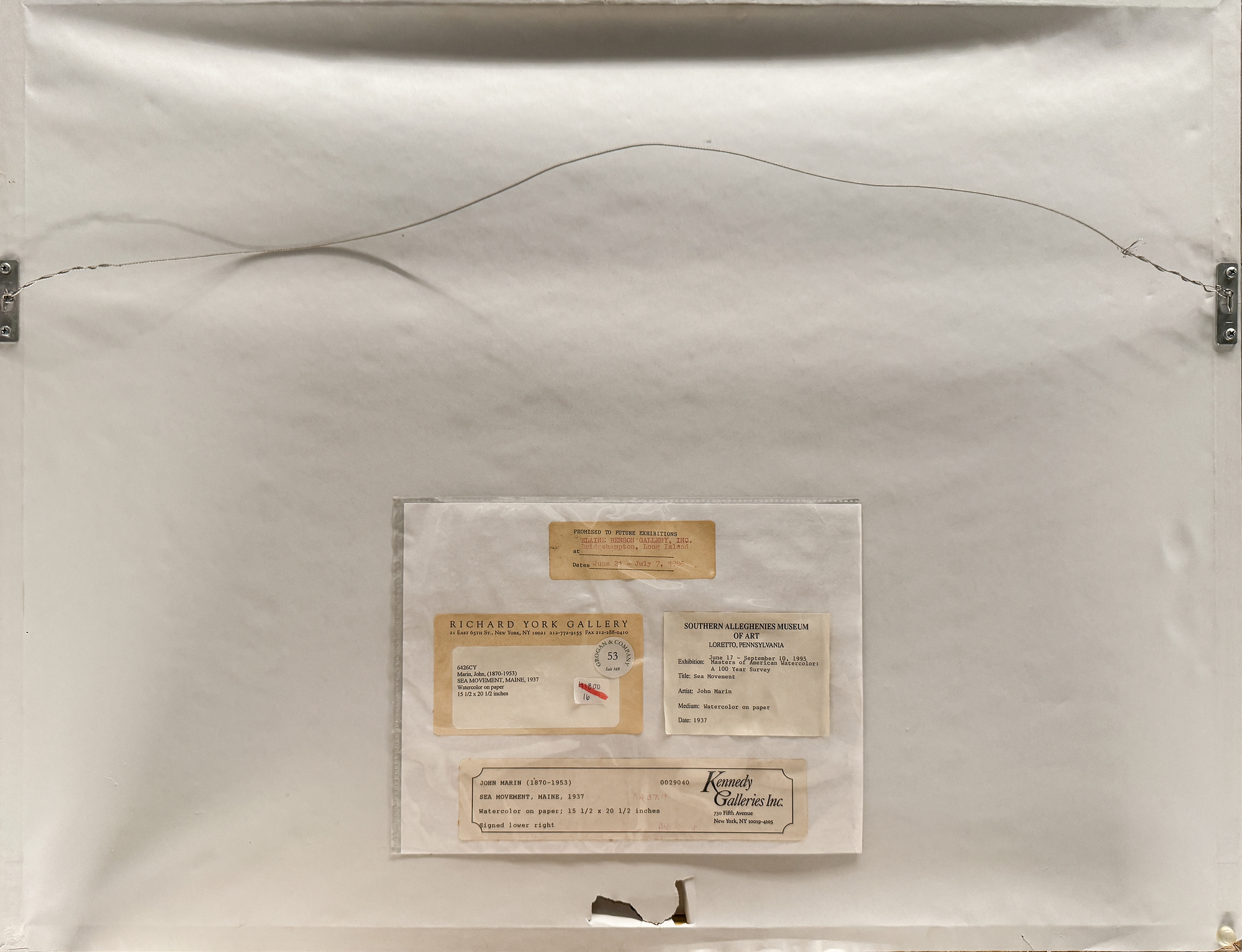
Procedencia
El patrimonio del artista
Kennedy Galleries, Nueva York
Richard York Gallery, Nueva York
Una perspectiva de Maine: la colección de un caballero de Nueva Inglaterra
Grogan & Company, 17 de noviembre de 2019, lote 53
Colección privada
Exposición
Nueva York, The Willard Gallery, Pinturas de John Marin de la década de 1930, 2 de marzo-3 de abril de 1965
Loretto, Pensilvania, Southern Alleghenies Museum of Art, Maestros de la acuarela estadounidense: un centenario, 17 de junio-10 de septiembre de 1995
Waterville, Maine, Museo de Arte del Colby College, John Marin en Maine
...Más...., 24 de junio-27 de septiembre de 1998, n.º 13
Literatura
Sheldon Reich, John Marin: Análisis estilístico y catálogo razonado, 1970, vol. 2, n.º 37.19.
...MENOS....
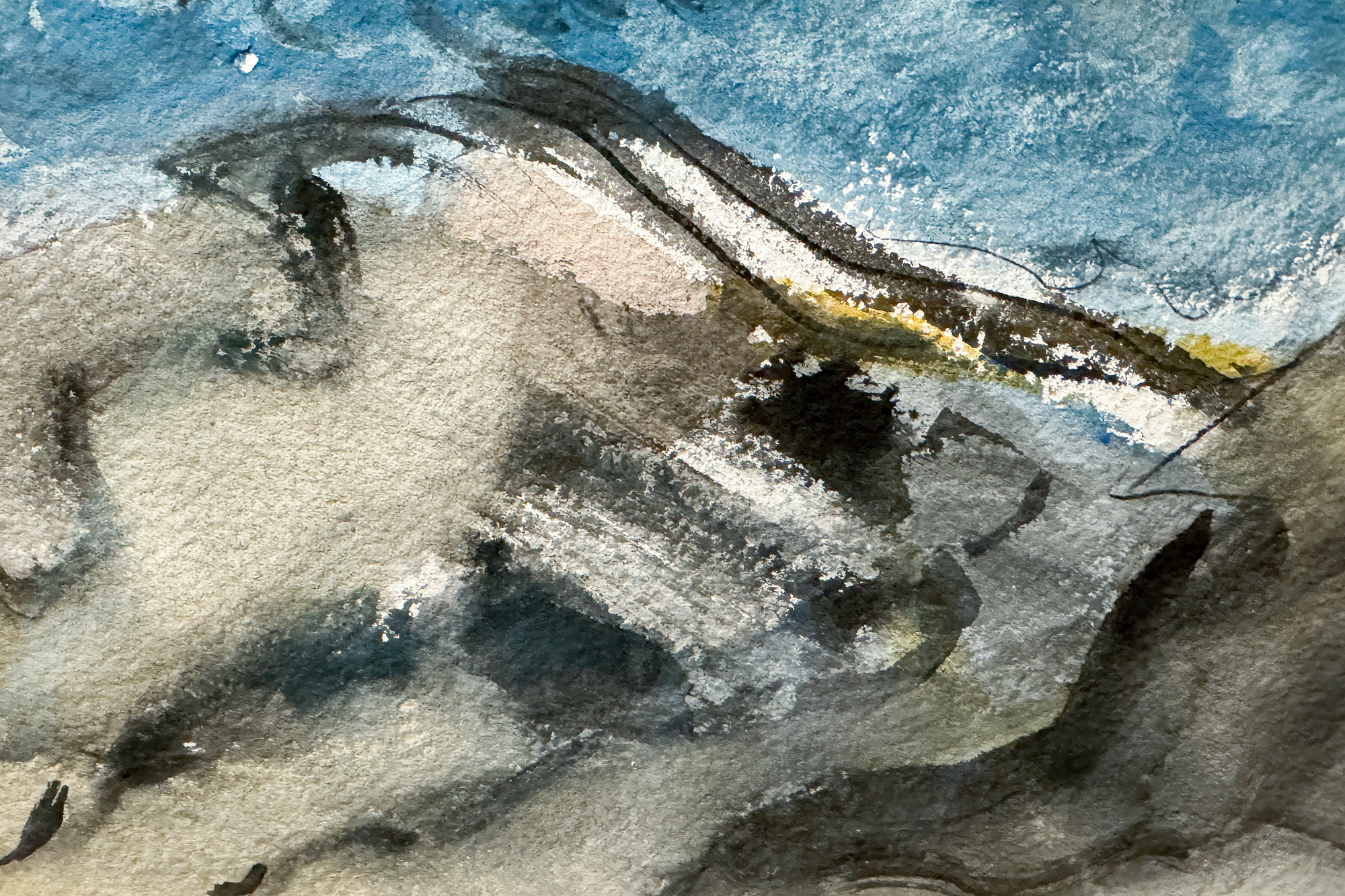
La obra «Sea Movement, Maine» (1937) de John Marin ejemplifica su enfoque dinámico de la acuarela, un medio que transformó en uno de los vehículos más expresivos del modernismo americano temprano. Pintada durante su periodo de madurez, la obra captura la energía inquieta de la costa de Maine, un tema al que Marin volvió repetidamente como fuente de inspiración. Las pinceladas rápidas y gestuales transmiten el mar embravecido y las rocas escarpadas, mientras que los lavados de azul intenso, gris y negro evocan tanto la inmediatez como la atmósfera. La capacidad característica de Marin para fusionar la abstracción con la observación es evidente aquí: la composición es a la vez fiel a los ritmos del mundo natural y liberada en su libertad expresiva.


La importancia de esta obra queda subrayada por su inclusión en el catálogo razonado de Sheldon Reich de 1970 (n.º 37.19) y su historial de exposiciones en dos museos, lo que confirma su lugar dentro de la célebre colección de paisajes marinos de Maine de Marin. «Sea Movement, Maine» es un vívido testimonio de la búsqueda permanente del artista por plasmar la vitalidad de la naturaleza en forma pictórica.
Preguntar