

Atrás

JULES CHERET(1836-1932)

$75,000

 
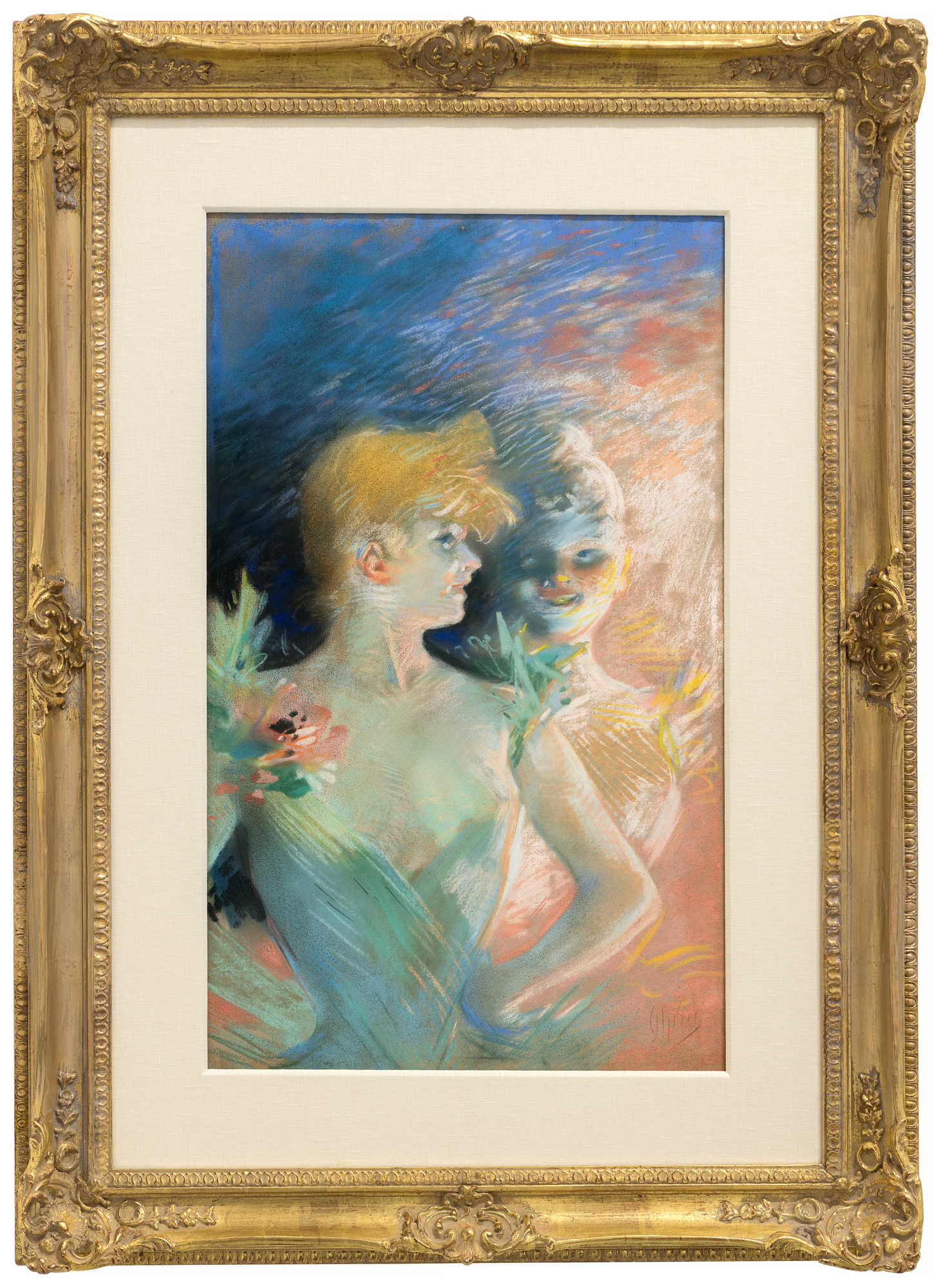
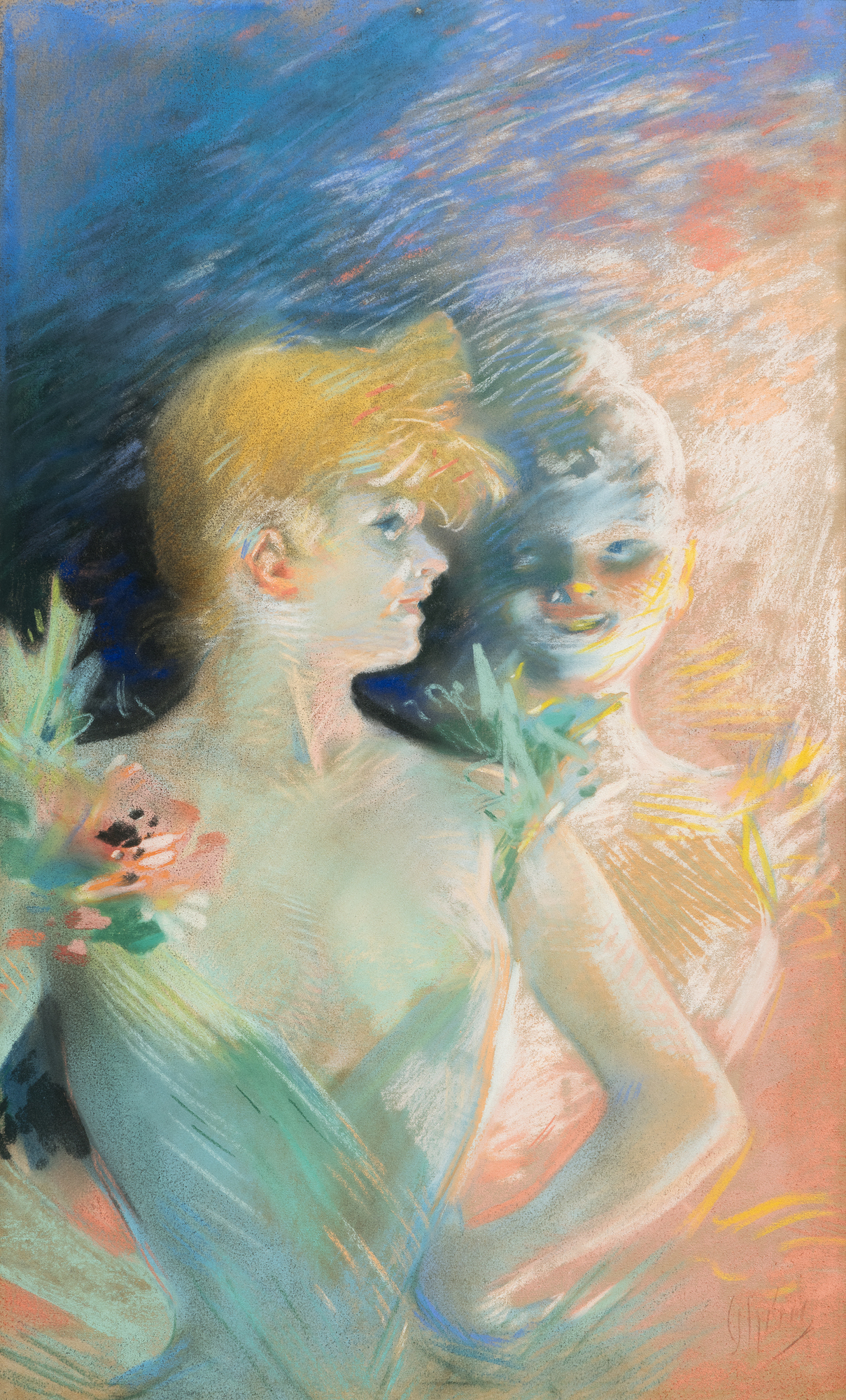
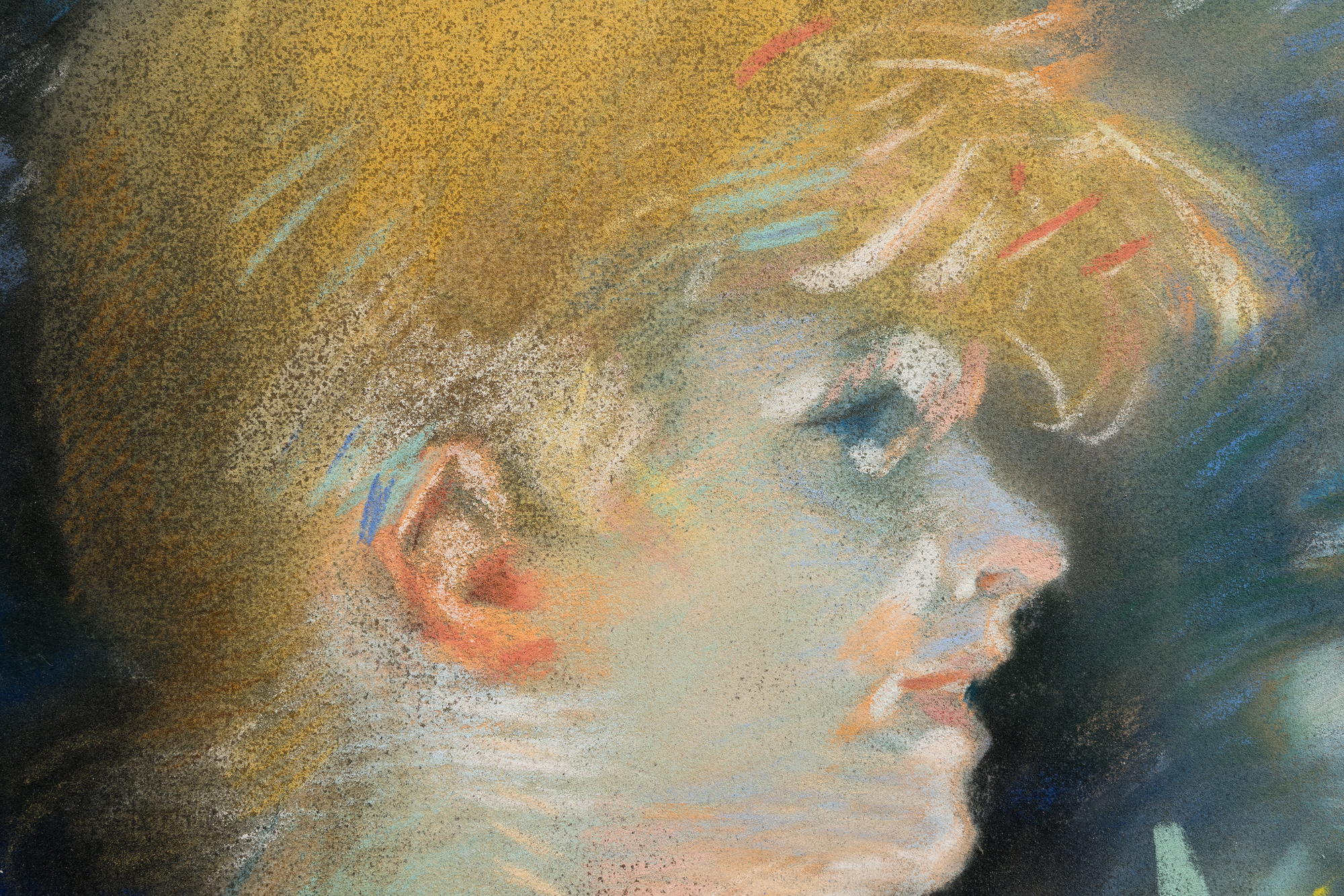
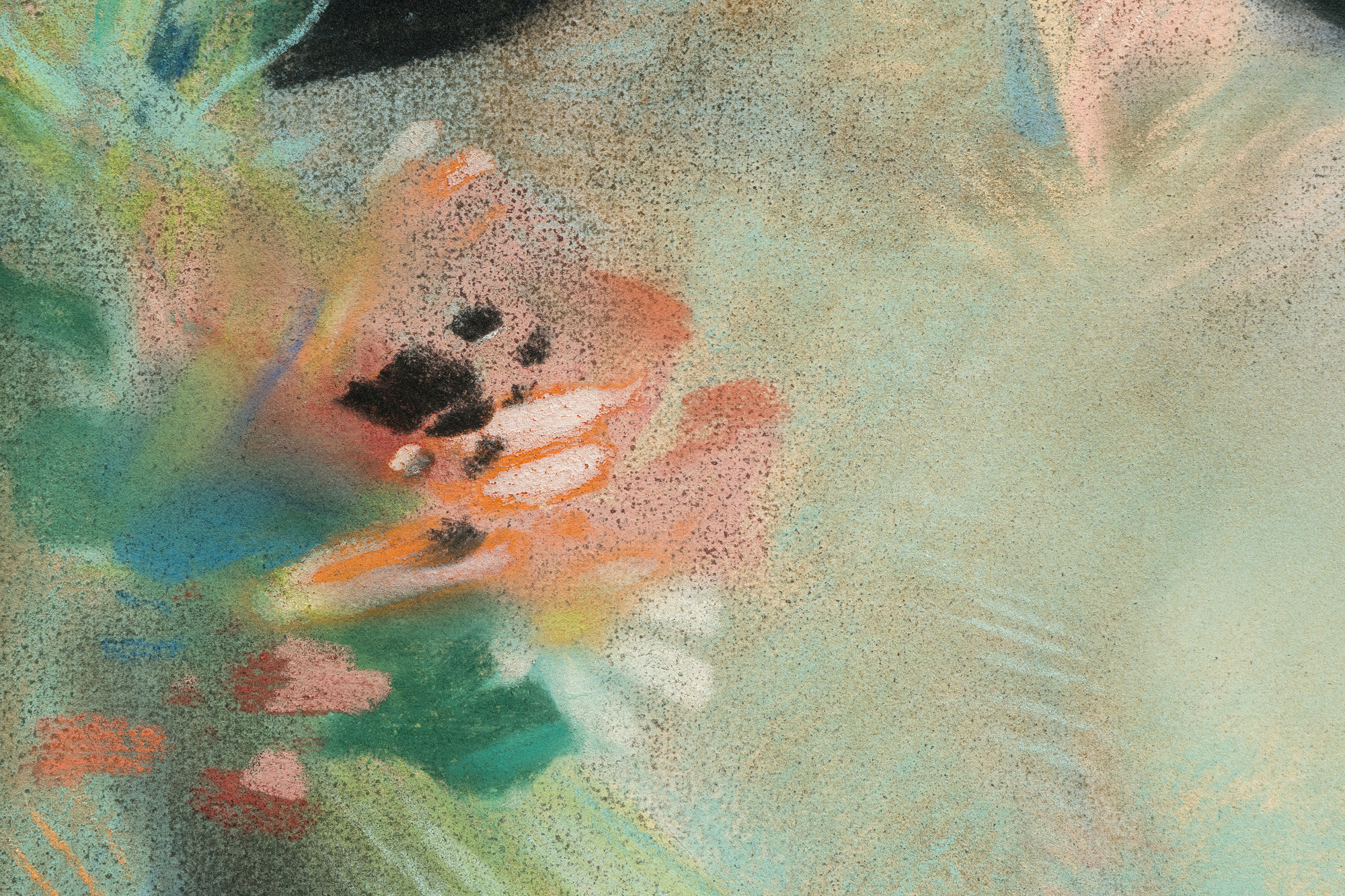
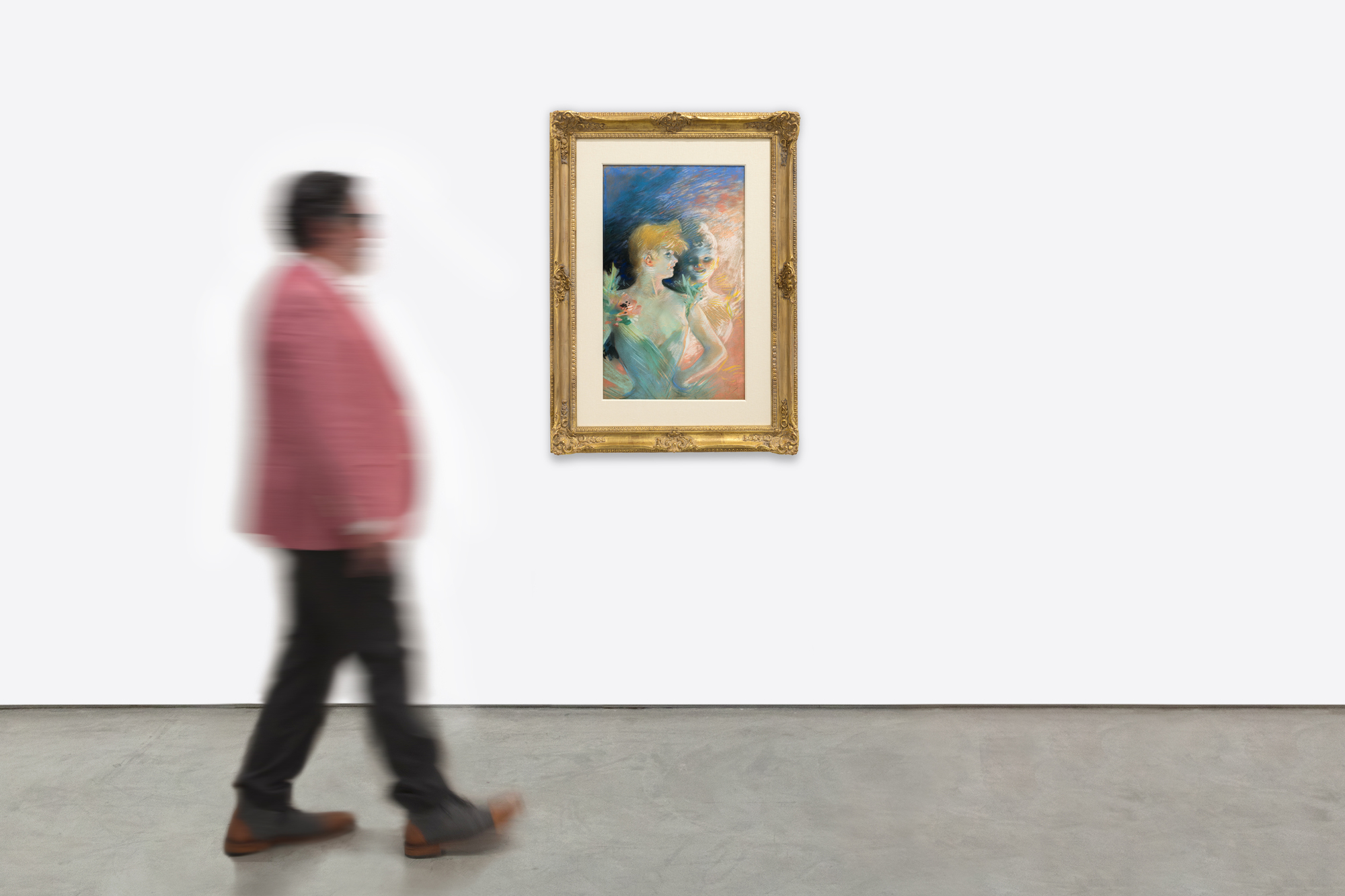
<div>Jules Chéret’s <em>Portrait</em> is a lively pastel chalk on canvas that reveals the painterly sensibility behind the artist best known as the master of Belle Époque poster art. In this composition, two female figures emerge from a whirlwind of color and light, their forms dissolving into strokes of turquoise, rose, and gold. The surface vibrates with movement, recalling the theatrical energy and fleeting glamour that defined fin-de-siècle Paris. Softly modeled yet animated by sweeping gestures, the figures seem caught mid-performance—at once intimate and exuberant. </div><br><br><div> </div><br><br><div>Though widely celebrated for his advertising posters, Chéret was deeply influenced by the Rococo masters, particularly Jean-Honoré Fragonard and Antoine Watteau. Their spirit of elegance, sensuality, and decorative flourish permeates this work, where lightness of touch and chromatic brilliance take precedence over strict realism. These same qualities made his vivid lithographic posters for the Eldorado, the Olympia, the Folies Bergère, the Théâtre de l’Opéra, the Alcazar d’Été, and the Moulin Rouge iconic emblems of Parisian modern life. </div><br><br><div> </div><br><br><div>Chéret’s success in poster design helped launch a new generation of artists, including Charles Gesmar and Henri de Toulouse-Lautrec, solidifying the poster as a legitimate artistic medium. While he achieved recognition as a painter, it was his advertising imagery—initially undertaken to earn a living but later pursued with conviction—that secured his legacy. Honored with a posthumous exhibition at the Salon d’Automne in 1933, Chéret’s works are now held in major institutions including The Museum of Modern Art, the Musée d’Orsay, the Hermitage Museum, and the Art Institute of Chicago, affirming his enduring place in the history of modern art. </div> <div>Jules Chéret’s <em>Portrait</em> is a lively pastel chalk on canvas that reveals the painterly sensibility behind the artist best known as the master of Belle Époque poster art. In this composition, two female figures emerge from a whirlwind of color and light, their forms dissolving into strokes of turquoise, rose, and gold. The surface vibrates with movement, recalling the theatrical energy and fleeting glamour that defined fin-de-siècle Paris. Softly modeled yet animated by sweeping gestures, the figures seem caught mid-performance—at once intimate and exuberant. </div><br><br><div> </div><br><br><div>Though widely celebrated for his advertising posters, Chéret was deeply influenced by the Rococo masters, particularly Jean-Honoré Fragonard and Antoine Watteau. Their spirit of elegance, sensuality, and decorative flourish permeates this work, where lightness of touch and chromatic brilliance take precedence over strict realism. These same qualities made his vivid lithographic posters for the Eldorado, the Olympia, the Folies Bergère, the Théâtre de l’Opéra, the Alcazar d’Été, and the Moulin Rouge iconic emblems of Parisian modern life. </div><br><br><div> </div><br><br><div>Chéret’s success in poster design helped launch a new generation of artists, including Charles Gesmar and Henri de Toulouse-Lautrec, solidifying the poster as a legitimate artistic medium. While he achieved recognition as a painter, it was his advertising imagery—initially undertaken to earn a living but later pursued with conviction—that secured his legacy. Honored with a posthumous exhibition at the Salon d’Automne in 1933, Chéret’s works are now held in major institutions including The Museum of Modern Art, the Musée d’Orsay, the Hermitage Museum, and the Art Institute of Chicago, affirming his enduring place in the history of modern art. </div> <div>Jules Chéret’s <em>Portrait</em> is a lively pastel chalk on canvas that reveals the painterly sensibility behind the artist best known as the master of Belle Époque poster art. In this composition, two female figures emerge from a whirlwind of color and light, their forms dissolving into strokes of turquoise, rose, and gold. The surface vibrates with movement, recalling the theatrical energy and fleeting glamour that defined fin-de-siècle Paris. Softly modeled yet animated by sweeping gestures, the figures seem caught mid-performance—at once intimate and exuberant. </div><br><br><div> </div><br><br><div>Though widely celebrated for his advertising posters, Chéret was deeply influenced by the Rococo masters, particularly Jean-Honoré Fragonard and Antoine Watteau. Their spirit of elegance, sensuality, and decorative flourish permeates this work, where lightness of touch and chromatic brilliance take precedence over strict realism. These same qualities made his vivid lithographic posters for the Eldorado, the Olympia, the Folies Bergère, the Théâtre de l’Opéra, the Alcazar d’Été, and the Moulin Rouge iconic emblems of Parisian modern life. </div><br><br><div> </div><br><br><div>Chéret’s success in poster design helped launch a new generation of artists, including Charles Gesmar and Henri de Toulouse-Lautrec, solidifying the poster as a legitimate artistic medium. While he achieved recognition as a painter, it was his advertising imagery—initially undertaken to earn a living but later pursued with conviction—that secured his legacy. Honored with a posthumous exhibition at the Salon d’Automne in 1933, Chéret’s works are now held in major institutions including The Museum of Modern Art, the Musée d’Orsay, the Hermitage Museum, and the Art Institute of Chicago, affirming his enduring place in the history of modern art. </div> <div>Jules Chéret’s <em>Portrait</em> is a lively pastel chalk on canvas that reveals the painterly sensibility behind the artist best known as the master of Belle Époque poster art. In this composition, two female figures emerge from a whirlwind of color and light, their forms dissolving into strokes of turquoise, rose, and gold. The surface vibrates with movement, recalling the theatrical energy and fleeting glamour that defined fin-de-siècle Paris. Softly modeled yet animated by sweeping gestures, the figures seem caught mid-performance—at once intimate and exuberant. </div><br><br><div> </div><br><br><div>Though widely celebrated for his advertising posters, Chéret was deeply influenced by the Rococo masters, particularly Jean-Honoré Fragonard and Antoine Watteau. Their spirit of elegance, sensuality, and decorative flourish permeates this work, where lightness of touch and chromatic brilliance take precedence over strict realism. These same qualities made his vivid lithographic posters for the Eldorado, the Olympia, the Folies Bergère, the Théâtre de l’Opéra, the Alcazar d’Été, and the Moulin Rouge iconic emblems of Parisian modern life. </div><br><br><div> </div><br><br><div>Chéret’s success in poster design helped launch a new generation of artists, including Charles Gesmar and Henri de Toulouse-Lautrec, solidifying the poster as a legitimate artistic medium. While he achieved recognition as a painter, it was his advertising imagery—initially undertaken to earn a living but later pursued with conviction—that secured his legacy. Honored with a posthumous exhibition at the Salon d’Automne in 1933, Chéret’s works are now held in major institutions including The Museum of Modern Art, the Musée d’Orsay, the Hermitage Museum, and the Art Institute of Chicago, affirming his enduring place in the history of modern art. </div> <div>Jules Chéret’s <em>Portrait</em> is a lively pastel chalk on canvas that reveals the painterly sensibility behind the artist best known as the master of Belle Époque poster art. In this composition, two female figures emerge from a whirlwind of color and light, their forms dissolving into strokes of turquoise, rose, and gold. The surface vibrates with movement, recalling the theatrical energy and fleeting glamour that defined fin-de-siècle Paris. Softly modeled yet animated by sweeping gestures, the figures seem caught mid-performance—at once intimate and exuberant. </div><br><br><div> </div><br><br><div>Though widely celebrated for his advertising posters, Chéret was deeply influenced by the Rococo masters, particularly Jean-Honoré Fragonard and Antoine Watteau. Their spirit of elegance, sensuality, and decorative flourish permeates this work, where lightness of touch and chromatic brilliance take precedence over strict realism. These same qualities made his vivid lithographic posters for the Eldorado, the Olympia, the Folies Bergère, the Théâtre de l’Opéra, the Alcazar d’Été, and the Moulin Rouge iconic emblems of Parisian modern life. </div><br><br><div> </div><br><br><div>Chéret’s success in poster design helped launch a new generation of artists, including Charles Gesmar and Henri de Toulouse-Lautrec, solidifying the poster as a legitimate artistic medium. While he achieved recognition as a painter, it was his advertising imagery—initially undertaken to earn a living but later pursued with conviction—that secured his legacy. Honored with a posthumous exhibition at the Salon d’Automne in 1933, Chéret’s works are now held in major institutions including The Museum of Modern Art, the Musée d’Orsay, the Hermitage Museum, and the Art Institute of Chicago, affirming his enduring place in the history of modern art. </div> <div>Jules Chéret’s <em>Portrait</em> is a lively pastel chalk on canvas that reveals the painterly sensibility behind the artist best known as the master of Belle Époque poster art. In this composition, two female figures emerge from a whirlwind of color and light, their forms dissolving into strokes of turquoise, rose, and gold. The surface vibrates with movement, recalling the theatrical energy and fleeting glamour that defined fin-de-siècle Paris. Softly modeled yet animated by sweeping gestures, the figures seem caught mid-performance—at once intimate and exuberant. </div><br><br><div> </div><br><br><div>Though widely celebrated for his advertising posters, Chéret was deeply influenced by the Rococo masters, particularly Jean-Honoré Fragonard and Antoine Watteau. Their spirit of elegance, sensuality, and decorative flourish permeates this work, where lightness of touch and chromatic brilliance take precedence over strict realism. These same qualities made his vivid lithographic posters for the Eldorado, the Olympia, the Folies Bergère, the Théâtre de l’Opéra, the Alcazar d’Été, and the Moulin Rouge iconic emblems of Parisian modern life. </div><br><br><div> </div><br><br><div>Chéret’s success in poster design helped launch a new generation of artists, including Charles Gesmar and Henri de Toulouse-Lautrec, solidifying the poster as a legitimate artistic medium. While he achieved recognition as a painter, it was his advertising imagery—initially undertaken to earn a living but later pursued with conviction—that secured his legacy. Honored with a posthumous exhibition at the Salon d’Automne in 1933, Chéret’s works are now held in major institutions including The Museum of Modern Art, the Musée d’Orsay, the Hermitage Museum, and the Art Institute of Chicago, affirming his enduring place in the history of modern art. </div> <div>Jules Chéret’s <em>Portrait</em> is a lively pastel chalk on canvas that reveals the painterly sensibility behind the artist best known as the master of Belle Époque poster art. In this composition, two female figures emerge from a whirlwind of color and light, their forms dissolving into strokes of turquoise, rose, and gold. The surface vibrates with movement, recalling the theatrical energy and fleeting glamour that defined fin-de-siècle Paris. Softly modeled yet animated by sweeping gestures, the figures seem caught mid-performance—at once intimate and exuberant. </div><br><br><div> </div><br><br><div>Though widely celebrated for his advertising posters, Chéret was deeply influenced by the Rococo masters, particularly Jean-Honoré Fragonard and Antoine Watteau. Their spirit of elegance, sensuality, and decorative flourish permeates this work, where lightness of touch and chromatic brilliance take precedence over strict realism. These same qualities made his vivid lithographic posters for the Eldorado, the Olympia, the Folies Bergère, the Théâtre de l’Opéra, the Alcazar d’Été, and the Moulin Rouge iconic emblems of Parisian modern life. </div><br><br><div> </div><br><br><div>Chéret’s success in poster design helped launch a new generation of artists, including Charles Gesmar and Henri de Toulouse-Lautrec, solidifying the poster as a legitimate artistic medium. While he achieved recognition as a painter, it was his advertising imagery—initially undertaken to earn a living but later pursued with conviction—that secured his legacy. Honored with a posthumous exhibition at the Salon d’Automne in 1933, Chéret’s works are now held in major institutions including The Museum of Modern Art, the Musée d’Orsay, the Hermitage Museum, and the Art Institute of Chicago, affirming his enduring place in the history of modern art. </div> <div>Jules Chéret’s <em>Portrait</em> is a lively pastel chalk on canvas that reveals the painterly sensibility behind the artist best known as the master of Belle Époque poster art. In this composition, two female figures emerge from a whirlwind of color and light, their forms dissolving into strokes of turquoise, rose, and gold. The surface vibrates with movement, recalling the theatrical energy and fleeting glamour that defined fin-de-siècle Paris. Softly modeled yet animated by sweeping gestures, the figures seem caught mid-performance—at once intimate and exuberant. </div><br><br><div> </div><br><br><div>Though widely celebrated for his advertising posters, Chéret was deeply influenced by the Rococo masters, particularly Jean-Honoré Fragonard and Antoine Watteau. Their spirit of elegance, sensuality, and decorative flourish permeates this work, where lightness of touch and chromatic brilliance take precedence over strict realism. These same qualities made his vivid lithographic posters for the Eldorado, the Olympia, the Folies Bergère, the Théâtre de l’Opéra, the Alcazar d’Été, and the Moulin Rouge iconic emblems of Parisian modern life. </div><br><br><div> </div><br><br><div>Chéret’s success in poster design helped launch a new generation of artists, including Charles Gesmar and Henri de Toulouse-Lautrec, solidifying the poster as a legitimate artistic medium. While he achieved recognition as a painter, it was his advertising imagery—initially undertaken to earn a living but later pursued with conviction—that secured his legacy. Honored with a posthumous exhibition at the Salon d’Automne in 1933, Chéret’s works are now held in major institutions including The Museum of Modern Art, the Musée d’Orsay, the Hermitage Museum, and the Art Institute of Chicago, affirming his enduring place in the history of modern art. </div> <div>Jules Chéret’s <em>Portrait</em> is a lively pastel chalk on canvas that reveals the painterly sensibility behind the artist best known as the master of Belle Époque poster art. In this composition, two female figures emerge from a whirlwind of color and light, their forms dissolving into strokes of turquoise, rose, and gold. The surface vibrates with movement, recalling the theatrical energy and fleeting glamour that defined fin-de-siècle Paris. Softly modeled yet animated by sweeping gestures, the figures seem caught mid-performance—at once intimate and exuberant. </div><br><br><div> </div><br><br><div>Though widely celebrated for his advertising posters, Chéret was deeply influenced by the Rococo masters, particularly Jean-Honoré Fragonard and Antoine Watteau. Their spirit of elegance, sensuality, and decorative flourish permeates this work, where lightness of touch and chromatic brilliance take precedence over strict realism. These same qualities made his vivid lithographic posters for the Eldorado, the Olympia, the Folies Bergère, the Théâtre de l’Opéra, the Alcazar d’Été, and the Moulin Rouge iconic emblems of Parisian modern life. </div><br><br><div> </div><br><br><div>Chéret’s success in poster design helped launch a new generation of artists, including Charles Gesmar and Henri de Toulouse-Lautrec, solidifying the poster as a legitimate artistic medium. While he achieved recognition as a painter, it was his advertising imagery—initially undertaken to earn a living but later pursued with conviction—that secured his legacy. Honored with a posthumous exhibition at the Salon d’Automne in 1933, Chéret’s works are now held in major institutions including The Museum of Modern Art, the Musée d’Orsay, the Hermitage Museum, and the Art Institute of Chicago, affirming his enduring place in the history of modern art. </div> <div>Jules Chéret’s <em>Portrait</em> is a lively pastel chalk on canvas that reveals the painterly sensibility behind the artist best known as the master of Belle Époque poster art. In this composition, two female figures emerge from a whirlwind of color and light, their forms dissolving into strokes of turquoise, rose, and gold. The surface vibrates with movement, recalling the theatrical energy and fleeting glamour that defined fin-de-siècle Paris. Softly modeled yet animated by sweeping gestures, the figures seem caught mid-performance—at once intimate and exuberant. </div><br><br><div> </div><br><br><div>Though widely celebrated for his advertising posters, Chéret was deeply influenced by the Rococo masters, particularly Jean-Honoré Fragonard and Antoine Watteau. Their spirit of elegance, sensuality, and decorative flourish permeates this work, where lightness of touch and chromatic brilliance take precedence over strict realism. These same qualities made his vivid lithographic posters for the Eldorado, the Olympia, the Folies Bergère, the Théâtre de l’Opéra, the Alcazar d’Été, and the Moulin Rouge iconic emblems of Parisian modern life. </div><br><br><div> </div><br><br><div>Chéret’s success in poster design helped launch a new generation of artists, including Charles Gesmar and Henri de Toulouse-Lautrec, solidifying the poster as a legitimate artistic medium. While he achieved recognition as a painter, it was his advertising imagery—initially undertaken to earn a living but later pursued with conviction—that secured his legacy. Honored with a posthumous exhibition at the Salon d’Automne in 1933, Chéret’s works are now held in major institutions including The Museum of Modern Art, the Musée d’Orsay, the Hermitage Museum, and the Art Institute of Chicago, affirming his enduring place in the history of modern art. </div>
RetratoFinales de 180030 1/2 x 18 1/2 pulgadas(77,47 x 46,99 cm) Pastel sobre lienzo
Procedencia
Propiedad suiza
Germann Auktionshaus AG, Zúrich, 23 de junio de 2025, lote 00027
Colección privada, adquirida en la subasta anterior
Exposición
Ginebra, Suiza, Petit Palais de Genève, Trésors du Petit Palais de Genève, 18 de mayo - 23 de agosto de 1983, viajó a Osaka Umeda, Tokio, Fukushima, Sapporo, Hakata
Rotterdam, Países Bajos, Kunsthal Rotterdam, Schilders van Parijs Van Renoir tot Picasso - Verzameling Oscar Ghez, 2 de octubre de 2004 - 3 de abril de 2005
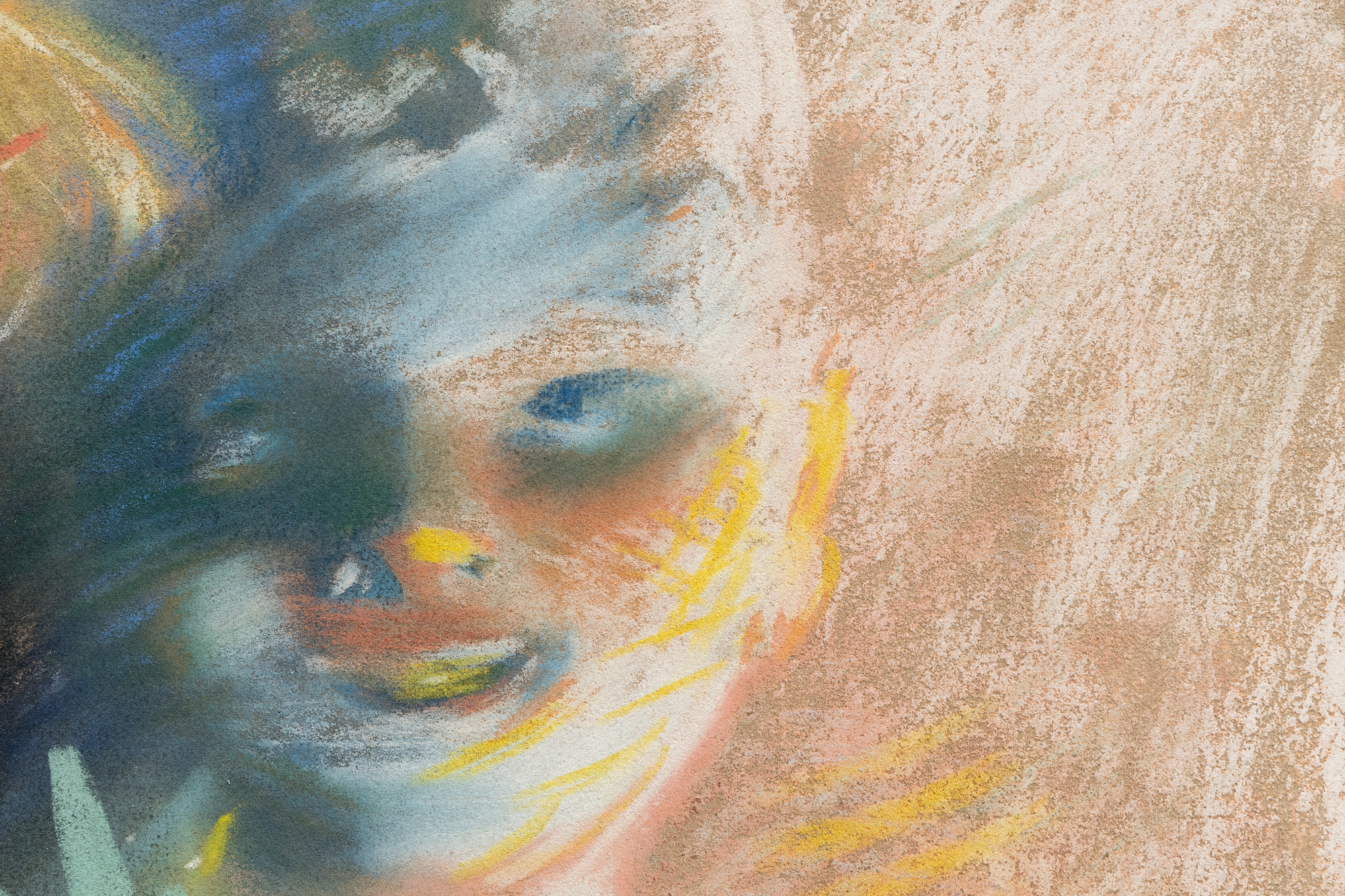
El Retrato de Jules Chéret es un animado pastel sobre lienzo que revela la sensibilidad pictórica del artista más conocido como el maestro del cartelismo de la Belle Époque. En esta composición, dos figuras femeninas emergen de un torbellino de color y luz, y sus formas se disuelven en trazos de turquesa, rosa y dorado. La superficie vibra con movimiento, recordando la energía teatral y el glamour fugaz que definieron el París finisecular. Suavemente modeladas pero animadas por gestos amplios, las figuras parecen capturadas en plena actuación, íntimas y exuberantes a la vez.


Aunque ampliamente celebrado por sus carteles publicitarios, Chéret estuvo profundamente influenciado por los maestros rococó, en particular Jean-Honoré Fragonard y Antoine Watteau. Su espíritu de elegancia, sensualidad y floritura decorativa impregna esta obra, en la que la ligereza del trazo y el brillo cromático prevalecen sobre el realismo estricto. Estas mismas cualidades hicieron que sus vívidos carteles litográficos para el Eldorado, el Olympia, las Folies Bergère, el Théâtre de l'Opéra, el Alcazar d'Été y el Moulin Rouge se convirtieran en emblemas icónicos de la vida moderna parisina.


El éxito de Chéret en el diseño de carteles contribuyó al lanzamiento de una nueva generación de artistas, entre los que se encontraban Charles Gesmar y Henri de Toulouse-Lautrec, consolidando el cartel como un medio artístico legítimo. Aunque alcanzó el reconocimiento como pintor, fueron sus imágenes publicitarias —inicialmente realizadas para ganarse la vida, pero posteriormente perseguidas con convicción— las que aseguraron su legado. Honrado con una exposición póstuma en el Salon d'Automne en 1933, las obras de Chéret se conservan ahora en importantes instituciones, como el Museo de Arte Moderno, el Museo de Orsay, el Museo Hermitage y el Instituto de Arte de Chicago, lo que confirma su lugar perdurable en la historia del arte moderno.
Preguntar