
Atrás

JANE PETERSON(1876-1965)

$85,000

 
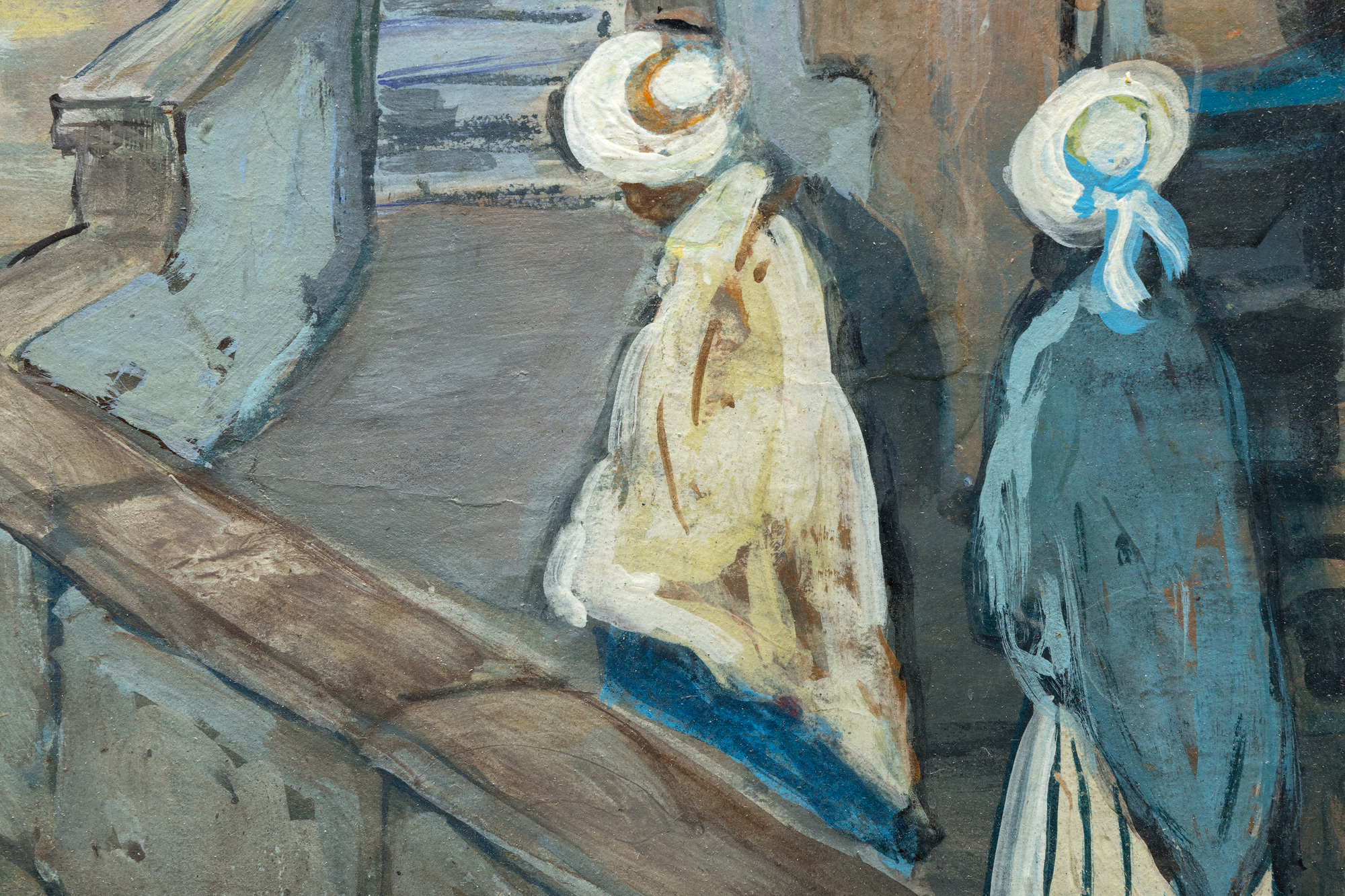
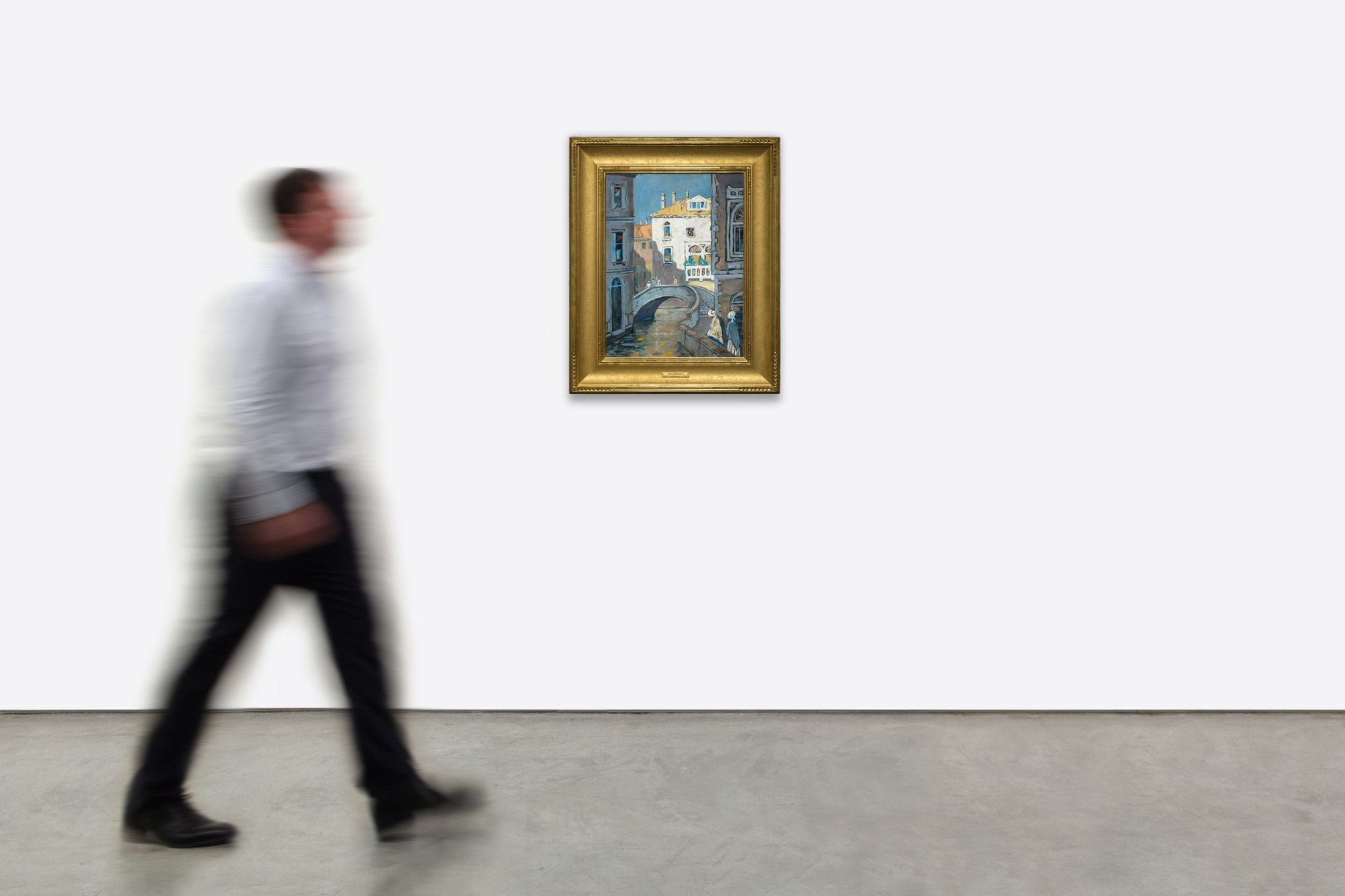
<div><font face=Lato size=3 color="#191919"><em>Figures Along a Venetian Canal, Summer </em>is a vibrant and characteristically bold example of Jane Peterson’s Venetian canal scenes, a subject that represents one of the most collected and widely recognized motifs within her body of work and is one she returned to repeatedly during her European travels. Peterson is known for combining academic draftsmanship with bold color and loose, expressive brushwork. Her work reflects the visual influence of Impressionism, Fauvism, and Art Nouveau. Previously held in the collection of the artist and her estate, this painting is a beautiful example of these influences and of her signature style.</font></div><br><br><div> </div><br><br><div><font face=Lato size=3 color="#191919">The medium and smaller format of this canvas was chosen for portability during Peterson’s travels and captures a serene moment with figures moving along the canals, approaching a bridge. Peterson uses saturated colors and broad, lively brushstrokes to animate the scene, as well as use of light to bring the scene to life and create a distinct mood. The painting relates closely to other Venetian scenes in major museum collections, including <em>St. Mark's in Venice</em>, circa 1920 in the permanent collection of The Norton Museum of Art.</font></div><br><br><div> </div><br><br><div><font face=Lato size=3 color="#191919">Peterson was known for choosing subjects beyond the conventional expectations for women artists of her time, favoring street scenes, travel, public life, and even wartime experience. <em>Figures Along a Venetian Canal, Summer </em>embodies this outward looking spirit, revealing her ability to transform everyday scenes into moments of vivid immediacy and enduring charm.</font></div> <div><font face=Lato size=3 color="#191919"><em>Figures Along a Venetian Canal, Summer </em>is a vibrant and characteristically bold example of Jane Peterson’s Venetian canal scenes, a subject that represents one of the most collected and widely recognized motifs within her body of work and is one she returned to repeatedly during her European travels. Peterson is known for combining academic draftsmanship with bold color and loose, expressive brushwork. Her work reflects the visual influence of Impressionism, Fauvism, and Art Nouveau. Previously held in the collection of the artist and her estate, this painting is a beautiful example of these influences and of her signature style.</font></div><br><br><div> </div><br><br><div><font face=Lato size=3 color="#191919">The medium and smaller format of this canvas was chosen for portability during Peterson’s travels and captures a serene moment with figures moving along the canals, approaching a bridge. Peterson uses saturated colors and broad, lively brushstrokes to animate the scene, as well as use of light to bring the scene to life and create a distinct mood. The painting relates closely to other Venetian scenes in major museum collections, including <em>St. Mark's in Venice</em>, circa 1920 in the permanent collection of The Norton Museum of Art.</font></div><br><br><div> </div><br><br><div><font face=Lato size=3 color="#191919">Peterson was known for choosing subjects beyond the conventional expectations for women artists of her time, favoring street scenes, travel, public life, and even wartime experience. <em>Figures Along a Venetian Canal, Summer </em>embodies this outward looking spirit, revealing her ability to transform everyday scenes into moments of vivid immediacy and enduring charm.</font></div> <div><font face=Lato size=3 color="#191919"><em>Figures Along a Venetian Canal, Summer </em>is a vibrant and characteristically bold example of Jane Peterson’s Venetian canal scenes, a subject that represents one of the most collected and widely recognized motifs within her body of work and is one she returned to repeatedly during her European travels. Peterson is known for combining academic draftsmanship with bold color and loose, expressive brushwork. Her work reflects the visual influence of Impressionism, Fauvism, and Art Nouveau. Previously held in the collection of the artist and her estate, this painting is a beautiful example of these influences and of her signature style.</font></div><br><br><div> </div><br><br><div><font face=Lato size=3 color="#191919">The medium and smaller format of this canvas was chosen for portability during Peterson’s travels and captures a serene moment with figures moving along the canals, approaching a bridge. Peterson uses saturated colors and broad, lively brushstrokes to animate the scene, as well as use of light to bring the scene to life and create a distinct mood. The painting relates closely to other Venetian scenes in major museum collections, including <em>St. Mark's in Venice</em>, circa 1920 in the permanent collection of The Norton Museum of Art.</font></div><br><br><div> </div><br><br><div><font face=Lato size=3 color="#191919">Peterson was known for choosing subjects beyond the conventional expectations for women artists of her time, favoring street scenes, travel, public life, and even wartime experience. <em>Figures Along a Venetian Canal, Summer </em>embodies this outward looking spirit, revealing her ability to transform everyday scenes into moments of vivid immediacy and enduring charm.</font></div> <div><font face=Lato size=3 color="#191919"><em>Figures Along a Venetian Canal, Summer </em>is a vibrant and characteristically bold example of Jane Peterson’s Venetian canal scenes, a subject that represents one of the most collected and widely recognized motifs within her body of work and is one she returned to repeatedly during her European travels. Peterson is known for combining academic draftsmanship with bold color and loose, expressive brushwork. Her work reflects the visual influence of Impressionism, Fauvism, and Art Nouveau. Previously held in the collection of the artist and her estate, this painting is a beautiful example of these influences and of her signature style.</font></div><br><br><div> </div><br><br><div><font face=Lato size=3 color="#191919">The medium and smaller format of this canvas was chosen for portability during Peterson’s travels and captures a serene moment with figures moving along the canals, approaching a bridge. Peterson uses saturated colors and broad, lively brushstrokes to animate the scene, as well as use of light to bring the scene to life and create a distinct mood. The painting relates closely to other Venetian scenes in major museum collections, including <em>St. Mark's in Venice</em>, circa 1920 in the permanent collection of The Norton Museum of Art.</font></div><br><br><div> </div><br><br><div><font face=Lato size=3 color="#191919">Peterson was known for choosing subjects beyond the conventional expectations for women artists of her time, favoring street scenes, travel, public life, and even wartime experience. <em>Figures Along a Venetian Canal, Summer </em>embodies this outward looking spirit, revealing her ability to transform everyday scenes into moments of vivid immediacy and enduring charm.</font></div> <div><font face=Lato size=3 color="#191919"><em>Figures Along a Venetian Canal, Summer </em>is a vibrant and characteristically bold example of Jane Peterson’s Venetian canal scenes, a subject that represents one of the most collected and widely recognized motifs within her body of work and is one she returned to repeatedly during her European travels. Peterson is known for combining academic draftsmanship with bold color and loose, expressive brushwork. Her work reflects the visual influence of Impressionism, Fauvism, and Art Nouveau. Previously held in the collection of the artist and her estate, this painting is a beautiful example of these influences and of her signature style.</font></div><br><br><div> </div><br><br><div><font face=Lato size=3 color="#191919">The medium and smaller format of this canvas was chosen for portability during Peterson’s travels and captures a serene moment with figures moving along the canals, approaching a bridge. Peterson uses saturated colors and broad, lively brushstrokes to animate the scene, as well as use of light to bring the scene to life and create a distinct mood. The painting relates closely to other Venetian scenes in major museum collections, including <em>St. Mark's in Venice</em>, circa 1920 in the permanent collection of The Norton Museum of Art.</font></div><br><br><div> </div><br><br><div><font face=Lato size=3 color="#191919">Peterson was known for choosing subjects beyond the conventional expectations for women artists of her time, favoring street scenes, travel, public life, and even wartime experience. <em>Figures Along a Venetian Canal, Summer </em>embodies this outward looking spirit, revealing her ability to transform everyday scenes into moments of vivid immediacy and enduring charm.</font></div> <div><font face=Lato size=3 color="#191919"><em>Figures Along a Venetian Canal, Summer </em>is a vibrant and characteristically bold example of Jane Peterson’s Venetian canal scenes, a subject that represents one of the most collected and widely recognized motifs within her body of work and is one she returned to repeatedly during her European travels. Peterson is known for combining academic draftsmanship with bold color and loose, expressive brushwork. Her work reflects the visual influence of Impressionism, Fauvism, and Art Nouveau. Previously held in the collection of the artist and her estate, this painting is a beautiful example of these influences and of her signature style.</font></div><br><br><div> </div><br><br><div><font face=Lato size=3 color="#191919">The medium and smaller format of this canvas was chosen for portability during Peterson’s travels and captures a serene moment with figures moving along the canals, approaching a bridge. Peterson uses saturated colors and broad, lively brushstrokes to animate the scene, as well as use of light to bring the scene to life and create a distinct mood. The painting relates closely to other Venetian scenes in major museum collections, including <em>St. Mark's in Venice</em>, circa 1920 in the permanent collection of The Norton Museum of Art.</font></div><br><br><div> </div><br><br><div><font face=Lato size=3 color="#191919">Peterson was known for choosing subjects beyond the conventional expectations for women artists of her time, favoring street scenes, travel, public life, and even wartime experience. <em>Figures Along a Venetian Canal, Summer </em>embodies this outward looking spirit, revealing her ability to transform everyday scenes into moments of vivid immediacy and enduring charm.</font></div> <div><font face=Lato size=3 color="#191919"><em>Figures Along a Venetian Canal, Summer </em>is a vibrant and characteristically bold example of Jane Peterson’s Venetian canal scenes, a subject that represents one of the most collected and widely recognized motifs within her body of work and is one she returned to repeatedly during her European travels. Peterson is known for combining academic draftsmanship with bold color and loose, expressive brushwork. Her work reflects the visual influence of Impressionism, Fauvism, and Art Nouveau. Previously held in the collection of the artist and her estate, this painting is a beautiful example of these influences and of her signature style.</font></div><br><br><div> </div><br><br><div><font face=Lato size=3 color="#191919">The medium and smaller format of this canvas was chosen for portability during Peterson’s travels and captures a serene moment with figures moving along the canals, approaching a bridge. Peterson uses saturated colors and broad, lively brushstrokes to animate the scene, as well as use of light to bring the scene to life and create a distinct mood. The painting relates closely to other Venetian scenes in major museum collections, including <em>St. Mark's in Venice</em>, circa 1920 in the permanent collection of The Norton Museum of Art.</font></div><br><br><div> </div><br><br><div><font face=Lato size=3 color="#191919">Peterson was known for choosing subjects beyond the conventional expectations for women artists of her time, favoring street scenes, travel, public life, and even wartime experience. <em>Figures Along a Venetian Canal, Summer </em>embodies this outward looking spirit, revealing her ability to transform everyday scenes into moments of vivid immediacy and enduring charm.</font></div>
Figuras a lo largo de un canal veneciano, verano25 1/2 x 18 1/8 pulgadas(64,77 x 46,04 cm) Óleo sobre papel sobre lienzo
Procedencia
Peterson Estate hasta 1969
Colección privada, Connecticut hasta 2001
Colección privada
Figuras a lo largo de un canal veneciano, verano es un ejemplo vibrante y característicamente audaz de las escenas de canales venecianos de Jane Peterson, un tema que representa uno de los motivos más coleccionados y ampliamente reconocidos dentro de su obra y al que volvió repetidamente durante sus viajes por Europa. Peterson es conocida por combinar el dibujo académico con colores audaces y pinceladas sueltas y expresivas. Su obra refleja la influencia visual del impresionismo, el fauvismo y el Art Nouveau. Esta pintura, que anteriormente formaba parte de la colección de la artista y de su patrimonio, es un bello ejemplo de estas influencias y de su estilo característico.


El formato mediano y pequeño de este lienzo fue elegido para facilitar su transporte durante los viajes de Peterson y captura un momento sereno con figuras que se mueven a lo largo de los canales, acercándose a un puente. Peterson utiliza colores saturados y pinceladas amplias y vivaces para animar la escena, así como el uso de la luz para dar vida a la escena y crear un ambiente distintivo. La pintura guarda una estrecha relación con otras escenas venecianas de importantes colecciones de museos, como San Marcos en Venecia, circa 1920, que forma parte de la colección permanente del Museo de Arte Norton.


Peterson era conocida por elegir temas que iban más allá de las expectativas convencionales para las mujeres artistas de su época, decantándose por escenas callejeras, viajes, vida pública e incluso experiencias bélicas. Figuras a lo largo de un canal veneciano, verano encarna este espíritu abierto al exterior, revelando su capacidad para transformar escenas cotidianas en momentos de vívida inmediatez y encanto perdurable.
Preguntar