JASPER JOHNS (nacido en 1930)

 
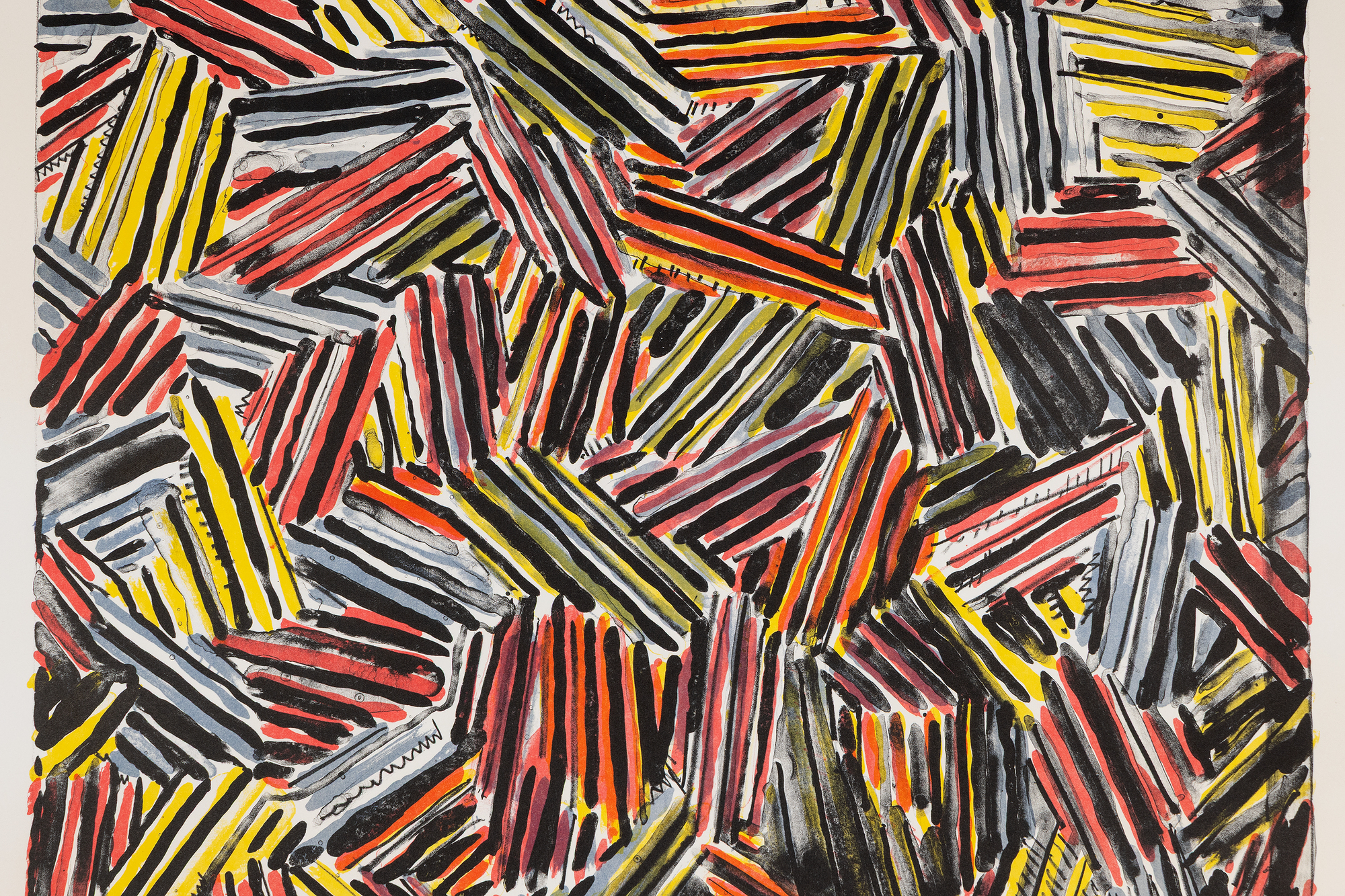
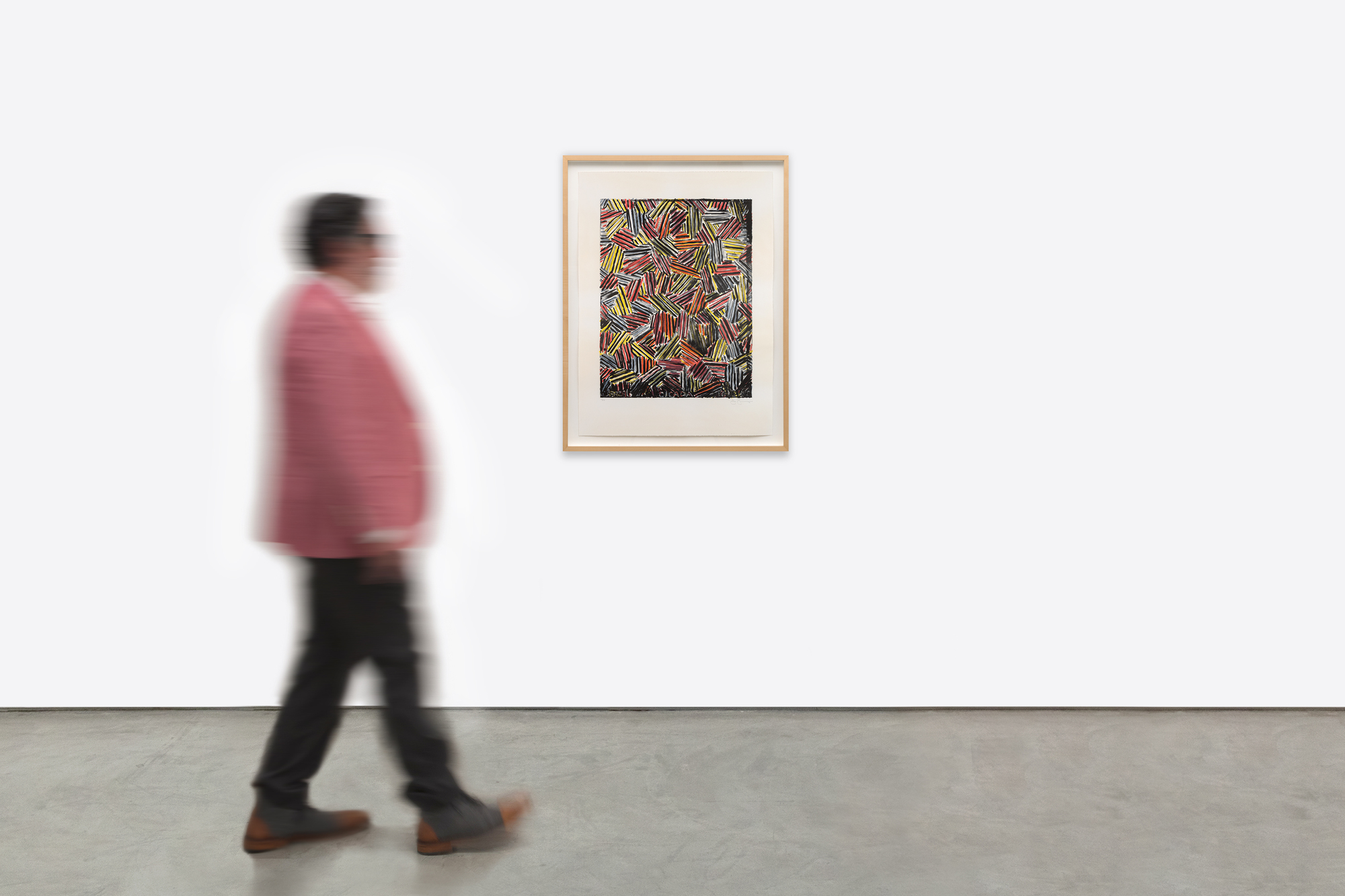
<div><font face=Lato size=3 color=black>Jasper Johns’ <em>Cicada</em> (1981) is a color lithograph published by Gemini G.E.L. in an edition of 58. The title evokes the insect’s cyclical emergence, echoing Johns’s interest in recurrence and transformation.</font></div><br><br><div> </div><br><br><div><font face=Lato size=3 color=black>Created during his “crosshatch” period (1972–83), the work exemplifies his move from flags and targets toward abstract systems of mark-making. Through layered color and texture, Johns explores the possibilities of lithography as a medium of repetition and variation.</font></div><br><br><div> </div><br><br><div><font face=Lato size=3 color=black>Impressions of <em>Cicada</em> are held in the collections of the Museum of Modern Art and the Whitney Museum of American Art, underscoring its importance within Johns’s printmaking practice.</font></div> <div><font face=Lato size=3 color=black>Jasper Johns’ <em>Cicada</em> (1981) is a color lithograph published by Gemini G.E.L. in an edition of 58. The title evokes the insect’s cyclical emergence, echoing Johns’s interest in recurrence and transformation.</font></div><br><br><div> </div><br><br><div><font face=Lato size=3 color=black>Created during his “crosshatch” period (1972–83), the work exemplifies his move from flags and targets toward abstract systems of mark-making. Through layered color and texture, Johns explores the possibilities of lithography as a medium of repetition and variation.</font></div><br><br><div> </div><br><br><div><font face=Lato size=3 color=black>Impressions of <em>Cicada</em> are held in the collections of the Museum of Modern Art and the Whitney Museum of American Art, underscoring its importance within Johns’s printmaking practice.</font></div> <div><font face=Lato size=3 color=black>Jasper Johns’ <em>Cicada</em> (1981) is a color lithograph published by Gemini G.E.L. in an edition of 58. The title evokes the insect’s cyclical emergence, echoing Johns’s interest in recurrence and transformation.</font></div><br><br><div> </div><br><br><div><font face=Lato size=3 color=black>Created during his “crosshatch” period (1972–83), the work exemplifies his move from flags and targets toward abstract systems of mark-making. Through layered color and texture, Johns explores the possibilities of lithography as a medium of repetition and variation.</font></div><br><br><div> </div><br><br><div><font face=Lato size=3 color=black>Impressions of <em>Cicada</em> are held in the collections of the Museum of Modern Art and the Whitney Museum of American Art, underscoring its importance within Johns’s printmaking practice.</font></div> <div><font face=Lato size=3 color=black>Jasper Johns’ <em>Cicada</em> (1981) is a color lithograph published by Gemini G.E.L. in an edition of 58. The title evokes the insect’s cyclical emergence, echoing Johns’s interest in recurrence and transformation.</font></div><br><br><div> </div><br><br><div><font face=Lato size=3 color=black>Created during his “crosshatch” period (1972–83), the work exemplifies his move from flags and targets toward abstract systems of mark-making. Through layered color and texture, Johns explores the possibilities of lithography as a medium of repetition and variation.</font></div><br><br><div> </div><br><br><div><font face=Lato size=3 color=black>Impressions of <em>Cicada</em> are held in the collections of the Museum of Modern Art and the Whitney Museum of American Art, underscoring its importance within Johns’s printmaking practice.</font></div> <div><font face=Lato size=3 color=black>Jasper Johns’ <em>Cicada</em> (1981) is a color lithograph published by Gemini G.E.L. in an edition of 58. The title evokes the insect’s cyclical emergence, echoing Johns’s interest in recurrence and transformation.</font></div><br><br><div> </div><br><br><div><font face=Lato size=3 color=black>Created during his “crosshatch” period (1972–83), the work exemplifies his move from flags and targets toward abstract systems of mark-making. Through layered color and texture, Johns explores the possibilities of lithography as a medium of repetition and variation.</font></div><br><br><div> </div><br><br><div><font face=Lato size=3 color=black>Impressions of <em>Cicada</em> are held in the collections of the Museum of Modern Art and the Whitney Museum of American Art, underscoring its importance within Johns’s printmaking practice.</font></div> <div><font face=Lato size=3 color=black>Jasper Johns’ <em>Cicada</em> (1981) is a color lithograph published by Gemini G.E.L. in an edition of 58. The title evokes the insect’s cyclical emergence, echoing Johns’s interest in recurrence and transformation.</font></div><br><br><div> </div><br><br><div><font face=Lato size=3 color=black>Created during his “crosshatch” period (1972–83), the work exemplifies his move from flags and targets toward abstract systems of mark-making. Through layered color and texture, Johns explores the possibilities of lithography as a medium of repetition and variation.</font></div><br><br><div> </div><br><br><div><font face=Lato size=3 color=black>Impressions of <em>Cicada</em> are held in the collections of the Museum of Modern Art and the Whitney Museum of American Art, underscoring its importance within Johns’s printmaking practice.</font></div> <div><font face=Lato size=3 color=black>Jasper Johns’ <em>Cicada</em> (1981) is a color lithograph published by Gemini G.E.L. in an edition of 58. The title evokes the insect’s cyclical emergence, echoing Johns’s interest in recurrence and transformation.</font></div><br><br><div> </div><br><br><div><font face=Lato size=3 color=black>Created during his “crosshatch” period (1972–83), the work exemplifies his move from flags and targets toward abstract systems of mark-making. Through layered color and texture, Johns explores the possibilities of lithography as a medium of repetition and variation.</font></div><br><br><div> </div><br><br><div><font face=Lato size=3 color=black>Impressions of <em>Cicada</em> are held in the collections of the Museum of Modern Art and the Whitney Museum of American Art, underscoring its importance within Johns’s printmaking practice.</font></div> <div><font face=Lato size=3 color=black>Jasper Johns’ <em>Cicada</em> (1981) is a color lithograph published by Gemini G.E.L. in an edition of 58. The title evokes the insect’s cyclical emergence, echoing Johns’s interest in recurrence and transformation.</font></div><br><br><div> </div><br><br><div><font face=Lato size=3 color=black>Created during his “crosshatch” period (1972–83), the work exemplifies his move from flags and targets toward abstract systems of mark-making. Through layered color and texture, Johns explores the possibilities of lithography as a medium of repetition and variation.</font></div><br><br><div> </div><br><br><div><font face=Lato size=3 color=black>Impressions of <em>Cicada</em> are held in the collections of the Museum of Modern Art and the Whitney Museum of American Art, underscoring its importance within Johns’s printmaking practice.</font></div> <div><font face=Lato size=3 color=black>Jasper Johns’ <em>Cicada</em> (1981) is a color lithograph published by Gemini G.E.L. in an edition of 58. The title evokes the insect’s cyclical emergence, echoing Johns’s interest in recurrence and transformation.</font></div><br><br><div> </div><br><br><div><font face=Lato size=3 color=black>Created during his “crosshatch” period (1972–83), the work exemplifies his move from flags and targets toward abstract systems of mark-making. Through layered color and texture, Johns explores the possibilities of lithography as a medium of repetition and variation.</font></div><br><br><div> </div><br><br><div><font face=Lato size=3 color=black>Impressions of <em>Cicada</em> are held in the collections of the Museum of Modern Art and the Whitney Museum of American Art, underscoring its importance within Johns’s printmaking practice.</font></div> <div><font face=Lato size=3 color=black>Jasper Johns’ <em>Cicada</em> (1981) is a color lithograph published by Gemini G.E.L. in an edition of 58. The title evokes the insect’s cyclical emergence, echoing Johns’s interest in recurrence and transformation.</font></div><br><br><div> </div><br><br><div><font face=Lato size=3 color=black>Created during his “crosshatch” period (1972–83), the work exemplifies his move from flags and targets toward abstract systems of mark-making. Through layered color and texture, Johns explores the possibilities of lithography as a medium of repetition and variation.</font></div><br><br><div> </div><br><br><div><font face=Lato size=3 color=black>Impressions of <em>Cicada</em> are held in the collections of the Museum of Modern Art and the Whitney Museum of American Art, underscoring its importance within Johns’s printmaking practice.</font></div>
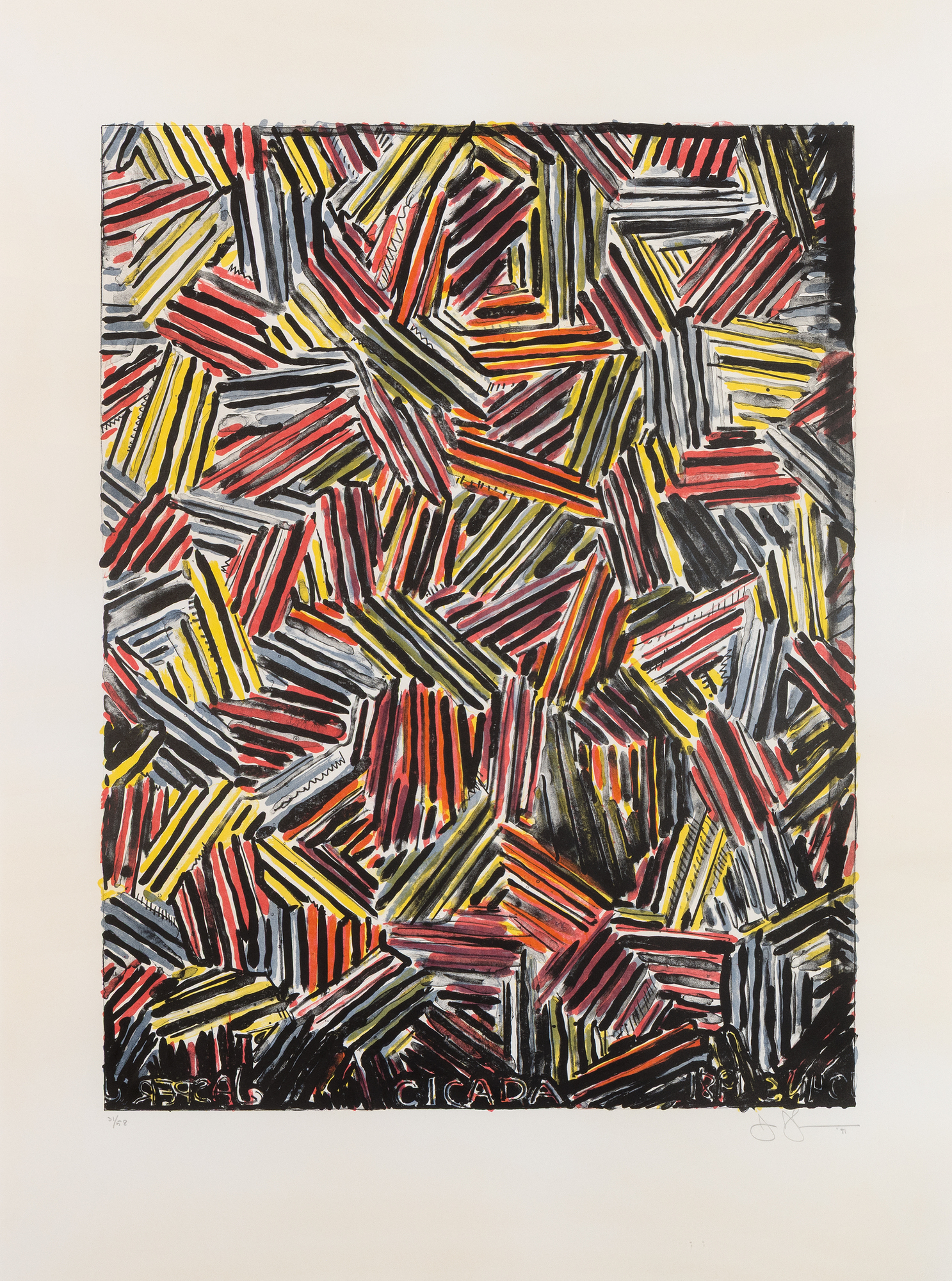
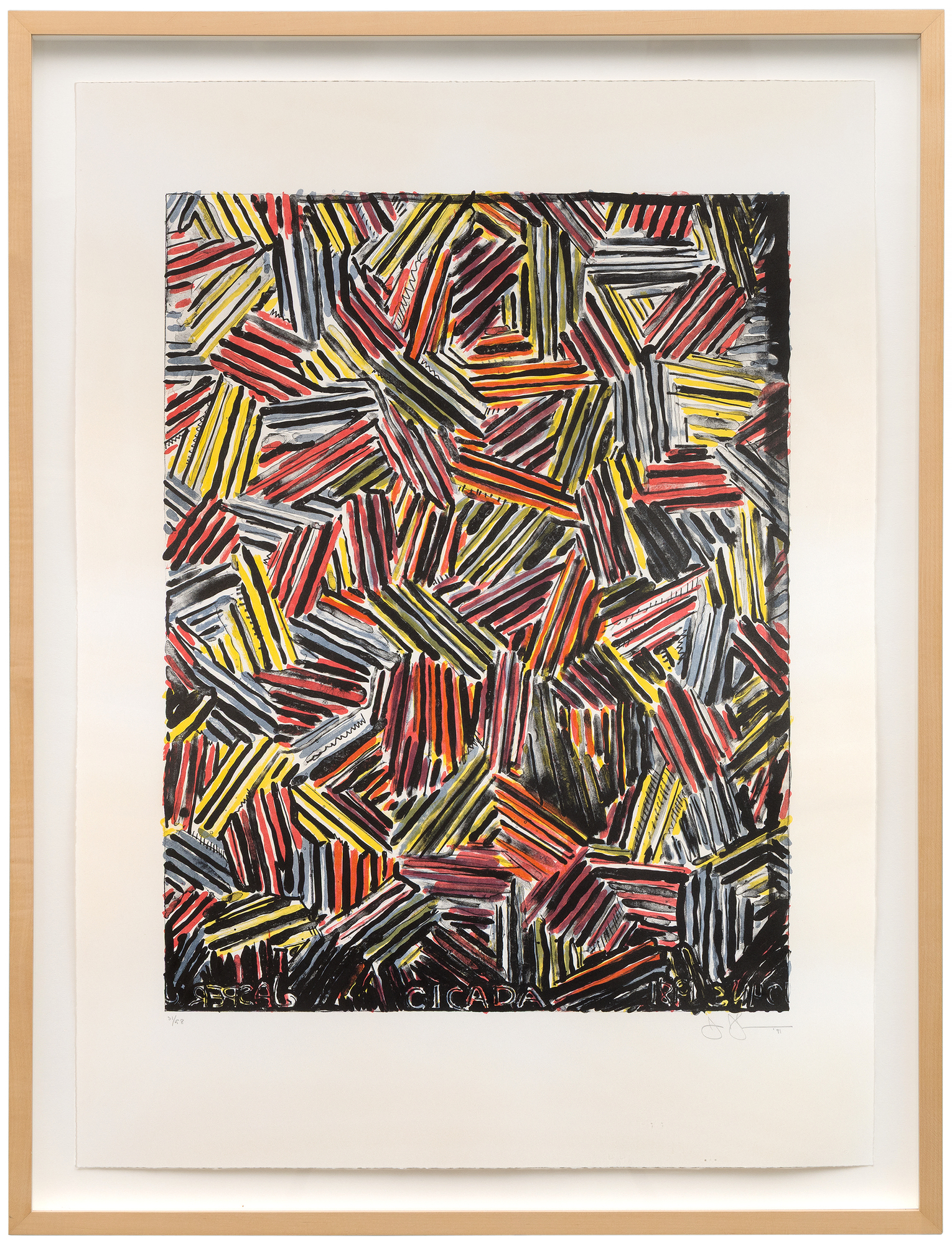
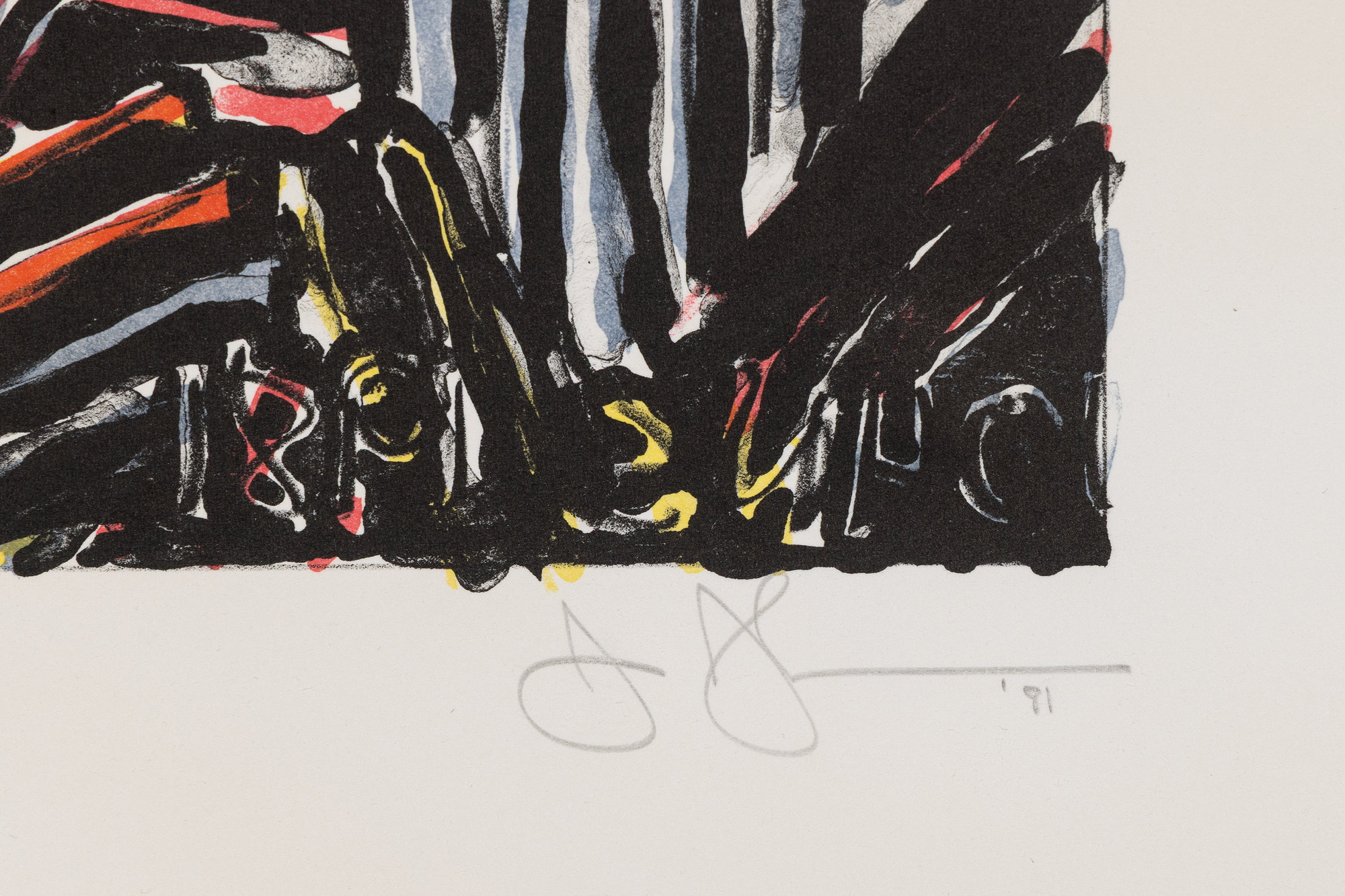
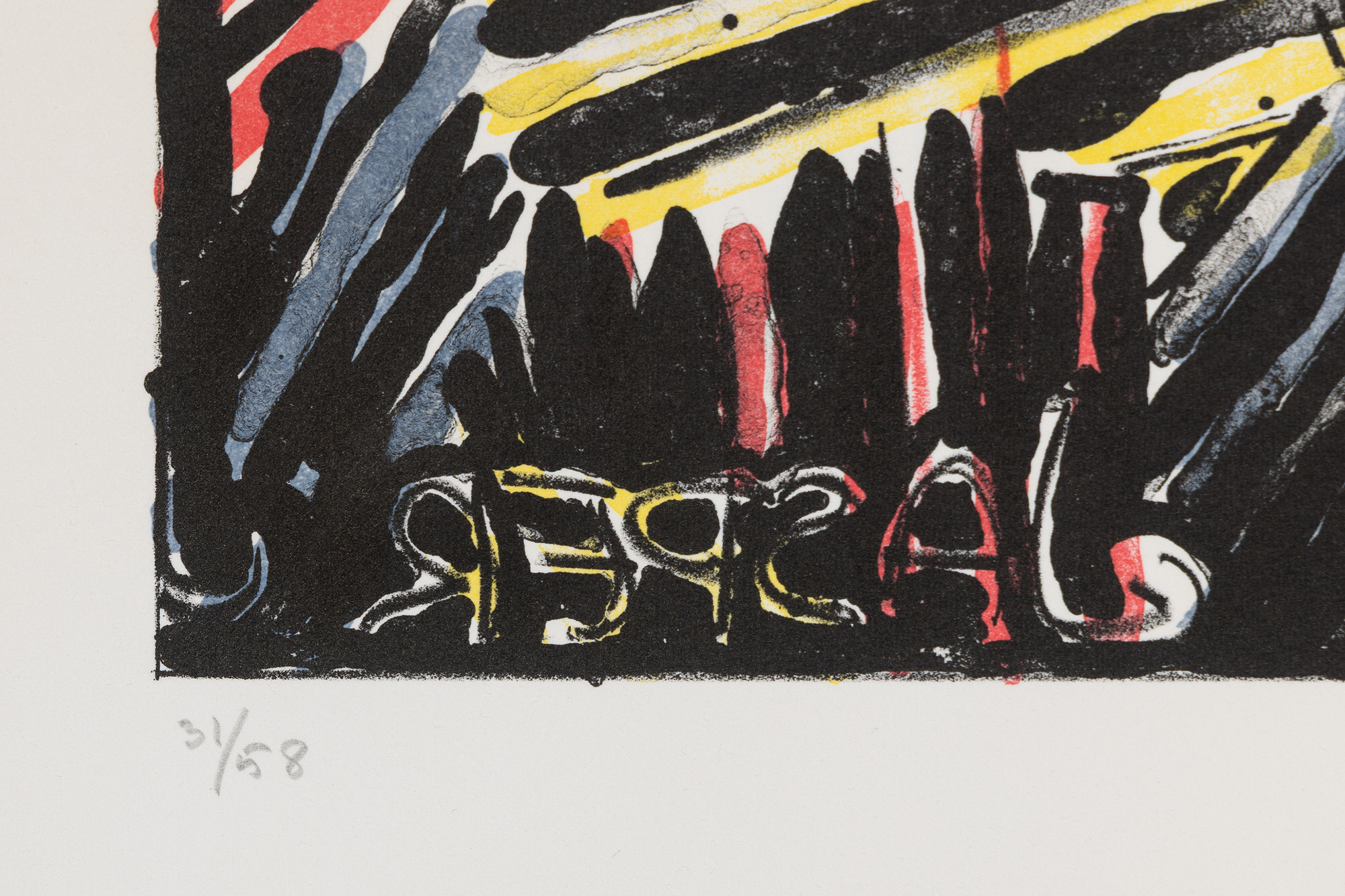
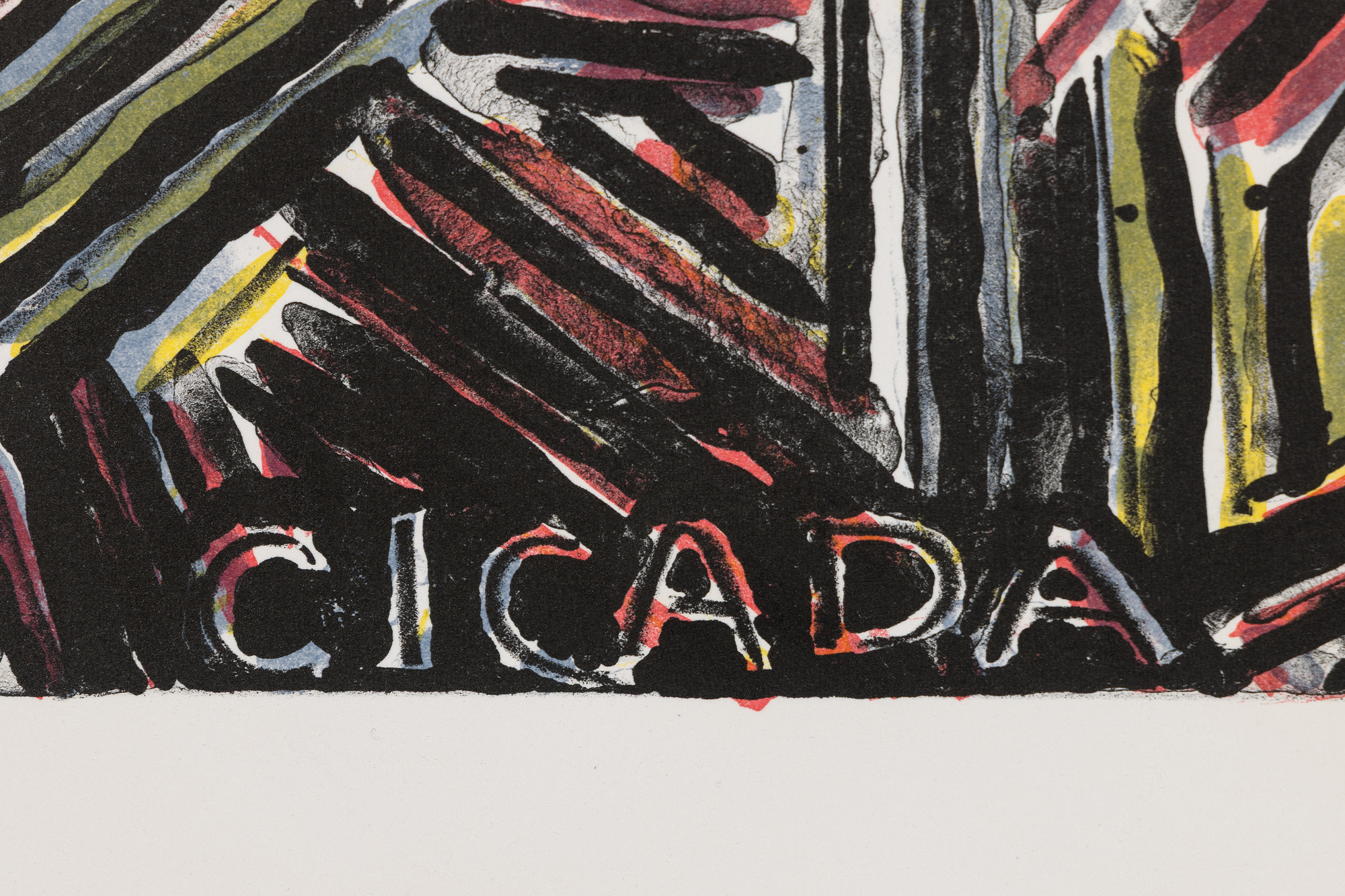
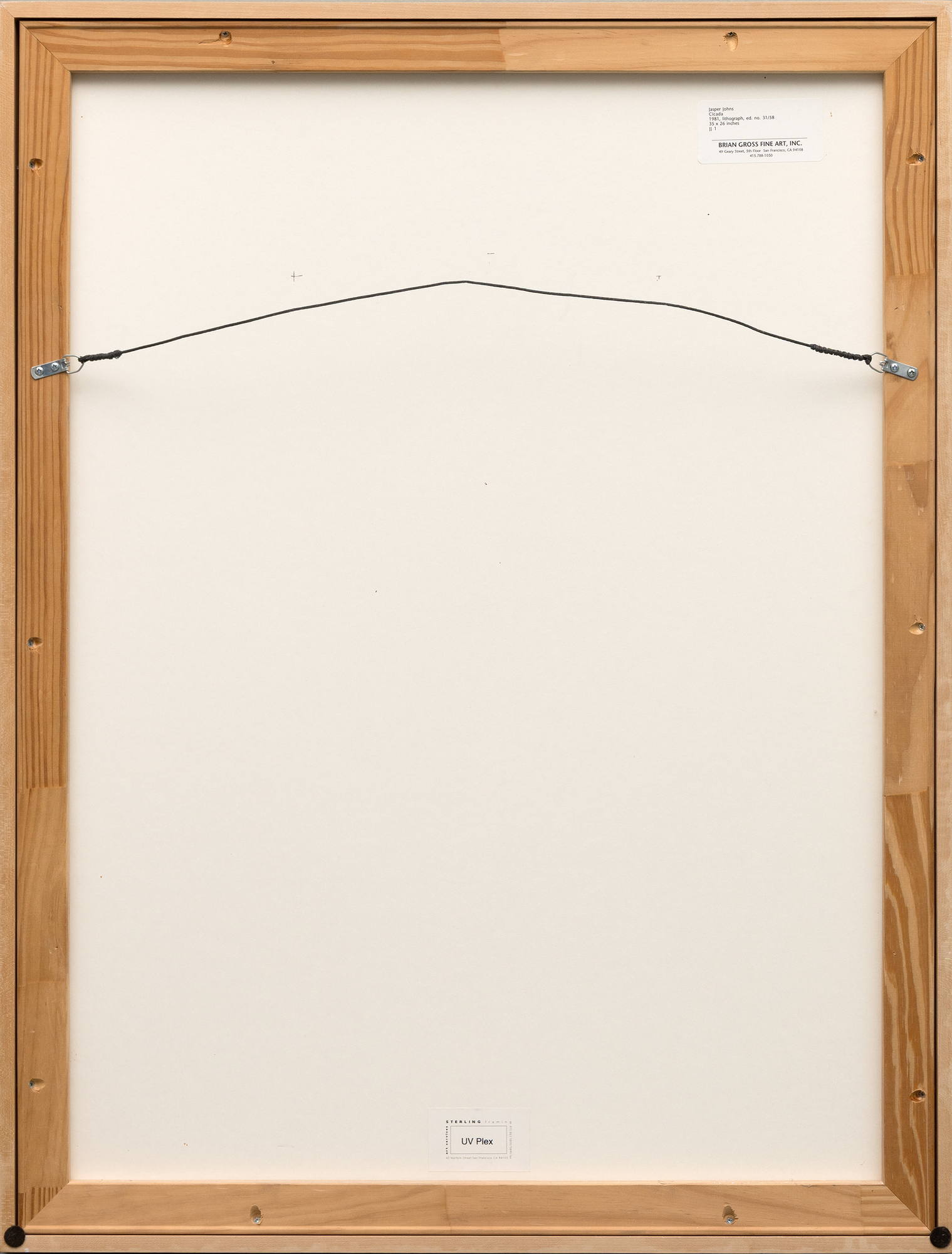
Cigarra198135 x 26 pulg.(88,9 x 66,04 cm) litografía en color
Procedencia
Bellas Artes Brian Gross
Colección Privada
Heather James Bellas Artes
Cicada (1981) de Jasper Johns es una litografía en color publicada por Gemini G.E.L. en una edición de 58 ejemplares. El título evoca la aparición cíclica del insecto, haciéndose eco del interés de Johns por la recurrencia y la transformación.


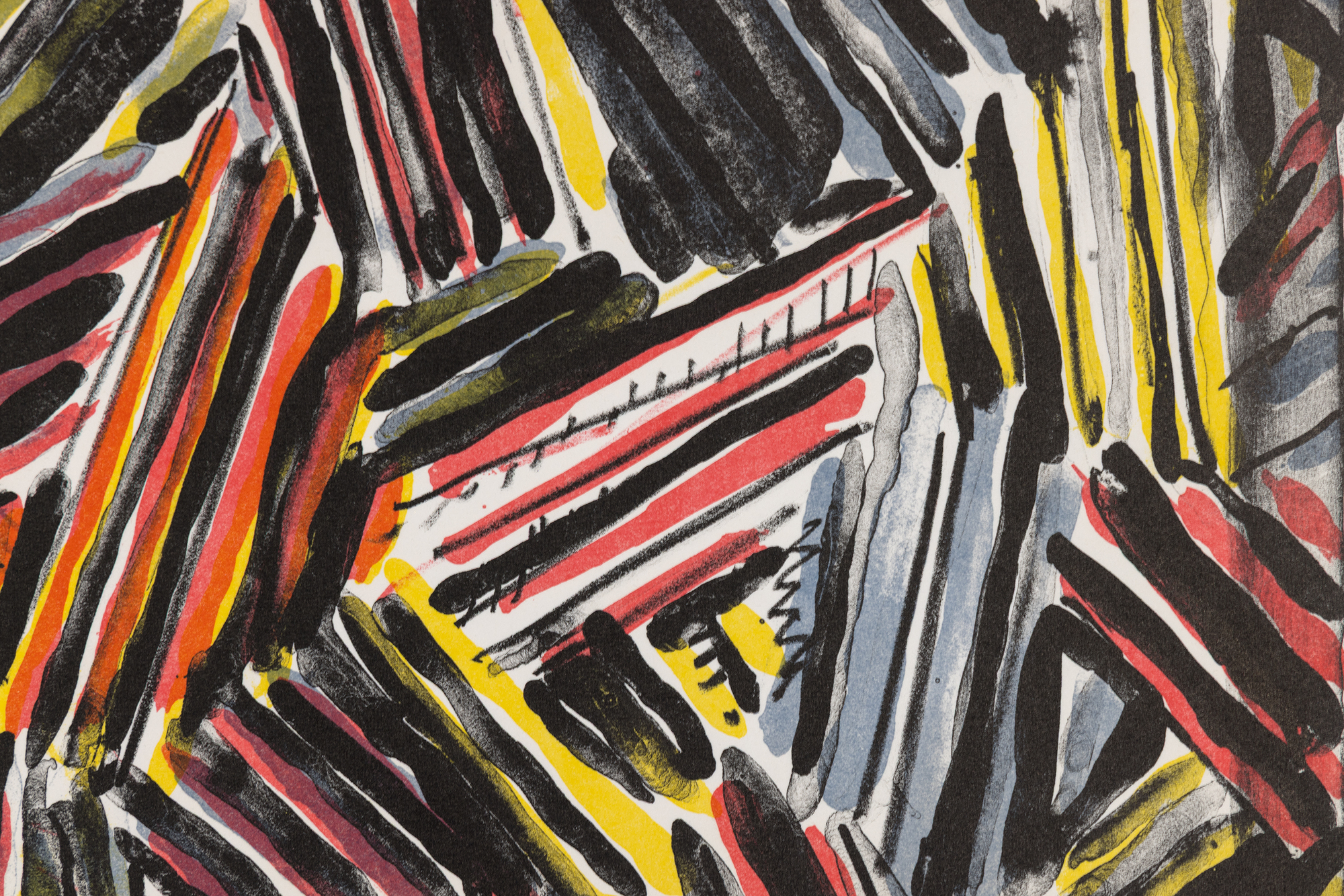
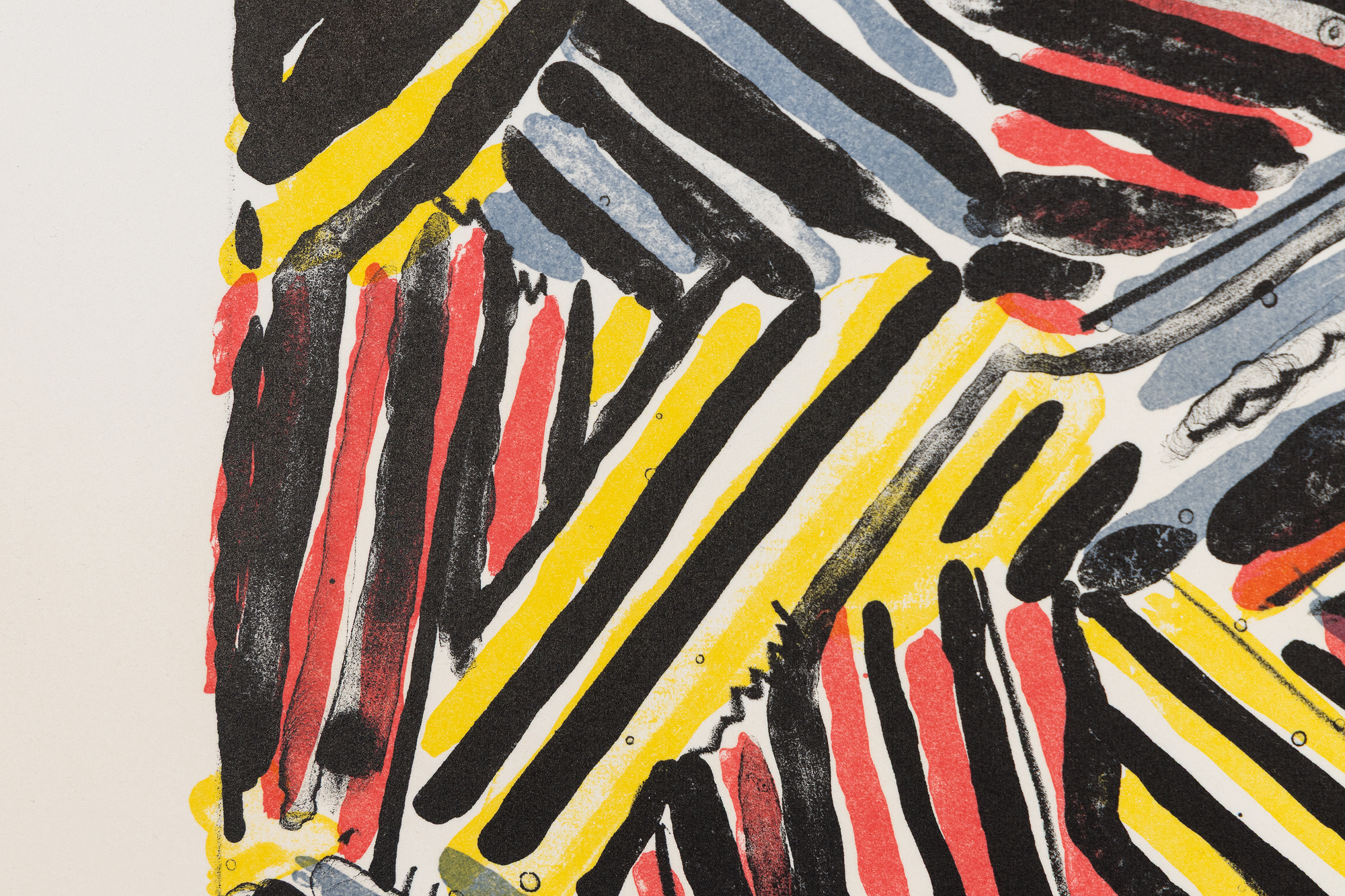
Creada durante su periodo de "manchas cruzadas" (1972-83), la obra ejemplifica su paso de las banderas y los blancos a los sistemas abstractos de creación de marcas. Mediante capas de color y textura, Johns explora las posibilidades de la litografía como medio de repetición y variación.


Impressions of Cicada forma parte de las colecciones del Museo de Arte Moderno y del Museo Whitney de Arte Americano, lo que subraya su importancia dentro de la práctica del grabado de Johns.
Preguntar