JULES OLITSKI (1922-2007)

 
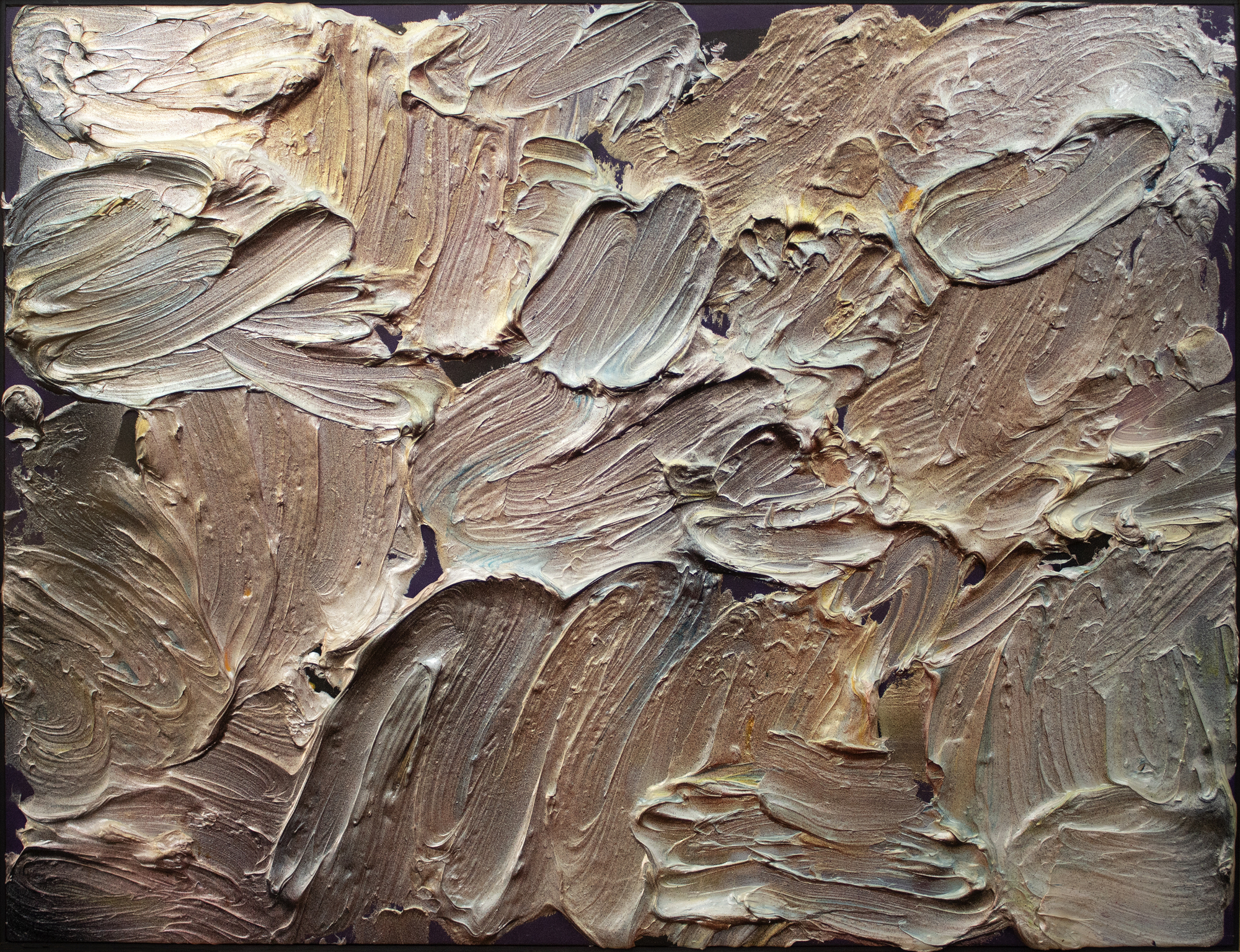
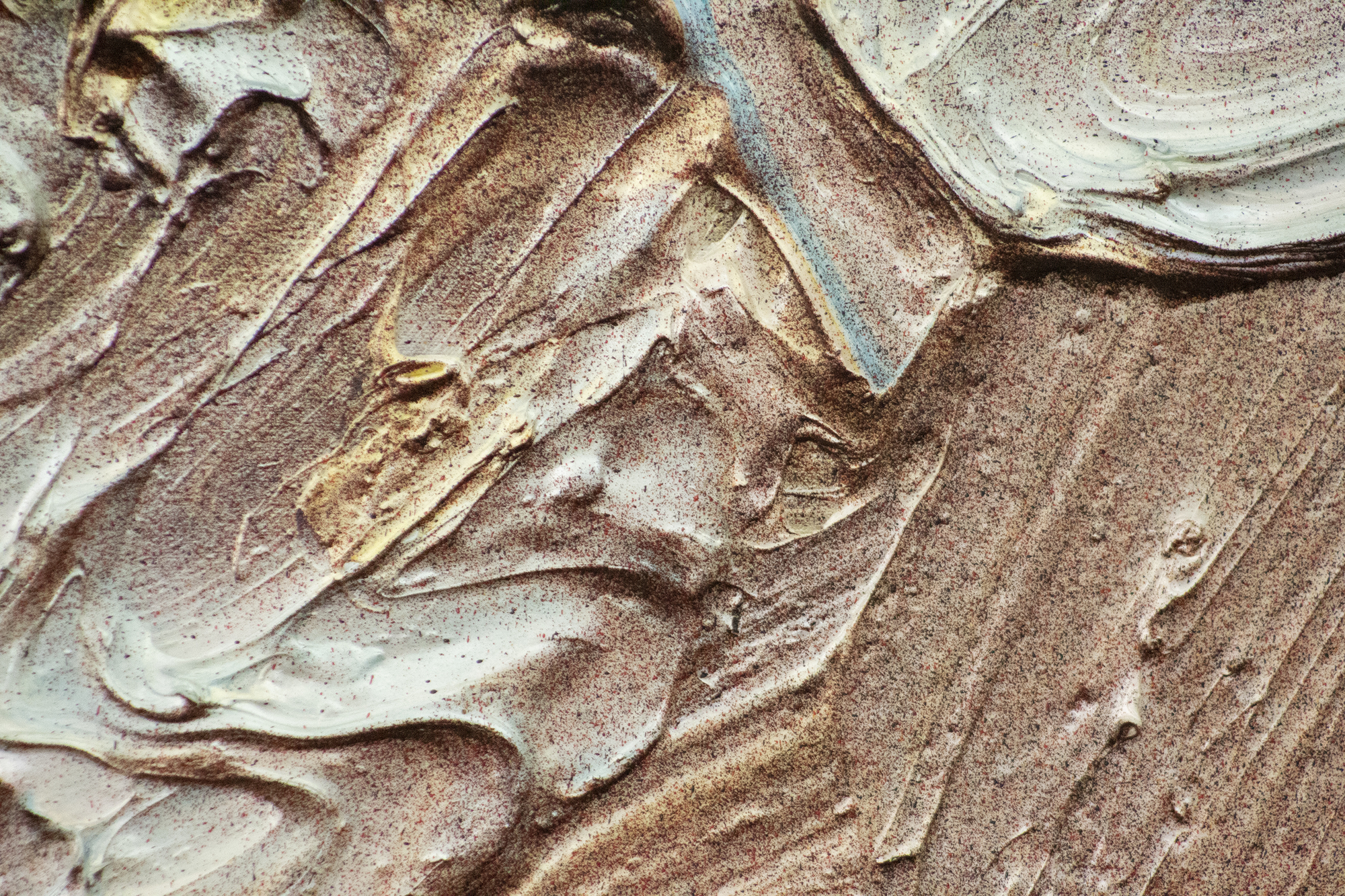
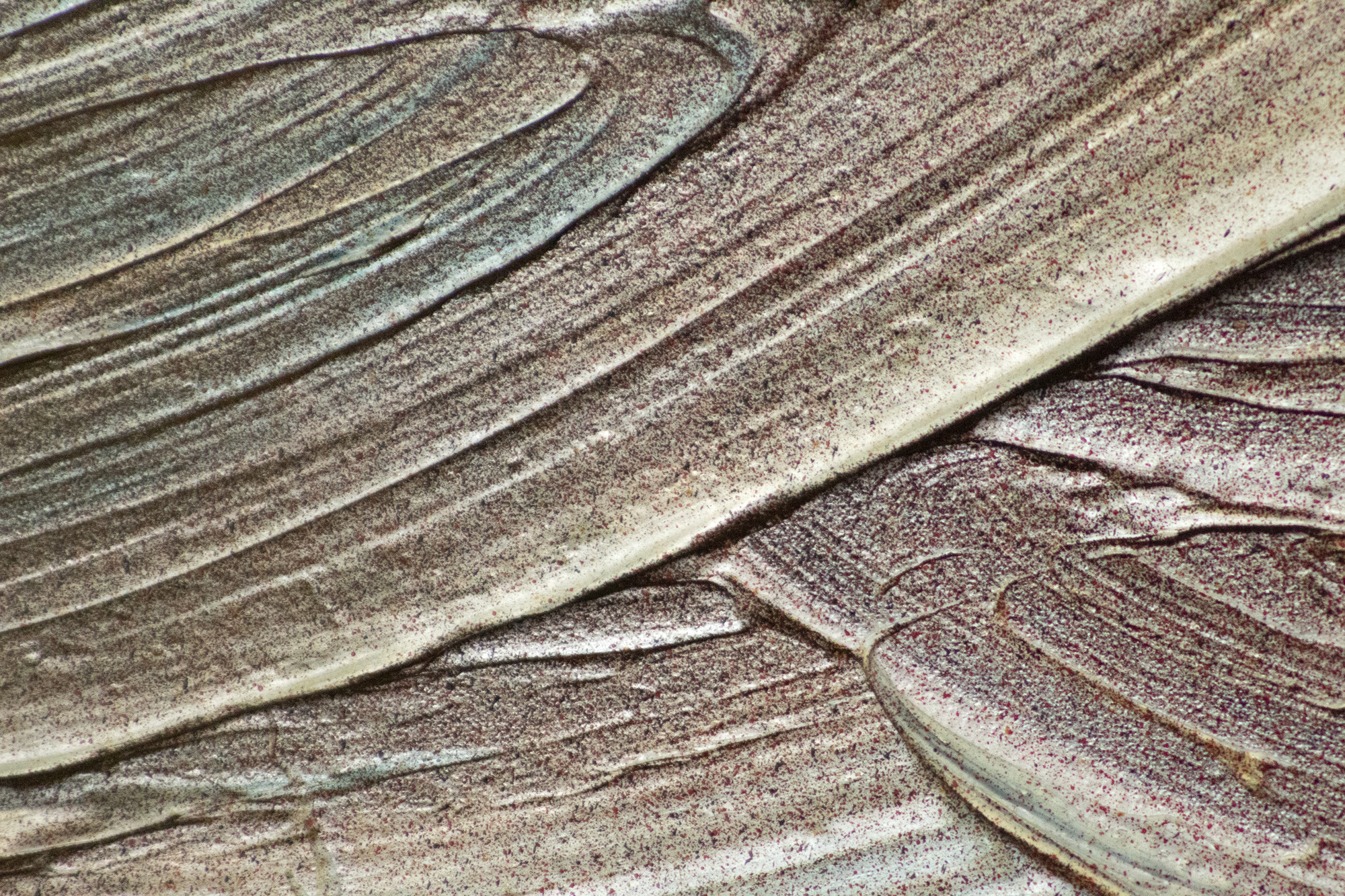
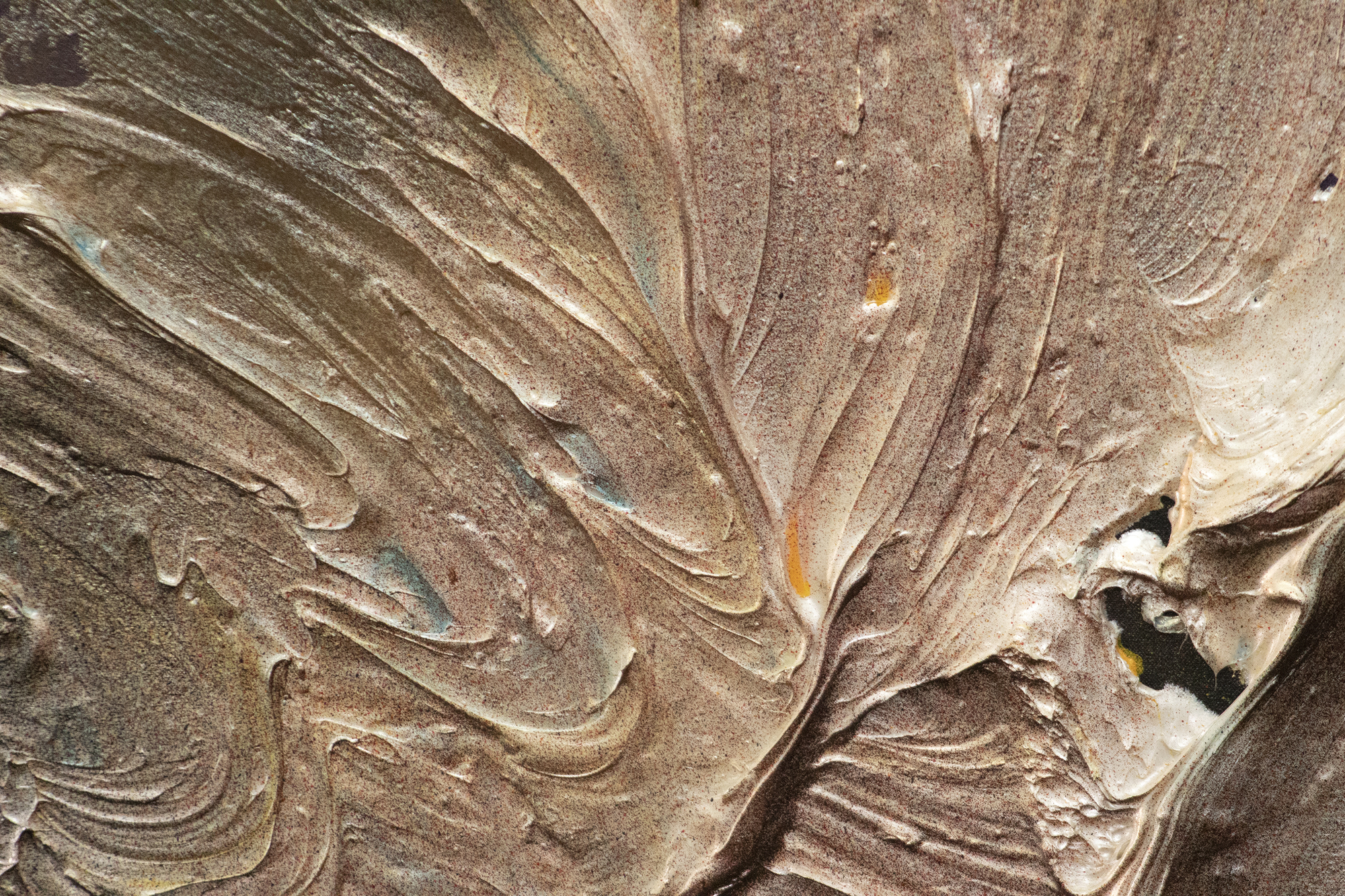
<div><font face=HelveticaNeue size=3 color="#191919">Jules Olitski’s <em>Beauty of Eve</em> (1989) exemplifies the artist’s signature “mitt” paintings, where color field abstraction, gesture, and texture converge into a richly tactile surface. Thick layers of acrylic are applied with expressive movement using unconventional tools such as mitts, brooms, and squeegees to explore the physical depth and material presence of paint. <em>Beauty of Eve</em> captures the height of this experimentation.</font></div><br><br><div> </div><br><br><div><font face=HelveticaNeue size=3 color="#191919">Olitski received major recognition at the Metropolitan Museum of Art in 1969, where he became the first living artist given a solo exhibition at the museum. His work is represented in many major permanent and public collections, including The Boston Museum of Fine Arts, Boston, MA; The Art Institute of Chicago, Chicago, IL; The Hirshhorn Museum and Sculpture Garden, Washington, D.C.; The Museum of Fine Arts, Houston, TX; Tate Modern, London, UK; Toledo Museum of Art, Toledo, OH; The Metropolitan Museum of Art; The Museum of Modern Art; The Solomon R. Guggenheim Museum; and The Whitney Museum of American Art, New York</font></div> <div><font face=HelveticaNeue size=3 color="#191919">Jules Olitski’s <em>Beauty of Eve</em> (1989) exemplifies the artist’s signature “mitt” paintings, where color field abstraction, gesture, and texture converge into a richly tactile surface. Thick layers of acrylic are applied with expressive movement using unconventional tools such as mitts, brooms, and squeegees to explore the physical depth and material presence of paint. <em>Beauty of Eve</em> captures the height of this experimentation.</font></div><br><br><div> </div><br><br><div><font face=HelveticaNeue size=3 color="#191919">Olitski received major recognition at the Metropolitan Museum of Art in 1969, where he became the first living artist given a solo exhibition at the museum. His work is represented in many major permanent and public collections, including The Boston Museum of Fine Arts, Boston, MA; The Art Institute of Chicago, Chicago, IL; The Hirshhorn Museum and Sculpture Garden, Washington, D.C.; The Museum of Fine Arts, Houston, TX; Tate Modern, London, UK; Toledo Museum of Art, Toledo, OH; The Metropolitan Museum of Art; The Museum of Modern Art; The Solomon R. Guggenheim Museum; and The Whitney Museum of American Art, New York</font></div> <div><font face=HelveticaNeue size=3 color="#191919">Jules Olitski’s <em>Beauty of Eve</em> (1989) exemplifies the artist’s signature “mitt” paintings, where color field abstraction, gesture, and texture converge into a richly tactile surface. Thick layers of acrylic are applied with expressive movement using unconventional tools such as mitts, brooms, and squeegees to explore the physical depth and material presence of paint. <em>Beauty of Eve</em> captures the height of this experimentation.</font></div><br><br><div> </div><br><br><div><font face=HelveticaNeue size=3 color="#191919">Olitski received major recognition at the Metropolitan Museum of Art in 1969, where he became the first living artist given a solo exhibition at the museum. His work is represented in many major permanent and public collections, including The Boston Museum of Fine Arts, Boston, MA; The Art Institute of Chicago, Chicago, IL; The Hirshhorn Museum and Sculpture Garden, Washington, D.C.; The Museum of Fine Arts, Houston, TX; Tate Modern, London, UK; Toledo Museum of Art, Toledo, OH; The Metropolitan Museum of Art; The Museum of Modern Art; The Solomon R. Guggenheim Museum; and The Whitney Museum of American Art, New York</font></div> <div><font face=HelveticaNeue size=3 color="#191919">Jules Olitski’s <em>Beauty of Eve</em> (1989) exemplifies the artist’s signature “mitt” paintings, where color field abstraction, gesture, and texture converge into a richly tactile surface. Thick layers of acrylic are applied with expressive movement using unconventional tools such as mitts, brooms, and squeegees to explore the physical depth and material presence of paint. <em>Beauty of Eve</em> captures the height of this experimentation.</font></div><br><br><div> </div><br><br><div><font face=HelveticaNeue size=3 color="#191919">Olitski received major recognition at the Metropolitan Museum of Art in 1969, where he became the first living artist given a solo exhibition at the museum. His work is represented in many major permanent and public collections, including The Boston Museum of Fine Arts, Boston, MA; The Art Institute of Chicago, Chicago, IL; The Hirshhorn Museum and Sculpture Garden, Washington, D.C.; The Museum of Fine Arts, Houston, TX; Tate Modern, London, UK; Toledo Museum of Art, Toledo, OH; The Metropolitan Museum of Art; The Museum of Modern Art; The Solomon R. Guggenheim Museum; and The Whitney Museum of American Art, New York</font></div> <div><font face=HelveticaNeue size=3 color="#191919">Jules Olitski’s <em>Beauty of Eve</em> (1989) exemplifies the artist’s signature “mitt” paintings, where color field abstraction, gesture, and texture converge into a richly tactile surface. Thick layers of acrylic are applied with expressive movement using unconventional tools such as mitts, brooms, and squeegees to explore the physical depth and material presence of paint. <em>Beauty of Eve</em> captures the height of this experimentation.</font></div><br><br><div> </div><br><br><div><font face=HelveticaNeue size=3 color="#191919">Olitski received major recognition at the Metropolitan Museum of Art in 1969, where he became the first living artist given a solo exhibition at the museum. His work is represented in many major permanent and public collections, including The Boston Museum of Fine Arts, Boston, MA; The Art Institute of Chicago, Chicago, IL; The Hirshhorn Museum and Sculpture Garden, Washington, D.C.; The Museum of Fine Arts, Houston, TX; Tate Modern, London, UK; Toledo Museum of Art, Toledo, OH; The Metropolitan Museum of Art; The Museum of Modern Art; The Solomon R. Guggenheim Museum; and The Whitney Museum of American Art, New York</font></div> <div><font face=HelveticaNeue size=3 color="#191919">Jules Olitski’s <em>Beauty of Eve</em> (1989) exemplifies the artist’s signature “mitt” paintings, where color field abstraction, gesture, and texture converge into a richly tactile surface. Thick layers of acrylic are applied with expressive movement using unconventional tools such as mitts, brooms, and squeegees to explore the physical depth and material presence of paint. <em>Beauty of Eve</em> captures the height of this experimentation.</font></div><br><br><div> </div><br><br><div><font face=HelveticaNeue size=3 color="#191919">Olitski received major recognition at the Metropolitan Museum of Art in 1969, where he became the first living artist given a solo exhibition at the museum. His work is represented in many major permanent and public collections, including The Boston Museum of Fine Arts, Boston, MA; The Art Institute of Chicago, Chicago, IL; The Hirshhorn Museum and Sculpture Garden, Washington, D.C.; The Museum of Fine Arts, Houston, TX; Tate Modern, London, UK; Toledo Museum of Art, Toledo, OH; The Metropolitan Museum of Art; The Museum of Modern Art; The Solomon R. Guggenheim Museum; and The Whitney Museum of American Art, New York</font></div> <div><font face=HelveticaNeue size=3 color="#191919">Jules Olitski’s <em>Beauty of Eve</em> (1989) exemplifies the artist’s signature “mitt” paintings, where color field abstraction, gesture, and texture converge into a richly tactile surface. Thick layers of acrylic are applied with expressive movement using unconventional tools such as mitts, brooms, and squeegees to explore the physical depth and material presence of paint. <em>Beauty of Eve</em> captures the height of this experimentation.</font></div><br><br><div> </div><br><br><div><font face=HelveticaNeue size=3 color="#191919">Olitski received major recognition at the Metropolitan Museum of Art in 1969, where he became the first living artist given a solo exhibition at the museum. His work is represented in many major permanent and public collections, including The Boston Museum of Fine Arts, Boston, MA; The Art Institute of Chicago, Chicago, IL; The Hirshhorn Museum and Sculpture Garden, Washington, D.C.; The Museum of Fine Arts, Houston, TX; Tate Modern, London, UK; Toledo Museum of Art, Toledo, OH; The Metropolitan Museum of Art; The Museum of Modern Art; The Solomon R. Guggenheim Museum; and The Whitney Museum of American Art, New York</font></div> <div><font face=HelveticaNeue size=3 color="#191919">Jules Olitski’s <em>Beauty of Eve</em> (1989) exemplifies the artist’s signature “mitt” paintings, where color field abstraction, gesture, and texture converge into a richly tactile surface. Thick layers of acrylic are applied with expressive movement using unconventional tools such as mitts, brooms, and squeegees to explore the physical depth and material presence of paint. <em>Beauty of Eve</em> captures the height of this experimentation.</font></div><br><br><div> </div><br><br><div><font face=HelveticaNeue size=3 color="#191919">Olitski received major recognition at the Metropolitan Museum of Art in 1969, where he became the first living artist given a solo exhibition at the museum. His work is represented in many major permanent and public collections, including The Boston Museum of Fine Arts, Boston, MA; The Art Institute of Chicago, Chicago, IL; The Hirshhorn Museum and Sculpture Garden, Washington, D.C.; The Museum of Fine Arts, Houston, TX; Tate Modern, London, UK; Toledo Museum of Art, Toledo, OH; The Metropolitan Museum of Art; The Museum of Modern Art; The Solomon R. Guggenheim Museum; and The Whitney Museum of American Art, New York</font></div> <div><font face=HelveticaNeue size=3 color="#191919">Jules Olitski’s <em>Beauty of Eve</em> (1989) exemplifies the artist’s signature “mitt” paintings, where color field abstraction, gesture, and texture converge into a richly tactile surface. Thick layers of acrylic are applied with expressive movement using unconventional tools such as mitts, brooms, and squeegees to explore the physical depth and material presence of paint. <em>Beauty of Eve</em> captures the height of this experimentation.</font></div><br><br><div> </div><br><br><div><font face=HelveticaNeue size=3 color="#191919">Olitski received major recognition at the Metropolitan Museum of Art in 1969, where he became the first living artist given a solo exhibition at the museum. His work is represented in many major permanent and public collections, including The Boston Museum of Fine Arts, Boston, MA; The Art Institute of Chicago, Chicago, IL; The Hirshhorn Museum and Sculpture Garden, Washington, D.C.; The Museum of Fine Arts, Houston, TX; Tate Modern, London, UK; Toledo Museum of Art, Toledo, OH; The Metropolitan Museum of Art; The Museum of Modern Art; The Solomon R. Guggenheim Museum; and The Whitney Museum of American Art, New York</font></div> <div><font face=HelveticaNeue size=3 color="#191919">Jules Olitski’s <em>Beauty of Eve</em> (1989) exemplifies the artist’s signature “mitt” paintings, where color field abstraction, gesture, and texture converge into a richly tactile surface. Thick layers of acrylic are applied with expressive movement using unconventional tools such as mitts, brooms, and squeegees to explore the physical depth and material presence of paint. <em>Beauty of Eve</em> captures the height of this experimentation.</font></div><br><br><div> </div><br><br><div><font face=HelveticaNeue size=3 color="#191919">Olitski received major recognition at the Metropolitan Museum of Art in 1969, where he became the first living artist given a solo exhibition at the museum. His work is represented in many major permanent and public collections, including The Boston Museum of Fine Arts, Boston, MA; The Art Institute of Chicago, Chicago, IL; The Hirshhorn Museum and Sculpture Garden, Washington, D.C.; The Museum of Fine Arts, Houston, TX; Tate Modern, London, UK; Toledo Museum of Art, Toledo, OH; The Metropolitan Museum of Art; The Museum of Modern Art; The Solomon R. Guggenheim Museum; and The Whitney Museum of American Art, New York</font></div>
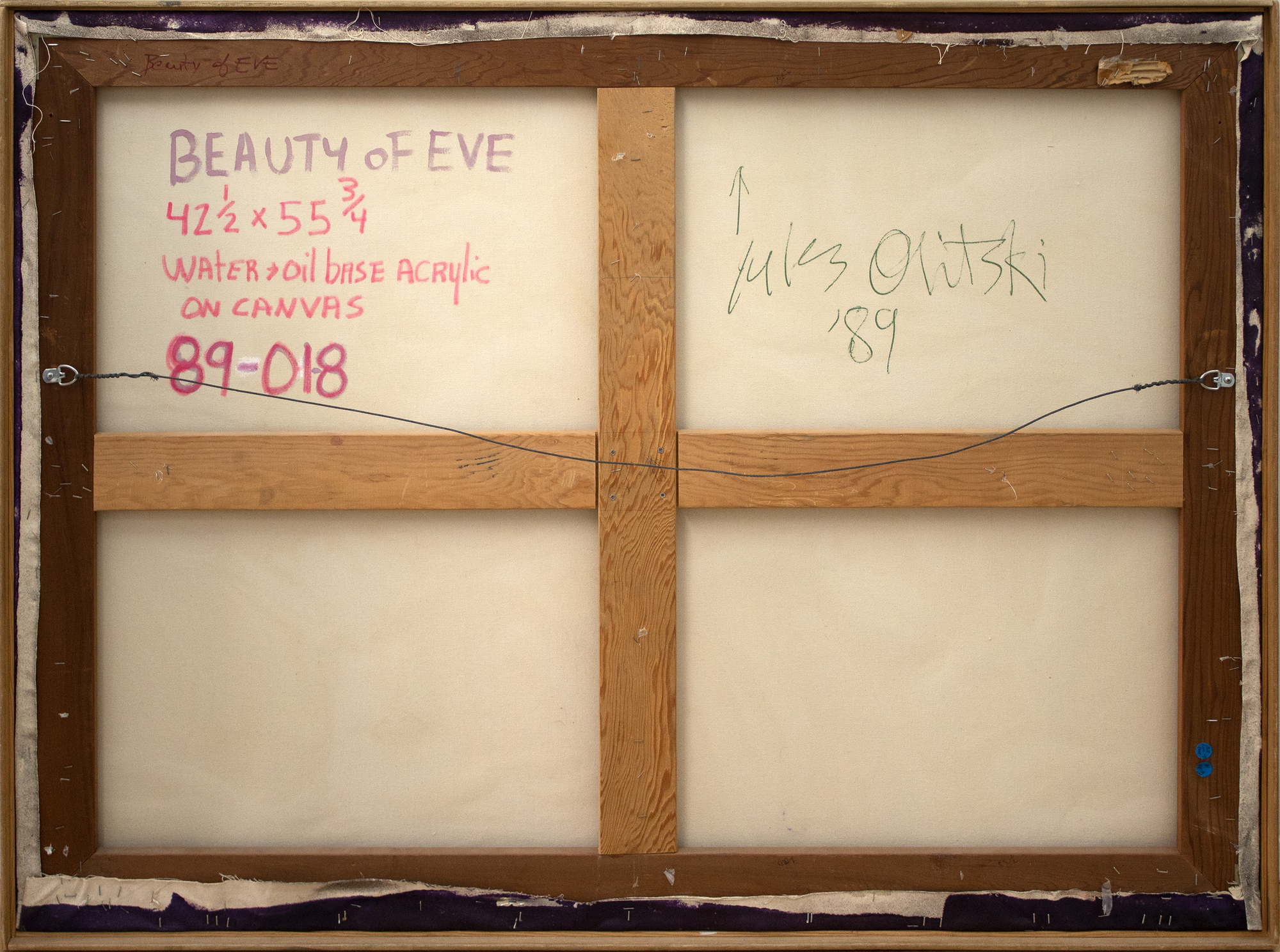
La belleza de Eva198942 1/2 x 55 3/4 in.(107,95 x 141,61 cm) acrílico al agua y al óleo sobre lienzo
Procedencia
Propiedad del artista
Colección privada
La obra Beauty of Eve (1989) de Jules Olitski es un ejemplo paradigmático de las pinturas «mitt» características del artista, en las que la abstracción del campo cromático, el gesto y la textura convergen en una superficie ricamente táctil. Se aplican gruesas capas de acrílico con movimientos expresivos utilizando herramientas poco convencionales, como guantes, escobas y rasquetas, para explorar la profundidad física y la presencia material de la pintura. Beauty of Eve captura el apogeo de esta experimentación.


Olitski recibió un gran reconocimiento en el Museo Metropolitano de Arte en 1969, donde se convirtió en el primer artista vivo en tener una exposición individual en el museo. Su obra está representada en muchas colecciones permanentes y públicas importantes, entre ellas el Museo de Bellas Artes de Boston, Boston, Massachusetts; el Instituto de Arte de Chicago, Chicago, Illinois; el Museo Hirshhorn y Jardín de Esculturas, Washington, D.C.; el Museo de Bellas Artes de Houston, Texas; la Tate Modern de Londres, Reino Unido; el Museo de Arte de Toledo, Ohio; el Museo Metropolitano de Arte; el Museo de Arte Moderno; el Museo Solomon R. Guggenheim y el Museo Whitney de Arte Americano, Nueva York.
Preguntar