

Atrás

ALBERT BIERSTADT (1830-1902)

$1,750,000

 
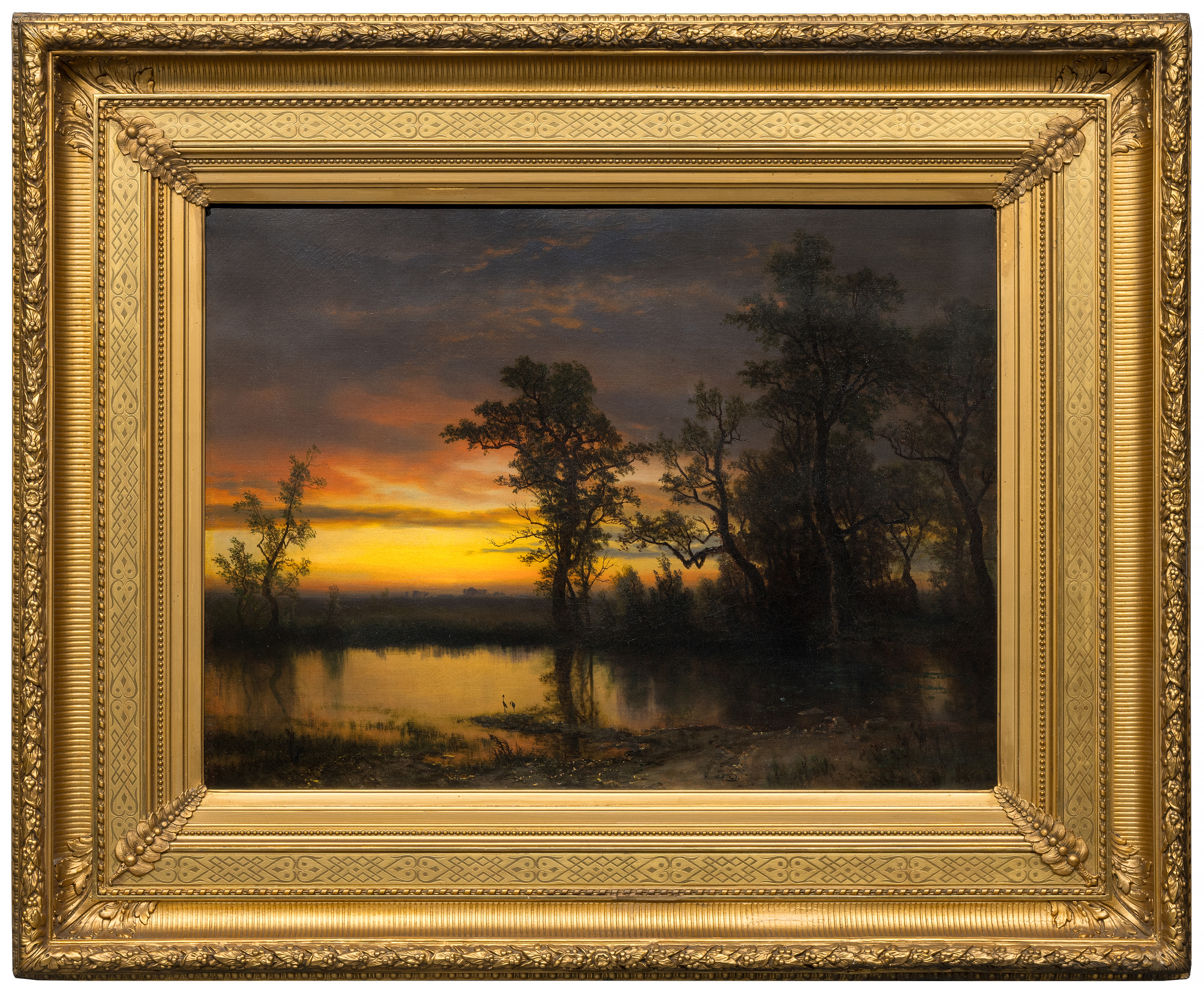
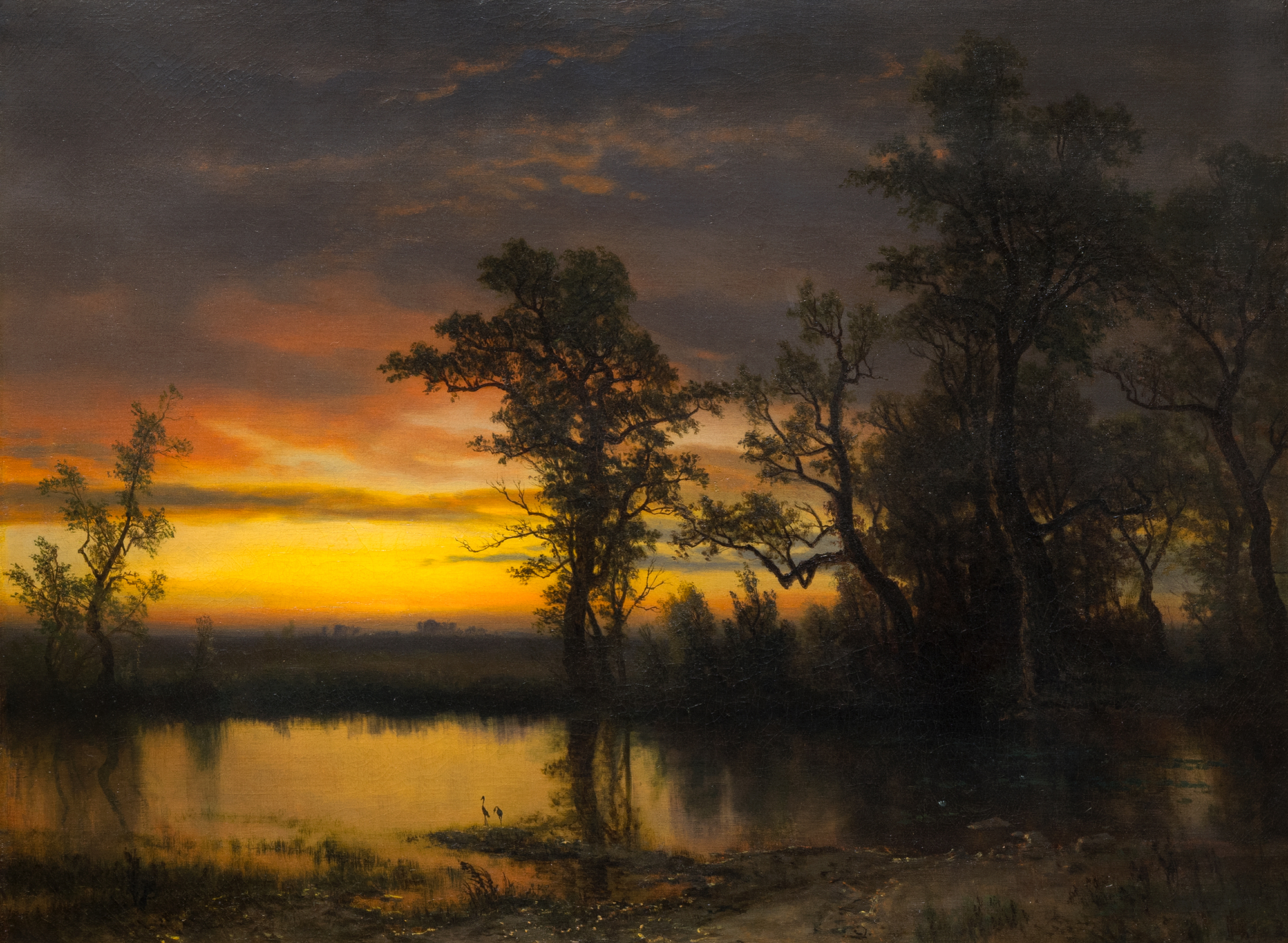
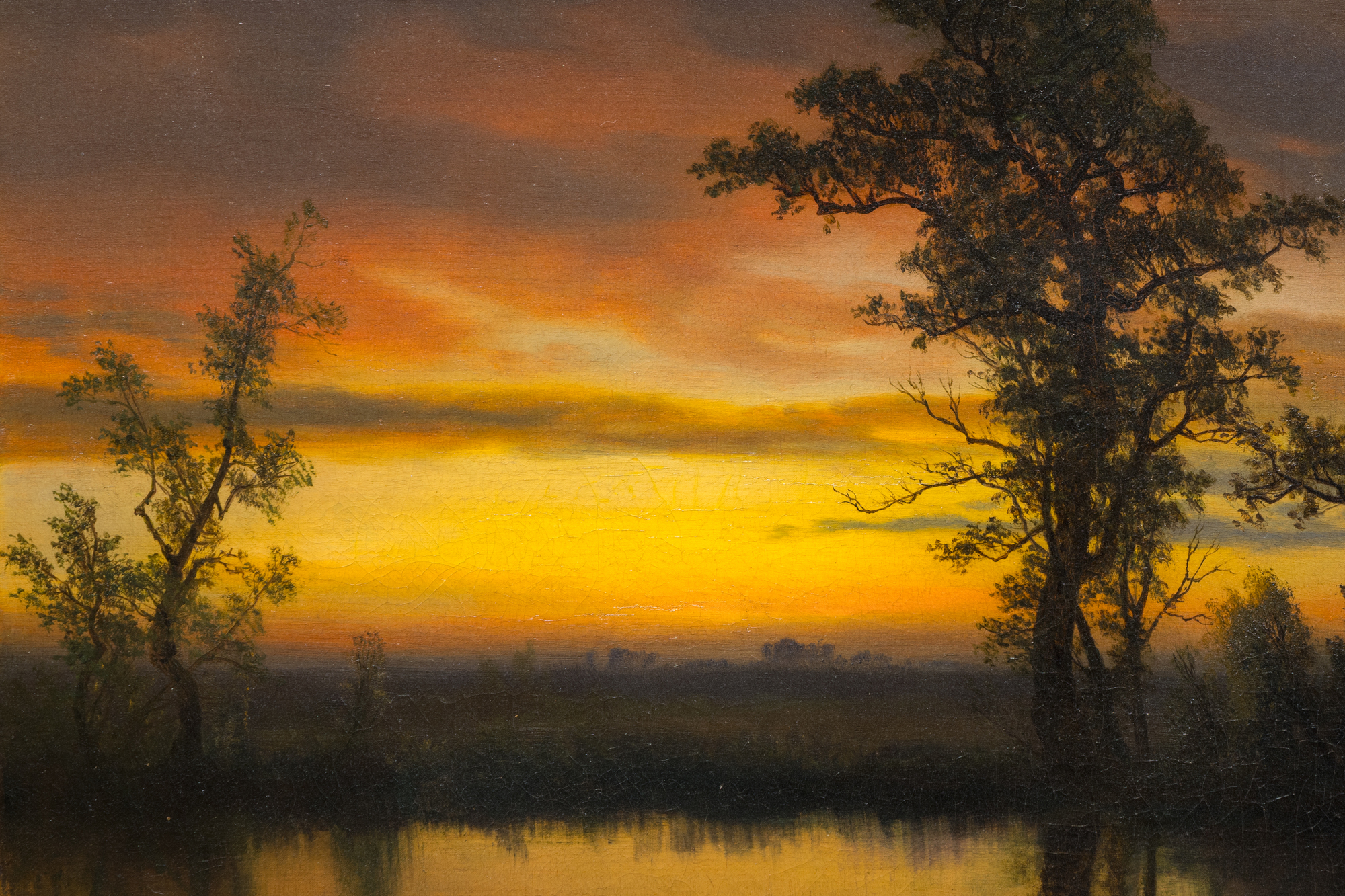
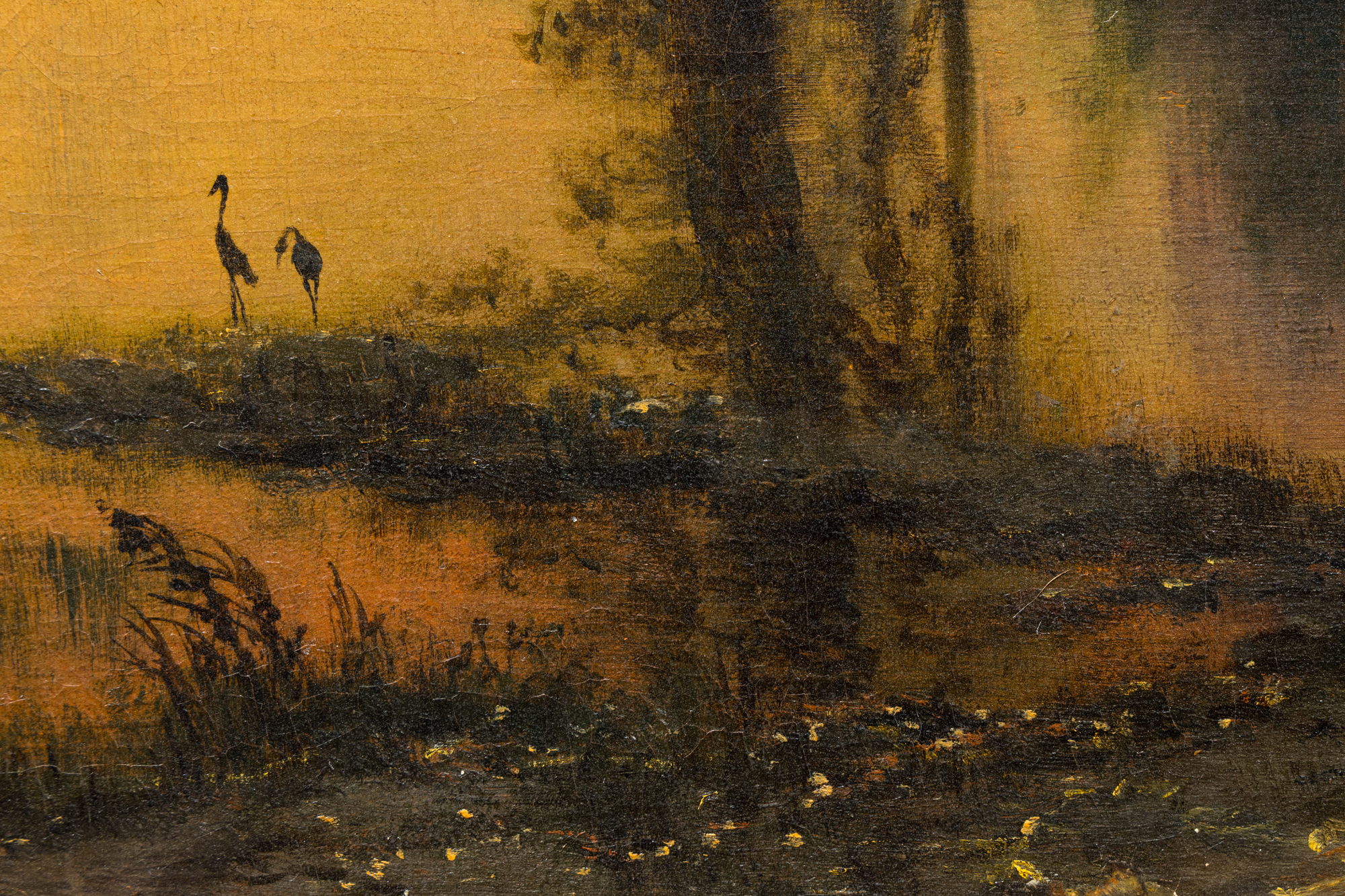
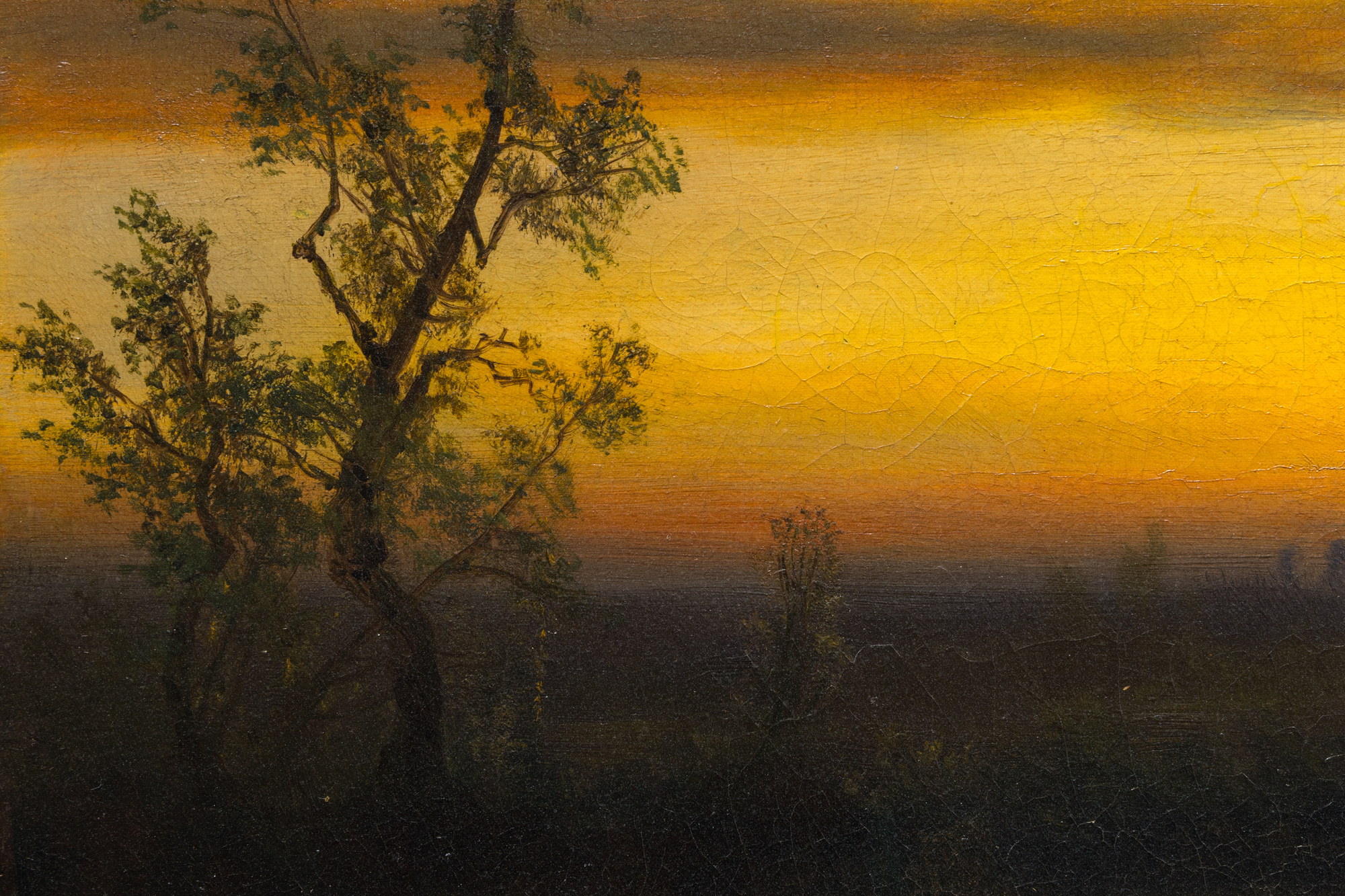
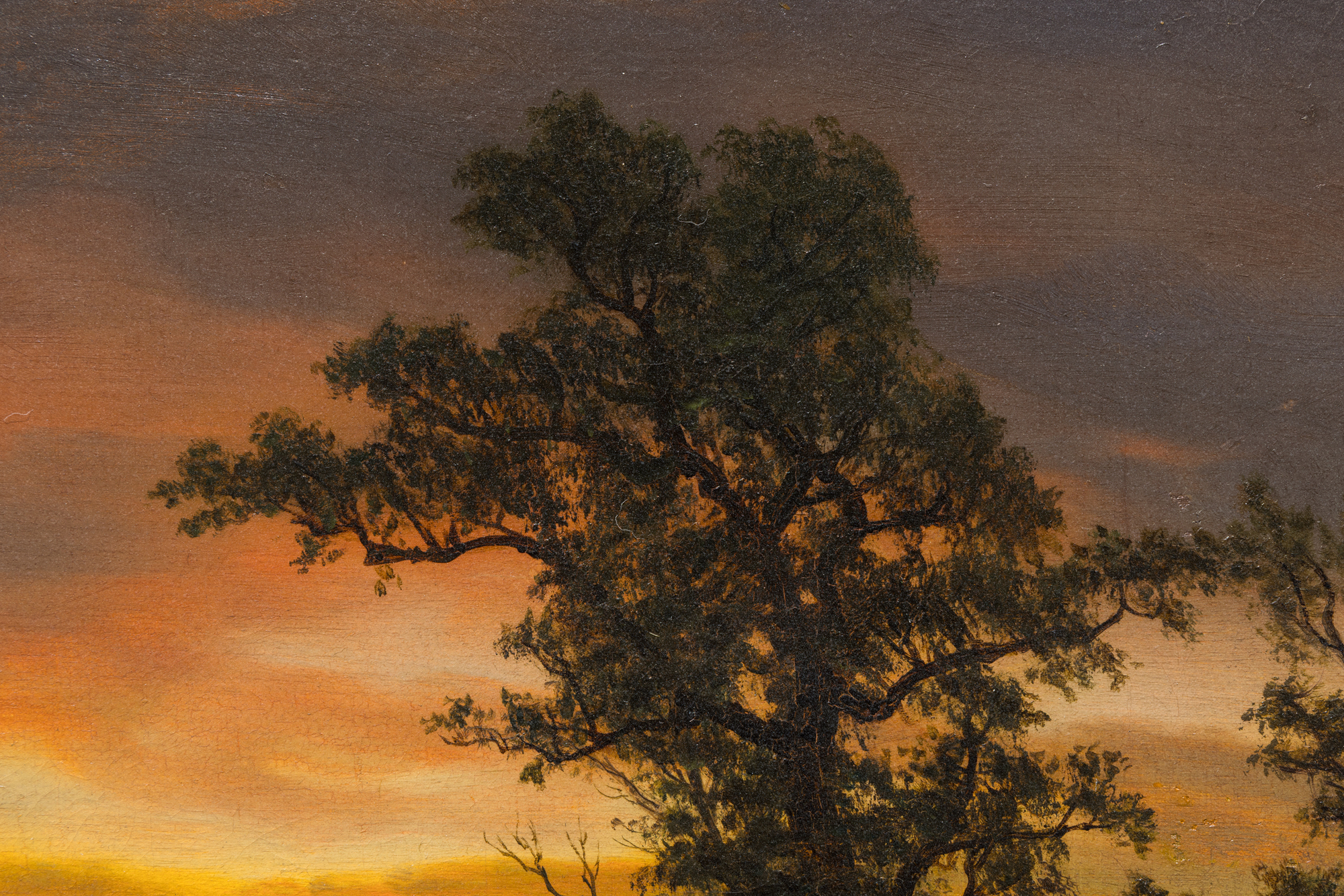
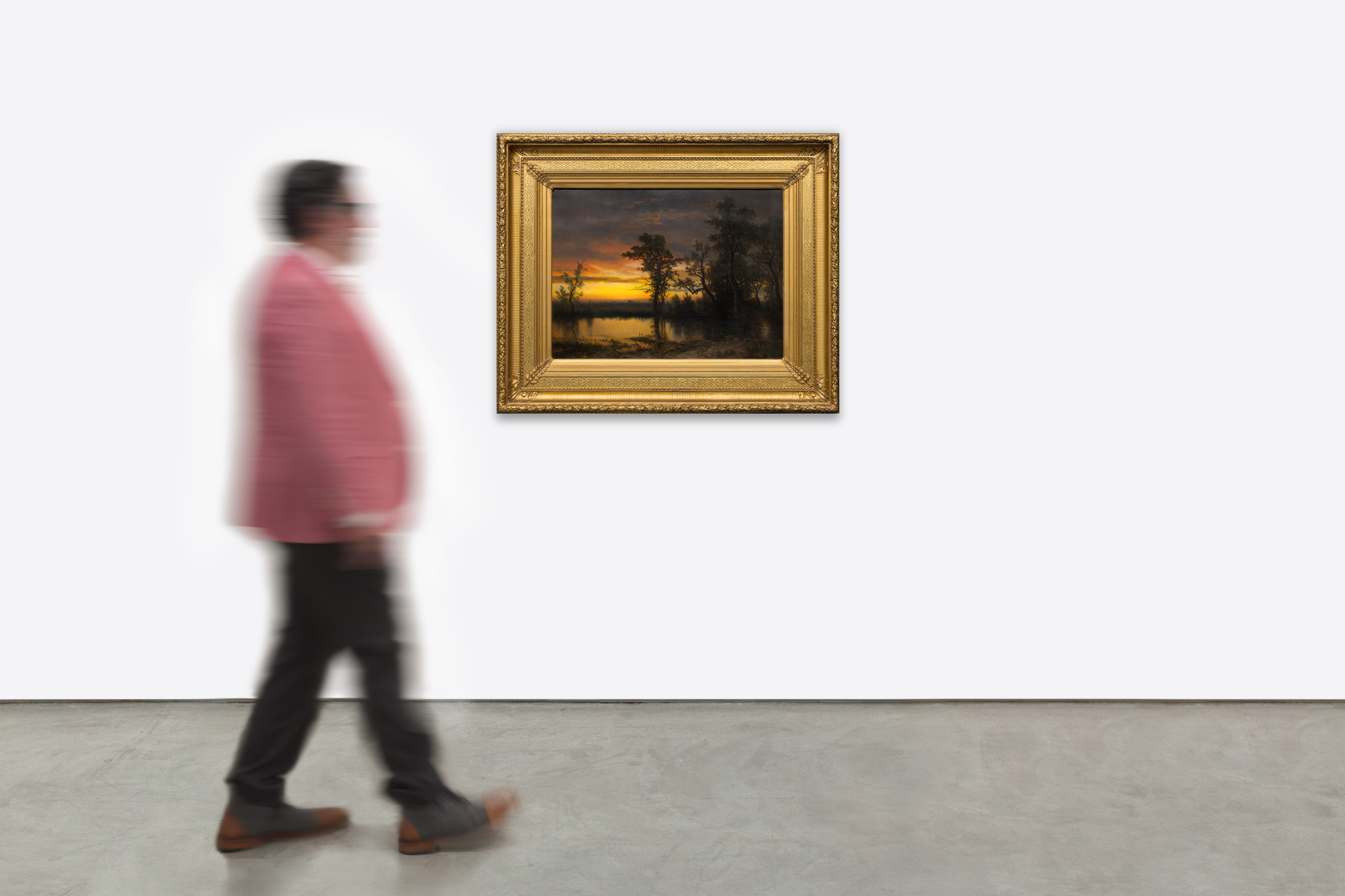
<div>"Twilight on the San Joaquin" (c. 1873) is a luminous oil painting that exemplifies Albert Bierstadt’s mature engagement with the American landscape and his mastery of light effects. Executed in a refined Luminist style, the work emphasizes a tranquil, glowing atmosphere achieved through meticulous detail, subtle tonal transitions, and a carefully controlled palette. The fading light of dusk settles gently over the scene, transforming the San Joaquin River into a reflective plane that anchors the composition and enhances its meditative stillness. </div><br><br><div> </div><br><br><div>The San Joaquin River, which flows through California’s Central Valley before joining the Sacramento River at the Sacramento–San Joaquin Delta, was a subject well suited to Bierstadt’s interest in expansive yet serene vistas. In this painting, the river becomes a conduit for light, capturing the delicate interplay between sky and water at twilight. The result is a harmonious balance between natural grandeur and intimate observation. </div><br><br><div> </div><br><br><div>Bierstadt was a prominent painter associated with the Hudson River School, known for his large, gleaming depictions of the American West. His portrayals of beauty and plenty helped shape the popular image of the West and reassured Americans, still grappling with the aftermath of the Civil War, that their young democracy possessed a grandeur comparable to Europe and would endure. Between 1871 and 1873, Bierstadt lived in California, maintaining a studio in San Francisco, and traveled extensively through the region, producing works that capture its vastness and unique beauty. </div><br><br><div> </div><br><br><div>A closely related twilight scene, "Owens Valley, California" (c. 1872) is in the collection of the McMullen Museum of Art, Boston College. Twilight on the San Joaquin will be included in the forthcoming Albert Bierstadt catalogue raisonné database directed by Melissa Webster Speidel, President of the Bierstadt Foundation. </div> <div>"Twilight on the San Joaquin" (c. 1873) is a luminous oil painting that exemplifies Albert Bierstadt’s mature engagement with the American landscape and his mastery of light effects. Executed in a refined Luminist style, the work emphasizes a tranquil, glowing atmosphere achieved through meticulous detail, subtle tonal transitions, and a carefully controlled palette. The fading light of dusk settles gently over the scene, transforming the San Joaquin River into a reflective plane that anchors the composition and enhances its meditative stillness. </div><br><br><div> </div><br><br><div>The San Joaquin River, which flows through California’s Central Valley before joining the Sacramento River at the Sacramento–San Joaquin Delta, was a subject well suited to Bierstadt’s interest in expansive yet serene vistas. In this painting, the river becomes a conduit for light, capturing the delicate interplay between sky and water at twilight. The result is a harmonious balance between natural grandeur and intimate observation. </div><br><br><div> </div><br><br><div>Bierstadt was a prominent painter associated with the Hudson River School, known for his large, gleaming depictions of the American West. His portrayals of beauty and plenty helped shape the popular image of the West and reassured Americans, still grappling with the aftermath of the Civil War, that their young democracy possessed a grandeur comparable to Europe and would endure. Between 1871 and 1873, Bierstadt lived in California, maintaining a studio in San Francisco, and traveled extensively through the region, producing works that capture its vastness and unique beauty. </div><br><br><div> </div><br><br><div>A closely related twilight scene, "Owens Valley, California" (c. 1872) is in the collection of the McMullen Museum of Art, Boston College. Twilight on the San Joaquin will be included in the forthcoming Albert Bierstadt catalogue raisonné database directed by Melissa Webster Speidel, President of the Bierstadt Foundation. </div> <div>"Twilight on the San Joaquin" (c. 1873) is a luminous oil painting that exemplifies Albert Bierstadt’s mature engagement with the American landscape and his mastery of light effects. Executed in a refined Luminist style, the work emphasizes a tranquil, glowing atmosphere achieved through meticulous detail, subtle tonal transitions, and a carefully controlled palette. The fading light of dusk settles gently over the scene, transforming the San Joaquin River into a reflective plane that anchors the composition and enhances its meditative stillness. </div><br><br><div> </div><br><br><div>The San Joaquin River, which flows through California’s Central Valley before joining the Sacramento River at the Sacramento–San Joaquin Delta, was a subject well suited to Bierstadt’s interest in expansive yet serene vistas. In this painting, the river becomes a conduit for light, capturing the delicate interplay between sky and water at twilight. The result is a harmonious balance between natural grandeur and intimate observation. </div><br><br><div> </div><br><br><div>Bierstadt was a prominent painter associated with the Hudson River School, known for his large, gleaming depictions of the American West. His portrayals of beauty and plenty helped shape the popular image of the West and reassured Americans, still grappling with the aftermath of the Civil War, that their young democracy possessed a grandeur comparable to Europe and would endure. Between 1871 and 1873, Bierstadt lived in California, maintaining a studio in San Francisco, and traveled extensively through the region, producing works that capture its vastness and unique beauty. </div><br><br><div> </div><br><br><div>A closely related twilight scene, "Owens Valley, California" (c. 1872) is in the collection of the McMullen Museum of Art, Boston College. Twilight on the San Joaquin will be included in the forthcoming Albert Bierstadt catalogue raisonné database directed by Melissa Webster Speidel, President of the Bierstadt Foundation. </div> <div>"Twilight on the San Joaquin" (c. 1873) is a luminous oil painting that exemplifies Albert Bierstadt’s mature engagement with the American landscape and his mastery of light effects. Executed in a refined Luminist style, the work emphasizes a tranquil, glowing atmosphere achieved through meticulous detail, subtle tonal transitions, and a carefully controlled palette. The fading light of dusk settles gently over the scene, transforming the San Joaquin River into a reflective plane that anchors the composition and enhances its meditative stillness. </div><br><br><div> </div><br><br><div>The San Joaquin River, which flows through California’s Central Valley before joining the Sacramento River at the Sacramento–San Joaquin Delta, was a subject well suited to Bierstadt’s interest in expansive yet serene vistas. In this painting, the river becomes a conduit for light, capturing the delicate interplay between sky and water at twilight. The result is a harmonious balance between natural grandeur and intimate observation. </div><br><br><div> </div><br><br><div>Bierstadt was a prominent painter associated with the Hudson River School, known for his large, gleaming depictions of the American West. His portrayals of beauty and plenty helped shape the popular image of the West and reassured Americans, still grappling with the aftermath of the Civil War, that their young democracy possessed a grandeur comparable to Europe and would endure. Between 1871 and 1873, Bierstadt lived in California, maintaining a studio in San Francisco, and traveled extensively through the region, producing works that capture its vastness and unique beauty. </div><br><br><div> </div><br><br><div>A closely related twilight scene, "Owens Valley, California" (c. 1872) is in the collection of the McMullen Museum of Art, Boston College. Twilight on the San Joaquin will be included in the forthcoming Albert Bierstadt catalogue raisonné database directed by Melissa Webster Speidel, President of the Bierstadt Foundation. </div> <div>"Twilight on the San Joaquin" (c. 1873) is a luminous oil painting that exemplifies Albert Bierstadt’s mature engagement with the American landscape and his mastery of light effects. Executed in a refined Luminist style, the work emphasizes a tranquil, glowing atmosphere achieved through meticulous detail, subtle tonal transitions, and a carefully controlled palette. The fading light of dusk settles gently over the scene, transforming the San Joaquin River into a reflective plane that anchors the composition and enhances its meditative stillness. </div><br><br><div> </div><br><br><div>The San Joaquin River, which flows through California’s Central Valley before joining the Sacramento River at the Sacramento–San Joaquin Delta, was a subject well suited to Bierstadt’s interest in expansive yet serene vistas. In this painting, the river becomes a conduit for light, capturing the delicate interplay between sky and water at twilight. The result is a harmonious balance between natural grandeur and intimate observation. </div><br><br><div> </div><br><br><div>Bierstadt was a prominent painter associated with the Hudson River School, known for his large, gleaming depictions of the American West. His portrayals of beauty and plenty helped shape the popular image of the West and reassured Americans, still grappling with the aftermath of the Civil War, that their young democracy possessed a grandeur comparable to Europe and would endure. Between 1871 and 1873, Bierstadt lived in California, maintaining a studio in San Francisco, and traveled extensively through the region, producing works that capture its vastness and unique beauty. </div><br><br><div> </div><br><br><div>A closely related twilight scene, "Owens Valley, California" (c. 1872) is in the collection of the McMullen Museum of Art, Boston College. Twilight on the San Joaquin will be included in the forthcoming Albert Bierstadt catalogue raisonné database directed by Melissa Webster Speidel, President of the Bierstadt Foundation. </div> <div>"Twilight on the San Joaquin" (c. 1873) is a luminous oil painting that exemplifies Albert Bierstadt’s mature engagement with the American landscape and his mastery of light effects. Executed in a refined Luminist style, the work emphasizes a tranquil, glowing atmosphere achieved through meticulous detail, subtle tonal transitions, and a carefully controlled palette. The fading light of dusk settles gently over the scene, transforming the San Joaquin River into a reflective plane that anchors the composition and enhances its meditative stillness. </div><br><br><div> </div><br><br><div>The San Joaquin River, which flows through California’s Central Valley before joining the Sacramento River at the Sacramento–San Joaquin Delta, was a subject well suited to Bierstadt’s interest in expansive yet serene vistas. In this painting, the river becomes a conduit for light, capturing the delicate interplay between sky and water at twilight. The result is a harmonious balance between natural grandeur and intimate observation. </div><br><br><div> </div><br><br><div>Bierstadt was a prominent painter associated with the Hudson River School, known for his large, gleaming depictions of the American West. His portrayals of beauty and plenty helped shape the popular image of the West and reassured Americans, still grappling with the aftermath of the Civil War, that their young democracy possessed a grandeur comparable to Europe and would endure. Between 1871 and 1873, Bierstadt lived in California, maintaining a studio in San Francisco, and traveled extensively through the region, producing works that capture its vastness and unique beauty. </div><br><br><div> </div><br><br><div>A closely related twilight scene, "Owens Valley, California" (c. 1872) is in the collection of the McMullen Museum of Art, Boston College. Twilight on the San Joaquin will be included in the forthcoming Albert Bierstadt catalogue raisonné database directed by Melissa Webster Speidel, President of the Bierstadt Foundation. </div> <div>"Twilight on the San Joaquin" (c. 1873) is a luminous oil painting that exemplifies Albert Bierstadt’s mature engagement with the American landscape and his mastery of light effects. Executed in a refined Luminist style, the work emphasizes a tranquil, glowing atmosphere achieved through meticulous detail, subtle tonal transitions, and a carefully controlled palette. The fading light of dusk settles gently over the scene, transforming the San Joaquin River into a reflective plane that anchors the composition and enhances its meditative stillness. </div><br><br><div> </div><br><br><div>The San Joaquin River, which flows through California’s Central Valley before joining the Sacramento River at the Sacramento–San Joaquin Delta, was a subject well suited to Bierstadt’s interest in expansive yet serene vistas. In this painting, the river becomes a conduit for light, capturing the delicate interplay between sky and water at twilight. The result is a harmonious balance between natural grandeur and intimate observation. </div><br><br><div> </div><br><br><div>Bierstadt was a prominent painter associated with the Hudson River School, known for his large, gleaming depictions of the American West. His portrayals of beauty and plenty helped shape the popular image of the West and reassured Americans, still grappling with the aftermath of the Civil War, that their young democracy possessed a grandeur comparable to Europe and would endure. Between 1871 and 1873, Bierstadt lived in California, maintaining a studio in San Francisco, and traveled extensively through the region, producing works that capture its vastness and unique beauty. </div><br><br><div> </div><br><br><div>A closely related twilight scene, "Owens Valley, California" (c. 1872) is in the collection of the McMullen Museum of Art, Boston College. Twilight on the San Joaquin will be included in the forthcoming Albert Bierstadt catalogue raisonné database directed by Melissa Webster Speidel, President of the Bierstadt Foundation. </div> <div>"Twilight on the San Joaquin" (c. 1873) is a luminous oil painting that exemplifies Albert Bierstadt’s mature engagement with the American landscape and his mastery of light effects. Executed in a refined Luminist style, the work emphasizes a tranquil, glowing atmosphere achieved through meticulous detail, subtle tonal transitions, and a carefully controlled palette. The fading light of dusk settles gently over the scene, transforming the San Joaquin River into a reflective plane that anchors the composition and enhances its meditative stillness. </div><br><br><div> </div><br><br><div>The San Joaquin River, which flows through California’s Central Valley before joining the Sacramento River at the Sacramento–San Joaquin Delta, was a subject well suited to Bierstadt’s interest in expansive yet serene vistas. In this painting, the river becomes a conduit for light, capturing the delicate interplay between sky and water at twilight. The result is a harmonious balance between natural grandeur and intimate observation. </div><br><br><div> </div><br><br><div>Bierstadt was a prominent painter associated with the Hudson River School, known for his large, gleaming depictions of the American West. His portrayals of beauty and plenty helped shape the popular image of the West and reassured Americans, still grappling with the aftermath of the Civil War, that their young democracy possessed a grandeur comparable to Europe and would endure. Between 1871 and 1873, Bierstadt lived in California, maintaining a studio in San Francisco, and traveled extensively through the region, producing works that capture its vastness and unique beauty. </div><br><br><div> </div><br><br><div>A closely related twilight scene, "Owens Valley, California" (c. 1872) is in the collection of the McMullen Museum of Art, Boston College. Twilight on the San Joaquin will be included in the forthcoming Albert Bierstadt catalogue raisonné database directed by Melissa Webster Speidel, President of the Bierstadt Foundation. </div> <div>"Twilight on the San Joaquin" (c. 1873) is a luminous oil painting that exemplifies Albert Bierstadt’s mature engagement with the American landscape and his mastery of light effects. Executed in a refined Luminist style, the work emphasizes a tranquil, glowing atmosphere achieved through meticulous detail, subtle tonal transitions, and a carefully controlled palette. The fading light of dusk settles gently over the scene, transforming the San Joaquin River into a reflective plane that anchors the composition and enhances its meditative stillness. </div><br><br><div> </div><br><br><div>The San Joaquin River, which flows through California’s Central Valley before joining the Sacramento River at the Sacramento–San Joaquin Delta, was a subject well suited to Bierstadt’s interest in expansive yet serene vistas. In this painting, the river becomes a conduit for light, capturing the delicate interplay between sky and water at twilight. The result is a harmonious balance between natural grandeur and intimate observation. </div><br><br><div> </div><br><br><div>Bierstadt was a prominent painter associated with the Hudson River School, known for his large, gleaming depictions of the American West. His portrayals of beauty and plenty helped shape the popular image of the West and reassured Americans, still grappling with the aftermath of the Civil War, that their young democracy possessed a grandeur comparable to Europe and would endure. Between 1871 and 1873, Bierstadt lived in California, maintaining a studio in San Francisco, and traveled extensively through the region, producing works that capture its vastness and unique beauty. </div><br><br><div> </div><br><br><div>A closely related twilight scene, "Owens Valley, California" (c. 1872) is in the collection of the McMullen Museum of Art, Boston College. Twilight on the San Joaquin will be included in the forthcoming Albert Bierstadt catalogue raisonné database directed by Melissa Webster Speidel, President of the Bierstadt Foundation. </div> <div>"Twilight on the San Joaquin" (c. 1873) is a luminous oil painting that exemplifies Albert Bierstadt’s mature engagement with the American landscape and his mastery of light effects. Executed in a refined Luminist style, the work emphasizes a tranquil, glowing atmosphere achieved through meticulous detail, subtle tonal transitions, and a carefully controlled palette. The fading light of dusk settles gently over the scene, transforming the San Joaquin River into a reflective plane that anchors the composition and enhances its meditative stillness. </div><br><br><div> </div><br><br><div>The San Joaquin River, which flows through California’s Central Valley before joining the Sacramento River at the Sacramento–San Joaquin Delta, was a subject well suited to Bierstadt’s interest in expansive yet serene vistas. In this painting, the river becomes a conduit for light, capturing the delicate interplay between sky and water at twilight. The result is a harmonious balance between natural grandeur and intimate observation. </div><br><br><div> </div><br><br><div>Bierstadt was a prominent painter associated with the Hudson River School, known for his large, gleaming depictions of the American West. His portrayals of beauty and plenty helped shape the popular image of the West and reassured Americans, still grappling with the aftermath of the Civil War, that their young democracy possessed a grandeur comparable to Europe and would endure. Between 1871 and 1873, Bierstadt lived in California, maintaining a studio in San Francisco, and traveled extensively through the region, producing works that capture its vastness and unique beauty. </div><br><br><div> </div><br><br><div>A closely related twilight scene, "Owens Valley, California" (c. 1872) is in the collection of the McMullen Museum of Art, Boston College. Twilight on the San Joaquin will be included in the forthcoming Albert Bierstadt catalogue raisonné database directed by Melissa Webster Speidel, President of the Bierstadt Foundation. </div>
Crepúsculo en el San Joaquính. 187356 x 75 x 2 cm(55,88 x 74,93 x 1,91 cm) óleo sobre lienzo
Procedencia
Colección privada, Massachusetts, anterior a 1970
Colección privada, Middleboro, Massachusetts, 1970
Colección privada, adquirida de la anterior, 2024
«Crepúsculo en el San Joaquín» (h. 1873) es un luminoso óleo que ejemplifica la madurez de Albert Bierstadt en su tratamiento del paisaje estadounidense y su dominio de los efectos de luz. Realizada en un refinado estilo luminista, la obra destaca por su atmósfera tranquila y resplandeciente, lograda mediante un detalle meticuloso, sutiles transiciones tonales y una paleta cuidadosamente controlada. La luz menguante del atardecer se posa suavemente sobre la escena, transformando el río San Joaquín en un plano reflectante que ancla la composición y realza su quietud meditativa.


El río San Joaquín, que atraviesa el Valle Central de California antes de unirse al río Sacramento en el delta de Sacramento-San Joaquín, era un tema muy adecuado para el interés de Bierstadt por las vistas amplias pero serenas. En este cuadro, el río se convierte en un conducto de luz, captando la delicada interacción entre el cielo y el agua al atardecer. El resultado es un equilibrio armonioso entre la grandeza natural y la observación íntima.


Bierstadt fue un destacado pintor asociado a la Escuela del río Hudson, conocido por sus grandes y resplandecientes representaciones del Oeste americano. Sus representaciones de la belleza y la abundancia contribuyeron a forjar la imagen popular del Oeste y tranquilizaron a los estadounidenses, que aún se debatían con las secuelas de la Guerra Civil, asegurándoles que su joven democracia poseía una grandeza comparable a la de Europa y que perduraría. Entre 1871 y 1873, Bierstadt vivió en California, donde mantuvo un estudio en San Francisco, y viajó extensamente por la región, produciendo obras que capturan su inmensidad y belleza única.


Una escena crepuscular muy similar, «Owens Valley, California» (h. 1872), forma parte de la colección del McMullen Museum of Art del Boston College. «Twilight on the San Joaquin» se incluirá en la próxima base de datos del catálogo razonado de Albert Bierstadt, dirigida por Melissa Webster Speidel, presidenta de la Fundación Bierstadt.
Preguntar