Atrás

MARC CHAGALL(1887-1985)

 
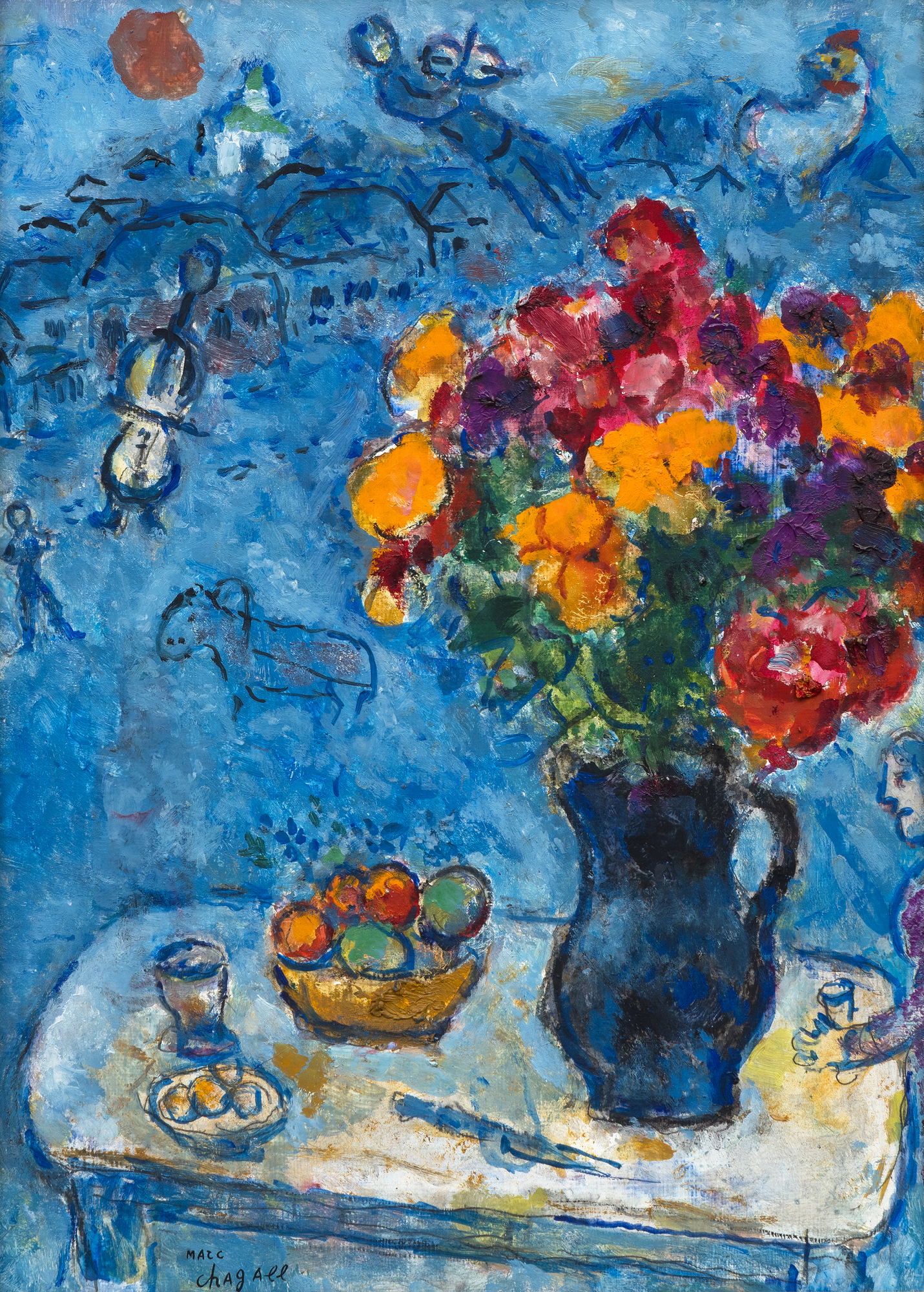
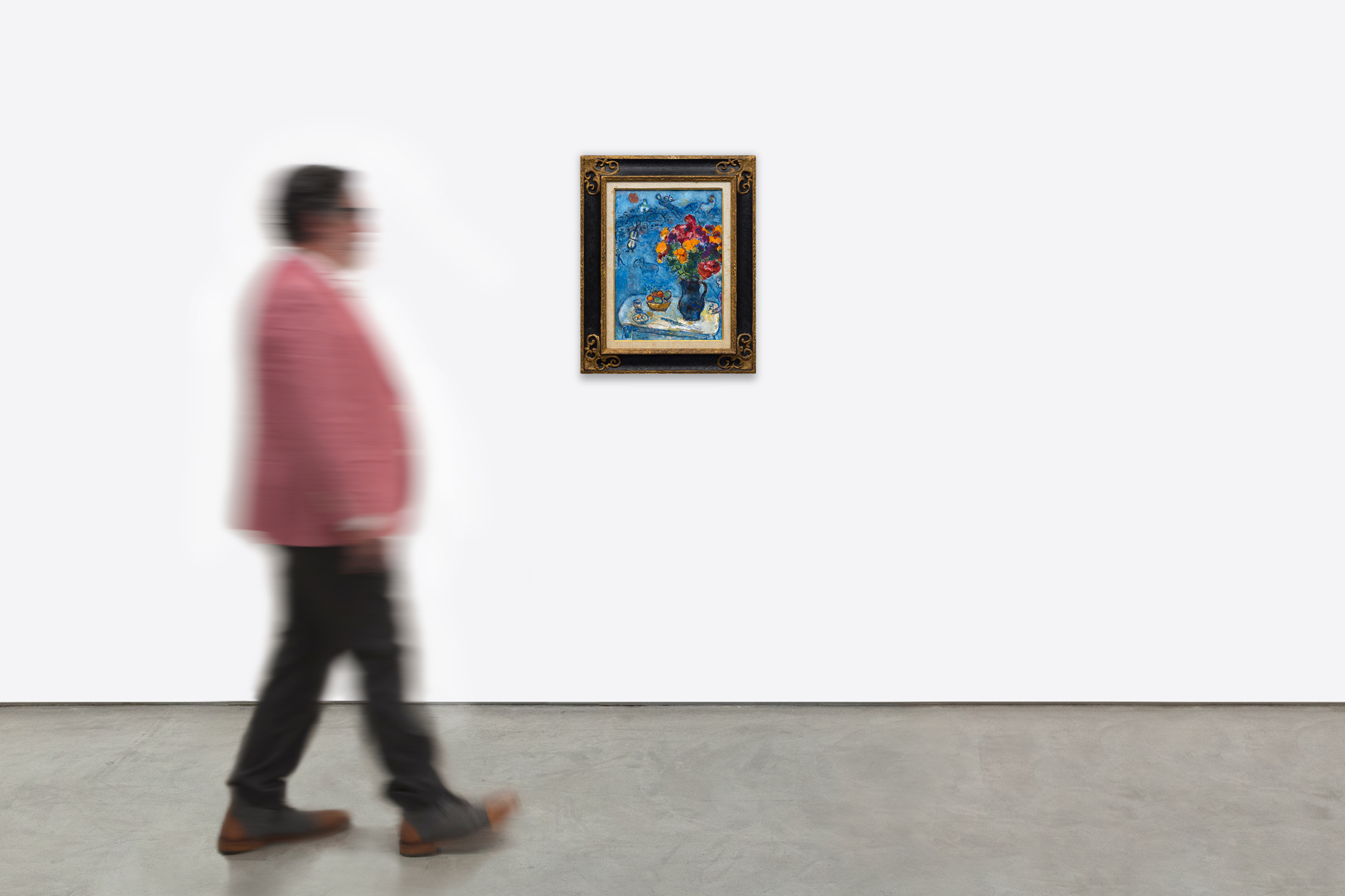
<div><font face=Lato size=3 color=black>Marc Chagall’s <em>Sur la table</em> is a radiant celebration of color, memory, and imagination. Bathed in a deep blue palette, the painting brings together several of the artist’s most beloved motifs: a rooster, violinist, goat, and exuberant bouquet. The composition is animated with Chagall’s signature sense of movement and dreamlike harmony, creating a world where everyday life, folklore, and love coexist in vibrant equilibrium.</font></div><br><br><div> </div><br><br><div><font face=Lato size=3 color=black>Painted in a richly productive period just after Chagall’s return to his homeland in the early 1970s, <em>Sur la table</em> reflects the renewed emotional and visual energy that came from reconnecting with his roots in Vitebsk, represented here by the white domed church in the distance. The expansive bouquet, one of Chagall’s enduring symbols of love for his first wife, Bella, dominates the foreground and infuses the work with emotional warmth and vitality.</font></div><br><br><div> </div><br><br><div><font face=Lato size=3 color=black>The painting remained in Chagall’s own collection and estate until after his death in 1985, underscoring its personal significance. Authenticated by the Comité Marc Chagall, <em>Sur la table</em> belongs to a lineage of floral and symbolic compositions that define his mature work.</font></div> <div><font face=Lato size=3 color=black>Marc Chagall’s <em>Sur la table</em> is a radiant celebration of color, memory, and imagination. Bathed in a deep blue palette, the painting brings together several of the artist’s most beloved motifs: a rooster, violinist, goat, and exuberant bouquet. The composition is animated with Chagall’s signature sense of movement and dreamlike harmony, creating a world where everyday life, folklore, and love coexist in vibrant equilibrium.</font></div><br><br><div> </div><br><br><div><font face=Lato size=3 color=black>Painted in a richly productive period just after Chagall’s return to his homeland in the early 1970s, <em>Sur la table</em> reflects the renewed emotional and visual energy that came from reconnecting with his roots in Vitebsk, represented here by the white domed church in the distance. The expansive bouquet, one of Chagall’s enduring symbols of love for his first wife, Bella, dominates the foreground and infuses the work with emotional warmth and vitality.</font></div><br><br><div> </div><br><br><div><font face=Lato size=3 color=black>The painting remained in Chagall’s own collection and estate until after his death in 1985, underscoring its personal significance. Authenticated by the Comité Marc Chagall, <em>Sur la table</em> belongs to a lineage of floral and symbolic compositions that define his mature work.</font></div> <div><font face=Lato size=3 color=black>Marc Chagall’s <em>Sur la table</em> is a radiant celebration of color, memory, and imagination. Bathed in a deep blue palette, the painting brings together several of the artist’s most beloved motifs: a rooster, violinist, goat, and exuberant bouquet. The composition is animated with Chagall’s signature sense of movement and dreamlike harmony, creating a world where everyday life, folklore, and love coexist in vibrant equilibrium.</font></div><br><br><div> </div><br><br><div><font face=Lato size=3 color=black>Painted in a richly productive period just after Chagall’s return to his homeland in the early 1970s, <em>Sur la table</em> reflects the renewed emotional and visual energy that came from reconnecting with his roots in Vitebsk, represented here by the white domed church in the distance. The expansive bouquet, one of Chagall’s enduring symbols of love for his first wife, Bella, dominates the foreground and infuses the work with emotional warmth and vitality.</font></div><br><br><div> </div><br><br><div><font face=Lato size=3 color=black>The painting remained in Chagall’s own collection and estate until after his death in 1985, underscoring its personal significance. Authenticated by the Comité Marc Chagall, <em>Sur la table</em> belongs to a lineage of floral and symbolic compositions that define his mature work.</font></div> <div><font face=Lato size=3 color=black>Marc Chagall’s <em>Sur la table</em> is a radiant celebration of color, memory, and imagination. Bathed in a deep blue palette, the painting brings together several of the artist’s most beloved motifs: a rooster, violinist, goat, and exuberant bouquet. The composition is animated with Chagall’s signature sense of movement and dreamlike harmony, creating a world where everyday life, folklore, and love coexist in vibrant equilibrium.</font></div><br><br><div> </div><br><br><div><font face=Lato size=3 color=black>Painted in a richly productive period just after Chagall’s return to his homeland in the early 1970s, <em>Sur la table</em> reflects the renewed emotional and visual energy that came from reconnecting with his roots in Vitebsk, represented here by the white domed church in the distance. The expansive bouquet, one of Chagall’s enduring symbols of love for his first wife, Bella, dominates the foreground and infuses the work with emotional warmth and vitality.</font></div><br><br><div> </div><br><br><div><font face=Lato size=3 color=black>The painting remained in Chagall’s own collection and estate until after his death in 1985, underscoring its personal significance. Authenticated by the Comité Marc Chagall, <em>Sur la table</em> belongs to a lineage of floral and symbolic compositions that define his mature work.</font></div> <div><font face=Lato size=3 color=black>Marc Chagall’s <em>Sur la table</em> is a radiant celebration of color, memory, and imagination. Bathed in a deep blue palette, the painting brings together several of the artist’s most beloved motifs: a rooster, violinist, goat, and exuberant bouquet. The composition is animated with Chagall’s signature sense of movement and dreamlike harmony, creating a world where everyday life, folklore, and love coexist in vibrant equilibrium.</font></div><br><br><div> </div><br><br><div><font face=Lato size=3 color=black>Painted in a richly productive period just after Chagall’s return to his homeland in the early 1970s, <em>Sur la table</em> reflects the renewed emotional and visual energy that came from reconnecting with his roots in Vitebsk, represented here by the white domed church in the distance. The expansive bouquet, one of Chagall’s enduring symbols of love for his first wife, Bella, dominates the foreground and infuses the work with emotional warmth and vitality.</font></div><br><br><div> </div><br><br><div><font face=Lato size=3 color=black>The painting remained in Chagall’s own collection and estate until after his death in 1985, underscoring its personal significance. Authenticated by the Comité Marc Chagall, <em>Sur la table</em> belongs to a lineage of floral and symbolic compositions that define his mature work.</font></div> <div><font face=Lato size=3 color=black>Marc Chagall’s <em>Sur la table</em> is a radiant celebration of color, memory, and imagination. Bathed in a deep blue palette, the painting brings together several of the artist’s most beloved motifs: a rooster, violinist, goat, and exuberant bouquet. The composition is animated with Chagall’s signature sense of movement and dreamlike harmony, creating a world where everyday life, folklore, and love coexist in vibrant equilibrium.</font></div><br><br><div> </div><br><br><div><font face=Lato size=3 color=black>Painted in a richly productive period just after Chagall’s return to his homeland in the early 1970s, <em>Sur la table</em> reflects the renewed emotional and visual energy that came from reconnecting with his roots in Vitebsk, represented here by the white domed church in the distance. The expansive bouquet, one of Chagall’s enduring symbols of love for his first wife, Bella, dominates the foreground and infuses the work with emotional warmth and vitality.</font></div><br><br><div> </div><br><br><div><font face=Lato size=3 color=black>The painting remained in Chagall’s own collection and estate until after his death in 1985, underscoring its personal significance. Authenticated by the Comité Marc Chagall, <em>Sur la table</em> belongs to a lineage of floral and symbolic compositions that define his mature work.</font></div> <div><font face=Lato size=3 color=black>Marc Chagall’s <em>Sur la table</em> is a radiant celebration of color, memory, and imagination. Bathed in a deep blue palette, the painting brings together several of the artist’s most beloved motifs: a rooster, violinist, goat, and exuberant bouquet. The composition is animated with Chagall’s signature sense of movement and dreamlike harmony, creating a world where everyday life, folklore, and love coexist in vibrant equilibrium.</font></div><br><br><div> </div><br><br><div><font face=Lato size=3 color=black>Painted in a richly productive period just after Chagall’s return to his homeland in the early 1970s, <em>Sur la table</em> reflects the renewed emotional and visual energy that came from reconnecting with his roots in Vitebsk, represented here by the white domed church in the distance. The expansive bouquet, one of Chagall’s enduring symbols of love for his first wife, Bella, dominates the foreground and infuses the work with emotional warmth and vitality.</font></div><br><br><div> </div><br><br><div><font face=Lato size=3 color=black>The painting remained in Chagall’s own collection and estate until after his death in 1985, underscoring its personal significance. Authenticated by the Comité Marc Chagall, <em>Sur la table</em> belongs to a lineage of floral and symbolic compositions that define his mature work.</font></div> <div><font face=Lato size=3 color=black>Marc Chagall’s <em>Sur la table</em> is a radiant celebration of color, memory, and imagination. Bathed in a deep blue palette, the painting brings together several of the artist’s most beloved motifs: a rooster, violinist, goat, and exuberant bouquet. The composition is animated with Chagall’s signature sense of movement and dreamlike harmony, creating a world where everyday life, folklore, and love coexist in vibrant equilibrium.</font></div><br><br><div> </div><br><br><div><font face=Lato size=3 color=black>Painted in a richly productive period just after Chagall’s return to his homeland in the early 1970s, <em>Sur la table</em> reflects the renewed emotional and visual energy that came from reconnecting with his roots in Vitebsk, represented here by the white domed church in the distance. The expansive bouquet, one of Chagall’s enduring symbols of love for his first wife, Bella, dominates the foreground and infuses the work with emotional warmth and vitality.</font></div><br><br><div> </div><br><br><div><font face=Lato size=3 color=black>The painting remained in Chagall’s own collection and estate until after his death in 1985, underscoring its personal significance. Authenticated by the Comité Marc Chagall, <em>Sur la table</em> belongs to a lineage of floral and symbolic compositions that define his mature work.</font></div> <div><font face=Lato size=3 color=black>Marc Chagall’s <em>Sur la table</em> is a radiant celebration of color, memory, and imagination. Bathed in a deep blue palette, the painting brings together several of the artist’s most beloved motifs: a rooster, violinist, goat, and exuberant bouquet. The composition is animated with Chagall’s signature sense of movement and dreamlike harmony, creating a world where everyday life, folklore, and love coexist in vibrant equilibrium.</font></div><br><br><div> </div><br><br><div><font face=Lato size=3 color=black>Painted in a richly productive period just after Chagall’s return to his homeland in the early 1970s, <em>Sur la table</em> reflects the renewed emotional and visual energy that came from reconnecting with his roots in Vitebsk, represented here by the white domed church in the distance. The expansive bouquet, one of Chagall’s enduring symbols of love for his first wife, Bella, dominates the foreground and infuses the work with emotional warmth and vitality.</font></div><br><br><div> </div><br><br><div><font face=Lato size=3 color=black>The painting remained in Chagall’s own collection and estate until after his death in 1985, underscoring its personal significance. Authenticated by the Comité Marc Chagall, <em>Sur la table</em> belongs to a lineage of floral and symbolic compositions that define his mature work.</font></div> <div><font face=Lato size=3 color=black>Marc Chagall’s <em>Sur la table</em> is a radiant celebration of color, memory, and imagination. Bathed in a deep blue palette, the painting brings together several of the artist’s most beloved motifs: a rooster, violinist, goat, and exuberant bouquet. The composition is animated with Chagall’s signature sense of movement and dreamlike harmony, creating a world where everyday life, folklore, and love coexist in vibrant equilibrium.</font></div><br><br><div> </div><br><br><div><font face=Lato size=3 color=black>Painted in a richly productive period just after Chagall’s return to his homeland in the early 1970s, <em>Sur la table</em> reflects the renewed emotional and visual energy that came from reconnecting with his roots in Vitebsk, represented here by the white domed church in the distance. The expansive bouquet, one of Chagall’s enduring symbols of love for his first wife, Bella, dominates the foreground and infuses the work with emotional warmth and vitality.</font></div><br><br><div> </div><br><br><div><font face=Lato size=3 color=black>The painting remained in Chagall’s own collection and estate until after his death in 1985, underscoring its personal significance. Authenticated by the Comité Marc Chagall, <em>Sur la table</em> belongs to a lineage of floral and symbolic compositions that define his mature work.</font></div>
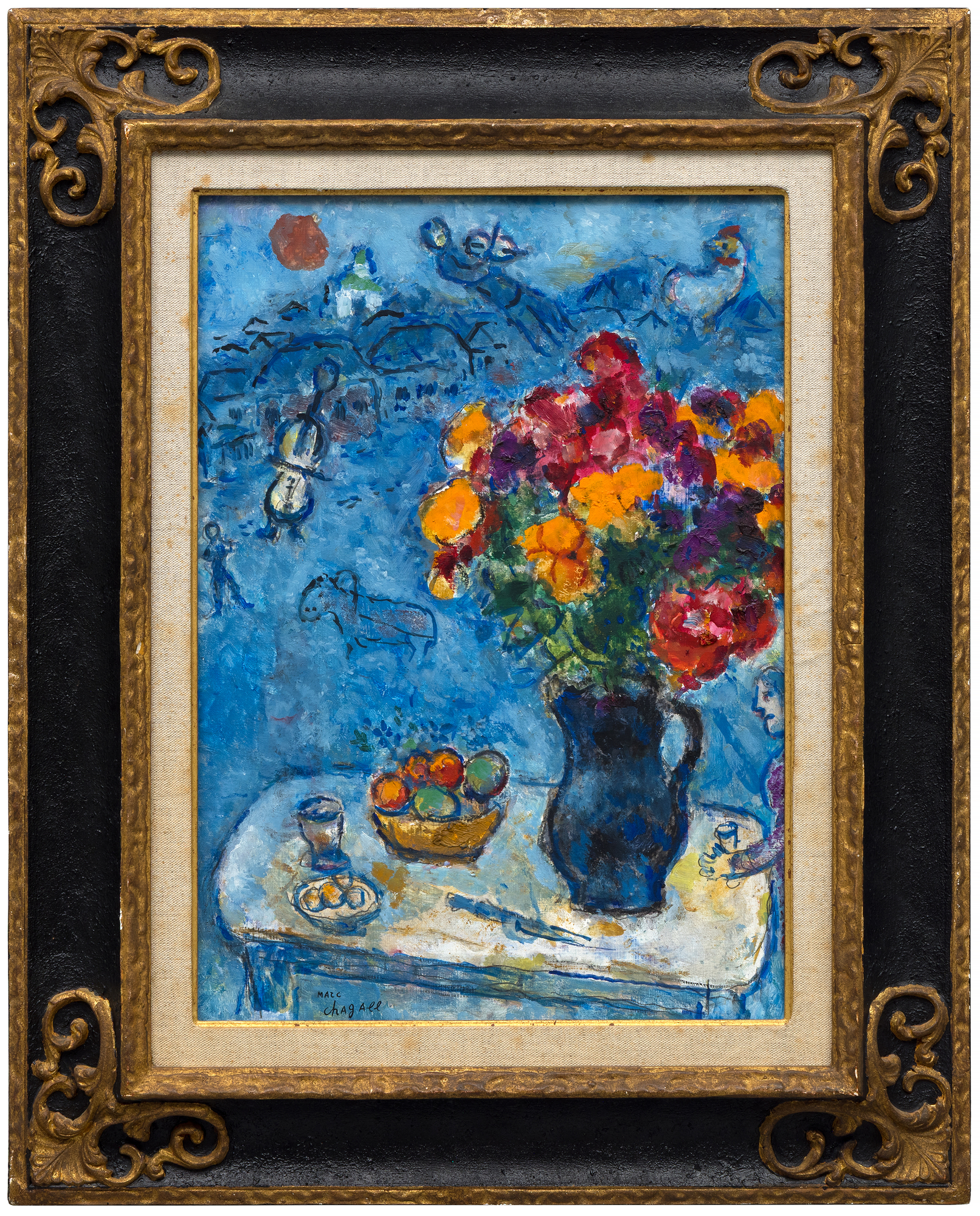
Sobre la mesac. 197517 3/4 x 12 3/4 pulgadas(45,09 x 32,39 cm) Óleo sobre tabla
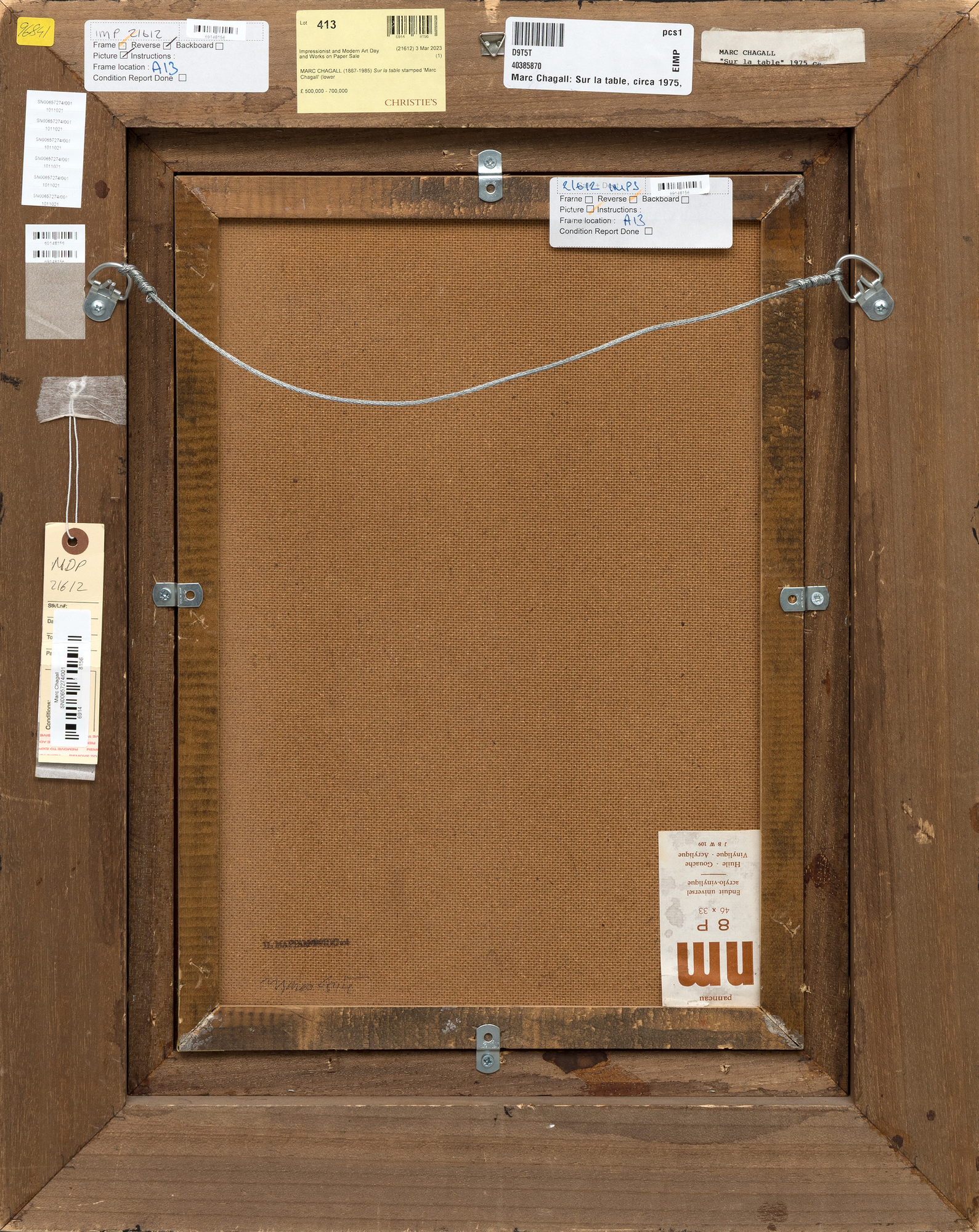
Procedencia
Patrimonio del artista
Galería de Arte Contini, Mestre
Colección privada, Padua
Galería Il Mappamondo, Milán
Colección privada, Milán
Colección privada, adquirida de la anterior
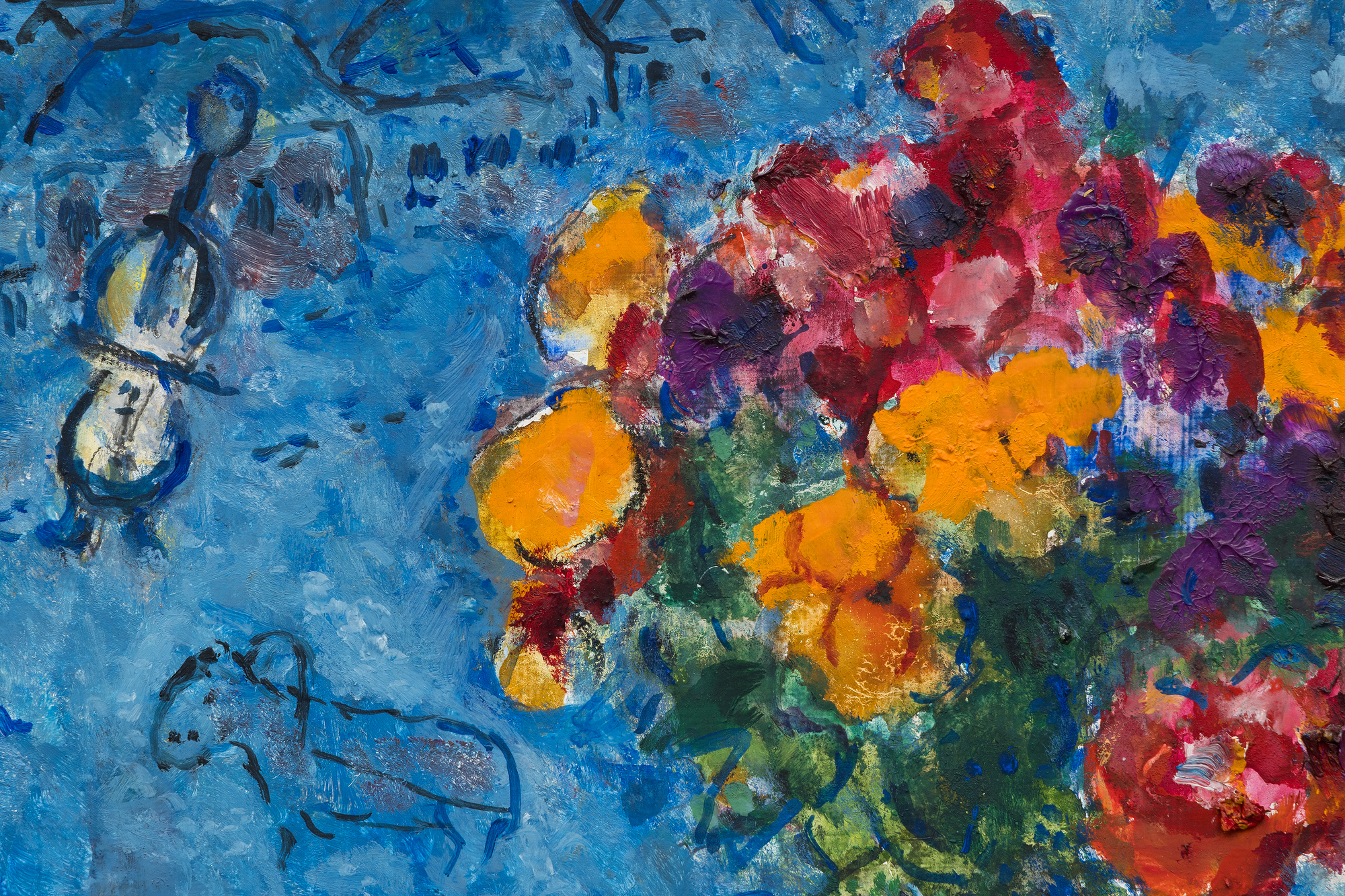
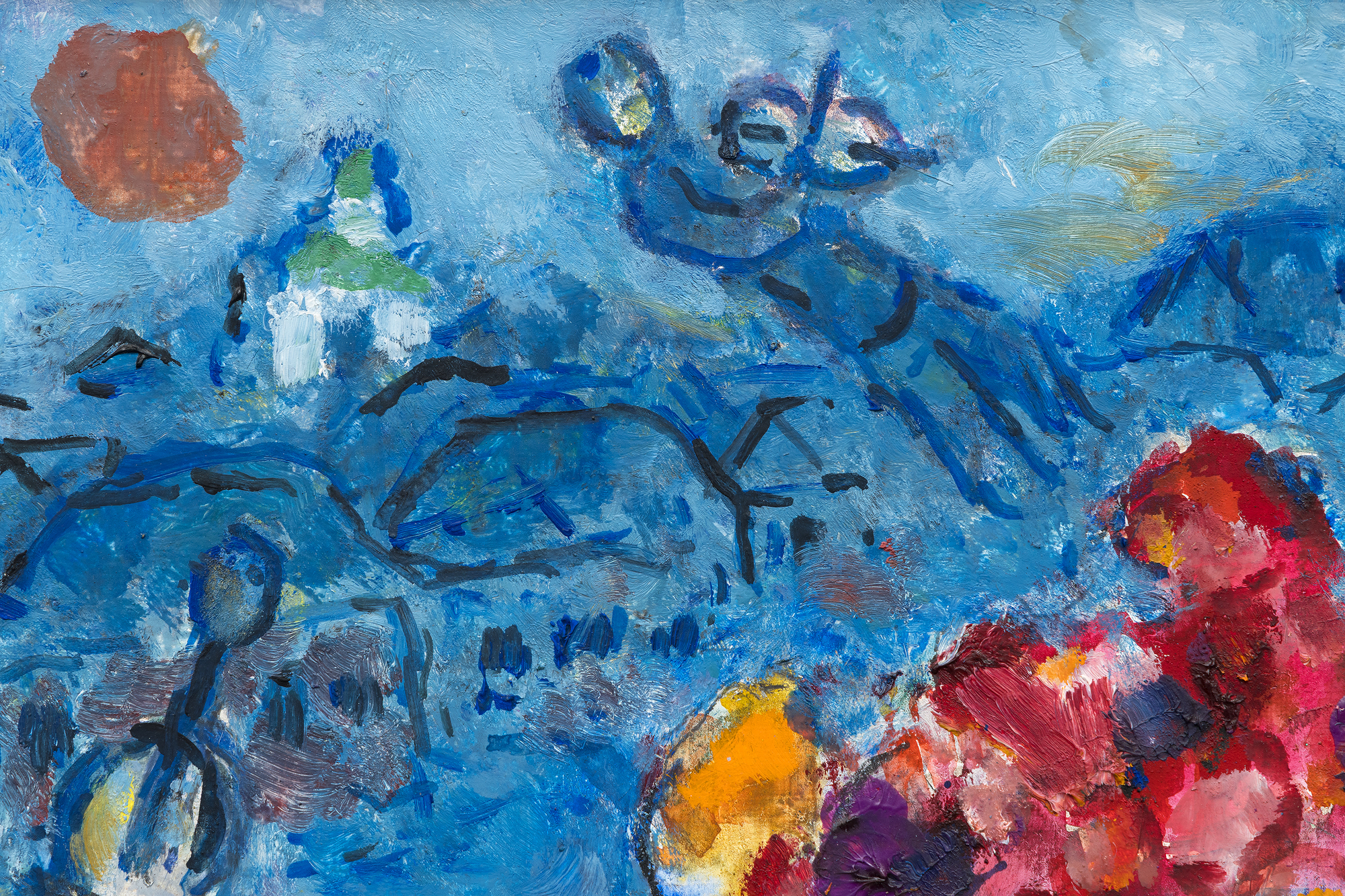
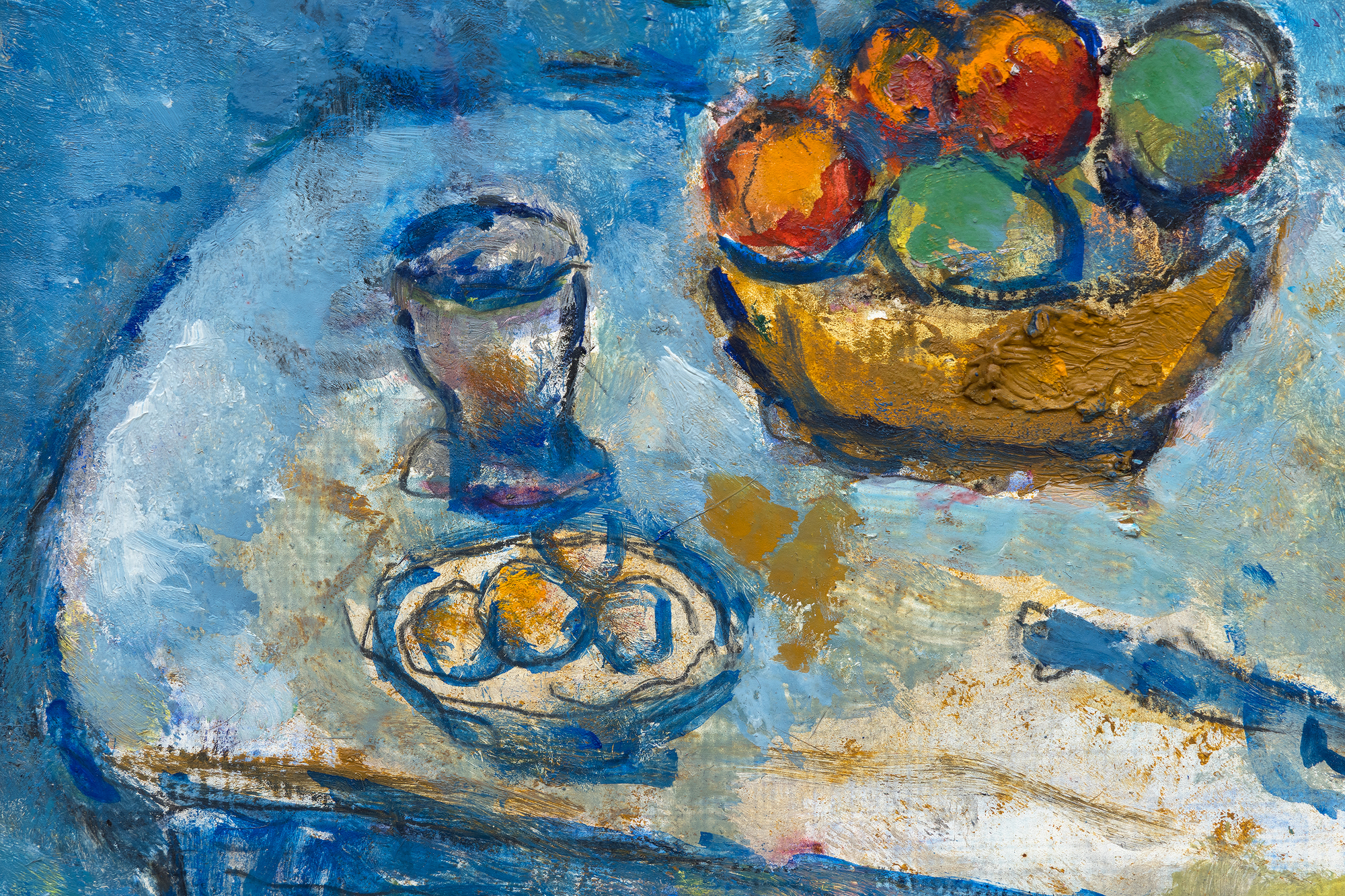
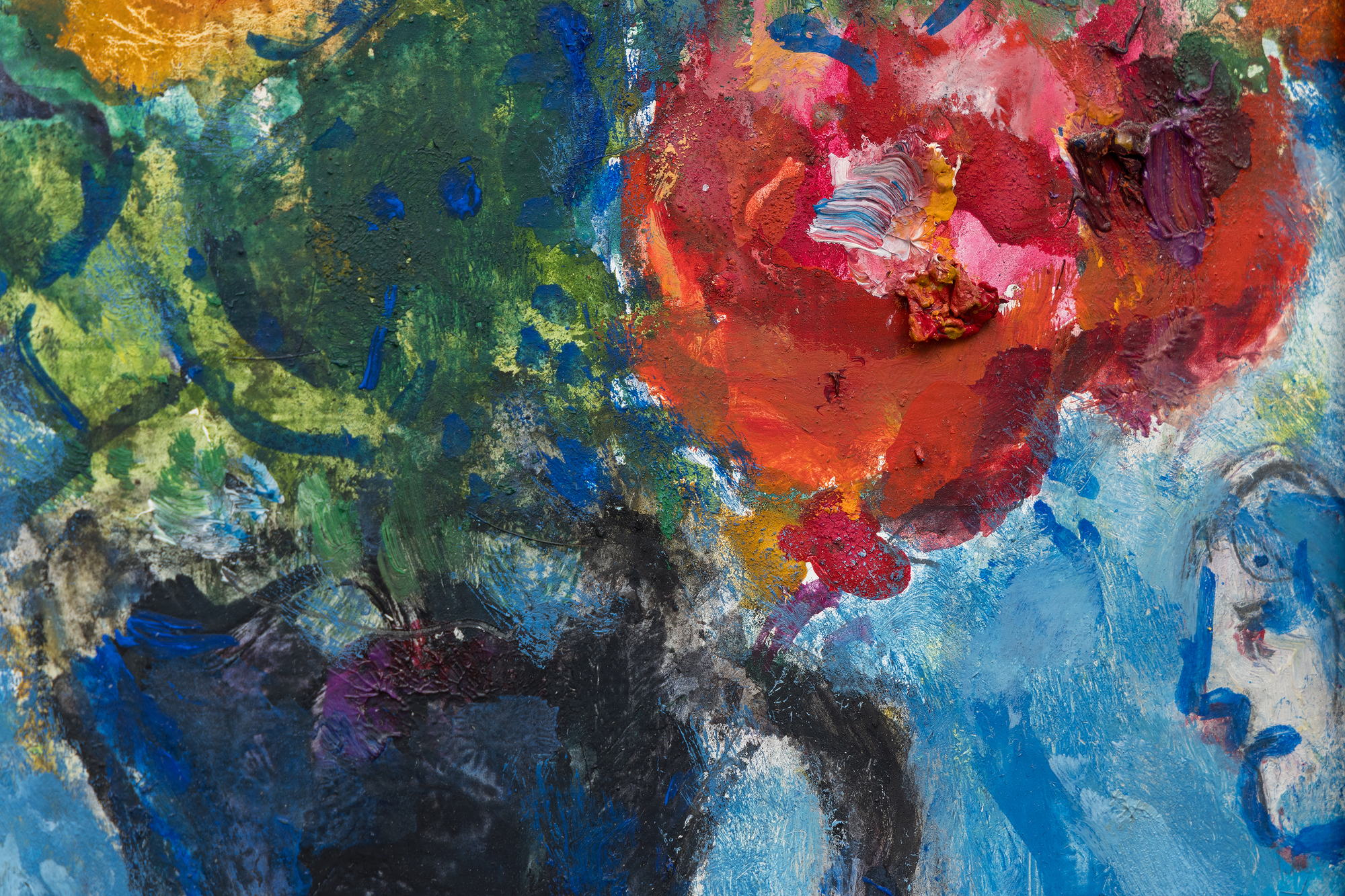
Sur la table, de Marc Chagall, es una radiante celebración del color, la memoria y la imaginación. Bañada en una paleta de azules intensos, la pintura reúne varios de los motivos más queridos del artista: un gallo, un violinista, una cabra y un exuberante ramo de flores. La composición está animada por el característico sentido del movimiento y la armonía onírica de Chagall, creando un mundo en el que la vida cotidiana, el folclore y el amor coexisten en un vibrante equilibrio.


Pintado en un periodo muy productivo justo después del regreso de Chagall a su tierra natal a principios de la década de 1970, Sur la table refleja la renovada energía emocional y visual que le proporcionó el reencuentro con sus raíces en Vitebsk, representadas aquí por la iglesia con cúpula blanca en la distancia. El amplio ramo de flores, uno de los símbolos perdurables del amor de Chagall por su primera esposa, Bella, domina el primer plano e infunde a la obra calidez emocional y vitalidad.


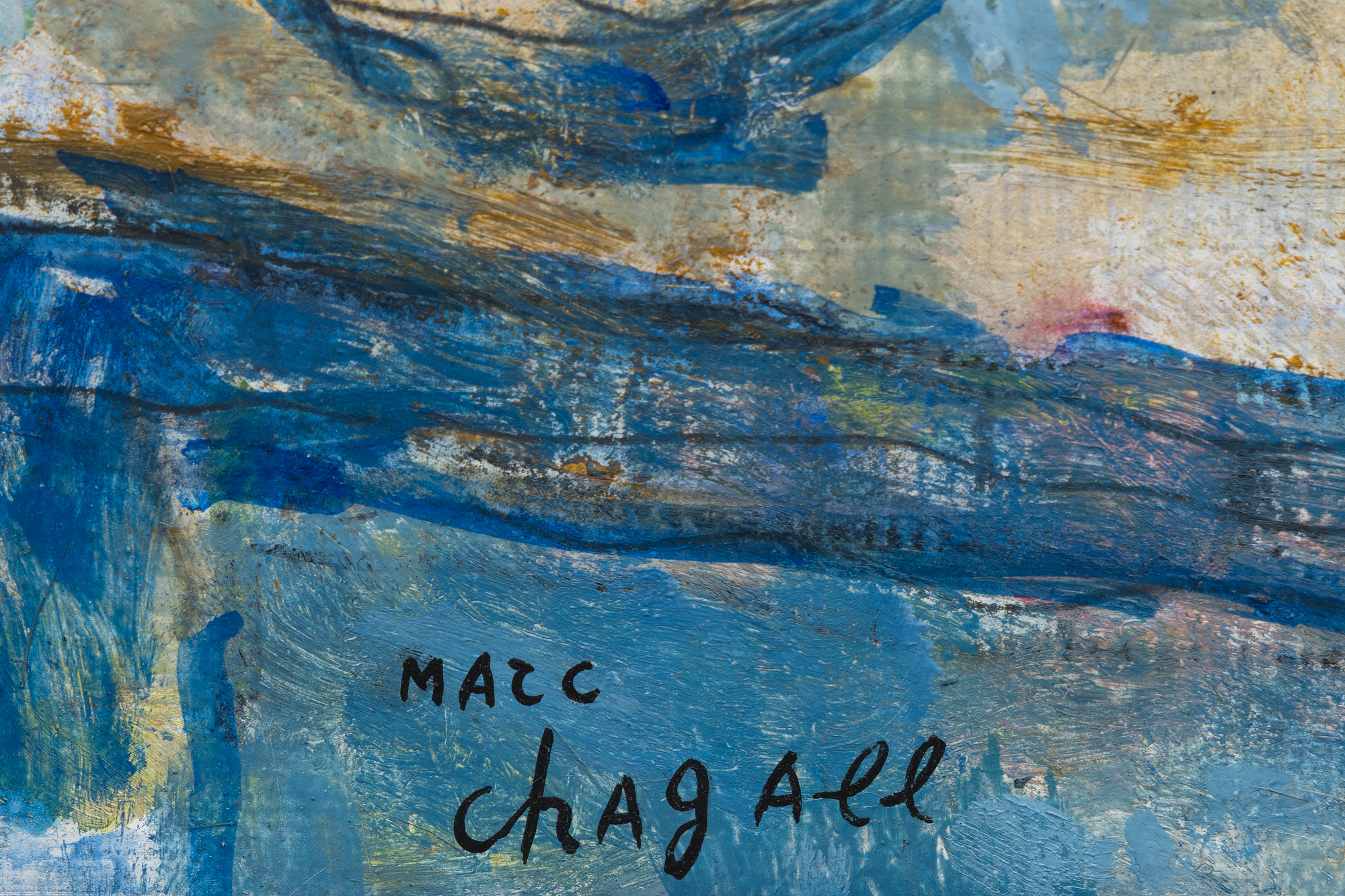
La pintura permaneció en la colección y el patrimonio de Chagall hasta después de su muerte en 1985, lo que subraya su importancia personal. Autenticada por el Comité Marc Chagall, Sur la table pertenece a una línea de composiciones florales y simbólicas que definen su obra madura.
Preguntar