Atrás

CAMILLE PISSARRO(1830-1903)

$1,750,000

 
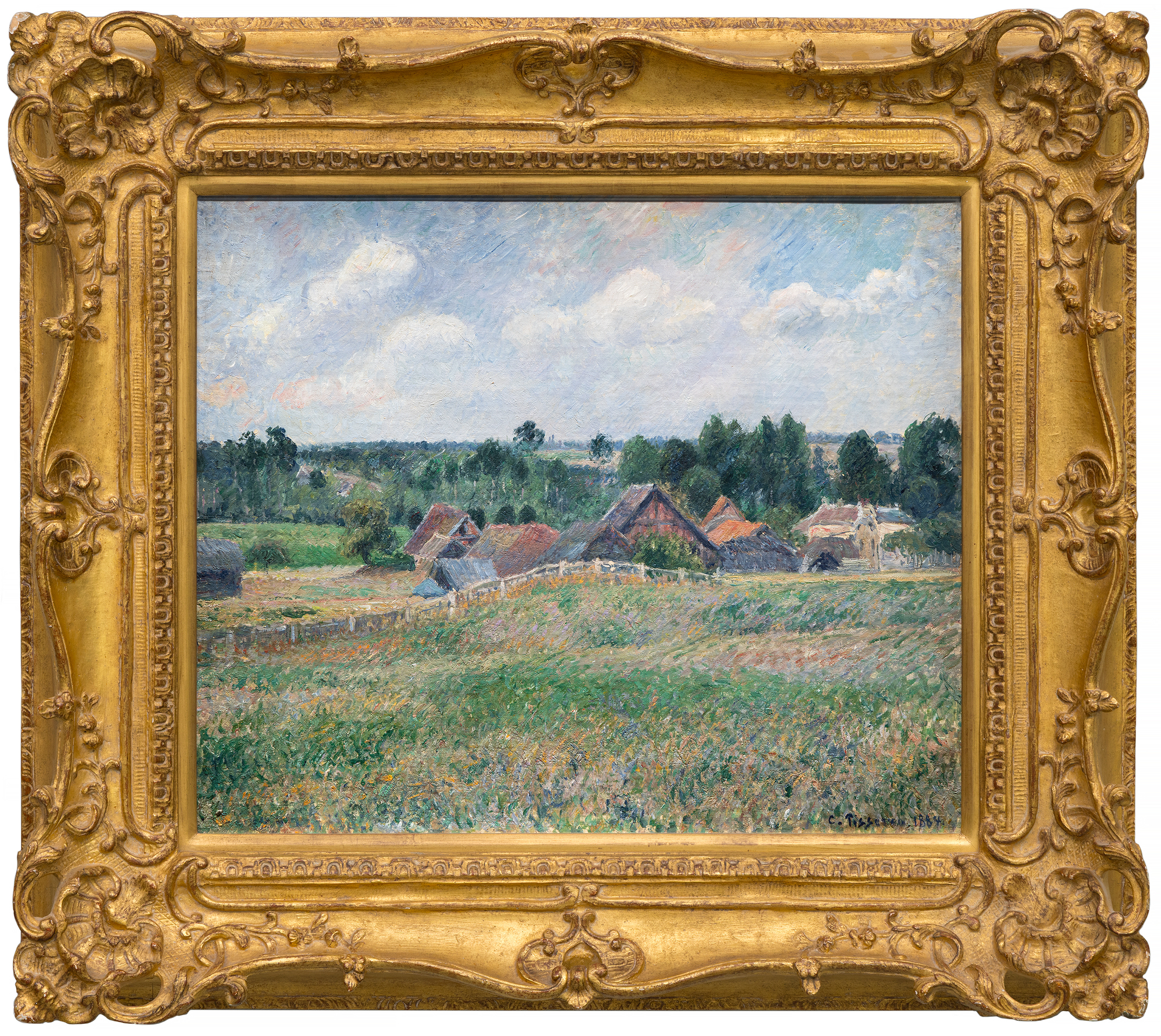
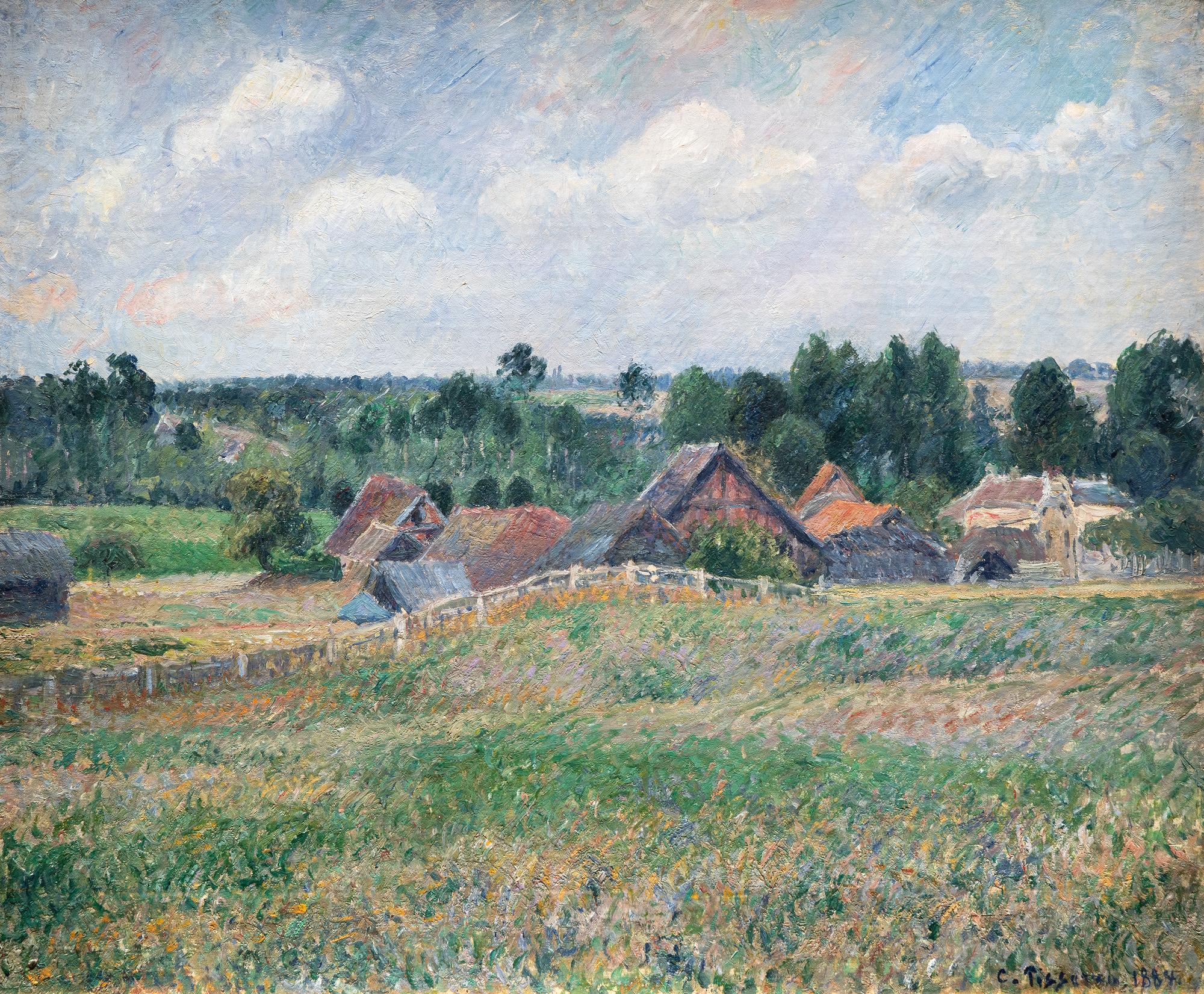
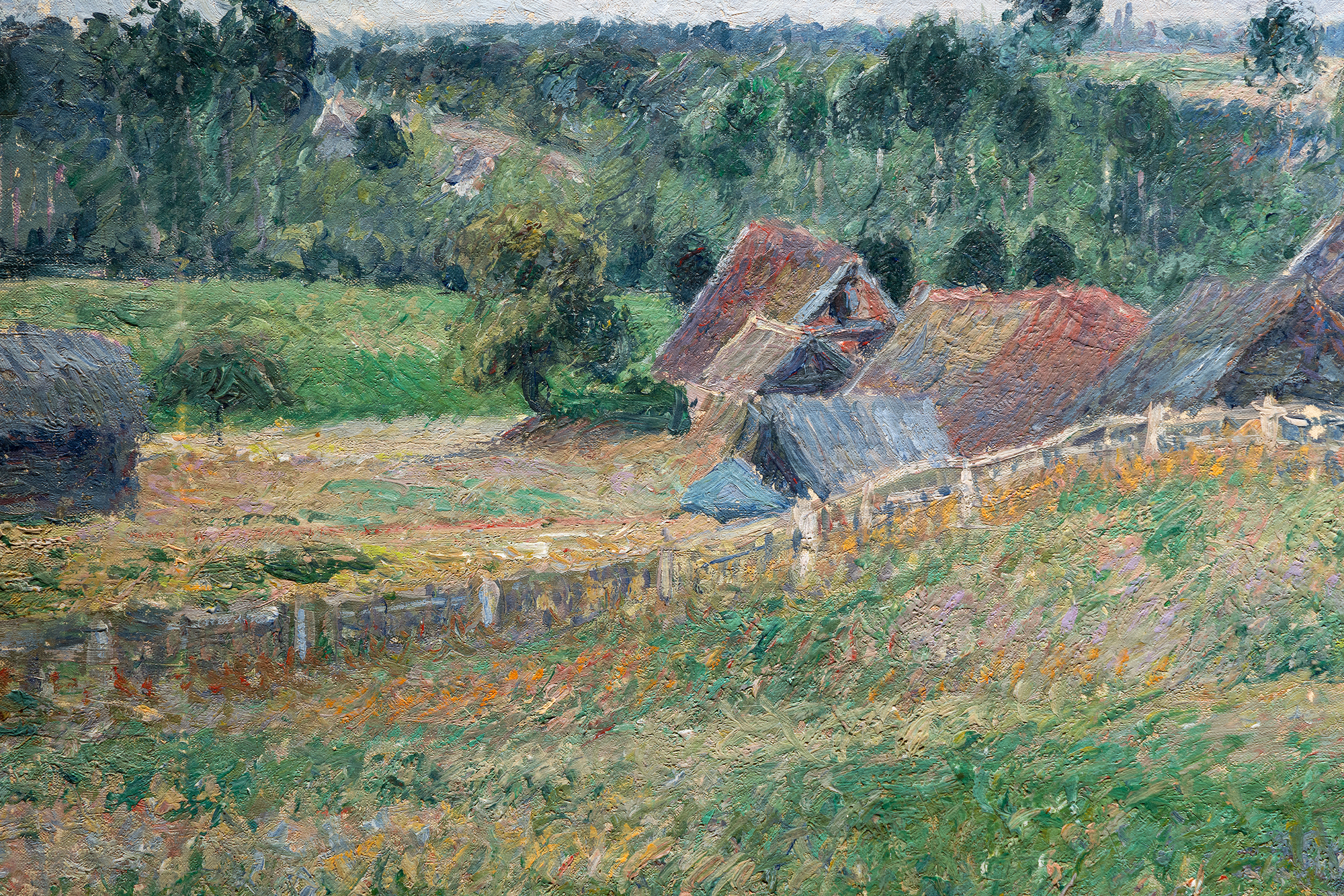
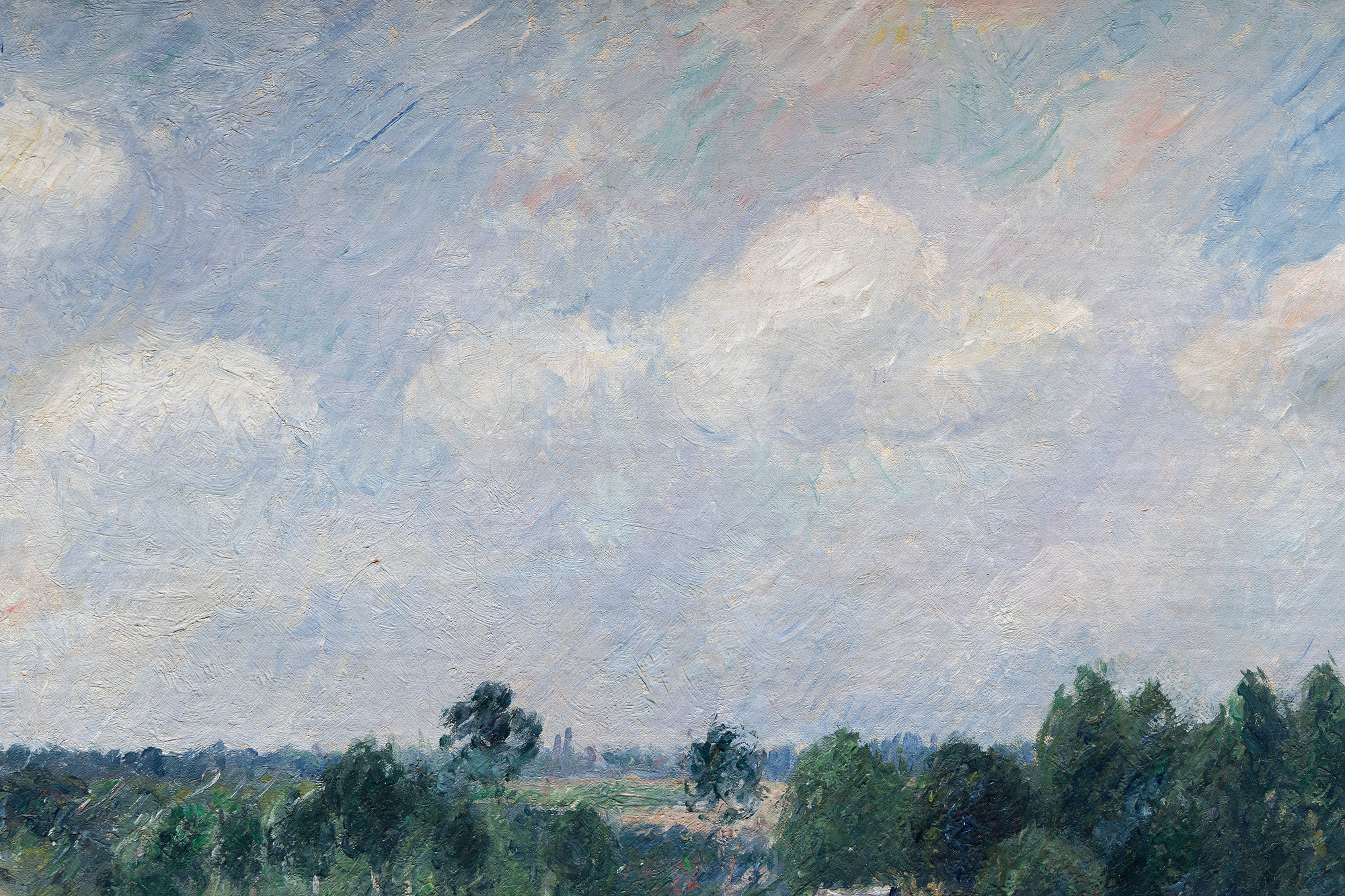
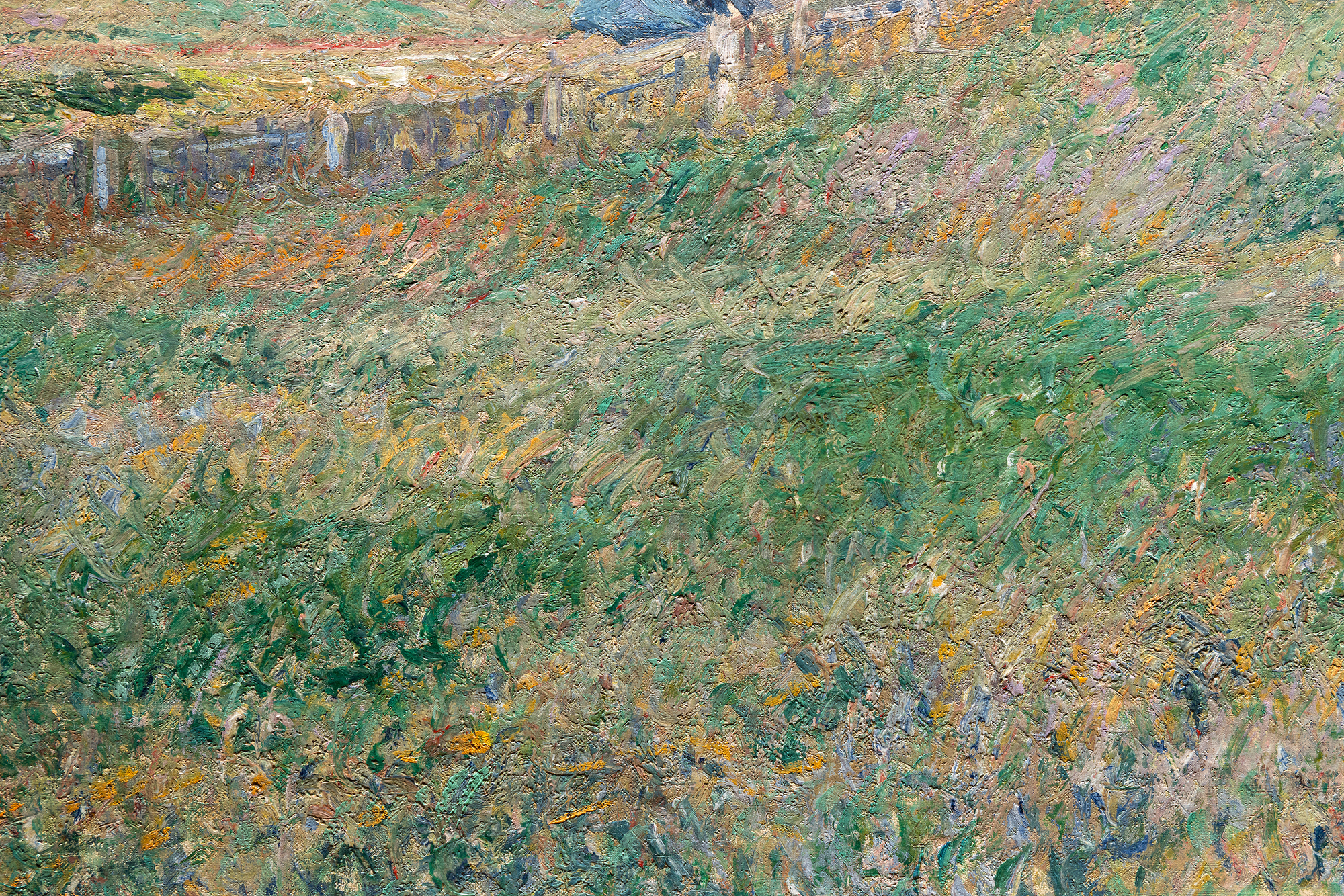
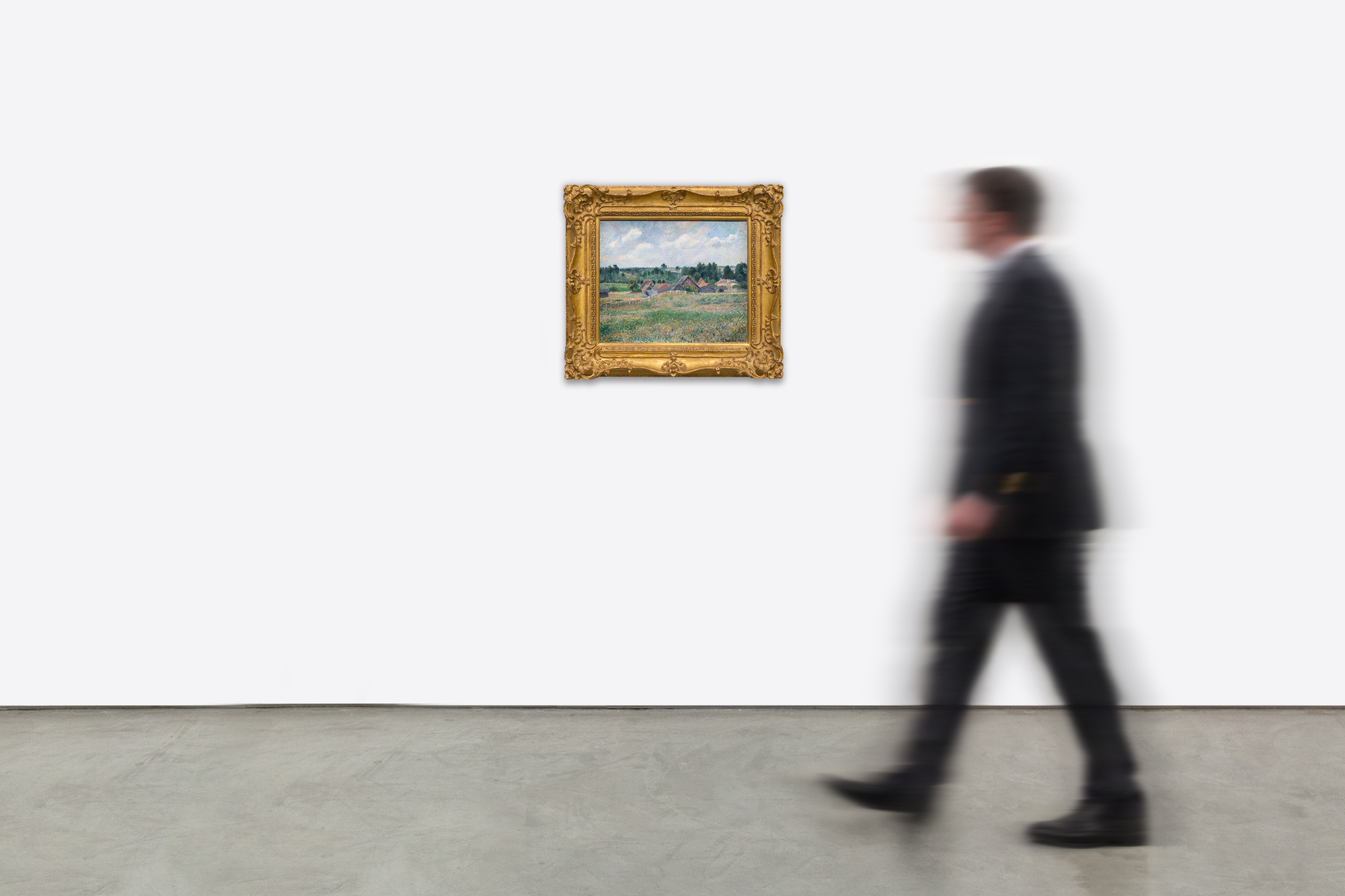
<div><font face=Lato size=3>Camille Pissarro’s La Briqueterie Delafolie à Éragny (1884) offers a vivid rural scene from Éragny. The painting has never been to auction, instead gracing numerous exhibitions in Zurich, Paris, Brussels, Warsaw, and Santa Barbara since its creation. Documented as no. 776 in volume III of the catalogue raisonné by Joachim Pissarro and Claire Durand-Ruel Snollaerts (illustrated p. 514), it stands as a testament to Pissarro’s Impressionist legacy. </font></div><br><br><div><font face=Lato size=3> </font></div><br><br><div><font face=Lato size=3>The foreground features a polychrome meadow. The staccato green, ochre, and lilac brushstrokes in all directions convey the wind’s gentle movement through the field beneath a fleecy sky. In the distance, the Delafolie brickyard emerges, owned by Pissarro’s good friend and neighbor. The catalogue raisonné notes:  </font></div><br><br><div><font face=Lato size=3> </font></div><br><br><div><font face=Lato size=3>“The Delafolie brickyard at Éragny, refers to a local family-owned and operated brickyard. Mr. Delafolie wasn’t just a bricklayer—he was Pissarro’s neighbor and brewed his own cider. His cider was reportedly so good that Claude Monet once wrote to Pissarro asking who the merchant was and how he could order a keg for himself. Pissarro and Mr. Delafolie were good friends, and Pissarro often took advantage of Mr. Delafolie’s regular deliveries to Paris and Gisors to ship his paintings along with the bricks.”  </font></div><br><br><div><font face=Lato size=3> </font></div><br><br><div><font face=Lato size=3>Similar works reside in the Musée d’Orsay, the Walters Art Museum, and the Birmingham Museum of Art. This painting offers collectors a rare, well-traveled piece, embodying Pissarro’s intimate connection to Éragny’s landscape and community. </font></div> <div><font face=Lato size=3>Camille Pissarro’s La Briqueterie Delafolie à Éragny (1884) offers a vivid rural scene from Éragny. The painting has never been to auction, instead gracing numerous exhibitions in Zurich, Paris, Brussels, Warsaw, and Santa Barbara since its creation. Documented as no. 776 in volume III of the catalogue raisonné by Joachim Pissarro and Claire Durand-Ruel Snollaerts (illustrated p. 514), it stands as a testament to Pissarro’s Impressionist legacy. </font></div><br><br><div><font face=Lato size=3> </font></div><br><br><div><font face=Lato size=3>The foreground features a polychrome meadow. The staccato green, ochre, and lilac brushstrokes in all directions convey the wind’s gentle movement through the field beneath a fleecy sky. In the distance, the Delafolie brickyard emerges, owned by Pissarro’s good friend and neighbor. The catalogue raisonné notes:  </font></div><br><br><div><font face=Lato size=3> </font></div><br><br><div><font face=Lato size=3>“The Delafolie brickyard at Éragny, refers to a local family-owned and operated brickyard. Mr. Delafolie wasn’t just a bricklayer—he was Pissarro’s neighbor and brewed his own cider. His cider was reportedly so good that Claude Monet once wrote to Pissarro asking who the merchant was and how he could order a keg for himself. Pissarro and Mr. Delafolie were good friends, and Pissarro often took advantage of Mr. Delafolie’s regular deliveries to Paris and Gisors to ship his paintings along with the bricks.”  </font></div><br><br><div><font face=Lato size=3> </font></div><br><br><div><font face=Lato size=3>Similar works reside in the Musée d’Orsay, the Walters Art Museum, and the Birmingham Museum of Art. This painting offers collectors a rare, well-traveled piece, embodying Pissarro’s intimate connection to Éragny’s landscape and community. </font></div> <div><font face=Lato size=3>Camille Pissarro’s La Briqueterie Delafolie à Éragny (1884) offers a vivid rural scene from Éragny. The painting has never been to auction, instead gracing numerous exhibitions in Zurich, Paris, Brussels, Warsaw, and Santa Barbara since its creation. Documented as no. 776 in volume III of the catalogue raisonné by Joachim Pissarro and Claire Durand-Ruel Snollaerts (illustrated p. 514), it stands as a testament to Pissarro’s Impressionist legacy. </font></div><br><br><div><font face=Lato size=3> </font></div><br><br><div><font face=Lato size=3>The foreground features a polychrome meadow. The staccato green, ochre, and lilac brushstrokes in all directions convey the wind’s gentle movement through the field beneath a fleecy sky. In the distance, the Delafolie brickyard emerges, owned by Pissarro’s good friend and neighbor. The catalogue raisonné notes:  </font></div><br><br><div><font face=Lato size=3> </font></div><br><br><div><font face=Lato size=3>“The Delafolie brickyard at Éragny, refers to a local family-owned and operated brickyard. Mr. Delafolie wasn’t just a bricklayer—he was Pissarro’s neighbor and brewed his own cider. His cider was reportedly so good that Claude Monet once wrote to Pissarro asking who the merchant was and how he could order a keg for himself. Pissarro and Mr. Delafolie were good friends, and Pissarro often took advantage of Mr. Delafolie’s regular deliveries to Paris and Gisors to ship his paintings along with the bricks.”  </font></div><br><br><div><font face=Lato size=3> </font></div><br><br><div><font face=Lato size=3>Similar works reside in the Musée d’Orsay, the Walters Art Museum, and the Birmingham Museum of Art. This painting offers collectors a rare, well-traveled piece, embodying Pissarro’s intimate connection to Éragny’s landscape and community. </font></div> <div><font face=Lato size=3>Camille Pissarro’s La Briqueterie Delafolie à Éragny (1884) offers a vivid rural scene from Éragny. The painting has never been to auction, instead gracing numerous exhibitions in Zurich, Paris, Brussels, Warsaw, and Santa Barbara since its creation. Documented as no. 776 in volume III of the catalogue raisonné by Joachim Pissarro and Claire Durand-Ruel Snollaerts (illustrated p. 514), it stands as a testament to Pissarro’s Impressionist legacy. </font></div><br><br><div><font face=Lato size=3> </font></div><br><br><div><font face=Lato size=3>The foreground features a polychrome meadow. The staccato green, ochre, and lilac brushstrokes in all directions convey the wind’s gentle movement through the field beneath a fleecy sky. In the distance, the Delafolie brickyard emerges, owned by Pissarro’s good friend and neighbor. The catalogue raisonné notes:  </font></div><br><br><div><font face=Lato size=3> </font></div><br><br><div><font face=Lato size=3>“The Delafolie brickyard at Éragny, refers to a local family-owned and operated brickyard. Mr. Delafolie wasn’t just a bricklayer—he was Pissarro’s neighbor and brewed his own cider. His cider was reportedly so good that Claude Monet once wrote to Pissarro asking who the merchant was and how he could order a keg for himself. Pissarro and Mr. Delafolie were good friends, and Pissarro often took advantage of Mr. Delafolie’s regular deliveries to Paris and Gisors to ship his paintings along with the bricks.”  </font></div><br><br><div><font face=Lato size=3> </font></div><br><br><div><font face=Lato size=3>Similar works reside in the Musée d’Orsay, the Walters Art Museum, and the Birmingham Museum of Art. This painting offers collectors a rare, well-traveled piece, embodying Pissarro’s intimate connection to Éragny’s landscape and community. </font></div> <div><font face=Lato size=3>Camille Pissarro’s La Briqueterie Delafolie à Éragny (1884) offers a vivid rural scene from Éragny. The painting has never been to auction, instead gracing numerous exhibitions in Zurich, Paris, Brussels, Warsaw, and Santa Barbara since its creation. Documented as no. 776 in volume III of the catalogue raisonné by Joachim Pissarro and Claire Durand-Ruel Snollaerts (illustrated p. 514), it stands as a testament to Pissarro’s Impressionist legacy. </font></div><br><br><div><font face=Lato size=3> </font></div><br><br><div><font face=Lato size=3>The foreground features a polychrome meadow. The staccato green, ochre, and lilac brushstrokes in all directions convey the wind’s gentle movement through the field beneath a fleecy sky. In the distance, the Delafolie brickyard emerges, owned by Pissarro’s good friend and neighbor. The catalogue raisonné notes:  </font></div><br><br><div><font face=Lato size=3> </font></div><br><br><div><font face=Lato size=3>“The Delafolie brickyard at Éragny, refers to a local family-owned and operated brickyard. Mr. Delafolie wasn’t just a bricklayer—he was Pissarro’s neighbor and brewed his own cider. His cider was reportedly so good that Claude Monet once wrote to Pissarro asking who the merchant was and how he could order a keg for himself. Pissarro and Mr. Delafolie were good friends, and Pissarro often took advantage of Mr. Delafolie’s regular deliveries to Paris and Gisors to ship his paintings along with the bricks.”  </font></div><br><br><div><font face=Lato size=3> </font></div><br><br><div><font face=Lato size=3>Similar works reside in the Musée d’Orsay, the Walters Art Museum, and the Birmingham Museum of Art. This painting offers collectors a rare, well-traveled piece, embodying Pissarro’s intimate connection to Éragny’s landscape and community. </font></div> <div><font face=Lato size=3>Camille Pissarro’s La Briqueterie Delafolie à Éragny (1884) offers a vivid rural scene from Éragny. The painting has never been to auction, instead gracing numerous exhibitions in Zurich, Paris, Brussels, Warsaw, and Santa Barbara since its creation. Documented as no. 776 in volume III of the catalogue raisonné by Joachim Pissarro and Claire Durand-Ruel Snollaerts (illustrated p. 514), it stands as a testament to Pissarro’s Impressionist legacy. </font></div><br><br><div><font face=Lato size=3> </font></div><br><br><div><font face=Lato size=3>The foreground features a polychrome meadow. The staccato green, ochre, and lilac brushstrokes in all directions convey the wind’s gentle movement through the field beneath a fleecy sky. In the distance, the Delafolie brickyard emerges, owned by Pissarro’s good friend and neighbor. The catalogue raisonné notes:  </font></div><br><br><div><font face=Lato size=3> </font></div><br><br><div><font face=Lato size=3>“The Delafolie brickyard at Éragny, refers to a local family-owned and operated brickyard. Mr. Delafolie wasn’t just a bricklayer—he was Pissarro’s neighbor and brewed his own cider. His cider was reportedly so good that Claude Monet once wrote to Pissarro asking who the merchant was and how he could order a keg for himself. Pissarro and Mr. Delafolie were good friends, and Pissarro often took advantage of Mr. Delafolie’s regular deliveries to Paris and Gisors to ship his paintings along with the bricks.”  </font></div><br><br><div><font face=Lato size=3> </font></div><br><br><div><font face=Lato size=3>Similar works reside in the Musée d’Orsay, the Walters Art Museum, and the Birmingham Museum of Art. This painting offers collectors a rare, well-traveled piece, embodying Pissarro’s intimate connection to Éragny’s landscape and community. </font></div> <div><font face=Lato size=3>Camille Pissarro’s La Briqueterie Delafolie à Éragny (1884) offers a vivid rural scene from Éragny. The painting has never been to auction, instead gracing numerous exhibitions in Zurich, Paris, Brussels, Warsaw, and Santa Barbara since its creation. Documented as no. 776 in volume III of the catalogue raisonné by Joachim Pissarro and Claire Durand-Ruel Snollaerts (illustrated p. 514), it stands as a testament to Pissarro’s Impressionist legacy. </font></div><br><br><div><font face=Lato size=3> </font></div><br><br><div><font face=Lato size=3>The foreground features a polychrome meadow. The staccato green, ochre, and lilac brushstrokes in all directions convey the wind’s gentle movement through the field beneath a fleecy sky. In the distance, the Delafolie brickyard emerges, owned by Pissarro’s good friend and neighbor. The catalogue raisonné notes:  </font></div><br><br><div><font face=Lato size=3> </font></div><br><br><div><font face=Lato size=3>“The Delafolie brickyard at Éragny, refers to a local family-owned and operated brickyard. Mr. Delafolie wasn’t just a bricklayer—he was Pissarro’s neighbor and brewed his own cider. His cider was reportedly so good that Claude Monet once wrote to Pissarro asking who the merchant was and how he could order a keg for himself. Pissarro and Mr. Delafolie were good friends, and Pissarro often took advantage of Mr. Delafolie’s regular deliveries to Paris and Gisors to ship his paintings along with the bricks.”  </font></div><br><br><div><font face=Lato size=3> </font></div><br><br><div><font face=Lato size=3>Similar works reside in the Musée d’Orsay, the Walters Art Museum, and the Birmingham Museum of Art. This painting offers collectors a rare, well-traveled piece, embodying Pissarro’s intimate connection to Éragny’s landscape and community. </font></div> <div><font face=Lato size=3>Camille Pissarro’s La Briqueterie Delafolie à Éragny (1884) offers a vivid rural scene from Éragny. The painting has never been to auction, instead gracing numerous exhibitions in Zurich, Paris, Brussels, Warsaw, and Santa Barbara since its creation. Documented as no. 776 in volume III of the catalogue raisonné by Joachim Pissarro and Claire Durand-Ruel Snollaerts (illustrated p. 514), it stands as a testament to Pissarro’s Impressionist legacy. </font></div><br><br><div><font face=Lato size=3> </font></div><br><br><div><font face=Lato size=3>The foreground features a polychrome meadow. The staccato green, ochre, and lilac brushstrokes in all directions convey the wind’s gentle movement through the field beneath a fleecy sky. In the distance, the Delafolie brickyard emerges, owned by Pissarro’s good friend and neighbor. The catalogue raisonné notes:  </font></div><br><br><div><font face=Lato size=3> </font></div><br><br><div><font face=Lato size=3>“The Delafolie brickyard at Éragny, refers to a local family-owned and operated brickyard. Mr. Delafolie wasn’t just a bricklayer—he was Pissarro’s neighbor and brewed his own cider. His cider was reportedly so good that Claude Monet once wrote to Pissarro asking who the merchant was and how he could order a keg for himself. Pissarro and Mr. Delafolie were good friends, and Pissarro often took advantage of Mr. Delafolie’s regular deliveries to Paris and Gisors to ship his paintings along with the bricks.”  </font></div><br><br><div><font face=Lato size=3> </font></div><br><br><div><font face=Lato size=3>Similar works reside in the Musée d’Orsay, the Walters Art Museum, and the Birmingham Museum of Art. This painting offers collectors a rare, well-traveled piece, embodying Pissarro’s intimate connection to Éragny’s landscape and community. </font></div> <div><font face=Lato size=3>Camille Pissarro’s La Briqueterie Delafolie à Éragny (1884) offers a vivid rural scene from Éragny. The painting has never been to auction, instead gracing numerous exhibitions in Zurich, Paris, Brussels, Warsaw, and Santa Barbara since its creation. Documented as no. 776 in volume III of the catalogue raisonné by Joachim Pissarro and Claire Durand-Ruel Snollaerts (illustrated p. 514), it stands as a testament to Pissarro’s Impressionist legacy. </font></div><br><br><div><font face=Lato size=3> </font></div><br><br><div><font face=Lato size=3>The foreground features a polychrome meadow. The staccato green, ochre, and lilac brushstrokes in all directions convey the wind’s gentle movement through the field beneath a fleecy sky. In the distance, the Delafolie brickyard emerges, owned by Pissarro’s good friend and neighbor. The catalogue raisonné notes:  </font></div><br><br><div><font face=Lato size=3> </font></div><br><br><div><font face=Lato size=3>“The Delafolie brickyard at Éragny, refers to a local family-owned and operated brickyard. Mr. Delafolie wasn’t just a bricklayer—he was Pissarro’s neighbor and brewed his own cider. His cider was reportedly so good that Claude Monet once wrote to Pissarro asking who the merchant was and how he could order a keg for himself. Pissarro and Mr. Delafolie were good friends, and Pissarro often took advantage of Mr. Delafolie’s regular deliveries to Paris and Gisors to ship his paintings along with the bricks.”  </font></div><br><br><div><font face=Lato size=3> </font></div><br><br><div><font face=Lato size=3>Similar works reside in the Musée d’Orsay, the Walters Art Museum, and the Birmingham Museum of Art. This painting offers collectors a rare, well-traveled piece, embodying Pissarro’s intimate connection to Éragny’s landscape and community. </font></div> <div><font face=Lato size=3>Camille Pissarro’s La Briqueterie Delafolie à Éragny (1884) offers a vivid rural scene from Éragny. The painting has never been to auction, instead gracing numerous exhibitions in Zurich, Paris, Brussels, Warsaw, and Santa Barbara since its creation. Documented as no. 776 in volume III of the catalogue raisonné by Joachim Pissarro and Claire Durand-Ruel Snollaerts (illustrated p. 514), it stands as a testament to Pissarro’s Impressionist legacy. </font></div><br><br><div><font face=Lato size=3> </font></div><br><br><div><font face=Lato size=3>The foreground features a polychrome meadow. The staccato green, ochre, and lilac brushstrokes in all directions convey the wind’s gentle movement through the field beneath a fleecy sky. In the distance, the Delafolie brickyard emerges, owned by Pissarro’s good friend and neighbor. The catalogue raisonné notes:  </font></div><br><br><div><font face=Lato size=3> </font></div><br><br><div><font face=Lato size=3>“The Delafolie brickyard at Éragny, refers to a local family-owned and operated brickyard. Mr. Delafolie wasn’t just a bricklayer—he was Pissarro’s neighbor and brewed his own cider. His cider was reportedly so good that Claude Monet once wrote to Pissarro asking who the merchant was and how he could order a keg for himself. Pissarro and Mr. Delafolie were good friends, and Pissarro often took advantage of Mr. Delafolie’s regular deliveries to Paris and Gisors to ship his paintings along with the bricks.”  </font></div><br><br><div><font face=Lato size=3> </font></div><br><br><div><font face=Lato size=3>Similar works reside in the Musée d’Orsay, the Walters Art Museum, and the Birmingham Museum of Art. This painting offers collectors a rare, well-traveled piece, embodying Pissarro’s intimate connection to Éragny’s landscape and community. </font></div>
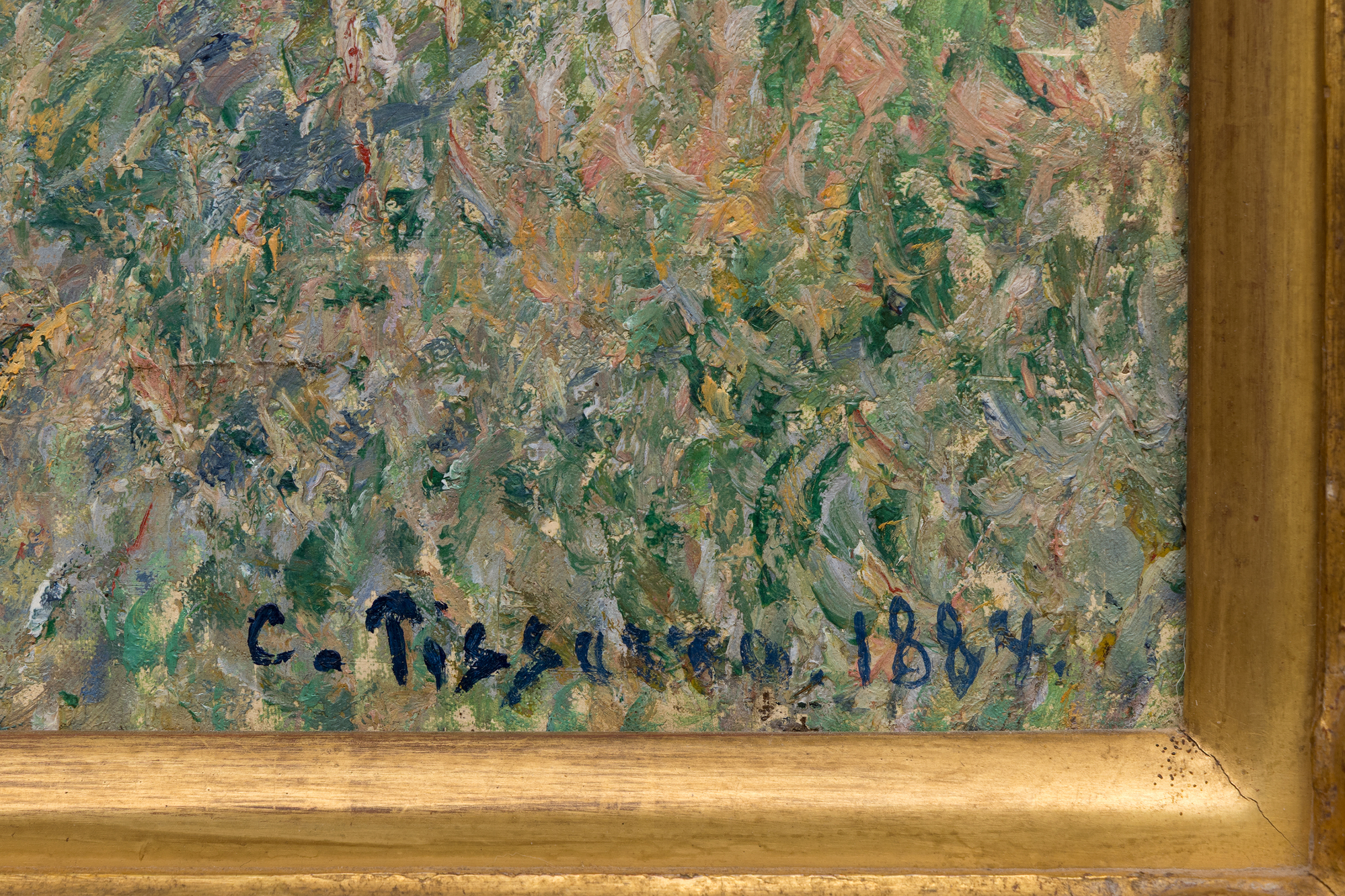
La Briqueterie Delafolie à Éragny188418 1/4 x 21 7/8 pulg.(46,36 x 55,56 cm) óleo sobre lienzo
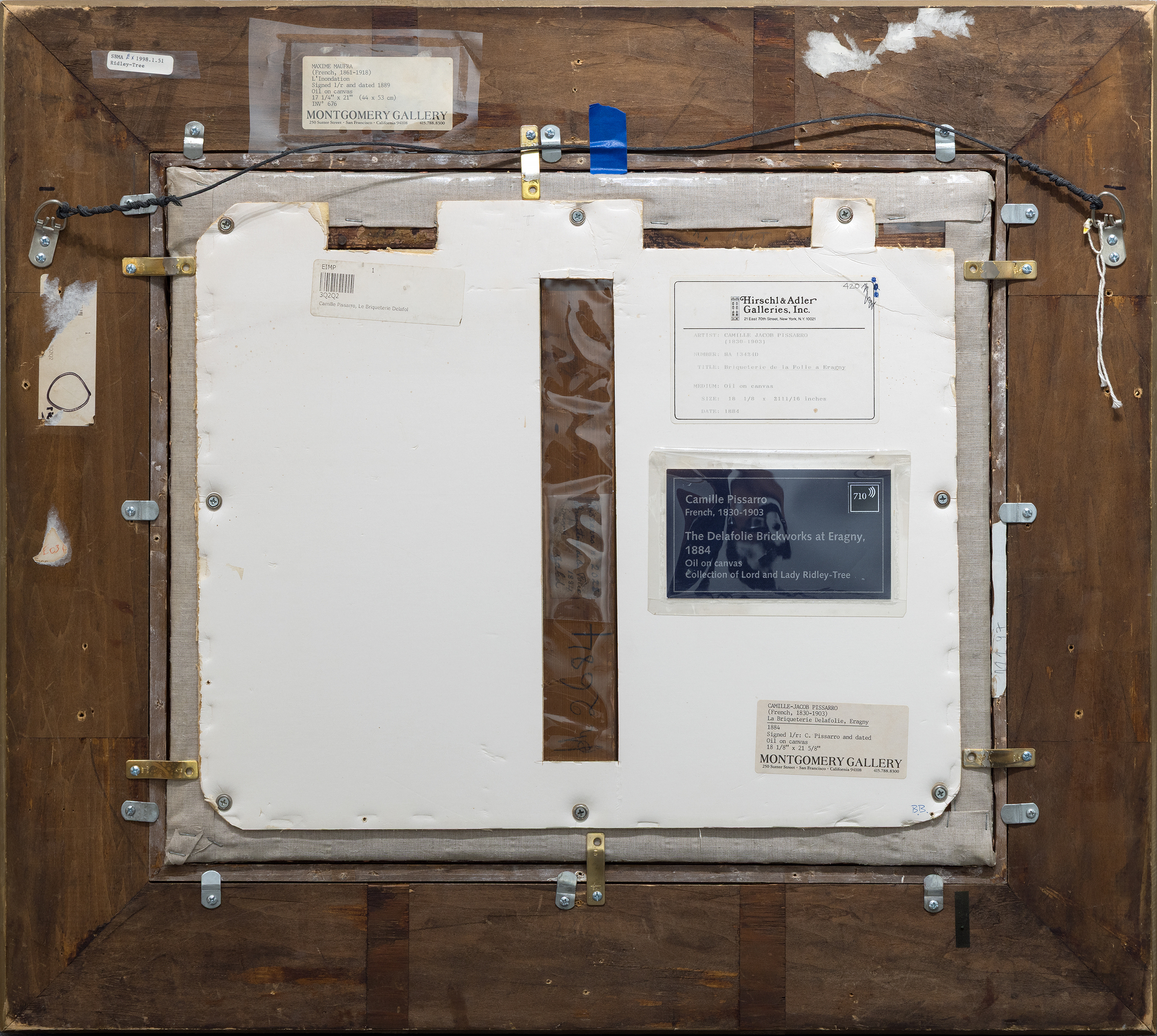
Procedencia
Durand-Ruel, París, adquirido al artista, 1892
Werner Herold, Zúrich, adquirido al artista en 1917
Desde entonces, por descendencia, hasta 1991
Montgomery Gallery, San Francisco (en consignación)
Galerías Hirschl & Adler, Nueva York
Colección privada, Nueva York, 1994
Lord y Lady Ridley Tree, Santa Bárbara, California
Colección privada
Exposición
París, Francia, Galerie Durand-Ruel, Camille Pissarro, 1892, nº. 30
Varsovia, Polonia, Towarzstwo, Zachety Sztuk Pieknuch w Krolestwie Polskiem, Wystawa Dziel Artystow Francusk
...Más....ich, 1911, nº 114
Zúrich, Suiza, Kunsthaus, L'Art française des XIXe et Xxe siècles, 1917, nº 152
París, Francia, Gazette des Beaux-Arts, La Peinture française du XIX siècle en Suisse, 1938, nº 76
Bruselas, Bélgica, Palacio de Bellas Artes, De David à Cézanne, 1947-48, nº 108
Santa Barbara, California, Museo de Arte de Santa Barbara, Santa Barbara Collects: Impresiones de Francia, 1998, no. 51
Literatura
Alfred Ernst, "Camille Pissarro", La Paix, París, febrero de 1892, p. 2
Janine Bailley-Herzberg, Correspondance de Camille Pissarro, vol. III, París, 1988, carta nº. 734, p. 171, nº. 5
Ludovic-Rodo Pissarro y Lionello Venturi, Camille Pissarro: son art, son oeuvre, vol. I París, 1939, nº 681, p. 177; vol. II, nº 681, pl. 141
Eric Zafran, Santa Barbara Collects: Impresiones de Francia, Santa Barbara, CA, 1988, no. 51, ilustrado
Joachim Pissarro y Claire Durand-Ruel Snollaerts, Pissarro, Catálogo crítico de pinturas, vol. III, París, 2005, nº 776, p. 514 ilustrada
...MENOS....
La Briqueterie Delafolie à Éragny (1884) de Camille Pissarro ofrece una vívida escena rural de Éragny. El cuadro nunca se ha subastado, sino que ha sido objeto de numerosas exposiciones en Zúrich, París, Bruselas, Varsovia y Santa Bárbara desde su creación. Documentado con el núm. 776 en el volumen III del catálogo razonado de Joachim Pissarro y Claire Durand-Ruel Snollaerts (ilustrado en la p. 514), constituye un testimonio del legado impresionista de Pissarro.


El primer plano presenta un prado policromo. Las pinceladas entrecortadas de verde, ocre y lila en todas las direcciones transmiten el suave movimiento del viento a través del campo bajo un cielo lanoso. A lo lejos, aparece el aserradero Delafolie, propiedad de un buen amigo y vecino de Pissarro. El catálogo razonado señala:


"La fábrica de ladrillos Delafolie, en Éragny, es una fábrica de ladrillos familiar. El Sr. Delafolie no era sólo un albañil, era vecino de Pissarro y fabricaba su propia sidra. Se dice que su sidra era tan buena que Claude Monet escribió a Pissarro preguntándole quién era el comerciante y cómo podía pedir un barril para él. Pissarro y el Sr. Delafolie eran buenos amigos, y Pissarro aprovechaba a menudo las entregas regulares del Sr. Delafolie a París y Gisors para enviar sus cuadros junto con los ladrillos".


Obras similares se conservan en el Museo de Orsay, el Walters Art Museum y el Birmingham Museum of Art. Este cuadro ofrece a los coleccionistas una pieza rara, muy viajada, que encarna la íntima conexión de Pissarro con el paisaje y la comunidad de Éragny.
Preguntar