返回

卡米尔·皮萨罗(1830-1903)

$1,750,000

 
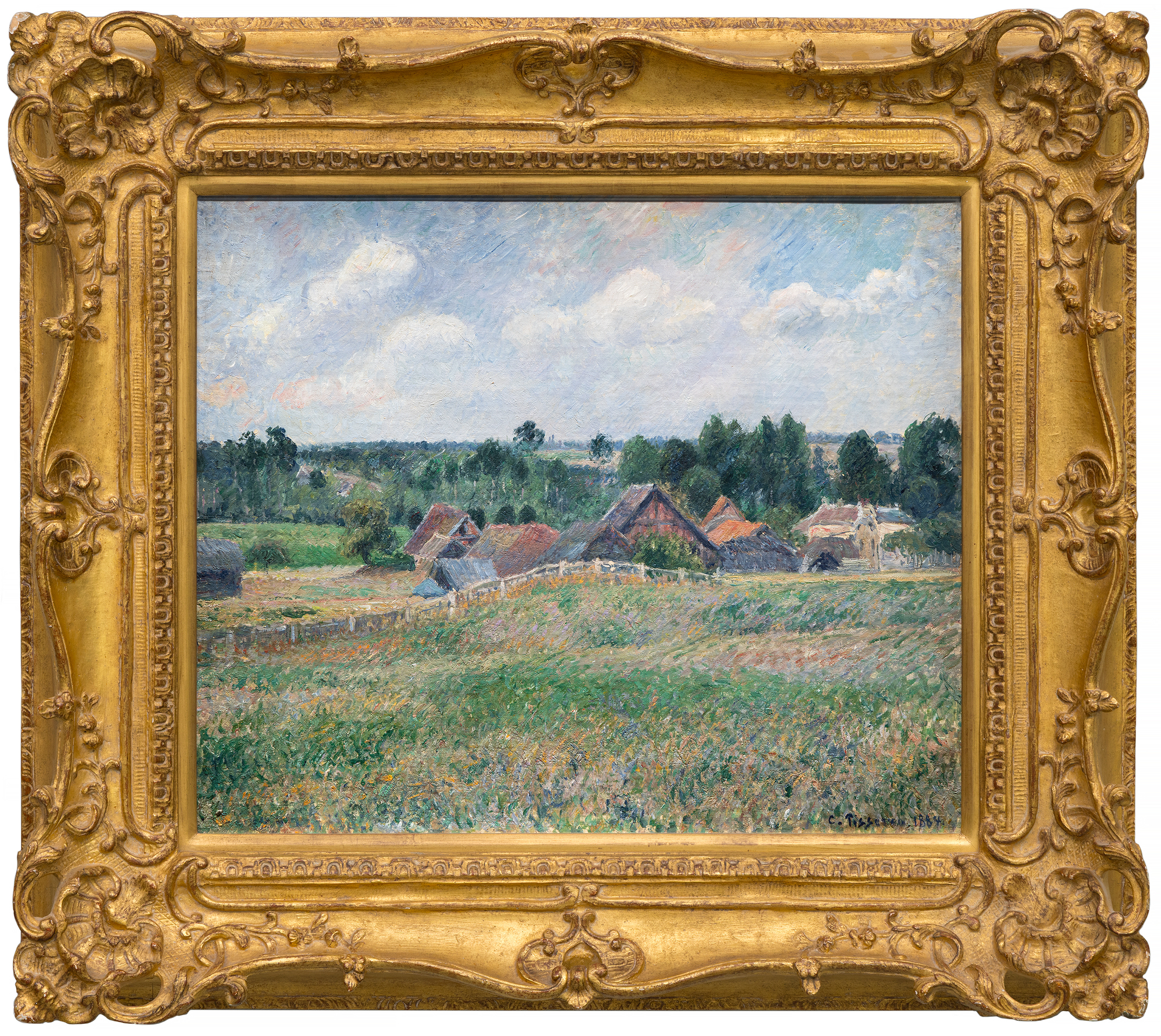
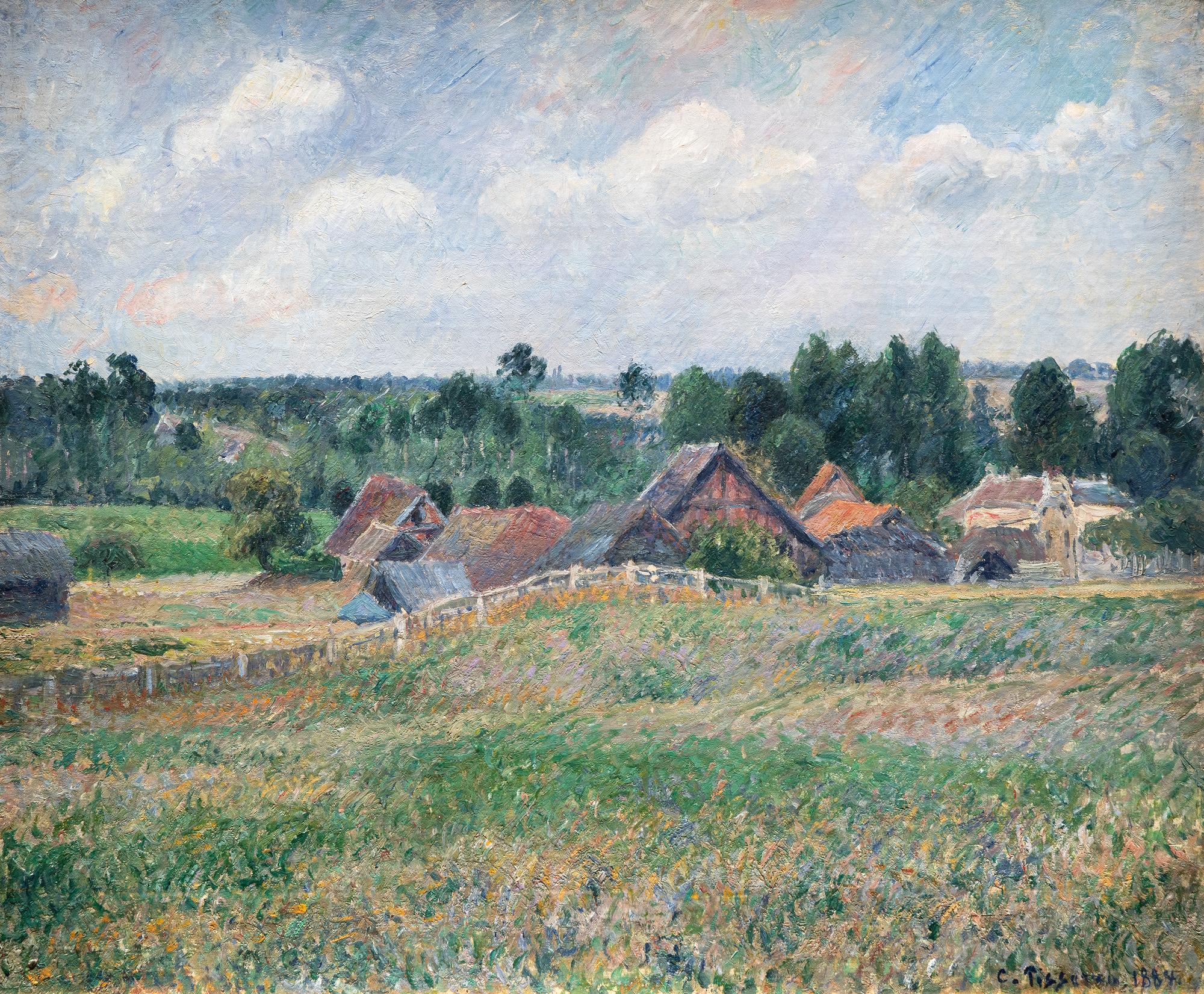
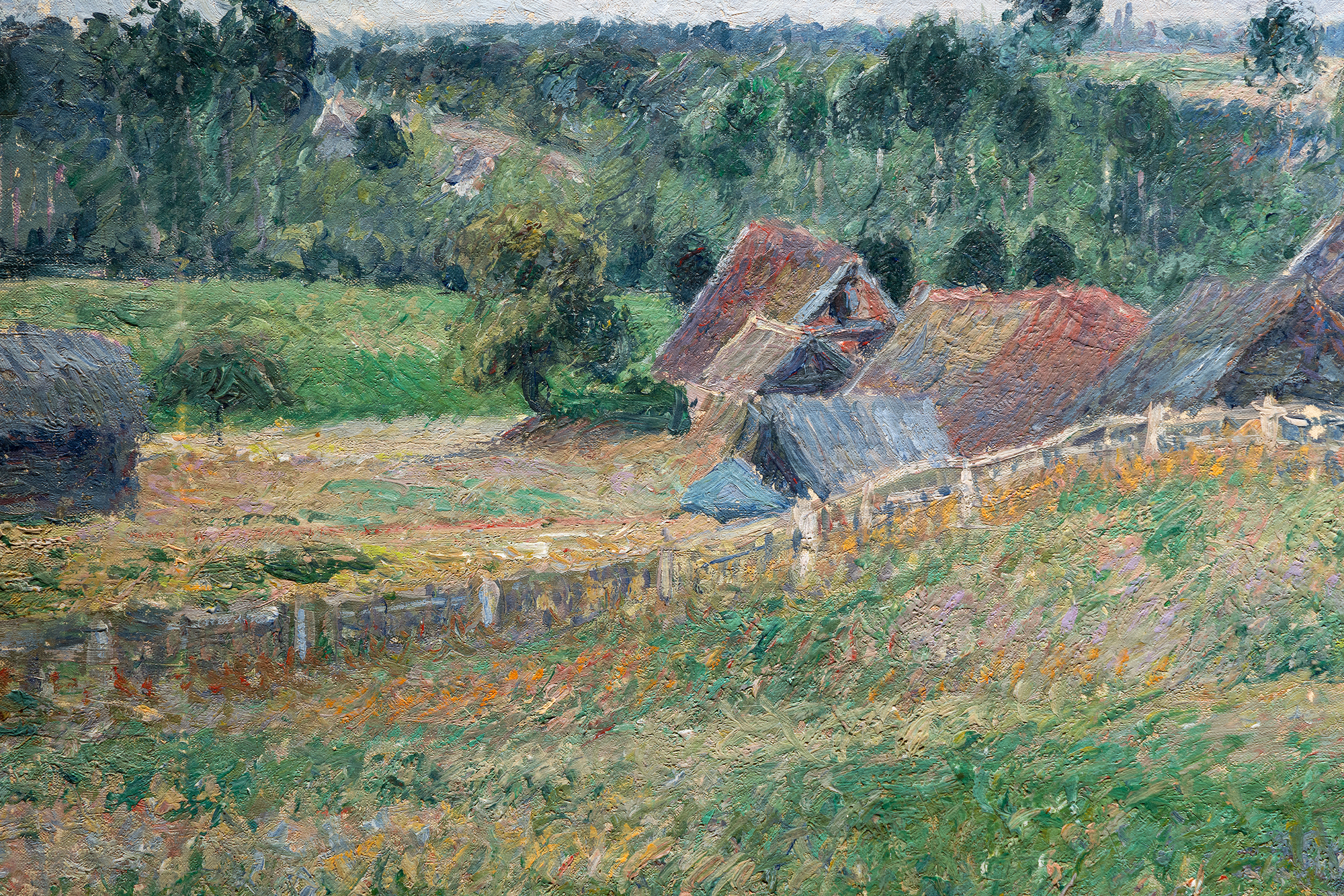
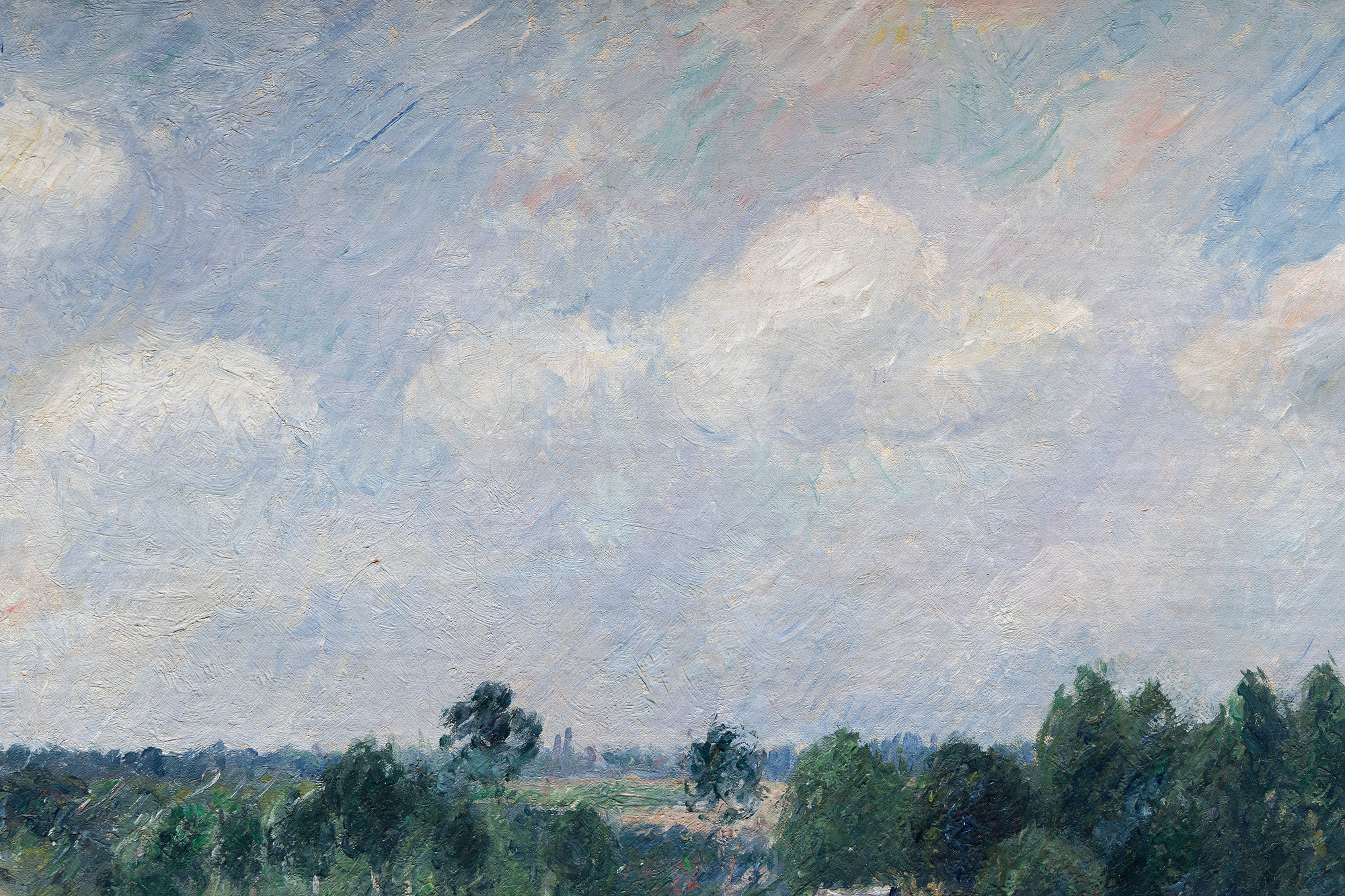
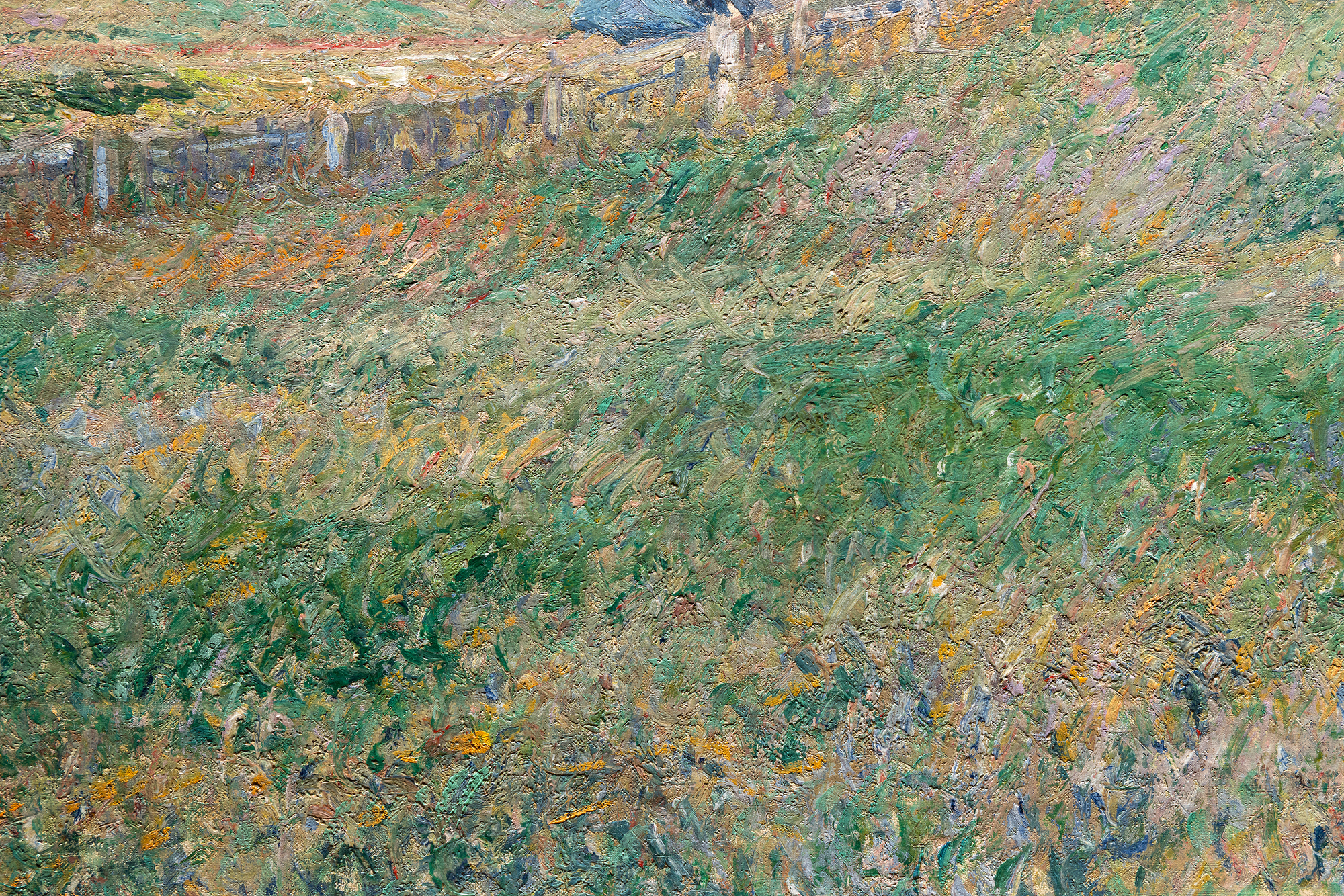
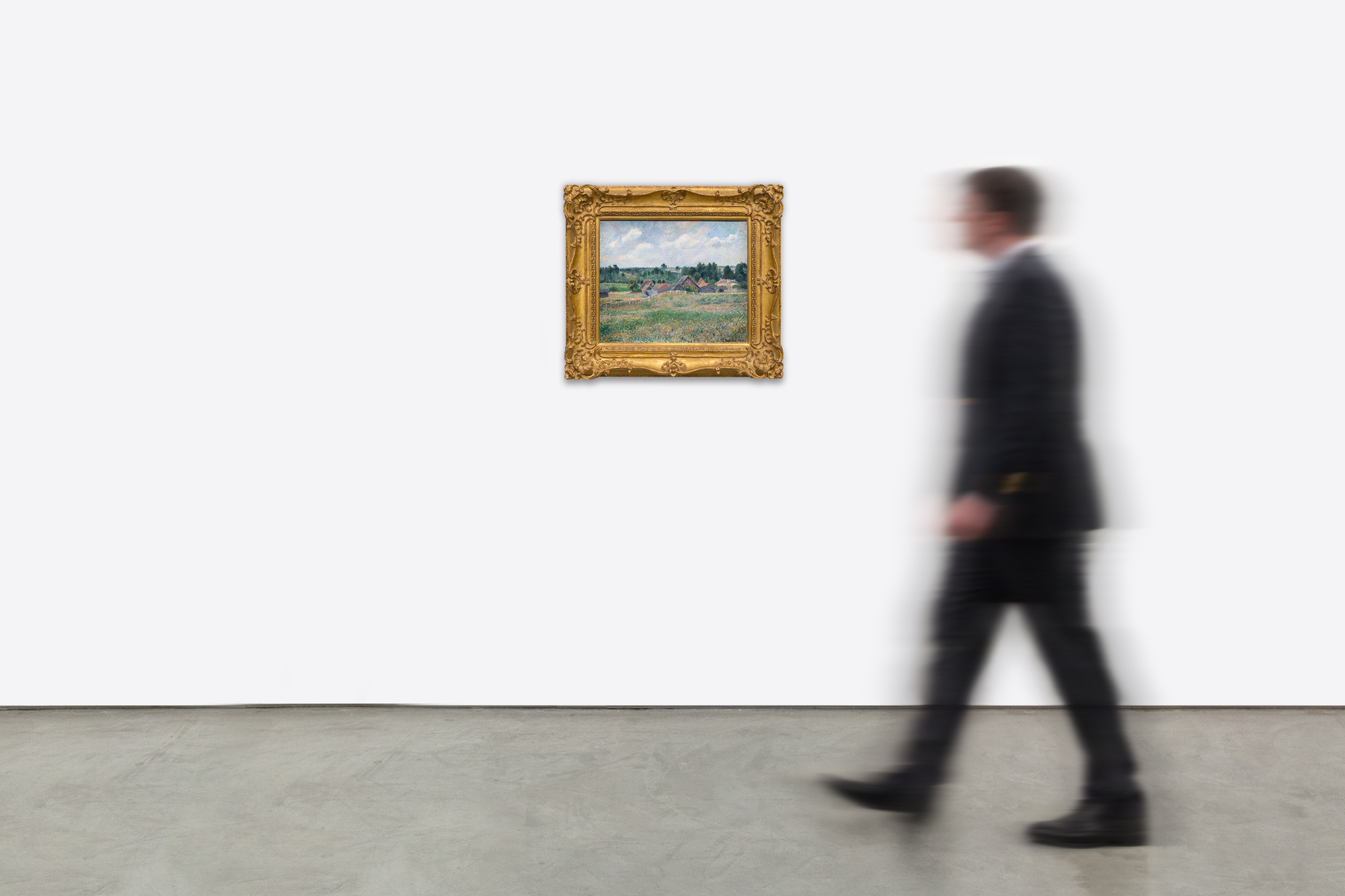
<div><font face=Lato size=3>Camille Pissarro’s La Briqueterie Delafolie à Éragny (1884) offers a vivid rural scene from Éragny. The painting has never been to auction, instead gracing numerous exhibitions in Zurich, Paris, Brussels, Warsaw, and Santa Barbara since its creation. Documented as no. 776 in volume III of the catalogue raisonné by Joachim Pissarro and Claire Durand-Ruel Snollaerts (illustrated p. 514), it stands as a testament to Pissarro’s Impressionist legacy. </font></div><br><br><div><font face=Lato size=3> </font></div><br><br><div><font face=Lato size=3>The foreground features a polychrome meadow. The staccato green, ochre, and lilac brushstrokes in all directions convey the wind’s gentle movement through the field beneath a fleecy sky. In the distance, the Delafolie brickyard emerges, owned by Pissarro’s good friend and neighbor. The catalogue raisonné notes:  </font></div><br><br><div><font face=Lato size=3> </font></div><br><br><div><font face=Lato size=3>“The Delafolie brickyard at Éragny, refers to a local family-owned and operated brickyard. Mr. Delafolie wasn’t just a bricklayer—he was Pissarro’s neighbor and brewed his own cider. His cider was reportedly so good that Claude Monet once wrote to Pissarro asking who the merchant was and how he could order a keg for himself. Pissarro and Mr. Delafolie were good friends, and Pissarro often took advantage of Mr. Delafolie’s regular deliveries to Paris and Gisors to ship his paintings along with the bricks.”  </font></div><br><br><div><font face=Lato size=3> </font></div><br><br><div><font face=Lato size=3>Similar works reside in the Musée d’Orsay, the Walters Art Museum, and the Birmingham Museum of Art. This painting offers collectors a rare, well-traveled piece, embodying Pissarro’s intimate connection to Éragny’s landscape and community. </font></div> <div><font face=Lato size=3>Camille Pissarro’s La Briqueterie Delafolie à Éragny (1884) offers a vivid rural scene from Éragny. The painting has never been to auction, instead gracing numerous exhibitions in Zurich, Paris, Brussels, Warsaw, and Santa Barbara since its creation. Documented as no. 776 in volume III of the catalogue raisonné by Joachim Pissarro and Claire Durand-Ruel Snollaerts (illustrated p. 514), it stands as a testament to Pissarro’s Impressionist legacy. </font></div><br><br><div><font face=Lato size=3> </font></div><br><br><div><font face=Lato size=3>The foreground features a polychrome meadow. The staccato green, ochre, and lilac brushstrokes in all directions convey the wind’s gentle movement through the field beneath a fleecy sky. In the distance, the Delafolie brickyard emerges, owned by Pissarro’s good friend and neighbor. The catalogue raisonné notes:  </font></div><br><br><div><font face=Lato size=3> </font></div><br><br><div><font face=Lato size=3>“The Delafolie brickyard at Éragny, refers to a local family-owned and operated brickyard. Mr. Delafolie wasn’t just a bricklayer—he was Pissarro’s neighbor and brewed his own cider. His cider was reportedly so good that Claude Monet once wrote to Pissarro asking who the merchant was and how he could order a keg for himself. Pissarro and Mr. Delafolie were good friends, and Pissarro often took advantage of Mr. Delafolie’s regular deliveries to Paris and Gisors to ship his paintings along with the bricks.”  </font></div><br><br><div><font face=Lato size=3> </font></div><br><br><div><font face=Lato size=3>Similar works reside in the Musée d’Orsay, the Walters Art Museum, and the Birmingham Museum of Art. This painting offers collectors a rare, well-traveled piece, embodying Pissarro’s intimate connection to Éragny’s landscape and community. </font></div> <div><font face=Lato size=3>Camille Pissarro’s La Briqueterie Delafolie à Éragny (1884) offers a vivid rural scene from Éragny. The painting has never been to auction, instead gracing numerous exhibitions in Zurich, Paris, Brussels, Warsaw, and Santa Barbara since its creation. Documented as no. 776 in volume III of the catalogue raisonné by Joachim Pissarro and Claire Durand-Ruel Snollaerts (illustrated p. 514), it stands as a testament to Pissarro’s Impressionist legacy. </font></div><br><br><div><font face=Lato size=3> </font></div><br><br><div><font face=Lato size=3>The foreground features a polychrome meadow. The staccato green, ochre, and lilac brushstrokes in all directions convey the wind’s gentle movement through the field beneath a fleecy sky. In the distance, the Delafolie brickyard emerges, owned by Pissarro’s good friend and neighbor. The catalogue raisonné notes:  </font></div><br><br><div><font face=Lato size=3> </font></div><br><br><div><font face=Lato size=3>“The Delafolie brickyard at Éragny, refers to a local family-owned and operated brickyard. Mr. Delafolie wasn’t just a bricklayer—he was Pissarro’s neighbor and brewed his own cider. His cider was reportedly so good that Claude Monet once wrote to Pissarro asking who the merchant was and how he could order a keg for himself. Pissarro and Mr. Delafolie were good friends, and Pissarro often took advantage of Mr. Delafolie’s regular deliveries to Paris and Gisors to ship his paintings along with the bricks.”  </font></div><br><br><div><font face=Lato size=3> </font></div><br><br><div><font face=Lato size=3>Similar works reside in the Musée d’Orsay, the Walters Art Museum, and the Birmingham Museum of Art. This painting offers collectors a rare, well-traveled piece, embodying Pissarro’s intimate connection to Éragny’s landscape and community. </font></div> <div><font face=Lato size=3>Camille Pissarro’s La Briqueterie Delafolie à Éragny (1884) offers a vivid rural scene from Éragny. The painting has never been to auction, instead gracing numerous exhibitions in Zurich, Paris, Brussels, Warsaw, and Santa Barbara since its creation. Documented as no. 776 in volume III of the catalogue raisonné by Joachim Pissarro and Claire Durand-Ruel Snollaerts (illustrated p. 514), it stands as a testament to Pissarro’s Impressionist legacy. </font></div><br><br><div><font face=Lato size=3> </font></div><br><br><div><font face=Lato size=3>The foreground features a polychrome meadow. The staccato green, ochre, and lilac brushstrokes in all directions convey the wind’s gentle movement through the field beneath a fleecy sky. In the distance, the Delafolie brickyard emerges, owned by Pissarro’s good friend and neighbor. The catalogue raisonné notes:  </font></div><br><br><div><font face=Lato size=3> </font></div><br><br><div><font face=Lato size=3>“The Delafolie brickyard at Éragny, refers to a local family-owned and operated brickyard. Mr. Delafolie wasn’t just a bricklayer—he was Pissarro’s neighbor and brewed his own cider. His cider was reportedly so good that Claude Monet once wrote to Pissarro asking who the merchant was and how he could order a keg for himself. Pissarro and Mr. Delafolie were good friends, and Pissarro often took advantage of Mr. Delafolie’s regular deliveries to Paris and Gisors to ship his paintings along with the bricks.”  </font></div><br><br><div><font face=Lato size=3> </font></div><br><br><div><font face=Lato size=3>Similar works reside in the Musée d’Orsay, the Walters Art Museum, and the Birmingham Museum of Art. This painting offers collectors a rare, well-traveled piece, embodying Pissarro’s intimate connection to Éragny’s landscape and community. </font></div> <div><font face=Lato size=3>Camille Pissarro’s La Briqueterie Delafolie à Éragny (1884) offers a vivid rural scene from Éragny. The painting has never been to auction, instead gracing numerous exhibitions in Zurich, Paris, Brussels, Warsaw, and Santa Barbara since its creation. Documented as no. 776 in volume III of the catalogue raisonné by Joachim Pissarro and Claire Durand-Ruel Snollaerts (illustrated p. 514), it stands as a testament to Pissarro’s Impressionist legacy. </font></div><br><br><div><font face=Lato size=3> </font></div><br><br><div><font face=Lato size=3>The foreground features a polychrome meadow. The staccato green, ochre, and lilac brushstrokes in all directions convey the wind’s gentle movement through the field beneath a fleecy sky. In the distance, the Delafolie brickyard emerges, owned by Pissarro’s good friend and neighbor. The catalogue raisonné notes:  </font></div><br><br><div><font face=Lato size=3> </font></div><br><br><div><font face=Lato size=3>“The Delafolie brickyard at Éragny, refers to a local family-owned and operated brickyard. Mr. Delafolie wasn’t just a bricklayer—he was Pissarro’s neighbor and brewed his own cider. His cider was reportedly so good that Claude Monet once wrote to Pissarro asking who the merchant was and how he could order a keg for himself. Pissarro and Mr. Delafolie were good friends, and Pissarro often took advantage of Mr. Delafolie’s regular deliveries to Paris and Gisors to ship his paintings along with the bricks.”  </font></div><br><br><div><font face=Lato size=3> </font></div><br><br><div><font face=Lato size=3>Similar works reside in the Musée d’Orsay, the Walters Art Museum, and the Birmingham Museum of Art. This painting offers collectors a rare, well-traveled piece, embodying Pissarro’s intimate connection to Éragny’s landscape and community. </font></div> <div><font face=Lato size=3>Camille Pissarro’s La Briqueterie Delafolie à Éragny (1884) offers a vivid rural scene from Éragny. The painting has never been to auction, instead gracing numerous exhibitions in Zurich, Paris, Brussels, Warsaw, and Santa Barbara since its creation. Documented as no. 776 in volume III of the catalogue raisonné by Joachim Pissarro and Claire Durand-Ruel Snollaerts (illustrated p. 514), it stands as a testament to Pissarro’s Impressionist legacy. </font></div><br><br><div><font face=Lato size=3> </font></div><br><br><div><font face=Lato size=3>The foreground features a polychrome meadow. The staccato green, ochre, and lilac brushstrokes in all directions convey the wind’s gentle movement through the field beneath a fleecy sky. In the distance, the Delafolie brickyard emerges, owned by Pissarro’s good friend and neighbor. The catalogue raisonné notes:  </font></div><br><br><div><font face=Lato size=3> </font></div><br><br><div><font face=Lato size=3>“The Delafolie brickyard at Éragny, refers to a local family-owned and operated brickyard. Mr. Delafolie wasn’t just a bricklayer—he was Pissarro’s neighbor and brewed his own cider. His cider was reportedly so good that Claude Monet once wrote to Pissarro asking who the merchant was and how he could order a keg for himself. Pissarro and Mr. Delafolie were good friends, and Pissarro often took advantage of Mr. Delafolie’s regular deliveries to Paris and Gisors to ship his paintings along with the bricks.”  </font></div><br><br><div><font face=Lato size=3> </font></div><br><br><div><font face=Lato size=3>Similar works reside in the Musée d’Orsay, the Walters Art Museum, and the Birmingham Museum of Art. This painting offers collectors a rare, well-traveled piece, embodying Pissarro’s intimate connection to Éragny’s landscape and community. </font></div> <div><font face=Lato size=3>Camille Pissarro’s La Briqueterie Delafolie à Éragny (1884) offers a vivid rural scene from Éragny. The painting has never been to auction, instead gracing numerous exhibitions in Zurich, Paris, Brussels, Warsaw, and Santa Barbara since its creation. Documented as no. 776 in volume III of the catalogue raisonné by Joachim Pissarro and Claire Durand-Ruel Snollaerts (illustrated p. 514), it stands as a testament to Pissarro’s Impressionist legacy. </font></div><br><br><div><font face=Lato size=3> </font></div><br><br><div><font face=Lato size=3>The foreground features a polychrome meadow. The staccato green, ochre, and lilac brushstrokes in all directions convey the wind’s gentle movement through the field beneath a fleecy sky. In the distance, the Delafolie brickyard emerges, owned by Pissarro’s good friend and neighbor. The catalogue raisonné notes:  </font></div><br><br><div><font face=Lato size=3> </font></div><br><br><div><font face=Lato size=3>“The Delafolie brickyard at Éragny, refers to a local family-owned and operated brickyard. Mr. Delafolie wasn’t just a bricklayer—he was Pissarro’s neighbor and brewed his own cider. His cider was reportedly so good that Claude Monet once wrote to Pissarro asking who the merchant was and how he could order a keg for himself. Pissarro and Mr. Delafolie were good friends, and Pissarro often took advantage of Mr. Delafolie’s regular deliveries to Paris and Gisors to ship his paintings along with the bricks.”  </font></div><br><br><div><font face=Lato size=3> </font></div><br><br><div><font face=Lato size=3>Similar works reside in the Musée d’Orsay, the Walters Art Museum, and the Birmingham Museum of Art. This painting offers collectors a rare, well-traveled piece, embodying Pissarro’s intimate connection to Éragny’s landscape and community. </font></div> <div><font face=Lato size=3>Camille Pissarro’s La Briqueterie Delafolie à Éragny (1884) offers a vivid rural scene from Éragny. The painting has never been to auction, instead gracing numerous exhibitions in Zurich, Paris, Brussels, Warsaw, and Santa Barbara since its creation. Documented as no. 776 in volume III of the catalogue raisonné by Joachim Pissarro and Claire Durand-Ruel Snollaerts (illustrated p. 514), it stands as a testament to Pissarro’s Impressionist legacy. </font></div><br><br><div><font face=Lato size=3> </font></div><br><br><div><font face=Lato size=3>The foreground features a polychrome meadow. The staccato green, ochre, and lilac brushstrokes in all directions convey the wind’s gentle movement through the field beneath a fleecy sky. In the distance, the Delafolie brickyard emerges, owned by Pissarro’s good friend and neighbor. The catalogue raisonné notes:  </font></div><br><br><div><font face=Lato size=3> </font></div><br><br><div><font face=Lato size=3>“The Delafolie brickyard at Éragny, refers to a local family-owned and operated brickyard. Mr. Delafolie wasn’t just a bricklayer—he was Pissarro’s neighbor and brewed his own cider. His cider was reportedly so good that Claude Monet once wrote to Pissarro asking who the merchant was and how he could order a keg for himself. Pissarro and Mr. Delafolie were good friends, and Pissarro often took advantage of Mr. Delafolie’s regular deliveries to Paris and Gisors to ship his paintings along with the bricks.”  </font></div><br><br><div><font face=Lato size=3> </font></div><br><br><div><font face=Lato size=3>Similar works reside in the Musée d’Orsay, the Walters Art Museum, and the Birmingham Museum of Art. This painting offers collectors a rare, well-traveled piece, embodying Pissarro’s intimate connection to Éragny’s landscape and community. </font></div> <div><font face=Lato size=3>Camille Pissarro’s La Briqueterie Delafolie à Éragny (1884) offers a vivid rural scene from Éragny. The painting has never been to auction, instead gracing numerous exhibitions in Zurich, Paris, Brussels, Warsaw, and Santa Barbara since its creation. Documented as no. 776 in volume III of the catalogue raisonné by Joachim Pissarro and Claire Durand-Ruel Snollaerts (illustrated p. 514), it stands as a testament to Pissarro’s Impressionist legacy. </font></div><br><br><div><font face=Lato size=3> </font></div><br><br><div><font face=Lato size=3>The foreground features a polychrome meadow. The staccato green, ochre, and lilac brushstrokes in all directions convey the wind’s gentle movement through the field beneath a fleecy sky. In the distance, the Delafolie brickyard emerges, owned by Pissarro’s good friend and neighbor. The catalogue raisonné notes:  </font></div><br><br><div><font face=Lato size=3> </font></div><br><br><div><font face=Lato size=3>“The Delafolie brickyard at Éragny, refers to a local family-owned and operated brickyard. Mr. Delafolie wasn’t just a bricklayer—he was Pissarro’s neighbor and brewed his own cider. His cider was reportedly so good that Claude Monet once wrote to Pissarro asking who the merchant was and how he could order a keg for himself. Pissarro and Mr. Delafolie were good friends, and Pissarro often took advantage of Mr. Delafolie’s regular deliveries to Paris and Gisors to ship his paintings along with the bricks.”  </font></div><br><br><div><font face=Lato size=3> </font></div><br><br><div><font face=Lato size=3>Similar works reside in the Musée d’Orsay, the Walters Art Museum, and the Birmingham Museum of Art. This painting offers collectors a rare, well-traveled piece, embodying Pissarro’s intimate connection to Éragny’s landscape and community. </font></div> <div><font face=Lato size=3>Camille Pissarro’s La Briqueterie Delafolie à Éragny (1884) offers a vivid rural scene from Éragny. The painting has never been to auction, instead gracing numerous exhibitions in Zurich, Paris, Brussels, Warsaw, and Santa Barbara since its creation. Documented as no. 776 in volume III of the catalogue raisonné by Joachim Pissarro and Claire Durand-Ruel Snollaerts (illustrated p. 514), it stands as a testament to Pissarro’s Impressionist legacy. </font></div><br><br><div><font face=Lato size=3> </font></div><br><br><div><font face=Lato size=3>The foreground features a polychrome meadow. The staccato green, ochre, and lilac brushstrokes in all directions convey the wind’s gentle movement through the field beneath a fleecy sky. In the distance, the Delafolie brickyard emerges, owned by Pissarro’s good friend and neighbor. The catalogue raisonné notes:  </font></div><br><br><div><font face=Lato size=3> </font></div><br><br><div><font face=Lato size=3>“The Delafolie brickyard at Éragny, refers to a local family-owned and operated brickyard. Mr. Delafolie wasn’t just a bricklayer—he was Pissarro’s neighbor and brewed his own cider. His cider was reportedly so good that Claude Monet once wrote to Pissarro asking who the merchant was and how he could order a keg for himself. Pissarro and Mr. Delafolie were good friends, and Pissarro often took advantage of Mr. Delafolie’s regular deliveries to Paris and Gisors to ship his paintings along with the bricks.”  </font></div><br><br><div><font face=Lato size=3> </font></div><br><br><div><font face=Lato size=3>Similar works reside in the Musée d’Orsay, the Walters Art Museum, and the Birmingham Museum of Art. This painting offers collectors a rare, well-traveled piece, embodying Pissarro’s intimate connection to Éragny’s landscape and community. </font></div>
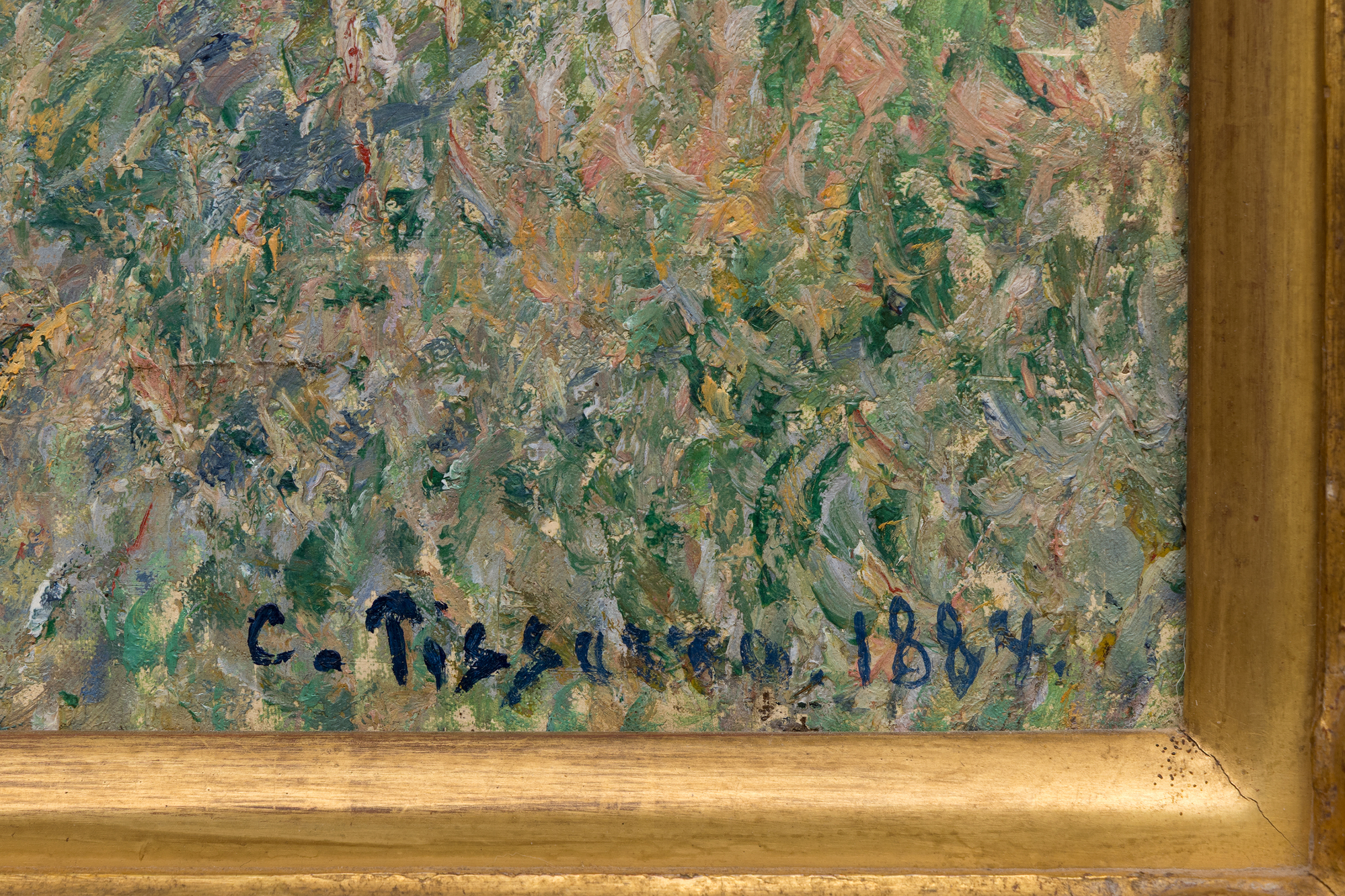
埃拉格尼的德拉弗利酒坊188418 1/4 x 21 7/8 英寸(46.36 x 55.56 厘米(46.36 x 55.56 厘米)布面油画
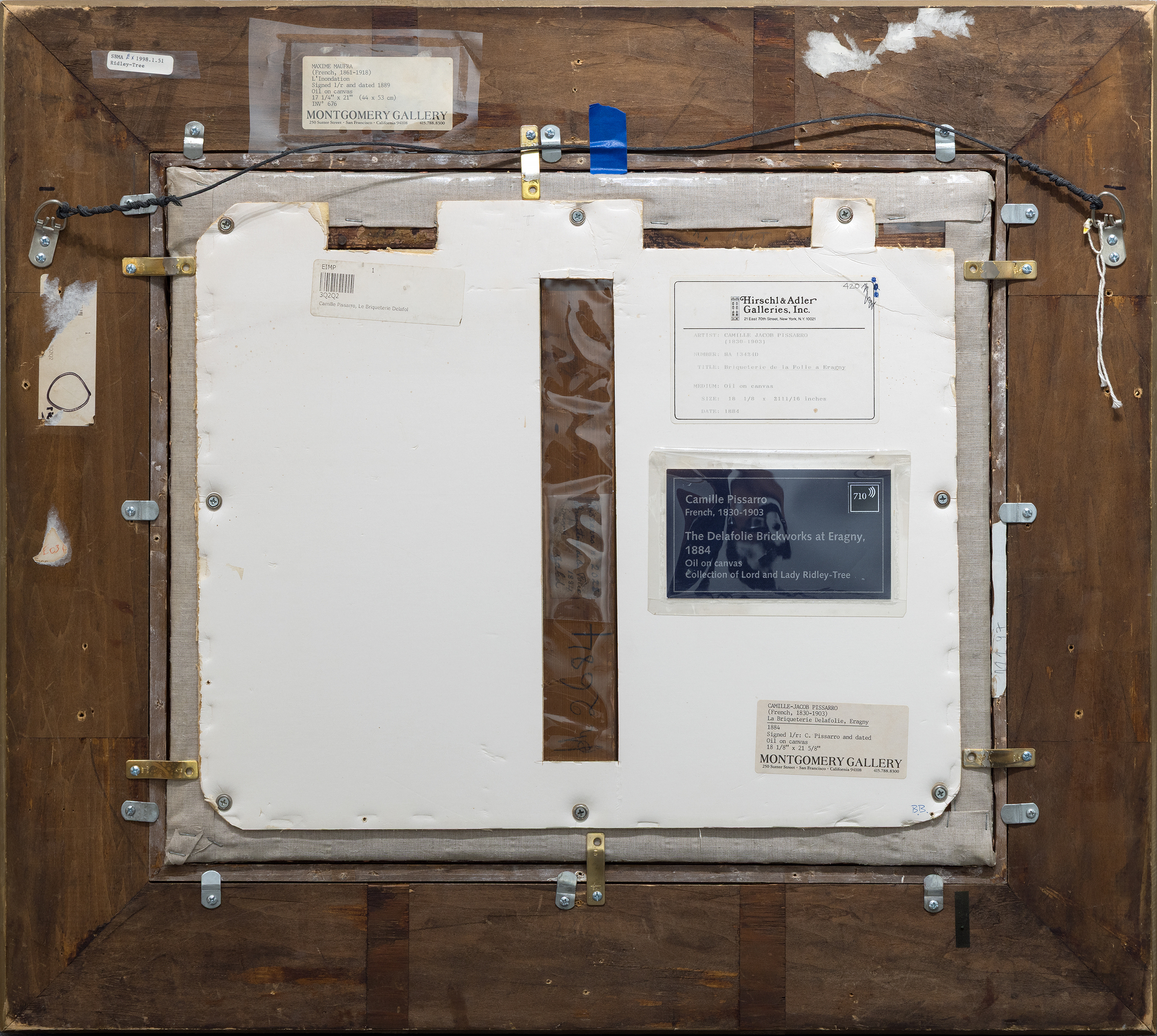
种源
杜兰德-鲁埃尔,巴黎,从艺术家处购得,1892 年
Werner Herold,苏黎世,1917 年从上述艺术家处购得
世袭至 1991 年
蒙哥马利画廊,旧金山(委托创作)
纽约赫希尔和阿德勒画廊
私人收藏,纽约,1994 年
加利福尼亚州圣巴巴拉的雷德利树勋爵和夫人
私人收藏
展会信息
法国巴黎,杜兰-鲁埃尔画廊,卡米耶-毕沙罗,1892 年,编号30
华沙,波兰,Towarzstwo, Zachety Sztuk Pieknuch w Krolestwie Polskiem, Wystawa Dziel Artystow Francusk
...更。。。1911年,第114号
瑞士苏黎世,Kunsthaus 美术馆,《十九和二十世纪的法国艺术》,1917 年,编号 152。
法国巴黎,Gazette des Beaux-Arts, La Peinture française du XIX siècle en Suisse, 1938, no.
比利时布鲁塞尔,艺术宫,De David à Cézanne,1947-48,编号 108
加利福尼亚州圣巴巴拉市,圣巴巴拉艺术博物馆,《圣巴巴拉收藏》:法国印象》,1998 年,第 51 号。51
文学
阿尔弗雷德-恩斯特,"卡米耶-毕沙罗",《和平》,巴黎,1892 年 2 月,第 2 页
Janine Bailley-Herzberg,《Correspondance de Camille Pissarro》,第三卷,巴黎,1988 年,第 734 号信件,第 171 页,No.734, p. 171, no.5
Ludovic-Rodo Pissarro 和 Lionello Venturi,《卡米耶-毕沙罗:他的艺术,他的作品》,第一卷,巴黎,1939 年,第 681 号,第 177 页;第二卷,第 681 号,图 141
埃里克-扎弗兰,《圣巴巴拉收藏》:法国印象》,加州圣巴巴拉,1988 年,第 51 号。51,有插图
Joachim Pissarro 和 Claire Durand-Ruel Snollaerts,《毕沙罗,绘画批评目录》,第三卷,巴黎,2005 年,编号 776,图版第 514 页。
...少。。。
卡米耶-毕沙罗的作品《La Briqueterie Delafolie à Éragny》(1884 年)展现了一幅生动的埃拉格尼乡村风景画。自创作以来,这幅画从未参加过拍卖,而是在苏黎世、巴黎、布鲁塞尔、华沙和圣巴巴拉多次展出。这幅画的编号为 No.在约阿希姆-毕沙罗和克莱尔-杜兰德-鲁埃尔-斯诺拉尔茨(Claire Durand-Ruel Snollaerts)编著的目录第三卷(插图第 514 页)中,这幅画被列为第 776 号,是毕沙罗印象派遗产的见证。


前景是一片多色草地。错落有致的绿色、赭色和淡紫色笔触从各个方向传达出风在飞扬的天空下穿过田野的轻柔动感。远处,毕沙罗的好朋友兼邻居德拉沃利砖厂浮现在眼前。图录中写道


"位于 Éragny 的 Delafolie 砖厂指的是当地一家家族经营的砖厂。Delafolie 先生不仅是一位砌砖工,还是毕沙罗的邻居,他自己酿造苹果酒。据说他酿造的苹果酒非常好喝,克劳德-莫奈曾写信给毕沙罗询问谁是商人,如何才能为自己订购一桶。毕沙罗和德拉弗利先生是好朋友,毕沙罗经常利用德拉弗利先生定期向巴黎和吉索斯送货的机会,将他的画作和砖块一起运到巴黎和吉索斯"。


类似作品收藏于奥赛博物馆、沃尔特斯艺术博物馆和伯明翰艺术博物馆。这幅画为收藏家们提供了一幅罕见的、饱经沧桑的作品,体现了毕沙罗与埃拉格尼景观和社区的密切联系。
询问