Atrás

WILLIAM MERRITT CHASE(1849-1916)

 
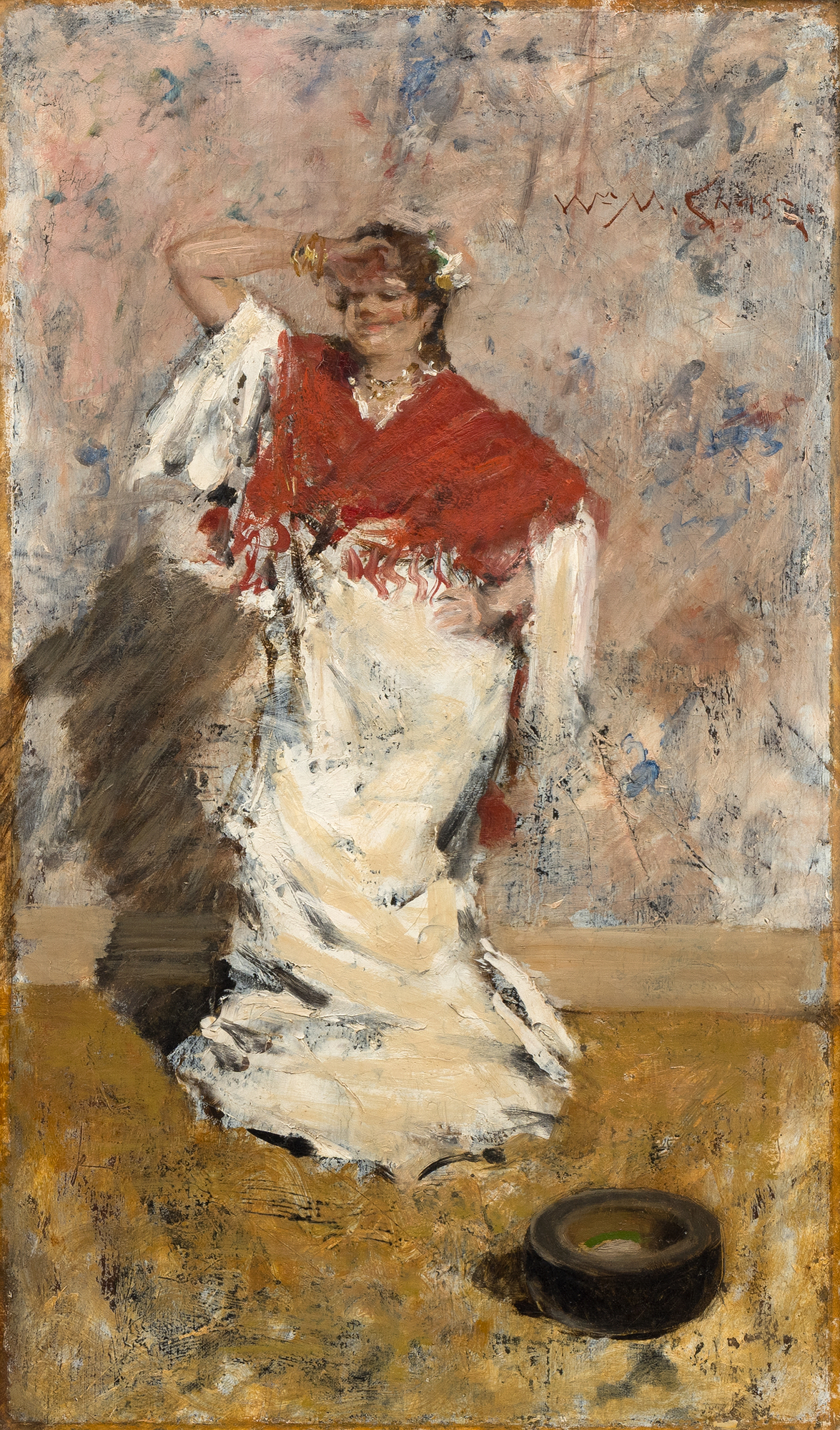
<div><font face=Lato size=3 color=black><em>Dancing Girl</em> dates from 1881 to 1882, a dynamic and exploratory moment in William Merritt Chase’s career when he was actively engaging with European subjects and broadening the expressive range of American painting. The work is included in the Chase catalogue raisonne and reflects the artists fascination with Spanish themes, which many American painters of the period encountered firsthand while studying the masters in the Prado and absorbing the culture, costume, and movement of Spain. Although the painting was later mislabeled by an early owner as an Italian street scene, Chase was in Spain during the summer when this work was created, firmly situating it within his Spanish period.</font></div><br><br><div> </div><br><br><div><font face=Lato size=3 color=black>The animated single figure captures a woman in motion, a subject that is notably rare within Chases oeuvre and distinct from the more contemplative female figures that dominate his most valuable works. His auction record painting, <em>I Think I Am Ready Now</em> from around 1883, shares the focus on a single female figure from the same period, underscoring the importance of this moment in his artistic development. The present work also relates closely to important institutional examples, including <em>Carmencita</em> from 1885 in the Metropolitan Museum of Art and <em>A Tambourine Player</em> in the Montclair Art Museum, both of which highlight Chases sustained interest in dancers and Spanish costume.</font></div><br><br><div> </div><br><br><div><font face=Lato size=3 color=black>The painting was held on long term loan to the Museum of Fine Arts Boston from 1906 to 1922, affirming its early institutional recognition. Chase’s Spanish works should be viewed in dialogue with those of John Singer Sargent, whom he met in 1881 while Sargent was developing studies for <em>El Jaleo</em>, as both artists looked to Velázquez for inspiration. <em>Dancing Girl</em> stands as a spirited and uncommon example of Chase portraying a woman at play, capturing movement, rhythm, and cultural immediacy at the height of his European engagement.</font></div><br><br><div> </div> <div><font face=Lato size=3 color=black><em>Dancing Girl</em> dates from 1881 to 1882, a dynamic and exploratory moment in William Merritt Chase’s career when he was actively engaging with European subjects and broadening the expressive range of American painting. The work is included in the Chase catalogue raisonne and reflects the artists fascination with Spanish themes, which many American painters of the period encountered firsthand while studying the masters in the Prado and absorbing the culture, costume, and movement of Spain. Although the painting was later mislabeled by an early owner as an Italian street scene, Chase was in Spain during the summer when this work was created, firmly situating it within his Spanish period.</font></div><br><br><div> </div><br><br><div><font face=Lato size=3 color=black>The animated single figure captures a woman in motion, a subject that is notably rare within Chases oeuvre and distinct from the more contemplative female figures that dominate his most valuable works. His auction record painting, <em>I Think I Am Ready Now</em> from around 1883, shares the focus on a single female figure from the same period, underscoring the importance of this moment in his artistic development. The present work also relates closely to important institutional examples, including <em>Carmencita</em> from 1885 in the Metropolitan Museum of Art and <em>A Tambourine Player</em> in the Montclair Art Museum, both of which highlight Chases sustained interest in dancers and Spanish costume.</font></div><br><br><div> </div><br><br><div><font face=Lato size=3 color=black>The painting was held on long term loan to the Museum of Fine Arts Boston from 1906 to 1922, affirming its early institutional recognition. Chase’s Spanish works should be viewed in dialogue with those of John Singer Sargent, whom he met in 1881 while Sargent was developing studies for <em>El Jaleo</em>, as both artists looked to Velázquez for inspiration. <em>Dancing Girl</em> stands as a spirited and uncommon example of Chase portraying a woman at play, capturing movement, rhythm, and cultural immediacy at the height of his European engagement.</font></div><br><br><div> </div> <div><font face=Lato size=3 color=black><em>Dancing Girl</em> dates from 1881 to 1882, a dynamic and exploratory moment in William Merritt Chase’s career when he was actively engaging with European subjects and broadening the expressive range of American painting. The work is included in the Chase catalogue raisonne and reflects the artists fascination with Spanish themes, which many American painters of the period encountered firsthand while studying the masters in the Prado and absorbing the culture, costume, and movement of Spain. Although the painting was later mislabeled by an early owner as an Italian street scene, Chase was in Spain during the summer when this work was created, firmly situating it within his Spanish period.</font></div><br><br><div> </div><br><br><div><font face=Lato size=3 color=black>The animated single figure captures a woman in motion, a subject that is notably rare within Chases oeuvre and distinct from the more contemplative female figures that dominate his most valuable works. His auction record painting, <em>I Think I Am Ready Now</em> from around 1883, shares the focus on a single female figure from the same period, underscoring the importance of this moment in his artistic development. The present work also relates closely to important institutional examples, including <em>Carmencita</em> from 1885 in the Metropolitan Museum of Art and <em>A Tambourine Player</em> in the Montclair Art Museum, both of which highlight Chases sustained interest in dancers and Spanish costume.</font></div><br><br><div> </div><br><br><div><font face=Lato size=3 color=black>The painting was held on long term loan to the Museum of Fine Arts Boston from 1906 to 1922, affirming its early institutional recognition. Chase’s Spanish works should be viewed in dialogue with those of John Singer Sargent, whom he met in 1881 while Sargent was developing studies for <em>El Jaleo</em>, as both artists looked to Velázquez for inspiration. <em>Dancing Girl</em> stands as a spirited and uncommon example of Chase portraying a woman at play, capturing movement, rhythm, and cultural immediacy at the height of his European engagement.</font></div><br><br><div> </div> <div><font face=Lato size=3 color=black><em>Dancing Girl</em> dates from 1881 to 1882, a dynamic and exploratory moment in William Merritt Chase’s career when he was actively engaging with European subjects and broadening the expressive range of American painting. The work is included in the Chase catalogue raisonne and reflects the artists fascination with Spanish themes, which many American painters of the period encountered firsthand while studying the masters in the Prado and absorbing the culture, costume, and movement of Spain. Although the painting was later mislabeled by an early owner as an Italian street scene, Chase was in Spain during the summer when this work was created, firmly situating it within his Spanish period.</font></div><br><br><div> </div><br><br><div><font face=Lato size=3 color=black>The animated single figure captures a woman in motion, a subject that is notably rare within Chases oeuvre and distinct from the more contemplative female figures that dominate his most valuable works. His auction record painting, <em>I Think I Am Ready Now</em> from around 1883, shares the focus on a single female figure from the same period, underscoring the importance of this moment in his artistic development. The present work also relates closely to important institutional examples, including <em>Carmencita</em> from 1885 in the Metropolitan Museum of Art and <em>A Tambourine Player</em> in the Montclair Art Museum, both of which highlight Chases sustained interest in dancers and Spanish costume.</font></div><br><br><div> </div><br><br><div><font face=Lato size=3 color=black>The painting was held on long term loan to the Museum of Fine Arts Boston from 1906 to 1922, affirming its early institutional recognition. Chase’s Spanish works should be viewed in dialogue with those of John Singer Sargent, whom he met in 1881 while Sargent was developing studies for <em>El Jaleo</em>, as both artists looked to Velázquez for inspiration. <em>Dancing Girl</em> stands as a spirited and uncommon example of Chase portraying a woman at play, capturing movement, rhythm, and cultural immediacy at the height of his European engagement.</font></div><br><br><div> </div> <div><font face=Lato size=3 color=black><em>Dancing Girl</em> dates from 1881 to 1882, a dynamic and exploratory moment in William Merritt Chase’s career when he was actively engaging with European subjects and broadening the expressive range of American painting. The work is included in the Chase catalogue raisonne and reflects the artists fascination with Spanish themes, which many American painters of the period encountered firsthand while studying the masters in the Prado and absorbing the culture, costume, and movement of Spain. Although the painting was later mislabeled by an early owner as an Italian street scene, Chase was in Spain during the summer when this work was created, firmly situating it within his Spanish period.</font></div><br><br><div> </div><br><br><div><font face=Lato size=3 color=black>The animated single figure captures a woman in motion, a subject that is notably rare within Chases oeuvre and distinct from the more contemplative female figures that dominate his most valuable works. His auction record painting, <em>I Think I Am Ready Now</em> from around 1883, shares the focus on a single female figure from the same period, underscoring the importance of this moment in his artistic development. The present work also relates closely to important institutional examples, including <em>Carmencita</em> from 1885 in the Metropolitan Museum of Art and <em>A Tambourine Player</em> in the Montclair Art Museum, both of which highlight Chases sustained interest in dancers and Spanish costume.</font></div><br><br><div> </div><br><br><div><font face=Lato size=3 color=black>The painting was held on long term loan to the Museum of Fine Arts Boston from 1906 to 1922, affirming its early institutional recognition. Chase’s Spanish works should be viewed in dialogue with those of John Singer Sargent, whom he met in 1881 while Sargent was developing studies for <em>El Jaleo</em>, as both artists looked to Velázquez for inspiration. <em>Dancing Girl</em> stands as a spirited and uncommon example of Chase portraying a woman at play, capturing movement, rhythm, and cultural immediacy at the height of his European engagement.</font></div><br><br><div> </div> <div><font face=Lato size=3 color=black><em>Dancing Girl</em> dates from 1881 to 1882, a dynamic and exploratory moment in William Merritt Chase’s career when he was actively engaging with European subjects and broadening the expressive range of American painting. The work is included in the Chase catalogue raisonne and reflects the artists fascination with Spanish themes, which many American painters of the period encountered firsthand while studying the masters in the Prado and absorbing the culture, costume, and movement of Spain. Although the painting was later mislabeled by an early owner as an Italian street scene, Chase was in Spain during the summer when this work was created, firmly situating it within his Spanish period.</font></div><br><br><div> </div><br><br><div><font face=Lato size=3 color=black>The animated single figure captures a woman in motion, a subject that is notably rare within Chases oeuvre and distinct from the more contemplative female figures that dominate his most valuable works. His auction record painting, <em>I Think I Am Ready Now</em> from around 1883, shares the focus on a single female figure from the same period, underscoring the importance of this moment in his artistic development. The present work also relates closely to important institutional examples, including <em>Carmencita</em> from 1885 in the Metropolitan Museum of Art and <em>A Tambourine Player</em> in the Montclair Art Museum, both of which highlight Chases sustained interest in dancers and Spanish costume.</font></div><br><br><div> </div><br><br><div><font face=Lato size=3 color=black>The painting was held on long term loan to the Museum of Fine Arts Boston from 1906 to 1922, affirming its early institutional recognition. Chase’s Spanish works should be viewed in dialogue with those of John Singer Sargent, whom he met in 1881 while Sargent was developing studies for <em>El Jaleo</em>, as both artists looked to Velázquez for inspiration. <em>Dancing Girl</em> stands as a spirited and uncommon example of Chase portraying a woman at play, capturing movement, rhythm, and cultural immediacy at the height of his European engagement.</font></div><br><br><div> </div> <div><font face=Lato size=3 color=black><em>Dancing Girl</em> dates from 1881 to 1882, a dynamic and exploratory moment in William Merritt Chase’s career when he was actively engaging with European subjects and broadening the expressive range of American painting. The work is included in the Chase catalogue raisonne and reflects the artists fascination with Spanish themes, which many American painters of the period encountered firsthand while studying the masters in the Prado and absorbing the culture, costume, and movement of Spain. Although the painting was later mislabeled by an early owner as an Italian street scene, Chase was in Spain during the summer when this work was created, firmly situating it within his Spanish period.</font></div><br><br><div> </div><br><br><div><font face=Lato size=3 color=black>The animated single figure captures a woman in motion, a subject that is notably rare within Chases oeuvre and distinct from the more contemplative female figures that dominate his most valuable works. His auction record painting, <em>I Think I Am Ready Now</em> from around 1883, shares the focus on a single female figure from the same period, underscoring the importance of this moment in his artistic development. The present work also relates closely to important institutional examples, including <em>Carmencita</em> from 1885 in the Metropolitan Museum of Art and <em>A Tambourine Player</em> in the Montclair Art Museum, both of which highlight Chases sustained interest in dancers and Spanish costume.</font></div><br><br><div> </div><br><br><div><font face=Lato size=3 color=black>The painting was held on long term loan to the Museum of Fine Arts Boston from 1906 to 1922, affirming its early institutional recognition. Chase’s Spanish works should be viewed in dialogue with those of John Singer Sargent, whom he met in 1881 while Sargent was developing studies for <em>El Jaleo</em>, as both artists looked to Velázquez for inspiration. <em>Dancing Girl</em> stands as a spirited and uncommon example of Chase portraying a woman at play, capturing movement, rhythm, and cultural immediacy at the height of his European engagement.</font></div><br><br><div> </div>
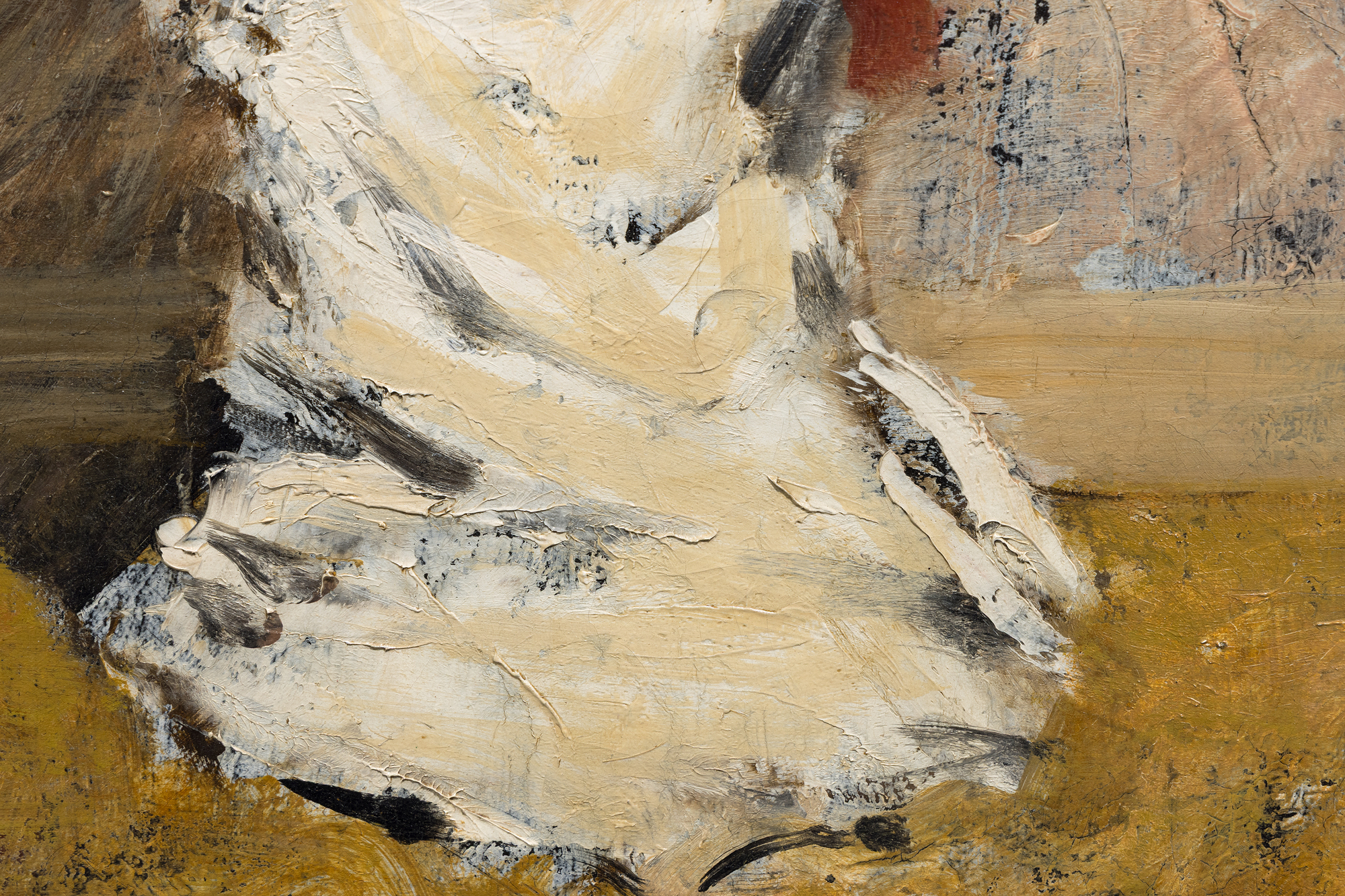
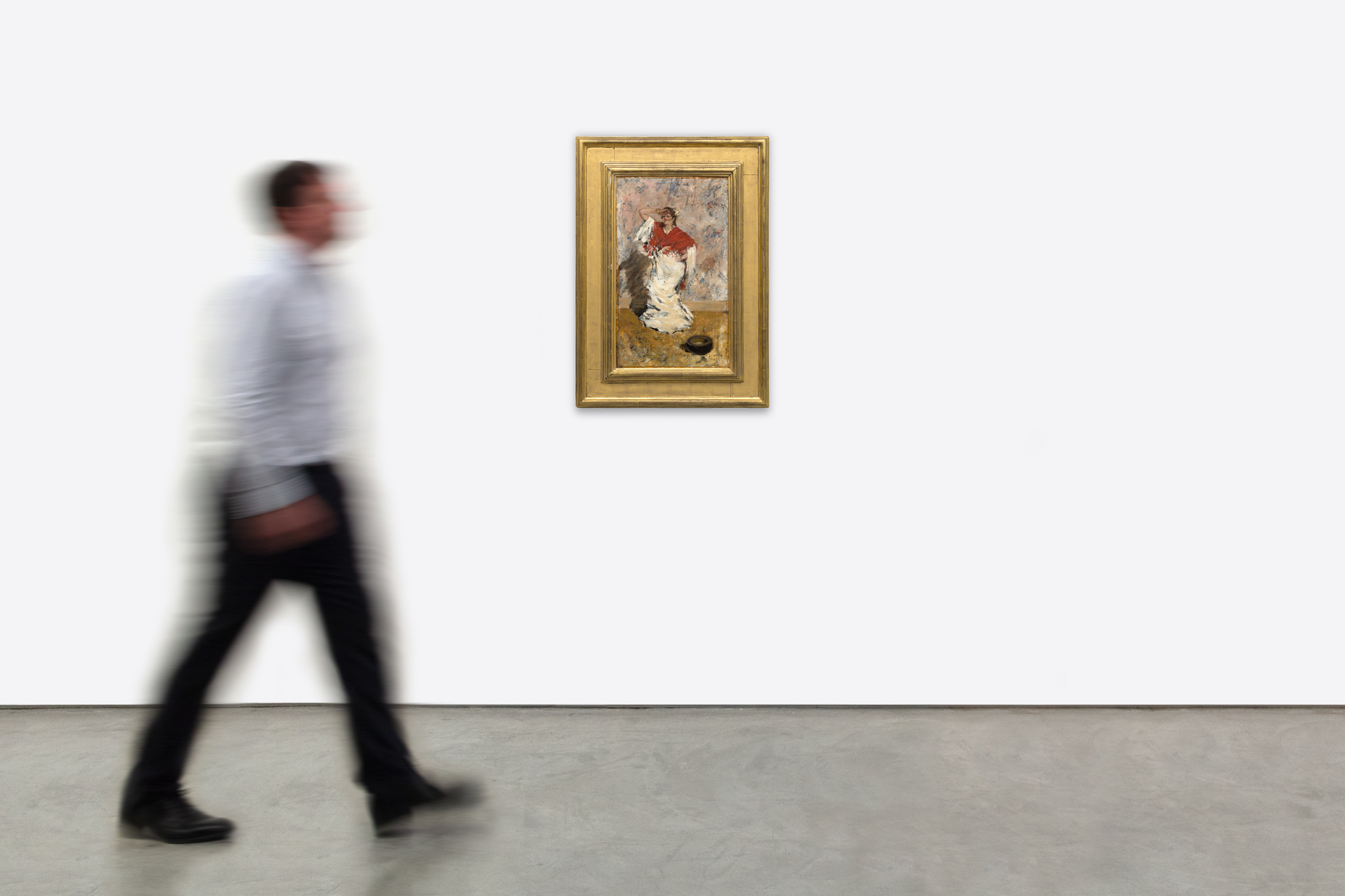
Bailarina1881-8226 x 15 1/2 pulgadas(66,04 x 39,37 cm) Óleo sobre lienzo
Procedencia
Chase Studio Nueva York, c. 1881
(posiblemente) en el Boston Art Club, 1886
Sra. W.B. Sewall, Boston, 1906
Museo de Bellas Artes, Boston (cedido por la Sra. W.B. Sewall, del 2 de noviembre de 1906 al 30 de octubre de 1913)
Rufus L. Sewall
Harold I. Sewall y William G. Sewal
Museo de Bellas Artes, Boston (en préstamo, del 30 de octubre de 1913 al 5 de julio de 1922)
Colección privada, Boston
Colección privada, Nueva York
Colección privada, Boston, adquirida de la anterior
Exposición
Boston, Massachusetts, Boston Art Club, Exposición de pinturas, ...Más....Estudios y bocetos del Sr. Wm. M. Chase, de Nueva York, del 18 de noviembre al 4 de diciembre de 1886, como n.º 57, Bailarina española.
Literatura
Ronald Pisano, William Merritt Chase: Retratos al óleo, Nueva York, 2006, n.º OP.99 como «Bailarina callejera, Italia (Estudio de una mujer; Niña bailando)».
...MENOS....
Dancing Girl data de 1881 a 1882, un momento dinámico y exploratorio en la carrera de William Merritt Chase, cuando se dedicaba activamente a temas europeos y ampliaba el rango expresivo de la pintura estadounidense. La obra está incluida en el catálogo razonado de Chase y refleja la fascinación del artista por los temas españoles, que muchos pintores estadounidenses de la época descubrieron de primera mano mientras estudiaban a los maestros del Prado y absorbían la cultura, la indumentaria y el movimiento de España. Aunque más tarde uno de los primeros propietarios etiquetó erróneamente el cuadro como una escena callejera italiana, Chase se encontraba en España durante el verano en que se creó esta obra, lo que la sitúa firmemente dentro de su periodo español.


La animada figura única captura a una mujer en movimiento, un tema notablemente raro en la obra de Chase y distinto de las figuras femeninas más contemplativas que dominan sus obras más valiosas. Su cuadro récord en subasta, I Think I Am Ready Now, de alrededor de 1883, comparte el enfoque en una sola figura femenina del mismo periodo, lo que subraya la importancia de este momento en su desarrollo artístico. La presente obra también guarda una estrecha relación con importantes ejemplos institucionales, como Carmencita, de 1885, del Museo Metropolitano de Arte, y A Tambourine Player, del Museo de Arte de Montclair, que ponen de relieve el interés constante de Chase por las bailarinas y los trajes españoles.


La pintura fue cedida en préstamo a largo plazo al Museo de Bellas Artes de Boston entre 1906 y 1922, lo que confirma su temprano reconocimiento institucional. Las obras españolas de Chase deben considerarse en diálogo con las de John Singer Sargent, a quien conoció en 1881 mientras Sargent desarrollaba estudios para El Jaleo, ya que ambos artistas buscaban inspiración en Velázquez. Bailarina es un ejemplo animado y poco común de Chase retratando a una mujer en acción, capturando el movimiento, el ritmo y la inmediatez cultural en el apogeo de su compromiso europeo.


Preguntar