ALSON كلارك & nbsp(1876-1949)

$100,000
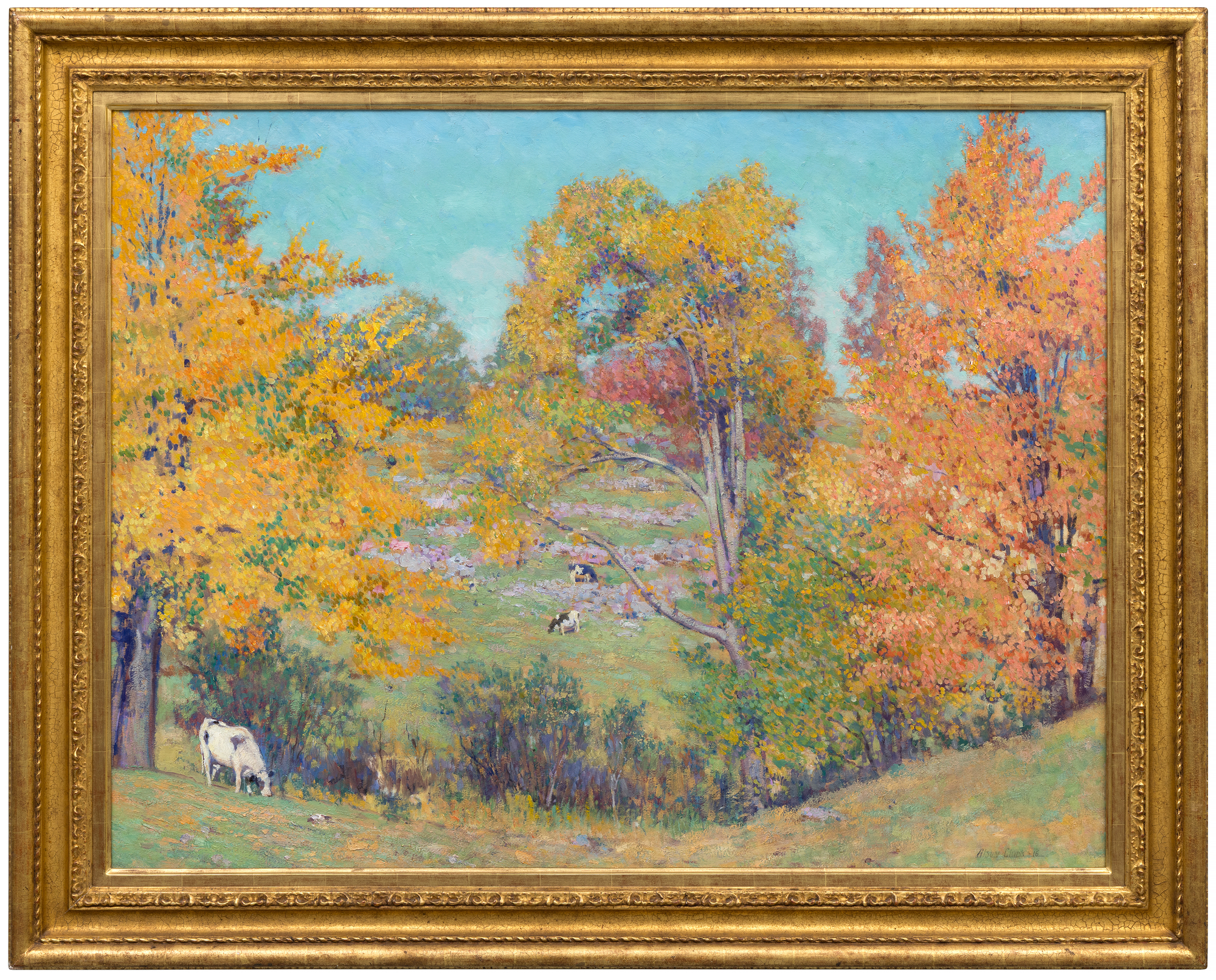
 
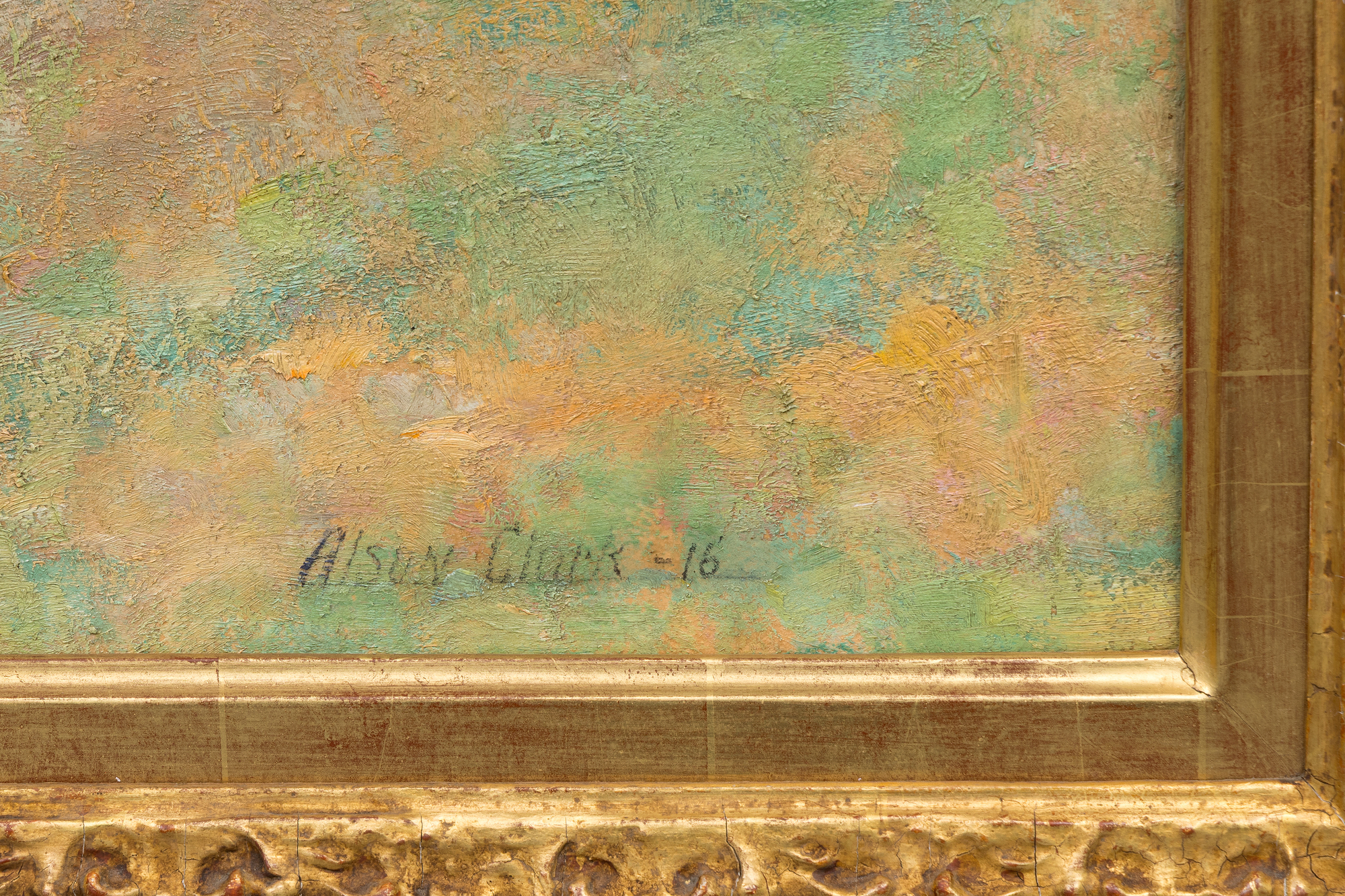
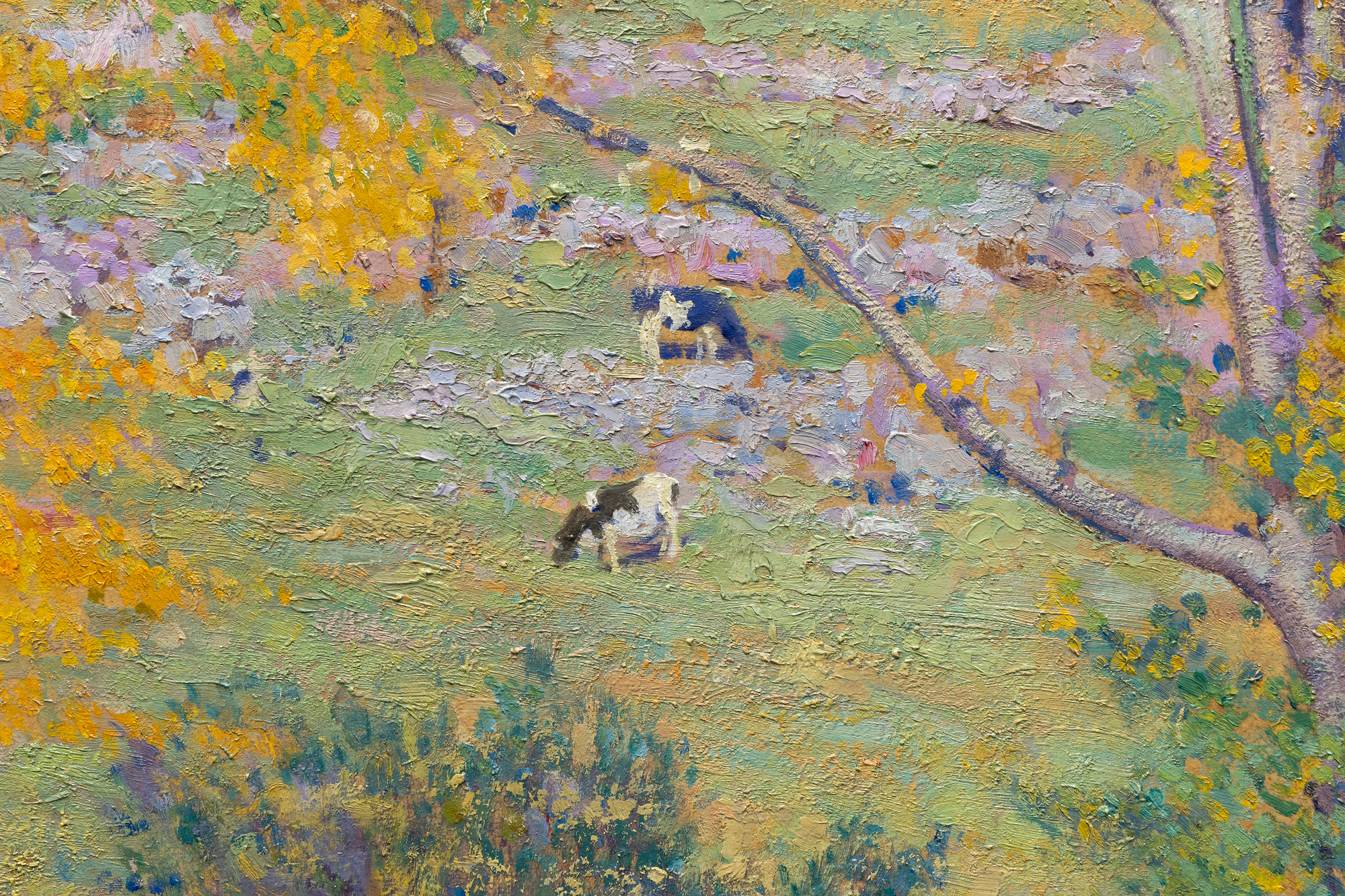
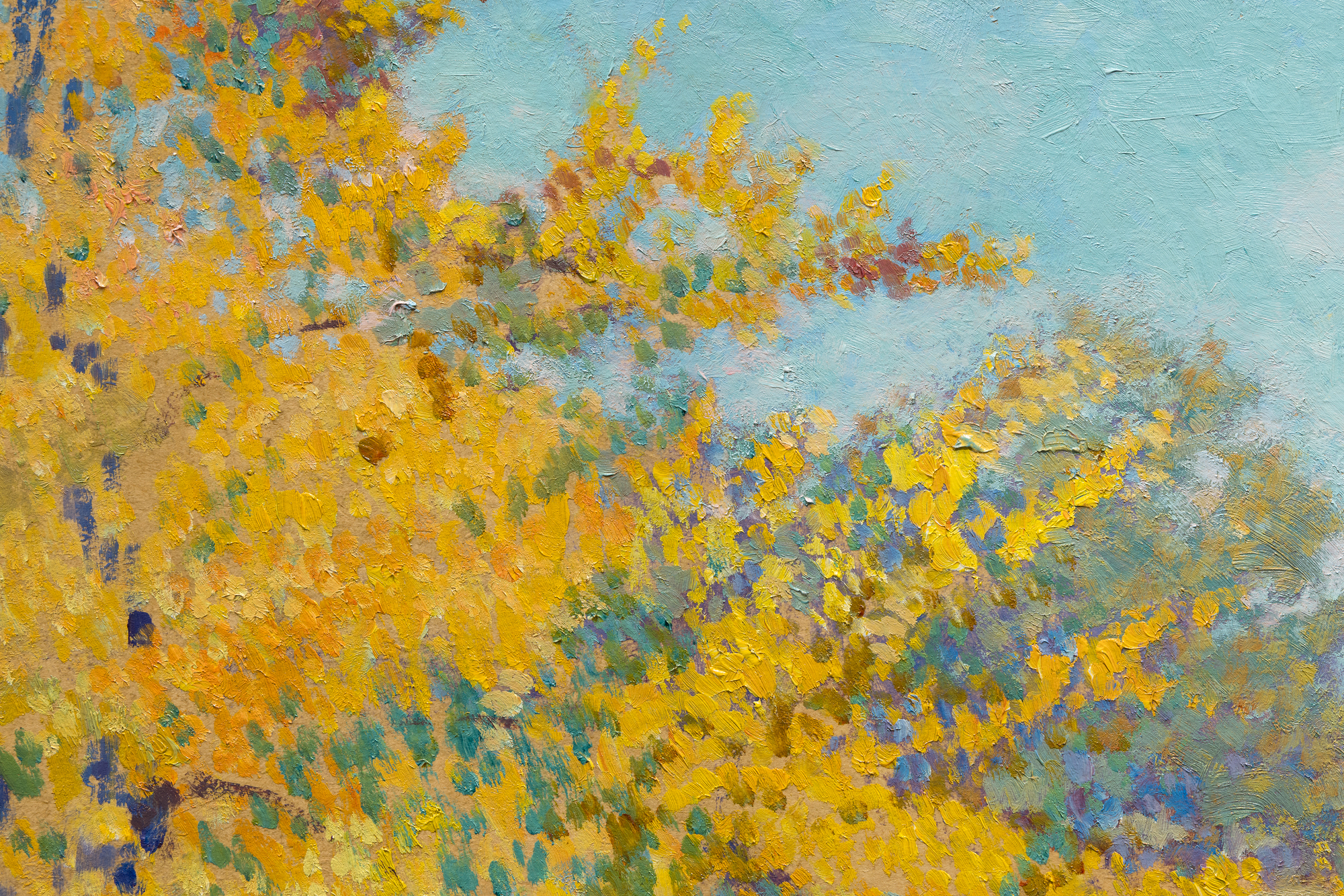
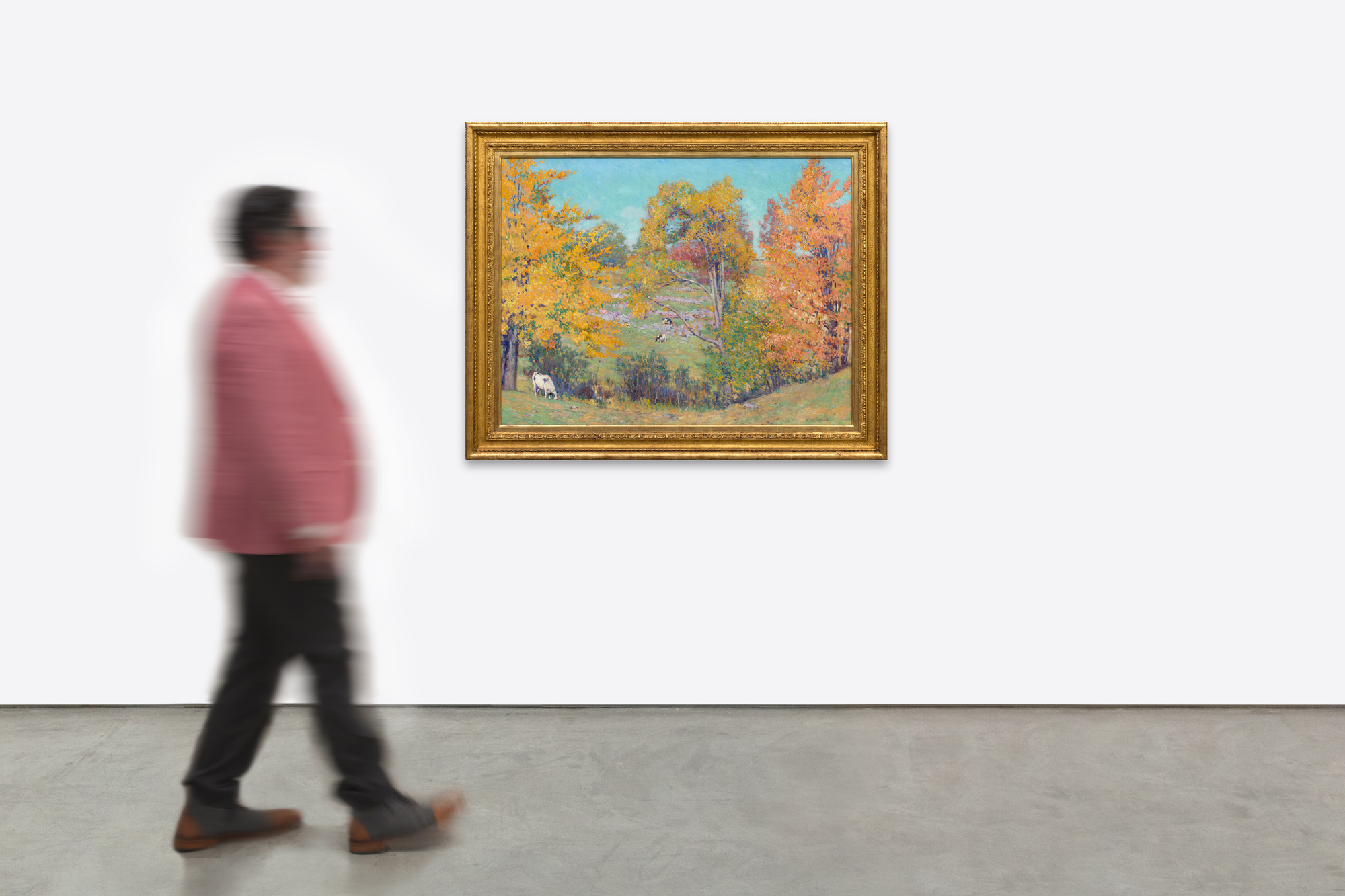
<div>Alson Clark’s <em>Autumn, St. Lawrence River</em> (1916) is a celebration of seasonal color and painterly assurance, created during a highly productive summer spent along the St. Lawrence River. Painted at a moment of peak confidence, the work follows closely on the artist’s major success at the Panama–Pacific International Exposition, where Clark filled an entire exhibition room with his paintings—an achievement that firmly established his reputation and momentum at this stage of his career. </div><br><br><div> </div><br><br><div>The composition unfolds across a gently rolling landscape animated by the brilliance of early autumn. Trees blaze with saturated yellows, oranges, and soft reds, their foliage rendered in broken, impressionistic strokes against a clear, luminous blue sky. Clark’s confident handling of paint allows color to carry form, creating a sense of depth through overlapping passages. Small grazing cattle dot the hillside, providing scale and a quiet note of pastoral life that anchors the composition without interrupting its chromatic rhythm. </div><br><br><div> </div><br><br><div>Clark was celebrated for his ability to fuse American landscape painting with lessons drawn from European Impressionism, and this work exemplifies that synthesis. The surface remains lively and tactile, with visible brushwork that conveys movement and atmosphere while maintaining compositional harmony. <em>Autumn, St. Lawrence River </em>reflects not only the artist’s mastery of color and light, but also the assured vision of a painter fully at ease with his subject, transforming a specific place and moment into a timeless expression of seasonal abundance. </div> <div>Alson Clark’s <em>Autumn, St. Lawrence River</em> (1916) is a celebration of seasonal color and painterly assurance, created during a highly productive summer spent along the St. Lawrence River. Painted at a moment of peak confidence, the work follows closely on the artist’s major success at the Panama–Pacific International Exposition, where Clark filled an entire exhibition room with his paintings—an achievement that firmly established his reputation and momentum at this stage of his career. </div><br><br><div> </div><br><br><div>The composition unfolds across a gently rolling landscape animated by the brilliance of early autumn. Trees blaze with saturated yellows, oranges, and soft reds, their foliage rendered in broken, impressionistic strokes against a clear, luminous blue sky. Clark’s confident handling of paint allows color to carry form, creating a sense of depth through overlapping passages. Small grazing cattle dot the hillside, providing scale and a quiet note of pastoral life that anchors the composition without interrupting its chromatic rhythm. </div><br><br><div> </div><br><br><div>Clark was celebrated for his ability to fuse American landscape painting with lessons drawn from European Impressionism, and this work exemplifies that synthesis. The surface remains lively and tactile, with visible brushwork that conveys movement and atmosphere while maintaining compositional harmony. <em>Autumn, St. Lawrence River </em>reflects not only the artist’s mastery of color and light, but also the assured vision of a painter fully at ease with his subject, transforming a specific place and moment into a timeless expression of seasonal abundance. </div> <div>Alson Clark’s <em>Autumn, St. Lawrence River</em> (1916) is a celebration of seasonal color and painterly assurance, created during a highly productive summer spent along the St. Lawrence River. Painted at a moment of peak confidence, the work follows closely on the artist’s major success at the Panama–Pacific International Exposition, where Clark filled an entire exhibition room with his paintings—an achievement that firmly established his reputation and momentum at this stage of his career. </div><br><br><div> </div><br><br><div>The composition unfolds across a gently rolling landscape animated by the brilliance of early autumn. Trees blaze with saturated yellows, oranges, and soft reds, their foliage rendered in broken, impressionistic strokes against a clear, luminous blue sky. Clark’s confident handling of paint allows color to carry form, creating a sense of depth through overlapping passages. Small grazing cattle dot the hillside, providing scale and a quiet note of pastoral life that anchors the composition without interrupting its chromatic rhythm. </div><br><br><div> </div><br><br><div>Clark was celebrated for his ability to fuse American landscape painting with lessons drawn from European Impressionism, and this work exemplifies that synthesis. The surface remains lively and tactile, with visible brushwork that conveys movement and atmosphere while maintaining compositional harmony. <em>Autumn, St. Lawrence River </em>reflects not only the artist’s mastery of color and light, but also the assured vision of a painter fully at ease with his subject, transforming a specific place and moment into a timeless expression of seasonal abundance. </div> <div>Alson Clark’s <em>Autumn, St. Lawrence River</em> (1916) is a celebration of seasonal color and painterly assurance, created during a highly productive summer spent along the St. Lawrence River. Painted at a moment of peak confidence, the work follows closely on the artist’s major success at the Panama–Pacific International Exposition, where Clark filled an entire exhibition room with his paintings—an achievement that firmly established his reputation and momentum at this stage of his career. </div><br><br><div> </div><br><br><div>The composition unfolds across a gently rolling landscape animated by the brilliance of early autumn. Trees blaze with saturated yellows, oranges, and soft reds, their foliage rendered in broken, impressionistic strokes against a clear, luminous blue sky. Clark’s confident handling of paint allows color to carry form, creating a sense of depth through overlapping passages. Small grazing cattle dot the hillside, providing scale and a quiet note of pastoral life that anchors the composition without interrupting its chromatic rhythm. </div><br><br><div> </div><br><br><div>Clark was celebrated for his ability to fuse American landscape painting with lessons drawn from European Impressionism, and this work exemplifies that synthesis. The surface remains lively and tactile, with visible brushwork that conveys movement and atmosphere while maintaining compositional harmony. <em>Autumn, St. Lawrence River </em>reflects not only the artist’s mastery of color and light, but also the assured vision of a painter fully at ease with his subject, transforming a specific place and moment into a timeless expression of seasonal abundance. </div> <div>Alson Clark’s <em>Autumn, St. Lawrence River</em> (1916) is a celebration of seasonal color and painterly assurance, created during a highly productive summer spent along the St. Lawrence River. Painted at a moment of peak confidence, the work follows closely on the artist’s major success at the Panama–Pacific International Exposition, where Clark filled an entire exhibition room with his paintings—an achievement that firmly established his reputation and momentum at this stage of his career. </div><br><br><div> </div><br><br><div>The composition unfolds across a gently rolling landscape animated by the brilliance of early autumn. Trees blaze with saturated yellows, oranges, and soft reds, their foliage rendered in broken, impressionistic strokes against a clear, luminous blue sky. Clark’s confident handling of paint allows color to carry form, creating a sense of depth through overlapping passages. Small grazing cattle dot the hillside, providing scale and a quiet note of pastoral life that anchors the composition without interrupting its chromatic rhythm. </div><br><br><div> </div><br><br><div>Clark was celebrated for his ability to fuse American landscape painting with lessons drawn from European Impressionism, and this work exemplifies that synthesis. The surface remains lively and tactile, with visible brushwork that conveys movement and atmosphere while maintaining compositional harmony. <em>Autumn, St. Lawrence River </em>reflects not only the artist’s mastery of color and light, but also the assured vision of a painter fully at ease with his subject, transforming a specific place and moment into a timeless expression of seasonal abundance. </div> <div>Alson Clark’s <em>Autumn, St. Lawrence River</em> (1916) is a celebration of seasonal color and painterly assurance, created during a highly productive summer spent along the St. Lawrence River. Painted at a moment of peak confidence, the work follows closely on the artist’s major success at the Panama–Pacific International Exposition, where Clark filled an entire exhibition room with his paintings—an achievement that firmly established his reputation and momentum at this stage of his career. </div><br><br><div> </div><br><br><div>The composition unfolds across a gently rolling landscape animated by the brilliance of early autumn. Trees blaze with saturated yellows, oranges, and soft reds, their foliage rendered in broken, impressionistic strokes against a clear, luminous blue sky. Clark’s confident handling of paint allows color to carry form, creating a sense of depth through overlapping passages. Small grazing cattle dot the hillside, providing scale and a quiet note of pastoral life that anchors the composition without interrupting its chromatic rhythm. </div><br><br><div> </div><br><br><div>Clark was celebrated for his ability to fuse American landscape painting with lessons drawn from European Impressionism, and this work exemplifies that synthesis. The surface remains lively and tactile, with visible brushwork that conveys movement and atmosphere while maintaining compositional harmony. <em>Autumn, St. Lawrence River </em>reflects not only the artist’s mastery of color and light, but also the assured vision of a painter fully at ease with his subject, transforming a specific place and moment into a timeless expression of seasonal abundance. </div> <div>Alson Clark’s <em>Autumn, St. Lawrence River</em> (1916) is a celebration of seasonal color and painterly assurance, created during a highly productive summer spent along the St. Lawrence River. Painted at a moment of peak confidence, the work follows closely on the artist’s major success at the Panama–Pacific International Exposition, where Clark filled an entire exhibition room with his paintings—an achievement that firmly established his reputation and momentum at this stage of his career. </div><br><br><div> </div><br><br><div>The composition unfolds across a gently rolling landscape animated by the brilliance of early autumn. Trees blaze with saturated yellows, oranges, and soft reds, their foliage rendered in broken, impressionistic strokes against a clear, luminous blue sky. Clark’s confident handling of paint allows color to carry form, creating a sense of depth through overlapping passages. Small grazing cattle dot the hillside, providing scale and a quiet note of pastoral life that anchors the composition without interrupting its chromatic rhythm. </div><br><br><div> </div><br><br><div>Clark was celebrated for his ability to fuse American landscape painting with lessons drawn from European Impressionism, and this work exemplifies that synthesis. The surface remains lively and tactile, with visible brushwork that conveys movement and atmosphere while maintaining compositional harmony. <em>Autumn, St. Lawrence River </em>reflects not only the artist’s mastery of color and light, but also the assured vision of a painter fully at ease with his subject, transforming a specific place and moment into a timeless expression of seasonal abundance. </div> <div>Alson Clark’s <em>Autumn, St. Lawrence River</em> (1916) is a celebration of seasonal color and painterly assurance, created during a highly productive summer spent along the St. Lawrence River. Painted at a moment of peak confidence, the work follows closely on the artist’s major success at the Panama–Pacific International Exposition, where Clark filled an entire exhibition room with his paintings—an achievement that firmly established his reputation and momentum at this stage of his career. </div><br><br><div> </div><br><br><div>The composition unfolds across a gently rolling landscape animated by the brilliance of early autumn. Trees blaze with saturated yellows, oranges, and soft reds, their foliage rendered in broken, impressionistic strokes against a clear, luminous blue sky. Clark’s confident handling of paint allows color to carry form, creating a sense of depth through overlapping passages. Small grazing cattle dot the hillside, providing scale and a quiet note of pastoral life that anchors the composition without interrupting its chromatic rhythm. </div><br><br><div> </div><br><br><div>Clark was celebrated for his ability to fuse American landscape painting with lessons drawn from European Impressionism, and this work exemplifies that synthesis. The surface remains lively and tactile, with visible brushwork that conveys movement and atmosphere while maintaining compositional harmony. <em>Autumn, St. Lawrence River </em>reflects not only the artist’s mastery of color and light, but also the assured vision of a painter fully at ease with his subject, transforming a specific place and moment into a timeless expression of seasonal abundance. </div> <div>Alson Clark’s <em>Autumn, St. Lawrence River</em> (1916) is a celebration of seasonal color and painterly assurance, created during a highly productive summer spent along the St. Lawrence River. Painted at a moment of peak confidence, the work follows closely on the artist’s major success at the Panama–Pacific International Exposition, where Clark filled an entire exhibition room with his paintings—an achievement that firmly established his reputation and momentum at this stage of his career. </div><br><br><div> </div><br><br><div>The composition unfolds across a gently rolling landscape animated by the brilliance of early autumn. Trees blaze with saturated yellows, oranges, and soft reds, their foliage rendered in broken, impressionistic strokes against a clear, luminous blue sky. Clark’s confident handling of paint allows color to carry form, creating a sense of depth through overlapping passages. Small grazing cattle dot the hillside, providing scale and a quiet note of pastoral life that anchors the composition without interrupting its chromatic rhythm. </div><br><br><div> </div><br><br><div>Clark was celebrated for his ability to fuse American landscape painting with lessons drawn from European Impressionism, and this work exemplifies that synthesis. The surface remains lively and tactile, with visible brushwork that conveys movement and atmosphere while maintaining compositional harmony. <em>Autumn, St. Lawrence River </em>reflects not only the artist’s mastery of color and light, but also the assured vision of a painter fully at ease with his subject, transforming a specific place and moment into a timeless expression of seasonal abundance. </div> <div>Alson Clark’s <em>Autumn, St. Lawrence River</em> (1916) is a celebration of seasonal color and painterly assurance, created during a highly productive summer spent along the St. Lawrence River. Painted at a moment of peak confidence, the work follows closely on the artist’s major success at the Panama–Pacific International Exposition, where Clark filled an entire exhibition room with his paintings—an achievement that firmly established his reputation and momentum at this stage of his career. </div><br><br><div> </div><br><br><div>The composition unfolds across a gently rolling landscape animated by the brilliance of early autumn. Trees blaze with saturated yellows, oranges, and soft reds, their foliage rendered in broken, impressionistic strokes against a clear, luminous blue sky. Clark’s confident handling of paint allows color to carry form, creating a sense of depth through overlapping passages. Small grazing cattle dot the hillside, providing scale and a quiet note of pastoral life that anchors the composition without interrupting its chromatic rhythm. </div><br><br><div> </div><br><br><div>Clark was celebrated for his ability to fuse American landscape painting with lessons drawn from European Impressionism, and this work exemplifies that synthesis. The surface remains lively and tactile, with visible brushwork that conveys movement and atmosphere while maintaining compositional harmony. <em>Autumn, St. Lawrence River </em>reflects not only the artist’s mastery of color and light, but also the assured vision of a painter fully at ease with his subject, transforming a specific place and moment into a timeless expression of seasonal abundance. </div>
الخريف، نهر سانت لورانس191635 × 46 بوصة(88.9 × 116.84 سم) زيت على لوح
الاصل
ملكية الفنان
معرض بيترسن، بيفرلي هيلز، كاليفورنيا (بعنوان "باقة أكتوبر")
مع جورج ستيرن للفنون الجميلة، ويست هوليوود، كاليفورنيا (بعنوان "باقة أكتوبر")
مزاد هيريتاج، بيفرلي هيلز، كاليفورنيا، مزاد آرت سيغنتشر، 20 مارس 2012، القطعة 87023
مجموعة خاصة، كاليفورنيا، تم الحصول عليها من المزاد أعلاه
الادب
جان ستيرن، ألسون س. كلارك، بيفرلي هيلز، كاليفورنيا، 1983، ص. 79، رقم 33 (مصورة)
تعد لوحة "الخريف، نهر سانت لورانس" (1916) للفنان ألسون كلارك احتفالاً بألوان الفصول وبثقة الفنان في فنه، وقد تم إنجازها خلال صيف مثمر للغاية قضاه الفنان على ضفاف نهر سانت لورانس. تم رسم هذه اللوحة في ذروة ثقة الفنان بنفسه، بعد نجاحه الكبير في معرض بنما-باسيفيك الدولي، حيث ملأ كلارك قاعة عرض كاملة بلوحاته، وهو إنجاز رسخ مكانته وسمعته في هذه المرحلة من حياته المهنية.


تتكشف التركيبة عبر منظر طبيعي متدرج برفق، تنعشه إشراقة أوائل الخريف. تتألق الأشجار بألوان صفراء وبرتقالية وحمراء ناعمة، وأوراقها مرسومة بضربات انطباعية متقطعة على خلفية سماء زرقاء صافية ومشرقة. تسمح معالجة كلارك الواثقة للطلاء للألوان بحمل الشكل، مما يخلق إحساسًا بالعمق من خلال تداخل المقاطع. تنتشر الأبقار الصغيرة التي ترعى على سفح التل، مما يضفي حجمًا وملاحظة هادئة للحياة الريفية التي تثبت التكوين دون مقاطعة إيقاعه اللوني.


اشتهر كلارك بقدرته على دمج رسم المناظر الطبيعية الأمريكية مع الدروس المستفادة من الانطباعية الأوروبية، ويجسد هذا العمل هذا التوليف. تظل السطح حيوية وملموسة، مع ضربات فرشاة مرئية تنقل الحركة والجو مع الحفاظ على تناغم التكوين. لا يعكس "الخريف، نهر سانت لورانس" إتقان الفنان للألوان والضوء فحسب، بل يعكس أيضًا رؤية واثقة لرسام متمكن تمامًا من موضوعه، يحول مكانًا ولحظة معينة إلى تعبير خالد عن وفرة الموسم.
الاستفسار