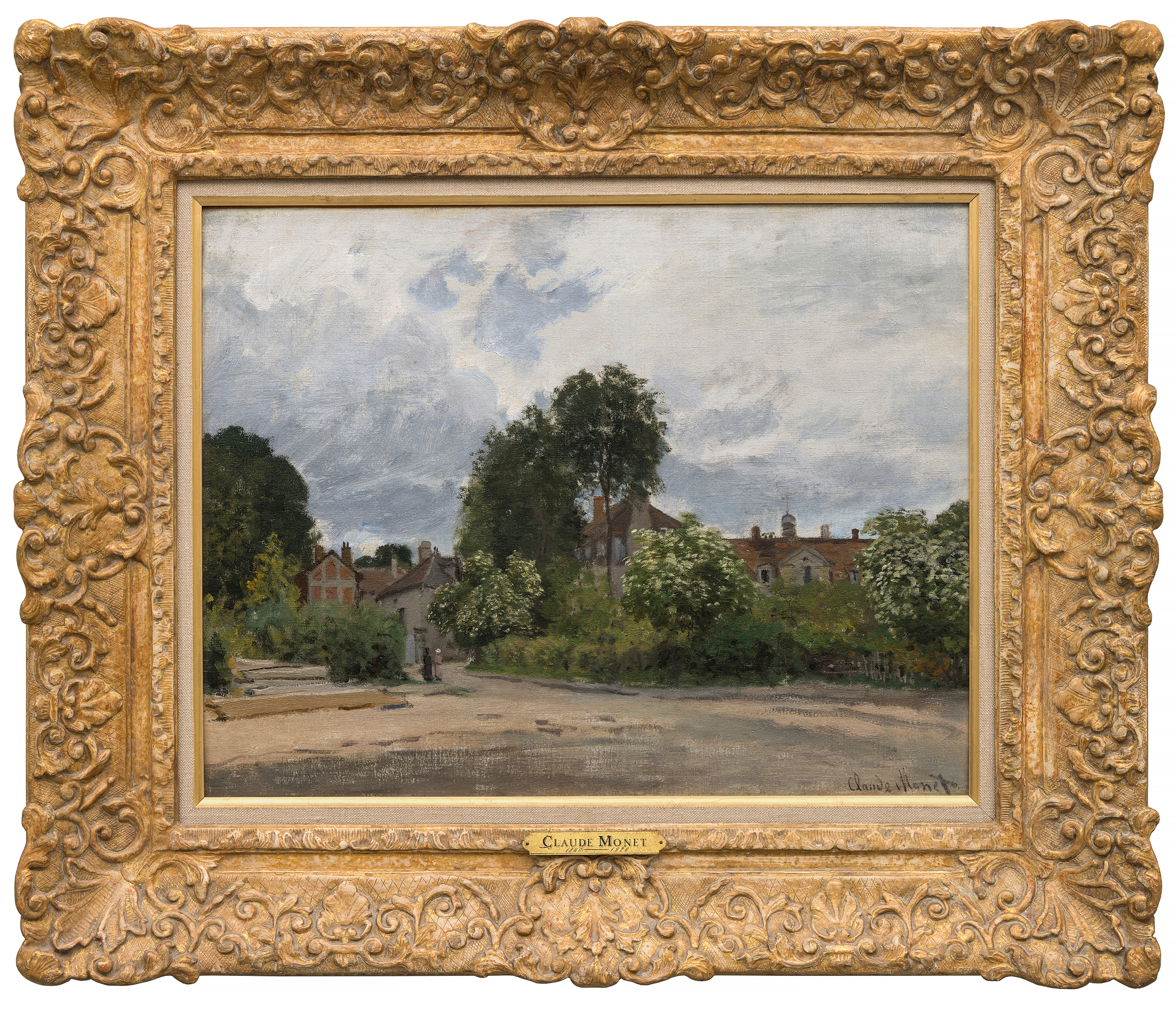
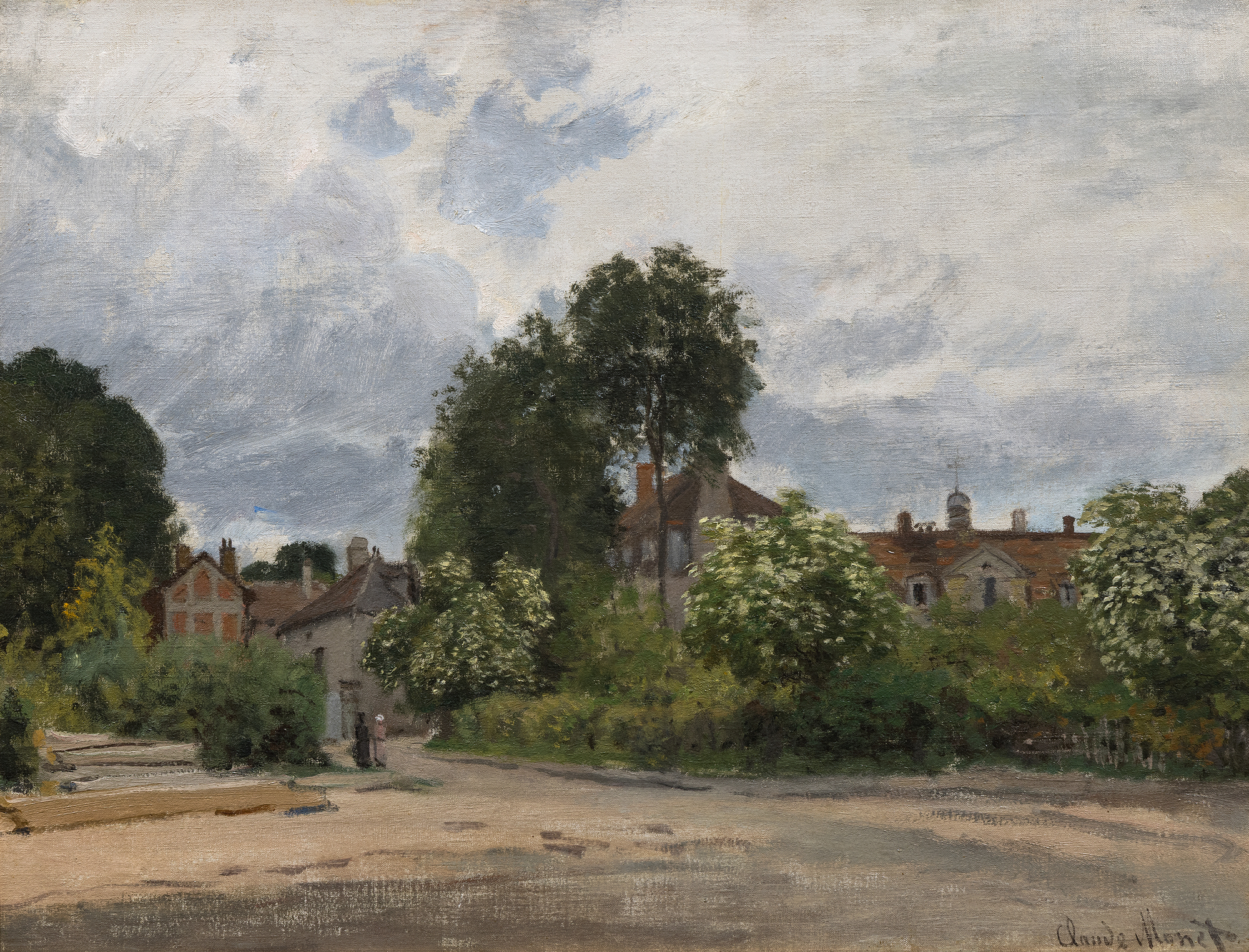
كلود [مونيه] (1840-1926)

$5,750,000
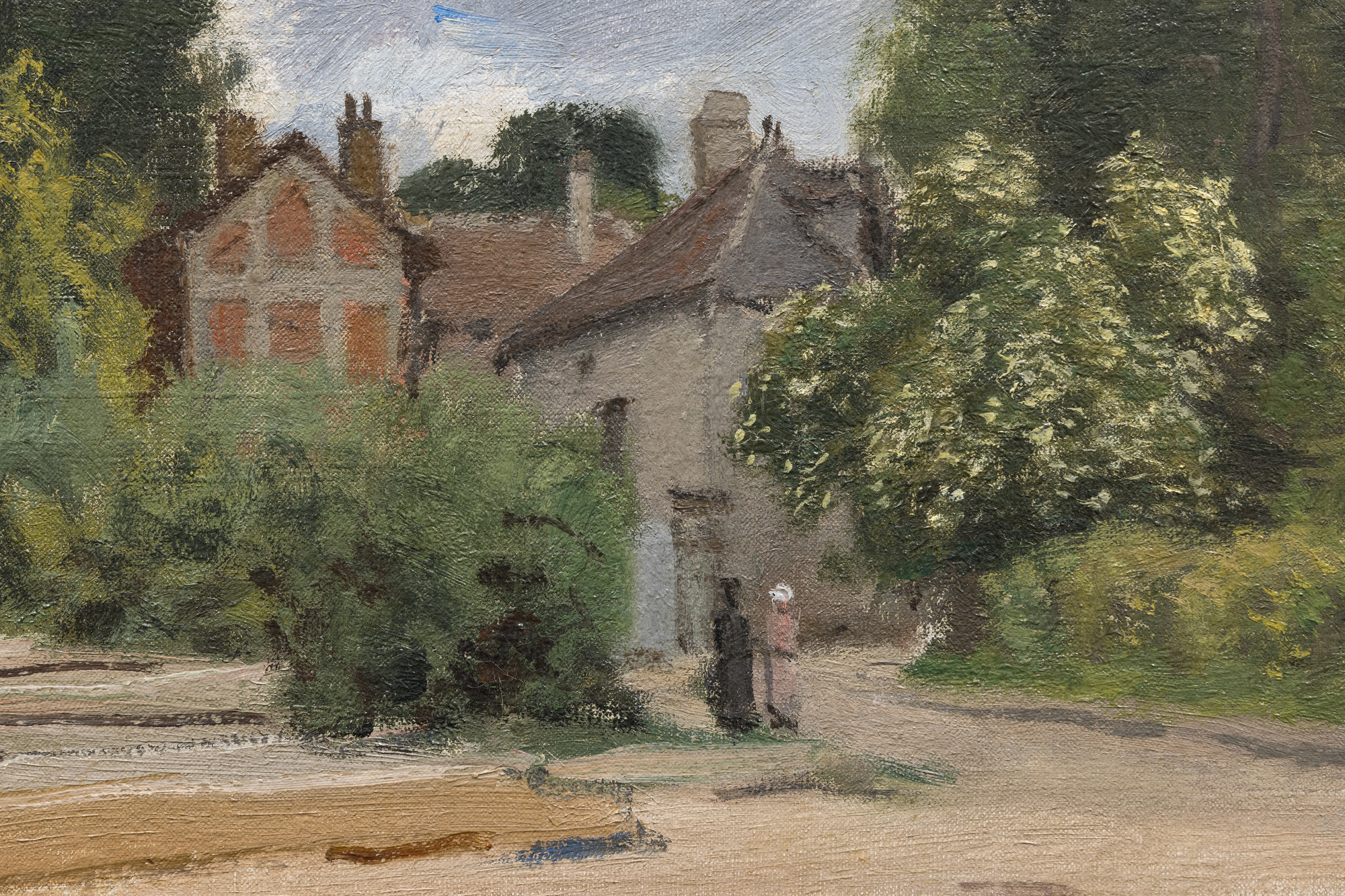
 
<div><font face=Lato size=3 color="#191919"><em>Argenteuil, l’Hospice</em> from 1872 belongs to one of the most formative chapters in Claude Monet’s career, painted during his early years in Argenteuil where he created nearly one hundred eighty canvases between 1871 and 1878. First owned by Paul Durand Ruel, Monet’s dealer and the most important champion of the Impressionists, the painting is included in the Wildenstein catalogue and was featured in the National Gallery London’s landmark exhibition <em>Monet and Architecture </em>in 2018. Created in the same year as his breakthrough <em>Impression, Sunrise</em>, the work reflects the moment when Monet’s vision for modern landscape took shape and laid the foundation for the movement that would soon be known as Impressionism.</font></div><br><br><div> </div><br><br><div><font face=Lato size=3 color="#191919">Monet settled in Argenteuil in late 1871, determined to renew his artistic direction after the upheavals of war and exile. The town offered an enticing blend of historical architecture, modern industry, rustic gardens, and the ever-shifting Seine, all within easy reach of Paris. The Aubrey House, where Monet lived, became a gathering place for Renoir, Manet, Sisley, Caillebotte, and later Pissarro, a setting that fostered both artistic exchange and the planning of the first Impressionist exhibition of 1874. As scholar Paul Hayes Tucker has noted, Argenteuil offered Monet a rare diversity of motifs that he encountered daily, ranging from the charmingly old to the strikingly new.</font></div><br><br><div> </div><br><br><div><font face=Lato size=3 color="#191919">In this painting Monet set his easel on rue Pierre Guienne, with his back to the Aubrey House, and painted the seventeenth century building that served at the time as the hospice of the Porte Saint Denis. The structure appears at right, viewed from the Seine, rendered with a quiet clarity that captures the atmosphere of an early spring day. The palette reflects both a reverence for the site’s history and an appreciation for Eugène Boudin, the friend and mentor who had encouraged Monet to paint the play of air and light years earlier and who joined him for a housewarming at Argenteuil on January 2, 1872. The hospice later became the Musée du Vieil Argenteuil, further reinforcing the historical resonance of the site.</font></div><br><br><div> </div><br><br><div><font face=Lato size=3 color="#191919"><em>Argenteuil, l’Hospice</em> stands as one of Monet’s earliest paintings from this crucial period and offers a faithful, atmospheric interpretation of a place deeply intertwined with the origins of Impressionism. Its blend of gentle tonalities, soft spring light, and direct observation reveals the artist’s growing confidence in painting the world as he perceived it, moment by moment, as a new vision for modern landscape art emerged.</font></div> <div><font face=Lato size=3 color="#191919"><em>Argenteuil, l’Hospice</em> from 1872 belongs to one of the most formative chapters in Claude Monet’s career, painted during his early years in Argenteuil where he created nearly one hundred eighty canvases between 1871 and 1878. First owned by Paul Durand Ruel, Monet’s dealer and the most important champion of the Impressionists, the painting is included in the Wildenstein catalogue and was featured in the National Gallery London’s landmark exhibition <em>Monet and Architecture </em>in 2018. Created in the same year as his breakthrough <em>Impression, Sunrise</em>, the work reflects the moment when Monet’s vision for modern landscape took shape and laid the foundation for the movement that would soon be known as Impressionism.</font></div><br><br><div> </div><br><br><div><font face=Lato size=3 color="#191919">Monet settled in Argenteuil in late 1871, determined to renew his artistic direction after the upheavals of war and exile. The town offered an enticing blend of historical architecture, modern industry, rustic gardens, and the ever-shifting Seine, all within easy reach of Paris. The Aubrey House, where Monet lived, became a gathering place for Renoir, Manet, Sisley, Caillebotte, and later Pissarro, a setting that fostered both artistic exchange and the planning of the first Impressionist exhibition of 1874. As scholar Paul Hayes Tucker has noted, Argenteuil offered Monet a rare diversity of motifs that he encountered daily, ranging from the charmingly old to the strikingly new.</font></div><br><br><div> </div><br><br><div><font face=Lato size=3 color="#191919">In this painting Monet set his easel on rue Pierre Guienne, with his back to the Aubrey House, and painted the seventeenth century building that served at the time as the hospice of the Porte Saint Denis. The structure appears at right, viewed from the Seine, rendered with a quiet clarity that captures the atmosphere of an early spring day. The palette reflects both a reverence for the site’s history and an appreciation for Eugène Boudin, the friend and mentor who had encouraged Monet to paint the play of air and light years earlier and who joined him for a housewarming at Argenteuil on January 2, 1872. The hospice later became the Musée du Vieil Argenteuil, further reinforcing the historical resonance of the site.</font></div><br><br><div> </div><br><br><div><font face=Lato size=3 color="#191919"><em>Argenteuil, l’Hospice</em> stands as one of Monet’s earliest paintings from this crucial period and offers a faithful, atmospheric interpretation of a place deeply intertwined with the origins of Impressionism. Its blend of gentle tonalities, soft spring light, and direct observation reveals the artist’s growing confidence in painting the world as he perceived it, moment by moment, as a new vision for modern landscape art emerged.</font></div> <div><font face=Lato size=3 color="#191919"><em>Argenteuil, l’Hospice</em> from 1872 belongs to one of the most formative chapters in Claude Monet’s career, painted during his early years in Argenteuil where he created nearly one hundred eighty canvases between 1871 and 1878. First owned by Paul Durand Ruel, Monet’s dealer and the most important champion of the Impressionists, the painting is included in the Wildenstein catalogue and was featured in the National Gallery London’s landmark exhibition <em>Monet and Architecture </em>in 2018. Created in the same year as his breakthrough <em>Impression, Sunrise</em>, the work reflects the moment when Monet’s vision for modern landscape took shape and laid the foundation for the movement that would soon be known as Impressionism.</font></div><br><br><div> </div><br><br><div><font face=Lato size=3 color="#191919">Monet settled in Argenteuil in late 1871, determined to renew his artistic direction after the upheavals of war and exile. The town offered an enticing blend of historical architecture, modern industry, rustic gardens, and the ever-shifting Seine, all within easy reach of Paris. The Aubrey House, where Monet lived, became a gathering place for Renoir, Manet, Sisley, Caillebotte, and later Pissarro, a setting that fostered both artistic exchange and the planning of the first Impressionist exhibition of 1874. As scholar Paul Hayes Tucker has noted, Argenteuil offered Monet a rare diversity of motifs that he encountered daily, ranging from the charmingly old to the strikingly new.</font></div><br><br><div> </div><br><br><div><font face=Lato size=3 color="#191919">In this painting Monet set his easel on rue Pierre Guienne, with his back to the Aubrey House, and painted the seventeenth century building that served at the time as the hospice of the Porte Saint Denis. The structure appears at right, viewed from the Seine, rendered with a quiet clarity that captures the atmosphere of an early spring day. The palette reflects both a reverence for the site’s history and an appreciation for Eugène Boudin, the friend and mentor who had encouraged Monet to paint the play of air and light years earlier and who joined him for a housewarming at Argenteuil on January 2, 1872. The hospice later became the Musée du Vieil Argenteuil, further reinforcing the historical resonance of the site.</font></div><br><br><div> </div><br><br><div><font face=Lato size=3 color="#191919"><em>Argenteuil, l’Hospice</em> stands as one of Monet’s earliest paintings from this crucial period and offers a faithful, atmospheric interpretation of a place deeply intertwined with the origins of Impressionism. Its blend of gentle tonalities, soft spring light, and direct observation reveals the artist’s growing confidence in painting the world as he perceived it, moment by moment, as a new vision for modern landscape art emerged.</font></div> <div><font face=Lato size=3 color="#191919"><em>Argenteuil, l’Hospice</em> from 1872 belongs to one of the most formative chapters in Claude Monet’s career, painted during his early years in Argenteuil where he created nearly one hundred eighty canvases between 1871 and 1878. First owned by Paul Durand Ruel, Monet’s dealer and the most important champion of the Impressionists, the painting is included in the Wildenstein catalogue and was featured in the National Gallery London’s landmark exhibition <em>Monet and Architecture </em>in 2018. Created in the same year as his breakthrough <em>Impression, Sunrise</em>, the work reflects the moment when Monet’s vision for modern landscape took shape and laid the foundation for the movement that would soon be known as Impressionism.</font></div><br><br><div> </div><br><br><div><font face=Lato size=3 color="#191919">Monet settled in Argenteuil in late 1871, determined to renew his artistic direction after the upheavals of war and exile. The town offered an enticing blend of historical architecture, modern industry, rustic gardens, and the ever-shifting Seine, all within easy reach of Paris. The Aubrey House, where Monet lived, became a gathering place for Renoir, Manet, Sisley, Caillebotte, and later Pissarro, a setting that fostered both artistic exchange and the planning of the first Impressionist exhibition of 1874. As scholar Paul Hayes Tucker has noted, Argenteuil offered Monet a rare diversity of motifs that he encountered daily, ranging from the charmingly old to the strikingly new.</font></div><br><br><div> </div><br><br><div><font face=Lato size=3 color="#191919">In this painting Monet set his easel on rue Pierre Guienne, with his back to the Aubrey House, and painted the seventeenth century building that served at the time as the hospice of the Porte Saint Denis. The structure appears at right, viewed from the Seine, rendered with a quiet clarity that captures the atmosphere of an early spring day. The palette reflects both a reverence for the site’s history and an appreciation for Eugène Boudin, the friend and mentor who had encouraged Monet to paint the play of air and light years earlier and who joined him for a housewarming at Argenteuil on January 2, 1872. The hospice later became the Musée du Vieil Argenteuil, further reinforcing the historical resonance of the site.</font></div><br><br><div> </div><br><br><div><font face=Lato size=3 color="#191919"><em>Argenteuil, l’Hospice</em> stands as one of Monet’s earliest paintings from this crucial period and offers a faithful, atmospheric interpretation of a place deeply intertwined with the origins of Impressionism. Its blend of gentle tonalities, soft spring light, and direct observation reveals the artist’s growing confidence in painting the world as he perceived it, moment by moment, as a new vision for modern landscape art emerged.</font></div> <div><font face=Lato size=3 color="#191919"><em>Argenteuil, l’Hospice</em> from 1872 belongs to one of the most formative chapters in Claude Monet’s career, painted during his early years in Argenteuil where he created nearly one hundred eighty canvases between 1871 and 1878. First owned by Paul Durand Ruel, Monet’s dealer and the most important champion of the Impressionists, the painting is included in the Wildenstein catalogue and was featured in the National Gallery London’s landmark exhibition <em>Monet and Architecture </em>in 2018. Created in the same year as his breakthrough <em>Impression, Sunrise</em>, the work reflects the moment when Monet’s vision for modern landscape took shape and laid the foundation for the movement that would soon be known as Impressionism.</font></div><br><br><div> </div><br><br><div><font face=Lato size=3 color="#191919">Monet settled in Argenteuil in late 1871, determined to renew his artistic direction after the upheavals of war and exile. The town offered an enticing blend of historical architecture, modern industry, rustic gardens, and the ever-shifting Seine, all within easy reach of Paris. The Aubrey House, where Monet lived, became a gathering place for Renoir, Manet, Sisley, Caillebotte, and later Pissarro, a setting that fostered both artistic exchange and the planning of the first Impressionist exhibition of 1874. As scholar Paul Hayes Tucker has noted, Argenteuil offered Monet a rare diversity of motifs that he encountered daily, ranging from the charmingly old to the strikingly new.</font></div><br><br><div> </div><br><br><div><font face=Lato size=3 color="#191919">In this painting Monet set his easel on rue Pierre Guienne, with his back to the Aubrey House, and painted the seventeenth century building that served at the time as the hospice of the Porte Saint Denis. The structure appears at right, viewed from the Seine, rendered with a quiet clarity that captures the atmosphere of an early spring day. The palette reflects both a reverence for the site’s history and an appreciation for Eugène Boudin, the friend and mentor who had encouraged Monet to paint the play of air and light years earlier and who joined him for a housewarming at Argenteuil on January 2, 1872. The hospice later became the Musée du Vieil Argenteuil, further reinforcing the historical resonance of the site.</font></div><br><br><div> </div><br><br><div><font face=Lato size=3 color="#191919"><em>Argenteuil, l’Hospice</em> stands as one of Monet’s earliest paintings from this crucial period and offers a faithful, atmospheric interpretation of a place deeply intertwined with the origins of Impressionism. Its blend of gentle tonalities, soft spring light, and direct observation reveals the artist’s growing confidence in painting the world as he perceived it, moment by moment, as a new vision for modern landscape art emerged.</font></div> <div><font face=Lato size=3 color="#191919"><em>Argenteuil, l’Hospice</em> from 1872 belongs to one of the most formative chapters in Claude Monet’s career, painted during his early years in Argenteuil where he created nearly one hundred eighty canvases between 1871 and 1878. First owned by Paul Durand Ruel, Monet’s dealer and the most important champion of the Impressionists, the painting is included in the Wildenstein catalogue and was featured in the National Gallery London’s landmark exhibition <em>Monet and Architecture </em>in 2018. Created in the same year as his breakthrough <em>Impression, Sunrise</em>, the work reflects the moment when Monet’s vision for modern landscape took shape and laid the foundation for the movement that would soon be known as Impressionism.</font></div><br><br><div> </div><br><br><div><font face=Lato size=3 color="#191919">Monet settled in Argenteuil in late 1871, determined to renew his artistic direction after the upheavals of war and exile. The town offered an enticing blend of historical architecture, modern industry, rustic gardens, and the ever-shifting Seine, all within easy reach of Paris. The Aubrey House, where Monet lived, became a gathering place for Renoir, Manet, Sisley, Caillebotte, and later Pissarro, a setting that fostered both artistic exchange and the planning of the first Impressionist exhibition of 1874. As scholar Paul Hayes Tucker has noted, Argenteuil offered Monet a rare diversity of motifs that he encountered daily, ranging from the charmingly old to the strikingly new.</font></div><br><br><div> </div><br><br><div><font face=Lato size=3 color="#191919">In this painting Monet set his easel on rue Pierre Guienne, with his back to the Aubrey House, and painted the seventeenth century building that served at the time as the hospice of the Porte Saint Denis. The structure appears at right, viewed from the Seine, rendered with a quiet clarity that captures the atmosphere of an early spring day. The palette reflects both a reverence for the site’s history and an appreciation for Eugène Boudin, the friend and mentor who had encouraged Monet to paint the play of air and light years earlier and who joined him for a housewarming at Argenteuil on January 2, 1872. The hospice later became the Musée du Vieil Argenteuil, further reinforcing the historical resonance of the site.</font></div><br><br><div> </div><br><br><div><font face=Lato size=3 color="#191919"><em>Argenteuil, l’Hospice</em> stands as one of Monet’s earliest paintings from this crucial period and offers a faithful, atmospheric interpretation of a place deeply intertwined with the origins of Impressionism. Its blend of gentle tonalities, soft spring light, and direct observation reveals the artist’s growing confidence in painting the world as he perceived it, moment by moment, as a new vision for modern landscape art emerged.</font></div> <div><font face=Lato size=3 color="#191919"><em>Argenteuil, l’Hospice</em> from 1872 belongs to one of the most formative chapters in Claude Monet’s career, painted during his early years in Argenteuil where he created nearly one hundred eighty canvases between 1871 and 1878. First owned by Paul Durand Ruel, Monet’s dealer and the most important champion of the Impressionists, the painting is included in the Wildenstein catalogue and was featured in the National Gallery London’s landmark exhibition <em>Monet and Architecture </em>in 2018. Created in the same year as his breakthrough <em>Impression, Sunrise</em>, the work reflects the moment when Monet’s vision for modern landscape took shape and laid the foundation for the movement that would soon be known as Impressionism.</font></div><br><br><div> </div><br><br><div><font face=Lato size=3 color="#191919">Monet settled in Argenteuil in late 1871, determined to renew his artistic direction after the upheavals of war and exile. The town offered an enticing blend of historical architecture, modern industry, rustic gardens, and the ever-shifting Seine, all within easy reach of Paris. The Aubrey House, where Monet lived, became a gathering place for Renoir, Manet, Sisley, Caillebotte, and later Pissarro, a setting that fostered both artistic exchange and the planning of the first Impressionist exhibition of 1874. As scholar Paul Hayes Tucker has noted, Argenteuil offered Monet a rare diversity of motifs that he encountered daily, ranging from the charmingly old to the strikingly new.</font></div><br><br><div> </div><br><br><div><font face=Lato size=3 color="#191919">In this painting Monet set his easel on rue Pierre Guienne, with his back to the Aubrey House, and painted the seventeenth century building that served at the time as the hospice of the Porte Saint Denis. The structure appears at right, viewed from the Seine, rendered with a quiet clarity that captures the atmosphere of an early spring day. The palette reflects both a reverence for the site’s history and an appreciation for Eugène Boudin, the friend and mentor who had encouraged Monet to paint the play of air and light years earlier and who joined him for a housewarming at Argenteuil on January 2, 1872. The hospice later became the Musée du Vieil Argenteuil, further reinforcing the historical resonance of the site.</font></div><br><br><div> </div><br><br><div><font face=Lato size=3 color="#191919"><em>Argenteuil, l’Hospice</em> stands as one of Monet’s earliest paintings from this crucial period and offers a faithful, atmospheric interpretation of a place deeply intertwined with the origins of Impressionism. Its blend of gentle tonalities, soft spring light, and direct observation reveals the artist’s growing confidence in painting the world as he perceived it, moment by moment, as a new vision for modern landscape art emerged.</font></div> <div><font face=Lato size=3 color="#191919"><em>Argenteuil, l’Hospice</em> from 1872 belongs to one of the most formative chapters in Claude Monet’s career, painted during his early years in Argenteuil where he created nearly one hundred eighty canvases between 1871 and 1878. First owned by Paul Durand Ruel, Monet’s dealer and the most important champion of the Impressionists, the painting is included in the Wildenstein catalogue and was featured in the National Gallery London’s landmark exhibition <em>Monet and Architecture </em>in 2018. Created in the same year as his breakthrough <em>Impression, Sunrise</em>, the work reflects the moment when Monet’s vision for modern landscape took shape and laid the foundation for the movement that would soon be known as Impressionism.</font></div><br><br><div> </div><br><br><div><font face=Lato size=3 color="#191919">Monet settled in Argenteuil in late 1871, determined to renew his artistic direction after the upheavals of war and exile. The town offered an enticing blend of historical architecture, modern industry, rustic gardens, and the ever-shifting Seine, all within easy reach of Paris. The Aubrey House, where Monet lived, became a gathering place for Renoir, Manet, Sisley, Caillebotte, and later Pissarro, a setting that fostered both artistic exchange and the planning of the first Impressionist exhibition of 1874. As scholar Paul Hayes Tucker has noted, Argenteuil offered Monet a rare diversity of motifs that he encountered daily, ranging from the charmingly old to the strikingly new.</font></div><br><br><div> </div><br><br><div><font face=Lato size=3 color="#191919">In this painting Monet set his easel on rue Pierre Guienne, with his back to the Aubrey House, and painted the seventeenth century building that served at the time as the hospice of the Porte Saint Denis. The structure appears at right, viewed from the Seine, rendered with a quiet clarity that captures the atmosphere of an early spring day. The palette reflects both a reverence for the site’s history and an appreciation for Eugène Boudin, the friend and mentor who had encouraged Monet to paint the play of air and light years earlier and who joined him for a housewarming at Argenteuil on January 2, 1872. The hospice later became the Musée du Vieil Argenteuil, further reinforcing the historical resonance of the site.</font></div><br><br><div> </div><br><br><div><font face=Lato size=3 color="#191919"><em>Argenteuil, l’Hospice</em> stands as one of Monet’s earliest paintings from this crucial period and offers a faithful, atmospheric interpretation of a place deeply intertwined with the origins of Impressionism. Its blend of gentle tonalities, soft spring light, and direct observation reveals the artist’s growing confidence in painting the world as he perceived it, moment by moment, as a new vision for modern landscape art emerged.</font></div> <div><font face=Lato size=3 color="#191919"><em>Argenteuil, l’Hospice</em> from 1872 belongs to one of the most formative chapters in Claude Monet’s career, painted during his early years in Argenteuil where he created nearly one hundred eighty canvases between 1871 and 1878. First owned by Paul Durand Ruel, Monet’s dealer and the most important champion of the Impressionists, the painting is included in the Wildenstein catalogue and was featured in the National Gallery London’s landmark exhibition <em>Monet and Architecture </em>in 2018. Created in the same year as his breakthrough <em>Impression, Sunrise</em>, the work reflects the moment when Monet’s vision for modern landscape took shape and laid the foundation for the movement that would soon be known as Impressionism.</font></div><br><br><div> </div><br><br><div><font face=Lato size=3 color="#191919">Monet settled in Argenteuil in late 1871, determined to renew his artistic direction after the upheavals of war and exile. The town offered an enticing blend of historical architecture, modern industry, rustic gardens, and the ever-shifting Seine, all within easy reach of Paris. The Aubrey House, where Monet lived, became a gathering place for Renoir, Manet, Sisley, Caillebotte, and later Pissarro, a setting that fostered both artistic exchange and the planning of the first Impressionist exhibition of 1874. As scholar Paul Hayes Tucker has noted, Argenteuil offered Monet a rare diversity of motifs that he encountered daily, ranging from the charmingly old to the strikingly new.</font></div><br><br><div> </div><br><br><div><font face=Lato size=3 color="#191919">In this painting Monet set his easel on rue Pierre Guienne, with his back to the Aubrey House, and painted the seventeenth century building that served at the time as the hospice of the Porte Saint Denis. The structure appears at right, viewed from the Seine, rendered with a quiet clarity that captures the atmosphere of an early spring day. The palette reflects both a reverence for the site’s history and an appreciation for Eugène Boudin, the friend and mentor who had encouraged Monet to paint the play of air and light years earlier and who joined him for a housewarming at Argenteuil on January 2, 1872. The hospice later became the Musée du Vieil Argenteuil, further reinforcing the historical resonance of the site.</font></div><br><br><div> </div><br><br><div><font face=Lato size=3 color="#191919"><em>Argenteuil, l’Hospice</em> stands as one of Monet’s earliest paintings from this crucial period and offers a faithful, atmospheric interpretation of a place deeply intertwined with the origins of Impressionism. Its blend of gentle tonalities, soft spring light, and direct observation reveals the artist’s growing confidence in painting the world as he perceived it, moment by moment, as a new vision for modern landscape art emerged.</font></div> <div><font face=Lato size=3 color="#191919"><em>Argenteuil, l’Hospice</em> from 1872 belongs to one of the most formative chapters in Claude Monet’s career, painted during his early years in Argenteuil where he created nearly one hundred eighty canvases between 1871 and 1878. First owned by Paul Durand Ruel, Monet’s dealer and the most important champion of the Impressionists, the painting is included in the Wildenstein catalogue and was featured in the National Gallery London’s landmark exhibition <em>Monet and Architecture </em>in 2018. Created in the same year as his breakthrough <em>Impression, Sunrise</em>, the work reflects the moment when Monet’s vision for modern landscape took shape and laid the foundation for the movement that would soon be known as Impressionism.</font></div><br><br><div> </div><br><br><div><font face=Lato size=3 color="#191919">Monet settled in Argenteuil in late 1871, determined to renew his artistic direction after the upheavals of war and exile. The town offered an enticing blend of historical architecture, modern industry, rustic gardens, and the ever-shifting Seine, all within easy reach of Paris. The Aubrey House, where Monet lived, became a gathering place for Renoir, Manet, Sisley, Caillebotte, and later Pissarro, a setting that fostered both artistic exchange and the planning of the first Impressionist exhibition of 1874. As scholar Paul Hayes Tucker has noted, Argenteuil offered Monet a rare diversity of motifs that he encountered daily, ranging from the charmingly old to the strikingly new.</font></div><br><br><div> </div><br><br><div><font face=Lato size=3 color="#191919">In this painting Monet set his easel on rue Pierre Guienne, with his back to the Aubrey House, and painted the seventeenth century building that served at the time as the hospice of the Porte Saint Denis. The structure appears at right, viewed from the Seine, rendered with a quiet clarity that captures the atmosphere of an early spring day. The palette reflects both a reverence for the site’s history and an appreciation for Eugène Boudin, the friend and mentor who had encouraged Monet to paint the play of air and light years earlier and who joined him for a housewarming at Argenteuil on January 2, 1872. The hospice later became the Musée du Vieil Argenteuil, further reinforcing the historical resonance of the site.</font></div><br><br><div> </div><br><br><div><font face=Lato size=3 color="#191919"><em>Argenteuil, l’Hospice</em> stands as one of Monet’s earliest paintings from this crucial period and offers a faithful, atmospheric interpretation of a place deeply intertwined with the origins of Impressionism. Its blend of gentle tonalities, soft spring light, and direct observation reveals the artist’s growing confidence in painting the world as he perceived it, moment by moment, as a new vision for modern landscape art emerged.</font></div>
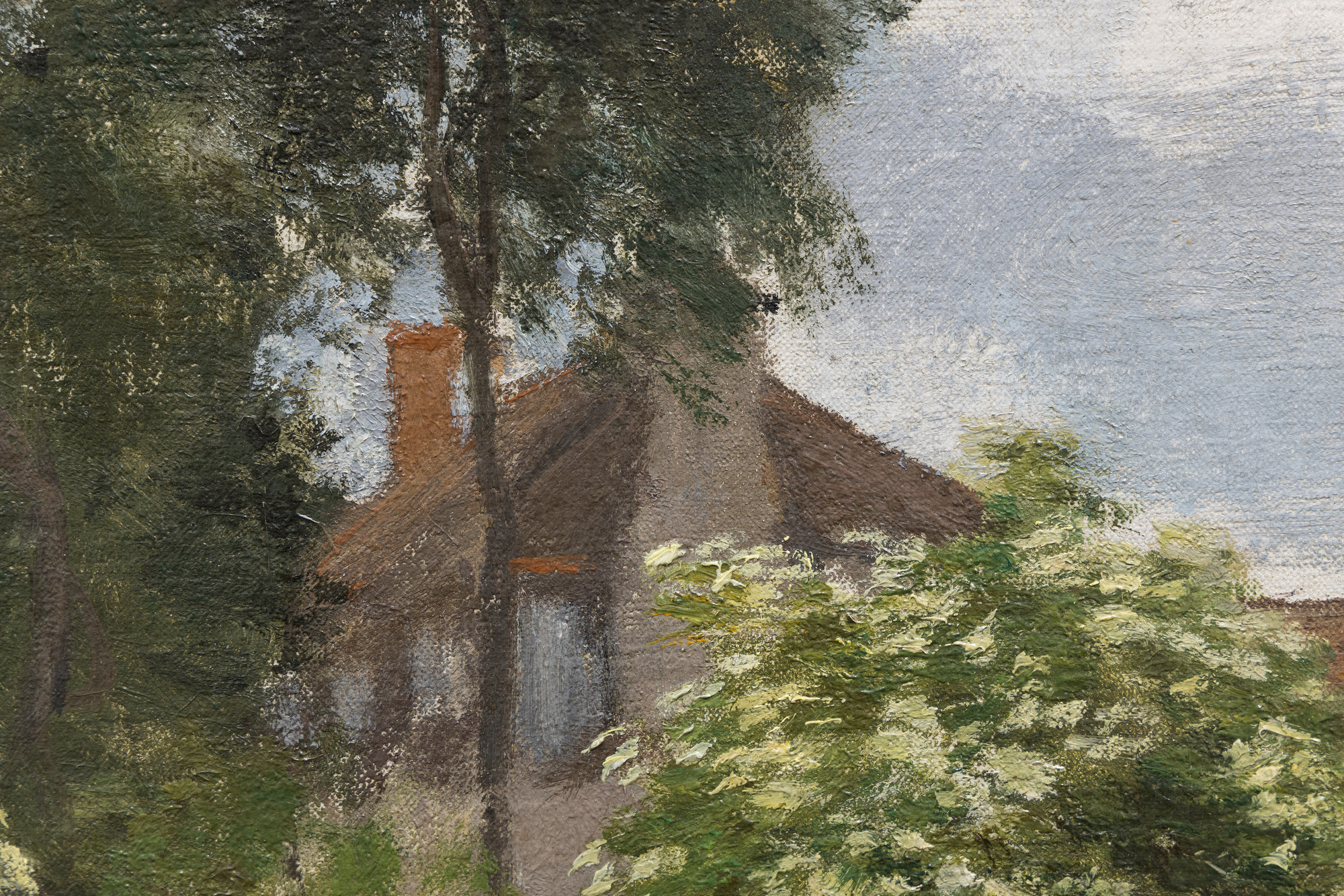
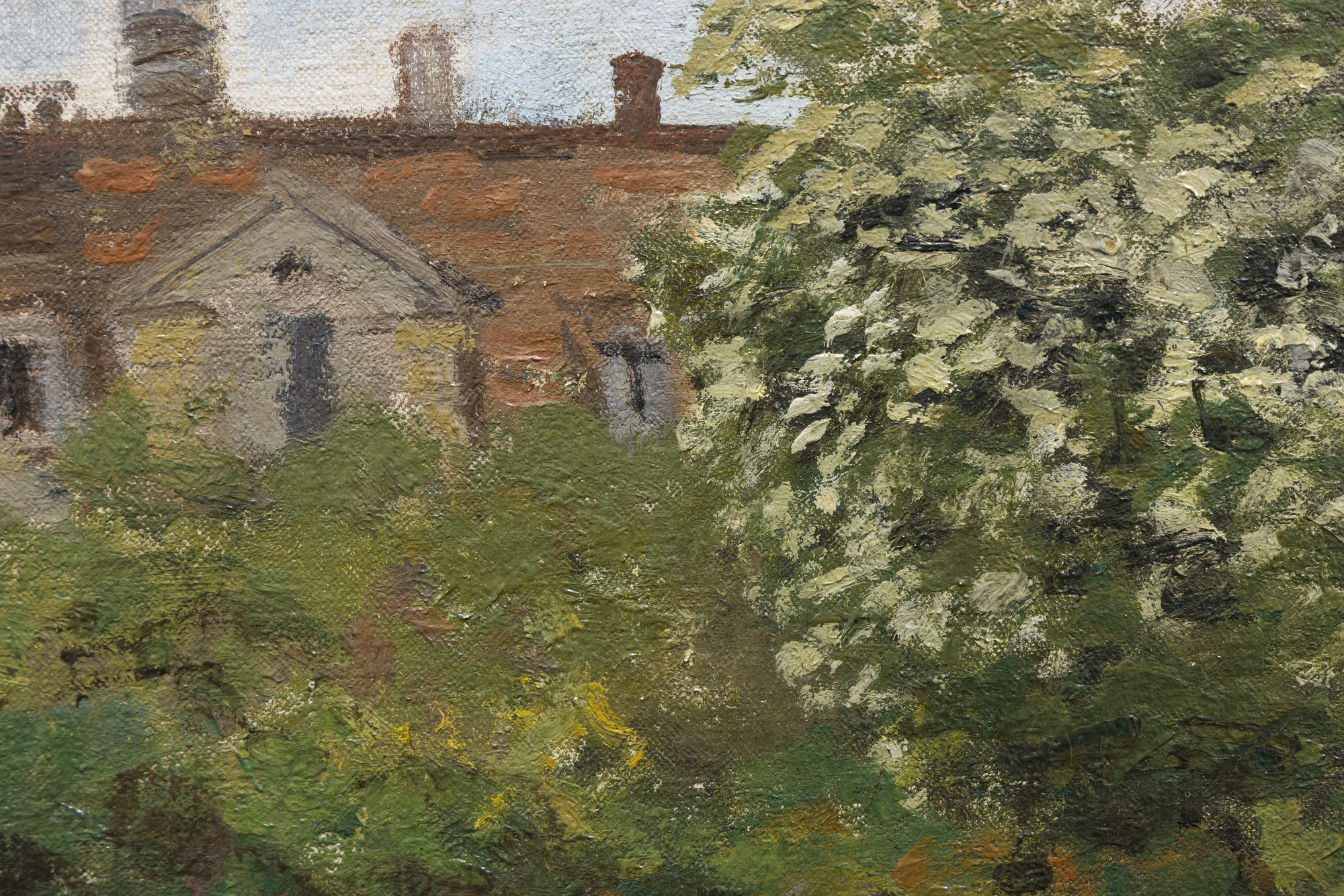
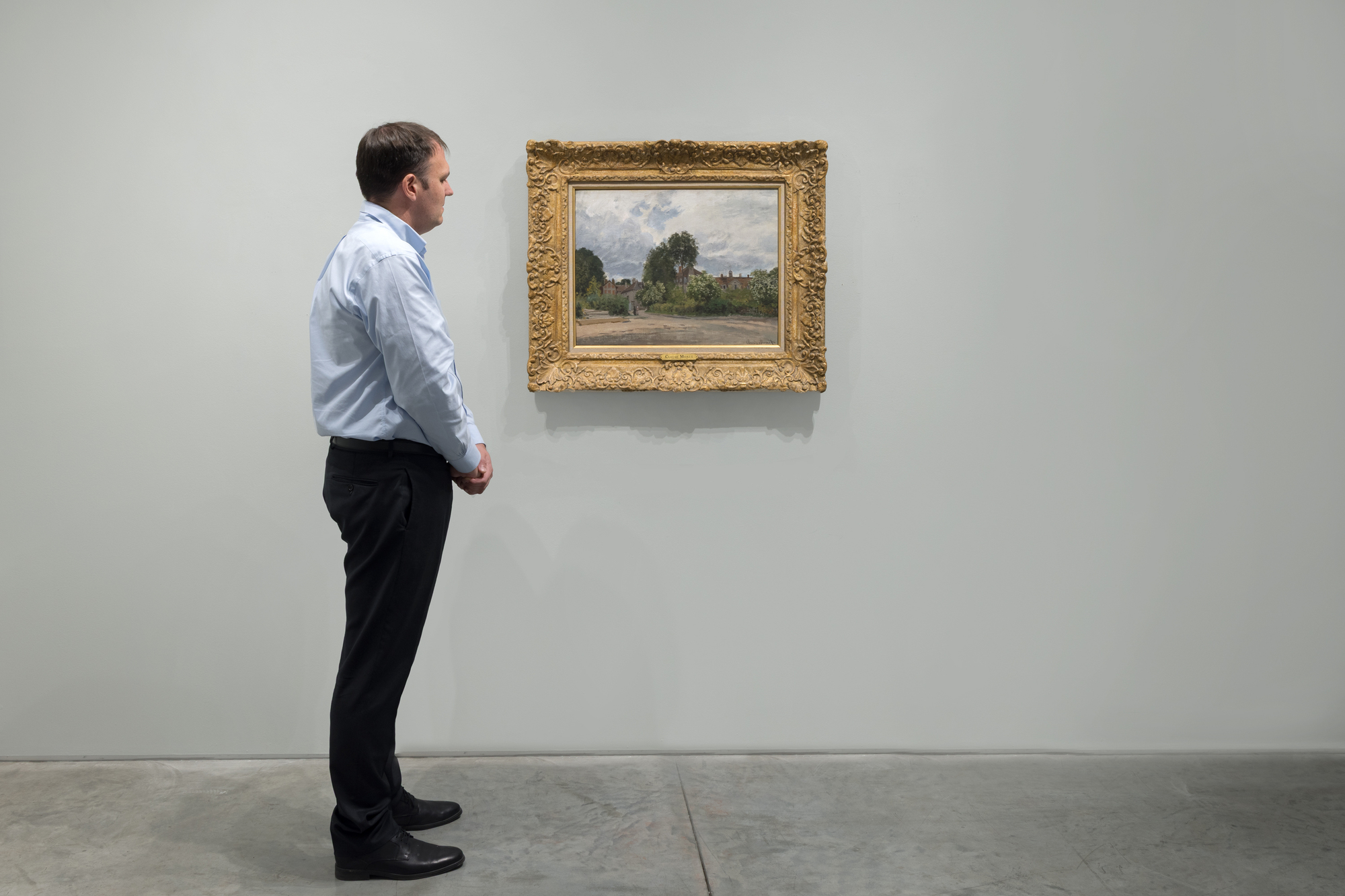
أرجنتويل، دار العجزة187220 × 25 5/8 بوصة(50.8 × 65.09 سم) زيت على قماش
الاصل
دوراند-رويل، باريس (تم شراؤها من الفنان في سبتمبر 1872)
بيع: Vente au benefice des Alsaciens-Lorrains باريس، 18-19 أبريل 1873، القطعة 104
كاثولينا لامبرت، نيويورك
البيع: فندق بلازا نيويورك، 21-22 فبراير 1916، القطعة 136 (بعنوان منظر لأرجنتويل)
M. E. Eldridge
Shoeneman Galleries، نيويورك
Wave Gallery، لندن
بيع: Sotheby’s نيويورك، 17 نوفمبر 1998، القطعة 240
مجموعة خاصة (تم شراؤها في المزاد المذكور أعلاه)
مجموعة خاصة، عن طريق الوراثة
مجموعة خاصة، كالي
... اكثر...فورنيا
معرض
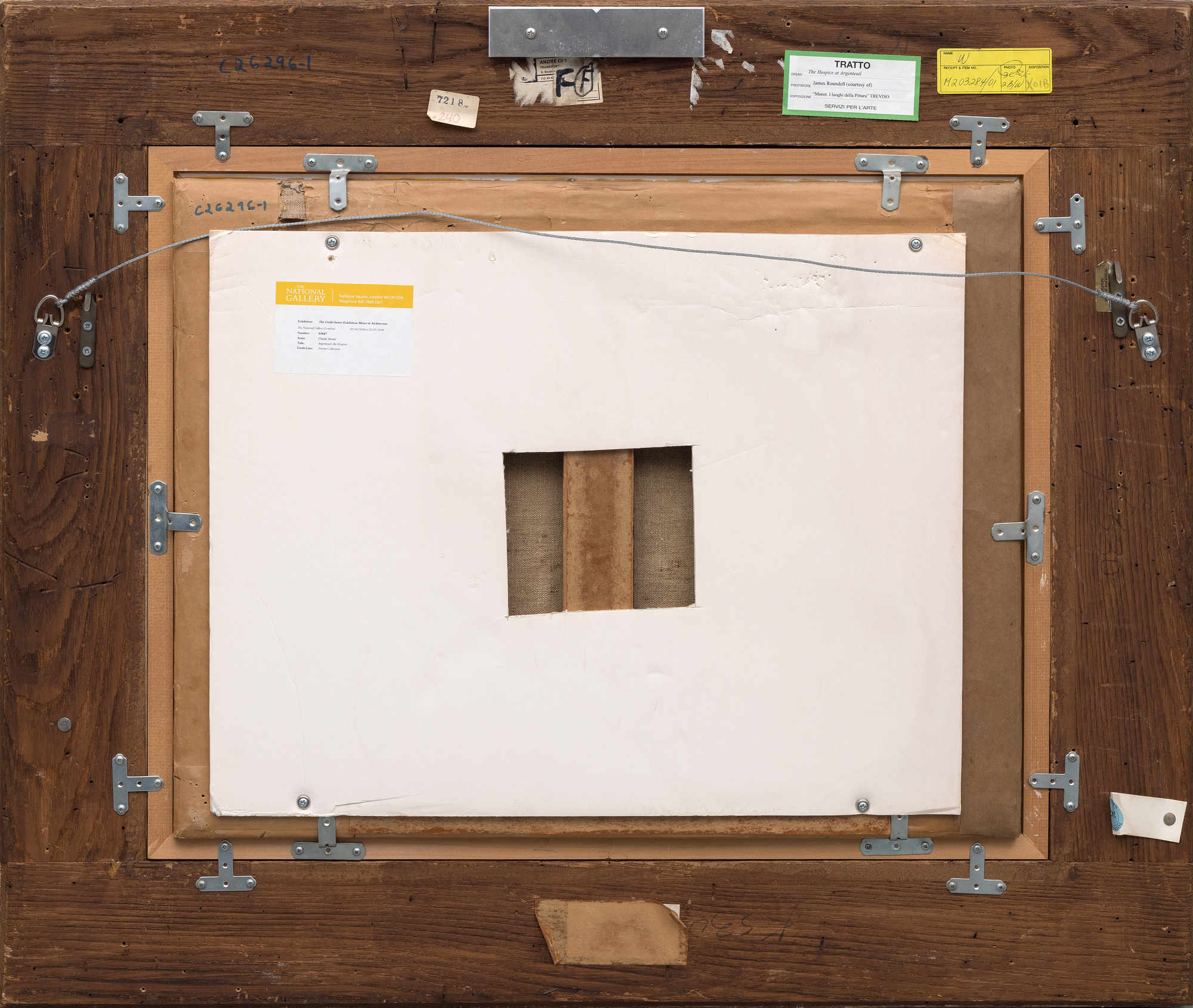
تريفيزو، كازا دي كاراريسي، مونيه: إيلوكي ديلا بيتورا، 29 سبتمبر 2001-10 فبراير 2002، ص. 358، رقم 11 (بعنوان أرجنتويل، لوسبيزيو، مصور)
لندن، المتحف الوطني، مونيه والعمارة، 9 أبريل-29 يوليو 2018، رقم 40 (بعنوان أرجنتويل، دار العجزة، مصور، ص. 122-23، رقم 115)
الادب
D. Wildenstein، كلود مونيه: السيرة الذاتية والكتالوج الشامل، باريس، 1974، المجلد الأول، ص 216-217، رقم 240 (مصورة)
P. H. Tucker، مونيه في أرجنتويل، ميلانو، 1982، ص 27 و 30، رقم 13 (مصورة)
D. Wildenstein، كلود مونيه، كتالوج رايسونيه، لوزان، 1991، المجلد الخامس (ملحق للوحات، رسومات، ألوان باستيل، فهرس)، ص. 27، رقم 240
D. Wildenstein، مونيه: كتالوج رايسونيه، باريس، 1996، المجلد الثاني، ص. 105، رقم 240 (مصوّر)
... اقل...
تنتمي لوحة "أرجنتيل، دار العجزة" التي رسمها كلود مونيه عام 1872 إلى أحد أكثر الفصول تأثيراً في مسيرته الفنية، حيث رسمها خلال سنواته الأولى في أرجنتيل التي أنتج فيها ما يقارب 180 لوحة بين عامي 1871 و1878. كانت اللوحة مملوكة في البداية لبول دوراند رويل، تاجر أعمال مونيه وأهم داعم للانطباعيين، وهي مدرجة في كتالوج وايلدنشتاين وعرضت في معرض "مونيه والعمارة" الذي أقيم في المتحف الوطني في لندن عام 2018. تم إنشاء هذه اللوحة في نفس العام الذي أنتج فيه مونيه لوحته الرائدة "انطباع، شروق الشمس"، وهي تعكس اللحظة التي تشكلت فيها رؤية مونيه للمناظر الطبيعية الحديثة ووضعت الأساس للحركة التي سرعان ما أصبحت معروفة باسم الانطباعية.


استقر مونيه في أرجنتويل في أواخر عام 1871، عازماً على تجديد اتجاهه الفني بعد اضطرابات الحرب والمنفى. كانت المدينة توفر مزيجاً جذاباً من العمارة التاريخية والصناعة الحديثة والحدائق الريفية ونهر السين المتغير باستمرار، وكل ذلك على مقربة من باريس. أصبح منزل أوبري، حيث عاش مونيه، مكانًا لتجمع رينوار ومانيه وسيسلي وكايلبوت، ولاحقًا بيسارو، وهو المكان الذي عزز التبادل الفني والتخطيط لأول معرض انطباعي في عام 1874. كما لاحظ الباحث بول هايز تاكر، قدمت أرجنتويل لمونيه تنوعًا نادرًا من الموضوعات التي كان يصادفها يوميًا، بدءًا من القديم الساحر إلى الجديد المذهل.


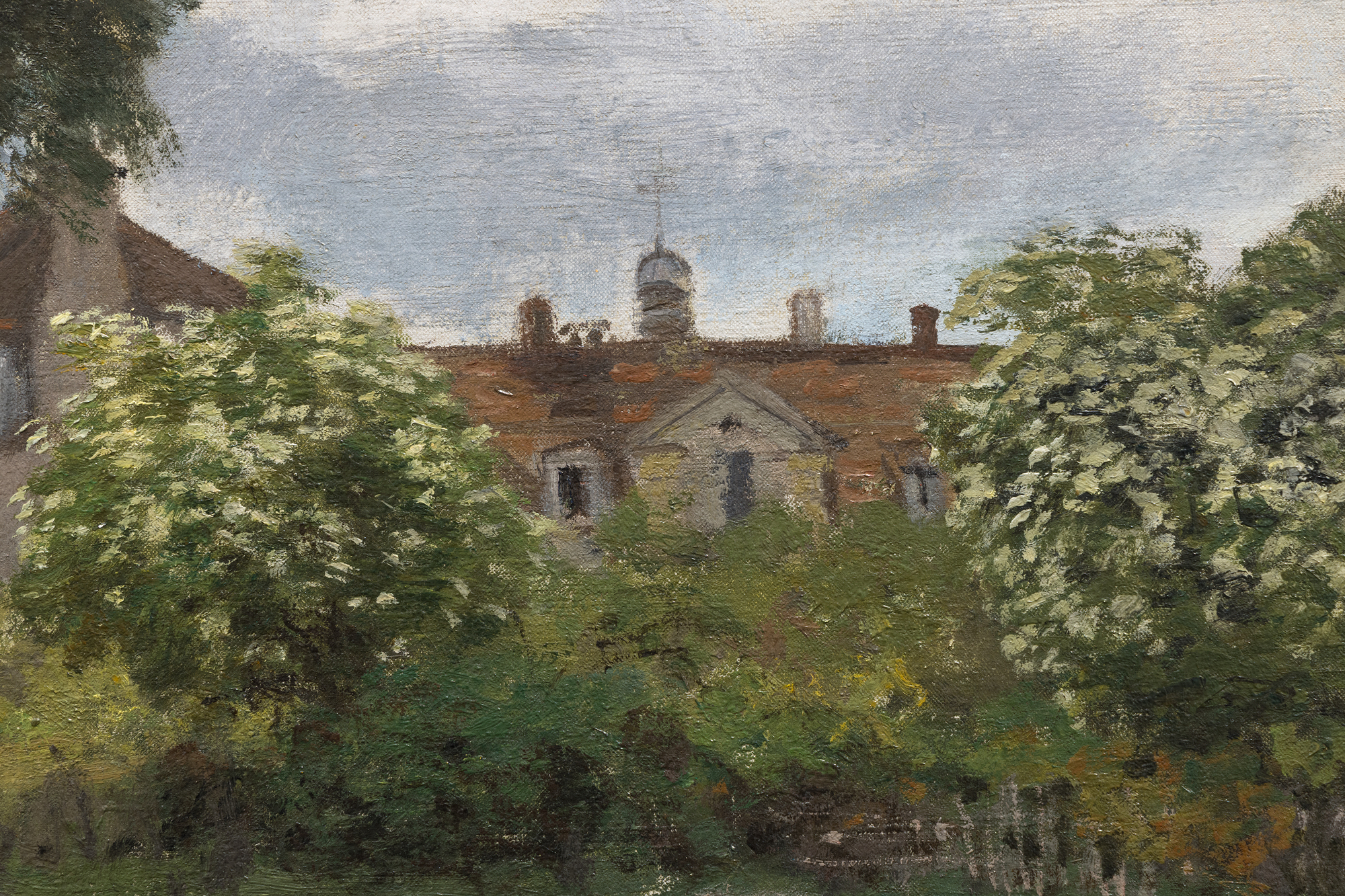
في هذه اللوحة، وضع مونيه حامله في شارع بيير غيين، وظهره إلى منزل أوبري، ورسم المبنى الذي يعود إلى القرن السابع عشر والذي كان في ذلك الوقت دار رعاية المسنين في بورت سان ديني. يظهر المبنى على اليمين، من منظور نهر السين، مصورًا بوضوح هادئ يجسد أجواء يوم من أوائل الربيع. تعكس لوحة الألوان احترامًا لتاريخ الموقع وتقديرًا لأوجين بودان، الصديق والمعلم الذي شجع مونيه على رسم تلاعب الهواء والضوء قبل سنوات عديدة، والذي انضم إليه في حفل تدشين منزله في أرجنتويل في 2 يناير 1872. أصبح دار العجزة لاحقًا متحف فيي أرجنتويل، مما عزز من الأهمية التاريخية للموقع.


تعد لوحة "أرجنتويل، دار العجزة" واحدة من أقدم لوحات مونيه في هذه الفترة الحاسمة، وتقدم تفسيرًا دقيقًا وعاطفيًا لمكان مرتبط ارتباطًا وثيقًا بأصول الانطباعية. ويكشف مزيجها من الألوان الهادئة والضوء الربيعي الناعم والملاحظة المباشرة عن ثقة الفنان المتزايدة في رسم العالم كما يراه، لحظة بلحظة، مع ظهور رؤية جديدة لفن المناظر الطبيعية الحديثة.
الاستفسار