جول شيريه(1836-1932)

$75,000

 
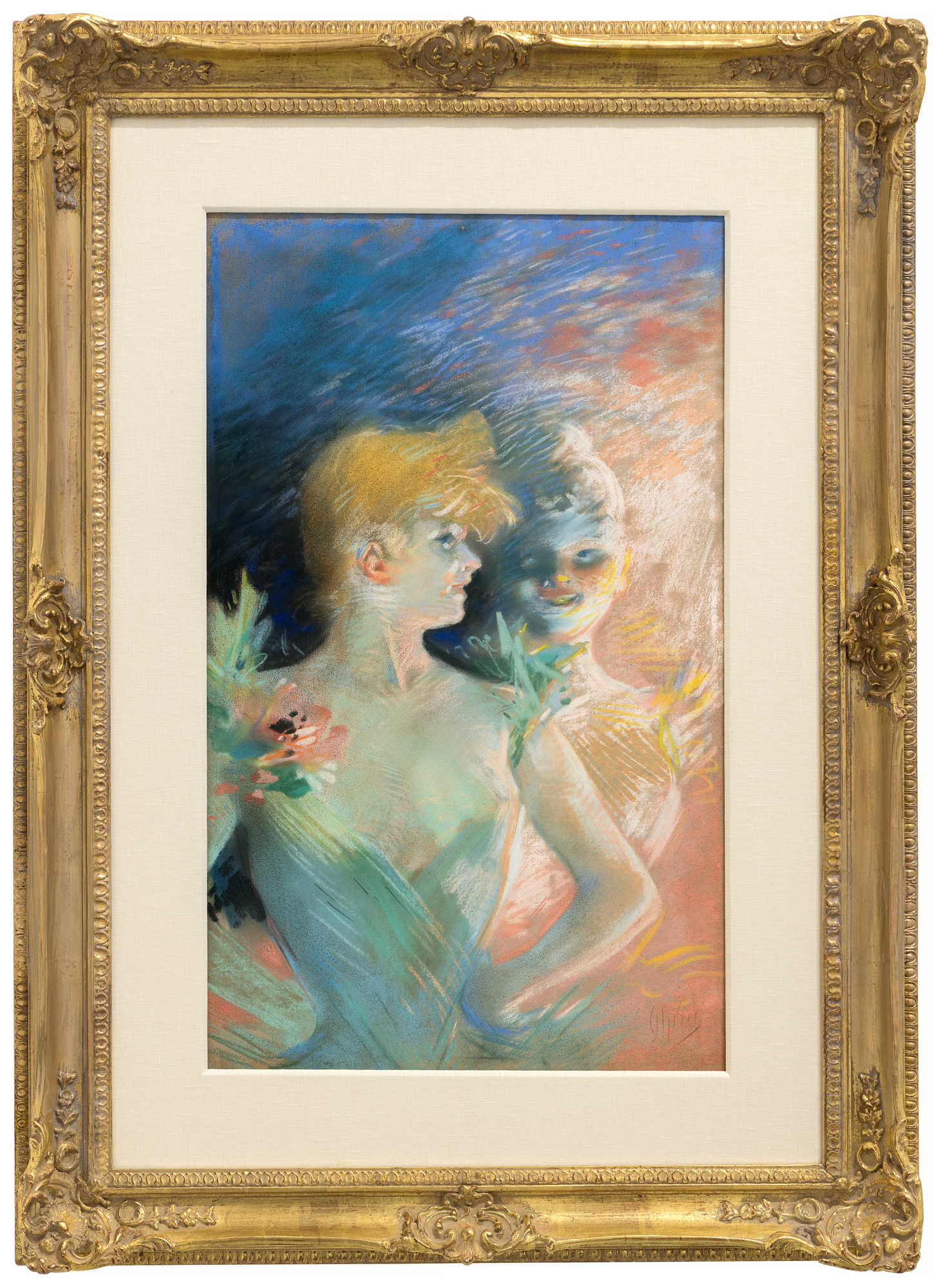
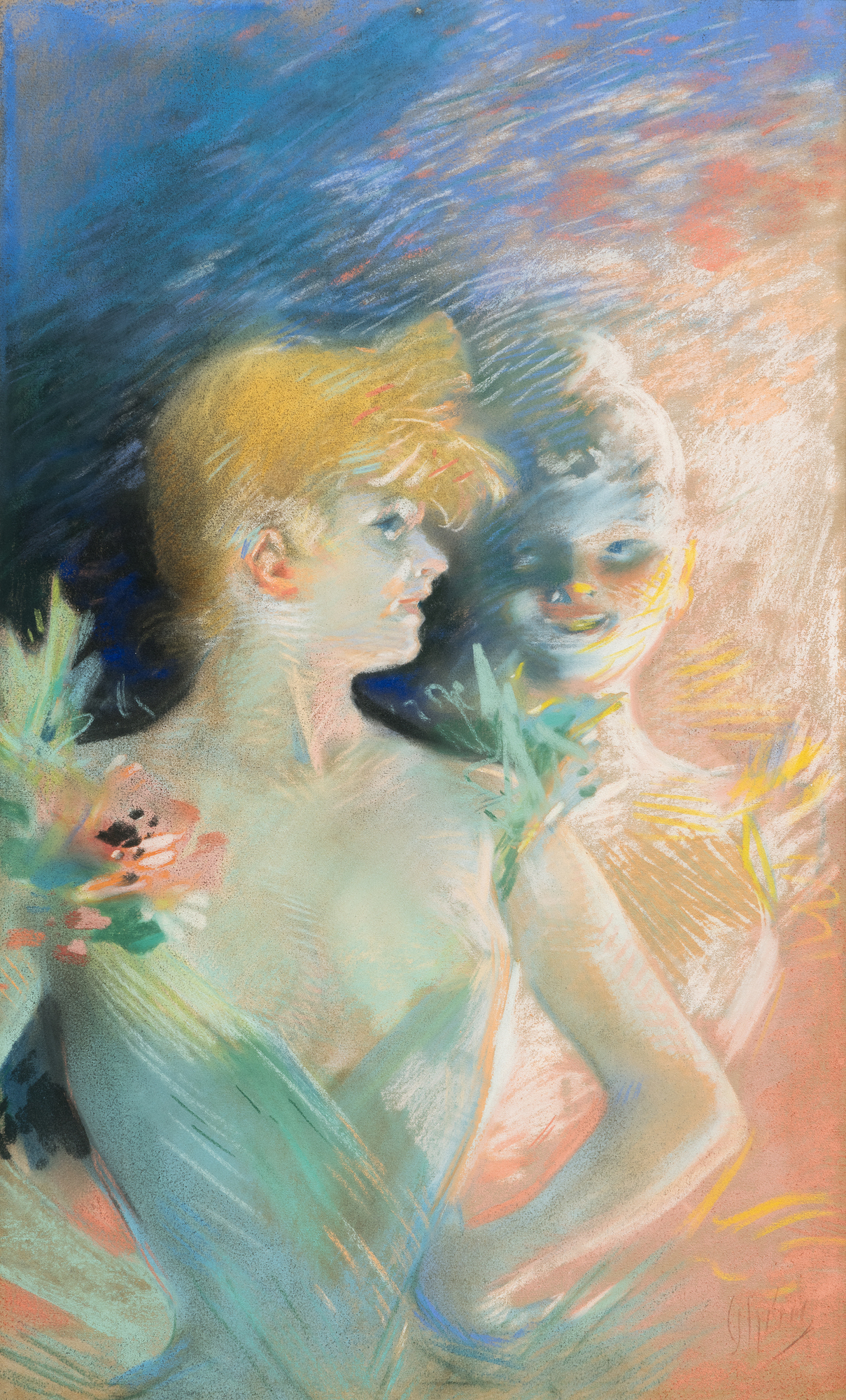
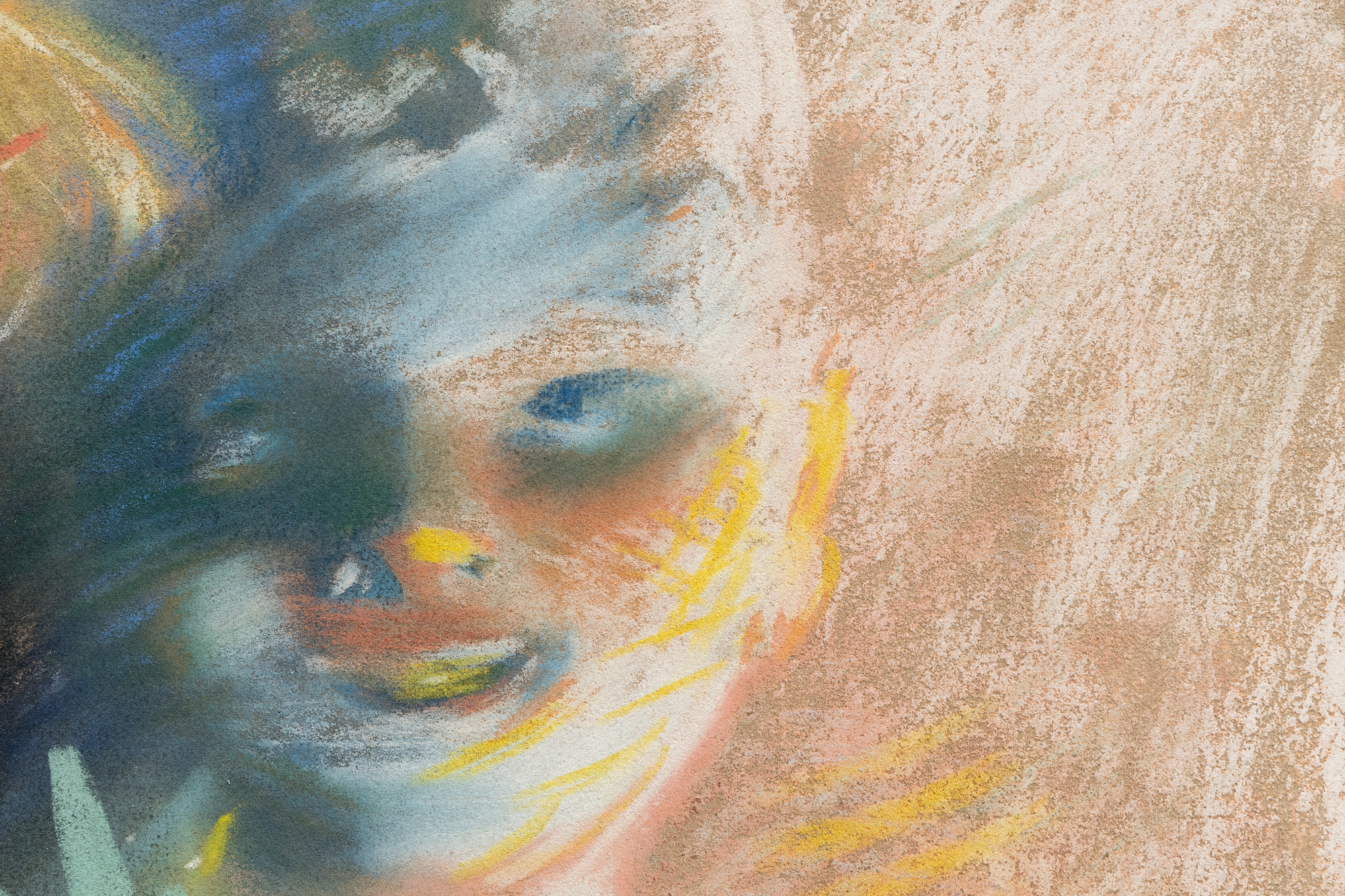
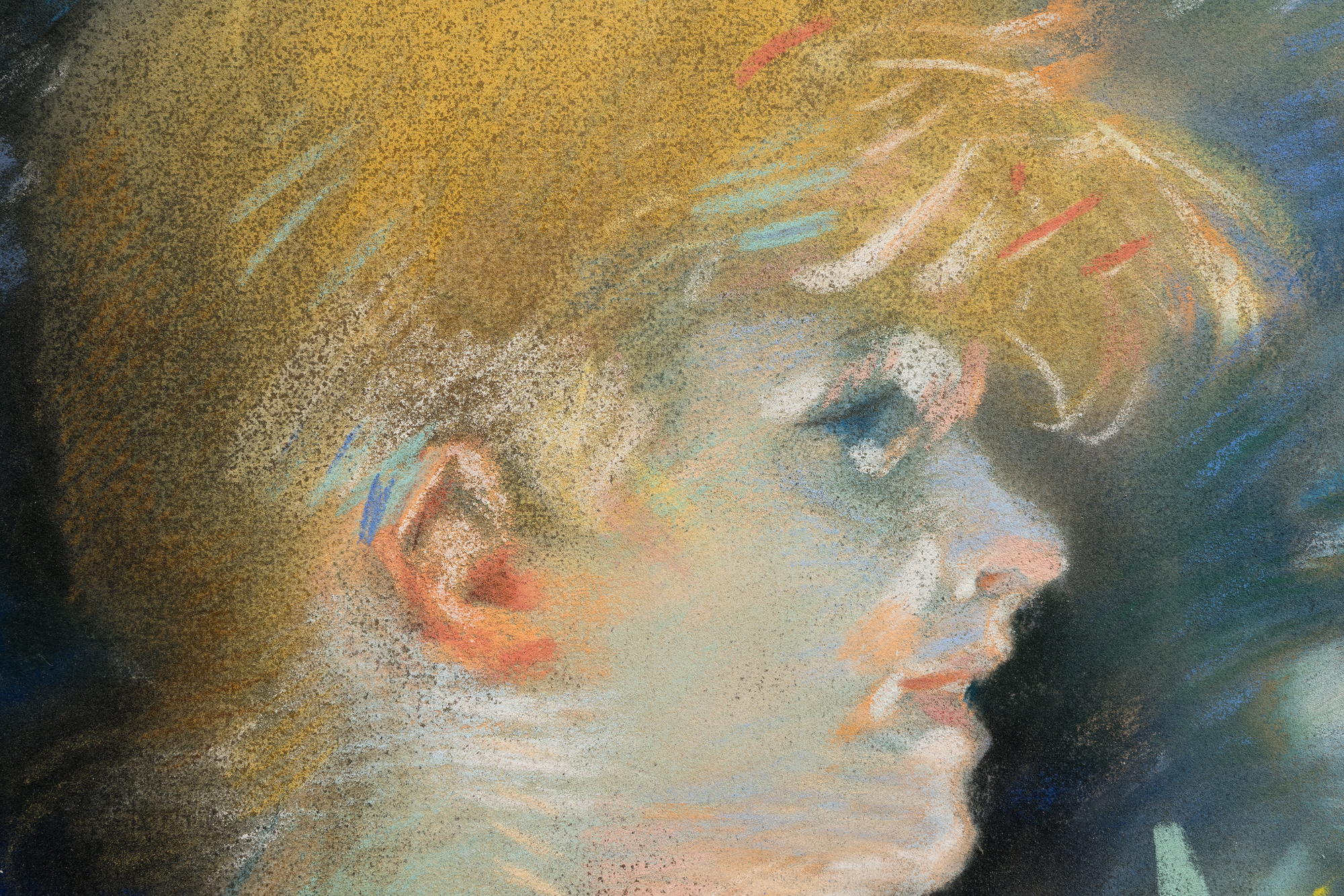
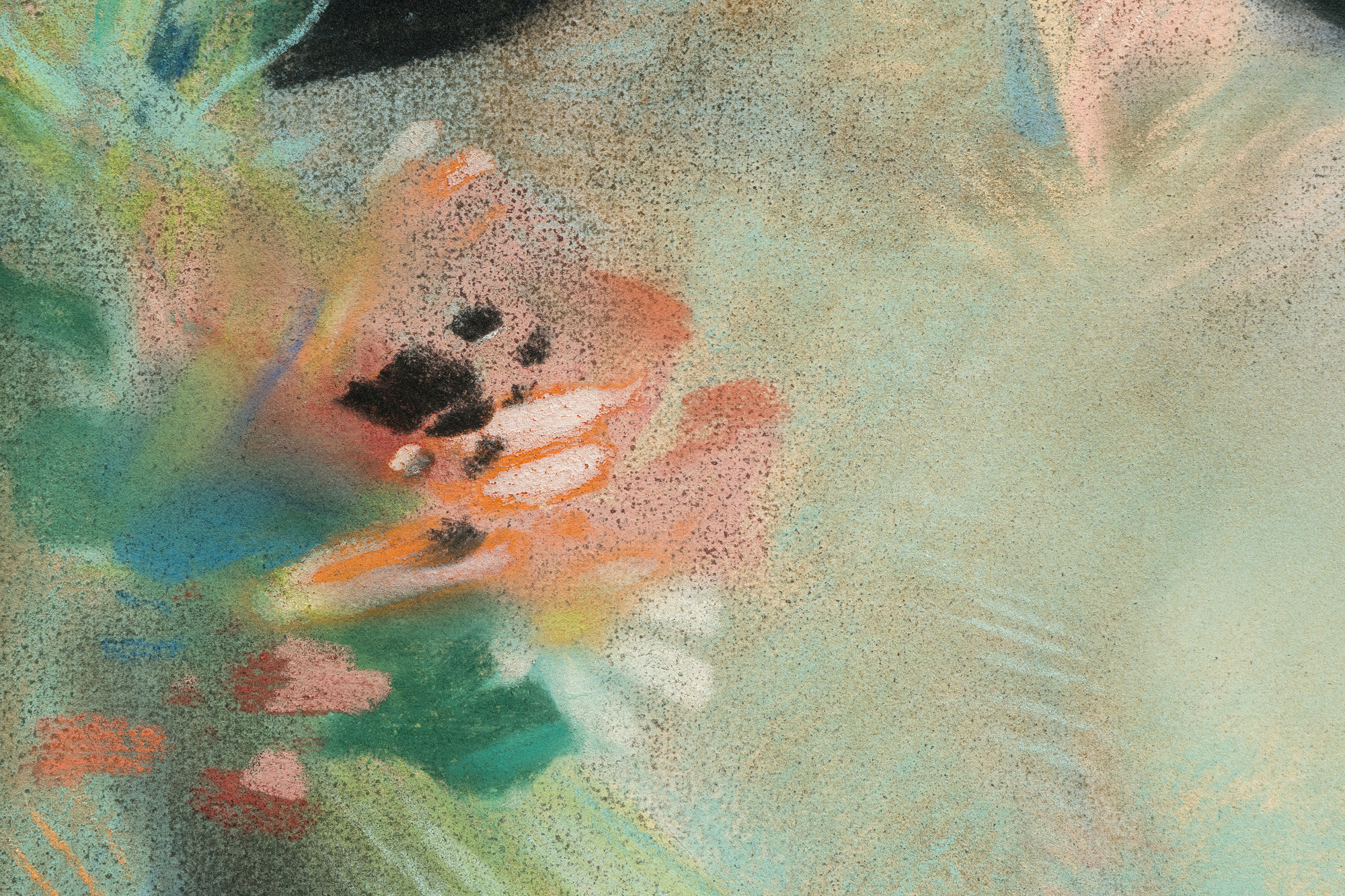
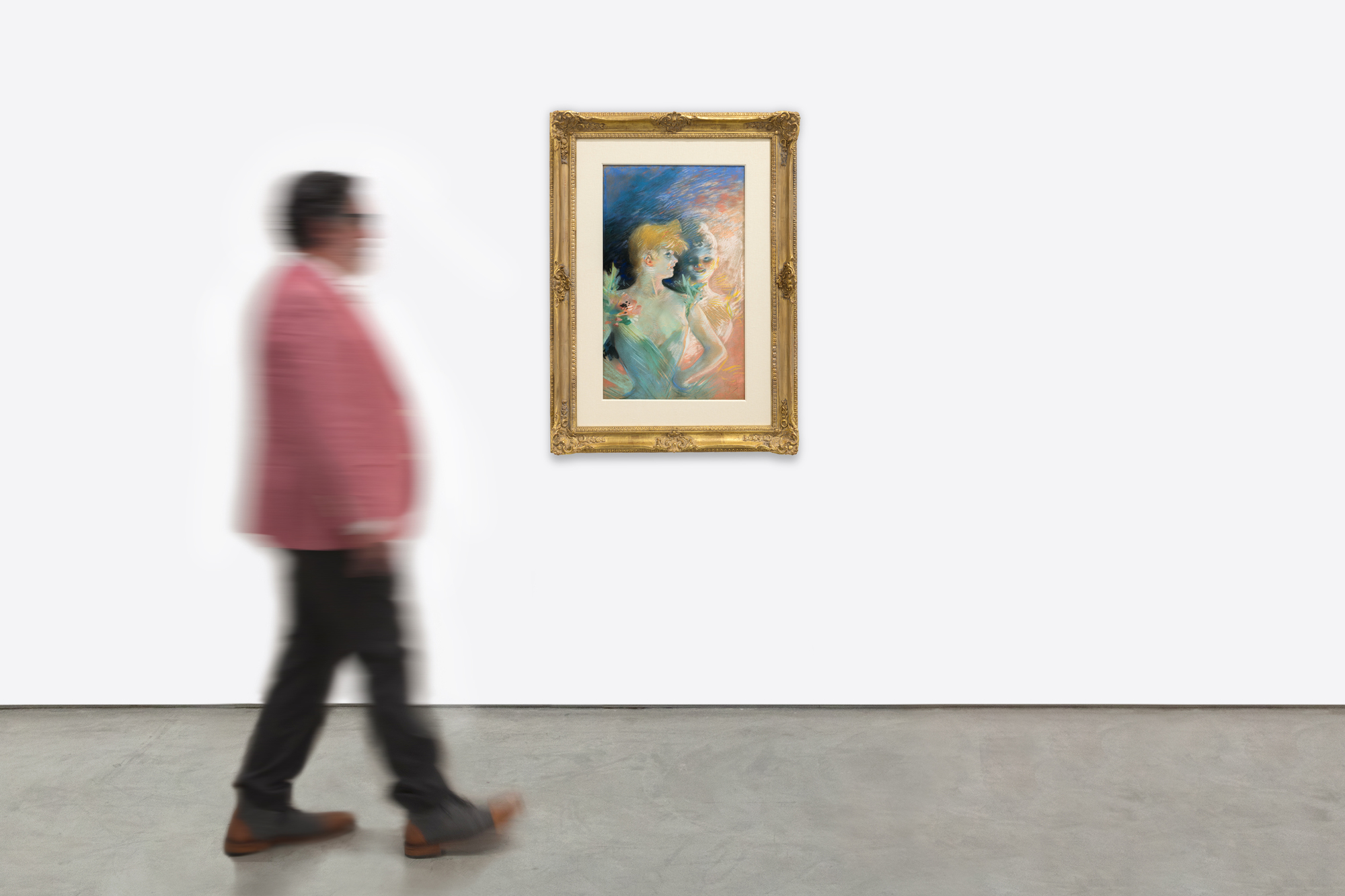
<div>Jules Chéret’s <em>Portrait</em> is a lively pastel chalk on canvas that reveals the painterly sensibility behind the artist best known as the master of Belle Époque poster art. In this composition, two female figures emerge from a whirlwind of color and light, their forms dissolving into strokes of turquoise, rose, and gold. The surface vibrates with movement, recalling the theatrical energy and fleeting glamour that defined fin-de-siècle Paris. Softly modeled yet animated by sweeping gestures, the figures seem caught mid-performance—at once intimate and exuberant. </div><br><br><div> </div><br><br><div>Though widely celebrated for his advertising posters, Chéret was deeply influenced by the Rococo masters, particularly Jean-Honoré Fragonard and Antoine Watteau. Their spirit of elegance, sensuality, and decorative flourish permeates this work, where lightness of touch and chromatic brilliance take precedence over strict realism. These same qualities made his vivid lithographic posters for the Eldorado, the Olympia, the Folies Bergère, the Théâtre de l’Opéra, the Alcazar d’Été, and the Moulin Rouge iconic emblems of Parisian modern life. </div><br><br><div> </div><br><br><div>Chéret’s success in poster design helped launch a new generation of artists, including Charles Gesmar and Henri de Toulouse-Lautrec, solidifying the poster as a legitimate artistic medium. While he achieved recognition as a painter, it was his advertising imagery—initially undertaken to earn a living but later pursued with conviction—that secured his legacy. Honored with a posthumous exhibition at the Salon d’Automne in 1933, Chéret’s works are now held in major institutions including The Museum of Modern Art, the Musée d’Orsay, the Hermitage Museum, and the Art Institute of Chicago, affirming his enduring place in the history of modern art. </div> <div>Jules Chéret’s <em>Portrait</em> is a lively pastel chalk on canvas that reveals the painterly sensibility behind the artist best known as the master of Belle Époque poster art. In this composition, two female figures emerge from a whirlwind of color and light, their forms dissolving into strokes of turquoise, rose, and gold. The surface vibrates with movement, recalling the theatrical energy and fleeting glamour that defined fin-de-siècle Paris. Softly modeled yet animated by sweeping gestures, the figures seem caught mid-performance—at once intimate and exuberant. </div><br><br><div> </div><br><br><div>Though widely celebrated for his advertising posters, Chéret was deeply influenced by the Rococo masters, particularly Jean-Honoré Fragonard and Antoine Watteau. Their spirit of elegance, sensuality, and decorative flourish permeates this work, where lightness of touch and chromatic brilliance take precedence over strict realism. These same qualities made his vivid lithographic posters for the Eldorado, the Olympia, the Folies Bergère, the Théâtre de l’Opéra, the Alcazar d’Été, and the Moulin Rouge iconic emblems of Parisian modern life. </div><br><br><div> </div><br><br><div>Chéret’s success in poster design helped launch a new generation of artists, including Charles Gesmar and Henri de Toulouse-Lautrec, solidifying the poster as a legitimate artistic medium. While he achieved recognition as a painter, it was his advertising imagery—initially undertaken to earn a living but later pursued with conviction—that secured his legacy. Honored with a posthumous exhibition at the Salon d’Automne in 1933, Chéret’s works are now held in major institutions including The Museum of Modern Art, the Musée d’Orsay, the Hermitage Museum, and the Art Institute of Chicago, affirming his enduring place in the history of modern art. </div> <div>Jules Chéret’s <em>Portrait</em> is a lively pastel chalk on canvas that reveals the painterly sensibility behind the artist best known as the master of Belle Époque poster art. In this composition, two female figures emerge from a whirlwind of color and light, their forms dissolving into strokes of turquoise, rose, and gold. The surface vibrates with movement, recalling the theatrical energy and fleeting glamour that defined fin-de-siècle Paris. Softly modeled yet animated by sweeping gestures, the figures seem caught mid-performance—at once intimate and exuberant. </div><br><br><div> </div><br><br><div>Though widely celebrated for his advertising posters, Chéret was deeply influenced by the Rococo masters, particularly Jean-Honoré Fragonard and Antoine Watteau. Their spirit of elegance, sensuality, and decorative flourish permeates this work, where lightness of touch and chromatic brilliance take precedence over strict realism. These same qualities made his vivid lithographic posters for the Eldorado, the Olympia, the Folies Bergère, the Théâtre de l’Opéra, the Alcazar d’Été, and the Moulin Rouge iconic emblems of Parisian modern life. </div><br><br><div> </div><br><br><div>Chéret’s success in poster design helped launch a new generation of artists, including Charles Gesmar and Henri de Toulouse-Lautrec, solidifying the poster as a legitimate artistic medium. While he achieved recognition as a painter, it was his advertising imagery—initially undertaken to earn a living but later pursued with conviction—that secured his legacy. Honored with a posthumous exhibition at the Salon d’Automne in 1933, Chéret’s works are now held in major institutions including The Museum of Modern Art, the Musée d’Orsay, the Hermitage Museum, and the Art Institute of Chicago, affirming his enduring place in the history of modern art. </div> <div>Jules Chéret’s <em>Portrait</em> is a lively pastel chalk on canvas that reveals the painterly sensibility behind the artist best known as the master of Belle Époque poster art. In this composition, two female figures emerge from a whirlwind of color and light, their forms dissolving into strokes of turquoise, rose, and gold. The surface vibrates with movement, recalling the theatrical energy and fleeting glamour that defined fin-de-siècle Paris. Softly modeled yet animated by sweeping gestures, the figures seem caught mid-performance—at once intimate and exuberant. </div><br><br><div> </div><br><br><div>Though widely celebrated for his advertising posters, Chéret was deeply influenced by the Rococo masters, particularly Jean-Honoré Fragonard and Antoine Watteau. Their spirit of elegance, sensuality, and decorative flourish permeates this work, where lightness of touch and chromatic brilliance take precedence over strict realism. These same qualities made his vivid lithographic posters for the Eldorado, the Olympia, the Folies Bergère, the Théâtre de l’Opéra, the Alcazar d’Été, and the Moulin Rouge iconic emblems of Parisian modern life. </div><br><br><div> </div><br><br><div>Chéret’s success in poster design helped launch a new generation of artists, including Charles Gesmar and Henri de Toulouse-Lautrec, solidifying the poster as a legitimate artistic medium. While he achieved recognition as a painter, it was his advertising imagery—initially undertaken to earn a living but later pursued with conviction—that secured his legacy. Honored with a posthumous exhibition at the Salon d’Automne in 1933, Chéret’s works are now held in major institutions including The Museum of Modern Art, the Musée d’Orsay, the Hermitage Museum, and the Art Institute of Chicago, affirming his enduring place in the history of modern art. </div> <div>Jules Chéret’s <em>Portrait</em> is a lively pastel chalk on canvas that reveals the painterly sensibility behind the artist best known as the master of Belle Époque poster art. In this composition, two female figures emerge from a whirlwind of color and light, their forms dissolving into strokes of turquoise, rose, and gold. The surface vibrates with movement, recalling the theatrical energy and fleeting glamour that defined fin-de-siècle Paris. Softly modeled yet animated by sweeping gestures, the figures seem caught mid-performance—at once intimate and exuberant. </div><br><br><div> </div><br><br><div>Though widely celebrated for his advertising posters, Chéret was deeply influenced by the Rococo masters, particularly Jean-Honoré Fragonard and Antoine Watteau. Their spirit of elegance, sensuality, and decorative flourish permeates this work, where lightness of touch and chromatic brilliance take precedence over strict realism. These same qualities made his vivid lithographic posters for the Eldorado, the Olympia, the Folies Bergère, the Théâtre de l’Opéra, the Alcazar d’Été, and the Moulin Rouge iconic emblems of Parisian modern life. </div><br><br><div> </div><br><br><div>Chéret’s success in poster design helped launch a new generation of artists, including Charles Gesmar and Henri de Toulouse-Lautrec, solidifying the poster as a legitimate artistic medium. While he achieved recognition as a painter, it was his advertising imagery—initially undertaken to earn a living but later pursued with conviction—that secured his legacy. Honored with a posthumous exhibition at the Salon d’Automne in 1933, Chéret’s works are now held in major institutions including The Museum of Modern Art, the Musée d’Orsay, the Hermitage Museum, and the Art Institute of Chicago, affirming his enduring place in the history of modern art. </div> <div>Jules Chéret’s <em>Portrait</em> is a lively pastel chalk on canvas that reveals the painterly sensibility behind the artist best known as the master of Belle Époque poster art. In this composition, two female figures emerge from a whirlwind of color and light, their forms dissolving into strokes of turquoise, rose, and gold. The surface vibrates with movement, recalling the theatrical energy and fleeting glamour that defined fin-de-siècle Paris. Softly modeled yet animated by sweeping gestures, the figures seem caught mid-performance—at once intimate and exuberant. </div><br><br><div> </div><br><br><div>Though widely celebrated for his advertising posters, Chéret was deeply influenced by the Rococo masters, particularly Jean-Honoré Fragonard and Antoine Watteau. Their spirit of elegance, sensuality, and decorative flourish permeates this work, where lightness of touch and chromatic brilliance take precedence over strict realism. These same qualities made his vivid lithographic posters for the Eldorado, the Olympia, the Folies Bergère, the Théâtre de l’Opéra, the Alcazar d’Été, and the Moulin Rouge iconic emblems of Parisian modern life. </div><br><br><div> </div><br><br><div>Chéret’s success in poster design helped launch a new generation of artists, including Charles Gesmar and Henri de Toulouse-Lautrec, solidifying the poster as a legitimate artistic medium. While he achieved recognition as a painter, it was his advertising imagery—initially undertaken to earn a living but later pursued with conviction—that secured his legacy. Honored with a posthumous exhibition at the Salon d’Automne in 1933, Chéret’s works are now held in major institutions including The Museum of Modern Art, the Musée d’Orsay, the Hermitage Museum, and the Art Institute of Chicago, affirming his enduring place in the history of modern art. </div> <div>Jules Chéret’s <em>Portrait</em> is a lively pastel chalk on canvas that reveals the painterly sensibility behind the artist best known as the master of Belle Époque poster art. In this composition, two female figures emerge from a whirlwind of color and light, their forms dissolving into strokes of turquoise, rose, and gold. The surface vibrates with movement, recalling the theatrical energy and fleeting glamour that defined fin-de-siècle Paris. Softly modeled yet animated by sweeping gestures, the figures seem caught mid-performance—at once intimate and exuberant. </div><br><br><div> </div><br><br><div>Though widely celebrated for his advertising posters, Chéret was deeply influenced by the Rococo masters, particularly Jean-Honoré Fragonard and Antoine Watteau. Their spirit of elegance, sensuality, and decorative flourish permeates this work, where lightness of touch and chromatic brilliance take precedence over strict realism. These same qualities made his vivid lithographic posters for the Eldorado, the Olympia, the Folies Bergère, the Théâtre de l’Opéra, the Alcazar d’Été, and the Moulin Rouge iconic emblems of Parisian modern life. </div><br><br><div> </div><br><br><div>Chéret’s success in poster design helped launch a new generation of artists, including Charles Gesmar and Henri de Toulouse-Lautrec, solidifying the poster as a legitimate artistic medium. While he achieved recognition as a painter, it was his advertising imagery—initially undertaken to earn a living but later pursued with conviction—that secured his legacy. Honored with a posthumous exhibition at the Salon d’Automne in 1933, Chéret’s works are now held in major institutions including The Museum of Modern Art, the Musée d’Orsay, the Hermitage Museum, and the Art Institute of Chicago, affirming his enduring place in the history of modern art. </div> <div>Jules Chéret’s <em>Portrait</em> is a lively pastel chalk on canvas that reveals the painterly sensibility behind the artist best known as the master of Belle Époque poster art. In this composition, two female figures emerge from a whirlwind of color and light, their forms dissolving into strokes of turquoise, rose, and gold. The surface vibrates with movement, recalling the theatrical energy and fleeting glamour that defined fin-de-siècle Paris. Softly modeled yet animated by sweeping gestures, the figures seem caught mid-performance—at once intimate and exuberant. </div><br><br><div> </div><br><br><div>Though widely celebrated for his advertising posters, Chéret was deeply influenced by the Rococo masters, particularly Jean-Honoré Fragonard and Antoine Watteau. Their spirit of elegance, sensuality, and decorative flourish permeates this work, where lightness of touch and chromatic brilliance take precedence over strict realism. These same qualities made his vivid lithographic posters for the Eldorado, the Olympia, the Folies Bergère, the Théâtre de l’Opéra, the Alcazar d’Été, and the Moulin Rouge iconic emblems of Parisian modern life. </div><br><br><div> </div><br><br><div>Chéret’s success in poster design helped launch a new generation of artists, including Charles Gesmar and Henri de Toulouse-Lautrec, solidifying the poster as a legitimate artistic medium. While he achieved recognition as a painter, it was his advertising imagery—initially undertaken to earn a living but later pursued with conviction—that secured his legacy. Honored with a posthumous exhibition at the Salon d’Automne in 1933, Chéret’s works are now held in major institutions including The Museum of Modern Art, the Musée d’Orsay, the Hermitage Museum, and the Art Institute of Chicago, affirming his enduring place in the history of modern art. </div> <div>Jules Chéret’s <em>Portrait</em> is a lively pastel chalk on canvas that reveals the painterly sensibility behind the artist best known as the master of Belle Époque poster art. In this composition, two female figures emerge from a whirlwind of color and light, their forms dissolving into strokes of turquoise, rose, and gold. The surface vibrates with movement, recalling the theatrical energy and fleeting glamour that defined fin-de-siècle Paris. Softly modeled yet animated by sweeping gestures, the figures seem caught mid-performance—at once intimate and exuberant. </div><br><br><div> </div><br><br><div>Though widely celebrated for his advertising posters, Chéret was deeply influenced by the Rococo masters, particularly Jean-Honoré Fragonard and Antoine Watteau. Their spirit of elegance, sensuality, and decorative flourish permeates this work, where lightness of touch and chromatic brilliance take precedence over strict realism. These same qualities made his vivid lithographic posters for the Eldorado, the Olympia, the Folies Bergère, the Théâtre de l’Opéra, the Alcazar d’Été, and the Moulin Rouge iconic emblems of Parisian modern life. </div><br><br><div> </div><br><br><div>Chéret’s success in poster design helped launch a new generation of artists, including Charles Gesmar and Henri de Toulouse-Lautrec, solidifying the poster as a legitimate artistic medium. While he achieved recognition as a painter, it was his advertising imagery—initially undertaken to earn a living but later pursued with conviction—that secured his legacy. Honored with a posthumous exhibition at the Salon d’Automne in 1933, Chéret’s works are now held in major institutions including The Museum of Modern Art, the Musée d’Orsay, the Hermitage Museum, and the Art Institute of Chicago, affirming his enduring place in the history of modern art. </div> <div>Jules Chéret’s <em>Portrait</em> is a lively pastel chalk on canvas that reveals the painterly sensibility behind the artist best known as the master of Belle Époque poster art. In this composition, two female figures emerge from a whirlwind of color and light, their forms dissolving into strokes of turquoise, rose, and gold. The surface vibrates with movement, recalling the theatrical energy and fleeting glamour that defined fin-de-siècle Paris. Softly modeled yet animated by sweeping gestures, the figures seem caught mid-performance—at once intimate and exuberant. </div><br><br><div> </div><br><br><div>Though widely celebrated for his advertising posters, Chéret was deeply influenced by the Rococo masters, particularly Jean-Honoré Fragonard and Antoine Watteau. Their spirit of elegance, sensuality, and decorative flourish permeates this work, where lightness of touch and chromatic brilliance take precedence over strict realism. These same qualities made his vivid lithographic posters for the Eldorado, the Olympia, the Folies Bergère, the Théâtre de l’Opéra, the Alcazar d’Été, and the Moulin Rouge iconic emblems of Parisian modern life. </div><br><br><div> </div><br><br><div>Chéret’s success in poster design helped launch a new generation of artists, including Charles Gesmar and Henri de Toulouse-Lautrec, solidifying the poster as a legitimate artistic medium. While he achieved recognition as a painter, it was his advertising imagery—initially undertaken to earn a living but later pursued with conviction—that secured his legacy. Honored with a posthumous exhibition at the Salon d’Automne in 1933, Chéret’s works are now held in major institutions including The Museum of Modern Art, the Musée d’Orsay, the Hermitage Museum, and the Art Institute of Chicago, affirming his enduring place in the history of modern art. </div>
صورةأواخر القرن التاسع عشر30 1/2 × 18 1/2 بوصة(77.47 × 46.99 سم) طباشير باستيل على قماش
الاصل
Swiss Property
Germann Auktionshaus AG، زيورخ، 23 يونيو 2025، القطعة 00027
مجموعة خاصة، تم شراؤها في المزاد المذكور أعلاه
معرض
جنيف، سويسرا، Petit Palais de Genève، Trésors du Petit Palais de Genève، 18 مايو - 23 أغسطس 1983، انتقلت إلى أوساكا أوميدا، طوكيو، فوكوشيما، سابورو، هاكاتا
روتردام، هولندا، Kunsthal Rotterdam، Schilders van Parijs Van Renoir tot Picasso - Verzameling Oscar Ghez، 2 أكتوبر 2004 - 3 أبريل 2005
لوحة "بورتريه" لجول شيريه هي لوحة نابضة بالحياة مرسومة بالطباشير الباستيل على قماش، تكشف عن الحساسية الفنية للفنان المعروف باعتباره سيد فن الملصقات في عصر البيل إيبوك. في هذه اللوحة، تظهر شخصيتان نسائيتان من دوامة من الألوان والضوء، وتتلاشى أشكالهما في ضربات من اللون الفيروزي والوردي والذهبي. تهتز السطح بالحركة، مستذكرة الطاقة المسرحية والروعة العابرة التي ميزت باريس في نهاية القرن. تبدو الشخصيتان، اللتان تم نحتهما برفق ولكنهما متحركتان بفضل حركاتهما الواسعة، وكأنهما تم التقاطهما في منتصف أدائهما، في صورة حميمة وحيوية في آن واحد.


على الرغم من شهرة شيريه الواسعة بفضل ملصقاته الإعلانية، إلا أنه تأثر بشدة بأساتذة الروكوكو، ولا سيما جان أونوريه فراغونارد وأنطوان واتو. يتخلل روح الأناقة والحسية والزخرفة هذه العمل، حيث تتفوق خفة اللمسة واللمعان اللوني على الواقعية الصارمة. هذه الصفات نفسها جعلت ملصقاته الليثوغرافية الزاهية لـ Eldorado و Olympia و Folies Bergère و Théâtre de l’Opéra و Alcazar d’Été و Moulin Rouge رموزًا أيقونية للحياة الباريسية الحديثة.


ساعد نجاح شيريه في تصميم الملصقات على إطلاق جيل جديد من الفنانين، بما في ذلك تشارلز جيسمار وهنري دي تولوز-لوتريك، مما عزز مكانة الملصق كوسيلة فنية شرعية. على الرغم من أنه حقق شهرة كرسام، إلا أن صوره الإعلانية - التي بدأها في البداية لكسب رزقه ولكنه تابعها لاحقًا بقناعة - هي التي ضمنت له إرثه. تم تكريم شيريه بمعرض بعد وفاته في صالون الخريف في عام 1933، وتُحفظ أعماله الآن في مؤسسات كبرى، بما في ذلك متحف الفن الحديث ومتحف أورسيه ومتحف الإرميتاج ومعهد شيكاغو للفنون، مما يؤكد مكانته الدائمة في تاريخ الفن الحديث.
الاستفسار