مارينو ماريني & nbsp(1901-1980)

$55,000
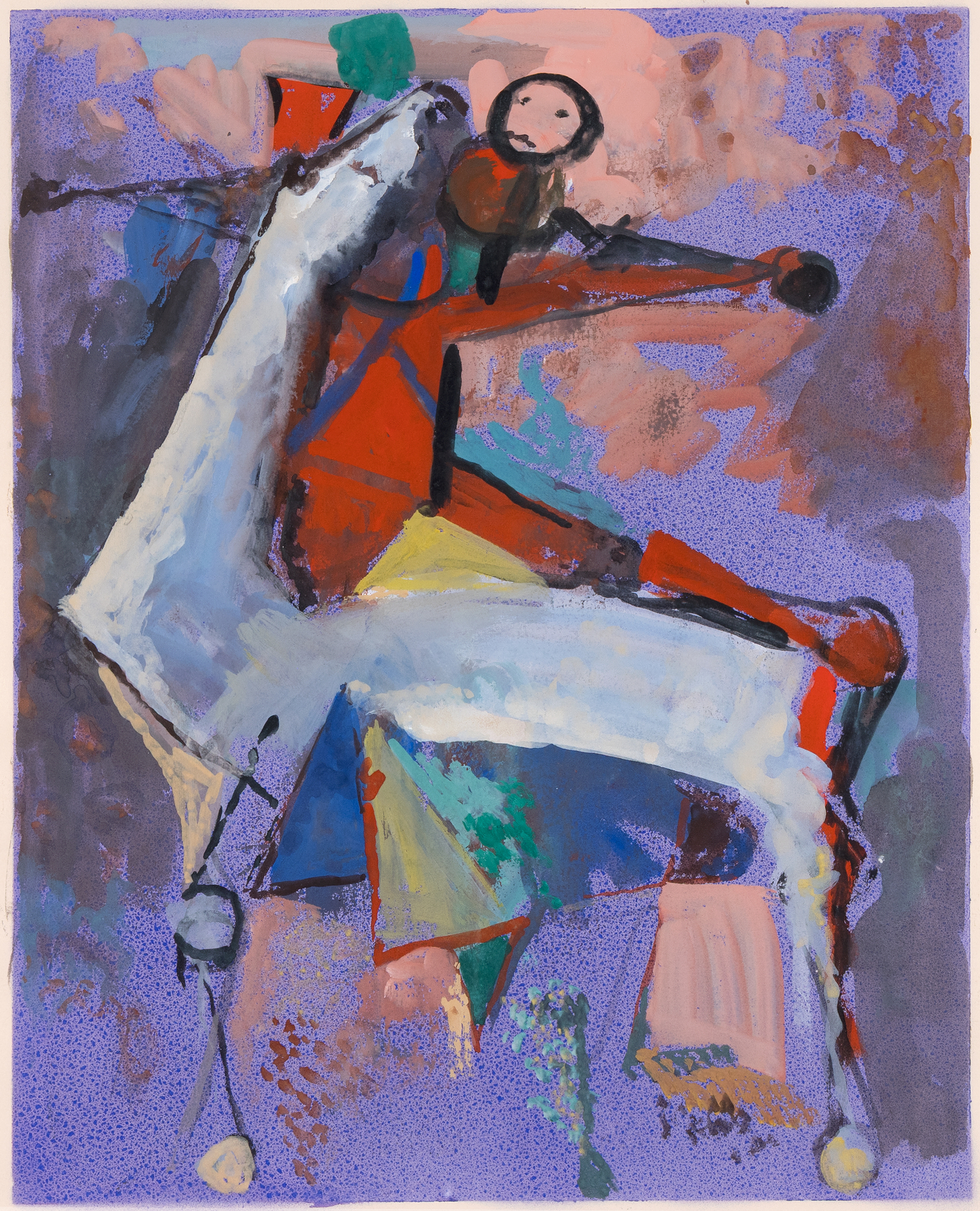
 
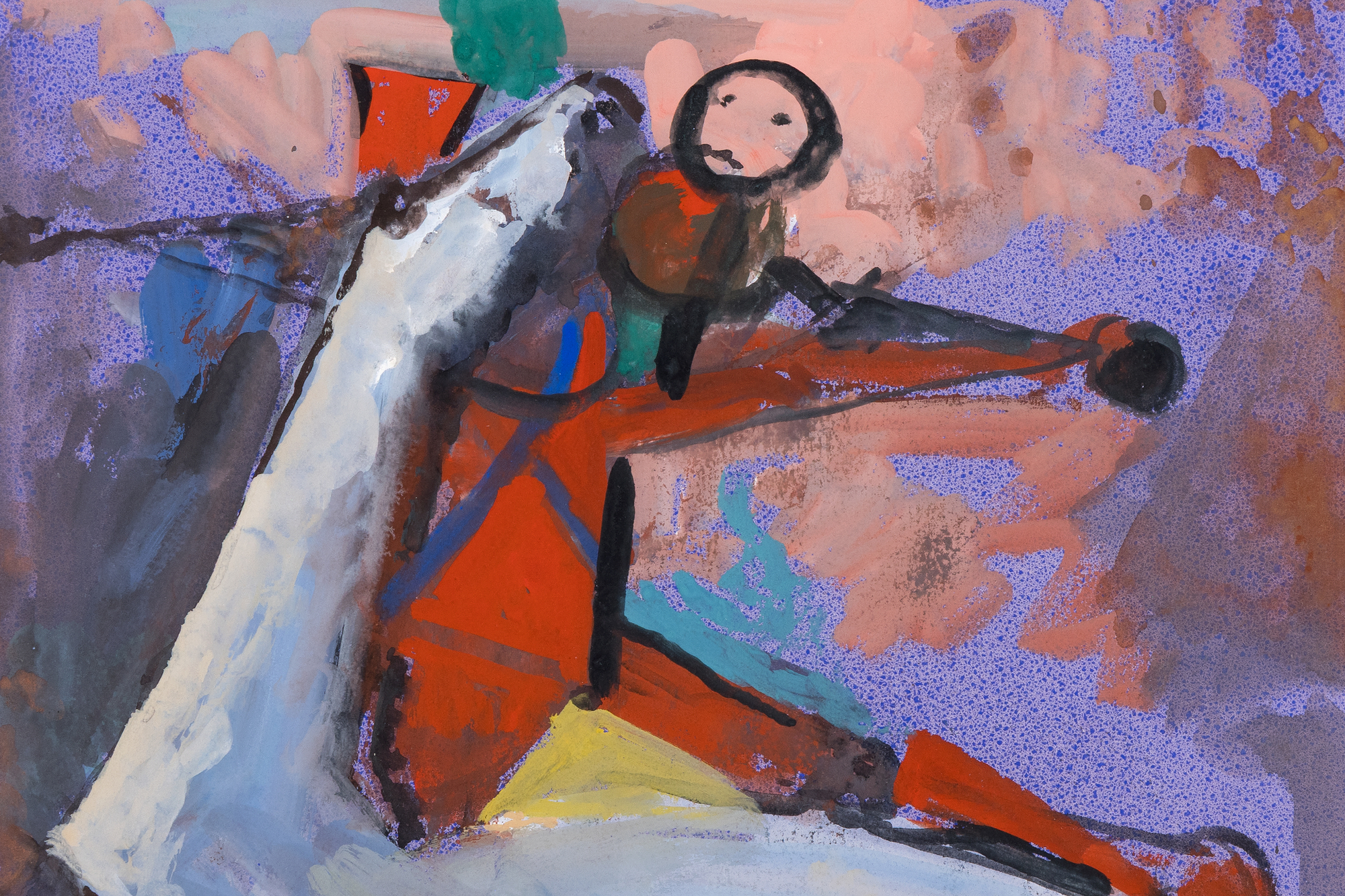
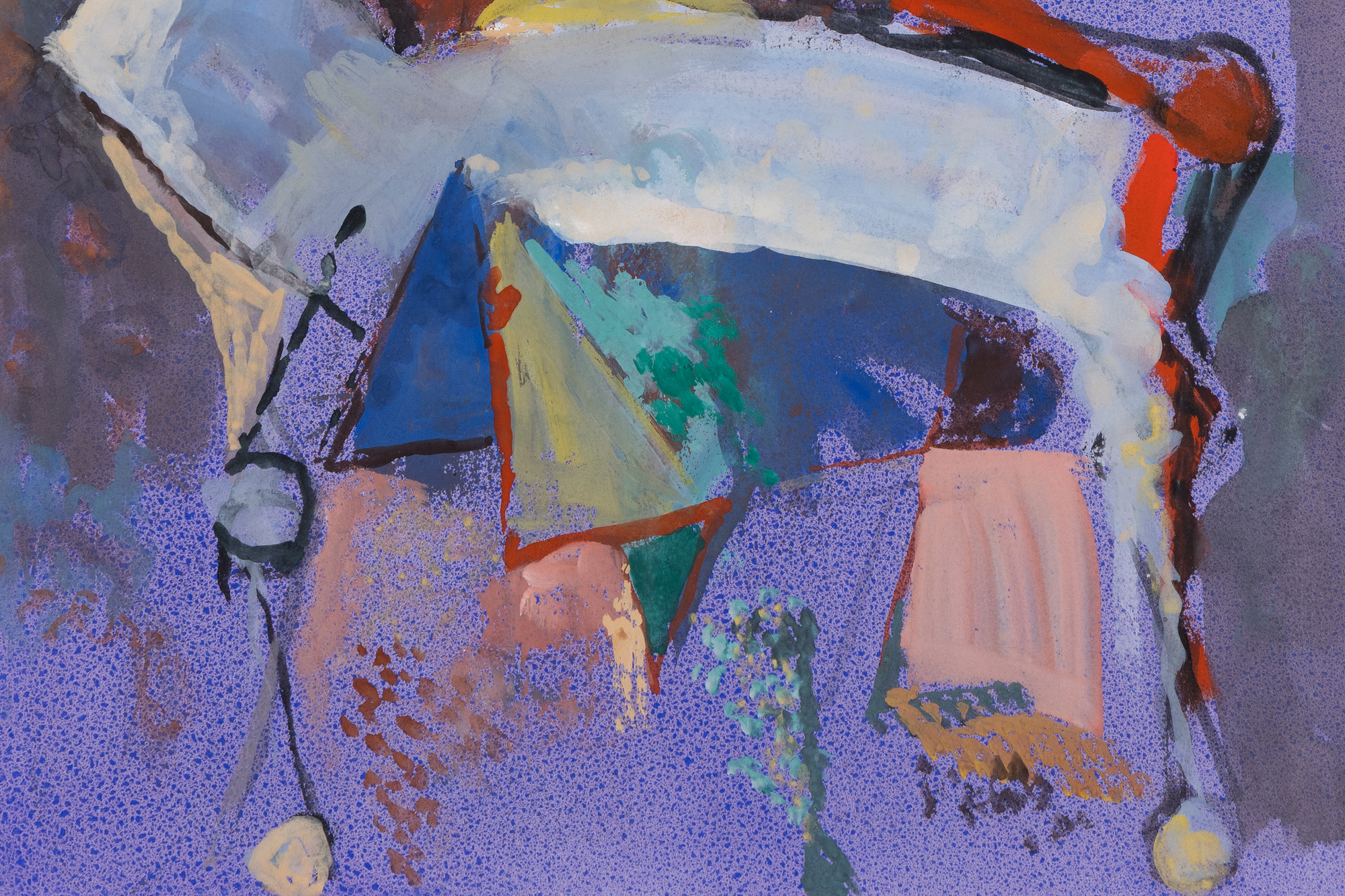
<div>Marino Marini’s <em>Marino from Shakespeare I</em> (1977) is a vivid and psychologically charged work on paper, executed in tempera over aquatint and drawn from the artist’s celebrated Marino from Shakespeare portfolio. In this variation, the equestrian figure is pushed to the foreground, its white, angular horse rearing across the composition with a sense of precarious motion. The rider is pared down to a mask-like head and simplified body, a formal reduction that places the figure in a state of fragile balance between control and collapse. </div><br><br><div> </div><br><br><div>The chromatic structure is bold and instinctive. Fields of violet, coral, and blue form a textured ground, against which the stark white of the horse and the warm reds and oranges of the rider assert themselves with dramatic clarity. Marini’s use of tempera over aquatint allows him to combine tonal depth with painterly immediacy: granular passages of aquatint dissolve into expressive sweeps of color, while linear accents stabilize the composition just enough to prevent it from tipping into chaos. </div><br><br><div> </div><br><br><div>As in many of his most significant works, the equestrian motif functions symbolically rather than narratively. Though inspired in spirit by Shakespeare, the image does not illustrate a specific text, instead channeling the emotional intensity and existential unease associated with tragic drama. Marini famously described his horse-and-rider figures as expressions of modern anxiety, stating, “My equestrian figures are symbols of the anguish that I feel when I survey contemporary events.” Here, that anguish is palpable in the strained geometry, unstable balance, and urgent movement of the forms. The print stands as a compelling demonstration of Marini’s ability to translate his sculptural language into graphic form, using color and gesture to confront the fragility of human authority and control. </div> <div>Marino Marini’s <em>Marino from Shakespeare I</em> (1977) is a vivid and psychologically charged work on paper, executed in tempera over aquatint and drawn from the artist’s celebrated Marino from Shakespeare portfolio. In this variation, the equestrian figure is pushed to the foreground, its white, angular horse rearing across the composition with a sense of precarious motion. The rider is pared down to a mask-like head and simplified body, a formal reduction that places the figure in a state of fragile balance between control and collapse. </div><br><br><div> </div><br><br><div>The chromatic structure is bold and instinctive. Fields of violet, coral, and blue form a textured ground, against which the stark white of the horse and the warm reds and oranges of the rider assert themselves with dramatic clarity. Marini’s use of tempera over aquatint allows him to combine tonal depth with painterly immediacy: granular passages of aquatint dissolve into expressive sweeps of color, while linear accents stabilize the composition just enough to prevent it from tipping into chaos. </div><br><br><div> </div><br><br><div>As in many of his most significant works, the equestrian motif functions symbolically rather than narratively. Though inspired in spirit by Shakespeare, the image does not illustrate a specific text, instead channeling the emotional intensity and existential unease associated with tragic drama. Marini famously described his horse-and-rider figures as expressions of modern anxiety, stating, “My equestrian figures are symbols of the anguish that I feel when I survey contemporary events.” Here, that anguish is palpable in the strained geometry, unstable balance, and urgent movement of the forms. The print stands as a compelling demonstration of Marini’s ability to translate his sculptural language into graphic form, using color and gesture to confront the fragility of human authority and control. </div> <div>Marino Marini’s <em>Marino from Shakespeare I</em> (1977) is a vivid and psychologically charged work on paper, executed in tempera over aquatint and drawn from the artist’s celebrated Marino from Shakespeare portfolio. In this variation, the equestrian figure is pushed to the foreground, its white, angular horse rearing across the composition with a sense of precarious motion. The rider is pared down to a mask-like head and simplified body, a formal reduction that places the figure in a state of fragile balance between control and collapse. </div><br><br><div> </div><br><br><div>The chromatic structure is bold and instinctive. Fields of violet, coral, and blue form a textured ground, against which the stark white of the horse and the warm reds and oranges of the rider assert themselves with dramatic clarity. Marini’s use of tempera over aquatint allows him to combine tonal depth with painterly immediacy: granular passages of aquatint dissolve into expressive sweeps of color, while linear accents stabilize the composition just enough to prevent it from tipping into chaos. </div><br><br><div> </div><br><br><div>As in many of his most significant works, the equestrian motif functions symbolically rather than narratively. Though inspired in spirit by Shakespeare, the image does not illustrate a specific text, instead channeling the emotional intensity and existential unease associated with tragic drama. Marini famously described his horse-and-rider figures as expressions of modern anxiety, stating, “My equestrian figures are symbols of the anguish that I feel when I survey contemporary events.” Here, that anguish is palpable in the strained geometry, unstable balance, and urgent movement of the forms. The print stands as a compelling demonstration of Marini’s ability to translate his sculptural language into graphic form, using color and gesture to confront the fragility of human authority and control. </div> <div>Marino Marini’s <em>Marino from Shakespeare I</em> (1977) is a vivid and psychologically charged work on paper, executed in tempera over aquatint and drawn from the artist’s celebrated Marino from Shakespeare portfolio. In this variation, the equestrian figure is pushed to the foreground, its white, angular horse rearing across the composition with a sense of precarious motion. The rider is pared down to a mask-like head and simplified body, a formal reduction that places the figure in a state of fragile balance between control and collapse. </div><br><br><div> </div><br><br><div>The chromatic structure is bold and instinctive. Fields of violet, coral, and blue form a textured ground, against which the stark white of the horse and the warm reds and oranges of the rider assert themselves with dramatic clarity. Marini’s use of tempera over aquatint allows him to combine tonal depth with painterly immediacy: granular passages of aquatint dissolve into expressive sweeps of color, while linear accents stabilize the composition just enough to prevent it from tipping into chaos. </div><br><br><div> </div><br><br><div>As in many of his most significant works, the equestrian motif functions symbolically rather than narratively. Though inspired in spirit by Shakespeare, the image does not illustrate a specific text, instead channeling the emotional intensity and existential unease associated with tragic drama. Marini famously described his horse-and-rider figures as expressions of modern anxiety, stating, “My equestrian figures are symbols of the anguish that I feel when I survey contemporary events.” Here, that anguish is palpable in the strained geometry, unstable balance, and urgent movement of the forms. The print stands as a compelling demonstration of Marini’s ability to translate his sculptural language into graphic form, using color and gesture to confront the fragility of human authority and control. </div> <div>Marino Marini’s <em>Marino from Shakespeare I</em> (1977) is a vivid and psychologically charged work on paper, executed in tempera over aquatint and drawn from the artist’s celebrated Marino from Shakespeare portfolio. In this variation, the equestrian figure is pushed to the foreground, its white, angular horse rearing across the composition with a sense of precarious motion. The rider is pared down to a mask-like head and simplified body, a formal reduction that places the figure in a state of fragile balance between control and collapse. </div><br><br><div> </div><br><br><div>The chromatic structure is bold and instinctive. Fields of violet, coral, and blue form a textured ground, against which the stark white of the horse and the warm reds and oranges of the rider assert themselves with dramatic clarity. Marini’s use of tempera over aquatint allows him to combine tonal depth with painterly immediacy: granular passages of aquatint dissolve into expressive sweeps of color, while linear accents stabilize the composition just enough to prevent it from tipping into chaos. </div><br><br><div> </div><br><br><div>As in many of his most significant works, the equestrian motif functions symbolically rather than narratively. Though inspired in spirit by Shakespeare, the image does not illustrate a specific text, instead channeling the emotional intensity and existential unease associated with tragic drama. Marini famously described his horse-and-rider figures as expressions of modern anxiety, stating, “My equestrian figures are symbols of the anguish that I feel when I survey contemporary events.” Here, that anguish is palpable in the strained geometry, unstable balance, and urgent movement of the forms. The print stands as a compelling demonstration of Marini’s ability to translate his sculptural language into graphic form, using color and gesture to confront the fragility of human authority and control. </div> <div>Marino Marini’s <em>Marino from Shakespeare I</em> (1977) is a vivid and psychologically charged work on paper, executed in tempera over aquatint and drawn from the artist’s celebrated Marino from Shakespeare portfolio. In this variation, the equestrian figure is pushed to the foreground, its white, angular horse rearing across the composition with a sense of precarious motion. The rider is pared down to a mask-like head and simplified body, a formal reduction that places the figure in a state of fragile balance between control and collapse. </div><br><br><div> </div><br><br><div>The chromatic structure is bold and instinctive. Fields of violet, coral, and blue form a textured ground, against which the stark white of the horse and the warm reds and oranges of the rider assert themselves with dramatic clarity. Marini’s use of tempera over aquatint allows him to combine tonal depth with painterly immediacy: granular passages of aquatint dissolve into expressive sweeps of color, while linear accents stabilize the composition just enough to prevent it from tipping into chaos. </div><br><br><div> </div><br><br><div>As in many of his most significant works, the equestrian motif functions symbolically rather than narratively. Though inspired in spirit by Shakespeare, the image does not illustrate a specific text, instead channeling the emotional intensity and existential unease associated with tragic drama. Marini famously described his horse-and-rider figures as expressions of modern anxiety, stating, “My equestrian figures are symbols of the anguish that I feel when I survey contemporary events.” Here, that anguish is palpable in the strained geometry, unstable balance, and urgent movement of the forms. The print stands as a compelling demonstration of Marini’s ability to translate his sculptural language into graphic form, using color and gesture to confront the fragility of human authority and control. </div> <div>Marino Marini’s <em>Marino from Shakespeare I</em> (1977) is a vivid and psychologically charged work on paper, executed in tempera over aquatint and drawn from the artist’s celebrated Marino from Shakespeare portfolio. In this variation, the equestrian figure is pushed to the foreground, its white, angular horse rearing across the composition with a sense of precarious motion. The rider is pared down to a mask-like head and simplified body, a formal reduction that places the figure in a state of fragile balance between control and collapse. </div><br><br><div> </div><br><br><div>The chromatic structure is bold and instinctive. Fields of violet, coral, and blue form a textured ground, against which the stark white of the horse and the warm reds and oranges of the rider assert themselves with dramatic clarity. Marini’s use of tempera over aquatint allows him to combine tonal depth with painterly immediacy: granular passages of aquatint dissolve into expressive sweeps of color, while linear accents stabilize the composition just enough to prevent it from tipping into chaos. </div><br><br><div> </div><br><br><div>As in many of his most significant works, the equestrian motif functions symbolically rather than narratively. Though inspired in spirit by Shakespeare, the image does not illustrate a specific text, instead channeling the emotional intensity and existential unease associated with tragic drama. Marini famously described his horse-and-rider figures as expressions of modern anxiety, stating, “My equestrian figures are symbols of the anguish that I feel when I survey contemporary events.” Here, that anguish is palpable in the strained geometry, unstable balance, and urgent movement of the forms. The print stands as a compelling demonstration of Marini’s ability to translate his sculptural language into graphic form, using color and gesture to confront the fragility of human authority and control. </div> <div>Marino Marini’s <em>Marino from Shakespeare I</em> (1977) is a vivid and psychologically charged work on paper, executed in tempera over aquatint and drawn from the artist’s celebrated Marino from Shakespeare portfolio. In this variation, the equestrian figure is pushed to the foreground, its white, angular horse rearing across the composition with a sense of precarious motion. The rider is pared down to a mask-like head and simplified body, a formal reduction that places the figure in a state of fragile balance between control and collapse. </div><br><br><div> </div><br><br><div>The chromatic structure is bold and instinctive. Fields of violet, coral, and blue form a textured ground, against which the stark white of the horse and the warm reds and oranges of the rider assert themselves with dramatic clarity. Marini’s use of tempera over aquatint allows him to combine tonal depth with painterly immediacy: granular passages of aquatint dissolve into expressive sweeps of color, while linear accents stabilize the composition just enough to prevent it from tipping into chaos. </div><br><br><div> </div><br><br><div>As in many of his most significant works, the equestrian motif functions symbolically rather than narratively. Though inspired in spirit by Shakespeare, the image does not illustrate a specific text, instead channeling the emotional intensity and existential unease associated with tragic drama. Marini famously described his horse-and-rider figures as expressions of modern anxiety, stating, “My equestrian figures are symbols of the anguish that I feel when I survey contemporary events.” Here, that anguish is palpable in the strained geometry, unstable balance, and urgent movement of the forms. The print stands as a compelling demonstration of Marini’s ability to translate his sculptural language into graphic form, using color and gesture to confront the fragility of human authority and control. </div> <div>Marino Marini’s <em>Marino from Shakespeare I</em> (1977) is a vivid and psychologically charged work on paper, executed in tempera over aquatint and drawn from the artist’s celebrated Marino from Shakespeare portfolio. In this variation, the equestrian figure is pushed to the foreground, its white, angular horse rearing across the composition with a sense of precarious motion. The rider is pared down to a mask-like head and simplified body, a formal reduction that places the figure in a state of fragile balance between control and collapse. </div><br><br><div> </div><br><br><div>The chromatic structure is bold and instinctive. Fields of violet, coral, and blue form a textured ground, against which the stark white of the horse and the warm reds and oranges of the rider assert themselves with dramatic clarity. Marini’s use of tempera over aquatint allows him to combine tonal depth with painterly immediacy: granular passages of aquatint dissolve into expressive sweeps of color, while linear accents stabilize the composition just enough to prevent it from tipping into chaos. </div><br><br><div> </div><br><br><div>As in many of his most significant works, the equestrian motif functions symbolically rather than narratively. Though inspired in spirit by Shakespeare, the image does not illustrate a specific text, instead channeling the emotional intensity and existential unease associated with tragic drama. Marini famously described his horse-and-rider figures as expressions of modern anxiety, stating, “My equestrian figures are symbols of the anguish that I feel when I survey contemporary events.” Here, that anguish is palpable in the strained geometry, unstable balance, and urgent movement of the forms. The print stands as a compelling demonstration of Marini’s ability to translate his sculptural language into graphic form, using color and gesture to confront the fragility of human authority and control. </div> <div>Marino Marini’s <em>Marino from Shakespeare I</em> (1977) is a vivid and psychologically charged work on paper, executed in tempera over aquatint and drawn from the artist’s celebrated Marino from Shakespeare portfolio. In this variation, the equestrian figure is pushed to the foreground, its white, angular horse rearing across the composition with a sense of precarious motion. The rider is pared down to a mask-like head and simplified body, a formal reduction that places the figure in a state of fragile balance between control and collapse. </div><br><br><div> </div><br><br><div>The chromatic structure is bold and instinctive. Fields of violet, coral, and blue form a textured ground, against which the stark white of the horse and the warm reds and oranges of the rider assert themselves with dramatic clarity. Marini’s use of tempera over aquatint allows him to combine tonal depth with painterly immediacy: granular passages of aquatint dissolve into expressive sweeps of color, while linear accents stabilize the composition just enough to prevent it from tipping into chaos. </div><br><br><div> </div><br><br><div>As in many of his most significant works, the equestrian motif functions symbolically rather than narratively. Though inspired in spirit by Shakespeare, the image does not illustrate a specific text, instead channeling the emotional intensity and existential unease associated with tragic drama. Marini famously described his horse-and-rider figures as expressions of modern anxiety, stating, “My equestrian figures are symbols of the anguish that I feel when I survey contemporary events.” Here, that anguish is palpable in the strained geometry, unstable balance, and urgent movement of the forms. The print stands as a compelling demonstration of Marini’s ability to translate his sculptural language into graphic form, using color and gesture to confront the fragility of human authority and control. </div>
مارينو من شكسبير الأول1977الصورة: 19 1/8 × 15 1/2 بوصة(48.58 × 39.37 سم) تمبرا فوق أكواتينت على ورق
الاصل
مؤسسة مارينو ماريني، بيستويا
مجموعة خاصة، تم الحصول عليها من المذكور أعلاه، 2006
سوثبيز، نيويورك، 14 نوفمبر 2023، القطعة 117
مجموعة خاصة، تم الحصول عليها من المذكور أعلاه
الادب
بيير كاسي، محرر، مارينو ماريني، ميلانو، 1999، ص. 94، مصور
عمل مارينو ماريني Marino from Shakespeare I (1977) هو عمل حيوي ومشحون نفسياً على الورق، تم تنفيذه باستخدام الطباعة بالتمبرا على الأكواتينت، ومستوحى من مجموعة Marino from Shakespeare الشهيرة للفنان. في هذا التباين، يتم دفع شخصية الفارس إلى المقدمة، حيث يظهر حصانه الأبيض ذو الزوايا الحادة في جميع أنحاء اللوحة مع إحساس بالحركة غير المستقرة. تم اختزال الفارس إلى رأس يشبه القناع وجسم مبسط، وهو اختزال شكلي يضع الشخصية في حالة من التوازن الهش بين السيطرة والانهيار.


الهيكل اللوني جريء وغريزي. تشكل حقول البنفسجي والمرجاني والأزرق أرضية مزخرفة، يبرز عليها اللون الأبيض الناصع للحصان والألوان الحمراء والبرتقالية الدافئة للفارس بوضوح درامي. يسمح استخدام ماريني للتيمبرا فوق الأكواتينت له بدمج عمق الألوان مع الفورية التصويرية: تذوب المقاطع الحبيبية للأكواتينت في مسحات لونية معبرة، بينما تعمل اللمسات الخطية على تثبيت التكوين بما يكفي لمنعه من الانزلاق إلى الفوضى.


كما هو الحال في العديد من أعماله الأكثر أهمية، يعمل موضوع الفروسية بشكل رمزي أكثر منه سردي. على الرغم من أن الصورة مستوحاة من شكسبير، إلا أنها لا توضح نصًا معينًا، بل تعبر عن الشدة العاطفية والقلق الوجودي المرتبط بالدراما المأساوية. وصف ماريني شخصياته من الخيول والفرسان بأنها تعبير عن القلق المعاصر، قائلاً: "شخصياتي الفروسية هي رموز للكرب الذي أشعر به عندما أراقب الأحداث المعاصرة". هنا، يمكن ملاحظة هذا الألم في الهندسة المتوترة والتوازن غير المستقر والحركة العاجلة للأشكال. تعتبر هذه المطبوعة دليلاً مقنعاً على قدرة ماريني على ترجمة لغته النحتية إلى شكل رسومي، باستخدام الألوان والإيماءات لمواجهة هشاشة السلطة والسيطرة البشرية.
الاستفسار