راي باركر &NBSP (1922-1990)

 
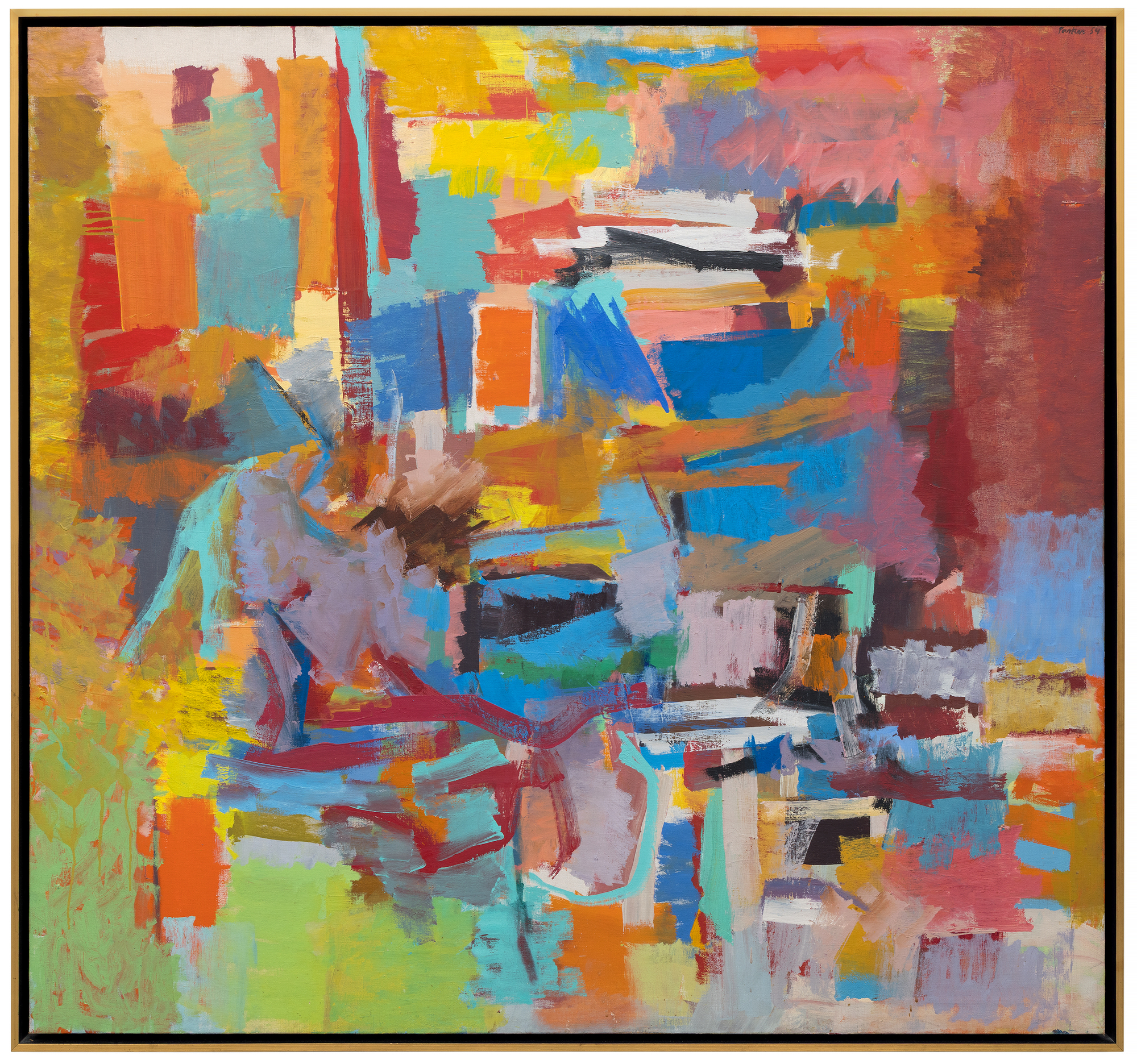
<div><font face=Lato size=3 color=black>Painted in 1954, this "Untitled" canvas exemplifies Ray Parker’s early engagement with Abstract Expressionism, a moment when he was forging a language of bold color and gestural immediacy. Parker worked directly on unstretched canvas, building the composition through broad, saturated brushstrokes that retain a sense of spontaneity and improvisation. The edges of form remain fluid, emphasizing the immediacy of his process. </font></div><br><br><div> </div><br><br><div><font face=Lato size=3 color=black>Although Parker would later become best known for his “Simple Paintings,” these early works are both rare and foundational, bridging the raw energy of Abstract Expressionism with the clarity of form that defined his mature style. With fewer than 310 works recorded at auction and very few from the 1950s, canvases of this scale and date seldom appear on the market. A related early abstraction, "Untitled" (1956), is in the collection of the Whitney Museum of American Art. "Untitled" (1954) represents a significant example of Parker’s innovative contribution to postwar American painting. </font></div> <div><font face=Lato size=3 color=black>Painted in 1954, this "Untitled" canvas exemplifies Ray Parker’s early engagement with Abstract Expressionism, a moment when he was forging a language of bold color and gestural immediacy. Parker worked directly on unstretched canvas, building the composition through broad, saturated brushstrokes that retain a sense of spontaneity and improvisation. The edges of form remain fluid, emphasizing the immediacy of his process. </font></div><br><br><div> </div><br><br><div><font face=Lato size=3 color=black>Although Parker would later become best known for his “Simple Paintings,” these early works are both rare and foundational, bridging the raw energy of Abstract Expressionism with the clarity of form that defined his mature style. With fewer than 310 works recorded at auction and very few from the 1950s, canvases of this scale and date seldom appear on the market. A related early abstraction, "Untitled" (1956), is in the collection of the Whitney Museum of American Art. "Untitled" (1954) represents a significant example of Parker’s innovative contribution to postwar American painting. </font></div> <div><font face=Lato size=3 color=black>Painted in 1954, this "Untitled" canvas exemplifies Ray Parker’s early engagement with Abstract Expressionism, a moment when he was forging a language of bold color and gestural immediacy. Parker worked directly on unstretched canvas, building the composition through broad, saturated brushstrokes that retain a sense of spontaneity and improvisation. The edges of form remain fluid, emphasizing the immediacy of his process. </font></div><br><br><div> </div><br><br><div><font face=Lato size=3 color=black>Although Parker would later become best known for his “Simple Paintings,” these early works are both rare and foundational, bridging the raw energy of Abstract Expressionism with the clarity of form that defined his mature style. With fewer than 310 works recorded at auction and very few from the 1950s, canvases of this scale and date seldom appear on the market. A related early abstraction, "Untitled" (1956), is in the collection of the Whitney Museum of American Art. "Untitled" (1954) represents a significant example of Parker’s innovative contribution to postwar American painting. </font></div> <div><font face=Lato size=3 color=black>Painted in 1954, this "Untitled" canvas exemplifies Ray Parker’s early engagement with Abstract Expressionism, a moment when he was forging a language of bold color and gestural immediacy. Parker worked directly on unstretched canvas, building the composition through broad, saturated brushstrokes that retain a sense of spontaneity and improvisation. The edges of form remain fluid, emphasizing the immediacy of his process. </font></div><br><br><div> </div><br><br><div><font face=Lato size=3 color=black>Although Parker would later become best known for his “Simple Paintings,” these early works are both rare and foundational, bridging the raw energy of Abstract Expressionism with the clarity of form that defined his mature style. With fewer than 310 works recorded at auction and very few from the 1950s, canvases of this scale and date seldom appear on the market. A related early abstraction, "Untitled" (1956), is in the collection of the Whitney Museum of American Art. "Untitled" (1954) represents a significant example of Parker’s innovative contribution to postwar American painting. </font></div> <div><font face=Lato size=3 color=black>Painted in 1954, this "Untitled" canvas exemplifies Ray Parker’s early engagement with Abstract Expressionism, a moment when he was forging a language of bold color and gestural immediacy. Parker worked directly on unstretched canvas, building the composition through broad, saturated brushstrokes that retain a sense of spontaneity and improvisation. The edges of form remain fluid, emphasizing the immediacy of his process. </font></div><br><br><div> </div><br><br><div><font face=Lato size=3 color=black>Although Parker would later become best known for his “Simple Paintings,” these early works are both rare and foundational, bridging the raw energy of Abstract Expressionism with the clarity of form that defined his mature style. With fewer than 310 works recorded at auction and very few from the 1950s, canvases of this scale and date seldom appear on the market. A related early abstraction, "Untitled" (1956), is in the collection of the Whitney Museum of American Art. "Untitled" (1954) represents a significant example of Parker’s innovative contribution to postwar American painting. </font></div> <div><font face=Lato size=3 color=black>Painted in 1954, this "Untitled" canvas exemplifies Ray Parker’s early engagement with Abstract Expressionism, a moment when he was forging a language of bold color and gestural immediacy. Parker worked directly on unstretched canvas, building the composition through broad, saturated brushstrokes that retain a sense of spontaneity and improvisation. The edges of form remain fluid, emphasizing the immediacy of his process. </font></div><br><br><div> </div><br><br><div><font face=Lato size=3 color=black>Although Parker would later become best known for his “Simple Paintings,” these early works are both rare and foundational, bridging the raw energy of Abstract Expressionism with the clarity of form that defined his mature style. With fewer than 310 works recorded at auction and very few from the 1950s, canvases of this scale and date seldom appear on the market. A related early abstraction, "Untitled" (1956), is in the collection of the Whitney Museum of American Art. "Untitled" (1954) represents a significant example of Parker’s innovative contribution to postwar American painting. </font></div> <div><font face=Lato size=3 color=black>Painted in 1954, this "Untitled" canvas exemplifies Ray Parker’s early engagement with Abstract Expressionism, a moment when he was forging a language of bold color and gestural immediacy. Parker worked directly on unstretched canvas, building the composition through broad, saturated brushstrokes that retain a sense of spontaneity and improvisation. The edges of form remain fluid, emphasizing the immediacy of his process. </font></div><br><br><div> </div><br><br><div><font face=Lato size=3 color=black>Although Parker would later become best known for his “Simple Paintings,” these early works are both rare and foundational, bridging the raw energy of Abstract Expressionism with the clarity of form that defined his mature style. With fewer than 310 works recorded at auction and very few from the 1950s, canvases of this scale and date seldom appear on the market. A related early abstraction, "Untitled" (1956), is in the collection of the Whitney Museum of American Art. "Untitled" (1954) represents a significant example of Parker’s innovative contribution to postwar American painting. </font></div> <div><font face=Lato size=3 color=black>Painted in 1954, this "Untitled" canvas exemplifies Ray Parker’s early engagement with Abstract Expressionism, a moment when he was forging a language of bold color and gestural immediacy. Parker worked directly on unstretched canvas, building the composition through broad, saturated brushstrokes that retain a sense of spontaneity and improvisation. The edges of form remain fluid, emphasizing the immediacy of his process. </font></div><br><br><div> </div><br><br><div><font face=Lato size=3 color=black>Although Parker would later become best known for his “Simple Paintings,” these early works are both rare and foundational, bridging the raw energy of Abstract Expressionism with the clarity of form that defined his mature style. With fewer than 310 works recorded at auction and very few from the 1950s, canvases of this scale and date seldom appear on the market. A related early abstraction, "Untitled" (1956), is in the collection of the Whitney Museum of American Art. "Untitled" (1954) represents a significant example of Parker’s innovative contribution to postwar American painting. </font></div> <div><font face=Lato size=3 color=black>Painted in 1954, this "Untitled" canvas exemplifies Ray Parker’s early engagement with Abstract Expressionism, a moment when he was forging a language of bold color and gestural immediacy. Parker worked directly on unstretched canvas, building the composition through broad, saturated brushstrokes that retain a sense of spontaneity and improvisation. The edges of form remain fluid, emphasizing the immediacy of his process. </font></div><br><br><div> </div><br><br><div><font face=Lato size=3 color=black>Although Parker would later become best known for his “Simple Paintings,” these early works are both rare and foundational, bridging the raw energy of Abstract Expressionism with the clarity of form that defined his mature style. With fewer than 310 works recorded at auction and very few from the 1950s, canvases of this scale and date seldom appear on the market. A related early abstraction, "Untitled" (1956), is in the collection of the Whitney Museum of American Art. "Untitled" (1954) represents a significant example of Parker’s innovative contribution to postwar American painting. </font></div> <div><font face=Lato size=3 color=black>Painted in 1954, this "Untitled" canvas exemplifies Ray Parker’s early engagement with Abstract Expressionism, a moment when he was forging a language of bold color and gestural immediacy. Parker worked directly on unstretched canvas, building the composition through broad, saturated brushstrokes that retain a sense of spontaneity and improvisation. The edges of form remain fluid, emphasizing the immediacy of his process. </font></div><br><br><div> </div><br><br><div><font face=Lato size=3 color=black>Although Parker would later become best known for his “Simple Paintings,” these early works are both rare and foundational, bridging the raw energy of Abstract Expressionism with the clarity of form that defined his mature style. With fewer than 310 works recorded at auction and very few from the 1950s, canvases of this scale and date seldom appear on the market. A related early abstraction, "Untitled" (1956), is in the collection of the Whitney Museum of American Art. "Untitled" (1954) represents a significant example of Parker’s innovative contribution to postwar American painting. </font></div>
بدون عنوان195452 1/4 × 56 × 1 بوصة(132.72 × 142.24 × 2.54 سم) زيت على قماش
الاصل
مبيعات كريستيز الخاصة
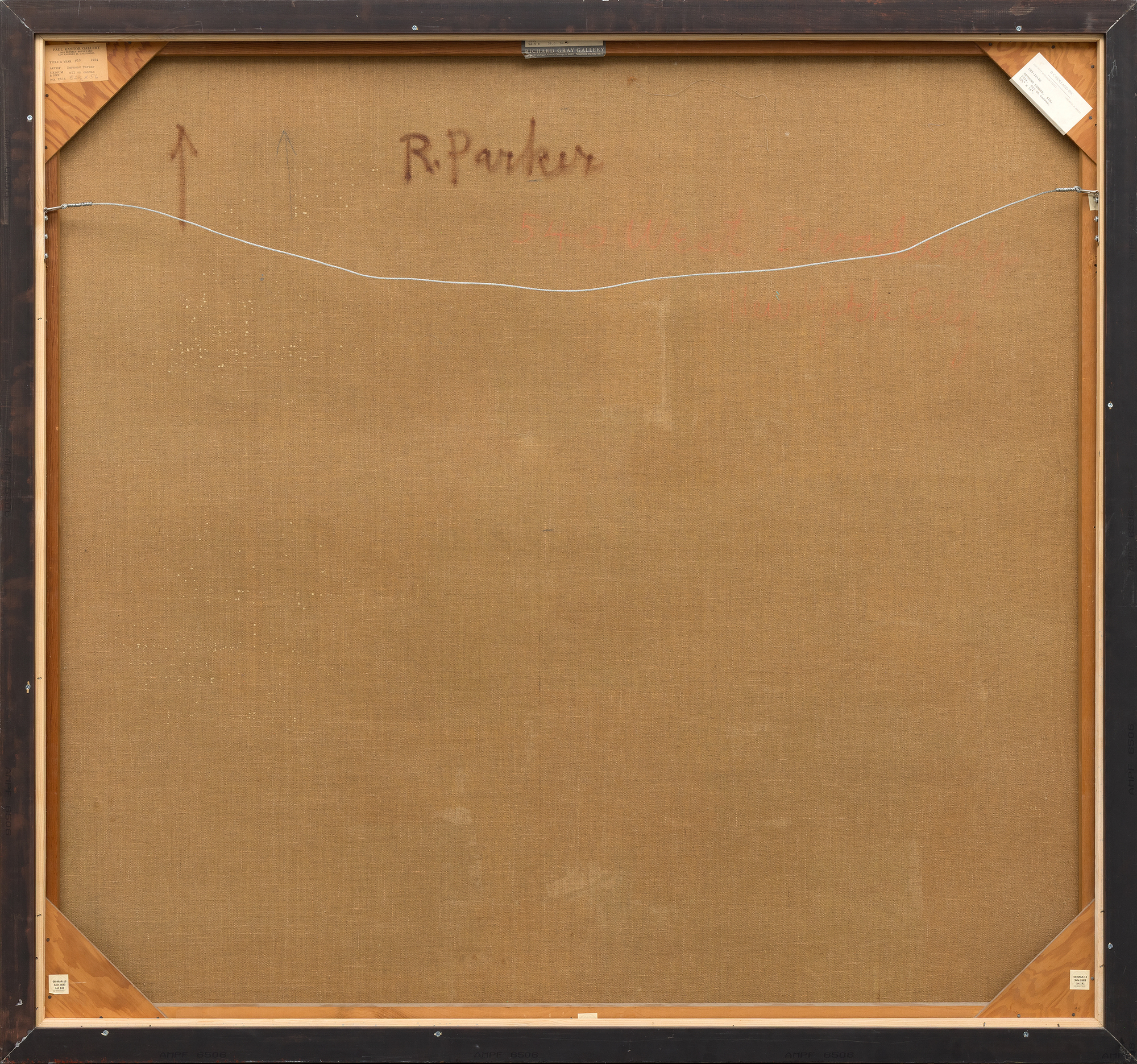
مجموعة خاصة، تم شراؤها من المذكور أعلاه
رسمت هذه اللوحة التي تحمل عنوان "بدون عنوان" في عام 1954، وهي تمثل انخراط راي باركر المبكر في التعبيرية التجريدية، في وقت كان فيه بصدد صياغة لغة من الألوان الجريئة والإيماءات المباشرة. عمل باركر مباشرة على قماش غير مشدود، وبنى التكوين من خلال ضربات فرشاة عريضة ومشبعة تحافظ على إحساس بالعفوية والارتجال. تظل حواف الشكل متدفقة، مما يؤكد على فورية عمليته.


على الرغم من أن باركر أصبح معروفًا لاحقًا بـ "لوحاته البسيطة"، إلا أن هذه الأعمال المبكرة نادرة وأساسية، حيث تربط بين الطاقة الخام للتعبيرية التجريدية ووضوح الشكل الذي ميز أسلوبه الناضج. مع أقل من 310 أعمال مسجلة في المزادات وقليل جدًا من أعمال الخمسينيات، نادرًا ما تظهر لوحات بهذا الحجم والتاريخ في السوق. توجد لوحة تجريدية مبكرة ذات صلة، بعنوان "بدون عنوان" (1956)، في مجموعة متحف ويتني للفن الأمريكي. تمثل لوحة "بدون عنوان" (1954) مثالاً مهمًا على مساهمة باركر المبتكرة في الرسم الأمريكي بعد الحرب.
الاستفسار