
العودة

كاميل بيسارو(1830-1903)

 
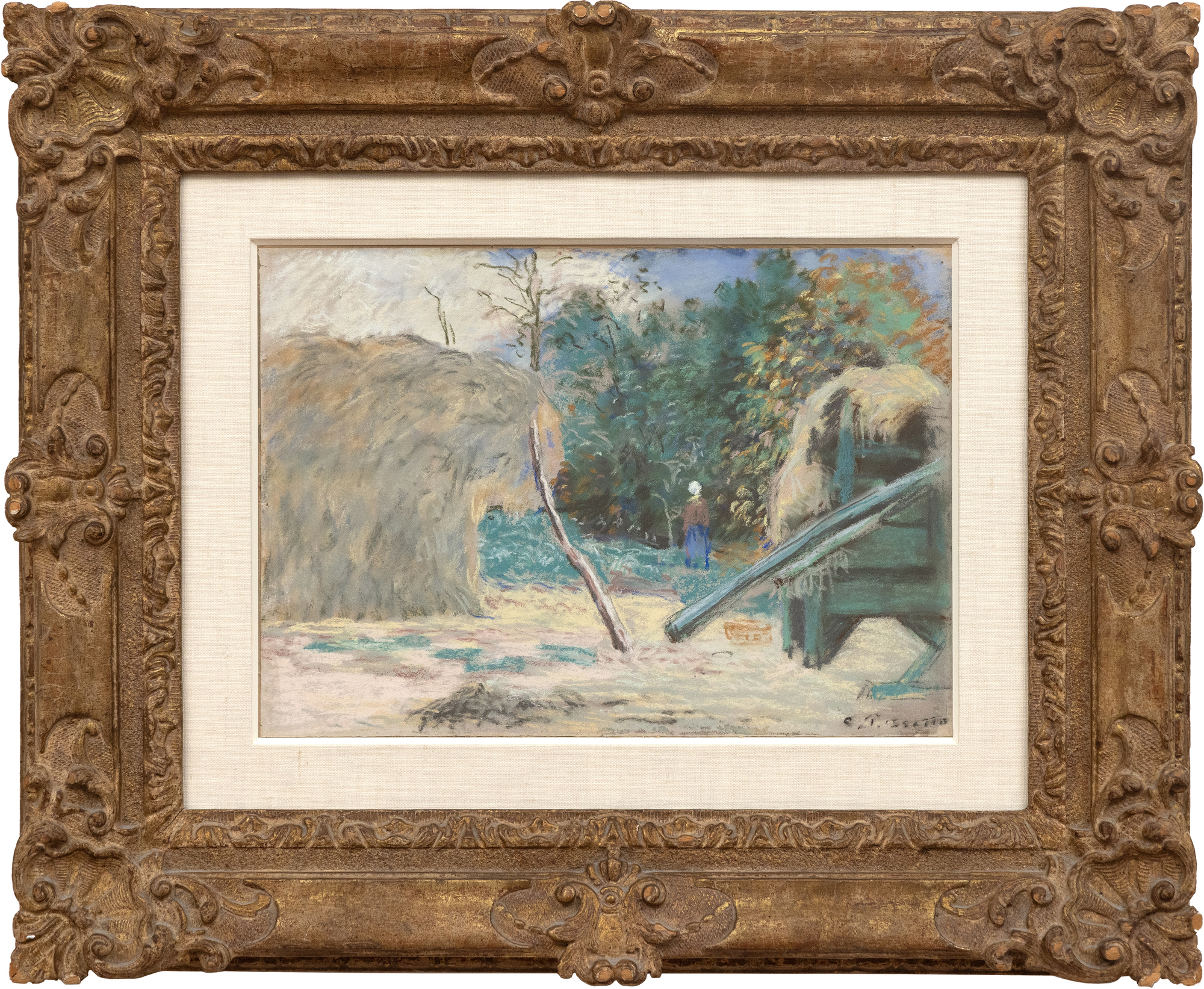
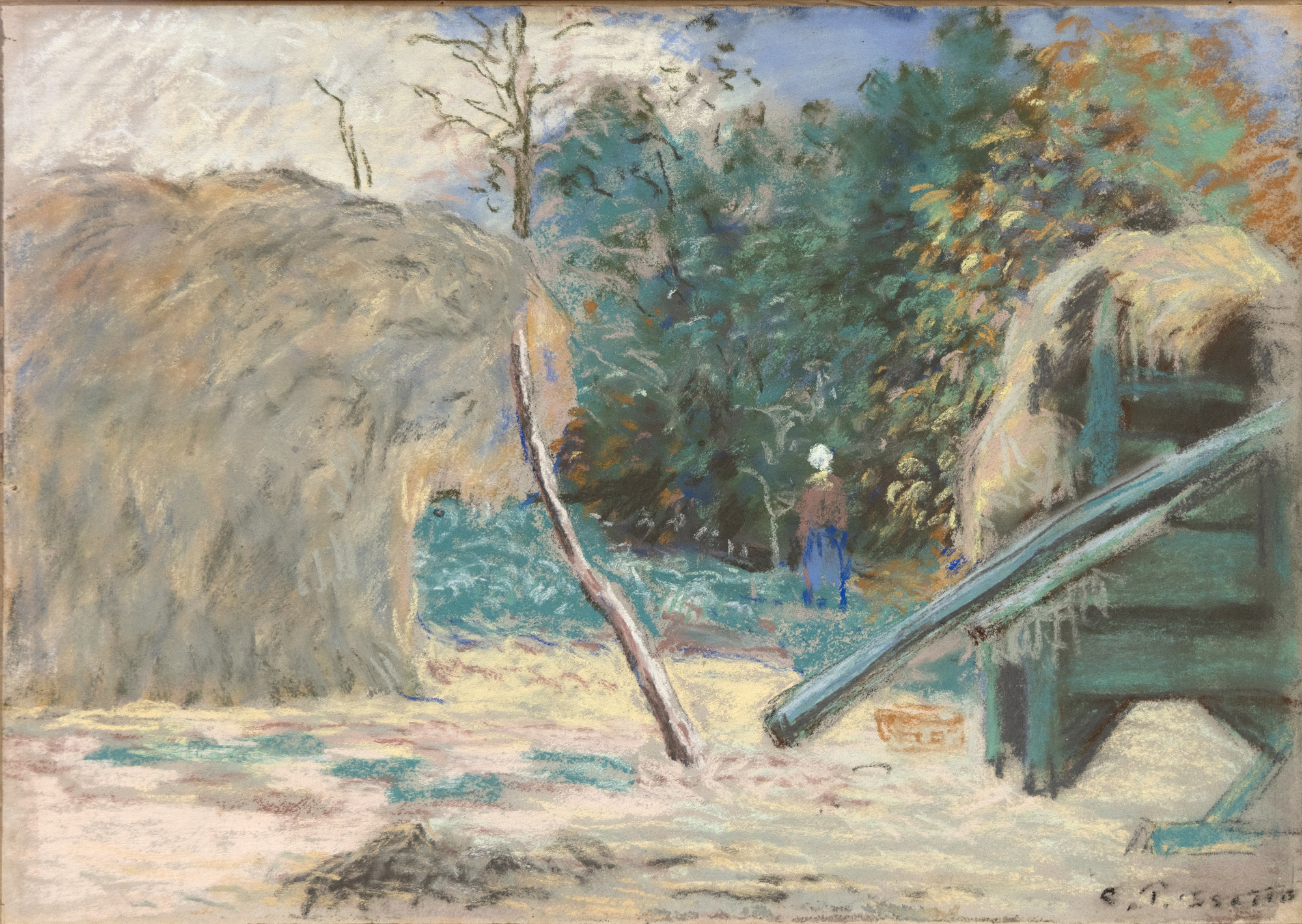
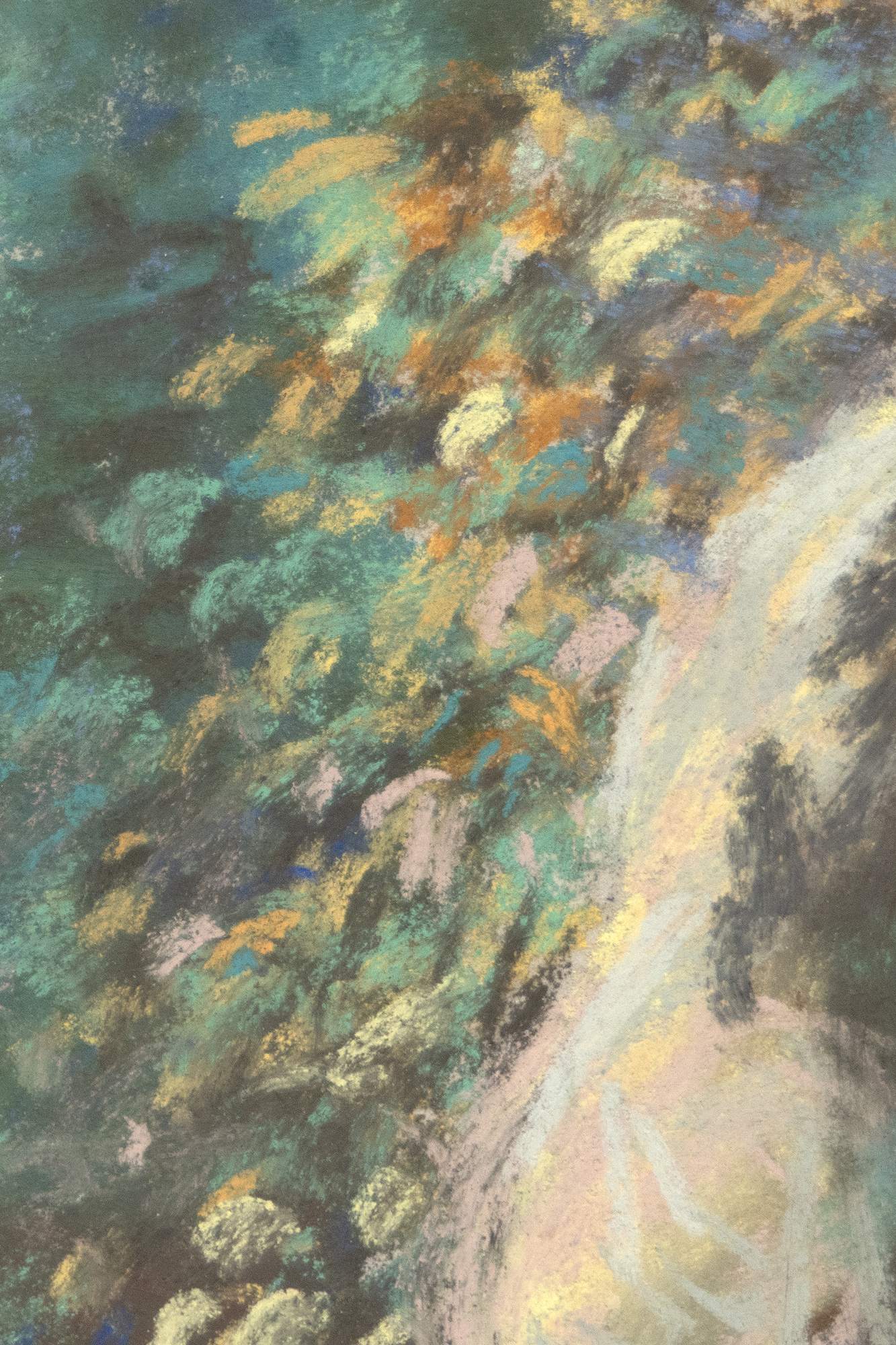
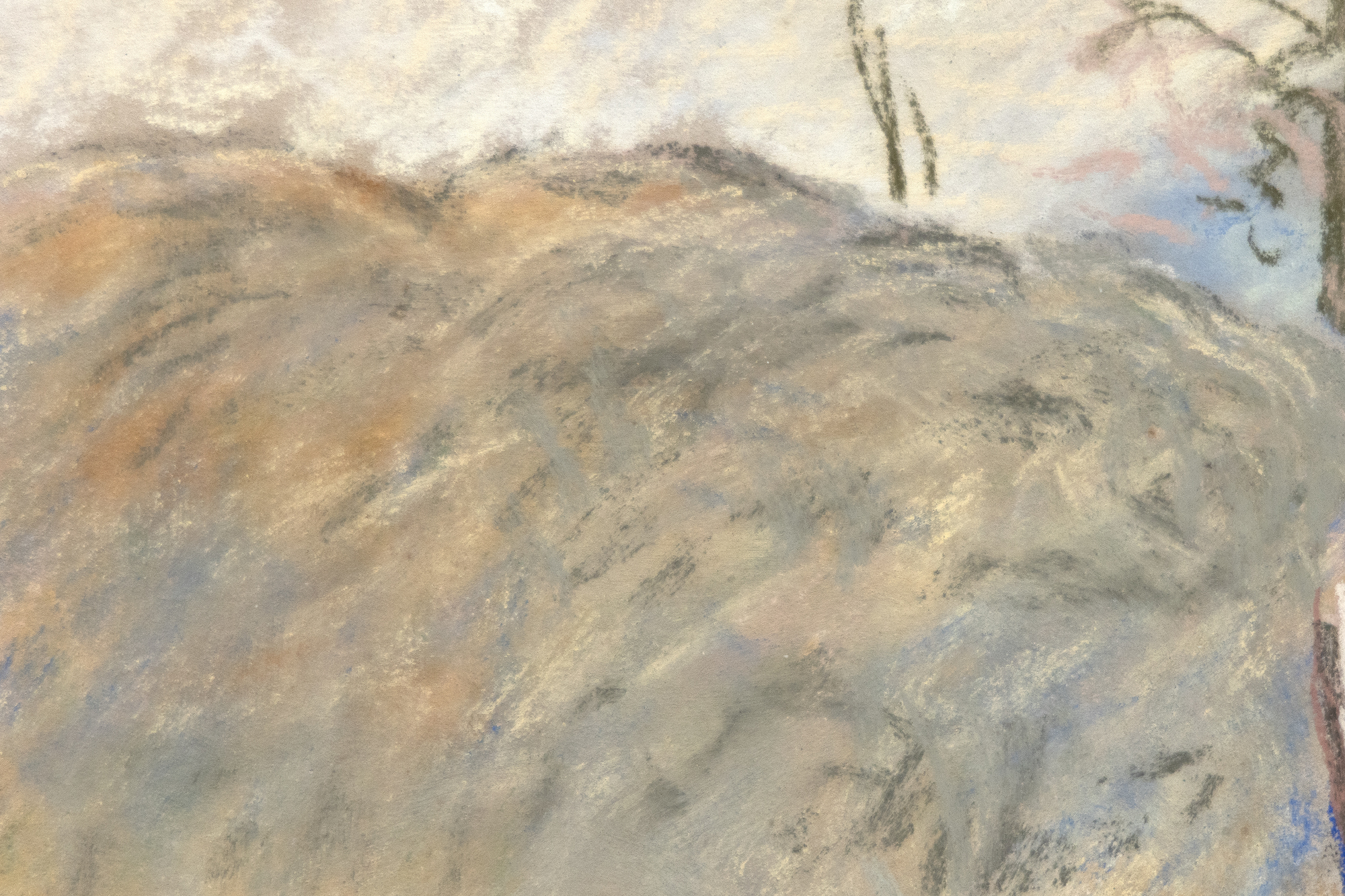
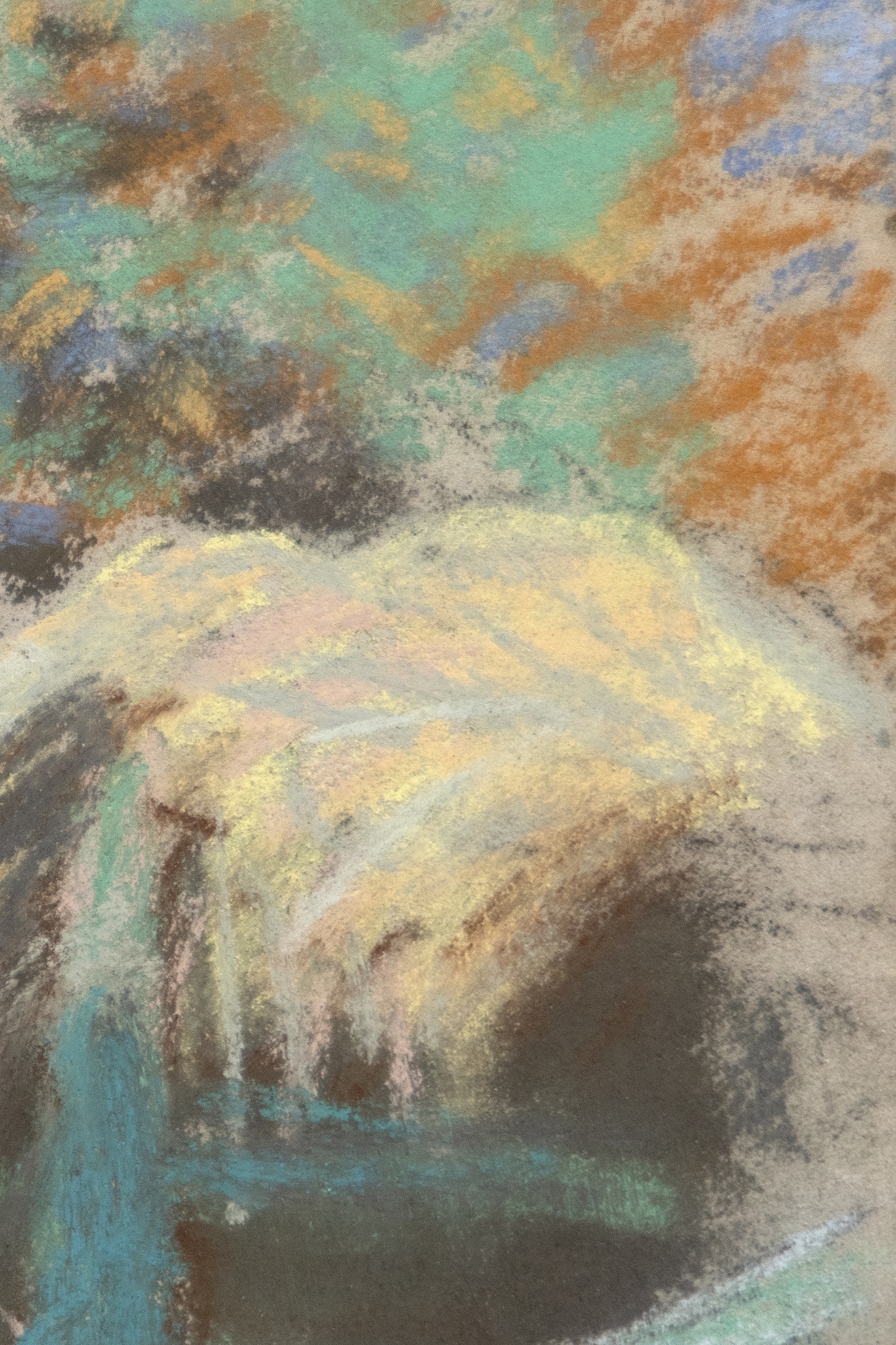
<div>Camille Pissarro’s<em> Paysage avec batteuse à Montfoucault </em>(c. 1875) is an exceptionally vivid pastel that unites the artist’s keen observation of rural life with the Impressionists’ fascination for light, atmosphere, and immediacy. Executed at a moment when Pissarro was deeply engaged with agrarian subjects, the composition centers on a working landscape—haystacks and farm structures set against dense foliage—where a solitary figure anchors the scene in lived experience. The motif is quintessentially Impressionist: an unembellished view of the modern, “seen” world, and a fleeting moment of real life recorded with speed and sensitivity. </div><br><br><div> </div><br><br><div>Pastel, with its directness and chromatic intensity, proved uniquely efficient for Impressionist artists seeking to capture transient light effects and faithful likenesses without the slower procedures of oil. Here, Pissarro exploits the medium’s strengths brilliantly. Soft, powdery passages dissolve edges into atmosphere, while firmer, painterly strokes build structure and texture across the hay, timber, and ground. The surface retains a remarkable freshness, with color that remains luminous and varied—cool blues and greens offset by warm straw, ochres, and sunlit highlights—allowing the viewer to experience the work’s original spontaneity. </div><br><br><div> </div><br><br><div>This work’s significance is underscored by its recent exhibition history: it was shown in 2020 at the J. Paul Getty Museum in<em> Powder and Light: Pastels in Late Nineteenth Century</em>, a focused exploration of how artists of the period embraced pastel as both experimental and modern. Beautifully preserved,<em> Paysage avec batteuse à Montfoucault </em>offers a direct encounter with Pissarro’s touch—each stroke visible, each tonal shift purposeful—capturing the countryside not as an ideal, but as a place of work, weather, and changing light. </div> <div>Camille Pissarro’s<em> Paysage avec batteuse à Montfoucault </em>(c. 1875) is an exceptionally vivid pastel that unites the artist’s keen observation of rural life with the Impressionists’ fascination for light, atmosphere, and immediacy. Executed at a moment when Pissarro was deeply engaged with agrarian subjects, the composition centers on a working landscape—haystacks and farm structures set against dense foliage—where a solitary figure anchors the scene in lived experience. The motif is quintessentially Impressionist: an unembellished view of the modern, “seen” world, and a fleeting moment of real life recorded with speed and sensitivity. </div><br><br><div> </div><br><br><div>Pastel, with its directness and chromatic intensity, proved uniquely efficient for Impressionist artists seeking to capture transient light effects and faithful likenesses without the slower procedures of oil. Here, Pissarro exploits the medium’s strengths brilliantly. Soft, powdery passages dissolve edges into atmosphere, while firmer, painterly strokes build structure and texture across the hay, timber, and ground. The surface retains a remarkable freshness, with color that remains luminous and varied—cool blues and greens offset by warm straw, ochres, and sunlit highlights—allowing the viewer to experience the work’s original spontaneity. </div><br><br><div> </div><br><br><div>This work’s significance is underscored by its recent exhibition history: it was shown in 2020 at the J. Paul Getty Museum in<em> Powder and Light: Pastels in Late Nineteenth Century</em>, a focused exploration of how artists of the period embraced pastel as both experimental and modern. Beautifully preserved,<em> Paysage avec batteuse à Montfoucault </em>offers a direct encounter with Pissarro’s touch—each stroke visible, each tonal shift purposeful—capturing the countryside not as an ideal, but as a place of work, weather, and changing light. </div> <div>Camille Pissarro’s<em> Paysage avec batteuse à Montfoucault </em>(c. 1875) is an exceptionally vivid pastel that unites the artist’s keen observation of rural life with the Impressionists’ fascination for light, atmosphere, and immediacy. Executed at a moment when Pissarro was deeply engaged with agrarian subjects, the composition centers on a working landscape—haystacks and farm structures set against dense foliage—where a solitary figure anchors the scene in lived experience. The motif is quintessentially Impressionist: an unembellished view of the modern, “seen” world, and a fleeting moment of real life recorded with speed and sensitivity. </div><br><br><div> </div><br><br><div>Pastel, with its directness and chromatic intensity, proved uniquely efficient for Impressionist artists seeking to capture transient light effects and faithful likenesses without the slower procedures of oil. Here, Pissarro exploits the medium’s strengths brilliantly. Soft, powdery passages dissolve edges into atmosphere, while firmer, painterly strokes build structure and texture across the hay, timber, and ground. The surface retains a remarkable freshness, with color that remains luminous and varied—cool blues and greens offset by warm straw, ochres, and sunlit highlights—allowing the viewer to experience the work’s original spontaneity. </div><br><br><div> </div><br><br><div>This work’s significance is underscored by its recent exhibition history: it was shown in 2020 at the J. Paul Getty Museum in<em> Powder and Light: Pastels in Late Nineteenth Century</em>, a focused exploration of how artists of the period embraced pastel as both experimental and modern. Beautifully preserved,<em> Paysage avec batteuse à Montfoucault </em>offers a direct encounter with Pissarro’s touch—each stroke visible, each tonal shift purposeful—capturing the countryside not as an ideal, but as a place of work, weather, and changing light. </div> <div>Camille Pissarro’s<em> Paysage avec batteuse à Montfoucault </em>(c. 1875) is an exceptionally vivid pastel that unites the artist’s keen observation of rural life with the Impressionists’ fascination for light, atmosphere, and immediacy. Executed at a moment when Pissarro was deeply engaged with agrarian subjects, the composition centers on a working landscape—haystacks and farm structures set against dense foliage—where a solitary figure anchors the scene in lived experience. The motif is quintessentially Impressionist: an unembellished view of the modern, “seen” world, and a fleeting moment of real life recorded with speed and sensitivity. </div><br><br><div> </div><br><br><div>Pastel, with its directness and chromatic intensity, proved uniquely efficient for Impressionist artists seeking to capture transient light effects and faithful likenesses without the slower procedures of oil. Here, Pissarro exploits the medium’s strengths brilliantly. Soft, powdery passages dissolve edges into atmosphere, while firmer, painterly strokes build structure and texture across the hay, timber, and ground. The surface retains a remarkable freshness, with color that remains luminous and varied—cool blues and greens offset by warm straw, ochres, and sunlit highlights—allowing the viewer to experience the work’s original spontaneity. </div><br><br><div> </div><br><br><div>This work’s significance is underscored by its recent exhibition history: it was shown in 2020 at the J. Paul Getty Museum in<em> Powder and Light: Pastels in Late Nineteenth Century</em>, a focused exploration of how artists of the period embraced pastel as both experimental and modern. Beautifully preserved,<em> Paysage avec batteuse à Montfoucault </em>offers a direct encounter with Pissarro’s touch—each stroke visible, each tonal shift purposeful—capturing the countryside not as an ideal, but as a place of work, weather, and changing light. </div> <div>Camille Pissarro’s<em> Paysage avec batteuse à Montfoucault </em>(c. 1875) is an exceptionally vivid pastel that unites the artist’s keen observation of rural life with the Impressionists’ fascination for light, atmosphere, and immediacy. Executed at a moment when Pissarro was deeply engaged with agrarian subjects, the composition centers on a working landscape—haystacks and farm structures set against dense foliage—where a solitary figure anchors the scene in lived experience. The motif is quintessentially Impressionist: an unembellished view of the modern, “seen” world, and a fleeting moment of real life recorded with speed and sensitivity. </div><br><br><div> </div><br><br><div>Pastel, with its directness and chromatic intensity, proved uniquely efficient for Impressionist artists seeking to capture transient light effects and faithful likenesses without the slower procedures of oil. Here, Pissarro exploits the medium’s strengths brilliantly. Soft, powdery passages dissolve edges into atmosphere, while firmer, painterly strokes build structure and texture across the hay, timber, and ground. The surface retains a remarkable freshness, with color that remains luminous and varied—cool blues and greens offset by warm straw, ochres, and sunlit highlights—allowing the viewer to experience the work’s original spontaneity. </div><br><br><div> </div><br><br><div>This work’s significance is underscored by its recent exhibition history: it was shown in 2020 at the J. Paul Getty Museum in<em> Powder and Light: Pastels in Late Nineteenth Century</em>, a focused exploration of how artists of the period embraced pastel as both experimental and modern. Beautifully preserved,<em> Paysage avec batteuse à Montfoucault </em>offers a direct encounter with Pissarro’s touch—each stroke visible, each tonal shift purposeful—capturing the countryside not as an ideal, but as a place of work, weather, and changing light. </div> <div>Camille Pissarro’s<em> Paysage avec batteuse à Montfoucault </em>(c. 1875) is an exceptionally vivid pastel that unites the artist’s keen observation of rural life with the Impressionists’ fascination for light, atmosphere, and immediacy. Executed at a moment when Pissarro was deeply engaged with agrarian subjects, the composition centers on a working landscape—haystacks and farm structures set against dense foliage—where a solitary figure anchors the scene in lived experience. The motif is quintessentially Impressionist: an unembellished view of the modern, “seen” world, and a fleeting moment of real life recorded with speed and sensitivity. </div><br><br><div> </div><br><br><div>Pastel, with its directness and chromatic intensity, proved uniquely efficient for Impressionist artists seeking to capture transient light effects and faithful likenesses without the slower procedures of oil. Here, Pissarro exploits the medium’s strengths brilliantly. Soft, powdery passages dissolve edges into atmosphere, while firmer, painterly strokes build structure and texture across the hay, timber, and ground. The surface retains a remarkable freshness, with color that remains luminous and varied—cool blues and greens offset by warm straw, ochres, and sunlit highlights—allowing the viewer to experience the work’s original spontaneity. </div><br><br><div> </div><br><br><div>This work’s significance is underscored by its recent exhibition history: it was shown in 2020 at the J. Paul Getty Museum in<em> Powder and Light: Pastels in Late Nineteenth Century</em>, a focused exploration of how artists of the period embraced pastel as both experimental and modern. Beautifully preserved,<em> Paysage avec batteuse à Montfoucault </em>offers a direct encounter with Pissarro’s touch—each stroke visible, each tonal shift purposeful—capturing the countryside not as an ideal, but as a place of work, weather, and changing light. </div> <div>Camille Pissarro’s<em> Paysage avec batteuse à Montfoucault </em>(c. 1875) is an exceptionally vivid pastel that unites the artist’s keen observation of rural life with the Impressionists’ fascination for light, atmosphere, and immediacy. Executed at a moment when Pissarro was deeply engaged with agrarian subjects, the composition centers on a working landscape—haystacks and farm structures set against dense foliage—where a solitary figure anchors the scene in lived experience. The motif is quintessentially Impressionist: an unembellished view of the modern, “seen” world, and a fleeting moment of real life recorded with speed and sensitivity. </div><br><br><div> </div><br><br><div>Pastel, with its directness and chromatic intensity, proved uniquely efficient for Impressionist artists seeking to capture transient light effects and faithful likenesses without the slower procedures of oil. Here, Pissarro exploits the medium’s strengths brilliantly. Soft, powdery passages dissolve edges into atmosphere, while firmer, painterly strokes build structure and texture across the hay, timber, and ground. The surface retains a remarkable freshness, with color that remains luminous and varied—cool blues and greens offset by warm straw, ochres, and sunlit highlights—allowing the viewer to experience the work’s original spontaneity. </div><br><br><div> </div><br><br><div>This work’s significance is underscored by its recent exhibition history: it was shown in 2020 at the J. Paul Getty Museum in<em> Powder and Light: Pastels in Late Nineteenth Century</em>, a focused exploration of how artists of the period embraced pastel as both experimental and modern. Beautifully preserved,<em> Paysage avec batteuse à Montfoucault </em>offers a direct encounter with Pissarro’s touch—each stroke visible, each tonal shift purposeful—capturing the countryside not as an ideal, but as a place of work, weather, and changing light. </div> <div>Camille Pissarro’s<em> Paysage avec batteuse à Montfoucault </em>(c. 1875) is an exceptionally vivid pastel that unites the artist’s keen observation of rural life with the Impressionists’ fascination for light, atmosphere, and immediacy. Executed at a moment when Pissarro was deeply engaged with agrarian subjects, the composition centers on a working landscape—haystacks and farm structures set against dense foliage—where a solitary figure anchors the scene in lived experience. The motif is quintessentially Impressionist: an unembellished view of the modern, “seen” world, and a fleeting moment of real life recorded with speed and sensitivity. </div><br><br><div> </div><br><br><div>Pastel, with its directness and chromatic intensity, proved uniquely efficient for Impressionist artists seeking to capture transient light effects and faithful likenesses without the slower procedures of oil. Here, Pissarro exploits the medium’s strengths brilliantly. Soft, powdery passages dissolve edges into atmosphere, while firmer, painterly strokes build structure and texture across the hay, timber, and ground. The surface retains a remarkable freshness, with color that remains luminous and varied—cool blues and greens offset by warm straw, ochres, and sunlit highlights—allowing the viewer to experience the work’s original spontaneity. </div><br><br><div> </div><br><br><div>This work’s significance is underscored by its recent exhibition history: it was shown in 2020 at the J. Paul Getty Museum in<em> Powder and Light: Pastels in Late Nineteenth Century</em>, a focused exploration of how artists of the period embraced pastel as both experimental and modern. Beautifully preserved,<em> Paysage avec batteuse à Montfoucault </em>offers a direct encounter with Pissarro’s touch—each stroke visible, each tonal shift purposeful—capturing the countryside not as an ideal, but as a place of work, weather, and changing light. </div> <div>Camille Pissarro’s<em> Paysage avec batteuse à Montfoucault </em>(c. 1875) is an exceptionally vivid pastel that unites the artist’s keen observation of rural life with the Impressionists’ fascination for light, atmosphere, and immediacy. Executed at a moment when Pissarro was deeply engaged with agrarian subjects, the composition centers on a working landscape—haystacks and farm structures set against dense foliage—where a solitary figure anchors the scene in lived experience. The motif is quintessentially Impressionist: an unembellished view of the modern, “seen” world, and a fleeting moment of real life recorded with speed and sensitivity. </div><br><br><div> </div><br><br><div>Pastel, with its directness and chromatic intensity, proved uniquely efficient for Impressionist artists seeking to capture transient light effects and faithful likenesses without the slower procedures of oil. Here, Pissarro exploits the medium’s strengths brilliantly. Soft, powdery passages dissolve edges into atmosphere, while firmer, painterly strokes build structure and texture across the hay, timber, and ground. The surface retains a remarkable freshness, with color that remains luminous and varied—cool blues and greens offset by warm straw, ochres, and sunlit highlights—allowing the viewer to experience the work’s original spontaneity. </div><br><br><div> </div><br><br><div>This work’s significance is underscored by its recent exhibition history: it was shown in 2020 at the J. Paul Getty Museum in<em> Powder and Light: Pastels in Late Nineteenth Century</em>, a focused exploration of how artists of the period embraced pastel as both experimental and modern. Beautifully preserved,<em> Paysage avec batteuse à Montfoucault </em>offers a direct encounter with Pissarro’s touch—each stroke visible, each tonal shift purposeful—capturing the countryside not as an ideal, but as a place of work, weather, and changing light. </div> <div>Camille Pissarro’s<em> Paysage avec batteuse à Montfoucault </em>(c. 1875) is an exceptionally vivid pastel that unites the artist’s keen observation of rural life with the Impressionists’ fascination for light, atmosphere, and immediacy. Executed at a moment when Pissarro was deeply engaged with agrarian subjects, the composition centers on a working landscape—haystacks and farm structures set against dense foliage—where a solitary figure anchors the scene in lived experience. The motif is quintessentially Impressionist: an unembellished view of the modern, “seen” world, and a fleeting moment of real life recorded with speed and sensitivity. </div><br><br><div> </div><br><br><div>Pastel, with its directness and chromatic intensity, proved uniquely efficient for Impressionist artists seeking to capture transient light effects and faithful likenesses without the slower procedures of oil. Here, Pissarro exploits the medium’s strengths brilliantly. Soft, powdery passages dissolve edges into atmosphere, while firmer, painterly strokes build structure and texture across the hay, timber, and ground. The surface retains a remarkable freshness, with color that remains luminous and varied—cool blues and greens offset by warm straw, ochres, and sunlit highlights—allowing the viewer to experience the work’s original spontaneity. </div><br><br><div> </div><br><br><div>This work’s significance is underscored by its recent exhibition history: it was shown in 2020 at the J. Paul Getty Museum in<em> Powder and Light: Pastels in Late Nineteenth Century</em>, a focused exploration of how artists of the period embraced pastel as both experimental and modern. Beautifully preserved,<em> Paysage avec batteuse à Montfoucault </em>offers a direct encounter with Pissarro’s touch—each stroke visible, each tonal shift purposeful—capturing the countryside not as an ideal, but as a place of work, weather, and changing light. </div>
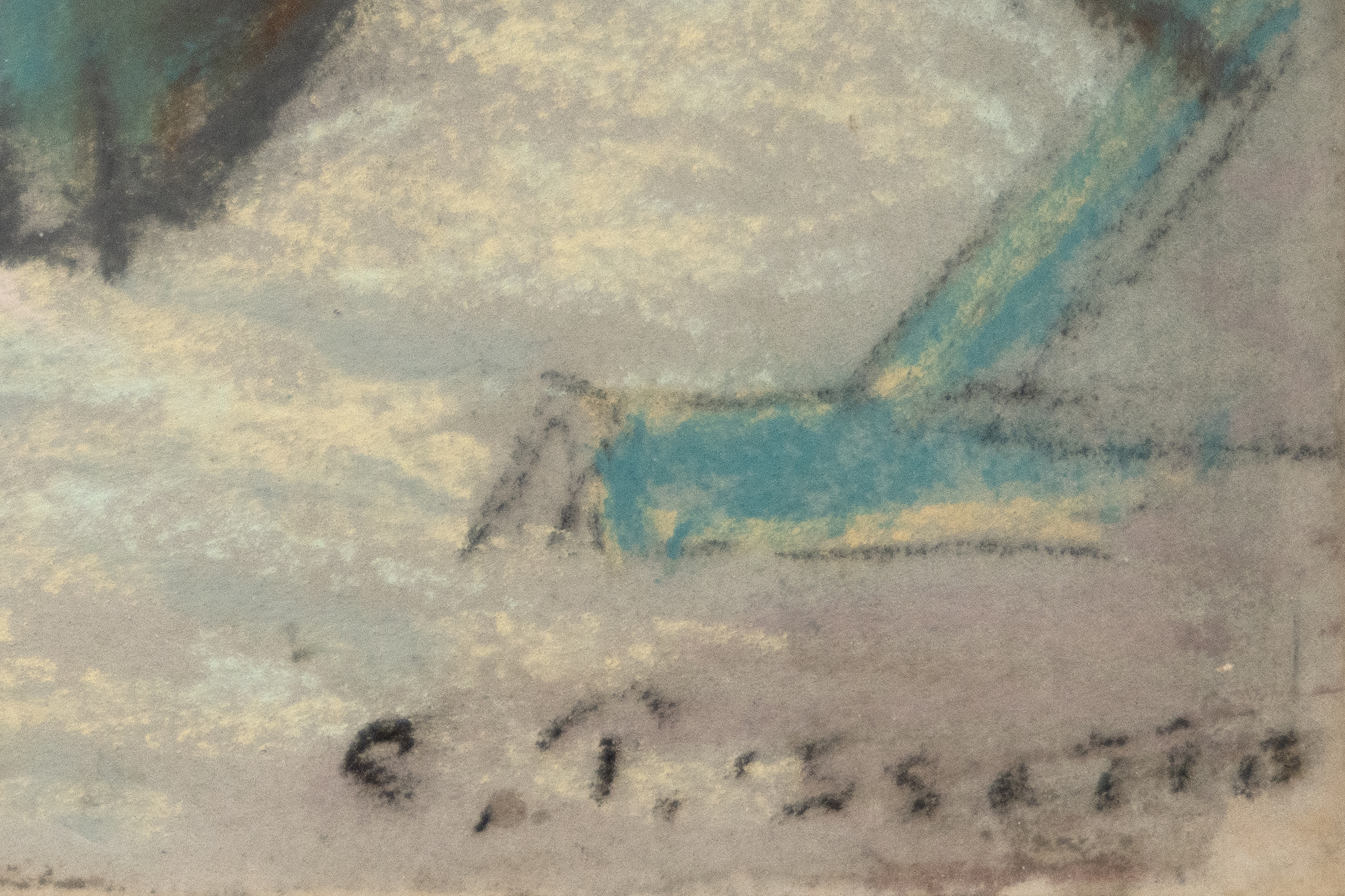
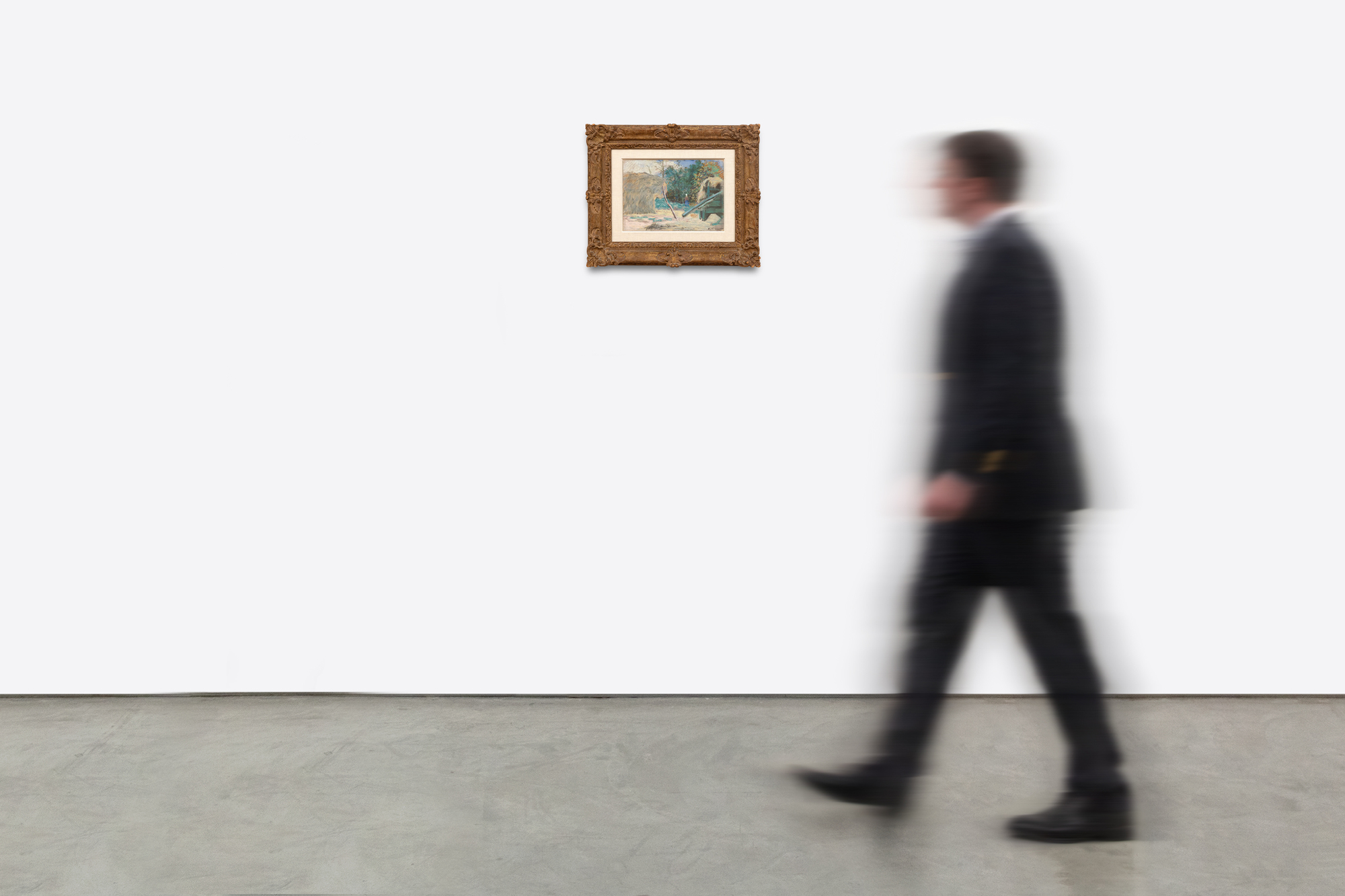
Paysage avec batteuse a Montfoucaultج. 187510 3/8 × 14 3/4 بوصة. (26.35 × 37.47 سم) باستيل على ورق مفروش على متن الطائرة
الاصل
Anon. Sale ، فندق Drouot ، باريس ، 24 فبراير 1936 ، قطعة 38
معارض بيرلز، نيويورك
حصل عليها المالك السابق ، حوالي عام 1960
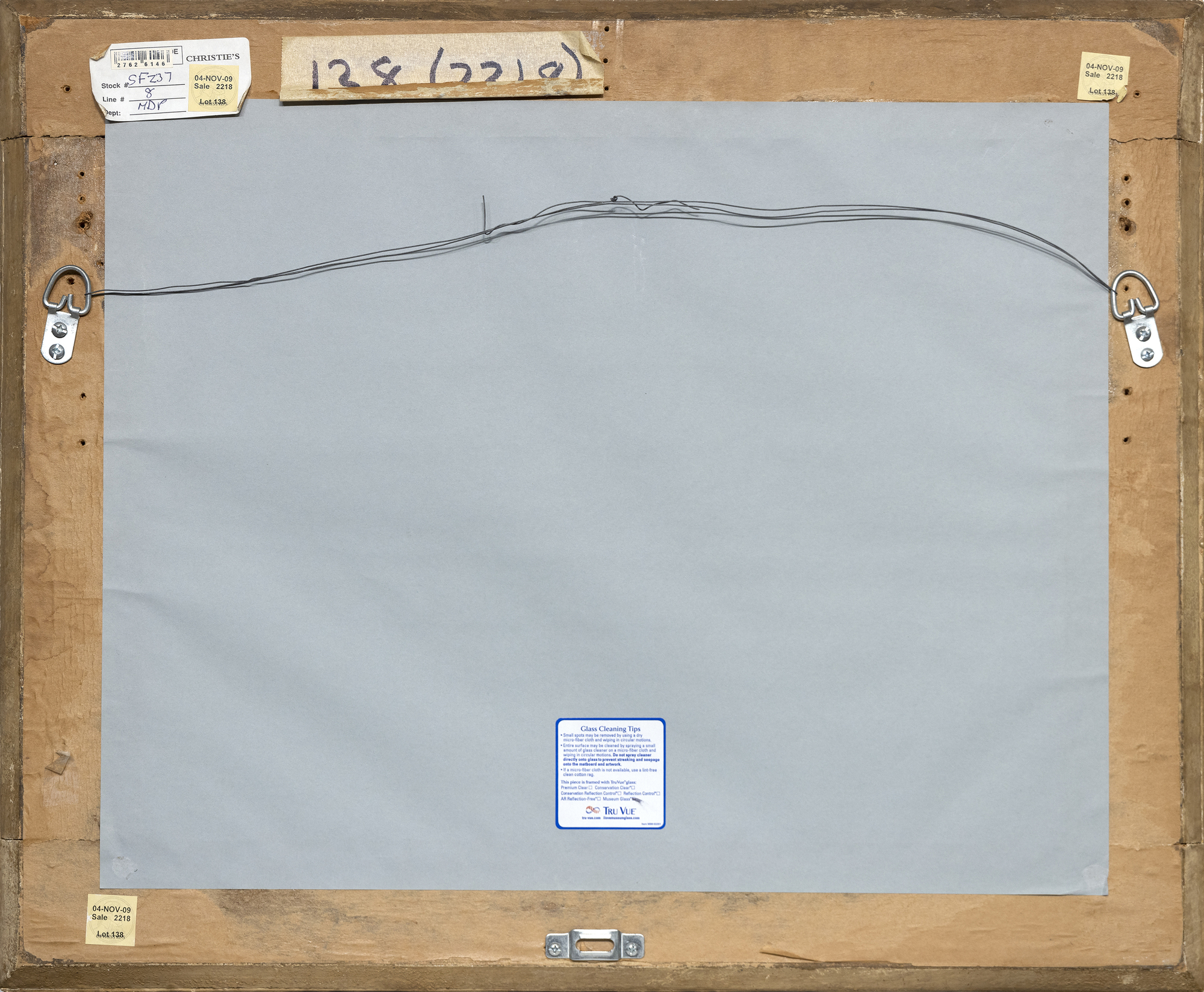
كريستيز لايف المزاد 2218 ، 4 نوفمبر 2009 ، الكثير 138
مجموعة خاصة ، تم الحصول عليها من البيع أعلاه
معرض
نيويورك ، معارض بيرلز ، التاريخ غير معروف ، رقم 84 أ
متحف جيه بول جيتي ، ديغا: "الراقصون الروس" وفن الباستيل "، 3 مايو - 23 أكتوبر 2016
متحف جيه بول جيتي ، "الفلاحون في الباستيل: جان فرانسوا ميليت وإحياء الباستيل ، 29 أكتوبر 2019 - 10 مايو 2020
ج. بول
... اكثر...متحف جيتي ، "المسحوق والضوء: الباستيل في أواخر القرن التاسع عشر" ، 28 يوليو 2020-31 أغسطس 2022
الادب
L.R. Pissarro and L. Venturi, Camille Pissarro, Son art-son oeuvre, Paris, 1939, vol. I, p. 291, no. 1529 (illustrated, vol. ii. pl. 294)
... اقل...
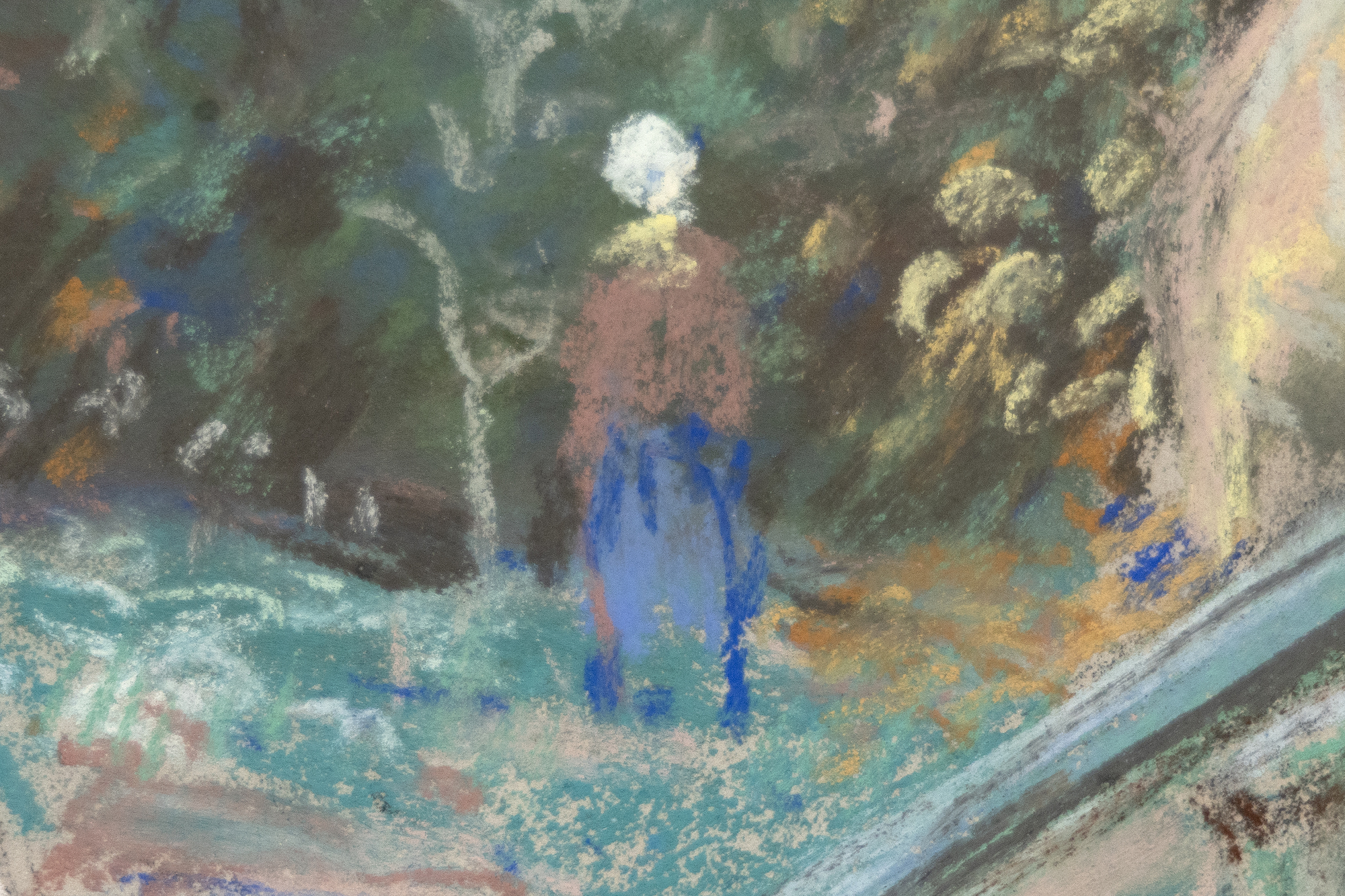
لوحة "Paysage avec batteuse à Montfoucault" (حوالي 1875) لكاميل بيسارو هي لوحة باستيلية استثنائية الحيوية تجمع بين ملاحظة الفنان الدقيقة للحياة الريفية وولع الانطباعيين بالضوء والجو واللحظة. تم تنفيذ اللوحة في وقت كان فيه بيسارو منشغلاً بشدة بمواضيع زراعية، وتركز التركيبة على منظر طبيعي عملي — أكوام من القش ومباني مزرعة على خلفية من الأوراق الكثيفة — حيث تثبت شخصية وحيدة المشهد في تجربة حية. الموضوع هو جوهر الانطباعية: منظر غير مزخرف للعالم الحديث "المرئي"، ولحظة عابرة من الحياة الحقيقية مسجلة بسرعة وحساسية.


أثبتت الألوان الباستيلية، بفضل مباشرتها وكثافة ألوانها، فعاليتها الفريدة للفنانين الانطباعيين الذين يسعون إلى التقاط تأثيرات الضوء العابرة والتشابه الدقيق دون اللجوء إلى الإجراءات البطيئة للرسم بالزيت. هنا، يستغل بيسارو قوة هذه الوسيلة ببراعة. تذيب المقاطع الناعمة والباردة الحواف في الجو، بينما تبني الضربات الأكثر صلابة والرسمية البنية والملمس عبر القش والخشب والأرض. يحتفظ السطح بنضارة رائعة، مع ألوان تظل مشرقة ومتنوعة - أزرق وأخضر بارد يقابله قش دافئ وألوان مغرة وإضاءة مشمسة - مما يسمح للمشاهد بتجربة العفوية الأصلية للعمل.


تؤكد أهمية هذا العمل تاريخ معارضه الأخيرة: فقد عُرض في عام 2020 في متحف ج. بول جيتي في معرض "البارود والضوء: ألوان الباستيل في أواخر القرن التاسع عشر"، وهو استكشاف مركّز لكيفية تبني الفنانين في تلك الفترة للباستيل باعتباره وسيلة تجريبية وحديثة. يقدم Paysage avec batteuse à Montfoucault، المحفوظ بشكل جميل، لقاءً مباشرًا مع لمسة بيسارو - كل ضربة فرشاة مرئية، كل تغيير في الدرجة اللونية هادف - حيث يلتقط الريف ليس كمثال مثالي، بل كمكان للعمل والطقس والضوء المتغير.
الاستفسار