



العودة

ليون بولك سميث(1906-1996)

 
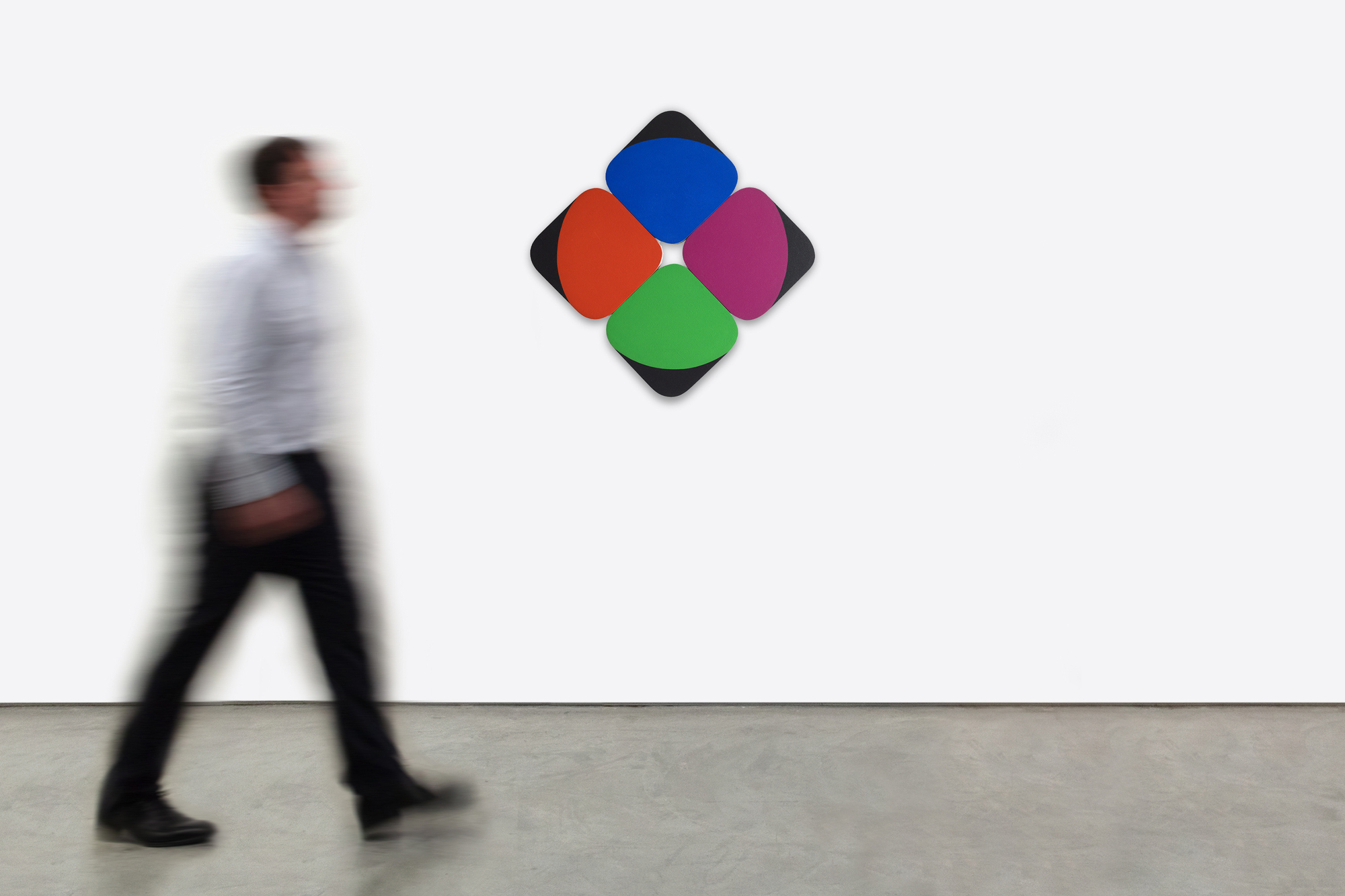
<div><font face=Lato size=3>Leon Polk Smith’s "Constellation Blue Violet Green Red" (1968) is a striking example of the artist’s radical exploration of form and color in postwar abstraction. Executed in acrylic on canvas, the work consists of four rounded-square panels arranged in a diamond formation. Each panel bears a crisp division of color: black at the outer edge, paired with one of four luminous hues—blue, violet, green, and red—creating a rhythmic interplay of symmetry and variation. </font></div><br><br><div><font face=Lato size=3> </font></div><br><br><div><font face=Lato size=3>Smith was a central figure in the development of hard-edge painting and geometric abstraction, aligned with contemporaries such as Ellsworth Kelly and Carmen Herrera. His "Constellation" series, begun in the 1960s, was groundbreaking for its use of multiple shaped canvases installed directly on the wall, eschewing traditional frames in favor of compositions that expand dynamically into surrounding space. </font></div><br><br><div><font face=Lato size=3> </font></div><br><br><div><font face=Lato size=3>While Smith was highly prolific in both works on paper and monumental single-panel paintings, multi-panel "Constellation" works remain less common within his oeuvre. Today, his paintings are represented in major institutions including The Museum of Modern Art, the Whitney Museum of American Art, and the Brooklyn Museum. In "Constellation Blue Violet Green Red", the clarity of Smith’s vision is on full display—color and geometry united in a constellation that feels both precise and expansive, disciplined yet alive with visual energy. </font></div> <div><font face=Lato size=3>Leon Polk Smith’s "Constellation Blue Violet Green Red" (1968) is a striking example of the artist’s radical exploration of form and color in postwar abstraction. Executed in acrylic on canvas, the work consists of four rounded-square panels arranged in a diamond formation. Each panel bears a crisp division of color: black at the outer edge, paired with one of four luminous hues—blue, violet, green, and red—creating a rhythmic interplay of symmetry and variation. </font></div><br><br><div><font face=Lato size=3> </font></div><br><br><div><font face=Lato size=3>Smith was a central figure in the development of hard-edge painting and geometric abstraction, aligned with contemporaries such as Ellsworth Kelly and Carmen Herrera. His "Constellation" series, begun in the 1960s, was groundbreaking for its use of multiple shaped canvases installed directly on the wall, eschewing traditional frames in favor of compositions that expand dynamically into surrounding space. </font></div><br><br><div><font face=Lato size=3> </font></div><br><br><div><font face=Lato size=3>While Smith was highly prolific in both works on paper and monumental single-panel paintings, multi-panel "Constellation" works remain less common within his oeuvre. Today, his paintings are represented in major institutions including The Museum of Modern Art, the Whitney Museum of American Art, and the Brooklyn Museum. In "Constellation Blue Violet Green Red", the clarity of Smith’s vision is on full display—color and geometry united in a constellation that feels both precise and expansive, disciplined yet alive with visual energy. </font></div> <div><font face=Lato size=3>Leon Polk Smith’s "Constellation Blue Violet Green Red" (1968) is a striking example of the artist’s radical exploration of form and color in postwar abstraction. Executed in acrylic on canvas, the work consists of four rounded-square panels arranged in a diamond formation. Each panel bears a crisp division of color: black at the outer edge, paired with one of four luminous hues—blue, violet, green, and red—creating a rhythmic interplay of symmetry and variation. </font></div><br><br><div><font face=Lato size=3> </font></div><br><br><div><font face=Lato size=3>Smith was a central figure in the development of hard-edge painting and geometric abstraction, aligned with contemporaries such as Ellsworth Kelly and Carmen Herrera. His "Constellation" series, begun in the 1960s, was groundbreaking for its use of multiple shaped canvases installed directly on the wall, eschewing traditional frames in favor of compositions that expand dynamically into surrounding space. </font></div><br><br><div><font face=Lato size=3> </font></div><br><br><div><font face=Lato size=3>While Smith was highly prolific in both works on paper and monumental single-panel paintings, multi-panel "Constellation" works remain less common within his oeuvre. Today, his paintings are represented in major institutions including The Museum of Modern Art, the Whitney Museum of American Art, and the Brooklyn Museum. In "Constellation Blue Violet Green Red", the clarity of Smith’s vision is on full display—color and geometry united in a constellation that feels both precise and expansive, disciplined yet alive with visual energy. </font></div> <div><font face=Lato size=3>Leon Polk Smith’s "Constellation Blue Violet Green Red" (1968) is a striking example of the artist’s radical exploration of form and color in postwar abstraction. Executed in acrylic on canvas, the work consists of four rounded-square panels arranged in a diamond formation. Each panel bears a crisp division of color: black at the outer edge, paired with one of four luminous hues—blue, violet, green, and red—creating a rhythmic interplay of symmetry and variation. </font></div><br><br><div><font face=Lato size=3> </font></div><br><br><div><font face=Lato size=3>Smith was a central figure in the development of hard-edge painting and geometric abstraction, aligned with contemporaries such as Ellsworth Kelly and Carmen Herrera. His "Constellation" series, begun in the 1960s, was groundbreaking for its use of multiple shaped canvases installed directly on the wall, eschewing traditional frames in favor of compositions that expand dynamically into surrounding space. </font></div><br><br><div><font face=Lato size=3> </font></div><br><br><div><font face=Lato size=3>While Smith was highly prolific in both works on paper and monumental single-panel paintings, multi-panel "Constellation" works remain less common within his oeuvre. Today, his paintings are represented in major institutions including The Museum of Modern Art, the Whitney Museum of American Art, and the Brooklyn Museum. In "Constellation Blue Violet Green Red", the clarity of Smith’s vision is on full display—color and geometry united in a constellation that feels both precise and expansive, disciplined yet alive with visual energy. </font></div> <div><font face=Lato size=3>Leon Polk Smith’s "Constellation Blue Violet Green Red" (1968) is a striking example of the artist’s radical exploration of form and color in postwar abstraction. Executed in acrylic on canvas, the work consists of four rounded-square panels arranged in a diamond formation. Each panel bears a crisp division of color: black at the outer edge, paired with one of four luminous hues—blue, violet, green, and red—creating a rhythmic interplay of symmetry and variation. </font></div><br><br><div><font face=Lato size=3> </font></div><br><br><div><font face=Lato size=3>Smith was a central figure in the development of hard-edge painting and geometric abstraction, aligned with contemporaries such as Ellsworth Kelly and Carmen Herrera. His "Constellation" series, begun in the 1960s, was groundbreaking for its use of multiple shaped canvases installed directly on the wall, eschewing traditional frames in favor of compositions that expand dynamically into surrounding space. </font></div><br><br><div><font face=Lato size=3> </font></div><br><br><div><font face=Lato size=3>While Smith was highly prolific in both works on paper and monumental single-panel paintings, multi-panel "Constellation" works remain less common within his oeuvre. Today, his paintings are represented in major institutions including The Museum of Modern Art, the Whitney Museum of American Art, and the Brooklyn Museum. In "Constellation Blue Violet Green Red", the clarity of Smith’s vision is on full display—color and geometry united in a constellation that feels both precise and expansive, disciplined yet alive with visual energy. </font></div> <div><font face=Lato size=3>Leon Polk Smith’s "Constellation Blue Violet Green Red" (1968) is a striking example of the artist’s radical exploration of form and color in postwar abstraction. Executed in acrylic on canvas, the work consists of four rounded-square panels arranged in a diamond formation. Each panel bears a crisp division of color: black at the outer edge, paired with one of four luminous hues—blue, violet, green, and red—creating a rhythmic interplay of symmetry and variation. </font></div><br><br><div><font face=Lato size=3> </font></div><br><br><div><font face=Lato size=3>Smith was a central figure in the development of hard-edge painting and geometric abstraction, aligned with contemporaries such as Ellsworth Kelly and Carmen Herrera. His "Constellation" series, begun in the 1960s, was groundbreaking for its use of multiple shaped canvases installed directly on the wall, eschewing traditional frames in favor of compositions that expand dynamically into surrounding space. </font></div><br><br><div><font face=Lato size=3> </font></div><br><br><div><font face=Lato size=3>While Smith was highly prolific in both works on paper and monumental single-panel paintings, multi-panel "Constellation" works remain less common within his oeuvre. Today, his paintings are represented in major institutions including The Museum of Modern Art, the Whitney Museum of American Art, and the Brooklyn Museum. In "Constellation Blue Violet Green Red", the clarity of Smith’s vision is on full display—color and geometry united in a constellation that feels both precise and expansive, disciplined yet alive with visual energy. </font></div> <div><font face=Lato size=3>Leon Polk Smith’s "Constellation Blue Violet Green Red" (1968) is a striking example of the artist’s radical exploration of form and color in postwar abstraction. Executed in acrylic on canvas, the work consists of four rounded-square panels arranged in a diamond formation. Each panel bears a crisp division of color: black at the outer edge, paired with one of four luminous hues—blue, violet, green, and red—creating a rhythmic interplay of symmetry and variation. </font></div><br><br><div><font face=Lato size=3> </font></div><br><br><div><font face=Lato size=3>Smith was a central figure in the development of hard-edge painting and geometric abstraction, aligned with contemporaries such as Ellsworth Kelly and Carmen Herrera. His "Constellation" series, begun in the 1960s, was groundbreaking for its use of multiple shaped canvases installed directly on the wall, eschewing traditional frames in favor of compositions that expand dynamically into surrounding space. </font></div><br><br><div><font face=Lato size=3> </font></div><br><br><div><font face=Lato size=3>While Smith was highly prolific in both works on paper and monumental single-panel paintings, multi-panel "Constellation" works remain less common within his oeuvre. Today, his paintings are represented in major institutions including The Museum of Modern Art, the Whitney Museum of American Art, and the Brooklyn Museum. In "Constellation Blue Violet Green Red", the clarity of Smith’s vision is on full display—color and geometry united in a constellation that feels both precise and expansive, disciplined yet alive with visual energy. </font></div> <div><font face=Lato size=3>Leon Polk Smith’s "Constellation Blue Violet Green Red" (1968) is a striking example of the artist’s radical exploration of form and color in postwar abstraction. Executed in acrylic on canvas, the work consists of four rounded-square panels arranged in a diamond formation. Each panel bears a crisp division of color: black at the outer edge, paired with one of four luminous hues—blue, violet, green, and red—creating a rhythmic interplay of symmetry and variation. </font></div><br><br><div><font face=Lato size=3> </font></div><br><br><div><font face=Lato size=3>Smith was a central figure in the development of hard-edge painting and geometric abstraction, aligned with contemporaries such as Ellsworth Kelly and Carmen Herrera. His "Constellation" series, begun in the 1960s, was groundbreaking for its use of multiple shaped canvases installed directly on the wall, eschewing traditional frames in favor of compositions that expand dynamically into surrounding space. </font></div><br><br><div><font face=Lato size=3> </font></div><br><br><div><font face=Lato size=3>While Smith was highly prolific in both works on paper and monumental single-panel paintings, multi-panel "Constellation" works remain less common within his oeuvre. Today, his paintings are represented in major institutions including The Museum of Modern Art, the Whitney Museum of American Art, and the Brooklyn Museum. In "Constellation Blue Violet Green Red", the clarity of Smith’s vision is on full display—color and geometry united in a constellation that feels both precise and expansive, disciplined yet alive with visual energy. </font></div> <div><font face=Lato size=3>Leon Polk Smith’s "Constellation Blue Violet Green Red" (1968) is a striking example of the artist’s radical exploration of form and color in postwar abstraction. Executed in acrylic on canvas, the work consists of four rounded-square panels arranged in a diamond formation. Each panel bears a crisp division of color: black at the outer edge, paired with one of four luminous hues—blue, violet, green, and red—creating a rhythmic interplay of symmetry and variation. </font></div><br><br><div><font face=Lato size=3> </font></div><br><br><div><font face=Lato size=3>Smith was a central figure in the development of hard-edge painting and geometric abstraction, aligned with contemporaries such as Ellsworth Kelly and Carmen Herrera. His "Constellation" series, begun in the 1960s, was groundbreaking for its use of multiple shaped canvases installed directly on the wall, eschewing traditional frames in favor of compositions that expand dynamically into surrounding space. </font></div><br><br><div><font face=Lato size=3> </font></div><br><br><div><font face=Lato size=3>While Smith was highly prolific in both works on paper and monumental single-panel paintings, multi-panel "Constellation" works remain less common within his oeuvre. Today, his paintings are represented in major institutions including The Museum of Modern Art, the Whitney Museum of American Art, and the Brooklyn Museum. In "Constellation Blue Violet Green Red", the clarity of Smith’s vision is on full display—color and geometry united in a constellation that feels both precise and expansive, disciplined yet alive with visual energy. </font></div> <div><font face=Lato size=3>Leon Polk Smith’s "Constellation Blue Violet Green Red" (1968) is a striking example of the artist’s radical exploration of form and color in postwar abstraction. Executed in acrylic on canvas, the work consists of four rounded-square panels arranged in a diamond formation. Each panel bears a crisp division of color: black at the outer edge, paired with one of four luminous hues—blue, violet, green, and red—creating a rhythmic interplay of symmetry and variation. </font></div><br><br><div><font face=Lato size=3> </font></div><br><br><div><font face=Lato size=3>Smith was a central figure in the development of hard-edge painting and geometric abstraction, aligned with contemporaries such as Ellsworth Kelly and Carmen Herrera. His "Constellation" series, begun in the 1960s, was groundbreaking for its use of multiple shaped canvases installed directly on the wall, eschewing traditional frames in favor of compositions that expand dynamically into surrounding space. </font></div><br><br><div><font face=Lato size=3> </font></div><br><br><div><font face=Lato size=3>While Smith was highly prolific in both works on paper and monumental single-panel paintings, multi-panel "Constellation" works remain less common within his oeuvre. Today, his paintings are represented in major institutions including The Museum of Modern Art, the Whitney Museum of American Art, and the Brooklyn Museum. In "Constellation Blue Violet Green Red", the clarity of Smith’s vision is on full display—color and geometry united in a constellation that feels both precise and expansive, disciplined yet alive with visual energy. </font></div>
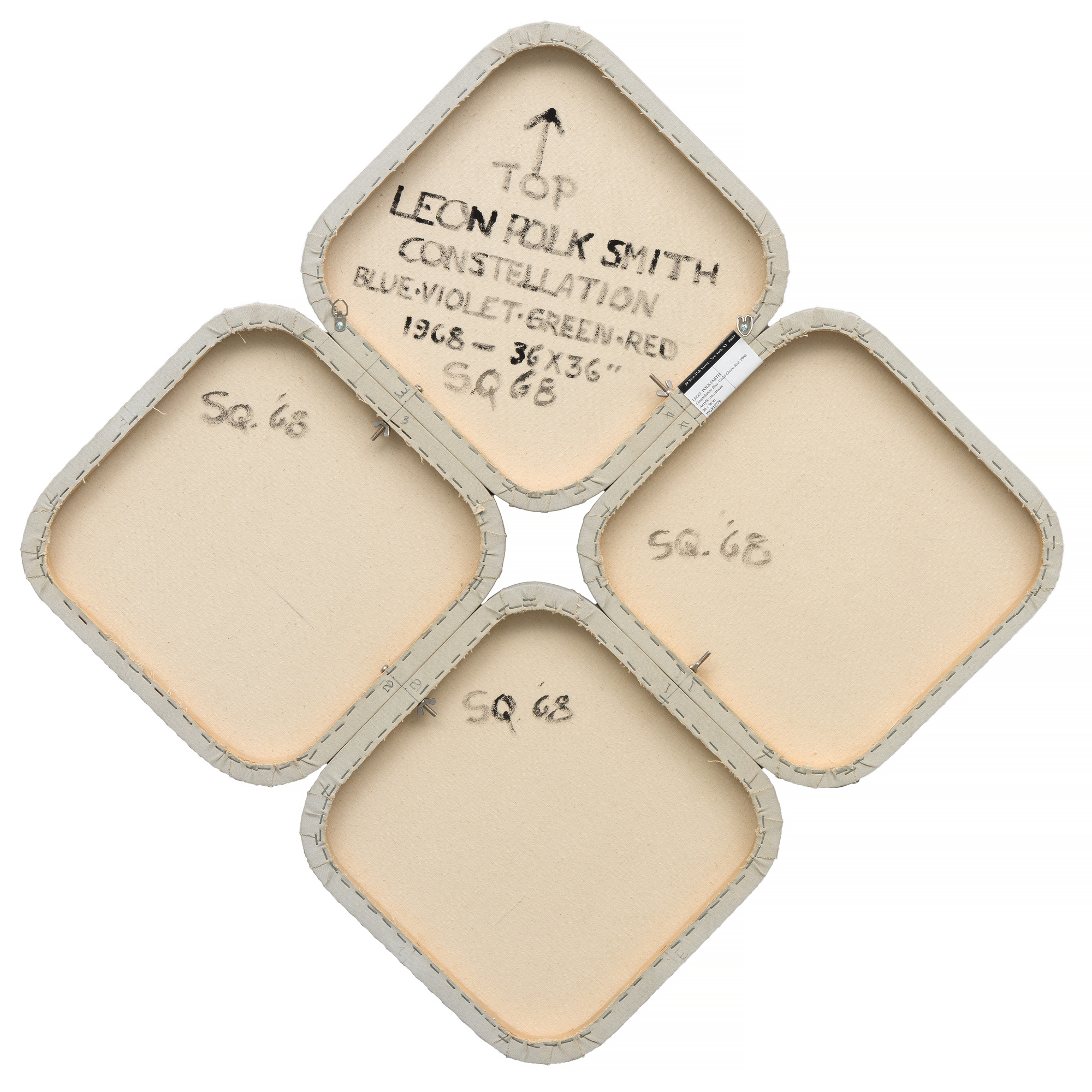
كوكبة زرقاء بنفسجية خضراء حمراء196836 × 36 1/4 بوصة(91.44 × 92.08 سم) أكريليك على قماش
الاصل
ليسون غاليري، نيويورك
مجموعة خاصة، تم شراؤها من المذكور أعلاه
تعد لوحة "Constellation Blue Violet Green Red" (1968) للفنان ليون بولك سميث مثالاً بارزاً على استكشاف الفنان الجذري للشكل واللون في الفن التجريدي بعد الحرب. تم تنفيذ العمل بالألوان الأكريليكية على قماش، ويتكون من أربعة لوحات مربعة مستديرة مرتبة في شكل ماسي. تتميز كل لوحة بتقسيم واضح للألوان: الأسود على الحافة الخارجية، مقترنًا بأحد الألوان الأربعة الزاهية — الأزرق والبنفسجي والأخضر والأحمر — مما يخلق تفاعلًا إيقاعيًا بين التناظر والتباين.


كان سميث شخصية مركزية في تطور الرسم الحاد والتجريد الهندسي، جنبًا إلى جنب مع معاصريه مثل إلسورث كيلي وكارمن هيريرا. كانت سلسلة "Constellation" التي بدأها في الستينيات رائدة في استخدامها لوحات قماشية متعددة الأشكال مثبتة مباشرة على الحائط، متجنبة الإطارات التقليدية لصالح تركيبات تتوسع ديناميكيًا في المساحة المحيطة.


بينما كان سميث غزير الإنتاج في كل من الأعمال على الورق واللوحات الضخمة ذات اللوحة الواحدة، تظل أعمال "Constellation" متعددة اللوحات أقل شيوعًا في أعماله. اليوم، توجد لوحاته في مؤسسات كبرى، بما في ذلك متحف الفن الحديث ومتحف ويتني للفن الأمريكي ومتحف بروكلين. في "Constellation Blue Violet Green Red"، تظهر رؤية سميث بوضوح تام — حيث يتحد اللون والهندسة في كوكبة تبدو دقيقة وواسعة في آن واحد، منضبطة ولكنها تنبض بالطاقة البصرية.
الاستفسار