


العودة
اليابانية
$9,500
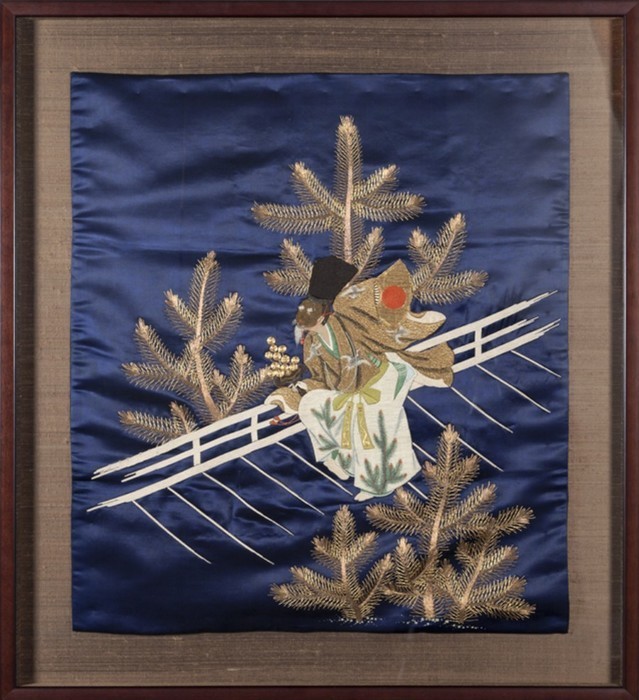
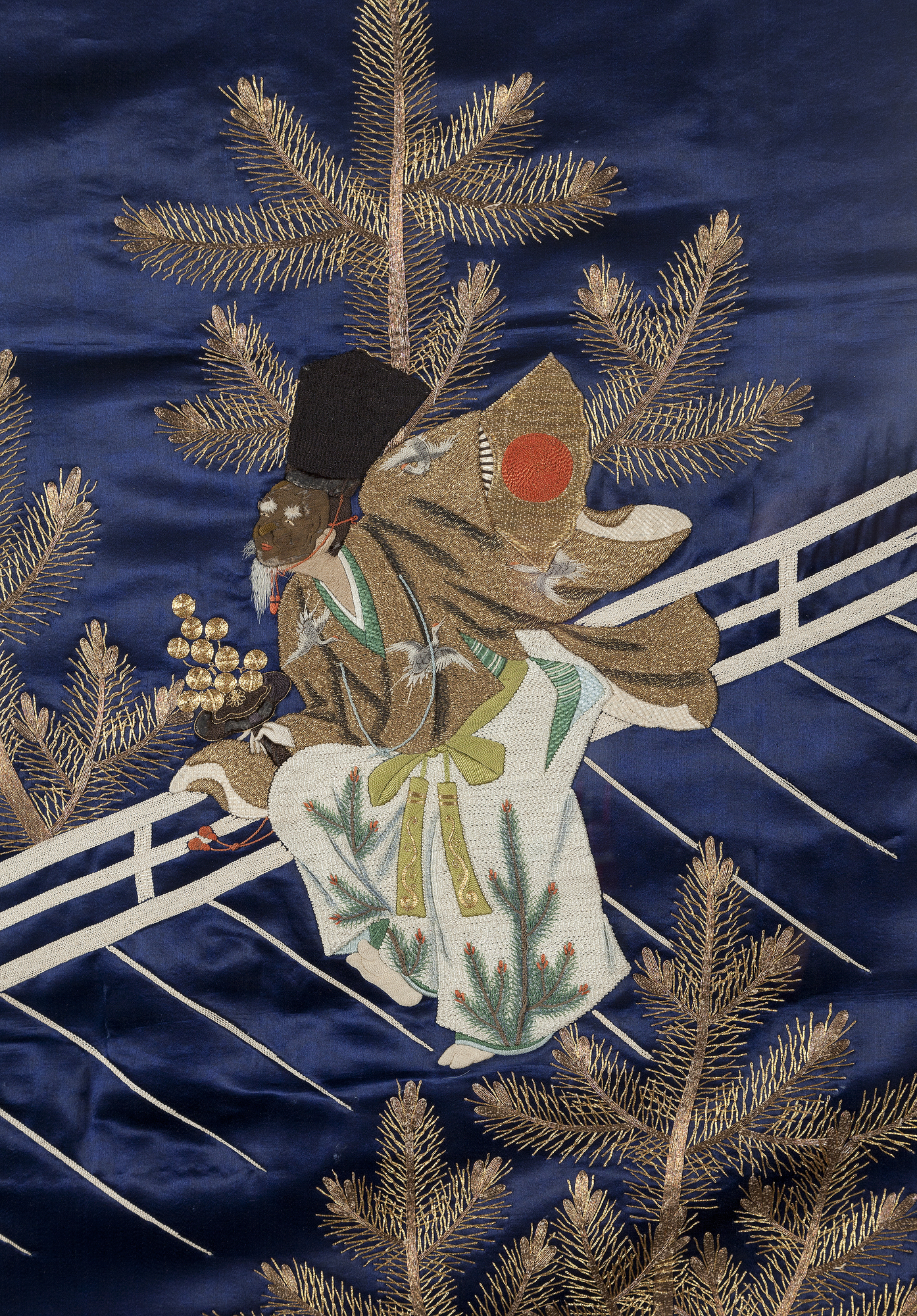
ممثل نوهفترة ميجي (1868-1912)27 1/2 × 25 بوصة(69.85 × 63.5 سم) تطريز من الحرير بالذهب وخيوط الحرير
الاصل
هيذر جيمس فأين أرت ، كاليفورنياهنا، ممثل نوه يرتدي زيًا كاملًا وقناعًا يعبر جناح مسرح نوه. يحيط بالمسرح أشجار الصنوبر، كما أن أشجار الصنوبر هي أيضًا أحد الزخارف على كيمونوه. عادةً ما يتم رسم شجرة صنوبر على الجدار الخلفي لمسارح نوه لتمثيل الشجرة التي، حسب الأسطورة، انتقلت من خلالها هذه الشكل المسرحي من السماء إلى البشرية. في الثقافة اليابانية، أصبحت شجرة الصنوبر دائمة الخضرة رمزًا مهمًا للطول العمر والثبات.
انتشرت ممارسة وضع الفوكوسا فوق الهدايا الموضوعة على صواني خشبية أو مطلية بالورنيش خلال فترة إيدو (القرن السابع عشر إلى القرن التاسع عشر). ما بدأ كممارسة وظيفية لحماية الهدايا من العوامل الجوية، أصبح له دور زخرفي خاص به. كانت العائلات الثرية تمتلك أعدادًا كبيرة من الفوكوسا، وكثيرًا ما كانت تكلف فنانين مشهورين في ذلك الوقت بتصميمها حصريًا لها. ثم كانت الرسومات تُصنع باستخدام تقنيات مثل الصباغة بالربط، والاستنسل، والتطريز بالشق، والنسيج، والرسم بالتطريز، ومزيج من جميع هذه الأساليب.
في كل مرة كانت هناك حاجة إلى فوكوسا، كان يتم اختيارها ليس فقط حسب المناسبة، ولكن أيضًا حسب الموسم والهدية نفسها ومكانة المانح والمتلقي. كانت الفوكوسا أيضًا جزءًا من جهاز العروس ويمكن تقديمها بمناسبة الزفاف. كانت الفوكوسا مصنوعة من قطع مربعة أو مستطيلة من الحرير، مبطنة وغالبًا ما تكون مزينة بشرابات، وأحيانًا تحمل حرفًا واحدًا أو شعار العائلة على ظهرها. تنص قواعد الآداب على أن الفوكوسا لا تعتبر عادة جزءًا من الهدية نفسها ويجب إعادتها لتغطي هدية رمزية أو شكرًا على الهدية. ومع ذلك، فإن بعض المتلقين، مثل البيروقراطيين، الذين قبلوا هدايا من أشخاص يسعون إلى كسب مودتهم، اختاروا الاحتفاظ بالفوكوسا مع الهدايا التي غطتها، مما أضاف إلى مخزونهم من أغطية الهدايا.
انتشرت ممارسة وضع الفوكوسا فوق الهدايا الموضوعة على صواني خشبية أو مطلية بالورنيش خلال فترة إيدو (القرن السابع عشر إلى القرن التاسع عشر). ما بدأ كممارسة وظيفية لحماية الهدايا من العوامل الجوية، أصبح له دور زخرفي خاص به. كانت العائلات الثرية تمتلك أعدادًا كبيرة من الفوكوسا، وكثيرًا ما كانت تكلف فنانين مشهورين في ذلك الوقت بتصميمها حصريًا لها. ثم كانت الرسومات تُصنع باستخدام تقنيات مثل الصباغة بالربط، والاستنسل، والتطريز بالشق، والنسيج، والرسم بالتطريز، ومزيج من جميع هذه الأساليب.
في كل مرة كانت هناك حاجة إلى فوكوسا، كان يتم اختيارها ليس فقط حسب المناسبة، ولكن أيضًا حسب الموسم والهدية نفسها ومكانة المانح والمتلقي. كانت الفوكوسا أيضًا جزءًا من جهاز العروس ويمكن تقديمها بمناسبة الزفاف. كانت الفوكوسا مصنوعة من قطع مربعة أو مستطيلة من الحرير، مبطنة وغالبًا ما تكون مزينة بشرابات، وأحيانًا تحمل حرفًا واحدًا أو شعار العائلة على ظهرها. تنص قواعد الآداب على أن الفوكوسا لا تعتبر عادة جزءًا من الهدية نفسها ويجب إعادتها لتغطي هدية رمزية أو شكرًا على الهدية. ومع ذلك، فإن بعض المتلقين، مثل البيروقراطيين، الذين قبلوا هدايا من أشخاص يسعون إلى كسب مودتهم، اختاروا الاحتفاظ بالفوكوسا مع الهدايا التي غطتها، مما أضاف إلى مخزونهم من أغطية الهدايا.