العودة

كلود [مونيه] (1840-1926)

 
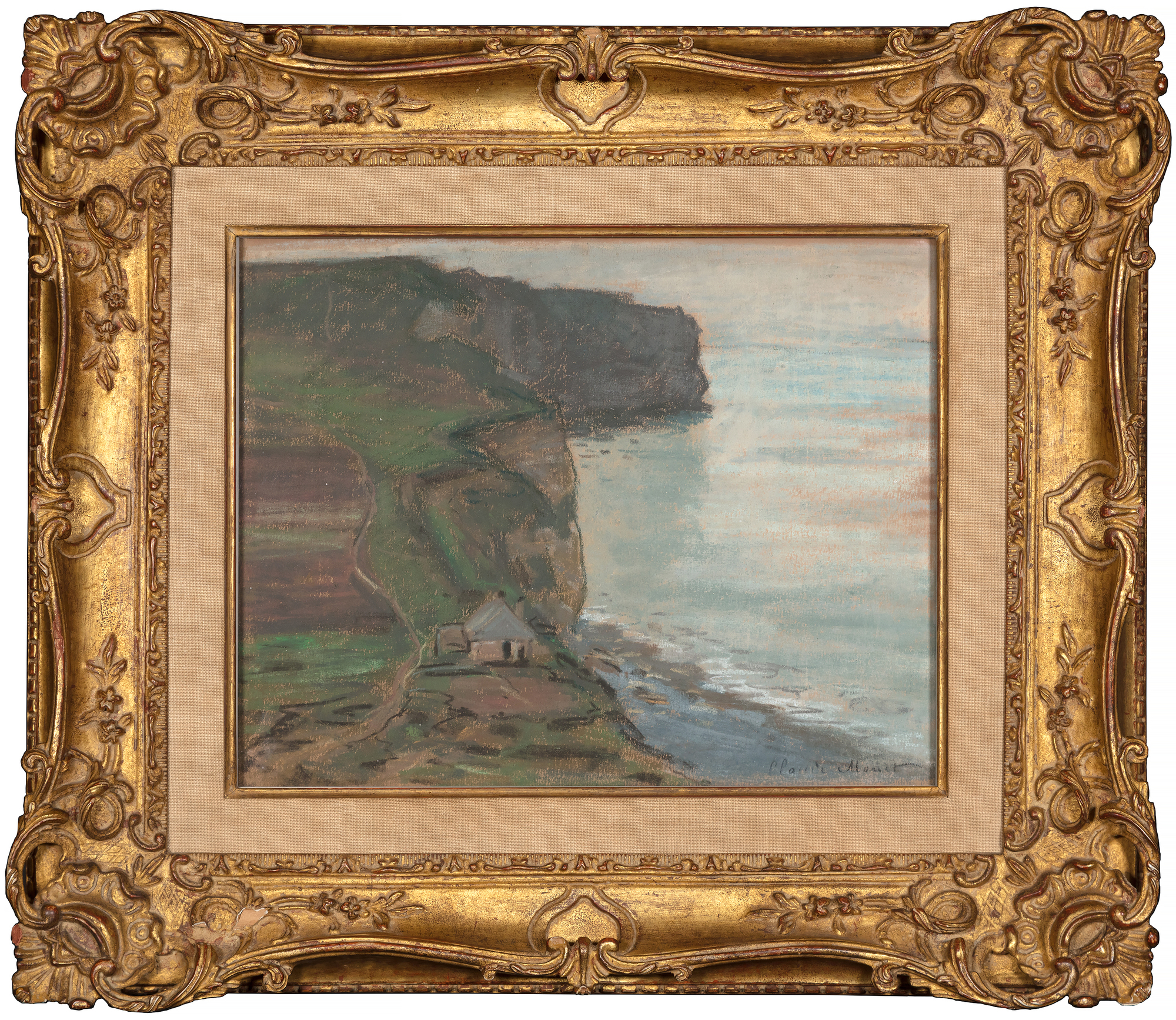
<div><font face=Lato size=3 color="#191919">As the idea of using drawings, whether in pencil or pastel to prepare a painting was at odds with Monet’s publicised creative process, he tended to downplay its importance in his work. However, after his death eight folios containing over four hundred drawings came to light as well as many pastels. This convenient and lightweight medium allowed him to experiment with composition and colour and develop ideas for his oil paintings at speed. He also used pastel to produce finished pictures, as in this example.</font></div><br><br><div><font face=Lato size=3 color="#191919"> </font></div><br><br><div><font face=Lato size=3 color="#191919">During the 1880s Monet returned to the Normandy coast. He found inspiration in the sparkling light and famous limestone cliffs, as had Delacroix and Courbet. As well as working directly in oils, he followed Boudin’s example and used black chalk and pastel to study the effects of light and colour on the sky, sea and land.</font></div><br><br><div><font face=Lato size=3 color="#191919"> </font></div><br><br><div><font face=Lato size=3 color="#191919">In this seascape at Etretat, twenty miles round the coast to the north of Le Havre, Monet has chosen an unusual composition, dividing the landscape down the centre with the vertiginous cliffs; the left half of the picture composed of earthy greens and browns, the right half a sun dappled sea that dissolves into the sky, the horizon only suggested by the lightest touch of charcoal. This picture has a marked difference in atmosphere to another pastel of the nearby Porte d’Aval, dateable to the same period, whose late afternoon sky shows the range of expression that could be achieved with pastel. By the summer of 1885 the year he made this pastel Monet had largely abandoned urban subjects, and was more drawn towards natural phenomena. He painted many views along the coast under different light conditions. As noted in the catalogue raisonné on Monet, this pastel is not a preparatory study for an oil painting, but a wholly original composition. It demonstrates how well the painter understood and enjoyed the versatility of the medium when trying to capture such variable weather.</font></div> <div><font face=Lato size=3 color="#191919">As the idea of using drawings, whether in pencil or pastel to prepare a painting was at odds with Monet’s publicised creative process, he tended to downplay its importance in his work. However, after his death eight folios containing over four hundred drawings came to light as well as many pastels. This convenient and lightweight medium allowed him to experiment with composition and colour and develop ideas for his oil paintings at speed. He also used pastel to produce finished pictures, as in this example.</font></div><br><br><div><font face=Lato size=3 color="#191919"> </font></div><br><br><div><font face=Lato size=3 color="#191919">During the 1880s Monet returned to the Normandy coast. He found inspiration in the sparkling light and famous limestone cliffs, as had Delacroix and Courbet. As well as working directly in oils, he followed Boudin’s example and used black chalk and pastel to study the effects of light and colour on the sky, sea and land.</font></div><br><br><div><font face=Lato size=3 color="#191919"> </font></div><br><br><div><font face=Lato size=3 color="#191919">In this seascape at Etretat, twenty miles round the coast to the north of Le Havre, Monet has chosen an unusual composition, dividing the landscape down the centre with the vertiginous cliffs; the left half of the picture composed of earthy greens and browns, the right half a sun dappled sea that dissolves into the sky, the horizon only suggested by the lightest touch of charcoal. This picture has a marked difference in atmosphere to another pastel of the nearby Porte d’Aval, dateable to the same period, whose late afternoon sky shows the range of expression that could be achieved with pastel. By the summer of 1885 the year he made this pastel Monet had largely abandoned urban subjects, and was more drawn towards natural phenomena. He painted many views along the coast under different light conditions. As noted in the catalogue raisonné on Monet, this pastel is not a preparatory study for an oil painting, but a wholly original composition. It demonstrates how well the painter understood and enjoyed the versatility of the medium when trying to capture such variable weather.</font></div> <div><font face=Lato size=3 color="#191919">As the idea of using drawings, whether in pencil or pastel to prepare a painting was at odds with Monet’s publicised creative process, he tended to downplay its importance in his work. However, after his death eight folios containing over four hundred drawings came to light as well as many pastels. This convenient and lightweight medium allowed him to experiment with composition and colour and develop ideas for his oil paintings at speed. He also used pastel to produce finished pictures, as in this example.</font></div><br><br><div><font face=Lato size=3 color="#191919"> </font></div><br><br><div><font face=Lato size=3 color="#191919">During the 1880s Monet returned to the Normandy coast. He found inspiration in the sparkling light and famous limestone cliffs, as had Delacroix and Courbet. As well as working directly in oils, he followed Boudin’s example and used black chalk and pastel to study the effects of light and colour on the sky, sea and land.</font></div><br><br><div><font face=Lato size=3 color="#191919"> </font></div><br><br><div><font face=Lato size=3 color="#191919">In this seascape at Etretat, twenty miles round the coast to the north of Le Havre, Monet has chosen an unusual composition, dividing the landscape down the centre with the vertiginous cliffs; the left half of the picture composed of earthy greens and browns, the right half a sun dappled sea that dissolves into the sky, the horizon only suggested by the lightest touch of charcoal. This picture has a marked difference in atmosphere to another pastel of the nearby Porte d’Aval, dateable to the same period, whose late afternoon sky shows the range of expression that could be achieved with pastel. By the summer of 1885 the year he made this pastel Monet had largely abandoned urban subjects, and was more drawn towards natural phenomena. He painted many views along the coast under different light conditions. As noted in the catalogue raisonné on Monet, this pastel is not a preparatory study for an oil painting, but a wholly original composition. It demonstrates how well the painter understood and enjoyed the versatility of the medium when trying to capture such variable weather.</font></div> <div><font face=Lato size=3 color="#191919">As the idea of using drawings, whether in pencil or pastel to prepare a painting was at odds with Monet’s publicised creative process, he tended to downplay its importance in his work. However, after his death eight folios containing over four hundred drawings came to light as well as many pastels. This convenient and lightweight medium allowed him to experiment with composition and colour and develop ideas for his oil paintings at speed. He also used pastel to produce finished pictures, as in this example.</font></div><br><br><div><font face=Lato size=3 color="#191919"> </font></div><br><br><div><font face=Lato size=3 color="#191919">During the 1880s Monet returned to the Normandy coast. He found inspiration in the sparkling light and famous limestone cliffs, as had Delacroix and Courbet. As well as working directly in oils, he followed Boudin’s example and used black chalk and pastel to study the effects of light and colour on the sky, sea and land.</font></div><br><br><div><font face=Lato size=3 color="#191919"> </font></div><br><br><div><font face=Lato size=3 color="#191919">In this seascape at Etretat, twenty miles round the coast to the north of Le Havre, Monet has chosen an unusual composition, dividing the landscape down the centre with the vertiginous cliffs; the left half of the picture composed of earthy greens and browns, the right half a sun dappled sea that dissolves into the sky, the horizon only suggested by the lightest touch of charcoal. This picture has a marked difference in atmosphere to another pastel of the nearby Porte d’Aval, dateable to the same period, whose late afternoon sky shows the range of expression that could be achieved with pastel. By the summer of 1885 the year he made this pastel Monet had largely abandoned urban subjects, and was more drawn towards natural phenomena. He painted many views along the coast under different light conditions. As noted in the catalogue raisonné on Monet, this pastel is not a preparatory study for an oil painting, but a wholly original composition. It demonstrates how well the painter understood and enjoyed the versatility of the medium when trying to capture such variable weather.</font></div> <div><font face=Lato size=3 color="#191919">As the idea of using drawings, whether in pencil or pastel to prepare a painting was at odds with Monet’s publicised creative process, he tended to downplay its importance in his work. However, after his death eight folios containing over four hundred drawings came to light as well as many pastels. This convenient and lightweight medium allowed him to experiment with composition and colour and develop ideas for his oil paintings at speed. He also used pastel to produce finished pictures, as in this example.</font></div><br><br><div><font face=Lato size=3 color="#191919"> </font></div><br><br><div><font face=Lato size=3 color="#191919">During the 1880s Monet returned to the Normandy coast. He found inspiration in the sparkling light and famous limestone cliffs, as had Delacroix and Courbet. As well as working directly in oils, he followed Boudin’s example and used black chalk and pastel to study the effects of light and colour on the sky, sea and land.</font></div><br><br><div><font face=Lato size=3 color="#191919"> </font></div><br><br><div><font face=Lato size=3 color="#191919">In this seascape at Etretat, twenty miles round the coast to the north of Le Havre, Monet has chosen an unusual composition, dividing the landscape down the centre with the vertiginous cliffs; the left half of the picture composed of earthy greens and browns, the right half a sun dappled sea that dissolves into the sky, the horizon only suggested by the lightest touch of charcoal. This picture has a marked difference in atmosphere to another pastel of the nearby Porte d’Aval, dateable to the same period, whose late afternoon sky shows the range of expression that could be achieved with pastel. By the summer of 1885 the year he made this pastel Monet had largely abandoned urban subjects, and was more drawn towards natural phenomena. He painted many views along the coast under different light conditions. As noted in the catalogue raisonné on Monet, this pastel is not a preparatory study for an oil painting, but a wholly original composition. It demonstrates how well the painter understood and enjoyed the versatility of the medium when trying to capture such variable weather.</font></div> <div><font face=Lato size=3 color="#191919">As the idea of using drawings, whether in pencil or pastel to prepare a painting was at odds with Monet’s publicised creative process, he tended to downplay its importance in his work. However, after his death eight folios containing over four hundred drawings came to light as well as many pastels. This convenient and lightweight medium allowed him to experiment with composition and colour and develop ideas for his oil paintings at speed. He also used pastel to produce finished pictures, as in this example.</font></div><br><br><div><font face=Lato size=3 color="#191919"> </font></div><br><br><div><font face=Lato size=3 color="#191919">During the 1880s Monet returned to the Normandy coast. He found inspiration in the sparkling light and famous limestone cliffs, as had Delacroix and Courbet. As well as working directly in oils, he followed Boudin’s example and used black chalk and pastel to study the effects of light and colour on the sky, sea and land.</font></div><br><br><div><font face=Lato size=3 color="#191919"> </font></div><br><br><div><font face=Lato size=3 color="#191919">In this seascape at Etretat, twenty miles round the coast to the north of Le Havre, Monet has chosen an unusual composition, dividing the landscape down the centre with the vertiginous cliffs; the left half of the picture composed of earthy greens and browns, the right half a sun dappled sea that dissolves into the sky, the horizon only suggested by the lightest touch of charcoal. This picture has a marked difference in atmosphere to another pastel of the nearby Porte d’Aval, dateable to the same period, whose late afternoon sky shows the range of expression that could be achieved with pastel. By the summer of 1885 the year he made this pastel Monet had largely abandoned urban subjects, and was more drawn towards natural phenomena. He painted many views along the coast under different light conditions. As noted in the catalogue raisonné on Monet, this pastel is not a preparatory study for an oil painting, but a wholly original composition. It demonstrates how well the painter understood and enjoyed the versatility of the medium when trying to capture such variable weather.</font></div> <div><font face=Lato size=3 color="#191919">As the idea of using drawings, whether in pencil or pastel to prepare a painting was at odds with Monet’s publicised creative process, he tended to downplay its importance in his work. However, after his death eight folios containing over four hundred drawings came to light as well as many pastels. This convenient and lightweight medium allowed him to experiment with composition and colour and develop ideas for his oil paintings at speed. He also used pastel to produce finished pictures, as in this example.</font></div><br><br><div><font face=Lato size=3 color="#191919"> </font></div><br><br><div><font face=Lato size=3 color="#191919">During the 1880s Monet returned to the Normandy coast. He found inspiration in the sparkling light and famous limestone cliffs, as had Delacroix and Courbet. As well as working directly in oils, he followed Boudin’s example and used black chalk and pastel to study the effects of light and colour on the sky, sea and land.</font></div><br><br><div><font face=Lato size=3 color="#191919"> </font></div><br><br><div><font face=Lato size=3 color="#191919">In this seascape at Etretat, twenty miles round the coast to the north of Le Havre, Monet has chosen an unusual composition, dividing the landscape down the centre with the vertiginous cliffs; the left half of the picture composed of earthy greens and browns, the right half a sun dappled sea that dissolves into the sky, the horizon only suggested by the lightest touch of charcoal. This picture has a marked difference in atmosphere to another pastel of the nearby Porte d’Aval, dateable to the same period, whose late afternoon sky shows the range of expression that could be achieved with pastel. By the summer of 1885 the year he made this pastel Monet had largely abandoned urban subjects, and was more drawn towards natural phenomena. He painted many views along the coast under different light conditions. As noted in the catalogue raisonné on Monet, this pastel is not a preparatory study for an oil painting, but a wholly original composition. It demonstrates how well the painter understood and enjoyed the versatility of the medium when trying to capture such variable weather.</font></div>
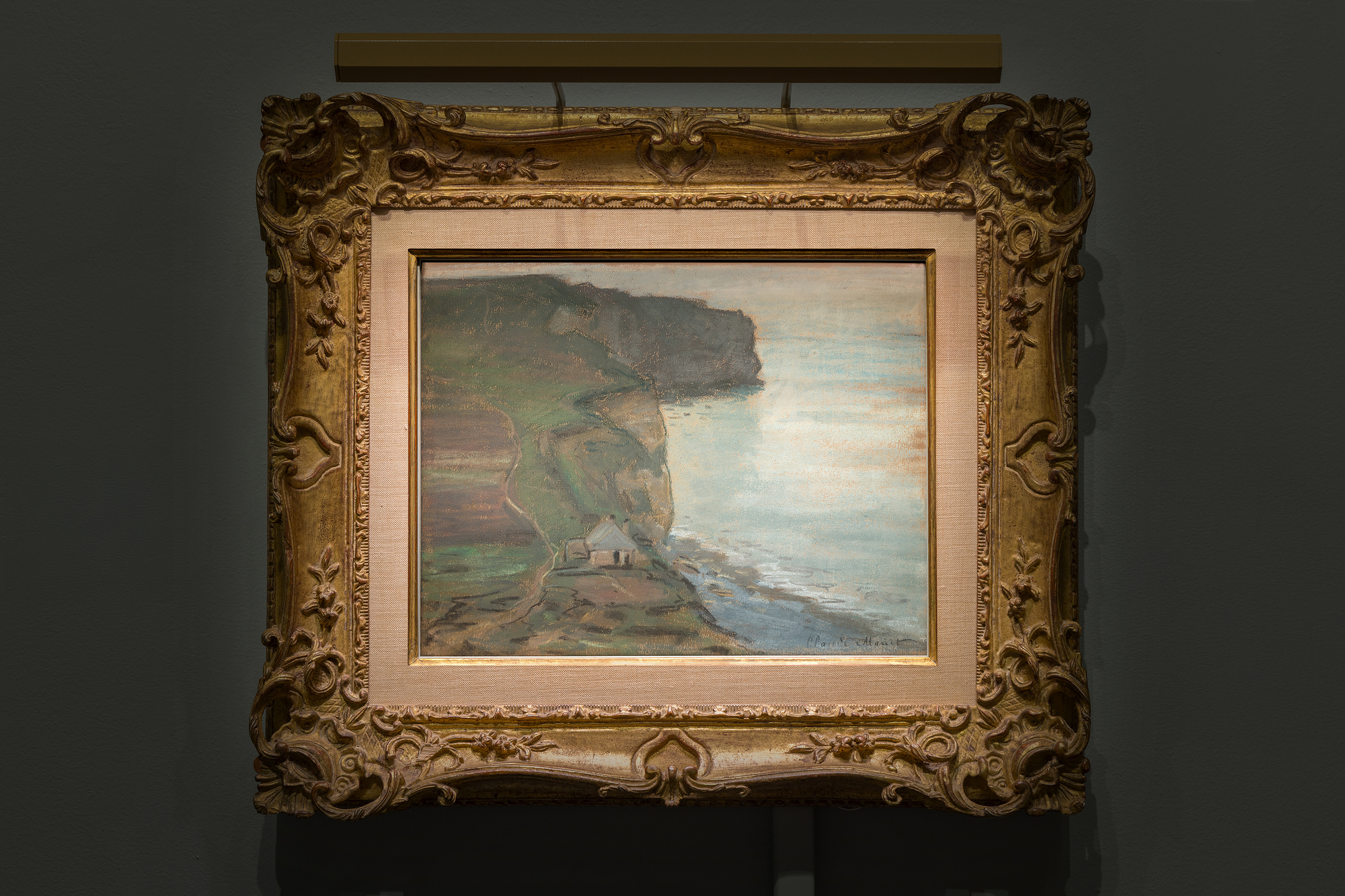
إتريتات، كاب دانتيفرحوالي 188510 1/2 × 13 3/8 بوصة(26.67 × 33.97 سم) باستيل على ورق مثبت على لوح
الاصل
(ربما) السيدة ماتيرن، حوالي عام 1894
I. Stchoukine، باريس
فندق دروو، باريس، 24 مارس 1900، القطعة 36
أوليفييه فانسير
غاليري لورنسو، باريس
وايلدنشتاين وشركاه، باريس
أليس تولي، تم شراؤها من المذكور أعلاه، 1973
كريستيز، نيويورك، 10 نوفمبر 1994، القطعة 138
معرض نيف-ديغانت، لندن
مجموعة خاصة، تم شراؤها من المذكور أعلاه، 2002، ومن ثم بالوراثة
مجموعة خاصة، كاليفورنيا
معرض
إيست هامبتون، نيويورك، قاعة غيلد، The Sea Around Us، أغسطس - سبتمبر 1953، رقم 45
واشي
... اكثر...واشنطن العاصمة، معارض آدامز ديفيدسون، الانطباعيون الفرنسيون وأتباعهم، ديسمبر 1971 - يناير 1972
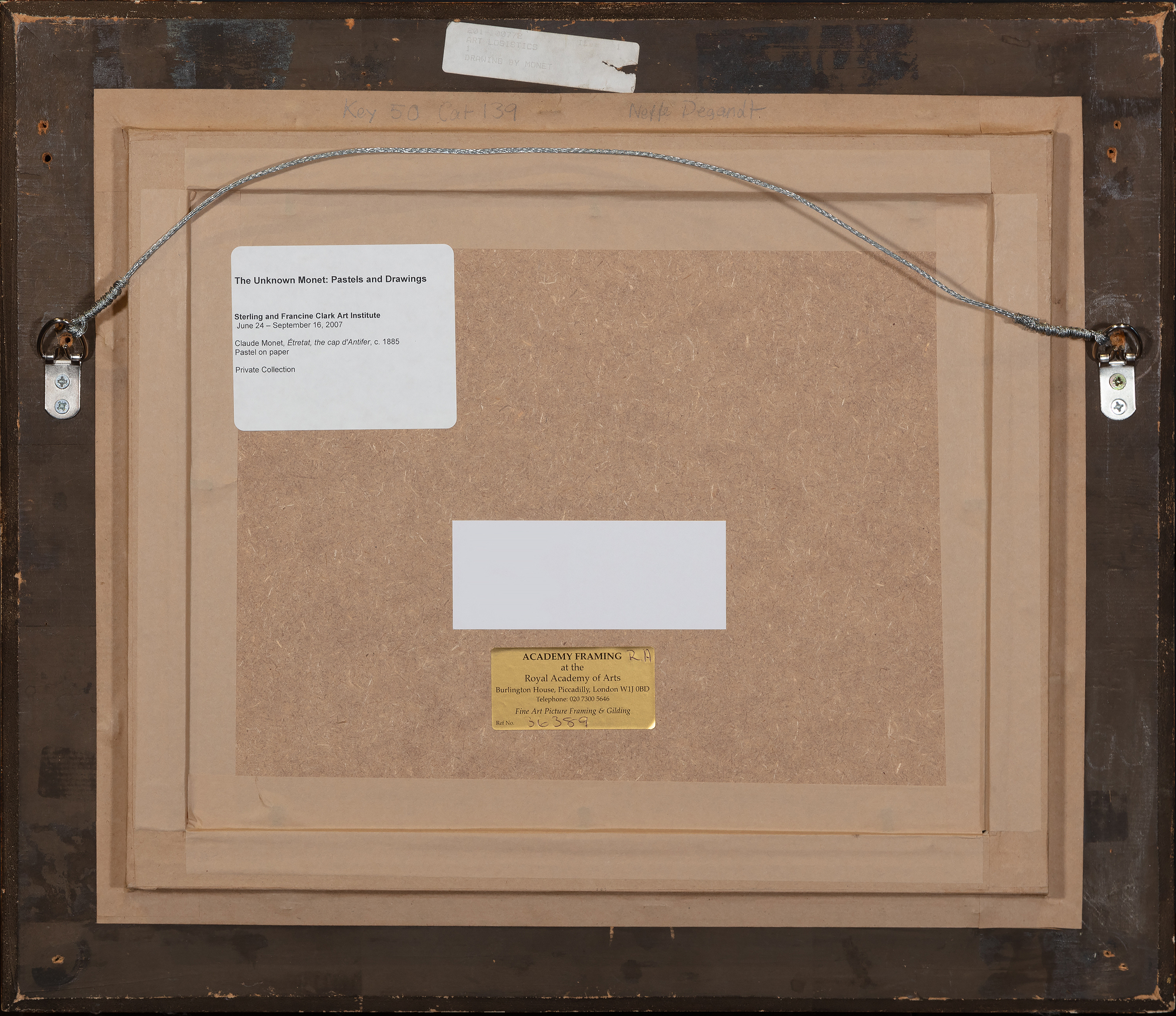
لندن، الأكاديمية الملكية للفنون؛ ويليامزتاون، معهد ستيرلينج وفرانسين كلارك للفنون، مونيه المجهول: رسومات بالباستيل ورسومات، مارس - سبتمبر 2007، رقم 139
الادب
دانيال وايلدنشتاين، كلود مونيه، كتالوج شامل، ملحق للوحات والرسومات والباستيل، لوزان، 1991، المجلد الخامس، رقم P 80، ص. 171 (مصورة)
جيمس غانز وريتشارد كيندل، مونيه المجهول: الباستيل والرسومات، ويليامزتاون، ماساتشوستس، 2007، رقم 139، ص. 158-159 و302 (مصورة في ص. 158)
... اقل...
نظرًا لأن فكرة استخدام الرسومات، سواء بالقلم الرصاص أو الباستيل، لإعداد لوحة كانت تتعارض مع عملية الإبداع التي أعلن عنها مونيه، فقد كان يميل إلى التقليل من أهميتها في عمله. ومع ذلك، بعد وفاته، ظهرت ثمانية مجلدات تحتوي على أكثر من أربعمائة رسم بالإضافة إلى العديد من اللوحات الباستيلية. سمحت له هذه الوسيلة المريحة والخفيفة الوزن بتجربة التكوين واللون وتطوير أفكار لوحاته الزيتية بسرعة. كما استخدم الباستيل لإنتاج صور نهائية، كما في هذا المثال.


خلال ثمانينيات القرن التاسع عشر، عاد مونيه إلى ساحل نورماندي. وجد الإلهام في الضوء المتلألئ والمنحدرات الجيرية الشهيرة، كما فعل ديلاكروا وكوربيه. بالإضافة إلى العمل مباشرة بالألوان الزيتية، اتبع مثال بودان واستخدم الطباشير الأسود والباستيل لدراسة تأثيرات الضوء واللون على السماء والبحر والأرض.


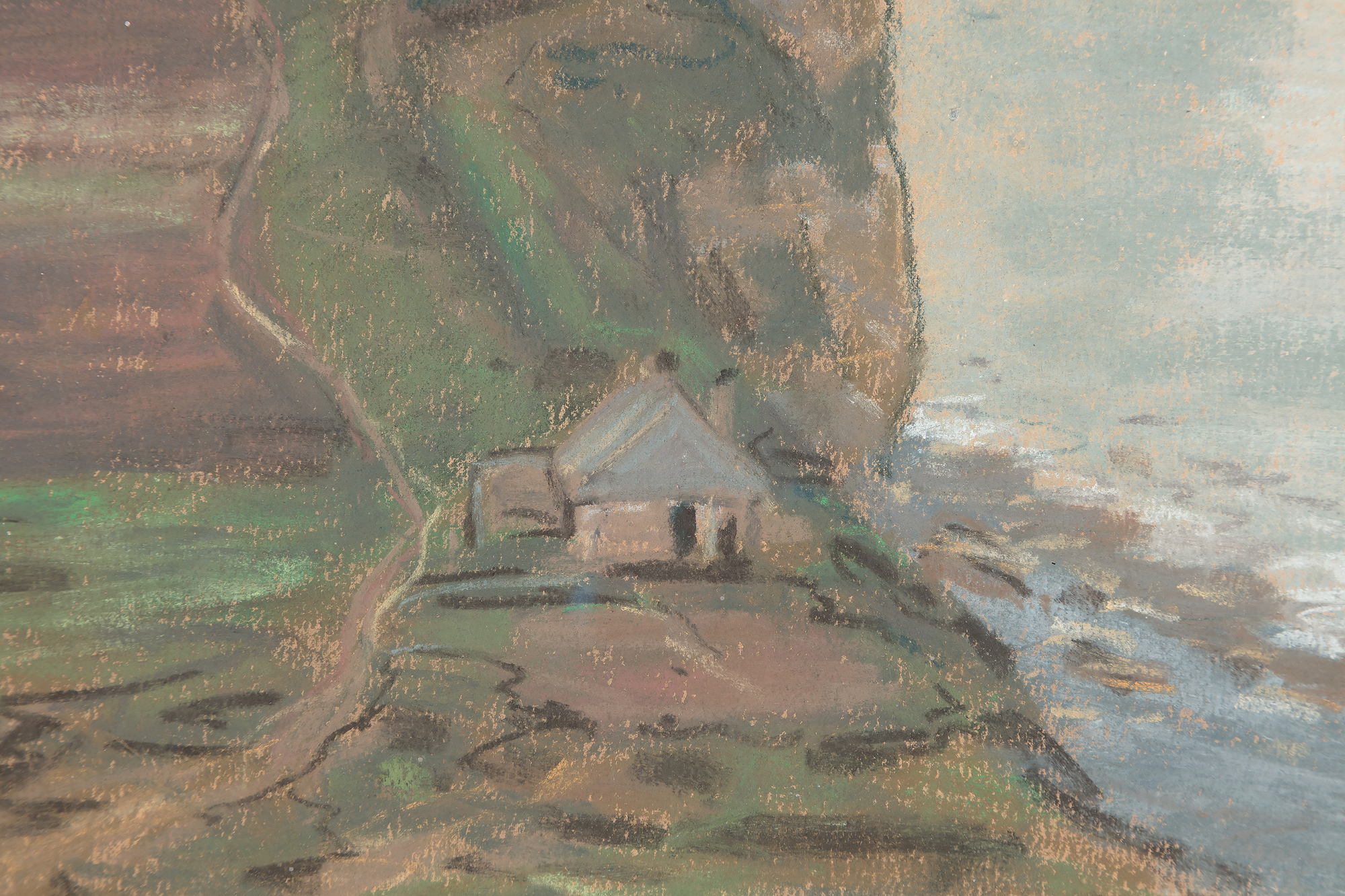
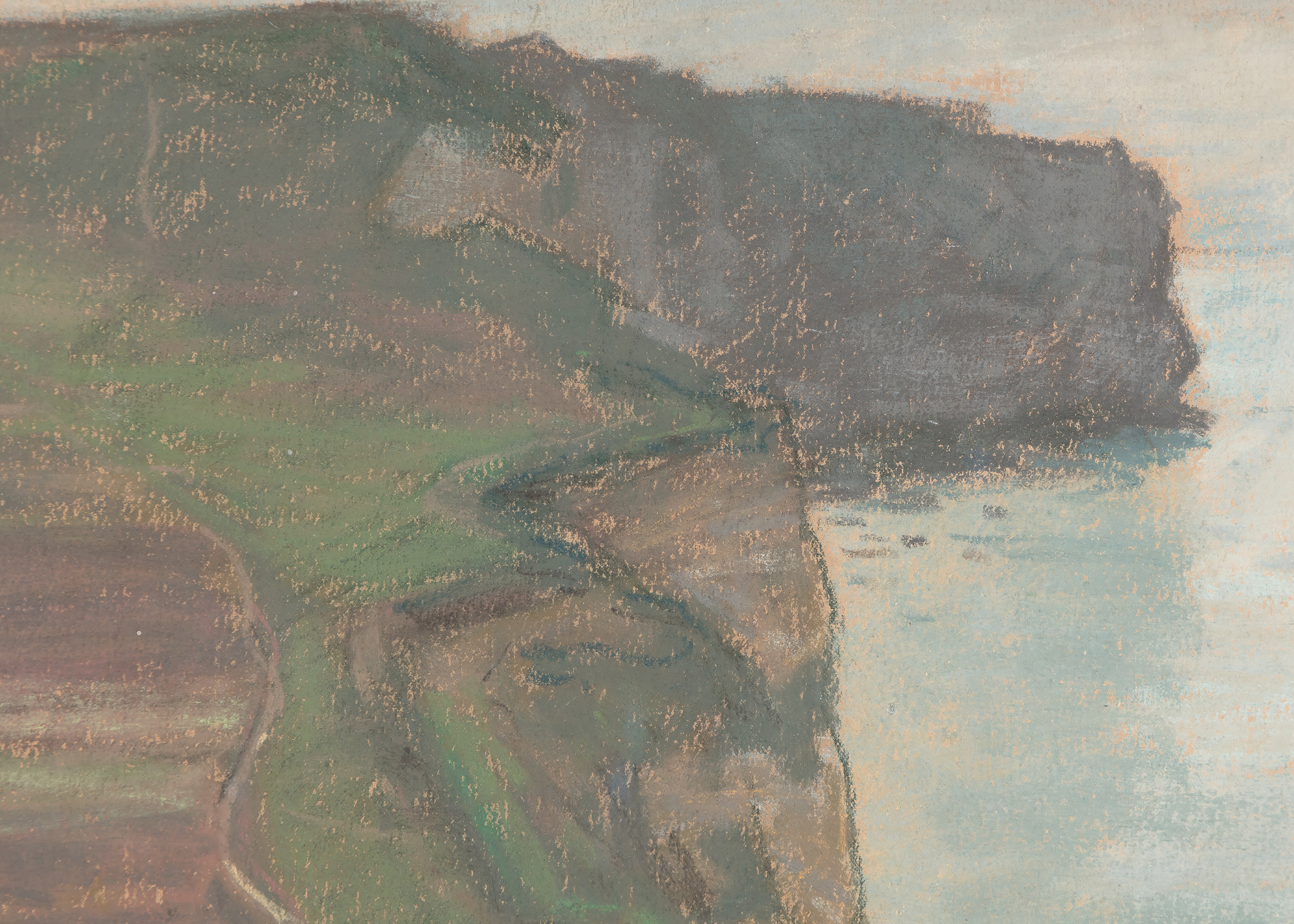
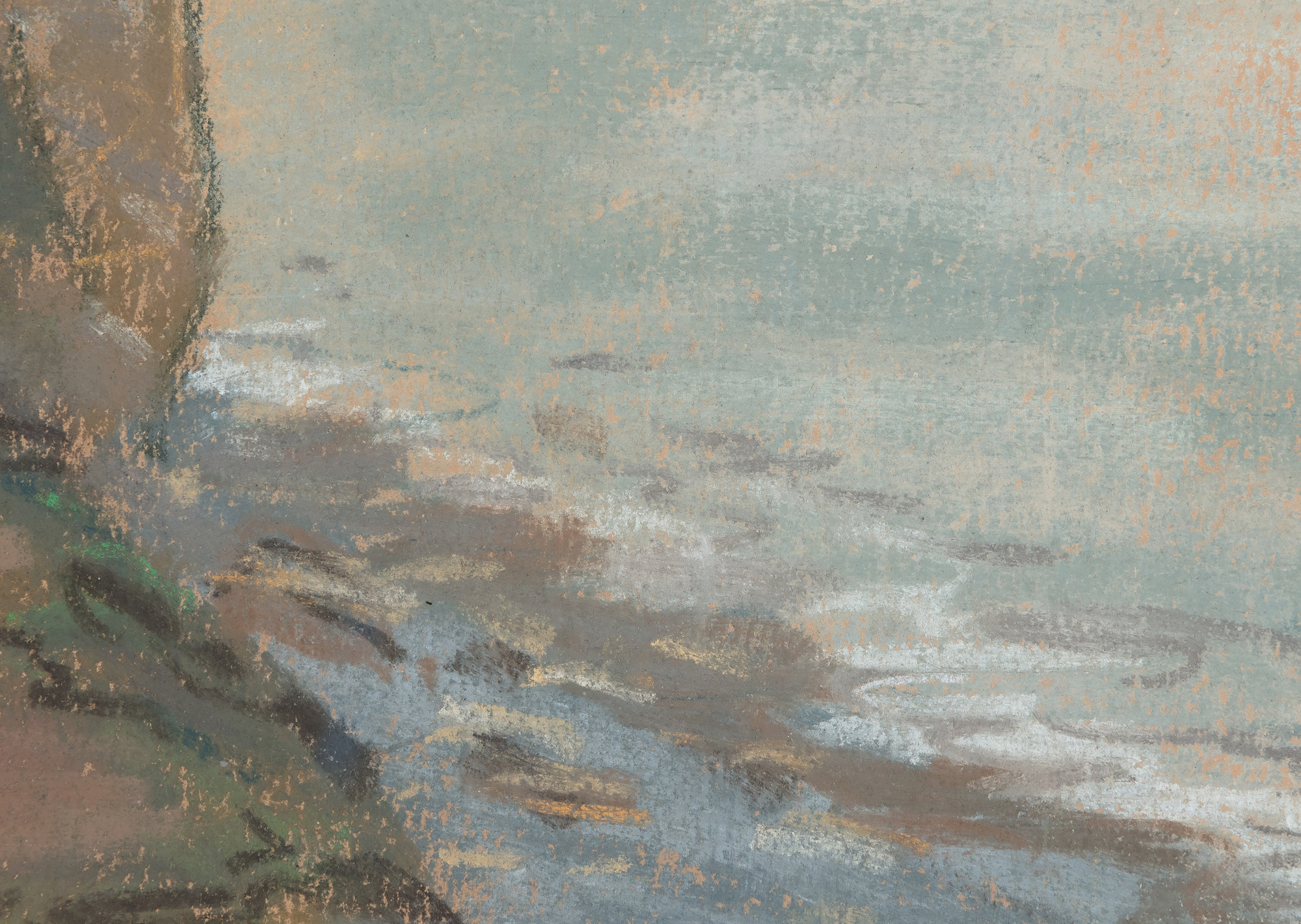
في هذا المنظر البحري في إتريتات، على بعد عشرين ميلاً من الساحل شمال لو هافر، اختار مونيه تركيبة غير عادية، حيث قسم المنظر الطبيعي في المنتصف بالمنحدرات الشاهقة؛ يتكون النصف الأيسر من الصورة من ألوان خضراء وبنية ترابية، والنصف الأيمن من بحر مرقط بأشعة الشمس يتلاشى في السماء، والأفق موحى به فقط بلمسة خفيفة من الفحم. تختلف هذه الصورة بشكل ملحوظ في أجوائها عن لوحة باستيل أخرى للبوابة القريبة بورت دافال، والتي تعود إلى نفس الفترة، حيث يُظهر سماء ما بعد الظهيرة مجموعة من التعبيرات التي يمكن تحقيقها باستخدام الباستيل. بحلول صيف عام 1885، وهو العام الذي رسم فيه هذه اللوحة بالباستيل، كان مونيه قد تخلى إلى حد كبير عن الموضوعات الحضرية، وأصبح أكثر انجذابًا إلى الظواهر الطبيعية. رسم العديد من المناظر على طول الساحل في ظروف إضاءة مختلفة. كما هو مذكور في الكتالوج الشامل لأعمال مونيه، فإن هذه اللوحة الباستيلية ليست دراسة تمهيدية لرسم زيتي، بل هي تركيبة أصلية بالكامل. وهي تظهر مدى فهم الرسام لتنوع هذه الوسيلة واستمتاعه بها عند محاولته التقاط مثل هذا الطقس المتغير.
الاستفسار