العودة

وينسلو هومر & nbsp(1836-1910)

 
<div><font face=Lato size=3 color=black><em>Houghton Farms (Girls Strolling in an Orchard)</em> belongs to a pivotal moment in Winslow Homers career, created during the late 1870s as he transitioned from the wartime subjects that first brought him acclaim to the watercolor medium and domestic pastoral themes that would secure his place in the American canon. This period marked Homers sustained engagement with Houghton Farm in Mountainville in the Hudson Valley, where he spent extended time with his childhood friend and patron Lawson Valentine. Over these visits Homer produced approximately fifty watercolors, forming one of the most important bodies of early work in the medium. The significance of this output was later celebrated in the 2009 exhibition at Syracuse Art Galleries, <em>Winslow Homers Empire State: Houghton Farm and Beyond</em>.</font></div><br><br><div> </div><br><br><div><font face=Lato size=3 color=black>This watercolor is included in the artists catalogue raisonne and relates closely to other early examples from Houghton Farm, including <em>Fresh Air</em> from 1878 in the collection of the Brooklyn Museum. Its serene orchard scene, rendered with a soft and muted palette, reflects the themes of nostalgia, calm, and peace that define Homer's Restoration period. The transparency of the watercolor medium allows Homer to create a delicate, atmospheric impression of a misty morning, animated by touches of bright color in the figures dress patterns, the bow on a hat, a headwrap, and the bluebird perched on a branch.</font></div><br><br><div> </div><br><br><div><font face=Lato size=3 color=black>The continued importance of Homer's watercolor practice is affirmed by the current exhibition at the Museum of Fine Arts Boston, <em>Of Light and Air: Winslow Homer in Watercolor</em>, which underscores the enduring resonance of works from this transformative period. <em>Houghton Farms (Girls Strolling in an Orchard)</em> stands as a beautifully preserved example from the moment when Homer embraced watercolor as his primary mode of expression, illuminating the quiet lyricism that came to define his mature art.</font></div> <div><font face=Lato size=3 color=black><em>Houghton Farms (Girls Strolling in an Orchard)</em> belongs to a pivotal moment in Winslow Homers career, created during the late 1870s as he transitioned from the wartime subjects that first brought him acclaim to the watercolor medium and domestic pastoral themes that would secure his place in the American canon. This period marked Homers sustained engagement with Houghton Farm in Mountainville in the Hudson Valley, where he spent extended time with his childhood friend and patron Lawson Valentine. Over these visits Homer produced approximately fifty watercolors, forming one of the most important bodies of early work in the medium. The significance of this output was later celebrated in the 2009 exhibition at Syracuse Art Galleries, <em>Winslow Homers Empire State: Houghton Farm and Beyond</em>.</font></div><br><br><div> </div><br><br><div><font face=Lato size=3 color=black>This watercolor is included in the artists catalogue raisonne and relates closely to other early examples from Houghton Farm, including <em>Fresh Air</em> from 1878 in the collection of the Brooklyn Museum. Its serene orchard scene, rendered with a soft and muted palette, reflects the themes of nostalgia, calm, and peace that define Homer's Restoration period. The transparency of the watercolor medium allows Homer to create a delicate, atmospheric impression of a misty morning, animated by touches of bright color in the figures dress patterns, the bow on a hat, a headwrap, and the bluebird perched on a branch.</font></div><br><br><div> </div><br><br><div><font face=Lato size=3 color=black>The continued importance of Homer's watercolor practice is affirmed by the current exhibition at the Museum of Fine Arts Boston, <em>Of Light and Air: Winslow Homer in Watercolor</em>, which underscores the enduring resonance of works from this transformative period. <em>Houghton Farms (Girls Strolling in an Orchard)</em> stands as a beautifully preserved example from the moment when Homer embraced watercolor as his primary mode of expression, illuminating the quiet lyricism that came to define his mature art.</font></div> <div><font face=Lato size=3 color=black><em>Houghton Farms (Girls Strolling in an Orchard)</em> belongs to a pivotal moment in Winslow Homers career, created during the late 1870s as he transitioned from the wartime subjects that first brought him acclaim to the watercolor medium and domestic pastoral themes that would secure his place in the American canon. This period marked Homers sustained engagement with Houghton Farm in Mountainville in the Hudson Valley, where he spent extended time with his childhood friend and patron Lawson Valentine. Over these visits Homer produced approximately fifty watercolors, forming one of the most important bodies of early work in the medium. The significance of this output was later celebrated in the 2009 exhibition at Syracuse Art Galleries, <em>Winslow Homers Empire State: Houghton Farm and Beyond</em>.</font></div><br><br><div> </div><br><br><div><font face=Lato size=3 color=black>This watercolor is included in the artists catalogue raisonne and relates closely to other early examples from Houghton Farm, including <em>Fresh Air</em> from 1878 in the collection of the Brooklyn Museum. Its serene orchard scene, rendered with a soft and muted palette, reflects the themes of nostalgia, calm, and peace that define Homer's Restoration period. The transparency of the watercolor medium allows Homer to create a delicate, atmospheric impression of a misty morning, animated by touches of bright color in the figures dress patterns, the bow on a hat, a headwrap, and the bluebird perched on a branch.</font></div><br><br><div> </div><br><br><div><font face=Lato size=3 color=black>The continued importance of Homer's watercolor practice is affirmed by the current exhibition at the Museum of Fine Arts Boston, <em>Of Light and Air: Winslow Homer in Watercolor</em>, which underscores the enduring resonance of works from this transformative period. <em>Houghton Farms (Girls Strolling in an Orchard)</em> stands as a beautifully preserved example from the moment when Homer embraced watercolor as his primary mode of expression, illuminating the quiet lyricism that came to define his mature art.</font></div> <div><font face=Lato size=3 color=black><em>Houghton Farms (Girls Strolling in an Orchard)</em> belongs to a pivotal moment in Winslow Homers career, created during the late 1870s as he transitioned from the wartime subjects that first brought him acclaim to the watercolor medium and domestic pastoral themes that would secure his place in the American canon. This period marked Homers sustained engagement with Houghton Farm in Mountainville in the Hudson Valley, where he spent extended time with his childhood friend and patron Lawson Valentine. Over these visits Homer produced approximately fifty watercolors, forming one of the most important bodies of early work in the medium. The significance of this output was later celebrated in the 2009 exhibition at Syracuse Art Galleries, <em>Winslow Homers Empire State: Houghton Farm and Beyond</em>.</font></div><br><br><div> </div><br><br><div><font face=Lato size=3 color=black>This watercolor is included in the artists catalogue raisonne and relates closely to other early examples from Houghton Farm, including <em>Fresh Air</em> from 1878 in the collection of the Brooklyn Museum. Its serene orchard scene, rendered with a soft and muted palette, reflects the themes of nostalgia, calm, and peace that define Homer's Restoration period. The transparency of the watercolor medium allows Homer to create a delicate, atmospheric impression of a misty morning, animated by touches of bright color in the figures dress patterns, the bow on a hat, a headwrap, and the bluebird perched on a branch.</font></div><br><br><div> </div><br><br><div><font face=Lato size=3 color=black>The continued importance of Homer's watercolor practice is affirmed by the current exhibition at the Museum of Fine Arts Boston, <em>Of Light and Air: Winslow Homer in Watercolor</em>, which underscores the enduring resonance of works from this transformative period. <em>Houghton Farms (Girls Strolling in an Orchard)</em> stands as a beautifully preserved example from the moment when Homer embraced watercolor as his primary mode of expression, illuminating the quiet lyricism that came to define his mature art.</font></div> <div><font face=Lato size=3 color=black><em>Houghton Farms (Girls Strolling in an Orchard)</em> belongs to a pivotal moment in Winslow Homers career, created during the late 1870s as he transitioned from the wartime subjects that first brought him acclaim to the watercolor medium and domestic pastoral themes that would secure his place in the American canon. This period marked Homers sustained engagement with Houghton Farm in Mountainville in the Hudson Valley, where he spent extended time with his childhood friend and patron Lawson Valentine. Over these visits Homer produced approximately fifty watercolors, forming one of the most important bodies of early work in the medium. The significance of this output was later celebrated in the 2009 exhibition at Syracuse Art Galleries, <em>Winslow Homers Empire State: Houghton Farm and Beyond</em>.</font></div><br><br><div> </div><br><br><div><font face=Lato size=3 color=black>This watercolor is included in the artists catalogue raisonne and relates closely to other early examples from Houghton Farm, including <em>Fresh Air</em> from 1878 in the collection of the Brooklyn Museum. Its serene orchard scene, rendered with a soft and muted palette, reflects the themes of nostalgia, calm, and peace that define Homer's Restoration period. The transparency of the watercolor medium allows Homer to create a delicate, atmospheric impression of a misty morning, animated by touches of bright color in the figures dress patterns, the bow on a hat, a headwrap, and the bluebird perched on a branch.</font></div><br><br><div> </div><br><br><div><font face=Lato size=3 color=black>The continued importance of Homer's watercolor practice is affirmed by the current exhibition at the Museum of Fine Arts Boston, <em>Of Light and Air: Winslow Homer in Watercolor</em>, which underscores the enduring resonance of works from this transformative period. <em>Houghton Farms (Girls Strolling in an Orchard)</em> stands as a beautifully preserved example from the moment when Homer embraced watercolor as his primary mode of expression, illuminating the quiet lyricism that came to define his mature art.</font></div> <div><font face=Lato size=3 color=black><em>Houghton Farms (Girls Strolling in an Orchard)</em> belongs to a pivotal moment in Winslow Homers career, created during the late 1870s as he transitioned from the wartime subjects that first brought him acclaim to the watercolor medium and domestic pastoral themes that would secure his place in the American canon. This period marked Homers sustained engagement with Houghton Farm in Mountainville in the Hudson Valley, where he spent extended time with his childhood friend and patron Lawson Valentine. Over these visits Homer produced approximately fifty watercolors, forming one of the most important bodies of early work in the medium. The significance of this output was later celebrated in the 2009 exhibition at Syracuse Art Galleries, <em>Winslow Homers Empire State: Houghton Farm and Beyond</em>.</font></div><br><br><div> </div><br><br><div><font face=Lato size=3 color=black>This watercolor is included in the artists catalogue raisonne and relates closely to other early examples from Houghton Farm, including <em>Fresh Air</em> from 1878 in the collection of the Brooklyn Museum. Its serene orchard scene, rendered with a soft and muted palette, reflects the themes of nostalgia, calm, and peace that define Homer's Restoration period. The transparency of the watercolor medium allows Homer to create a delicate, atmospheric impression of a misty morning, animated by touches of bright color in the figures dress patterns, the bow on a hat, a headwrap, and the bluebird perched on a branch.</font></div><br><br><div> </div><br><br><div><font face=Lato size=3 color=black>The continued importance of Homer's watercolor practice is affirmed by the current exhibition at the Museum of Fine Arts Boston, <em>Of Light and Air: Winslow Homer in Watercolor</em>, which underscores the enduring resonance of works from this transformative period. <em>Houghton Farms (Girls Strolling in an Orchard)</em> stands as a beautifully preserved example from the moment when Homer embraced watercolor as his primary mode of expression, illuminating the quiet lyricism that came to define his mature art.</font></div> <div><font face=Lato size=3 color=black><em>Houghton Farms (Girls Strolling in an Orchard)</em> belongs to a pivotal moment in Winslow Homers career, created during the late 1870s as he transitioned from the wartime subjects that first brought him acclaim to the watercolor medium and domestic pastoral themes that would secure his place in the American canon. This period marked Homers sustained engagement with Houghton Farm in Mountainville in the Hudson Valley, where he spent extended time with his childhood friend and patron Lawson Valentine. Over these visits Homer produced approximately fifty watercolors, forming one of the most important bodies of early work in the medium. The significance of this output was later celebrated in the 2009 exhibition at Syracuse Art Galleries, <em>Winslow Homers Empire State: Houghton Farm and Beyond</em>.</font></div><br><br><div> </div><br><br><div><font face=Lato size=3 color=black>This watercolor is included in the artists catalogue raisonne and relates closely to other early examples from Houghton Farm, including <em>Fresh Air</em> from 1878 in the collection of the Brooklyn Museum. Its serene orchard scene, rendered with a soft and muted palette, reflects the themes of nostalgia, calm, and peace that define Homer's Restoration period. The transparency of the watercolor medium allows Homer to create a delicate, atmospheric impression of a misty morning, animated by touches of bright color in the figures dress patterns, the bow on a hat, a headwrap, and the bluebird perched on a branch.</font></div><br><br><div> </div><br><br><div><font face=Lato size=3 color=black>The continued importance of Homer's watercolor practice is affirmed by the current exhibition at the Museum of Fine Arts Boston, <em>Of Light and Air: Winslow Homer in Watercolor</em>, which underscores the enduring resonance of works from this transformative period. <em>Houghton Farms (Girls Strolling in an Orchard)</em> stands as a beautifully preserved example from the moment when Homer embraced watercolor as his primary mode of expression, illuminating the quiet lyricism that came to define his mature art.</font></div>
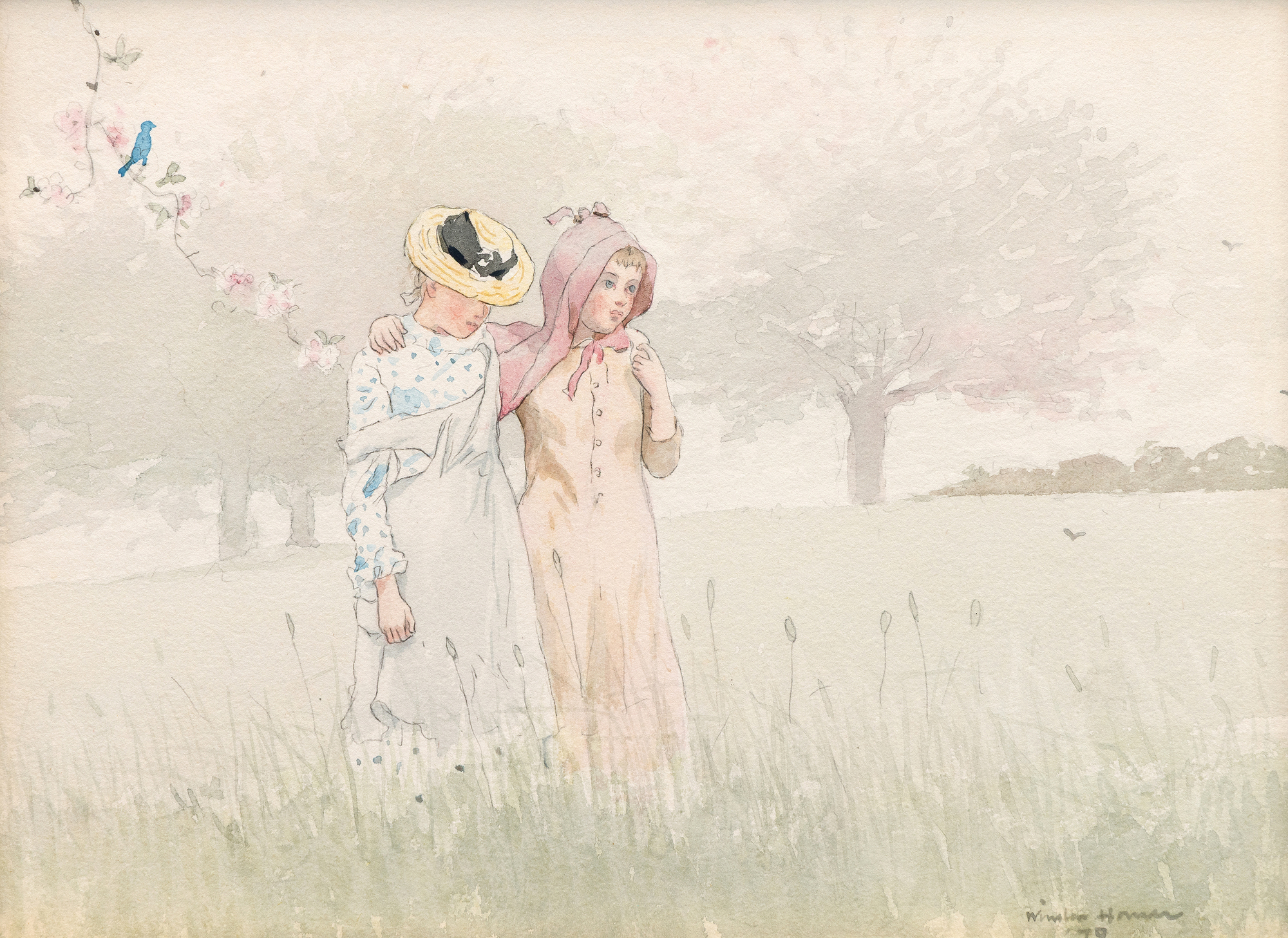
مزارع هوغتون (فتيات يتنزهن في بستان)18799 1/2 × 13 بوصة(24.13 × 33.02 سم) ألوان مائية وجرافيت على ورق
الاصل
جيمس هـ. دول، شيكاغو
جورج س. دول، شيكاغو، من سلالة المذكور أعلاه
السيدة جورج س. دول، شيكاغو
جون ج. فولي، مينيابوليس (ربما صهر السيدة جورج س. دول)
معرض كينيدي، نيويورك
مجموعة خاصة، فلوريدا
مجموعة خاصة، بوسطن
مجموعة خاصة
الادب
لويد غودريتش وأبيجيل بوث جيردتس، سجل أعمال وينسلو هومر، المجلد الثالث: من عام 1877 حتى مارس 1881، نيويورك، 2005، ص. 258، رقم 850 (مصورة)
تنتمي لوحة "مزارع هوغتون (فتيات يتنزهن في بستان)" إلى مرحلة محورية في مسيرة وينسلو هومرز الفنية، حيث تم إنتاجها في أواخر سبعينيات القرن التاسع عشر، في الفترة التي انتقل فيها من موضوعات الحرب التي جلبت له الشهرة في البداية إلى الألوان المائية والموضوعات الريفية المحلية التي ضمنت له مكانة مرموقة في الفن الأمريكي. شهدت هذه الفترة انخراط هومر المستمر في مزرعة هوغتون في ماونتنفيل في وادي هدسون، حيث أمضى وقتًا طويلاً مع صديق طفولته وراعيه لوسون فالنتاين. خلال هذه الزيارات، أنتج هومر حوالي خمسين لوحة مائية، شكلت واحدة من أهم الأعمال المبكرة في هذا الفن. تم الاحتفاء بأهمية هذه الإنتاجات لاحقًا في معرض عام 2009 في صالات عرض سيراكيوز للفنون، وينسلو هومرز إمباير ستيت: مزرعة هوغتون وما بعدها.


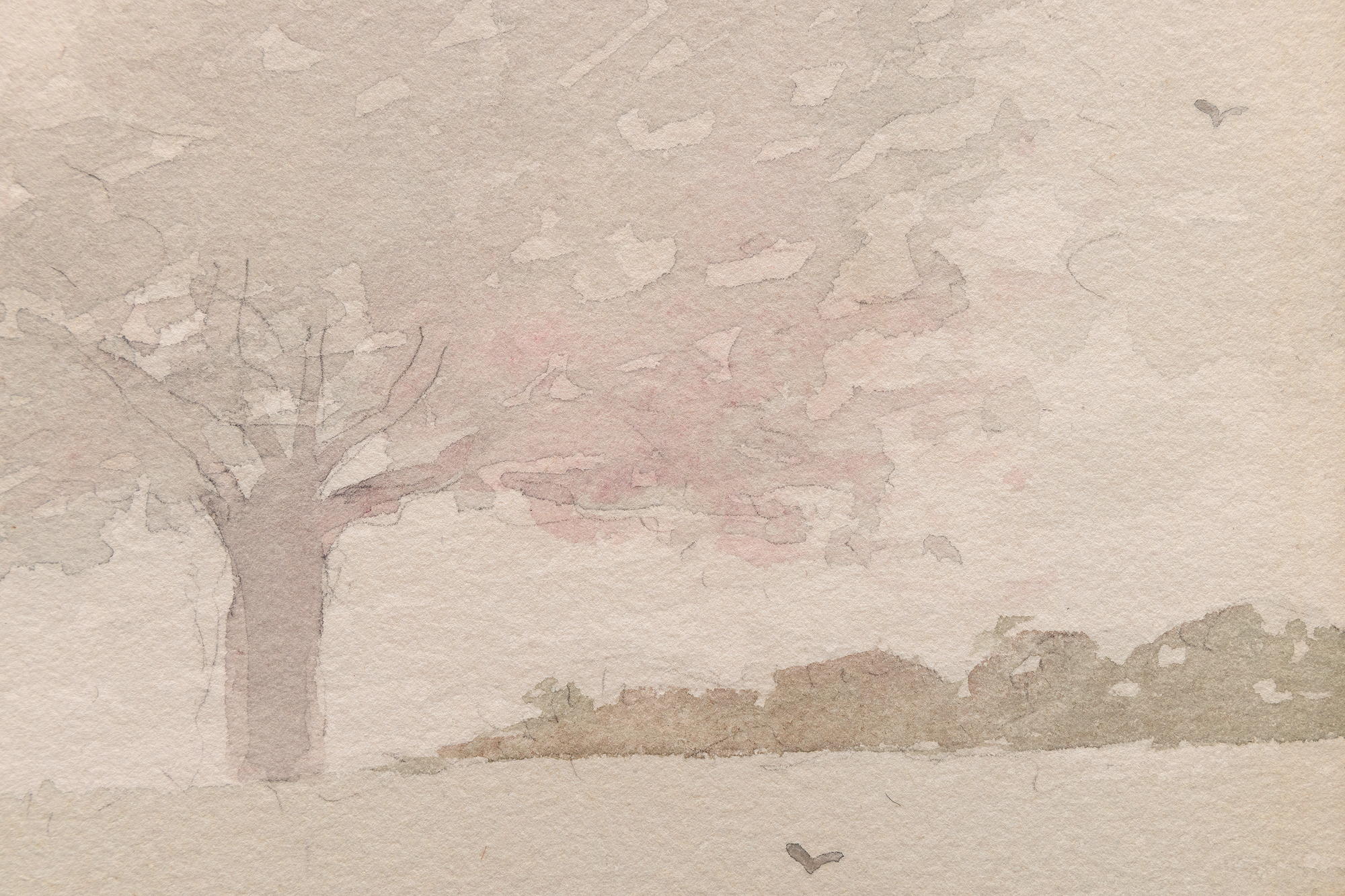
هذه اللوحة المائية مدرجة في كتالوج الأعمال الفنية للفنان وترتبط ارتباطًا وثيقًا بأعمال أخرى مبكرة من مزرعة هوغتون، بما في ذلك لوحة الهواء النقي من عام 1878 الموجودة في مجموعة متحف بروكلين. تعكس مشهد البستان الهادئ، المرسوم بألوان ناعمة وخافتة، موضوعات الحنين والهدوء والسلام التي تميز فترة إعادة الإحياء لدى هومر. تسمح شفافية الألوان المائية لهومر بخلق انطباع دقيق وجذاب لصباح ضبابي، تنعشه لمسات من الألوان الزاهية في أنماط ملابس الشخصيات، والفيونكة على القبعة، والغطاء على الرأس، والطائر الأزرق الجاثم على غصن الشجرة.


تؤكد المعرض الحالي في متحف الفنون الجميلة في بوسطن، "الضوء والهواء: وينسلو هومر في الألوان المائية"، على الأهمية المستمرة لممارسة هومر للألوان المائية، مما يؤكد على الصدى الدائم لأعماله من هذه الفترة التحولية. تعتبر لوحة "مزارع هوغتون (فتيات يتنزهن في بستان)" مثالاً جميلاً محفوظاً من اللحظة التي تبنى فيها هومر الألوان المائية كوسيلة تعبير أساسية له، مسلطاً الضوء على الشاعرية الهادئة التي أصبحت سمة مميزة لفنه الناضج.
الاستفسار