العودة

ويليام ميريت تشيس(1849-1916)

 
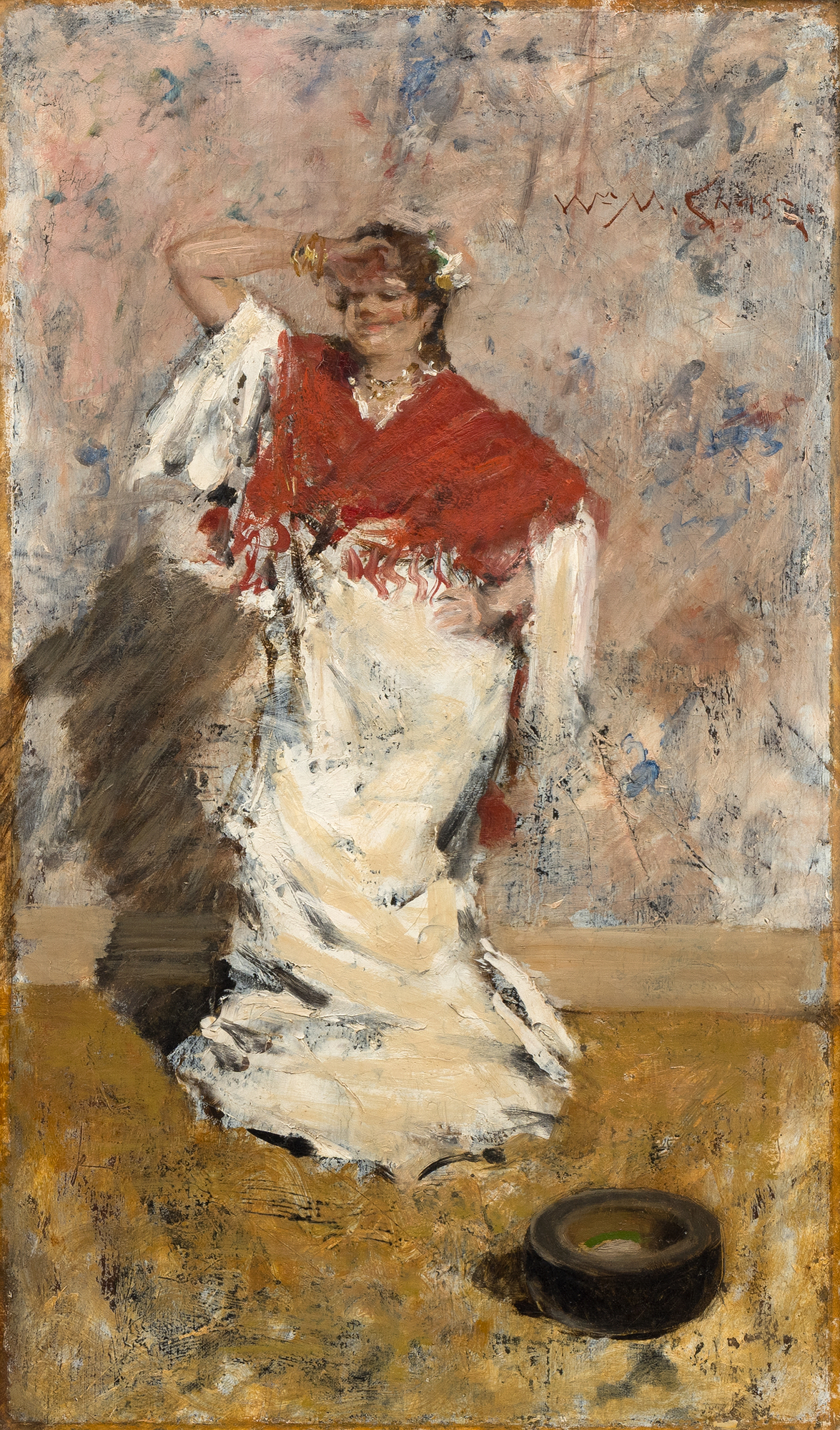
<div><font face=Lato size=3 color=black><em>Dancing Girl</em> dates from 1881 to 1882, a dynamic and exploratory moment in William Merritt Chase’s career when he was actively engaging with European subjects and broadening the expressive range of American painting. The work is included in the Chase catalogue raisonne and reflects the artists fascination with Spanish themes, which many American painters of the period encountered firsthand while studying the masters in the Prado and absorbing the culture, costume, and movement of Spain. Although the painting was later mislabeled by an early owner as an Italian street scene, Chase was in Spain during the summer when this work was created, firmly situating it within his Spanish period.</font></div><br><br><div> </div><br><br><div><font face=Lato size=3 color=black>The animated single figure captures a woman in motion, a subject that is notably rare within Chases oeuvre and distinct from the more contemplative female figures that dominate his most valuable works. His auction record painting, <em>I Think I Am Ready Now</em> from around 1883, shares the focus on a single female figure from the same period, underscoring the importance of this moment in his artistic development. The present work also relates closely to important institutional examples, including <em>Carmencita</em> from 1885 in the Metropolitan Museum of Art and <em>A Tambourine Player</em> in the Montclair Art Museum, both of which highlight Chases sustained interest in dancers and Spanish costume.</font></div><br><br><div> </div><br><br><div><font face=Lato size=3 color=black>The painting was held on long term loan to the Museum of Fine Arts Boston from 1906 to 1922, affirming its early institutional recognition. Chase’s Spanish works should be viewed in dialogue with those of John Singer Sargent, whom he met in 1881 while Sargent was developing studies for <em>El Jaleo</em>, as both artists looked to Velázquez for inspiration. <em>Dancing Girl</em> stands as a spirited and uncommon example of Chase portraying a woman at play, capturing movement, rhythm, and cultural immediacy at the height of his European engagement.</font></div><br><br><div> </div> <div><font face=Lato size=3 color=black><em>Dancing Girl</em> dates from 1881 to 1882, a dynamic and exploratory moment in William Merritt Chase’s career when he was actively engaging with European subjects and broadening the expressive range of American painting. The work is included in the Chase catalogue raisonne and reflects the artists fascination with Spanish themes, which many American painters of the period encountered firsthand while studying the masters in the Prado and absorbing the culture, costume, and movement of Spain. Although the painting was later mislabeled by an early owner as an Italian street scene, Chase was in Spain during the summer when this work was created, firmly situating it within his Spanish period.</font></div><br><br><div> </div><br><br><div><font face=Lato size=3 color=black>The animated single figure captures a woman in motion, a subject that is notably rare within Chases oeuvre and distinct from the more contemplative female figures that dominate his most valuable works. His auction record painting, <em>I Think I Am Ready Now</em> from around 1883, shares the focus on a single female figure from the same period, underscoring the importance of this moment in his artistic development. The present work also relates closely to important institutional examples, including <em>Carmencita</em> from 1885 in the Metropolitan Museum of Art and <em>A Tambourine Player</em> in the Montclair Art Museum, both of which highlight Chases sustained interest in dancers and Spanish costume.</font></div><br><br><div> </div><br><br><div><font face=Lato size=3 color=black>The painting was held on long term loan to the Museum of Fine Arts Boston from 1906 to 1922, affirming its early institutional recognition. Chase’s Spanish works should be viewed in dialogue with those of John Singer Sargent, whom he met in 1881 while Sargent was developing studies for <em>El Jaleo</em>, as both artists looked to Velázquez for inspiration. <em>Dancing Girl</em> stands as a spirited and uncommon example of Chase portraying a woman at play, capturing movement, rhythm, and cultural immediacy at the height of his European engagement.</font></div><br><br><div> </div> <div><font face=Lato size=3 color=black><em>Dancing Girl</em> dates from 1881 to 1882, a dynamic and exploratory moment in William Merritt Chase’s career when he was actively engaging with European subjects and broadening the expressive range of American painting. The work is included in the Chase catalogue raisonne and reflects the artists fascination with Spanish themes, which many American painters of the period encountered firsthand while studying the masters in the Prado and absorbing the culture, costume, and movement of Spain. Although the painting was later mislabeled by an early owner as an Italian street scene, Chase was in Spain during the summer when this work was created, firmly situating it within his Spanish period.</font></div><br><br><div> </div><br><br><div><font face=Lato size=3 color=black>The animated single figure captures a woman in motion, a subject that is notably rare within Chases oeuvre and distinct from the more contemplative female figures that dominate his most valuable works. His auction record painting, <em>I Think I Am Ready Now</em> from around 1883, shares the focus on a single female figure from the same period, underscoring the importance of this moment in his artistic development. The present work also relates closely to important institutional examples, including <em>Carmencita</em> from 1885 in the Metropolitan Museum of Art and <em>A Tambourine Player</em> in the Montclair Art Museum, both of which highlight Chases sustained interest in dancers and Spanish costume.</font></div><br><br><div> </div><br><br><div><font face=Lato size=3 color=black>The painting was held on long term loan to the Museum of Fine Arts Boston from 1906 to 1922, affirming its early institutional recognition. Chase’s Spanish works should be viewed in dialogue with those of John Singer Sargent, whom he met in 1881 while Sargent was developing studies for <em>El Jaleo</em>, as both artists looked to Velázquez for inspiration. <em>Dancing Girl</em> stands as a spirited and uncommon example of Chase portraying a woman at play, capturing movement, rhythm, and cultural immediacy at the height of his European engagement.</font></div><br><br><div> </div> <div><font face=Lato size=3 color=black><em>Dancing Girl</em> dates from 1881 to 1882, a dynamic and exploratory moment in William Merritt Chase’s career when he was actively engaging with European subjects and broadening the expressive range of American painting. The work is included in the Chase catalogue raisonne and reflects the artists fascination with Spanish themes, which many American painters of the period encountered firsthand while studying the masters in the Prado and absorbing the culture, costume, and movement of Spain. Although the painting was later mislabeled by an early owner as an Italian street scene, Chase was in Spain during the summer when this work was created, firmly situating it within his Spanish period.</font></div><br><br><div> </div><br><br><div><font face=Lato size=3 color=black>The animated single figure captures a woman in motion, a subject that is notably rare within Chases oeuvre and distinct from the more contemplative female figures that dominate his most valuable works. His auction record painting, <em>I Think I Am Ready Now</em> from around 1883, shares the focus on a single female figure from the same period, underscoring the importance of this moment in his artistic development. The present work also relates closely to important institutional examples, including <em>Carmencita</em> from 1885 in the Metropolitan Museum of Art and <em>A Tambourine Player</em> in the Montclair Art Museum, both of which highlight Chases sustained interest in dancers and Spanish costume.</font></div><br><br><div> </div><br><br><div><font face=Lato size=3 color=black>The painting was held on long term loan to the Museum of Fine Arts Boston from 1906 to 1922, affirming its early institutional recognition. Chase’s Spanish works should be viewed in dialogue with those of John Singer Sargent, whom he met in 1881 while Sargent was developing studies for <em>El Jaleo</em>, as both artists looked to Velázquez for inspiration. <em>Dancing Girl</em> stands as a spirited and uncommon example of Chase portraying a woman at play, capturing movement, rhythm, and cultural immediacy at the height of his European engagement.</font></div><br><br><div> </div> <div><font face=Lato size=3 color=black><em>Dancing Girl</em> dates from 1881 to 1882, a dynamic and exploratory moment in William Merritt Chase’s career when he was actively engaging with European subjects and broadening the expressive range of American painting. The work is included in the Chase catalogue raisonne and reflects the artists fascination with Spanish themes, which many American painters of the period encountered firsthand while studying the masters in the Prado and absorbing the culture, costume, and movement of Spain. Although the painting was later mislabeled by an early owner as an Italian street scene, Chase was in Spain during the summer when this work was created, firmly situating it within his Spanish period.</font></div><br><br><div> </div><br><br><div><font face=Lato size=3 color=black>The animated single figure captures a woman in motion, a subject that is notably rare within Chases oeuvre and distinct from the more contemplative female figures that dominate his most valuable works. His auction record painting, <em>I Think I Am Ready Now</em> from around 1883, shares the focus on a single female figure from the same period, underscoring the importance of this moment in his artistic development. The present work also relates closely to important institutional examples, including <em>Carmencita</em> from 1885 in the Metropolitan Museum of Art and <em>A Tambourine Player</em> in the Montclair Art Museum, both of which highlight Chases sustained interest in dancers and Spanish costume.</font></div><br><br><div> </div><br><br><div><font face=Lato size=3 color=black>The painting was held on long term loan to the Museum of Fine Arts Boston from 1906 to 1922, affirming its early institutional recognition. Chase’s Spanish works should be viewed in dialogue with those of John Singer Sargent, whom he met in 1881 while Sargent was developing studies for <em>El Jaleo</em>, as both artists looked to Velázquez for inspiration. <em>Dancing Girl</em> stands as a spirited and uncommon example of Chase portraying a woman at play, capturing movement, rhythm, and cultural immediacy at the height of his European engagement.</font></div><br><br><div> </div> <div><font face=Lato size=3 color=black><em>Dancing Girl</em> dates from 1881 to 1882, a dynamic and exploratory moment in William Merritt Chase’s career when he was actively engaging with European subjects and broadening the expressive range of American painting. The work is included in the Chase catalogue raisonne and reflects the artists fascination with Spanish themes, which many American painters of the period encountered firsthand while studying the masters in the Prado and absorbing the culture, costume, and movement of Spain. Although the painting was later mislabeled by an early owner as an Italian street scene, Chase was in Spain during the summer when this work was created, firmly situating it within his Spanish period.</font></div><br><br><div> </div><br><br><div><font face=Lato size=3 color=black>The animated single figure captures a woman in motion, a subject that is notably rare within Chases oeuvre and distinct from the more contemplative female figures that dominate his most valuable works. His auction record painting, <em>I Think I Am Ready Now</em> from around 1883, shares the focus on a single female figure from the same period, underscoring the importance of this moment in his artistic development. The present work also relates closely to important institutional examples, including <em>Carmencita</em> from 1885 in the Metropolitan Museum of Art and <em>A Tambourine Player</em> in the Montclair Art Museum, both of which highlight Chases sustained interest in dancers and Spanish costume.</font></div><br><br><div> </div><br><br><div><font face=Lato size=3 color=black>The painting was held on long term loan to the Museum of Fine Arts Boston from 1906 to 1922, affirming its early institutional recognition. Chase’s Spanish works should be viewed in dialogue with those of John Singer Sargent, whom he met in 1881 while Sargent was developing studies for <em>El Jaleo</em>, as both artists looked to Velázquez for inspiration. <em>Dancing Girl</em> stands as a spirited and uncommon example of Chase portraying a woman at play, capturing movement, rhythm, and cultural immediacy at the height of his European engagement.</font></div><br><br><div> </div> <div><font face=Lato size=3 color=black><em>Dancing Girl</em> dates from 1881 to 1882, a dynamic and exploratory moment in William Merritt Chase’s career when he was actively engaging with European subjects and broadening the expressive range of American painting. The work is included in the Chase catalogue raisonne and reflects the artists fascination with Spanish themes, which many American painters of the period encountered firsthand while studying the masters in the Prado and absorbing the culture, costume, and movement of Spain. Although the painting was later mislabeled by an early owner as an Italian street scene, Chase was in Spain during the summer when this work was created, firmly situating it within his Spanish period.</font></div><br><br><div> </div><br><br><div><font face=Lato size=3 color=black>The animated single figure captures a woman in motion, a subject that is notably rare within Chases oeuvre and distinct from the more contemplative female figures that dominate his most valuable works. His auction record painting, <em>I Think I Am Ready Now</em> from around 1883, shares the focus on a single female figure from the same period, underscoring the importance of this moment in his artistic development. The present work also relates closely to important institutional examples, including <em>Carmencita</em> from 1885 in the Metropolitan Museum of Art and <em>A Tambourine Player</em> in the Montclair Art Museum, both of which highlight Chases sustained interest in dancers and Spanish costume.</font></div><br><br><div> </div><br><br><div><font face=Lato size=3 color=black>The painting was held on long term loan to the Museum of Fine Arts Boston from 1906 to 1922, affirming its early institutional recognition. Chase’s Spanish works should be viewed in dialogue with those of John Singer Sargent, whom he met in 1881 while Sargent was developing studies for <em>El Jaleo</em>, as both artists looked to Velázquez for inspiration. <em>Dancing Girl</em> stands as a spirited and uncommon example of Chase portraying a woman at play, capturing movement, rhythm, and cultural immediacy at the height of his European engagement.</font></div><br><br><div> </div>
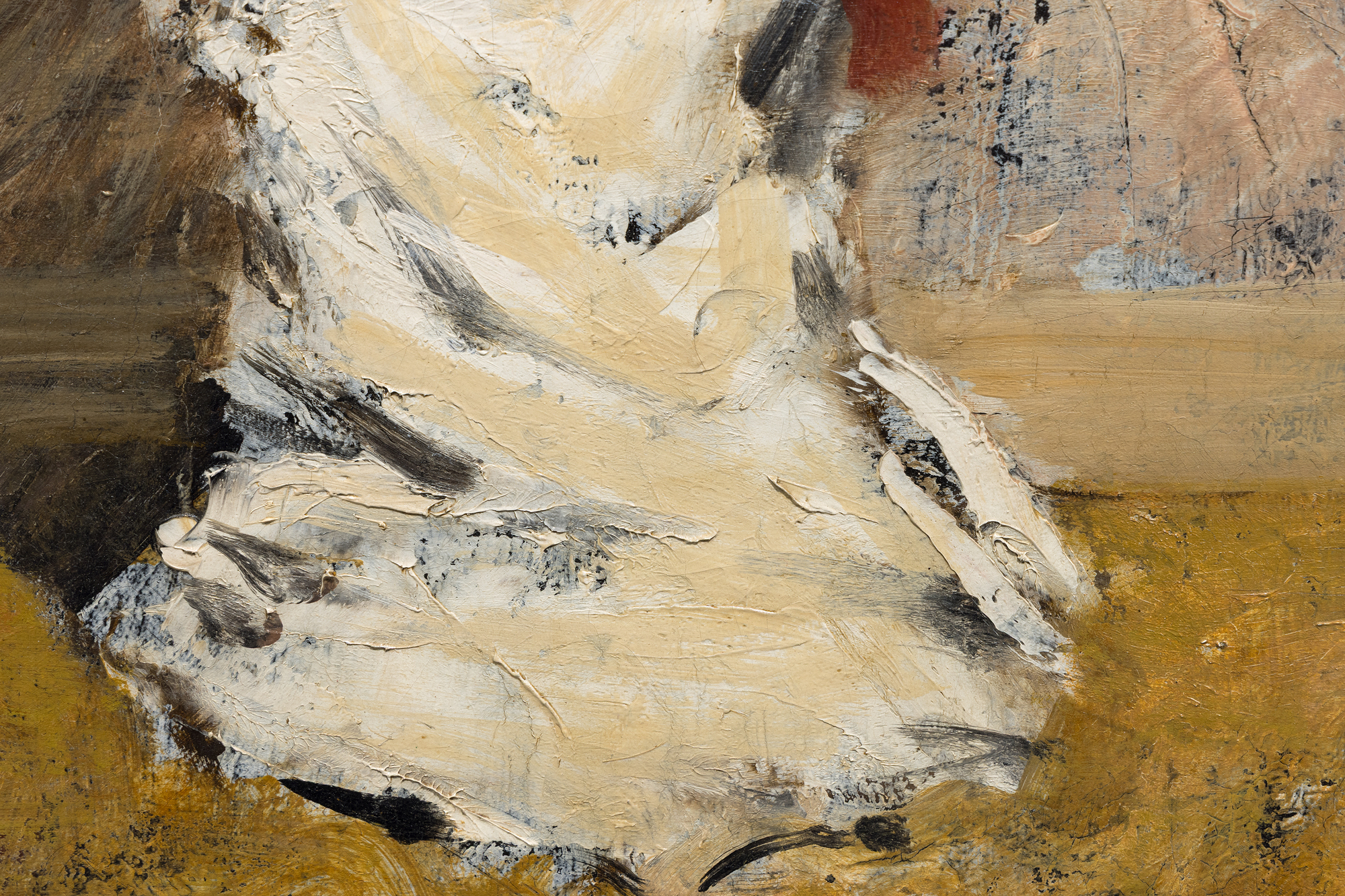
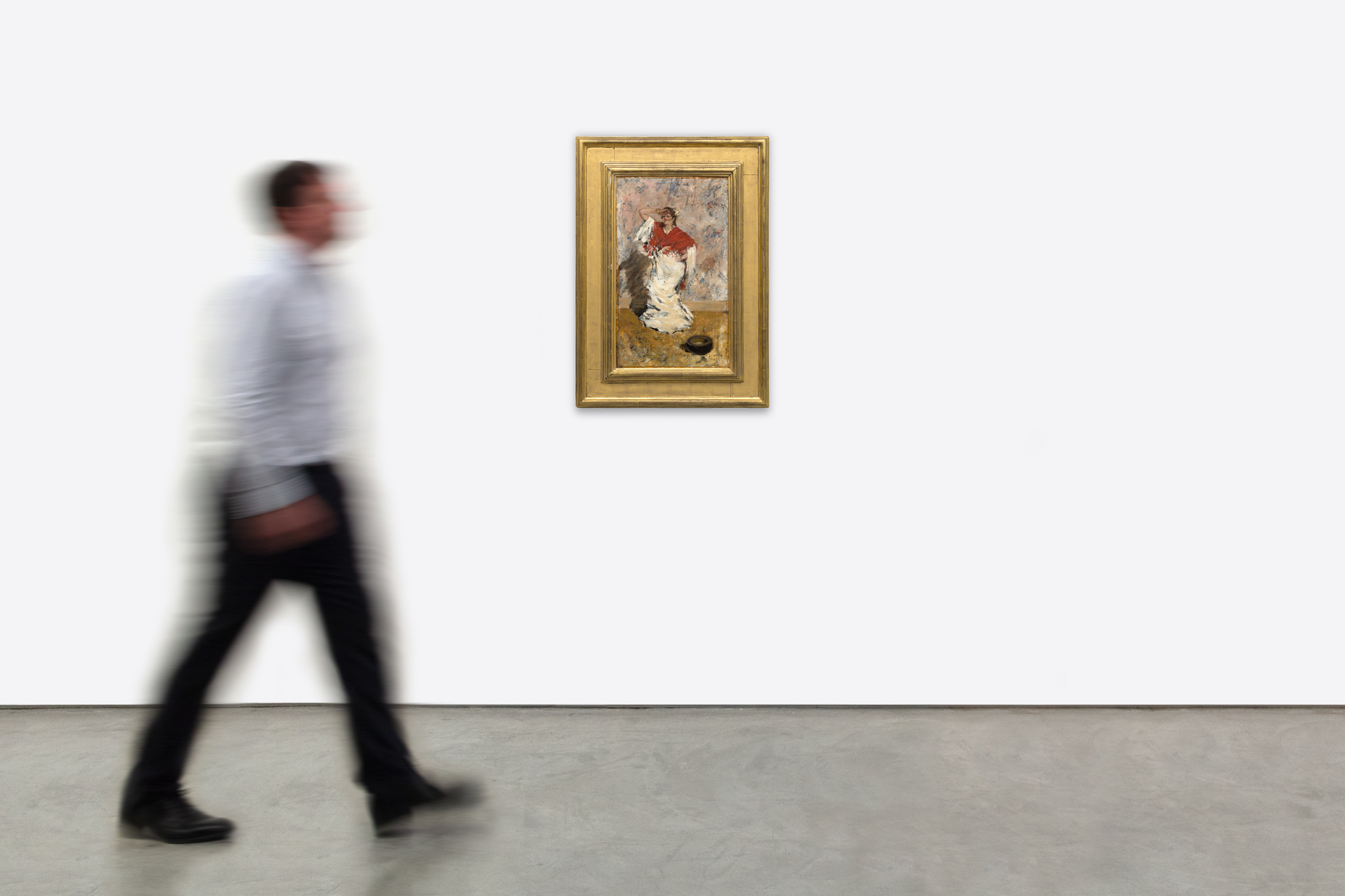
الراقصة1881-8226 × 15 1/2 بوصة(66.04 × 39.37 سم) زيت على قماش
الاصل
استوديو تشيس نيويورك، حوالي عام 1881
(ربما) في نادي بوسطن للفنون، 1886
السيدة و. ب. سيوال، بوسطن، 1906
متحف الفنون الجميلة، بوسطن (على سبيل الإعارة من السيدة و. ب. سيوال، من 2 نوفمبر 1906 إلى 30 أكتوبر 1913)
Rufus L. Sewall
Harold I. Sewall و William G. Sewal
متحف الفنون الجميلة، بوسطن (على سبيل الإعارة، من 30 أكتوبر 1913 إلى 5 يوليو 1922)
مجموعة خاصة، بوسطن
مجموعة خاصة، نيويورك
مجموعة خاصة، بوسطن، تم الحصول عليها من المجموعة المذكورة أعلاه
معرض
بوسطن، ماساتشوستس، نادي بوسطن للفنون، معرض للصور، ... اكثر...دراسات ورسومات للسيد و. م. تشيس من مدينة نيويورك، 18 نوفمبر - 4 ديسمبر 1886، رقم 57، راقصة إسبانية
الادب
رونالد بيسانو، ويليام ميريت تشيس: بورتريهات بالزيت، نيويورك، 2006، رقم OP.99 باسم "راقصة شوارع، إيطاليا (دراسة لامرأة؛ فتاة ترقص)"
... اقل...
تعود لوحة "الراقصة" إلى الفترة ما بين 1881 و 1882، وهي فترة ديناميكية واستكشافية في مسيرة ويليام ميريت تشيس الفنية، حيث كان منشغلاً بشكل كبير بموضوعات أوروبية ويوسع نطاق التعبير في الرسم الأمريكي. ترد هذه اللوحة في كتالوج تشيس وتجسد انجذاب الفنان للموضوعات الإسبانية، التي تعرف عليها العديد من الرسامين الأمريكيين في تلك الفترة عن كثب أثناء دراستهم لأعمال كبار الفنانين في متحف برادو واستيعابهم للثقافة والأزياء والحركة في إسبانيا. على الرغم من أن اللوحة أُخطئ في تصنيفها لاحقًا من قبل أحد مالكيها الأوائل على أنها مشهد شارع إيطالي، إلا أن تشيس كان في إسبانيا خلال الصيف الذي تم فيه إنشاء هذا العمل، مما يضعه بشكل قاطع ضمن فترته الإسبانية.


تصور الشخصية الوحيدة المتحركة امرأة في حالة حركة، وهو موضوع نادر بشكل ملحوظ في أعمال تشيس ويختلف عن الشخصيات النسائية الأكثر تأملاً التي تهيمن على أعماله الأكثر قيمة. تشارك لوحته التي سجلت رقماً قياسياً في المزاد، I Think I Am Ready Now من حوالي عام 1883، التركيز على شخصية نسائية واحدة من نفس الفترة، مما يؤكد أهمية هذه اللحظة في تطوره الفني. يرتبط هذا العمل أيضًا ارتباطًا وثيقًا بأمثلة مؤسسية مهمة، بما في ذلك Carmencita من عام 1885 في متحف المتروبوليتان للفنون و A Tambourine Player في متحف مونتكلير للفنون، وكلاهما يسلط الضوء على اهتمام تشيس المستمر بالراقصات والأزياء الإسبانية.


تم إعارة اللوحة لمدة طويلة إلى متحف الفنون الجميلة في بوسطن من عام 1906 إلى عام 1922، مما يؤكد الاعتراف المؤسسي المبكر بها. ينبغي النظر إلى أعمال تشيس الإسبانية في سياق حوار مع أعمال جون سينجر سارجنت، الذي التقى به في عام 1881 بينما كان سارجنت يعمل على دراسات لـ El Jaleo، حيث استلهم كلا الفنانين من فيلاسكيز. تعتبر Dancing Girl مثالًا حيويًا وغير مألوف لتشيس وهو يصور امرأة وهي تلعب، حيث يلتقط الحركة والإيقاع واللحظة الثقافية في ذروة انخراطه الأوروبي.


الاستفسار