
العودة

بيير بونارد   (1867-1947)

 
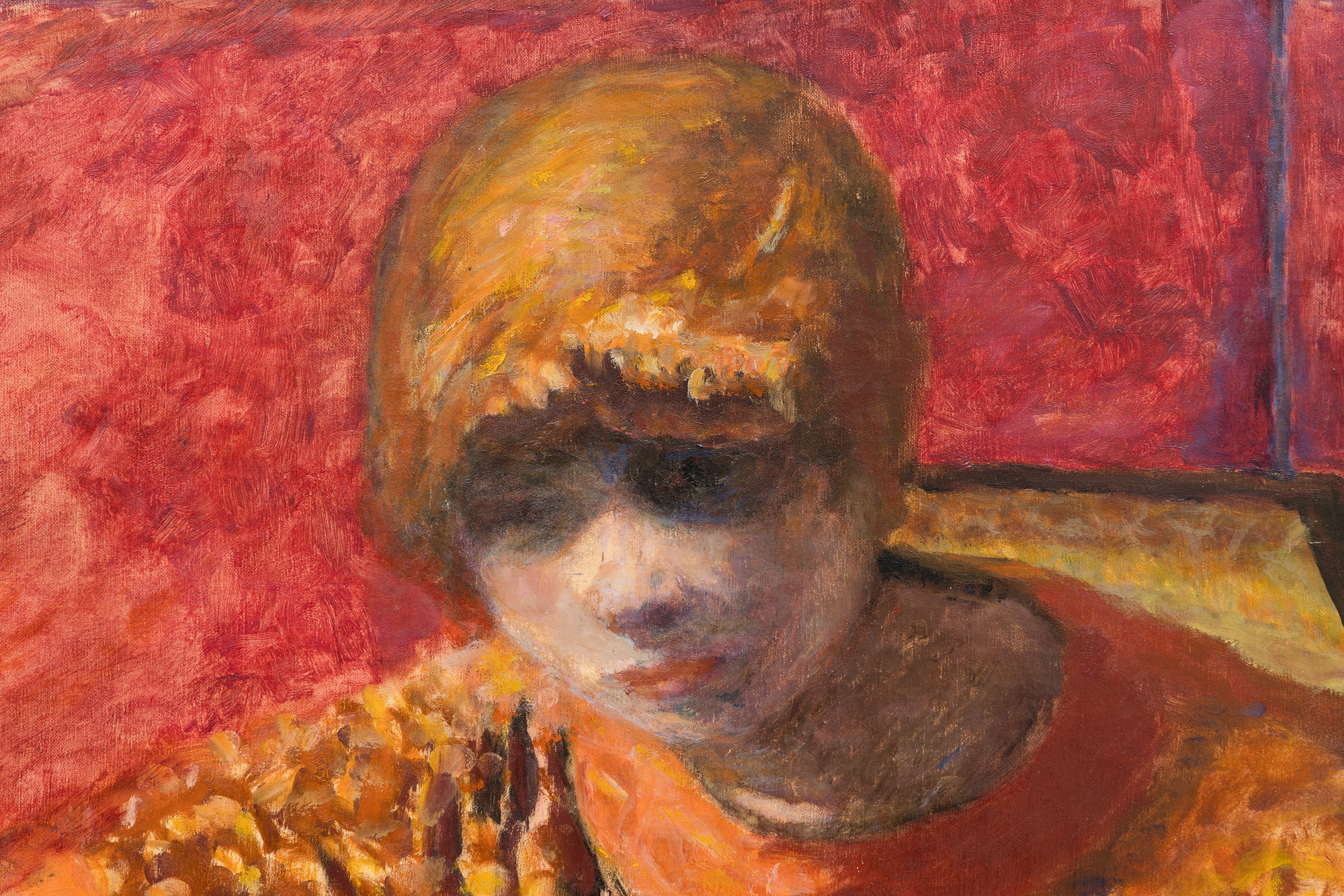
<div>Pierre Bonnard’s <em>La robe de chambre rouge (Marthe Bonnard)</em> (1912) is a richly intimate portrait of the artist’s lifelong muse and wife, Marthe de Meligny, painted at a moment when Bonnard was redefining modern interior painting through color, memory, and psychological nuance. Seated and absorbed in a private moment, Marthe is enveloped by a saturated red ground that presses close to the picture plane, dissolving traditional depth in favor of chromatic intensity. Her patterned robe and softly modeled face emerge through Bonnard’s layered brushwork, where color functions less as description than as emotional atmosphere. </div><br><br><div> </div><br><br><div>Painted in 1912, the work was exhibited extensively from the year of its creation, appearing in seven exhibitions across Paris, Rotterdam, and Munich, signaling its immediate recognition within Bonnard’s circle and the broader European avant-garde. The painting also boasts a distinguished provenance, having passed through the collections of notable French Jewish collector Alphonse Kahn; Eugène Blot, the influential gallerist, collector, and sculpture castor; and Jacques Dupont, the celebrated Olympic cyclist. </div><br><br><div> </div><br><br><div><em>La robe de chambre rouge</em> is published seven times, including Bonnard’s 1968 catalogue raisonné, where it is listed as no. 674. The artist’s portraits of Marthe occupy a central place in his oeuvre. Closely related examples are held in the permanent collections of major institutions such as the Tate, the Museum of Modern Art, the Guggenheim, and The Metropolitan Museum of Art, underscoring the enduring significance of these deeply personal yet formally radical compositions. </div> <div>Pierre Bonnard’s <em>La robe de chambre rouge (Marthe Bonnard)</em> (1912) is a richly intimate portrait of the artist’s lifelong muse and wife, Marthe de Meligny, painted at a moment when Bonnard was redefining modern interior painting through color, memory, and psychological nuance. Seated and absorbed in a private moment, Marthe is enveloped by a saturated red ground that presses close to the picture plane, dissolving traditional depth in favor of chromatic intensity. Her patterned robe and softly modeled face emerge through Bonnard’s layered brushwork, where color functions less as description than as emotional atmosphere. </div><br><br><div> </div><br><br><div>Painted in 1912, the work was exhibited extensively from the year of its creation, appearing in seven exhibitions across Paris, Rotterdam, and Munich, signaling its immediate recognition within Bonnard’s circle and the broader European avant-garde. The painting also boasts a distinguished provenance, having passed through the collections of notable French Jewish collector Alphonse Kahn; Eugène Blot, the influential gallerist, collector, and sculpture castor; and Jacques Dupont, the celebrated Olympic cyclist. </div><br><br><div> </div><br><br><div><em>La robe de chambre rouge</em> is published seven times, including Bonnard’s 1968 catalogue raisonné, where it is listed as no. 674. The artist’s portraits of Marthe occupy a central place in his oeuvre. Closely related examples are held in the permanent collections of major institutions such as the Tate, the Museum of Modern Art, the Guggenheim, and The Metropolitan Museum of Art, underscoring the enduring significance of these deeply personal yet formally radical compositions. </div> <div>Pierre Bonnard’s <em>La robe de chambre rouge (Marthe Bonnard)</em> (1912) is a richly intimate portrait of the artist’s lifelong muse and wife, Marthe de Meligny, painted at a moment when Bonnard was redefining modern interior painting through color, memory, and psychological nuance. Seated and absorbed in a private moment, Marthe is enveloped by a saturated red ground that presses close to the picture plane, dissolving traditional depth in favor of chromatic intensity. Her patterned robe and softly modeled face emerge through Bonnard’s layered brushwork, where color functions less as description than as emotional atmosphere. </div><br><br><div> </div><br><br><div>Painted in 1912, the work was exhibited extensively from the year of its creation, appearing in seven exhibitions across Paris, Rotterdam, and Munich, signaling its immediate recognition within Bonnard’s circle and the broader European avant-garde. The painting also boasts a distinguished provenance, having passed through the collections of notable French Jewish collector Alphonse Kahn; Eugène Blot, the influential gallerist, collector, and sculpture castor; and Jacques Dupont, the celebrated Olympic cyclist. </div><br><br><div> </div><br><br><div><em>La robe de chambre rouge</em> is published seven times, including Bonnard’s 1968 catalogue raisonné, where it is listed as no. 674. The artist’s portraits of Marthe occupy a central place in his oeuvre. Closely related examples are held in the permanent collections of major institutions such as the Tate, the Museum of Modern Art, the Guggenheim, and The Metropolitan Museum of Art, underscoring the enduring significance of these deeply personal yet formally radical compositions. </div> <div>Pierre Bonnard’s <em>La robe de chambre rouge (Marthe Bonnard)</em> (1912) is a richly intimate portrait of the artist’s lifelong muse and wife, Marthe de Meligny, painted at a moment when Bonnard was redefining modern interior painting through color, memory, and psychological nuance. Seated and absorbed in a private moment, Marthe is enveloped by a saturated red ground that presses close to the picture plane, dissolving traditional depth in favor of chromatic intensity. Her patterned robe and softly modeled face emerge through Bonnard’s layered brushwork, where color functions less as description than as emotional atmosphere. </div><br><br><div> </div><br><br><div>Painted in 1912, the work was exhibited extensively from the year of its creation, appearing in seven exhibitions across Paris, Rotterdam, and Munich, signaling its immediate recognition within Bonnard’s circle and the broader European avant-garde. The painting also boasts a distinguished provenance, having passed through the collections of notable French Jewish collector Alphonse Kahn; Eugène Blot, the influential gallerist, collector, and sculpture castor; and Jacques Dupont, the celebrated Olympic cyclist. </div><br><br><div> </div><br><br><div><em>La robe de chambre rouge</em> is published seven times, including Bonnard’s 1968 catalogue raisonné, where it is listed as no. 674. The artist’s portraits of Marthe occupy a central place in his oeuvre. Closely related examples are held in the permanent collections of major institutions such as the Tate, the Museum of Modern Art, the Guggenheim, and The Metropolitan Museum of Art, underscoring the enduring significance of these deeply personal yet formally radical compositions. </div> <div>Pierre Bonnard’s <em>La robe de chambre rouge (Marthe Bonnard)</em> (1912) is a richly intimate portrait of the artist’s lifelong muse and wife, Marthe de Meligny, painted at a moment when Bonnard was redefining modern interior painting through color, memory, and psychological nuance. Seated and absorbed in a private moment, Marthe is enveloped by a saturated red ground that presses close to the picture plane, dissolving traditional depth in favor of chromatic intensity. Her patterned robe and softly modeled face emerge through Bonnard’s layered brushwork, where color functions less as description than as emotional atmosphere. </div><br><br><div> </div><br><br><div>Painted in 1912, the work was exhibited extensively from the year of its creation, appearing in seven exhibitions across Paris, Rotterdam, and Munich, signaling its immediate recognition within Bonnard’s circle and the broader European avant-garde. The painting also boasts a distinguished provenance, having passed through the collections of notable French Jewish collector Alphonse Kahn; Eugène Blot, the influential gallerist, collector, and sculpture castor; and Jacques Dupont, the celebrated Olympic cyclist. </div><br><br><div> </div><br><br><div><em>La robe de chambre rouge</em> is published seven times, including Bonnard’s 1968 catalogue raisonné, where it is listed as no. 674. The artist’s portraits of Marthe occupy a central place in his oeuvre. Closely related examples are held in the permanent collections of major institutions such as the Tate, the Museum of Modern Art, the Guggenheim, and The Metropolitan Museum of Art, underscoring the enduring significance of these deeply personal yet formally radical compositions. </div> <div>Pierre Bonnard’s <em>La robe de chambre rouge (Marthe Bonnard)</em> (1912) is a richly intimate portrait of the artist’s lifelong muse and wife, Marthe de Meligny, painted at a moment when Bonnard was redefining modern interior painting through color, memory, and psychological nuance. Seated and absorbed in a private moment, Marthe is enveloped by a saturated red ground that presses close to the picture plane, dissolving traditional depth in favor of chromatic intensity. Her patterned robe and softly modeled face emerge through Bonnard’s layered brushwork, where color functions less as description than as emotional atmosphere. </div><br><br><div> </div><br><br><div>Painted in 1912, the work was exhibited extensively from the year of its creation, appearing in seven exhibitions across Paris, Rotterdam, and Munich, signaling its immediate recognition within Bonnard’s circle and the broader European avant-garde. The painting also boasts a distinguished provenance, having passed through the collections of notable French Jewish collector Alphonse Kahn; Eugène Blot, the influential gallerist, collector, and sculpture castor; and Jacques Dupont, the celebrated Olympic cyclist. </div><br><br><div> </div><br><br><div><em>La robe de chambre rouge</em> is published seven times, including Bonnard’s 1968 catalogue raisonné, where it is listed as no. 674. The artist’s portraits of Marthe occupy a central place in his oeuvre. Closely related examples are held in the permanent collections of major institutions such as the Tate, the Museum of Modern Art, the Guggenheim, and The Metropolitan Museum of Art, underscoring the enduring significance of these deeply personal yet formally radical compositions. </div> <div>Pierre Bonnard’s <em>La robe de chambre rouge (Marthe Bonnard)</em> (1912) is a richly intimate portrait of the artist’s lifelong muse and wife, Marthe de Meligny, painted at a moment when Bonnard was redefining modern interior painting through color, memory, and psychological nuance. Seated and absorbed in a private moment, Marthe is enveloped by a saturated red ground that presses close to the picture plane, dissolving traditional depth in favor of chromatic intensity. Her patterned robe and softly modeled face emerge through Bonnard’s layered brushwork, where color functions less as description than as emotional atmosphere. </div><br><br><div> </div><br><br><div>Painted in 1912, the work was exhibited extensively from the year of its creation, appearing in seven exhibitions across Paris, Rotterdam, and Munich, signaling its immediate recognition within Bonnard’s circle and the broader European avant-garde. The painting also boasts a distinguished provenance, having passed through the collections of notable French Jewish collector Alphonse Kahn; Eugène Blot, the influential gallerist, collector, and sculpture castor; and Jacques Dupont, the celebrated Olympic cyclist. </div><br><br><div> </div><br><br><div><em>La robe de chambre rouge</em> is published seven times, including Bonnard’s 1968 catalogue raisonné, where it is listed as no. 674. The artist’s portraits of Marthe occupy a central place in his oeuvre. Closely related examples are held in the permanent collections of major institutions such as the Tate, the Museum of Modern Art, the Guggenheim, and The Metropolitan Museum of Art, underscoring the enduring significance of these deeply personal yet formally radical compositions. </div>
الرداء الأحمر (مارث بونار)191221 × 27 1/4 بوصة(53.34 × 69.22 سم) زيت على قماش
الاصل
Galerie Bernheim-Jeune، باريس، تم شراؤها من الفنان
Alphonse Kahn، Saint-Germain-en-Laye، تم شراؤها من المذكور أعلاه
Me Lair-Dubreuil، Hôtel Drouot، باريس، 20 نوفمبر 1922، القطعة 40 (بعنوان "La robe de chambre orange")
يوجين بلوت، باريس، تم شراؤها في المزاد المذكور أعلاه
مكتب بودوان، باريس، 2 يونيو 1933، القطعة 33 (بعنوان "امرأة جالسة في مكان داخلي")
مجموعة هويت، باريس، تم شراؤها في المزاد المذكور أعلاه
جاك دوبون، باريس، ديسمبر 1940
مجموعة خاصة، موروثة من المذكور أعلاه
كريستيز، باريس، O
... اكثر...17 أكتوبر 2018، القطعة 37
مجموعة خاصة، تم الحصول عليها في المزاد المذكور أعلاه
معرض
باريس، غاليري برنهايم-جون، بونار، أعمال حديثة، 17 يونيو - 6 يوليو 1912، رقم 15
باريس، غاليري برنهايم-جون، بيير بونار، أعمال حديثة، 19 مايو – 7 يونيو 1913
باريس، Galerie d'art Braun & Cie، Portraits de Pierre Bonnard، يونيو 1933، رقم 21، ص. 4 (بعنوان "Portrait de femme au turban")
باريس، غاليري فرومونت، لا كومباني دو بانتر، 1953
روتردام، متحف بويمانز-فان بونينغن، بونارد، 1953، رقم 45 (بتاريخ "حوالي 1910-11")
باريس، Maison de la Pensée française، بيير بونار، صيف 1955، رقم 20
ميونيخ، هاوس دير كونست؛ باريس، أورانجيري دي تويلري، بيير بونار، سنتينير دي سا ناسنت، 8 أكتوبر 1966 – 15 أبريل 1967، رقم 75
الادب
Le courrier européen، 23 مايو 1913 (مصورة، بعنوان Étude de femme)
غوستاف كوكيو، Les indépendants، 1884-1920، باريس، 1921، ص. 78-79 (مصورة)
غوستاف كوكيو، بونارد، باريس، 1922، ص. 54 (بعنوان "La robe de chambre orangée")
ليون ويرث، بونارد، باريس، 1923 (مصورة، اللوحة 25)
أندريه فاج، جامع اللوحات الحديثة، باريس، 1930، ص. 252
Galerie d'art Braun & Cie، Portraits de Pierre Bonnard، باريس، 1933، رقم 21، ص. 4 (بعنوان "Portrait de femme au turban")
M.-T. Mauguis، الفنون، 25 يونيو 1955
Haus der Kunst & Orangerie des Tuileries، بيير بونار، Centenaire de sa naissance، ميونيخ وباريس، 1967، رقم 75 (مصورة)
رايموند كوغنيات، بونار، باريس، 1968 (مصورة على الغلاف)
جان وهنري دوبيرفيل، بونار، كتالوج شامل لأعماله الفنية، 1906-1919، باريس، 1968، المجلد الثاني، رقم 674، ص. 247 (مصورة)
... اقل...
لوحة "الرداء الأحمر (مارث بونارد)" (1912) لبيير بونارد هي صورة حميمة للغاية لزوجة الفنان ومصدر إلهامه طوال حياته، مارث دي ميليني، وقد رسمها بونارد في وقت كان يعيد فيه تعريف الرسم الداخلي الحديث من خلال الألوان والذاكرة والفروق النفسية الدقيقة. تجلس مارث منغمسة في لحظة خاصة، محاطًة بخلفية حمراء مشبعة تقترب من مستوى الصورة، مما يذيب العمق التقليدي لصالح الكثافة اللونية. يظهر رداءها المزخرف ووجهها الناعم من خلال ضربات فرشاة بونارد المتعددة الطبقات، حيث يعمل اللون كجو عاطفي أكثر منه كوصف.


رُسمت اللوحة في عام 1912، وعُرضت على نطاق واسع منذ عام إنشائها، حيث ظهرت في سبعة معارض في باريس وروتردام وميونيخ، مما يشير إلى الاعتراف الفوري بها في دائرة بونارد وفي أوساط الطليعة الأوروبية الأوسع. تتميز اللوحة أيضًا بمصدرها المتميز، حيث مرت عبر مجموعات جامع التحف الفرنسي اليهودي الشهير ألفونس كان؛ ويوجين بلوت، صاحب المعرض الفني المؤثر وجامع التحف والنحات؛ وجاك دوبونت، الدراج الأولمبي الشهير.


تم نشر La robe de chambre rouge سبع مرات، بما في ذلك كتالوج بونارد لعام 1968، حيث تم إدراجها تحت الرقم 674. تحتل لوحات الفنان التي تصور مارث مكانة مركزية في أعماله. وتوجد أمثلة وثيقة الصلة بها في المجموعات الدائمة لمؤسسات كبرى مثل تيت، ومتحف الفن الحديث، وغوغنهايم، ومتحف المتروبوليتان للفنون، مما يؤكد الأهمية الدائمة لهذه التراكيب الشخصية للغاية والراديكالية من الناحية الشكلية.
الاستفسار