KENNETH NOLAND (1924-2010)

$375,000
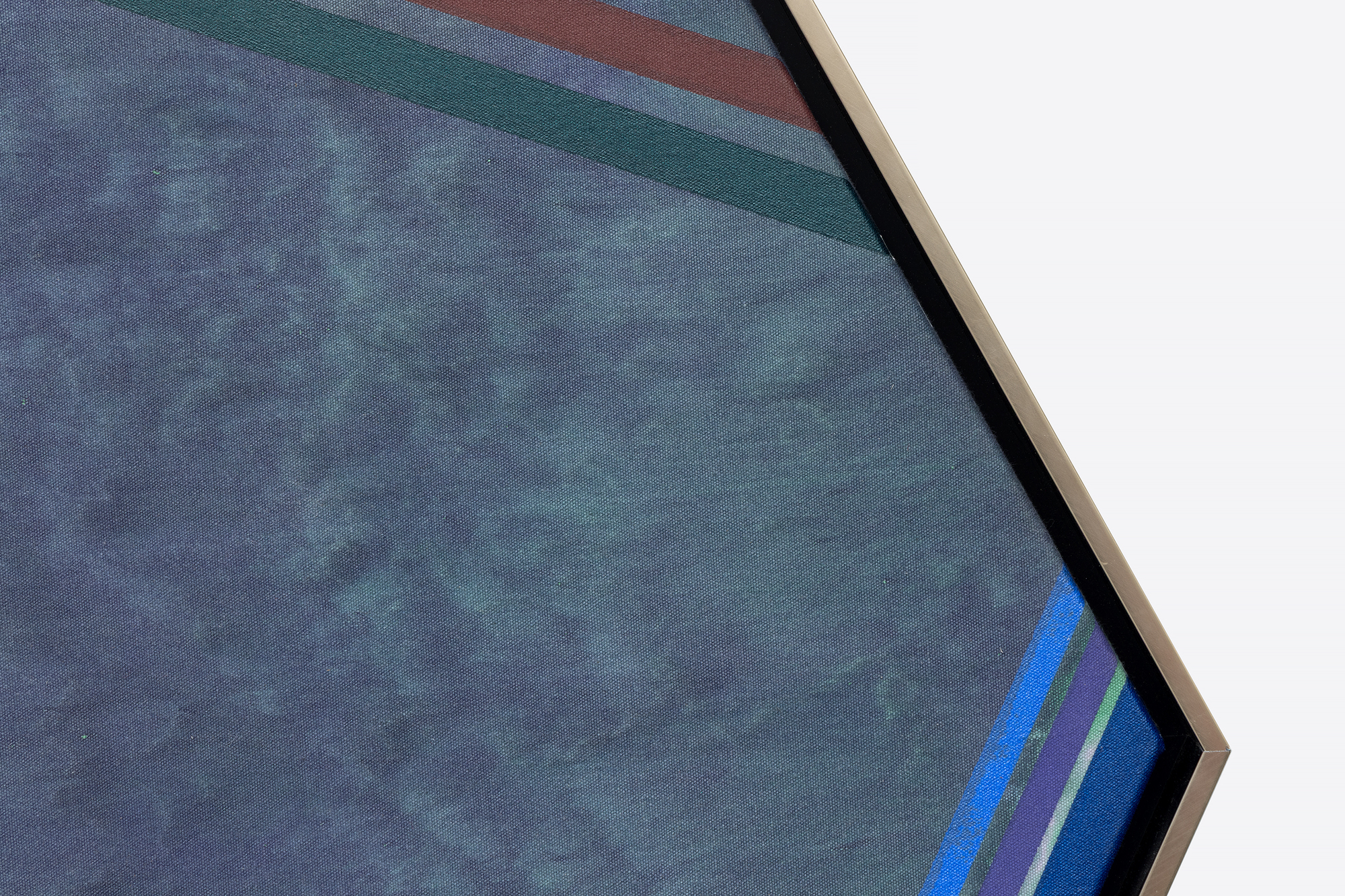
 
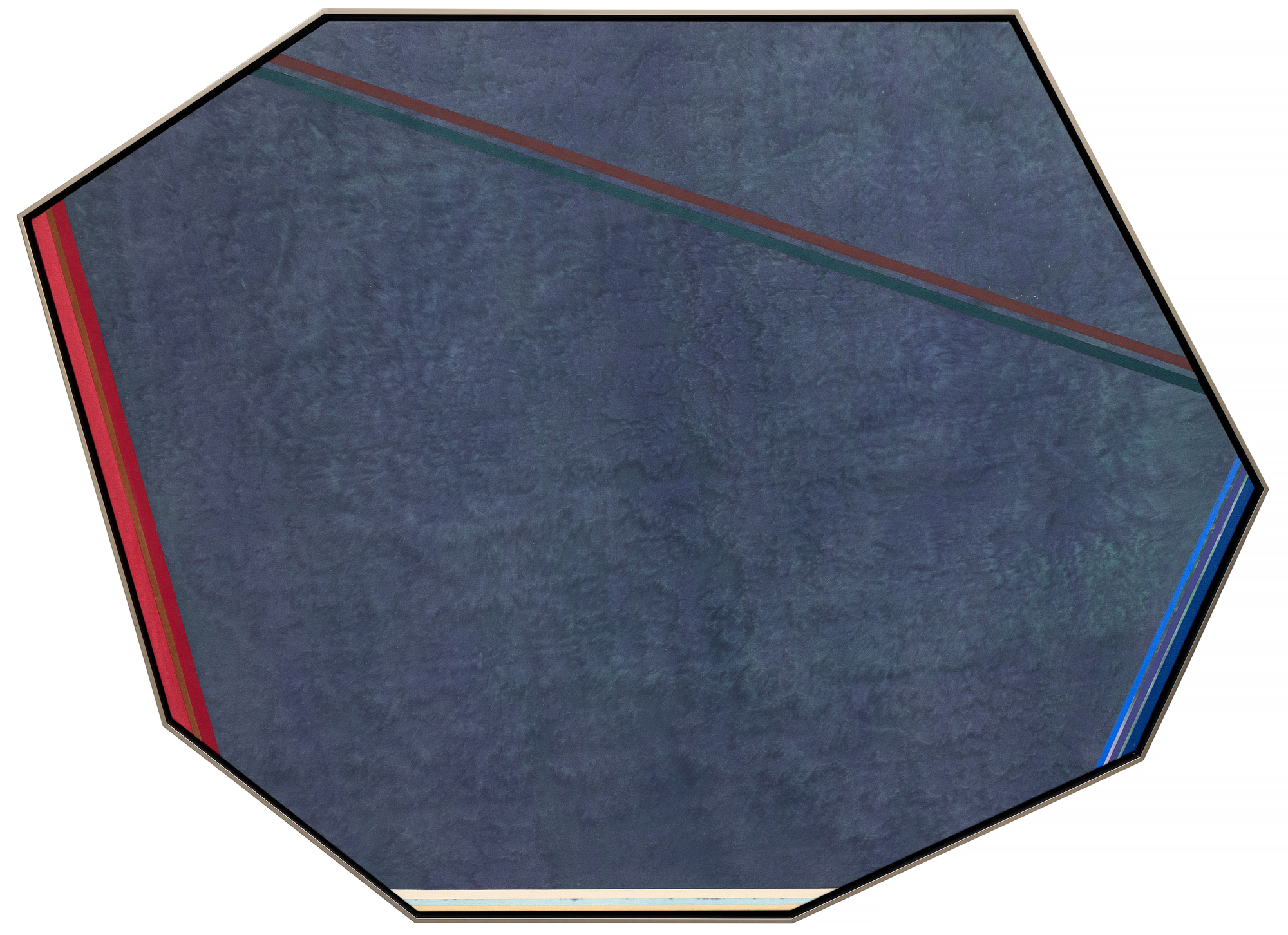
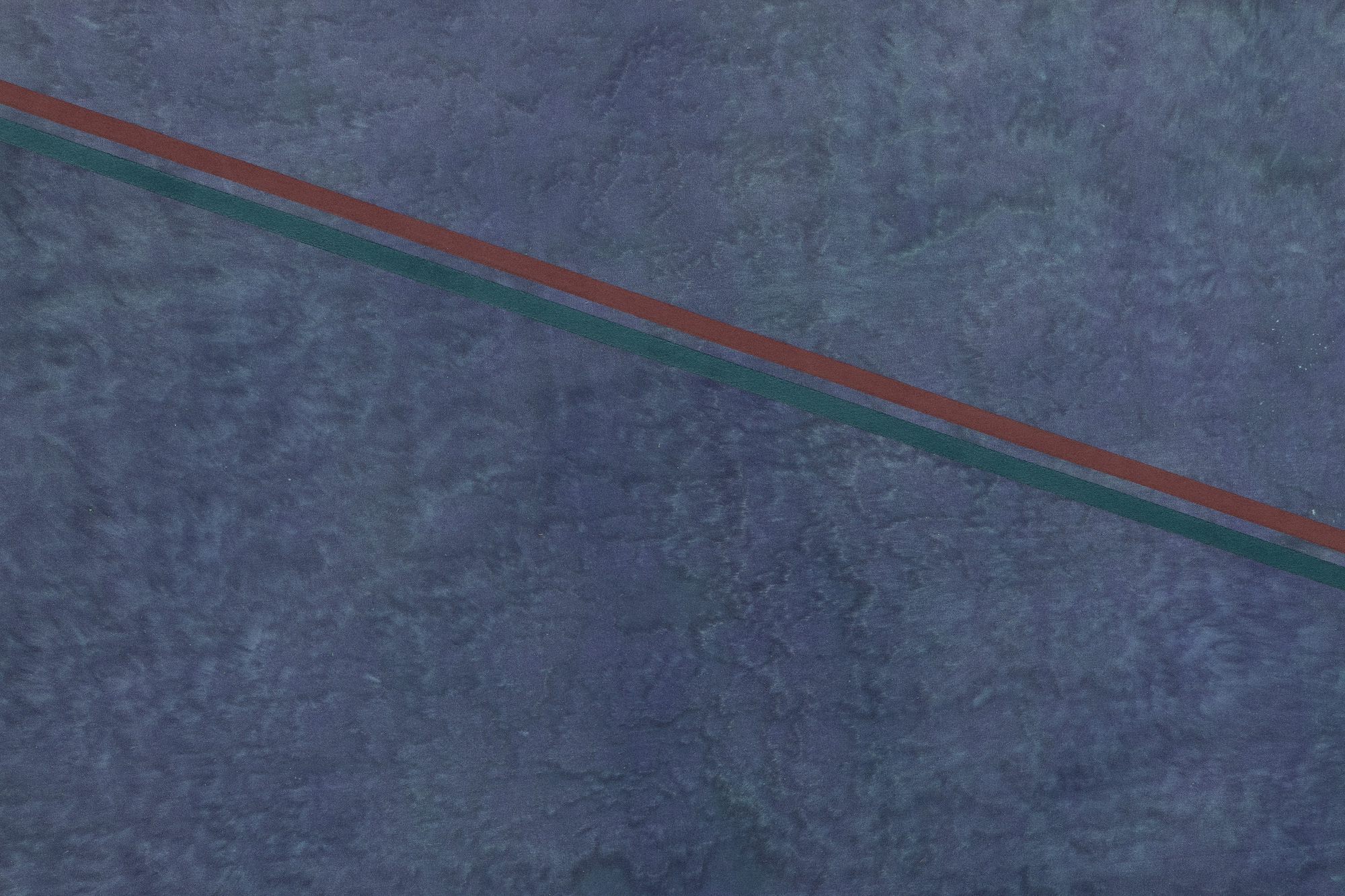
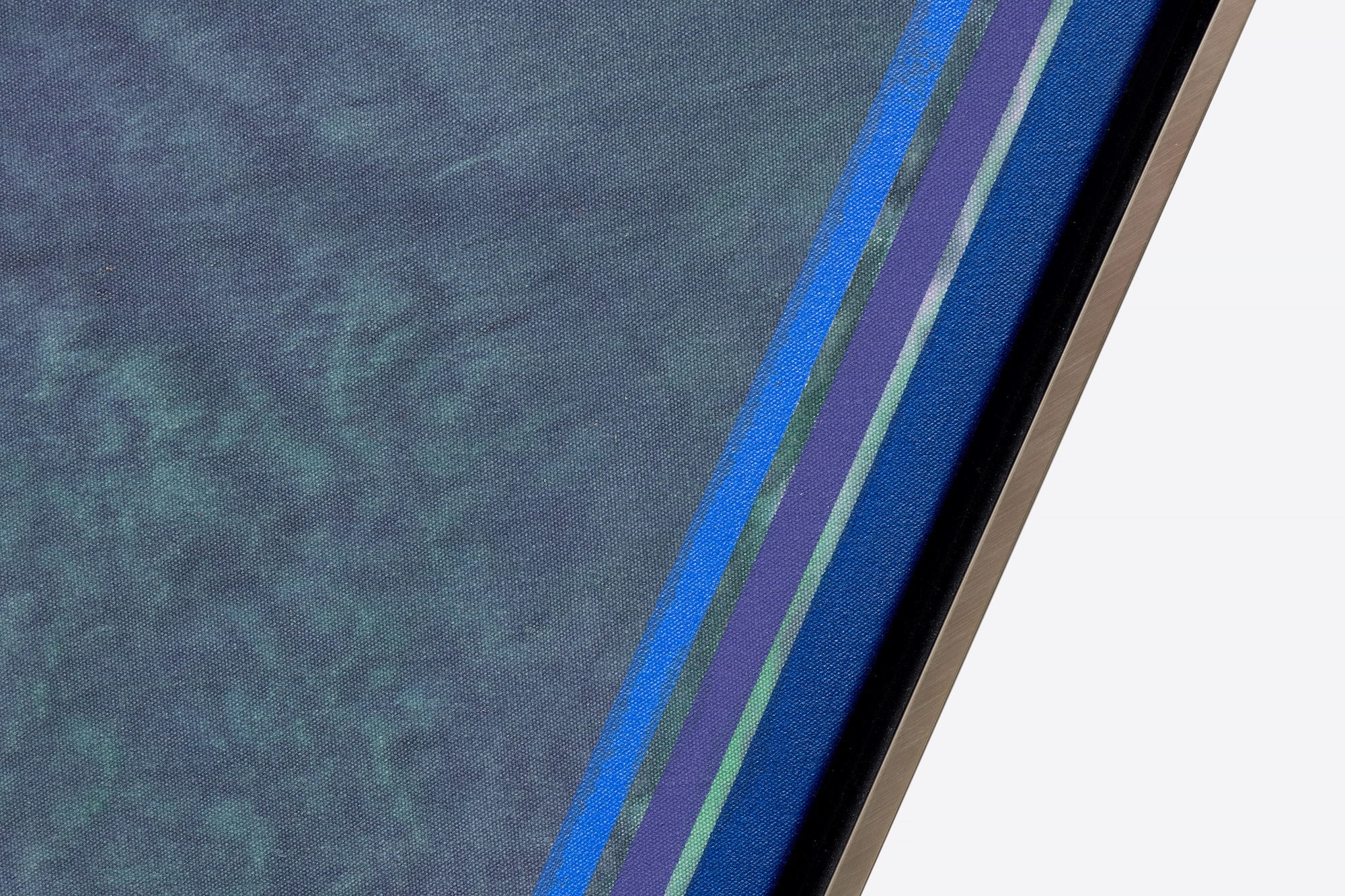
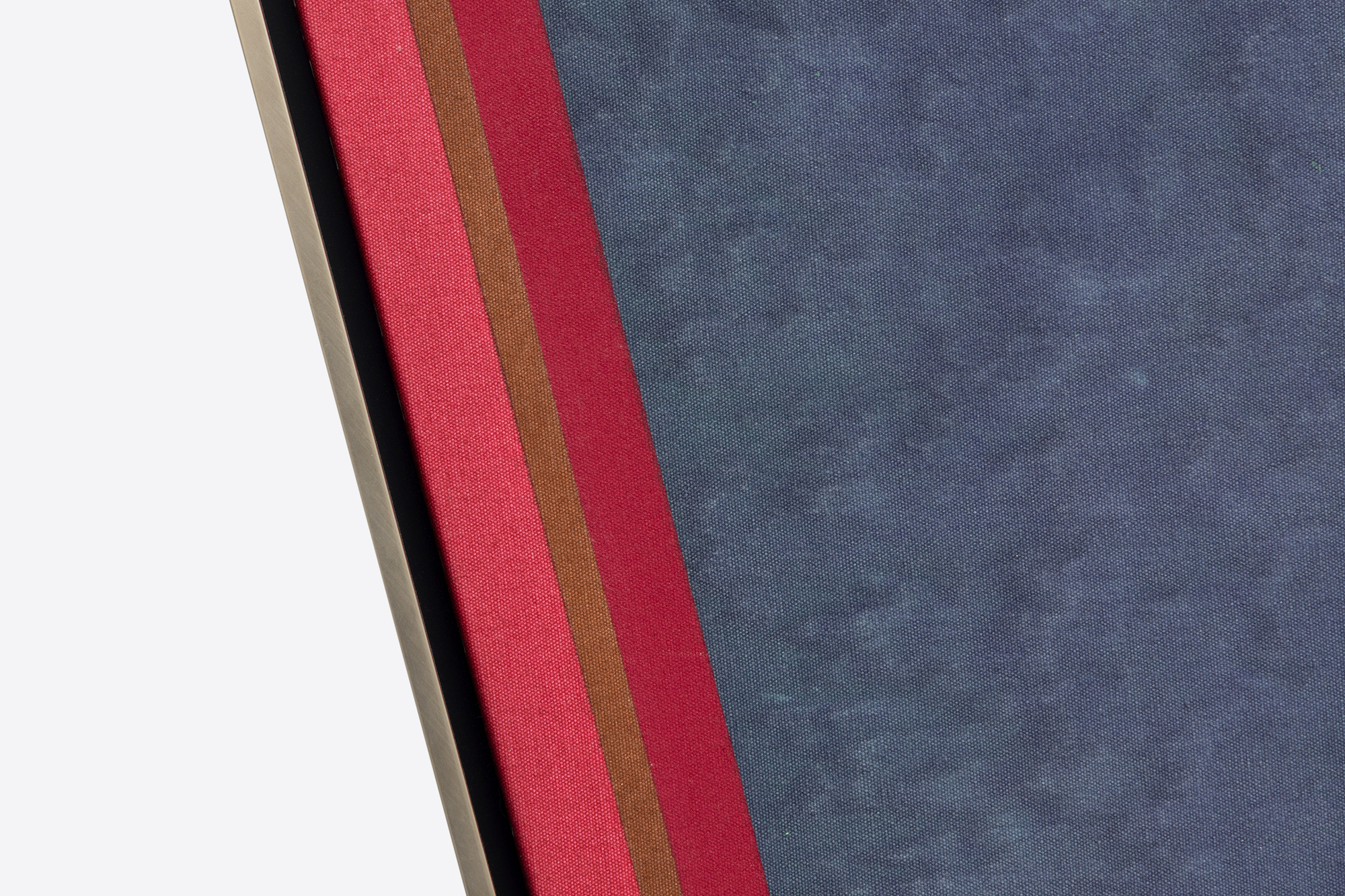
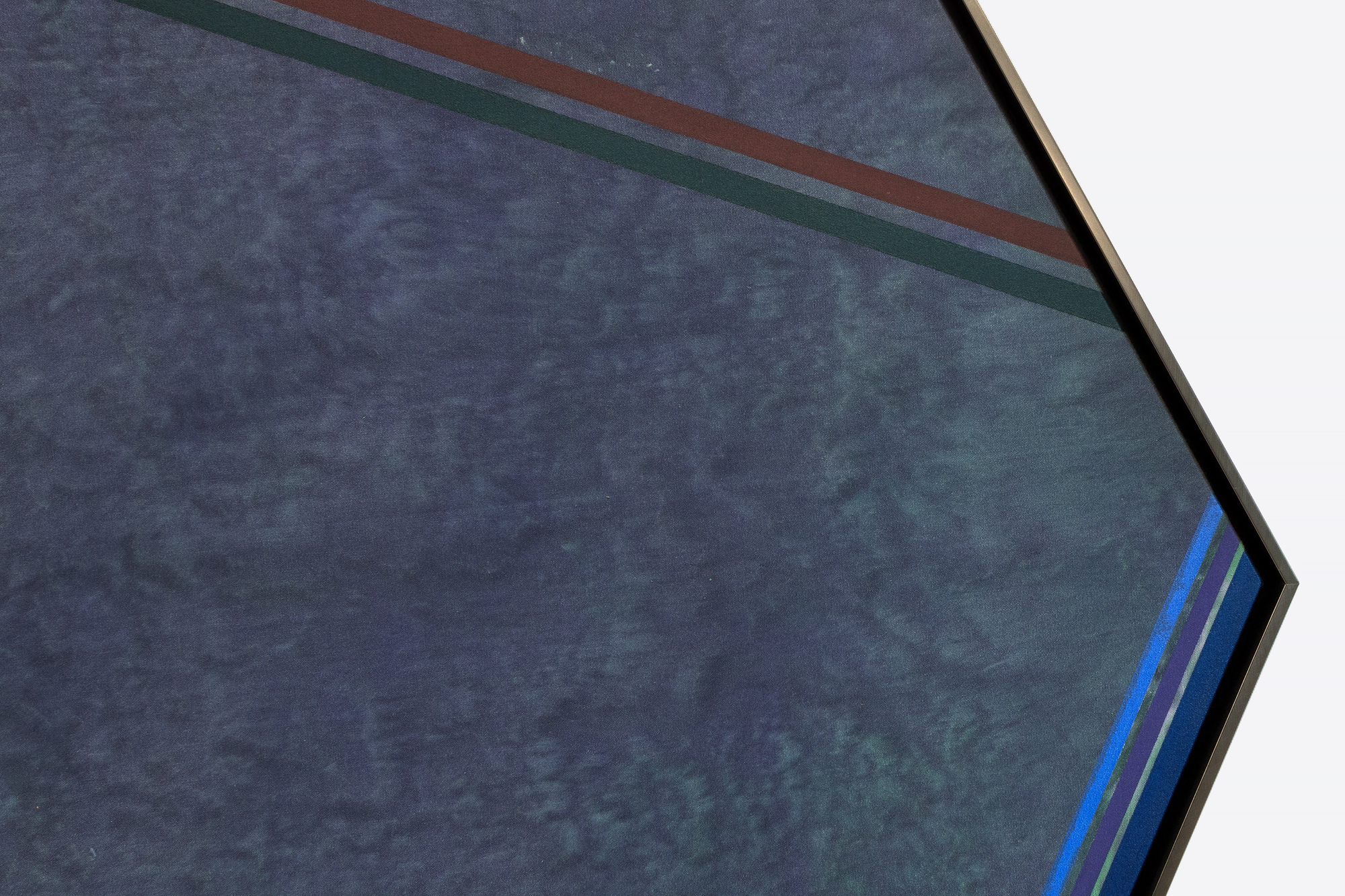
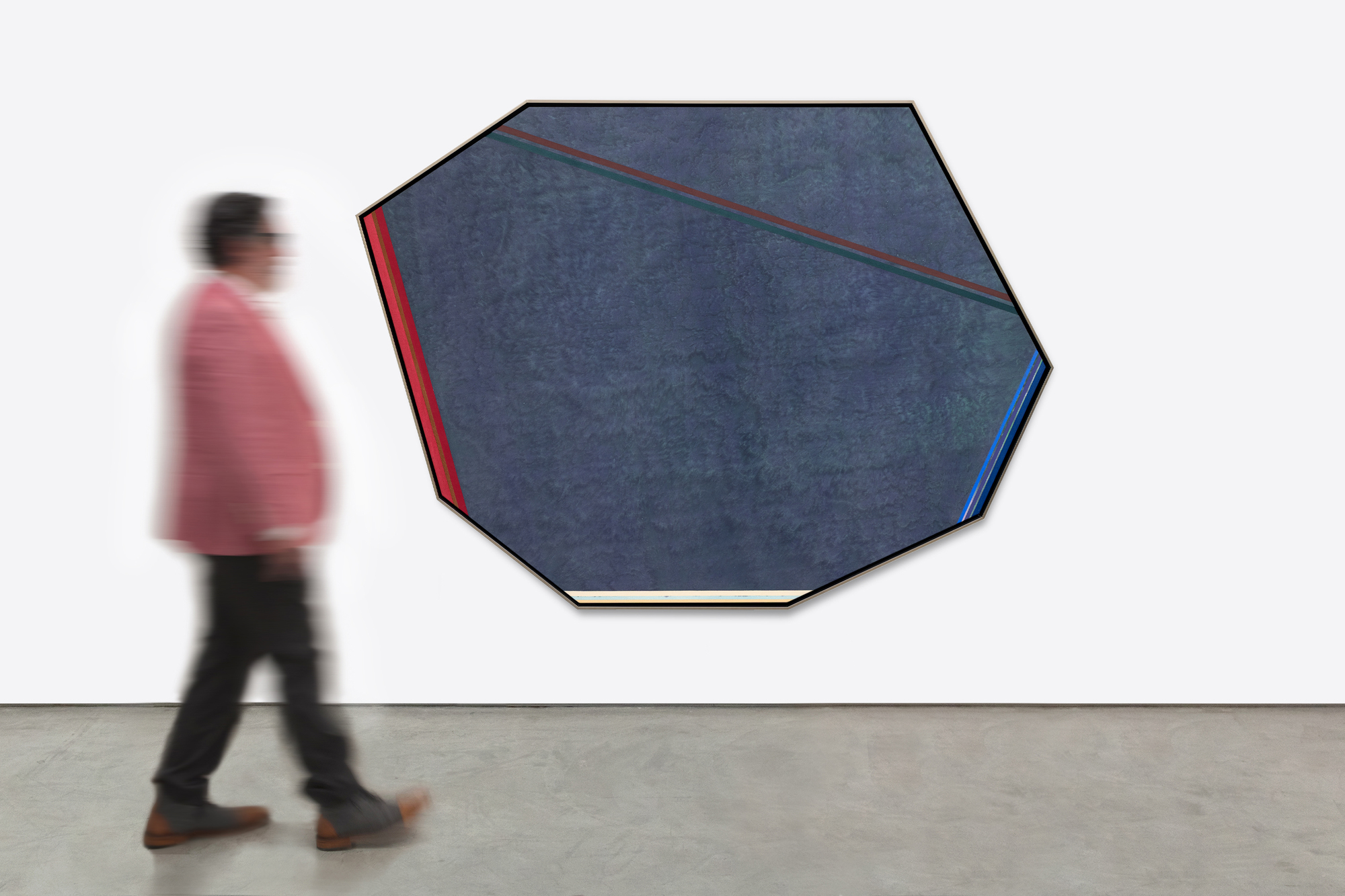
<div><font face=Lato size=3 color=black>Kenneth Noland’s <em>Gray Reflection</em> (1978) comes from the late 1970s, when the artist was deeply engaged with shaped canvases and the refinement of surface and form. The cool slate ground is animated by faint tonal shifts and angled color bands that cut across the polygonal field, creating both balance and quiet momentum.<br><br></font></div><br><br><div><font face=Lato size=3 color=black>This period was far less prolific than his celebrated 1960s circle paintings, making works such as <em>Gray Reflection </em>comparatively rare. While not part of a named series, it resonates with other late-1970s explorations like <em>Burnt Beige </em>at the Cranbrook Art Museum.<br><br></font></div><br><br><div><font face=Lato size=3 color=black>Noland, a central figure of post-painterly abstraction alongside Morris Louis and Helen Frankenthaler, is represented in major museum collections including MoMA, Tate, and the National Gallery of Art.</font></div> <div><font face=Lato size=3 color=black>Kenneth Noland’s <em>Gray Reflection</em> (1978) comes from the late 1970s, when the artist was deeply engaged with shaped canvases and the refinement of surface and form. The cool slate ground is animated by faint tonal shifts and angled color bands that cut across the polygonal field, creating both balance and quiet momentum.<br><br></font></div><br><br><div><font face=Lato size=3 color=black>This period was far less prolific than his celebrated 1960s circle paintings, making works such as <em>Gray Reflection </em>comparatively rare. While not part of a named series, it resonates with other late-1970s explorations like <em>Burnt Beige </em>at the Cranbrook Art Museum.<br><br></font></div><br><br><div><font face=Lato size=3 color=black>Noland, a central figure of post-painterly abstraction alongside Morris Louis and Helen Frankenthaler, is represented in major museum collections including MoMA, Tate, and the National Gallery of Art.</font></div> <div><font face=Lato size=3 color=black>Kenneth Noland’s <em>Gray Reflection</em> (1978) comes from the late 1970s, when the artist was deeply engaged with shaped canvases and the refinement of surface and form. The cool slate ground is animated by faint tonal shifts and angled color bands that cut across the polygonal field, creating both balance and quiet momentum.<br><br></font></div><br><br><div><font face=Lato size=3 color=black>This period was far less prolific than his celebrated 1960s circle paintings, making works such as <em>Gray Reflection </em>comparatively rare. While not part of a named series, it resonates with other late-1970s explorations like <em>Burnt Beige </em>at the Cranbrook Art Museum.<br><br></font></div><br><br><div><font face=Lato size=3 color=black>Noland, a central figure of post-painterly abstraction alongside Morris Louis and Helen Frankenthaler, is represented in major museum collections including MoMA, Tate, and the National Gallery of Art.</font></div> <div><font face=Lato size=3 color=black>Kenneth Noland’s <em>Gray Reflection</em> (1978) comes from the late 1970s, when the artist was deeply engaged with shaped canvases and the refinement of surface and form. The cool slate ground is animated by faint tonal shifts and angled color bands that cut across the polygonal field, creating both balance and quiet momentum.<br><br></font></div><br><br><div><font face=Lato size=3 color=black>This period was far less prolific than his celebrated 1960s circle paintings, making works such as <em>Gray Reflection </em>comparatively rare. While not part of a named series, it resonates with other late-1970s explorations like <em>Burnt Beige </em>at the Cranbrook Art Museum.<br><br></font></div><br><br><div><font face=Lato size=3 color=black>Noland, a central figure of post-painterly abstraction alongside Morris Louis and Helen Frankenthaler, is represented in major museum collections including MoMA, Tate, and the National Gallery of Art.</font></div> <div><font face=Lato size=3 color=black>Kenneth Noland’s <em>Gray Reflection</em> (1978) comes from the late 1970s, when the artist was deeply engaged with shaped canvases and the refinement of surface and form. The cool slate ground is animated by faint tonal shifts and angled color bands that cut across the polygonal field, creating both balance and quiet momentum.<br><br></font></div><br><br><div><font face=Lato size=3 color=black>This period was far less prolific than his celebrated 1960s circle paintings, making works such as <em>Gray Reflection </em>comparatively rare. While not part of a named series, it resonates with other late-1970s explorations like <em>Burnt Beige </em>at the Cranbrook Art Museum.<br><br></font></div><br><br><div><font face=Lato size=3 color=black>Noland, a central figure of post-painterly abstraction alongside Morris Louis and Helen Frankenthaler, is represented in major museum collections including MoMA, Tate, and the National Gallery of Art.</font></div> <div><font face=Lato size=3 color=black>Kenneth Noland’s <em>Gray Reflection</em> (1978) comes from the late 1970s, when the artist was deeply engaged with shaped canvases and the refinement of surface and form. The cool slate ground is animated by faint tonal shifts and angled color bands that cut across the polygonal field, creating both balance and quiet momentum.<br><br></font></div><br><br><div><font face=Lato size=3 color=black>This period was far less prolific than his celebrated 1960s circle paintings, making works such as <em>Gray Reflection </em>comparatively rare. While not part of a named series, it resonates with other late-1970s explorations like <em>Burnt Beige </em>at the Cranbrook Art Museum.<br><br></font></div><br><br><div><font face=Lato size=3 color=black>Noland, a central figure of post-painterly abstraction alongside Morris Louis and Helen Frankenthaler, is represented in major museum collections including MoMA, Tate, and the National Gallery of Art.</font></div> <div><font face=Lato size=3 color=black>Kenneth Noland’s <em>Gray Reflection</em> (1978) comes from the late 1970s, when the artist was deeply engaged with shaped canvases and the refinement of surface and form. The cool slate ground is animated by faint tonal shifts and angled color bands that cut across the polygonal field, creating both balance and quiet momentum.<br><br></font></div><br><br><div><font face=Lato size=3 color=black>This period was far less prolific than his celebrated 1960s circle paintings, making works such as <em>Gray Reflection </em>comparatively rare. While not part of a named series, it resonates with other late-1970s explorations like <em>Burnt Beige </em>at the Cranbrook Art Museum.<br><br></font></div><br><br><div><font face=Lato size=3 color=black>Noland, a central figure of post-painterly abstraction alongside Morris Louis and Helen Frankenthaler, is represented in major museum collections including MoMA, Tate, and the National Gallery of Art.</font></div> <div><font face=Lato size=3 color=black>Kenneth Noland’s <em>Gray Reflection</em> (1978) comes from the late 1970s, when the artist was deeply engaged with shaped canvases and the refinement of surface and form. The cool slate ground is animated by faint tonal shifts and angled color bands that cut across the polygonal field, creating both balance and quiet momentum.<br><br></font></div><br><br><div><font face=Lato size=3 color=black>This period was far less prolific than his celebrated 1960s circle paintings, making works such as <em>Gray Reflection </em>comparatively rare. While not part of a named series, it resonates with other late-1970s explorations like <em>Burnt Beige </em>at the Cranbrook Art Museum.<br><br></font></div><br><br><div><font face=Lato size=3 color=black>Noland, a central figure of post-painterly abstraction alongside Morris Louis and Helen Frankenthaler, is represented in major museum collections including MoMA, Tate, and the National Gallery of Art.</font></div> <div><font face=Lato size=3 color=black>Kenneth Noland’s <em>Gray Reflection</em> (1978) comes from the late 1970s, when the artist was deeply engaged with shaped canvases and the refinement of surface and form. The cool slate ground is animated by faint tonal shifts and angled color bands that cut across the polygonal field, creating both balance and quiet momentum.<br><br></font></div><br><br><div><font face=Lato size=3 color=black>This period was far less prolific than his celebrated 1960s circle paintings, making works such as <em>Gray Reflection </em>comparatively rare. While not part of a named series, it resonates with other late-1970s explorations like <em>Burnt Beige </em>at the Cranbrook Art Museum.<br><br></font></div><br><br><div><font face=Lato size=3 color=black>Noland, a central figure of post-painterly abstraction alongside Morris Louis and Helen Frankenthaler, is represented in major museum collections including MoMA, Tate, and the National Gallery of Art.</font></div> <div><font face=Lato size=3 color=black>Kenneth Noland’s <em>Gray Reflection</em> (1978) comes from the late 1970s, when the artist was deeply engaged with shaped canvases and the refinement of surface and form. The cool slate ground is animated by faint tonal shifts and angled color bands that cut across the polygonal field, creating both balance and quiet momentum.<br><br></font></div><br><br><div><font face=Lato size=3 color=black>This period was far less prolific than his celebrated 1960s circle paintings, making works such as <em>Gray Reflection </em>comparatively rare. While not part of a named series, it resonates with other late-1970s explorations like <em>Burnt Beige </em>at the Cranbrook Art Museum.<br><br></font></div><br><br><div><font face=Lato size=3 color=black>Noland, a central figure of post-painterly abstraction alongside Morris Louis and Helen Frankenthaler, is represented in major museum collections including MoMA, Tate, and the National Gallery of Art.</font></div>
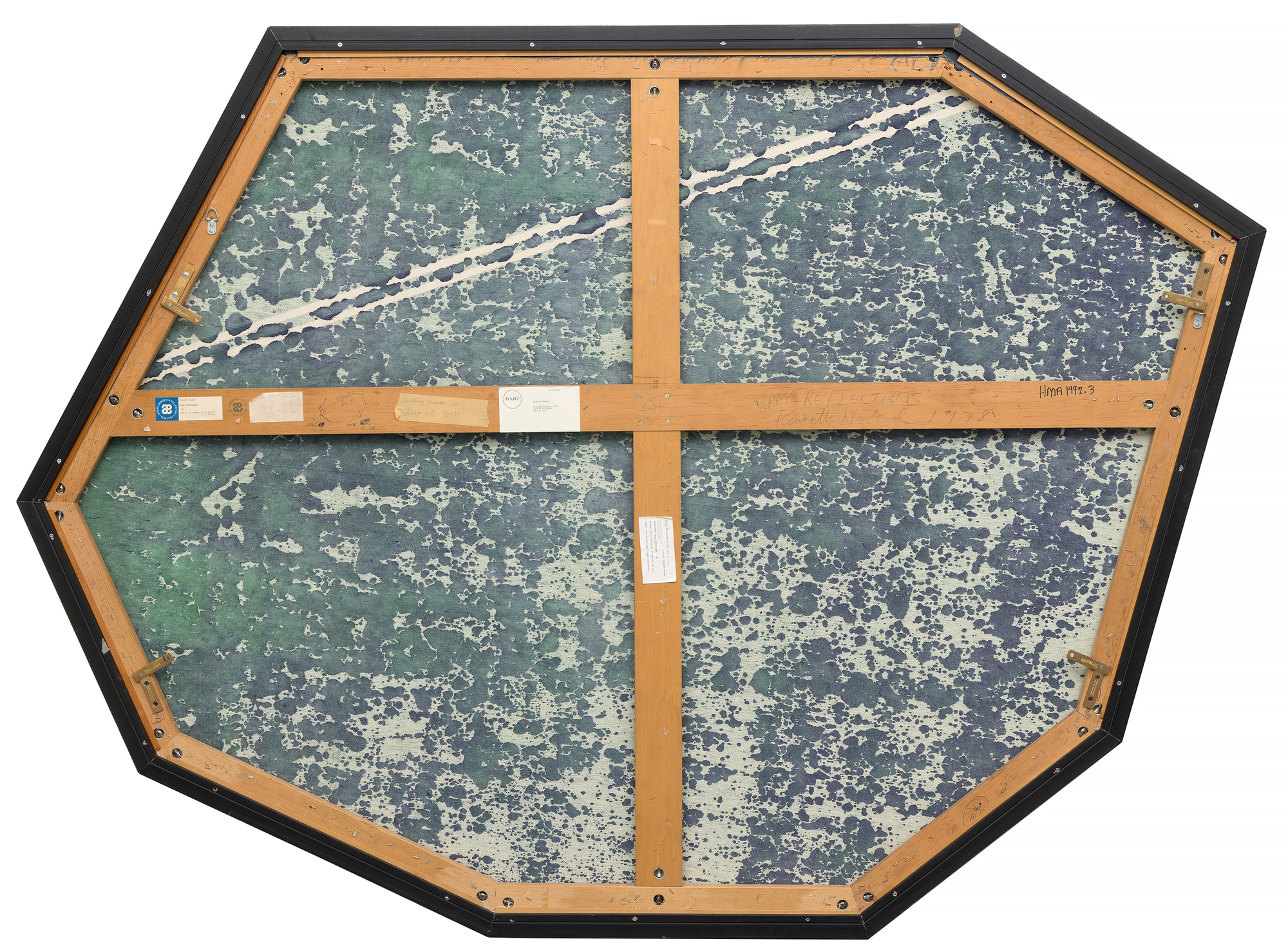
Graue Reflexion197866 1/4 x 88 1/2 Zoll(168,28 x 224,79 x 2,54 cm) Acryl auf Leinwand
Provenienz
André Emmerich Gallery, Inc., New York
Dart Gallery, Chicago
Anne und William J. Hokin, Chicago
Geschenk der oben genannten Personen über den 20th Century Art Acquisition Fund
Sotheby's New York, Mittwoch, 14. November 2012, Los 275
Privatsammlung, erworben von oben genanntem
Kenneth Nolands „Gray Reflection“ (1978) stammt aus den späten 1970er Jahren, als sich der Künstler intensiv mit geformten Leinwänden und der Verfeinerung von Oberfläche und Form beschäftigte. Der kühle Schiefergrund wird durch subtile Farbverläufe und schräge Farbbänder belebt, die das polygonale Feld durchziehen und sowohl Ausgewogenheit als auch ruhige Dynamik erzeugen.


Diese Schaffensphase war weit weniger produktiv als seine berühmten Kreismalereien der 1960er Jahre, sodass Werke wie „Gray Reflection“ vergleichsweise selten sind. Obwohl es nicht Teil einer benannten Serie ist, steht es in Resonanz mit anderen Arbeiten aus den späten 1970er Jahren, wie beispielsweise „Burnt Beige“ im Cranbrook Art Museum.


Noland, neben Morris Louis und Helen Frankenthaler eine zentrale Figur der post-malerischen Abstraktion, ist in bedeutenden Museumssammlungen vertreten, darunter im MoMA, in der Tate und in der National Gallery of Art.
Fragen Sie