OLGA DE AMARAL (geb. 1932)

 
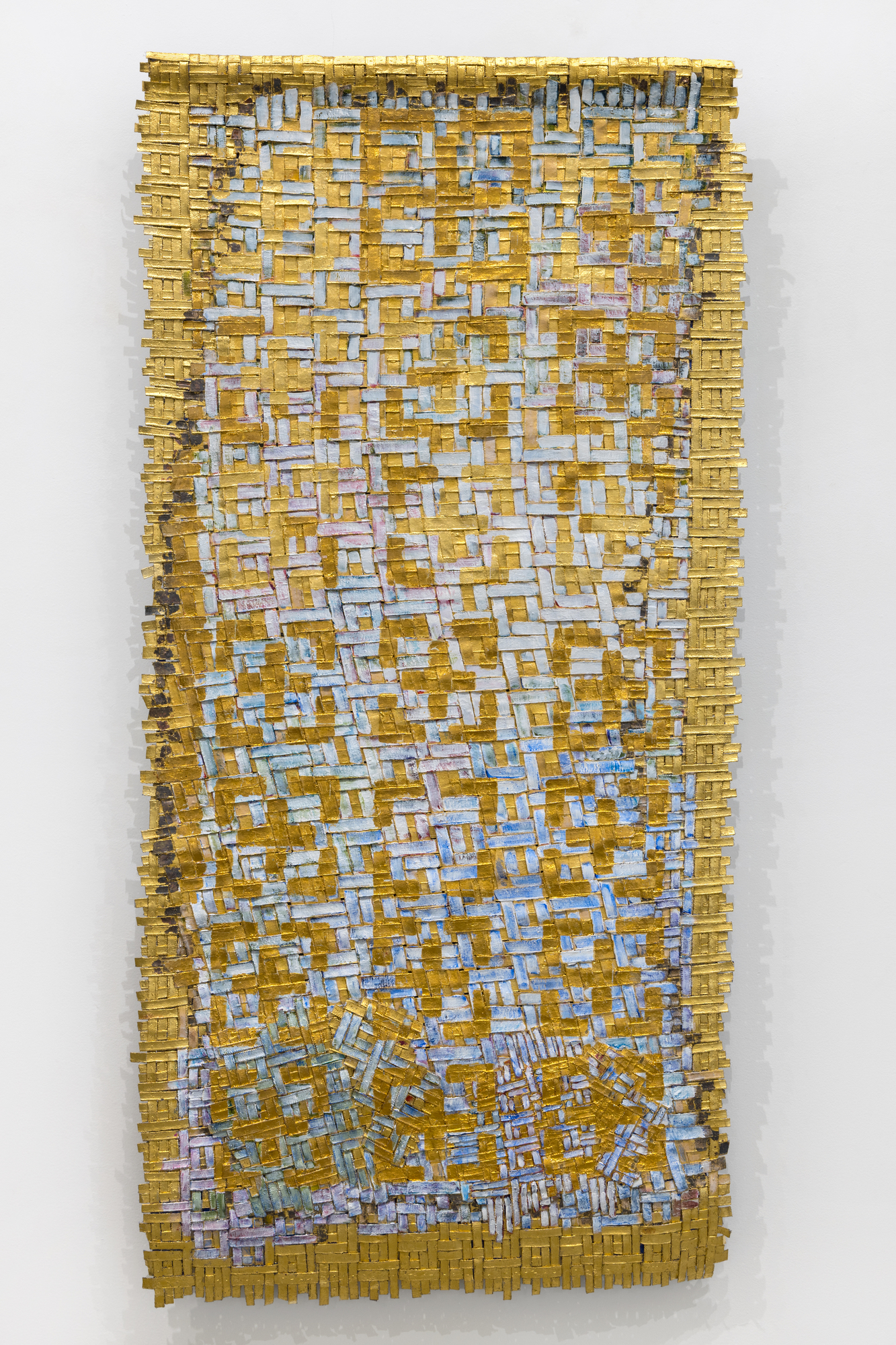
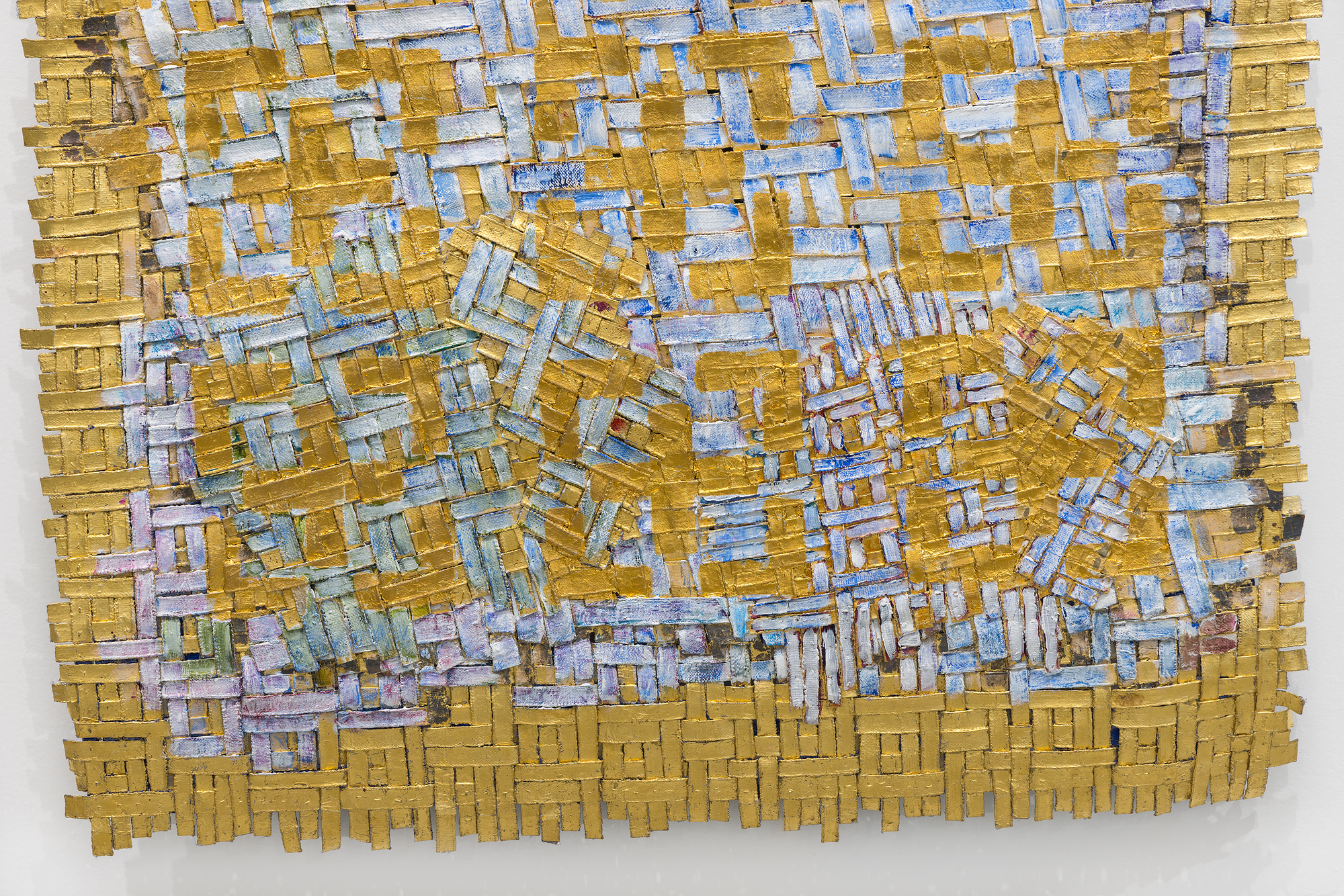
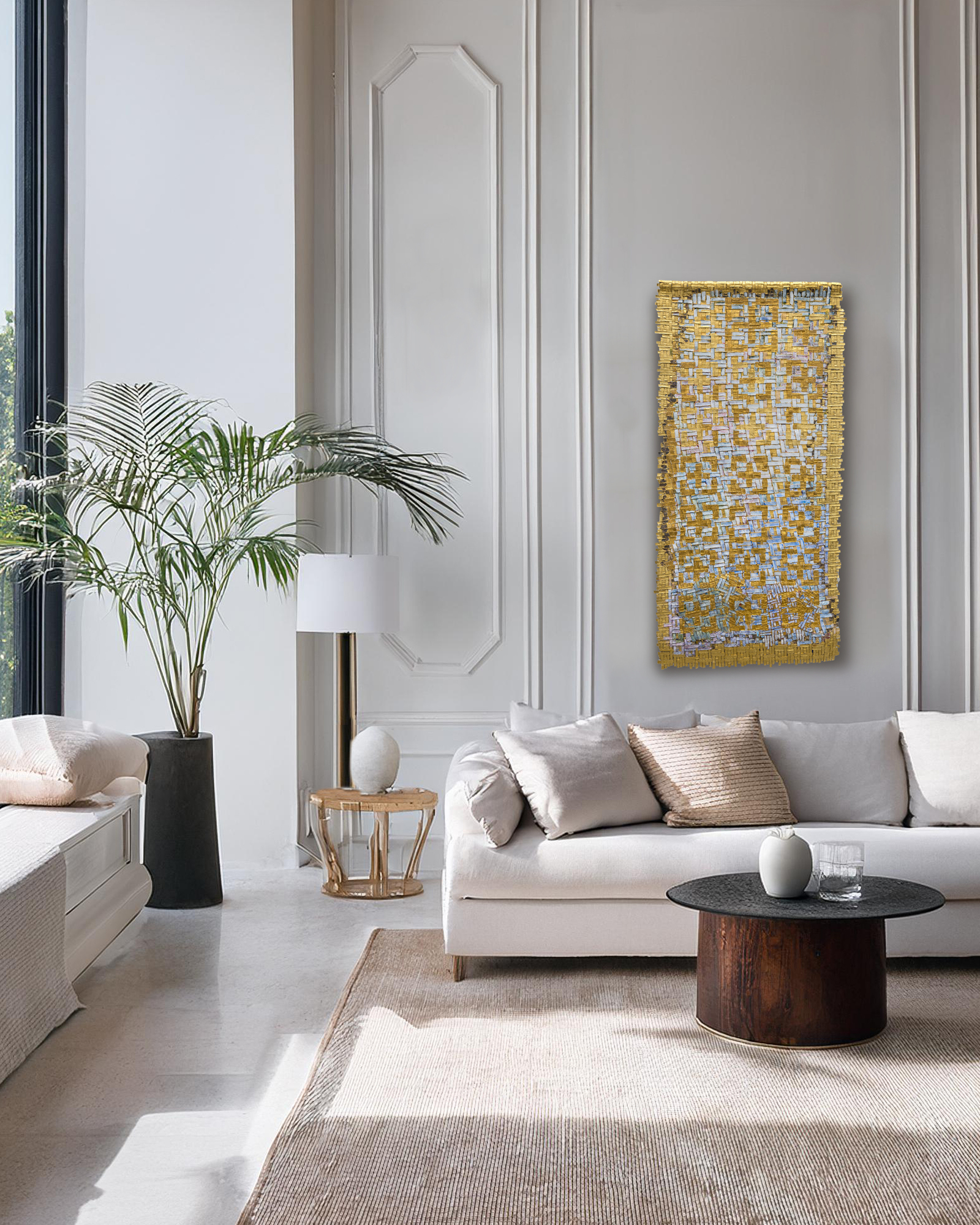
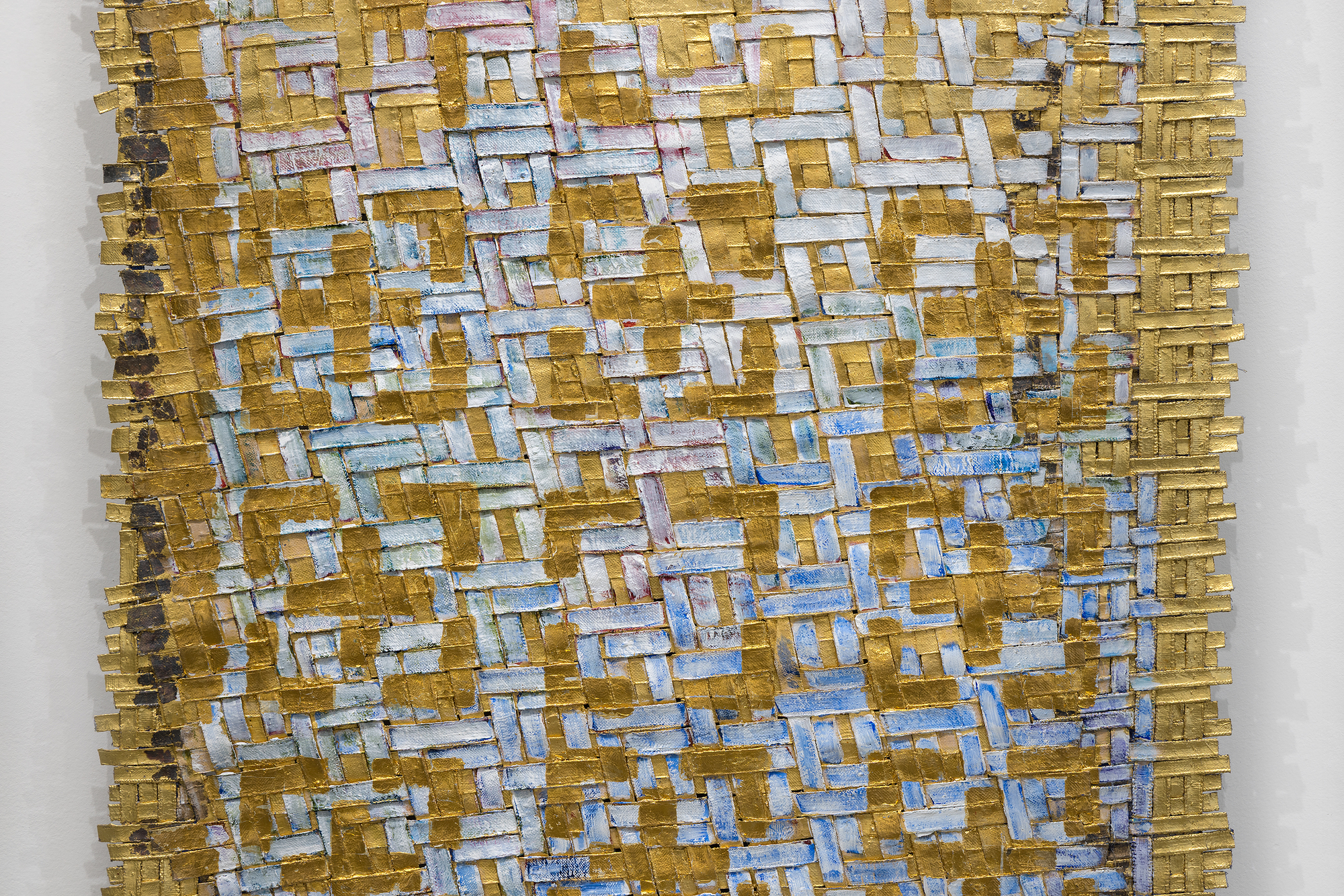
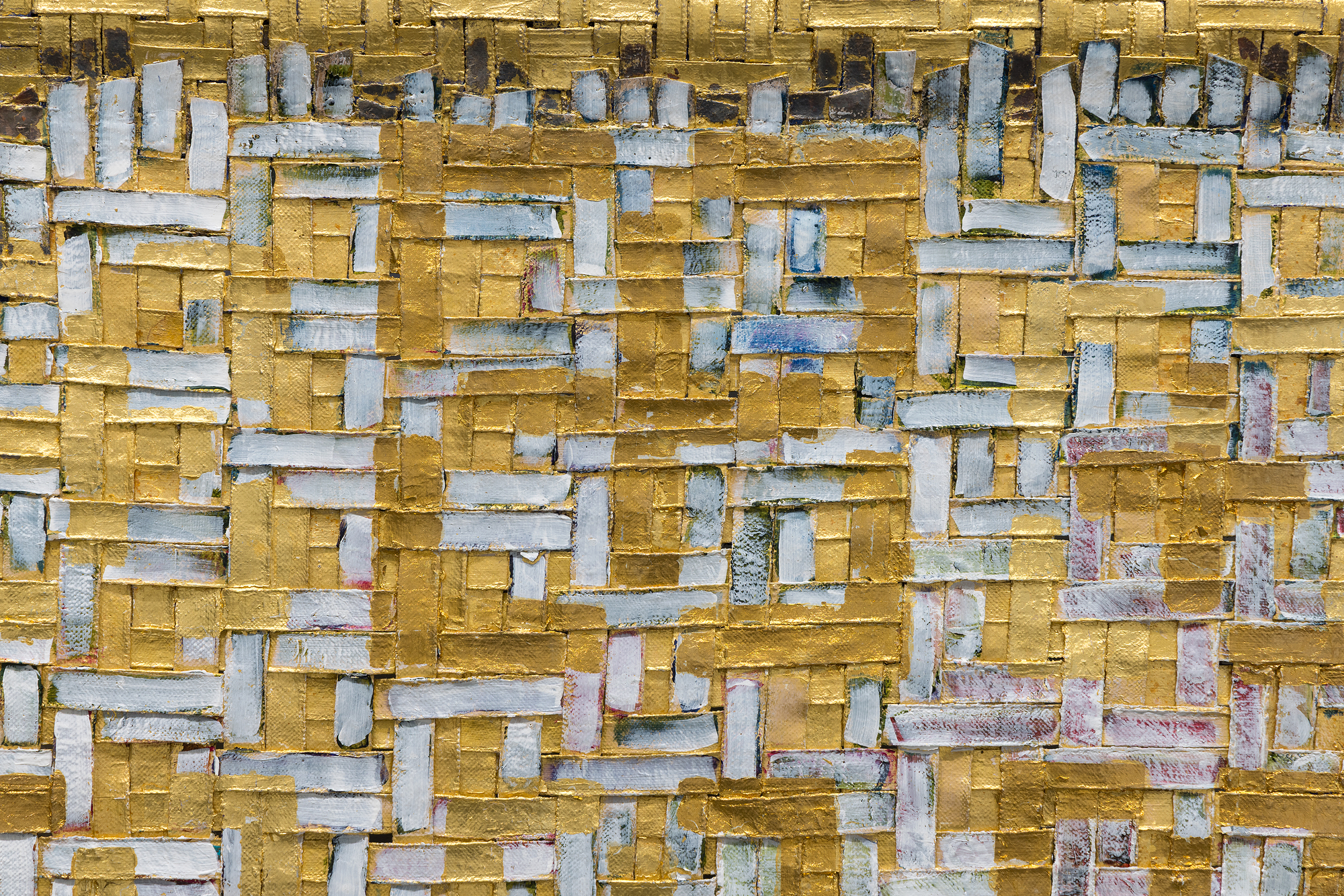
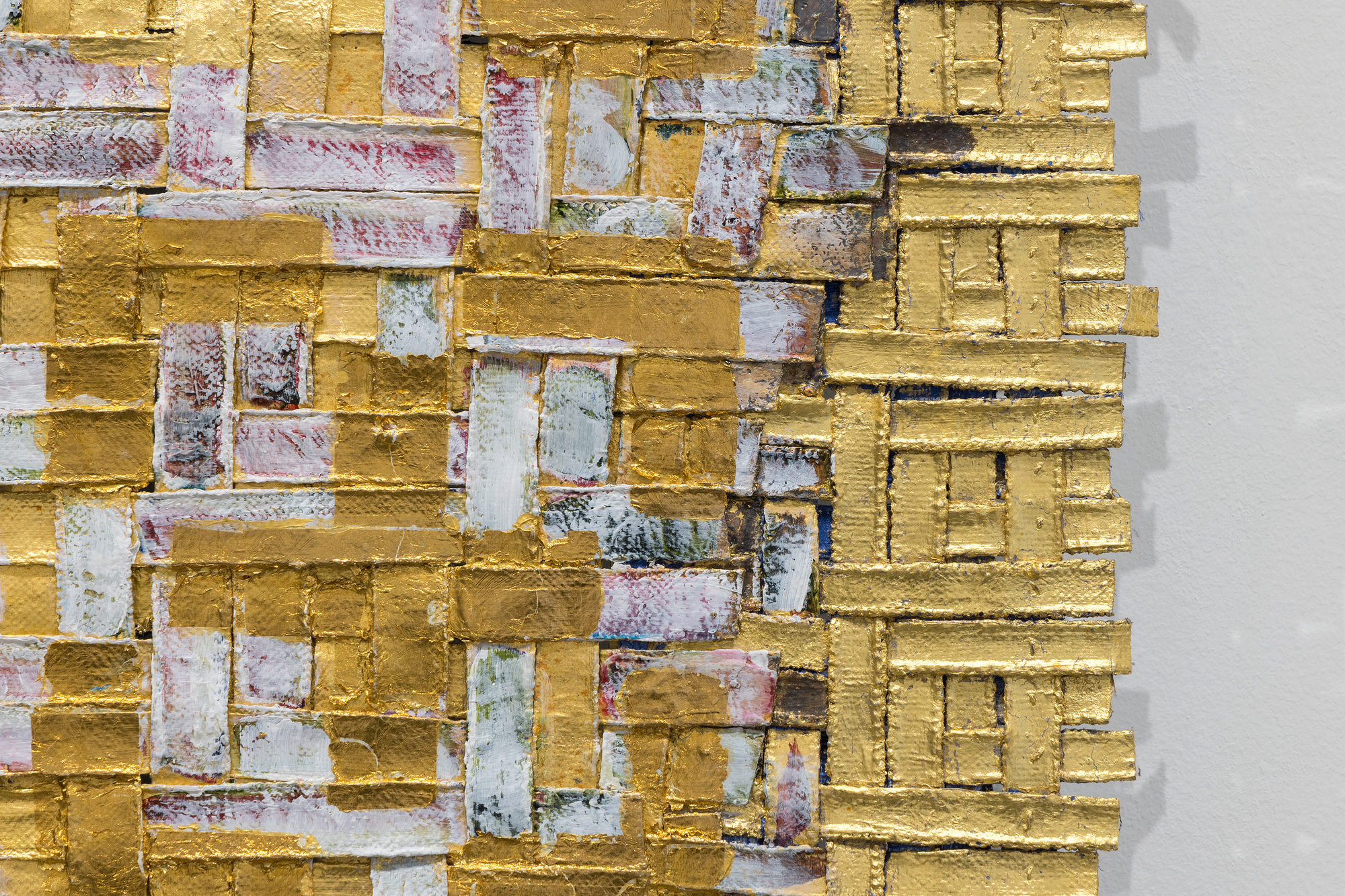
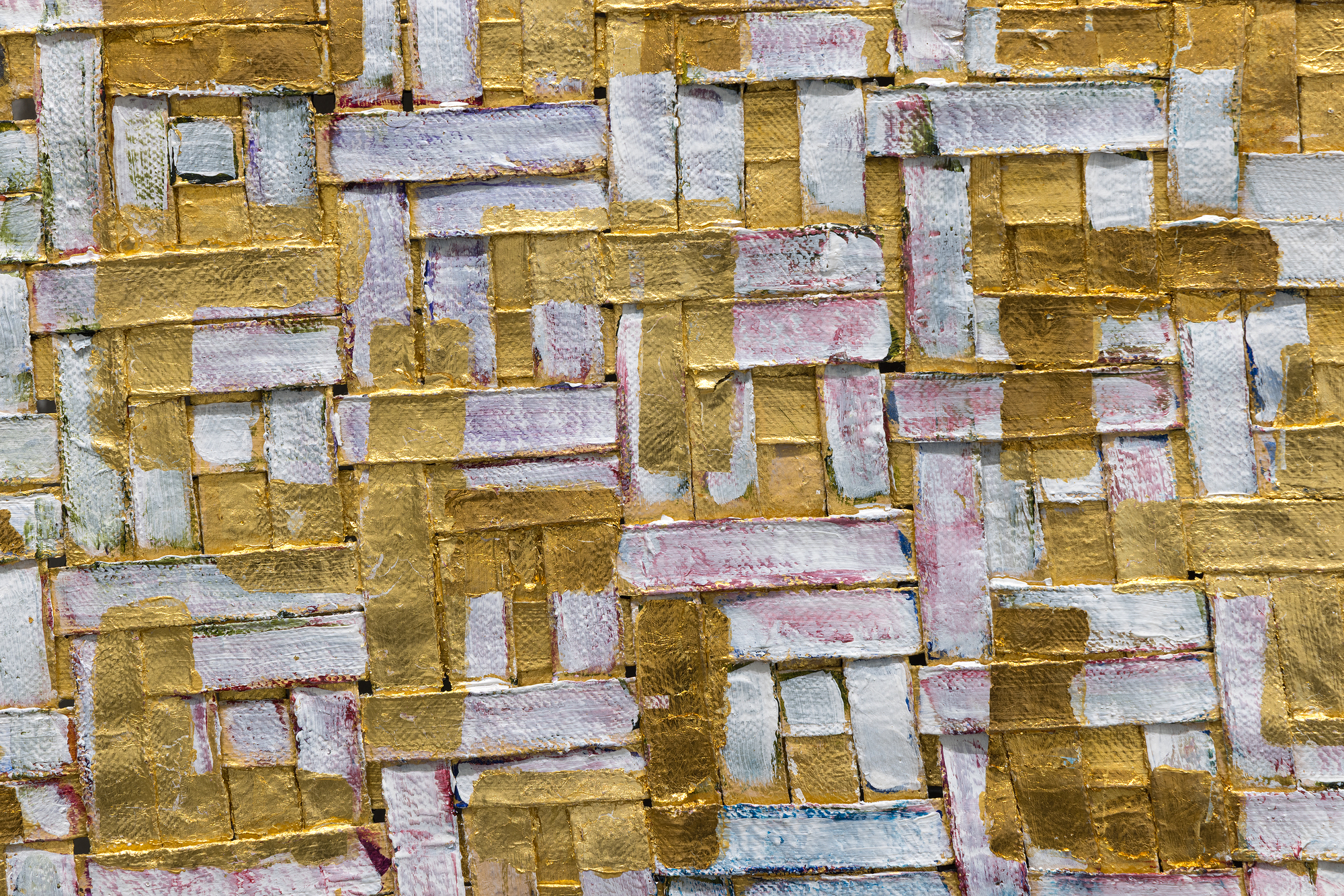
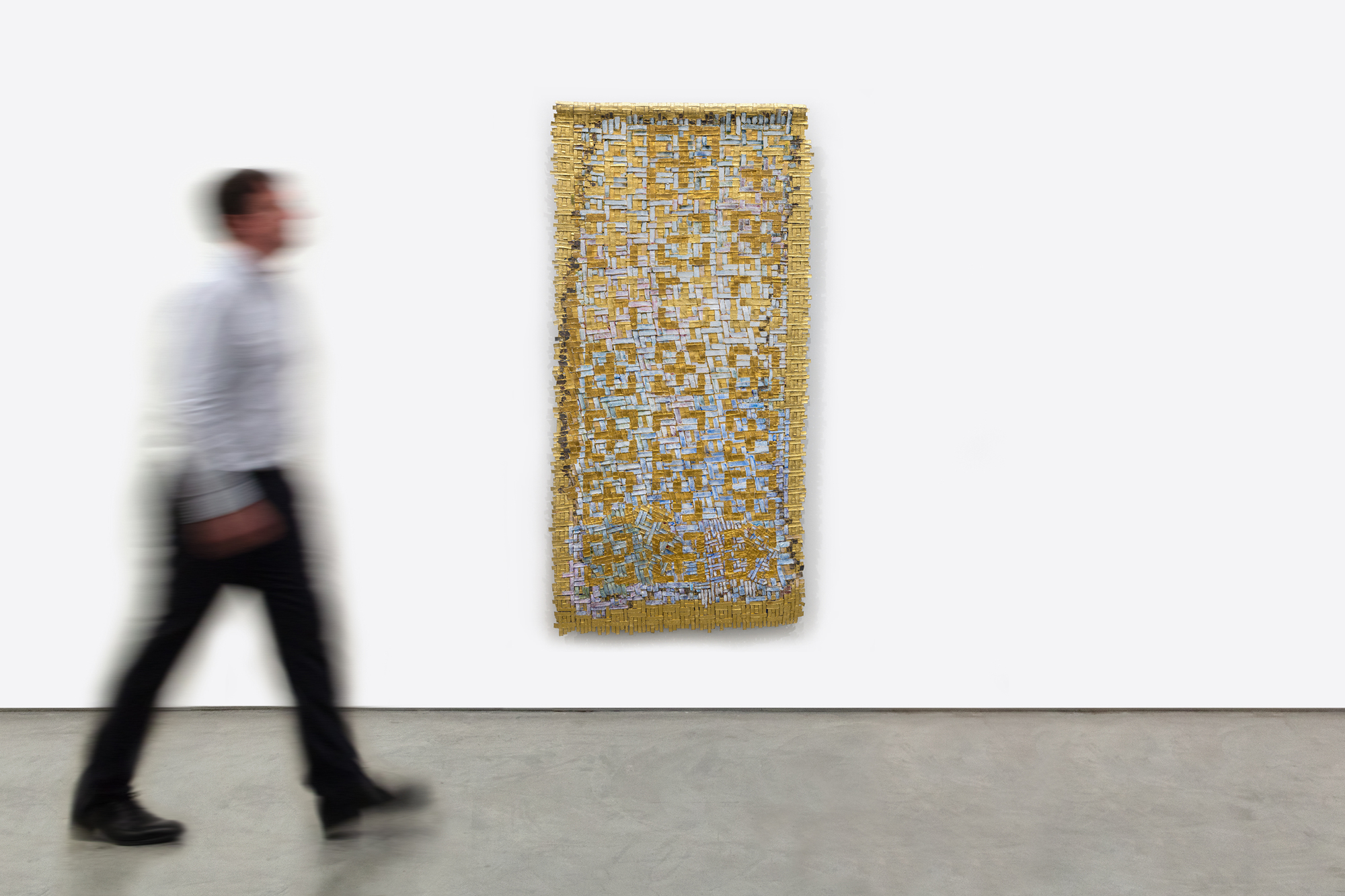
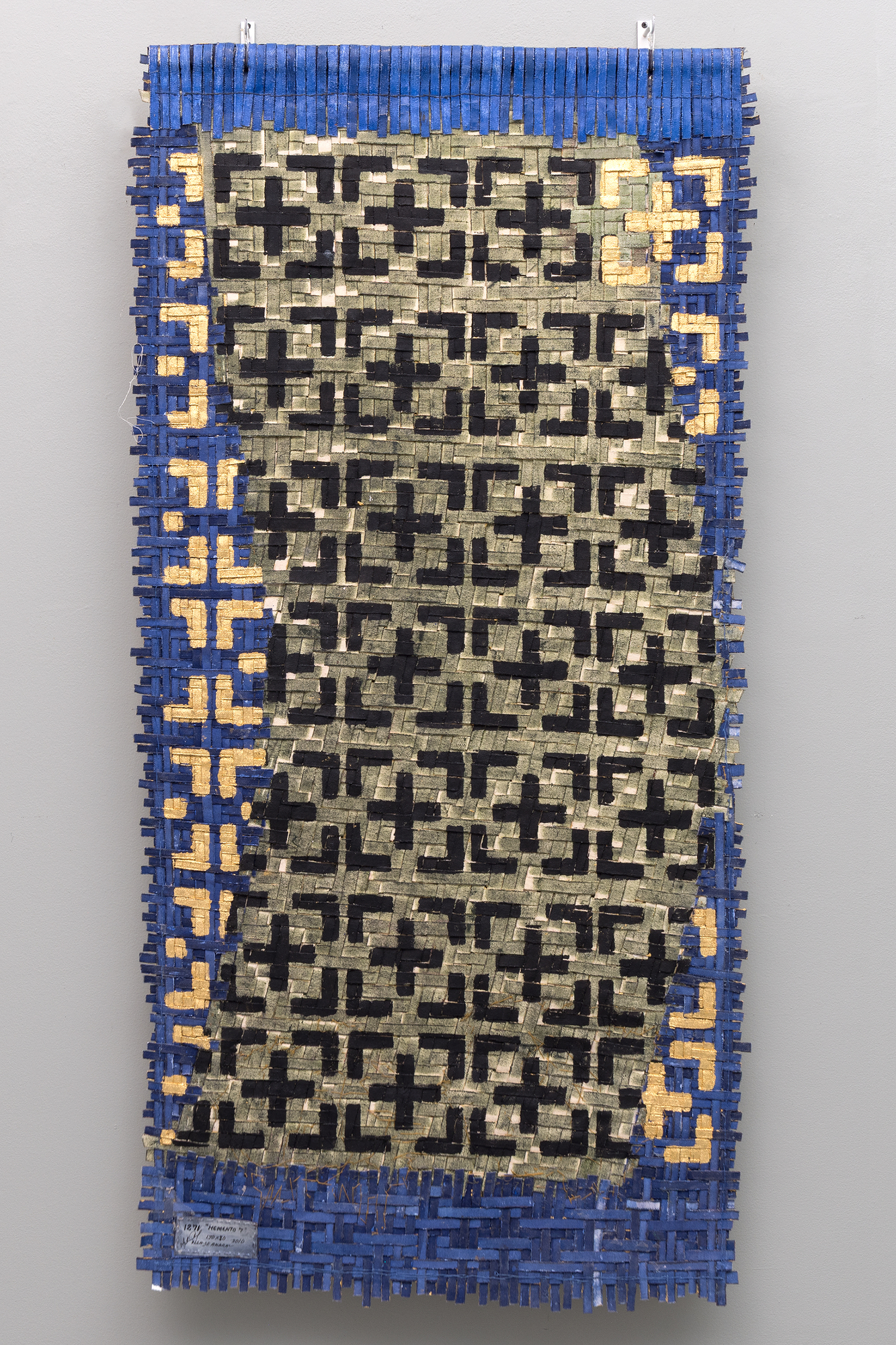
<div><font face=Lato size=3 color=black>Olga de Amaral’s <em>Memento 7</em> exemplifies the Colombian artist’s mastery in transforming textile into a medium of profound sculptural and symbolic resonance. Woven from natural fibers and coated with gesso, metallic leaf, and pigments, the work shimmers between material solidity and optical flux. Its surface glints with gold, refracting light in rhythmic intervals that shift as the viewer moves, evoking both the permanence of memory and its fragility.</font></div><br><br><div> </div><br><br><div><font face=Lato size=3 color=black>The <em>Memento</em> series, from which this piece belongs, explores memory as a layered, luminous presence. By embedding gold leaf within the weave, de Amaral connects her practice to pre-Columbian traditions in which gold was not a mere material but a carrier of spiritual and cultural meaning. In <em>Memento 7</em>, geometric patterning and a richly textured surface create a sense of sacred tapestry, collapsing distinctions between painting, sculpture, and textile.</font></div><br><br><div> </div><br><br><div><font face=Lato size=3 color=black>De Amaral’s work has been celebrated internationally for expanding the language of fiber art into realms of architecture and abstraction. <em>Memento 7</em> resonates with major institutional holdings of her work, including the Museum of Modern Art (New York), the Metropolitan Museum of Art, the Art Institute of Chicago, and the Musée d’Art Moderne de Paris. Within these collections, her gilded weavings stand as both objects of rare material beauty and meditations on history, place, and the metaphysics of light.</font></div><br><br><div> </div><br><br><div><font face=Lato size=3 color=black><em>Memento 7</em> thus embodies the artist’s unique synthesis of ancestral craft and modern abstraction, offering a powerful reflection on memory, time, and transformation.</font></div> <div><font face=Lato size=3 color=black>Olga de Amaral’s <em>Memento 7</em> exemplifies the Colombian artist’s mastery in transforming textile into a medium of profound sculptural and symbolic resonance. Woven from natural fibers and coated with gesso, metallic leaf, and pigments, the work shimmers between material solidity and optical flux. Its surface glints with gold, refracting light in rhythmic intervals that shift as the viewer moves, evoking both the permanence of memory and its fragility.</font></div><br><br><div> </div><br><br><div><font face=Lato size=3 color=black>The <em>Memento</em> series, from which this piece belongs, explores memory as a layered, luminous presence. By embedding gold leaf within the weave, de Amaral connects her practice to pre-Columbian traditions in which gold was not a mere material but a carrier of spiritual and cultural meaning. In <em>Memento 7</em>, geometric patterning and a richly textured surface create a sense of sacred tapestry, collapsing distinctions between painting, sculpture, and textile.</font></div><br><br><div> </div><br><br><div><font face=Lato size=3 color=black>De Amaral’s work has been celebrated internationally for expanding the language of fiber art into realms of architecture and abstraction. <em>Memento 7</em> resonates with major institutional holdings of her work, including the Museum of Modern Art (New York), the Metropolitan Museum of Art, the Art Institute of Chicago, and the Musée d’Art Moderne de Paris. Within these collections, her gilded weavings stand as both objects of rare material beauty and meditations on history, place, and the metaphysics of light.</font></div><br><br><div> </div><br><br><div><font face=Lato size=3 color=black><em>Memento 7</em> thus embodies the artist’s unique synthesis of ancestral craft and modern abstraction, offering a powerful reflection on memory, time, and transformation.</font></div> <div><font face=Lato size=3 color=black>Olga de Amaral’s <em>Memento 7</em> exemplifies the Colombian artist’s mastery in transforming textile into a medium of profound sculptural and symbolic resonance. Woven from natural fibers and coated with gesso, metallic leaf, and pigments, the work shimmers between material solidity and optical flux. Its surface glints with gold, refracting light in rhythmic intervals that shift as the viewer moves, evoking both the permanence of memory and its fragility.</font></div><br><br><div> </div><br><br><div><font face=Lato size=3 color=black>The <em>Memento</em> series, from which this piece belongs, explores memory as a layered, luminous presence. By embedding gold leaf within the weave, de Amaral connects her practice to pre-Columbian traditions in which gold was not a mere material but a carrier of spiritual and cultural meaning. In <em>Memento 7</em>, geometric patterning and a richly textured surface create a sense of sacred tapestry, collapsing distinctions between painting, sculpture, and textile.</font></div><br><br><div> </div><br><br><div><font face=Lato size=3 color=black>De Amaral’s work has been celebrated internationally for expanding the language of fiber art into realms of architecture and abstraction. <em>Memento 7</em> resonates with major institutional holdings of her work, including the Museum of Modern Art (New York), the Metropolitan Museum of Art, the Art Institute of Chicago, and the Musée d’Art Moderne de Paris. Within these collections, her gilded weavings stand as both objects of rare material beauty and meditations on history, place, and the metaphysics of light.</font></div><br><br><div> </div><br><br><div><font face=Lato size=3 color=black><em>Memento 7</em> thus embodies the artist’s unique synthesis of ancestral craft and modern abstraction, offering a powerful reflection on memory, time, and transformation.</font></div> <div><font face=Lato size=3 color=black>Olga de Amaral’s <em>Memento 7</em> exemplifies the Colombian artist’s mastery in transforming textile into a medium of profound sculptural and symbolic resonance. Woven from natural fibers and coated with gesso, metallic leaf, and pigments, the work shimmers between material solidity and optical flux. Its surface glints with gold, refracting light in rhythmic intervals that shift as the viewer moves, evoking both the permanence of memory and its fragility.</font></div><br><br><div> </div><br><br><div><font face=Lato size=3 color=black>The <em>Memento</em> series, from which this piece belongs, explores memory as a layered, luminous presence. By embedding gold leaf within the weave, de Amaral connects her practice to pre-Columbian traditions in which gold was not a mere material but a carrier of spiritual and cultural meaning. In <em>Memento 7</em>, geometric patterning and a richly textured surface create a sense of sacred tapestry, collapsing distinctions between painting, sculpture, and textile.</font></div><br><br><div> </div><br><br><div><font face=Lato size=3 color=black>De Amaral’s work has been celebrated internationally for expanding the language of fiber art into realms of architecture and abstraction. <em>Memento 7</em> resonates with major institutional holdings of her work, including the Museum of Modern Art (New York), the Metropolitan Museum of Art, the Art Institute of Chicago, and the Musée d’Art Moderne de Paris. Within these collections, her gilded weavings stand as both objects of rare material beauty and meditations on history, place, and the metaphysics of light.</font></div><br><br><div> </div><br><br><div><font face=Lato size=3 color=black><em>Memento 7</em> thus embodies the artist’s unique synthesis of ancestral craft and modern abstraction, offering a powerful reflection on memory, time, and transformation.</font></div> <div><font face=Lato size=3 color=black>Olga de Amaral’s <em>Memento 7</em> exemplifies the Colombian artist’s mastery in transforming textile into a medium of profound sculptural and symbolic resonance. Woven from natural fibers and coated with gesso, metallic leaf, and pigments, the work shimmers between material solidity and optical flux. Its surface glints with gold, refracting light in rhythmic intervals that shift as the viewer moves, evoking both the permanence of memory and its fragility.</font></div><br><br><div> </div><br><br><div><font face=Lato size=3 color=black>The <em>Memento</em> series, from which this piece belongs, explores memory as a layered, luminous presence. By embedding gold leaf within the weave, de Amaral connects her practice to pre-Columbian traditions in which gold was not a mere material but a carrier of spiritual and cultural meaning. In <em>Memento 7</em>, geometric patterning and a richly textured surface create a sense of sacred tapestry, collapsing distinctions between painting, sculpture, and textile.</font></div><br><br><div> </div><br><br><div><font face=Lato size=3 color=black>De Amaral’s work has been celebrated internationally for expanding the language of fiber art into realms of architecture and abstraction. <em>Memento 7</em> resonates with major institutional holdings of her work, including the Museum of Modern Art (New York), the Metropolitan Museum of Art, the Art Institute of Chicago, and the Musée d’Art Moderne de Paris. Within these collections, her gilded weavings stand as both objects of rare material beauty and meditations on history, place, and the metaphysics of light.</font></div><br><br><div> </div><br><br><div><font face=Lato size=3 color=black><em>Memento 7</em> thus embodies the artist’s unique synthesis of ancestral craft and modern abstraction, offering a powerful reflection on memory, time, and transformation.</font></div> <div><font face=Lato size=3 color=black>Olga de Amaral’s <em>Memento 7</em> exemplifies the Colombian artist’s mastery in transforming textile into a medium of profound sculptural and symbolic resonance. Woven from natural fibers and coated with gesso, metallic leaf, and pigments, the work shimmers between material solidity and optical flux. Its surface glints with gold, refracting light in rhythmic intervals that shift as the viewer moves, evoking both the permanence of memory and its fragility.</font></div><br><br><div> </div><br><br><div><font face=Lato size=3 color=black>The <em>Memento</em> series, from which this piece belongs, explores memory as a layered, luminous presence. By embedding gold leaf within the weave, de Amaral connects her practice to pre-Columbian traditions in which gold was not a mere material but a carrier of spiritual and cultural meaning. In <em>Memento 7</em>, geometric patterning and a richly textured surface create a sense of sacred tapestry, collapsing distinctions between painting, sculpture, and textile.</font></div><br><br><div> </div><br><br><div><font face=Lato size=3 color=black>De Amaral’s work has been celebrated internationally for expanding the language of fiber art into realms of architecture and abstraction. <em>Memento 7</em> resonates with major institutional holdings of her work, including the Museum of Modern Art (New York), the Metropolitan Museum of Art, the Art Institute of Chicago, and the Musée d’Art Moderne de Paris. Within these collections, her gilded weavings stand as both objects of rare material beauty and meditations on history, place, and the metaphysics of light.</font></div><br><br><div> </div><br><br><div><font face=Lato size=3 color=black><em>Memento 7</em> thus embodies the artist’s unique synthesis of ancestral craft and modern abstraction, offering a powerful reflection on memory, time, and transformation.</font></div> <div><font face=Lato size=3 color=black>Olga de Amaral’s <em>Memento 7</em> exemplifies the Colombian artist’s mastery in transforming textile into a medium of profound sculptural and symbolic resonance. Woven from natural fibers and coated with gesso, metallic leaf, and pigments, the work shimmers between material solidity and optical flux. Its surface glints with gold, refracting light in rhythmic intervals that shift as the viewer moves, evoking both the permanence of memory and its fragility.</font></div><br><br><div> </div><br><br><div><font face=Lato size=3 color=black>The <em>Memento</em> series, from which this piece belongs, explores memory as a layered, luminous presence. By embedding gold leaf within the weave, de Amaral connects her practice to pre-Columbian traditions in which gold was not a mere material but a carrier of spiritual and cultural meaning. In <em>Memento 7</em>, geometric patterning and a richly textured surface create a sense of sacred tapestry, collapsing distinctions between painting, sculpture, and textile.</font></div><br><br><div> </div><br><br><div><font face=Lato size=3 color=black>De Amaral’s work has been celebrated internationally for expanding the language of fiber art into realms of architecture and abstraction. <em>Memento 7</em> resonates with major institutional holdings of her work, including the Museum of Modern Art (New York), the Metropolitan Museum of Art, the Art Institute of Chicago, and the Musée d’Art Moderne de Paris. Within these collections, her gilded weavings stand as both objects of rare material beauty and meditations on history, place, and the metaphysics of light.</font></div><br><br><div> </div><br><br><div><font face=Lato size=3 color=black><em>Memento 7</em> thus embodies the artist’s unique synthesis of ancestral craft and modern abstraction, offering a powerful reflection on memory, time, and transformation.</font></div> <div><font face=Lato size=3 color=black>Olga de Amaral’s <em>Memento 7</em> exemplifies the Colombian artist’s mastery in transforming textile into a medium of profound sculptural and symbolic resonance. Woven from natural fibers and coated with gesso, metallic leaf, and pigments, the work shimmers between material solidity and optical flux. Its surface glints with gold, refracting light in rhythmic intervals that shift as the viewer moves, evoking both the permanence of memory and its fragility.</font></div><br><br><div> </div><br><br><div><font face=Lato size=3 color=black>The <em>Memento</em> series, from which this piece belongs, explores memory as a layered, luminous presence. By embedding gold leaf within the weave, de Amaral connects her practice to pre-Columbian traditions in which gold was not a mere material but a carrier of spiritual and cultural meaning. In <em>Memento 7</em>, geometric patterning and a richly textured surface create a sense of sacred tapestry, collapsing distinctions between painting, sculpture, and textile.</font></div><br><br><div> </div><br><br><div><font face=Lato size=3 color=black>De Amaral’s work has been celebrated internationally for expanding the language of fiber art into realms of architecture and abstraction. <em>Memento 7</em> resonates with major institutional holdings of her work, including the Museum of Modern Art (New York), the Metropolitan Museum of Art, the Art Institute of Chicago, and the Musée d’Art Moderne de Paris. Within these collections, her gilded weavings stand as both objects of rare material beauty and meditations on history, place, and the metaphysics of light.</font></div><br><br><div> </div><br><br><div><font face=Lato size=3 color=black><em>Memento 7</em> thus embodies the artist’s unique synthesis of ancestral craft and modern abstraction, offering a powerful reflection on memory, time, and transformation.</font></div> <div><font face=Lato size=3 color=black>Olga de Amaral’s <em>Memento 7</em> exemplifies the Colombian artist’s mastery in transforming textile into a medium of profound sculptural and symbolic resonance. Woven from natural fibers and coated with gesso, metallic leaf, and pigments, the work shimmers between material solidity and optical flux. Its surface glints with gold, refracting light in rhythmic intervals that shift as the viewer moves, evoking both the permanence of memory and its fragility.</font></div><br><br><div> </div><br><br><div><font face=Lato size=3 color=black>The <em>Memento</em> series, from which this piece belongs, explores memory as a layered, luminous presence. By embedding gold leaf within the weave, de Amaral connects her practice to pre-Columbian traditions in which gold was not a mere material but a carrier of spiritual and cultural meaning. In <em>Memento 7</em>, geometric patterning and a richly textured surface create a sense of sacred tapestry, collapsing distinctions between painting, sculpture, and textile.</font></div><br><br><div> </div><br><br><div><font face=Lato size=3 color=black>De Amaral’s work has been celebrated internationally for expanding the language of fiber art into realms of architecture and abstraction. <em>Memento 7</em> resonates with major institutional holdings of her work, including the Museum of Modern Art (New York), the Metropolitan Museum of Art, the Art Institute of Chicago, and the Musée d’Art Moderne de Paris. Within these collections, her gilded weavings stand as both objects of rare material beauty and meditations on history, place, and the metaphysics of light.</font></div><br><br><div> </div><br><br><div><font face=Lato size=3 color=black><em>Memento 7</em> thus embodies the artist’s unique synthesis of ancestral craft and modern abstraction, offering a powerful reflection on memory, time, and transformation.</font></div> <div><font face=Lato size=3 color=black>Olga de Amaral’s <em>Memento 7</em> exemplifies the Colombian artist’s mastery in transforming textile into a medium of profound sculptural and symbolic resonance. Woven from natural fibers and coated with gesso, metallic leaf, and pigments, the work shimmers between material solidity and optical flux. Its surface glints with gold, refracting light in rhythmic intervals that shift as the viewer moves, evoking both the permanence of memory and its fragility.</font></div><br><br><div> </div><br><br><div><font face=Lato size=3 color=black>The <em>Memento</em> series, from which this piece belongs, explores memory as a layered, luminous presence. By embedding gold leaf within the weave, de Amaral connects her practice to pre-Columbian traditions in which gold was not a mere material but a carrier of spiritual and cultural meaning. In <em>Memento 7</em>, geometric patterning and a richly textured surface create a sense of sacred tapestry, collapsing distinctions between painting, sculpture, and textile.</font></div><br><br><div> </div><br><br><div><font face=Lato size=3 color=black>De Amaral’s work has been celebrated internationally for expanding the language of fiber art into realms of architecture and abstraction. <em>Memento 7</em> resonates with major institutional holdings of her work, including the Museum of Modern Art (New York), the Metropolitan Museum of Art, the Art Institute of Chicago, and the Musée d’Art Moderne de Paris. Within these collections, her gilded weavings stand as both objects of rare material beauty and meditations on history, place, and the metaphysics of light.</font></div><br><br><div> </div><br><br><div><font face=Lato size=3 color=black><em>Memento 7</em> thus embodies the artist’s unique synthesis of ancestral craft and modern abstraction, offering a powerful reflection on memory, time, and transformation.</font></div>
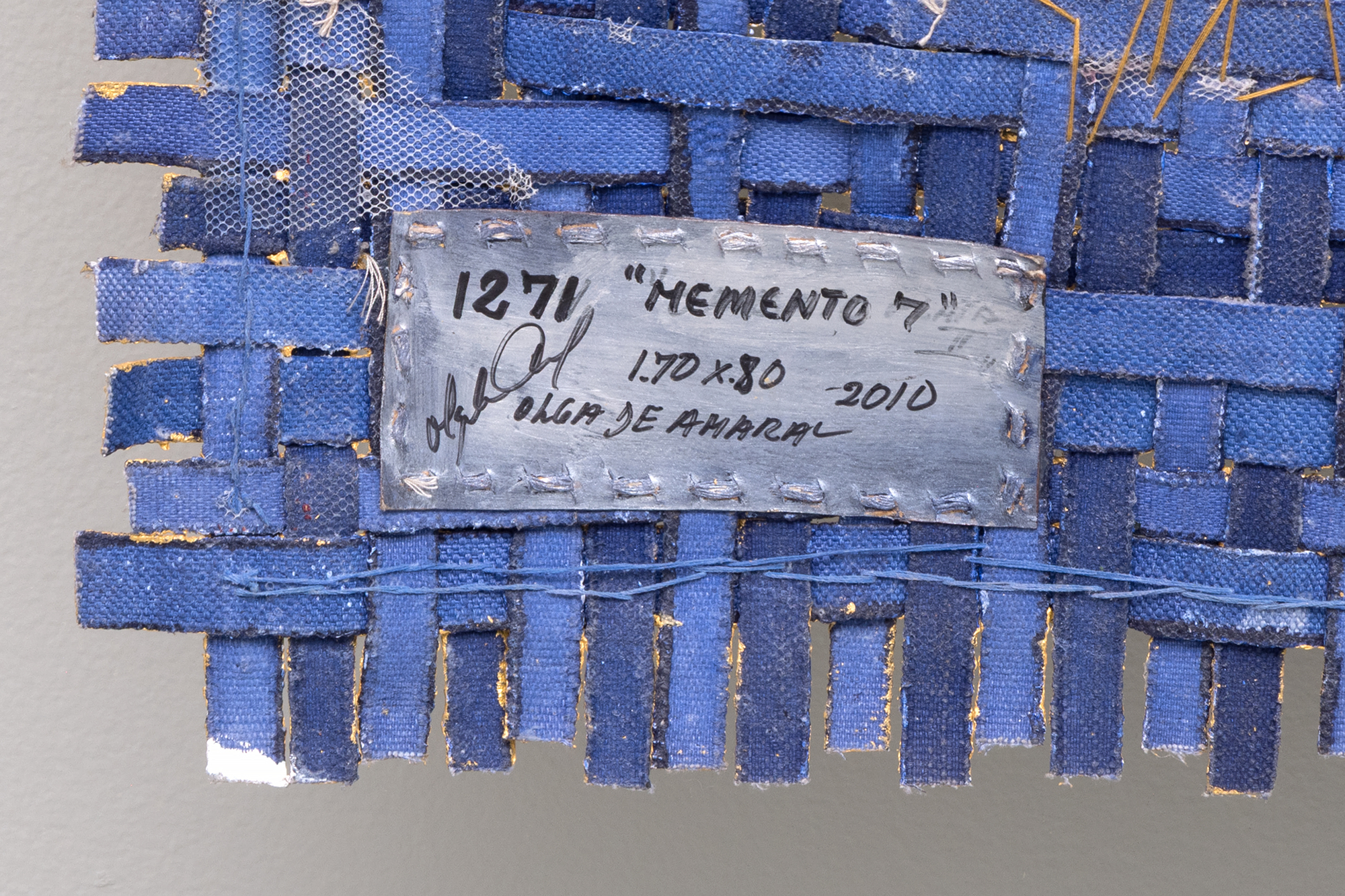
Memento 7201068 x 32 3/4 Zoll(169,86 x 80,01 cm) Leinen, Gesso, Acryl und Blattgold
Provenienz
Vom Künstler über die Lisson Gallery dem Museum of Fine Arts, Houston, gespendet Latin American Experience Benefit Auction, 2022
Privatsammlung, erworben aus der oben genannten Auktion
Heather James Fine Art
Literaturhinweise
Houston, Texas, Museum of Fine Arts, Houston, Latin American Experience Benefit Auction 2022 Katalog, 2022, abgebildet auf dem Cover
Olga de Amarals „Memento 7“ ist ein Beispiel für die Meisterschaft der kolumbianischen Künstlerin, Textilien in ein Medium von tiefer skulpturaler und symbolischer Resonanz zu verwandeln. Das aus Naturfasern gewebte und mit Gesso, Metallfolie und Pigmenten beschichtete Werk schimmert zwischen materieller Festigkeit und optischer Fluidität. Seine Oberfläche glänzt golden und bricht das Licht in rhythmischen Intervallen, die sich mit der Bewegung des Betrachters verschieben und sowohl die Beständigkeit der Erinnerung als auch ihre Zerbrechlichkeit evozieren.


Die Memento-Serie, zu der dieses Werk gehört, erforscht Erinnerung als vielschichtige, leuchtende Präsenz. Durch die Einbettung von Blattgold in das Gewebe knüpft de Amaral an präkolumbianische Traditionen an, in denen Gold nicht nur ein Material war, sondern auch spirituelle und kulturelle Bedeutung hatte. In Memento 7 schaffen geometrische Muster und eine reich strukturierte Oberfläche den Eindruck eines sakralen Wandteppichs und lassen die Grenzen zwischen Malerei, Skulptur und Textil verschwimmen.


De Amarals Werk wird international dafür gefeiert, dass es die Sprache der Faserkunst in die Bereiche Architektur und Abstraktion erweitert. Memento 7 steht im Einklang mit bedeutenden institutionellen Beständen ihrer Werke, darunter das Museum of Modern Art (New York), das Metropolitan Museum of Art, das Art Institute of Chicago und das Musée d'Art Moderne de Paris. In diesen Sammlungen stehen ihre vergoldeten Webarbeiten sowohl als Objekte von seltener materieller Schönheit als auch als Meditationen über Geschichte, Ort und die Metaphysik des Lichts.


Memento 7 verkörpert somit die einzigartige Synthese der Künstlerin aus traditionellem Handwerk und moderner Abstraktion und bietet eine kraftvolle Reflexion über Erinnerung, Zeit und Transformation.
Fragen Sie