Zurück

LYNNE MAPP DREXLER (1928-1999)

$475,000

 
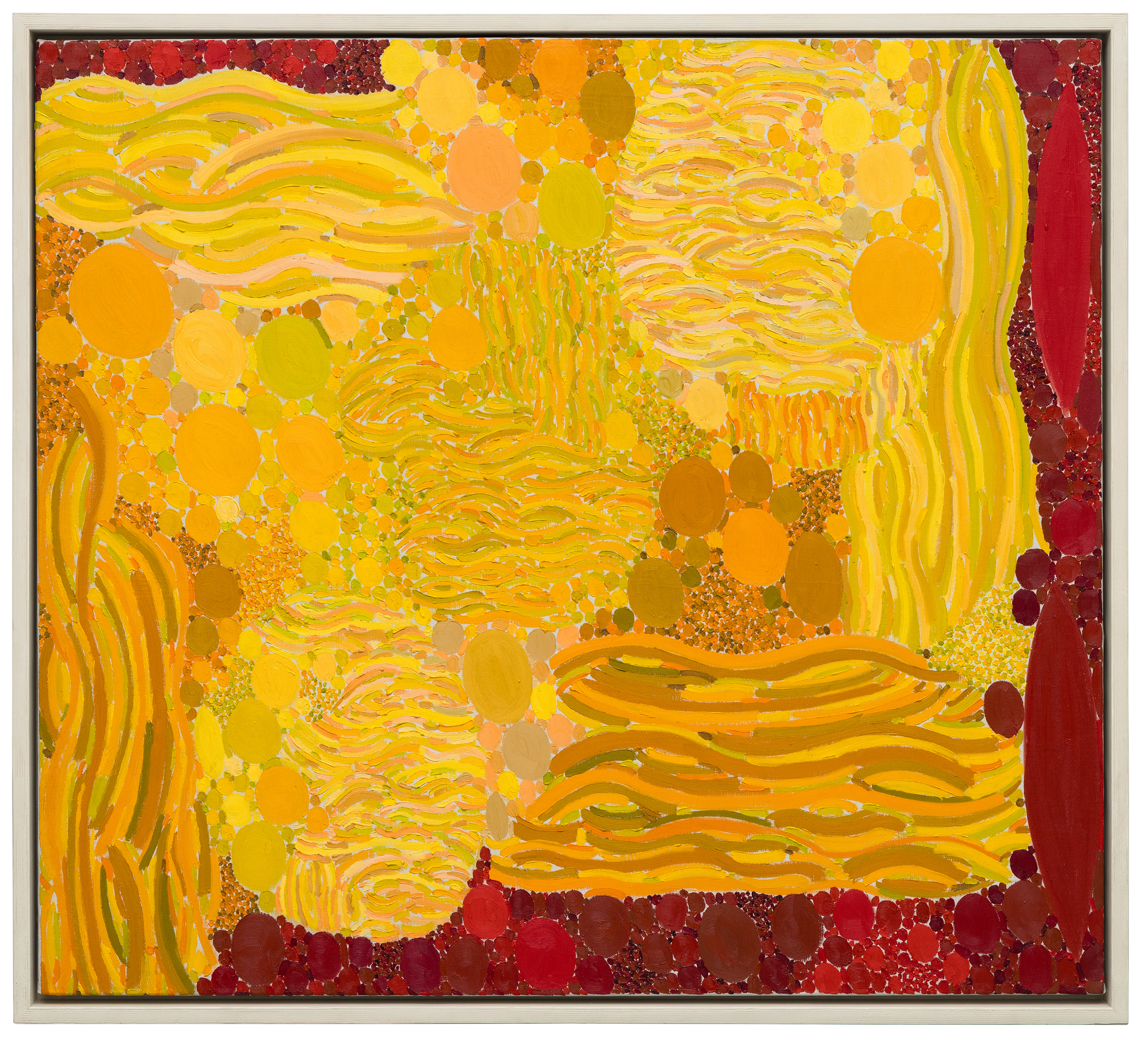
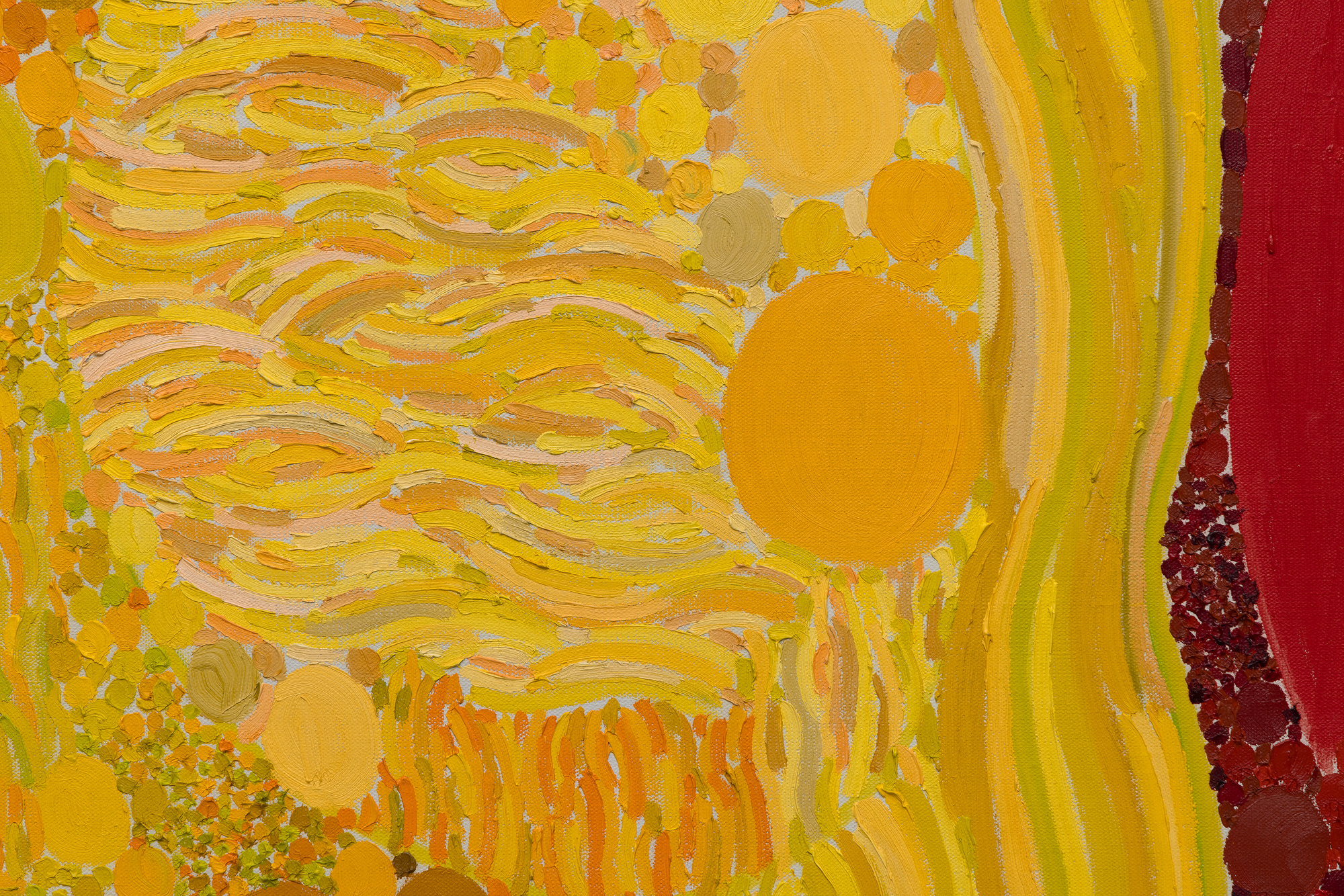
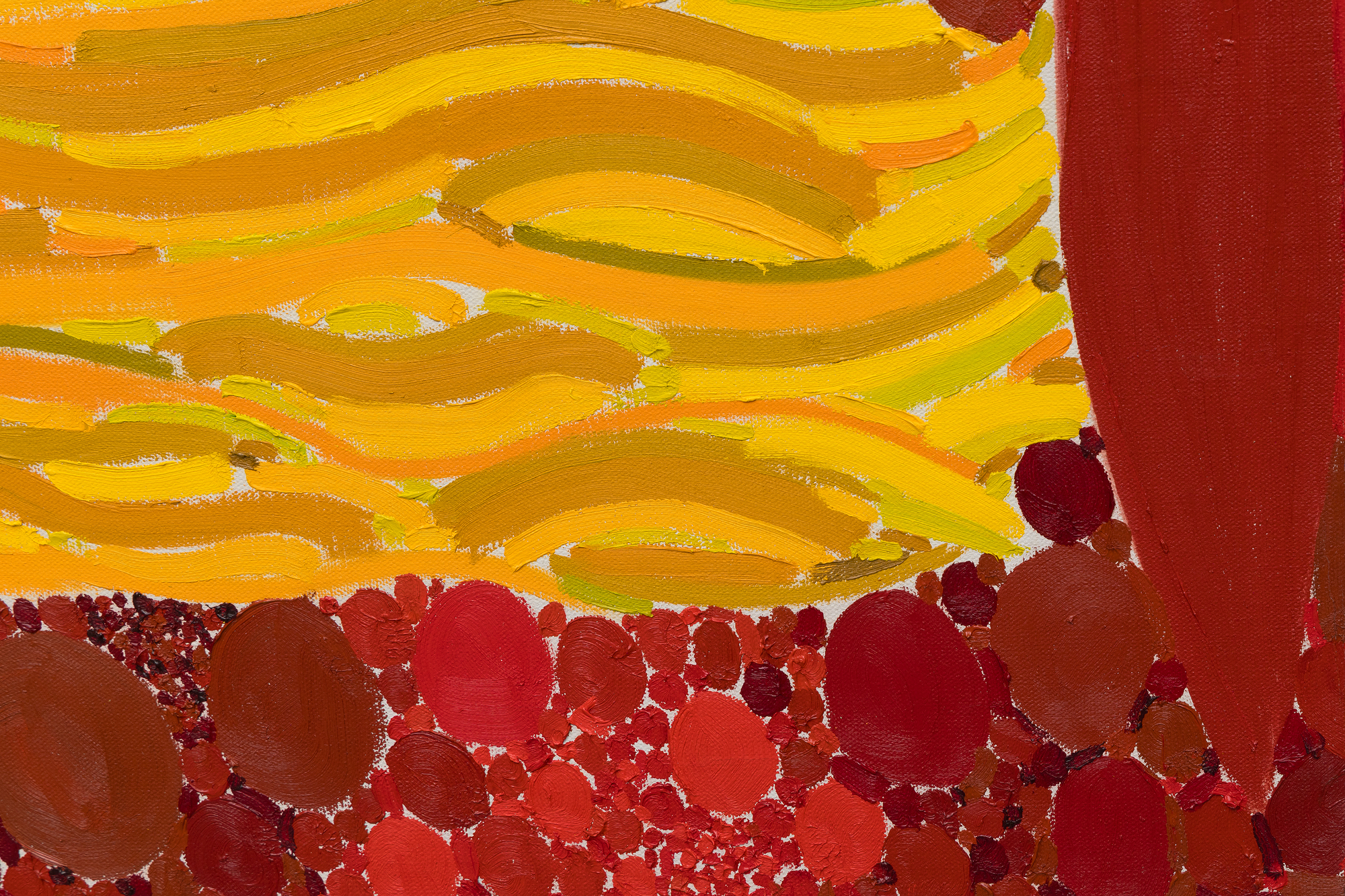
<div><font face=Lato size=3 color=black>Lynne Mapp Drexler’s <em>Spring Sun</em> (1971) exemplifies the vibrant, lyrical abstraction that has brought her renewed recognition in recent years. Composed of concentric circles, cascading brushstrokes, and radiant hues of yellow, orange, and red, the canvas pulses with the rhythm of light and season. Drexler’s painterly vocabulary—layering gestural strokes over pointillist clusters—creates a dynamic surface that evokes both natural phenomena and musical structure, reflecting her lifelong love of symphonic composition.</font></div><br><br><div><font face=Lato size=3> </font></div><br><br><div><font face=Lato size=3 color=black>Painted in 1971, <em>Spring Sun</em> belongs to an important moment in Drexler’s career when she was synthesizing her studies under Hans Hofmann and Robert Motherwell into a personal visual language rooted in color and pattern. The immersive composition suggests not only the brilliance of spring sunlight but also the expressive intensity with which Drexler approached abstraction.</font></div><br><br><div><font face=Lato size=3> </font></div><br><br><div><font face=Lato size=3 color=black>Her contributions have been increasingly recognized by major institutions. The Portland Museum of Art presented a landmark retrospective, <em>Lynne Drexler: Color Notes</em> (2022–2023), and her work has also been exhibited at MoMA PS1 and the Parrish Art Museum. <em>Spring Sun</em> demonstrates why Drexler is now regarded as a vital figure within the second generation of Abstract Expressionists, whose bold use of color and structure continues to resonate with contemporary audiences.</font></div> <div><font face=Lato size=3 color=black>Lynne Mapp Drexler’s <em>Spring Sun</em> (1971) exemplifies the vibrant, lyrical abstraction that has brought her renewed recognition in recent years. Composed of concentric circles, cascading brushstrokes, and radiant hues of yellow, orange, and red, the canvas pulses with the rhythm of light and season. Drexler’s painterly vocabulary—layering gestural strokes over pointillist clusters—creates a dynamic surface that evokes both natural phenomena and musical structure, reflecting her lifelong love of symphonic composition.</font></div><br><br><div><font face=Lato size=3> </font></div><br><br><div><font face=Lato size=3 color=black>Painted in 1971, <em>Spring Sun</em> belongs to an important moment in Drexler’s career when she was synthesizing her studies under Hans Hofmann and Robert Motherwell into a personal visual language rooted in color and pattern. The immersive composition suggests not only the brilliance of spring sunlight but also the expressive intensity with which Drexler approached abstraction.</font></div><br><br><div><font face=Lato size=3> </font></div><br><br><div><font face=Lato size=3 color=black>Her contributions have been increasingly recognized by major institutions. The Portland Museum of Art presented a landmark retrospective, <em>Lynne Drexler: Color Notes</em> (2022–2023), and her work has also been exhibited at MoMA PS1 and the Parrish Art Museum. <em>Spring Sun</em> demonstrates why Drexler is now regarded as a vital figure within the second generation of Abstract Expressionists, whose bold use of color and structure continues to resonate with contemporary audiences.</font></div> <div><font face=Lato size=3 color=black>Lynne Mapp Drexler’s <em>Spring Sun</em> (1971) exemplifies the vibrant, lyrical abstraction that has brought her renewed recognition in recent years. Composed of concentric circles, cascading brushstrokes, and radiant hues of yellow, orange, and red, the canvas pulses with the rhythm of light and season. Drexler’s painterly vocabulary—layering gestural strokes over pointillist clusters—creates a dynamic surface that evokes both natural phenomena and musical structure, reflecting her lifelong love of symphonic composition.</font></div><br><br><div><font face=Lato size=3> </font></div><br><br><div><font face=Lato size=3 color=black>Painted in 1971, <em>Spring Sun</em> belongs to an important moment in Drexler’s career when she was synthesizing her studies under Hans Hofmann and Robert Motherwell into a personal visual language rooted in color and pattern. The immersive composition suggests not only the brilliance of spring sunlight but also the expressive intensity with which Drexler approached abstraction.</font></div><br><br><div><font face=Lato size=3> </font></div><br><br><div><font face=Lato size=3 color=black>Her contributions have been increasingly recognized by major institutions. The Portland Museum of Art presented a landmark retrospective, <em>Lynne Drexler: Color Notes</em> (2022–2023), and her work has also been exhibited at MoMA PS1 and the Parrish Art Museum. <em>Spring Sun</em> demonstrates why Drexler is now regarded as a vital figure within the second generation of Abstract Expressionists, whose bold use of color and structure continues to resonate with contemporary audiences.</font></div> <div><font face=Lato size=3 color=black>Lynne Mapp Drexler’s <em>Spring Sun</em> (1971) exemplifies the vibrant, lyrical abstraction that has brought her renewed recognition in recent years. Composed of concentric circles, cascading brushstrokes, and radiant hues of yellow, orange, and red, the canvas pulses with the rhythm of light and season. Drexler’s painterly vocabulary—layering gestural strokes over pointillist clusters—creates a dynamic surface that evokes both natural phenomena and musical structure, reflecting her lifelong love of symphonic composition.</font></div><br><br><div><font face=Lato size=3> </font></div><br><br><div><font face=Lato size=3 color=black>Painted in 1971, <em>Spring Sun</em> belongs to an important moment in Drexler’s career when she was synthesizing her studies under Hans Hofmann and Robert Motherwell into a personal visual language rooted in color and pattern. The immersive composition suggests not only the brilliance of spring sunlight but also the expressive intensity with which Drexler approached abstraction.</font></div><br><br><div><font face=Lato size=3> </font></div><br><br><div><font face=Lato size=3 color=black>Her contributions have been increasingly recognized by major institutions. The Portland Museum of Art presented a landmark retrospective, <em>Lynne Drexler: Color Notes</em> (2022–2023), and her work has also been exhibited at MoMA PS1 and the Parrish Art Museum. <em>Spring Sun</em> demonstrates why Drexler is now regarded as a vital figure within the second generation of Abstract Expressionists, whose bold use of color and structure continues to resonate with contemporary audiences.</font></div> <div><font face=Lato size=3 color=black>Lynne Mapp Drexler’s <em>Spring Sun</em> (1971) exemplifies the vibrant, lyrical abstraction that has brought her renewed recognition in recent years. Composed of concentric circles, cascading brushstrokes, and radiant hues of yellow, orange, and red, the canvas pulses with the rhythm of light and season. Drexler’s painterly vocabulary—layering gestural strokes over pointillist clusters—creates a dynamic surface that evokes both natural phenomena and musical structure, reflecting her lifelong love of symphonic composition.</font></div><br><br><div><font face=Lato size=3> </font></div><br><br><div><font face=Lato size=3 color=black>Painted in 1971, <em>Spring Sun</em> belongs to an important moment in Drexler’s career when she was synthesizing her studies under Hans Hofmann and Robert Motherwell into a personal visual language rooted in color and pattern. The immersive composition suggests not only the brilliance of spring sunlight but also the expressive intensity with which Drexler approached abstraction.</font></div><br><br><div><font face=Lato size=3> </font></div><br><br><div><font face=Lato size=3 color=black>Her contributions have been increasingly recognized by major institutions. The Portland Museum of Art presented a landmark retrospective, <em>Lynne Drexler: Color Notes</em> (2022–2023), and her work has also been exhibited at MoMA PS1 and the Parrish Art Museum. <em>Spring Sun</em> demonstrates why Drexler is now regarded as a vital figure within the second generation of Abstract Expressionists, whose bold use of color and structure continues to resonate with contemporary audiences.</font></div> <div><font face=Lato size=3 color=black>Lynne Mapp Drexler’s <em>Spring Sun</em> (1971) exemplifies the vibrant, lyrical abstraction that has brought her renewed recognition in recent years. Composed of concentric circles, cascading brushstrokes, and radiant hues of yellow, orange, and red, the canvas pulses with the rhythm of light and season. Drexler’s painterly vocabulary—layering gestural strokes over pointillist clusters—creates a dynamic surface that evokes both natural phenomena and musical structure, reflecting her lifelong love of symphonic composition.</font></div><br><br><div><font face=Lato size=3> </font></div><br><br><div><font face=Lato size=3 color=black>Painted in 1971, <em>Spring Sun</em> belongs to an important moment in Drexler’s career when she was synthesizing her studies under Hans Hofmann and Robert Motherwell into a personal visual language rooted in color and pattern. The immersive composition suggests not only the brilliance of spring sunlight but also the expressive intensity with which Drexler approached abstraction.</font></div><br><br><div><font face=Lato size=3> </font></div><br><br><div><font face=Lato size=3 color=black>Her contributions have been increasingly recognized by major institutions. The Portland Museum of Art presented a landmark retrospective, <em>Lynne Drexler: Color Notes</em> (2022–2023), and her work has also been exhibited at MoMA PS1 and the Parrish Art Museum. <em>Spring Sun</em> demonstrates why Drexler is now regarded as a vital figure within the second generation of Abstract Expressionists, whose bold use of color and structure continues to resonate with contemporary audiences.</font></div> <div><font face=Lato size=3 color=black>Lynne Mapp Drexler’s <em>Spring Sun</em> (1971) exemplifies the vibrant, lyrical abstraction that has brought her renewed recognition in recent years. Composed of concentric circles, cascading brushstrokes, and radiant hues of yellow, orange, and red, the canvas pulses with the rhythm of light and season. Drexler’s painterly vocabulary—layering gestural strokes over pointillist clusters—creates a dynamic surface that evokes both natural phenomena and musical structure, reflecting her lifelong love of symphonic composition.</font></div><br><br><div><font face=Lato size=3> </font></div><br><br><div><font face=Lato size=3 color=black>Painted in 1971, <em>Spring Sun</em> belongs to an important moment in Drexler’s career when she was synthesizing her studies under Hans Hofmann and Robert Motherwell into a personal visual language rooted in color and pattern. The immersive composition suggests not only the brilliance of spring sunlight but also the expressive intensity with which Drexler approached abstraction.</font></div><br><br><div><font face=Lato size=3> </font></div><br><br><div><font face=Lato size=3 color=black>Her contributions have been increasingly recognized by major institutions. The Portland Museum of Art presented a landmark retrospective, <em>Lynne Drexler: Color Notes</em> (2022–2023), and her work has also been exhibited at MoMA PS1 and the Parrish Art Museum. <em>Spring Sun</em> demonstrates why Drexler is now regarded as a vital figure within the second generation of Abstract Expressionists, whose bold use of color and structure continues to resonate with contemporary audiences.</font></div> <div><font face=Lato size=3 color=black>Lynne Mapp Drexler’s <em>Spring Sun</em> (1971) exemplifies the vibrant, lyrical abstraction that has brought her renewed recognition in recent years. Composed of concentric circles, cascading brushstrokes, and radiant hues of yellow, orange, and red, the canvas pulses with the rhythm of light and season. Drexler’s painterly vocabulary—layering gestural strokes over pointillist clusters—creates a dynamic surface that evokes both natural phenomena and musical structure, reflecting her lifelong love of symphonic composition.</font></div><br><br><div><font face=Lato size=3> </font></div><br><br><div><font face=Lato size=3 color=black>Painted in 1971, <em>Spring Sun</em> belongs to an important moment in Drexler’s career when she was synthesizing her studies under Hans Hofmann and Robert Motherwell into a personal visual language rooted in color and pattern. The immersive composition suggests not only the brilliance of spring sunlight but also the expressive intensity with which Drexler approached abstraction.</font></div><br><br><div><font face=Lato size=3> </font></div><br><br><div><font face=Lato size=3 color=black>Her contributions have been increasingly recognized by major institutions. The Portland Museum of Art presented a landmark retrospective, <em>Lynne Drexler: Color Notes</em> (2022–2023), and her work has also been exhibited at MoMA PS1 and the Parrish Art Museum. <em>Spring Sun</em> demonstrates why Drexler is now regarded as a vital figure within the second generation of Abstract Expressionists, whose bold use of color and structure continues to resonate with contemporary audiences.</font></div> <div><font face=Lato size=3 color=black>Lynne Mapp Drexler’s <em>Spring Sun</em> (1971) exemplifies the vibrant, lyrical abstraction that has brought her renewed recognition in recent years. Composed of concentric circles, cascading brushstrokes, and radiant hues of yellow, orange, and red, the canvas pulses with the rhythm of light and season. Drexler’s painterly vocabulary—layering gestural strokes over pointillist clusters—creates a dynamic surface that evokes both natural phenomena and musical structure, reflecting her lifelong love of symphonic composition.</font></div><br><br><div><font face=Lato size=3> </font></div><br><br><div><font face=Lato size=3 color=black>Painted in 1971, <em>Spring Sun</em> belongs to an important moment in Drexler’s career when she was synthesizing her studies under Hans Hofmann and Robert Motherwell into a personal visual language rooted in color and pattern. The immersive composition suggests not only the brilliance of spring sunlight but also the expressive intensity with which Drexler approached abstraction.</font></div><br><br><div><font face=Lato size=3> </font></div><br><br><div><font face=Lato size=3 color=black>Her contributions have been increasingly recognized by major institutions. The Portland Museum of Art presented a landmark retrospective, <em>Lynne Drexler: Color Notes</em> (2022–2023), and her work has also been exhibited at MoMA PS1 and the Parrish Art Museum. <em>Spring Sun</em> demonstrates why Drexler is now regarded as a vital figure within the second generation of Abstract Expressionists, whose bold use of color and structure continues to resonate with contemporary audiences.</font></div> <div><font face=Lato size=3 color=black>Lynne Mapp Drexler’s <em>Spring Sun</em> (1971) exemplifies the vibrant, lyrical abstraction that has brought her renewed recognition in recent years. Composed of concentric circles, cascading brushstrokes, and radiant hues of yellow, orange, and red, the canvas pulses with the rhythm of light and season. Drexler’s painterly vocabulary—layering gestural strokes over pointillist clusters—creates a dynamic surface that evokes both natural phenomena and musical structure, reflecting her lifelong love of symphonic composition.</font></div><br><br><div><font face=Lato size=3> </font></div><br><br><div><font face=Lato size=3 color=black>Painted in 1971, <em>Spring Sun</em> belongs to an important moment in Drexler’s career when she was synthesizing her studies under Hans Hofmann and Robert Motherwell into a personal visual language rooted in color and pattern. The immersive composition suggests not only the brilliance of spring sunlight but also the expressive intensity with which Drexler approached abstraction.</font></div><br><br><div><font face=Lato size=3> </font></div><br><br><div><font face=Lato size=3 color=black>Her contributions have been increasingly recognized by major institutions. The Portland Museum of Art presented a landmark retrospective, <em>Lynne Drexler: Color Notes</em> (2022–2023), and her work has also been exhibited at MoMA PS1 and the Parrish Art Museum. <em>Spring Sun</em> demonstrates why Drexler is now regarded as a vital figure within the second generation of Abstract Expressionists, whose bold use of color and structure continues to resonate with contemporary audiences.</font></div>
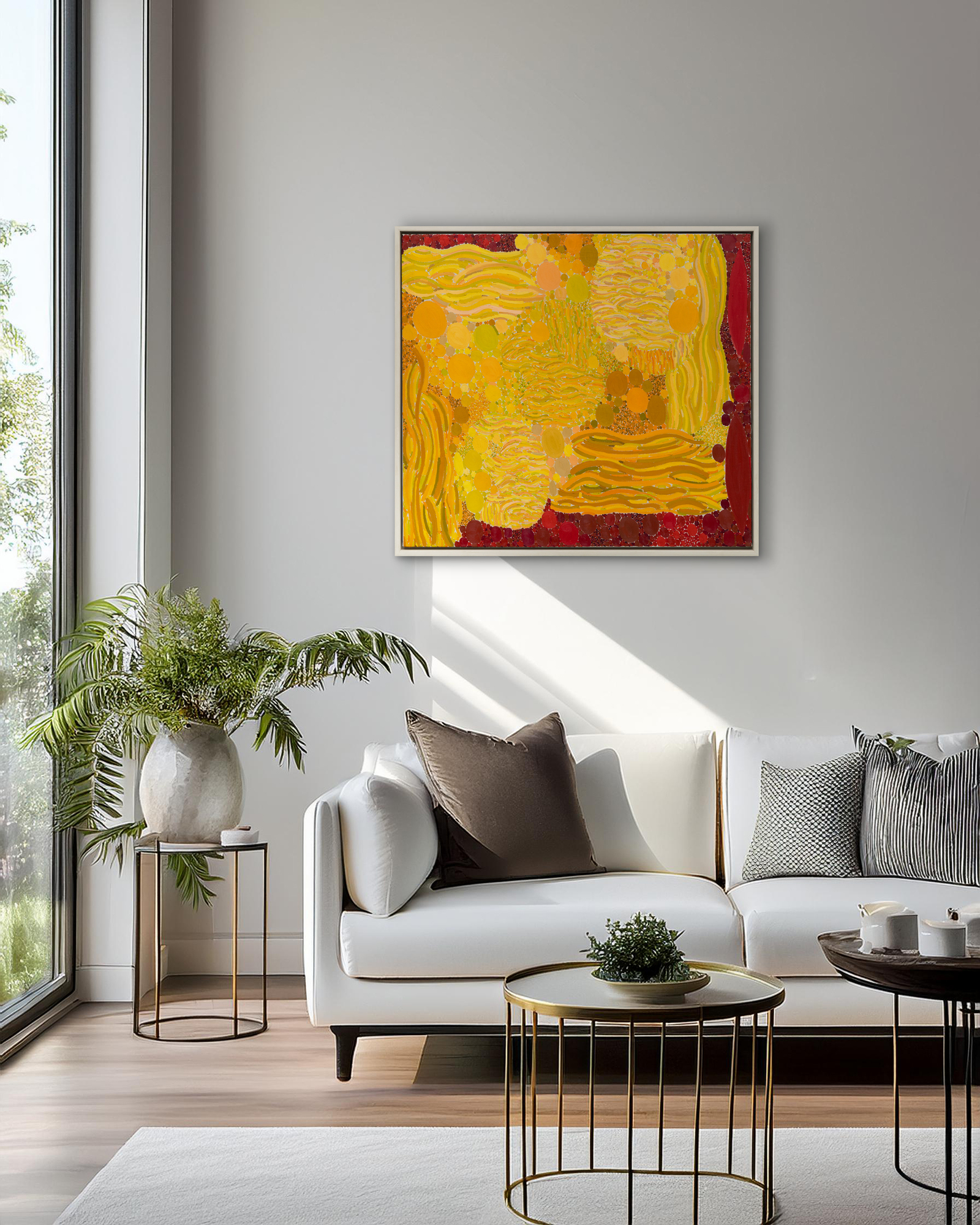
Frühlingssonne197135 5/8 x 39 3/4 x 1 Zoll(90,36 x 100,97 x 2,54 cm) Öl auf Leinwand
Provenienz
Künstleratelier, Spring Street, New York City, New York
Nachlass von John Hultberg, durch Vermächtnis aus dem oben genannten Nachlass
Privatsammlung über Elaine Weschler, 2013
Privatsammlung, Maine, 2025
Lynne Mapp Drexlers „Spring Sun“ (1971) ist ein Beispiel für die lebendige, lyrische Abstraktion, die ihr in den letzten Jahren neue Anerkennung eingebracht hat. Die Leinwand besteht aus konzentrischen Kreisen, kaskadenartigen Pinselstrichen und leuchtenden Gelb-, Orange- und Rottönen und pulsiert im Rhythmus des Lichts und der Jahreszeiten. Drexlers malerisches Vokabular – gestische Pinselstriche über pointillistische Cluster – schafft eine dynamische Oberfläche, die sowohl an Naturphänomene als auch an musikalische Strukturen erinnert und ihre lebenslange Liebe zur symphonischen Komposition widerspiegelt.


Das 1971 gemalte Bild „Spring Sun“ gehört zu einem wichtigen Moment in Drexlers Karriere, als sie ihre Studien bei Hans Hofmann und Robert Motherwell zu einer persönlichen Bildsprache zusammenfasste, die in Farbe und Muster verwurzelt ist. Die immersive Komposition suggeriert nicht nur die Brillanz des Frühlingssonnenscheins, sondern auch die expressive Intensität, mit der Drexler sich der Abstraktion näherte.


Ihre Beiträge werden zunehmend von bedeutenden Institutionen anerkannt. Das Portland Museum of Art präsentierte eine wegweisende Retrospektive, Lynne Drexler: Color Notes (2022–2023), und ihre Werke wurden auch im MoMA PS1 und im Parrish Art Museum ausgestellt. Spring Sun zeigt, warum Drexler heute als eine wichtige Figur der zweiten Generation der abstrakten Expressionisten gilt, deren kühner Umgang mit Farbe und Struktur auch beim zeitgenössischen Publikum weiterhin Anklang findet.
Fragen Sie