Zurück

JOHN MARIN(1870–1953)

 
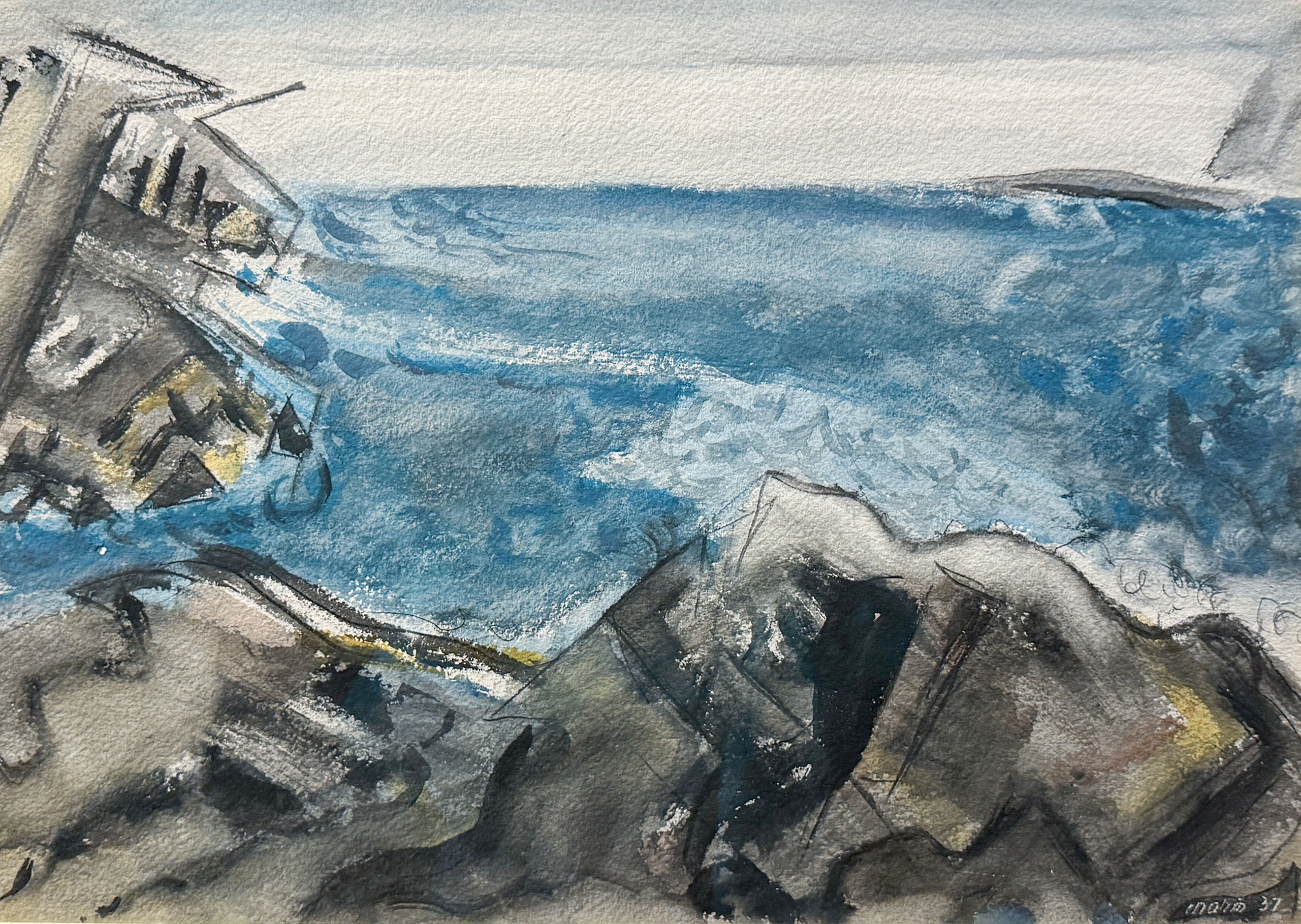
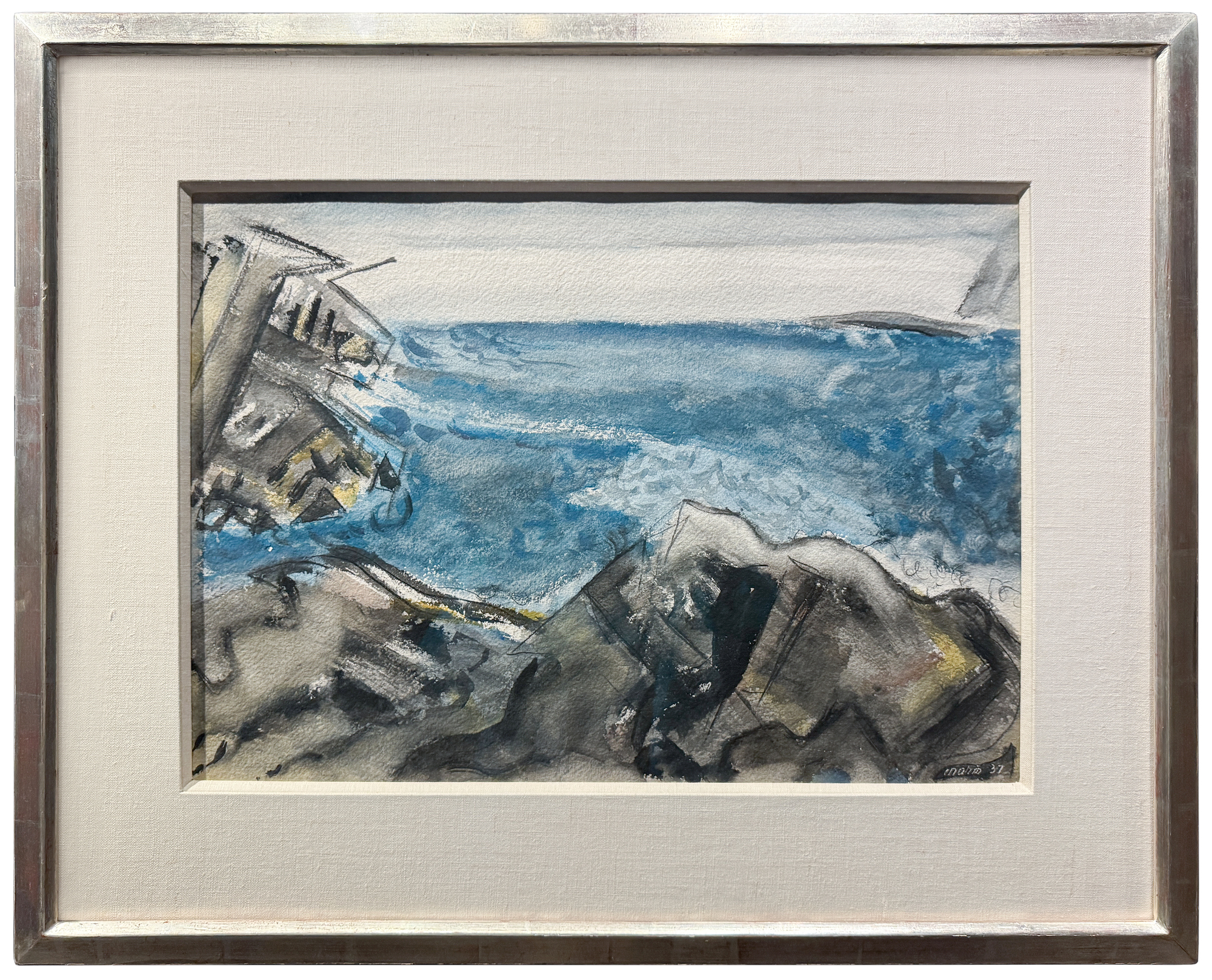
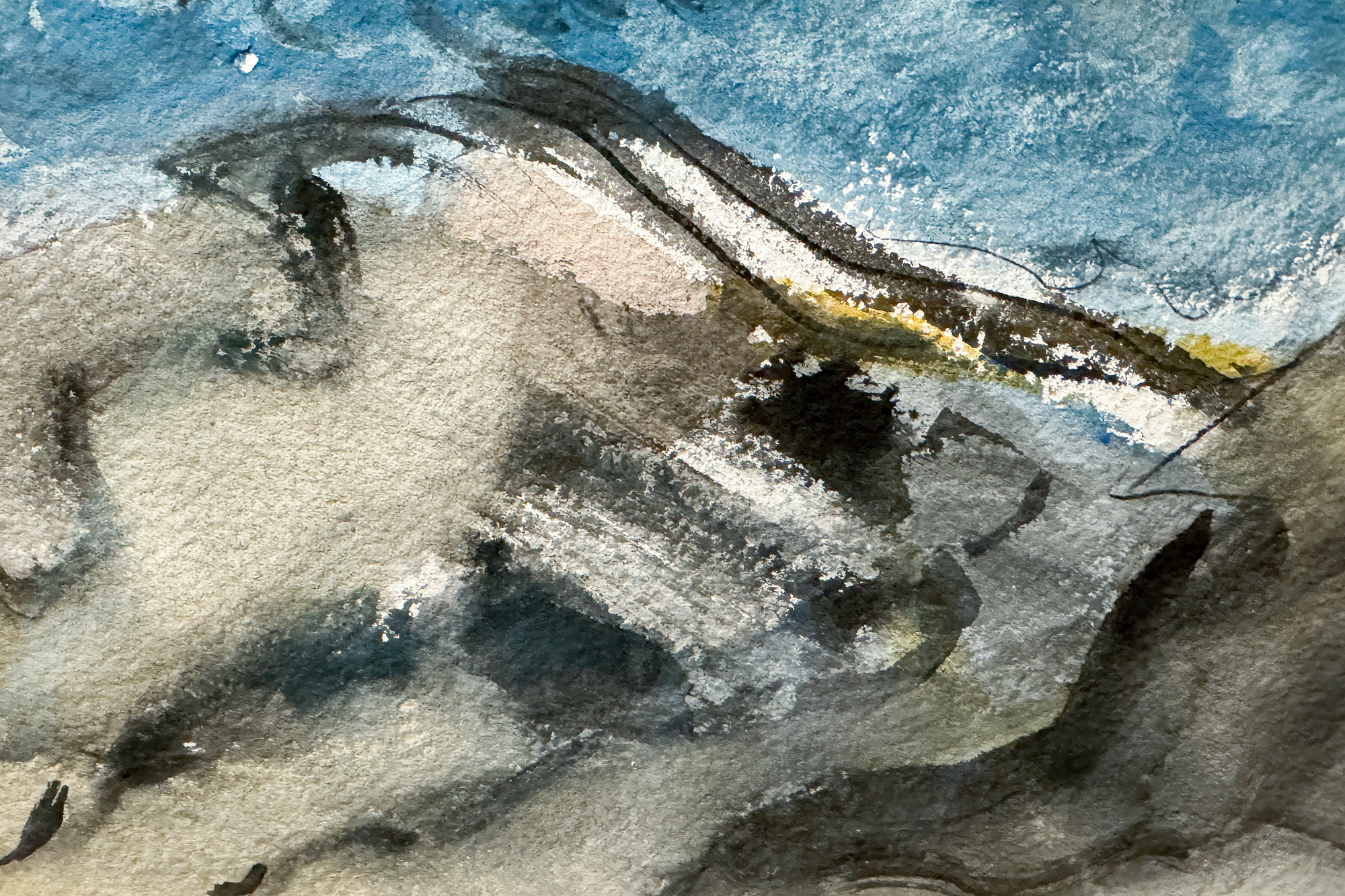
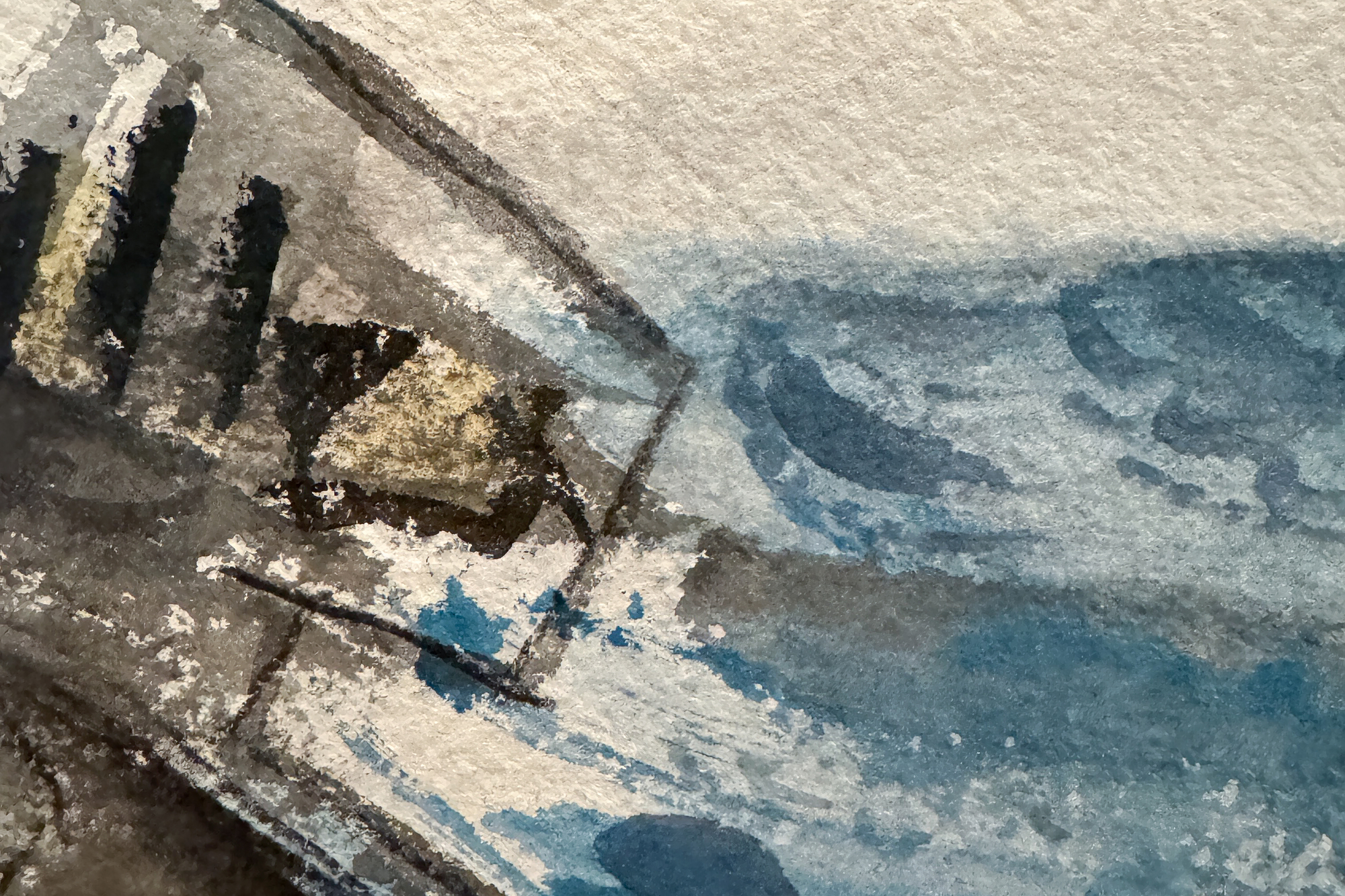
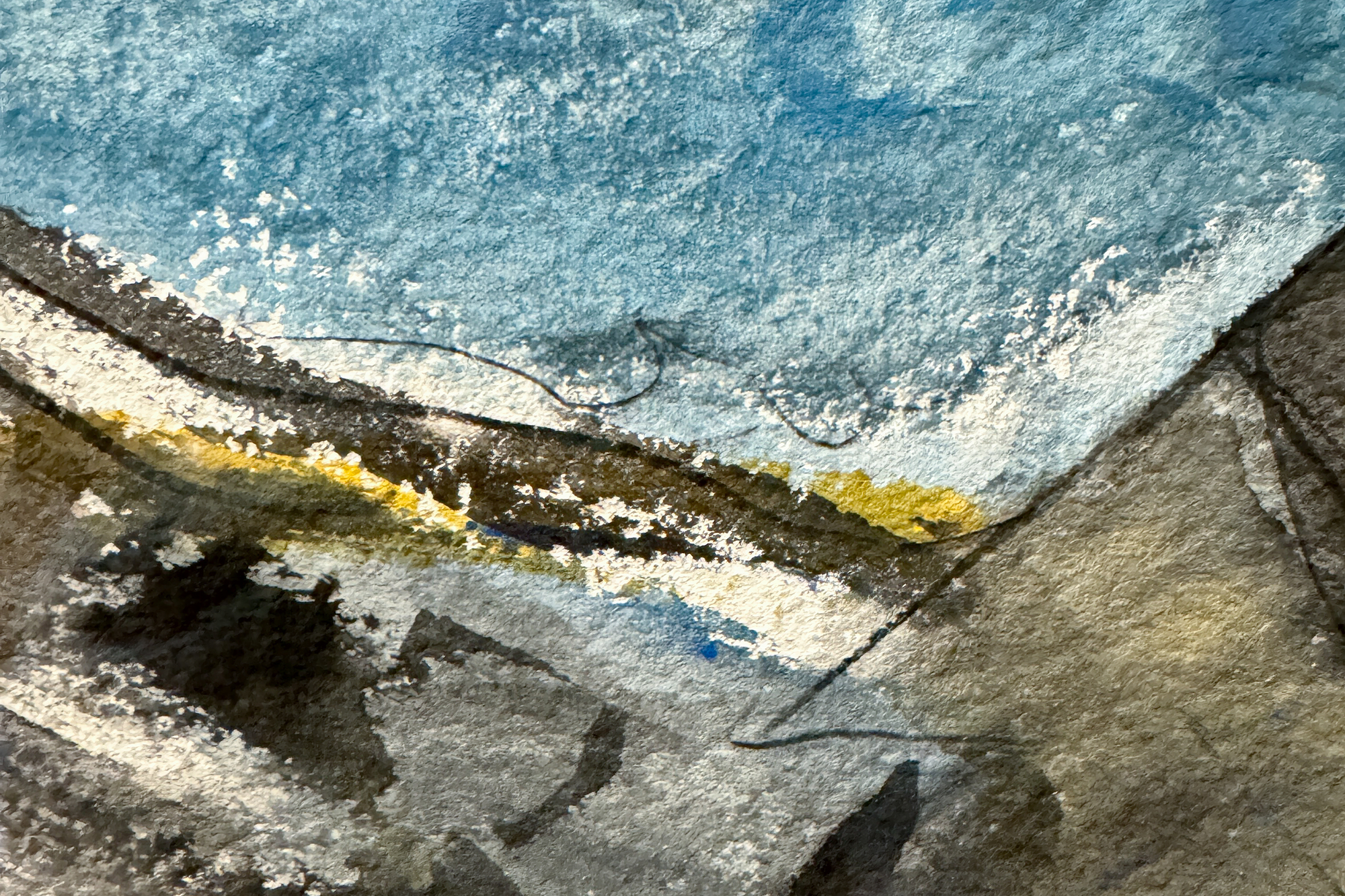
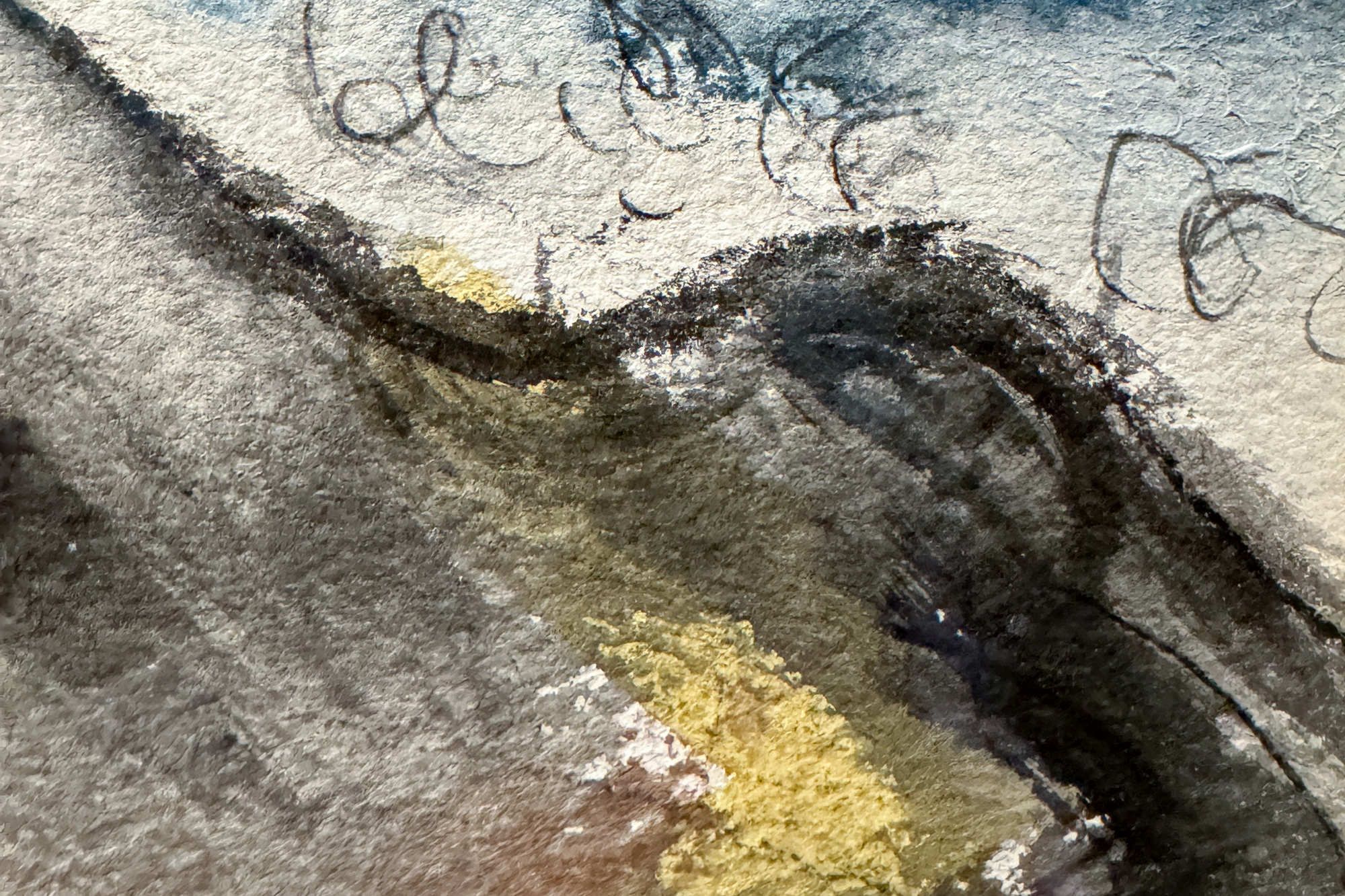
<div>John Marin’s "Sea Movement, Maine" (1937) exemplifies his dynamic approach to watercolor, a medium he transformed into one of the most expressive vehicles of early American modernism. Painted during his mature period, the work captures the restless energy of the Maine coast—a subject Marin returned to repeatedly as a source of inspiration. Quick, gestural strokes convey the surging sea and jagged rocks, while washes of deep blue, gray, and black evoke both immediacy and atmosphere. Marin’s hallmark ability to fuse abstraction with observation is evident here: the composition is at once faithful to the rhythms of the natural world and liberated in its expressive freedom. </div><br><br><div> </div><br><br><div>The significance of this work is underscored by its inclusion in Sheldon Reich’s 1970 catalogue raisonné (no. 37.19) and its exhibition history in two museum shows, affirming its place within Marin’s celebrated body of Maine seascapes. "Sea Movement, Maine" stands as a vivid testament to the artist’s lifelong pursuit of translating nature’s vitality into painterly form. </div> <div>John Marin’s "Sea Movement, Maine" (1937) exemplifies his dynamic approach to watercolor, a medium he transformed into one of the most expressive vehicles of early American modernism. Painted during his mature period, the work captures the restless energy of the Maine coast—a subject Marin returned to repeatedly as a source of inspiration. Quick, gestural strokes convey the surging sea and jagged rocks, while washes of deep blue, gray, and black evoke both immediacy and atmosphere. Marin’s hallmark ability to fuse abstraction with observation is evident here: the composition is at once faithful to the rhythms of the natural world and liberated in its expressive freedom. </div><br><br><div> </div><br><br><div>The significance of this work is underscored by its inclusion in Sheldon Reich’s 1970 catalogue raisonné (no. 37.19) and its exhibition history in two museum shows, affirming its place within Marin’s celebrated body of Maine seascapes. "Sea Movement, Maine" stands as a vivid testament to the artist’s lifelong pursuit of translating nature’s vitality into painterly form. </div> <div>John Marin’s "Sea Movement, Maine" (1937) exemplifies his dynamic approach to watercolor, a medium he transformed into one of the most expressive vehicles of early American modernism. Painted during his mature period, the work captures the restless energy of the Maine coast—a subject Marin returned to repeatedly as a source of inspiration. Quick, gestural strokes convey the surging sea and jagged rocks, while washes of deep blue, gray, and black evoke both immediacy and atmosphere. Marin’s hallmark ability to fuse abstraction with observation is evident here: the composition is at once faithful to the rhythms of the natural world and liberated in its expressive freedom. </div><br><br><div> </div><br><br><div>The significance of this work is underscored by its inclusion in Sheldon Reich’s 1970 catalogue raisonné (no. 37.19) and its exhibition history in two museum shows, affirming its place within Marin’s celebrated body of Maine seascapes. "Sea Movement, Maine" stands as a vivid testament to the artist’s lifelong pursuit of translating nature’s vitality into painterly form. </div> <div>John Marin’s "Sea Movement, Maine" (1937) exemplifies his dynamic approach to watercolor, a medium he transformed into one of the most expressive vehicles of early American modernism. Painted during his mature period, the work captures the restless energy of the Maine coast—a subject Marin returned to repeatedly as a source of inspiration. Quick, gestural strokes convey the surging sea and jagged rocks, while washes of deep blue, gray, and black evoke both immediacy and atmosphere. Marin’s hallmark ability to fuse abstraction with observation is evident here: the composition is at once faithful to the rhythms of the natural world and liberated in its expressive freedom. </div><br><br><div> </div><br><br><div>The significance of this work is underscored by its inclusion in Sheldon Reich’s 1970 catalogue raisonné (no. 37.19) and its exhibition history in two museum shows, affirming its place within Marin’s celebrated body of Maine seascapes. "Sea Movement, Maine" stands as a vivid testament to the artist’s lifelong pursuit of translating nature’s vitality into painterly form. </div> <div>John Marin’s "Sea Movement, Maine" (1937) exemplifies his dynamic approach to watercolor, a medium he transformed into one of the most expressive vehicles of early American modernism. Painted during his mature period, the work captures the restless energy of the Maine coast—a subject Marin returned to repeatedly as a source of inspiration. Quick, gestural strokes convey the surging sea and jagged rocks, while washes of deep blue, gray, and black evoke both immediacy and atmosphere. Marin’s hallmark ability to fuse abstraction with observation is evident here: the composition is at once faithful to the rhythms of the natural world and liberated in its expressive freedom. </div><br><br><div> </div><br><br><div>The significance of this work is underscored by its inclusion in Sheldon Reich’s 1970 catalogue raisonné (no. 37.19) and its exhibition history in two museum shows, affirming its place within Marin’s celebrated body of Maine seascapes. "Sea Movement, Maine" stands as a vivid testament to the artist’s lifelong pursuit of translating nature’s vitality into painterly form. </div> <div>John Marin’s "Sea Movement, Maine" (1937) exemplifies his dynamic approach to watercolor, a medium he transformed into one of the most expressive vehicles of early American modernism. Painted during his mature period, the work captures the restless energy of the Maine coast—a subject Marin returned to repeatedly as a source of inspiration. Quick, gestural strokes convey the surging sea and jagged rocks, while washes of deep blue, gray, and black evoke both immediacy and atmosphere. Marin’s hallmark ability to fuse abstraction with observation is evident here: the composition is at once faithful to the rhythms of the natural world and liberated in its expressive freedom. </div><br><br><div> </div><br><br><div>The significance of this work is underscored by its inclusion in Sheldon Reich’s 1970 catalogue raisonné (no. 37.19) and its exhibition history in two museum shows, affirming its place within Marin’s celebrated body of Maine seascapes. "Sea Movement, Maine" stands as a vivid testament to the artist’s lifelong pursuit of translating nature’s vitality into painterly form. </div> <div>John Marin’s "Sea Movement, Maine" (1937) exemplifies his dynamic approach to watercolor, a medium he transformed into one of the most expressive vehicles of early American modernism. Painted during his mature period, the work captures the restless energy of the Maine coast—a subject Marin returned to repeatedly as a source of inspiration. Quick, gestural strokes convey the surging sea and jagged rocks, while washes of deep blue, gray, and black evoke both immediacy and atmosphere. Marin’s hallmark ability to fuse abstraction with observation is evident here: the composition is at once faithful to the rhythms of the natural world and liberated in its expressive freedom. </div><br><br><div> </div><br><br><div>The significance of this work is underscored by its inclusion in Sheldon Reich’s 1970 catalogue raisonné (no. 37.19) and its exhibition history in two museum shows, affirming its place within Marin’s celebrated body of Maine seascapes. "Sea Movement, Maine" stands as a vivid testament to the artist’s lifelong pursuit of translating nature’s vitality into painterly form. </div> <div>John Marin’s "Sea Movement, Maine" (1937) exemplifies his dynamic approach to watercolor, a medium he transformed into one of the most expressive vehicles of early American modernism. Painted during his mature period, the work captures the restless energy of the Maine coast—a subject Marin returned to repeatedly as a source of inspiration. Quick, gestural strokes convey the surging sea and jagged rocks, while washes of deep blue, gray, and black evoke both immediacy and atmosphere. Marin’s hallmark ability to fuse abstraction with observation is evident here: the composition is at once faithful to the rhythms of the natural world and liberated in its expressive freedom. </div><br><br><div> </div><br><br><div>The significance of this work is underscored by its inclusion in Sheldon Reich’s 1970 catalogue raisonné (no. 37.19) and its exhibition history in two museum shows, affirming its place within Marin’s celebrated body of Maine seascapes. "Sea Movement, Maine" stands as a vivid testament to the artist’s lifelong pursuit of translating nature’s vitality into painterly form. </div> <div>John Marin’s "Sea Movement, Maine" (1937) exemplifies his dynamic approach to watercolor, a medium he transformed into one of the most expressive vehicles of early American modernism. Painted during his mature period, the work captures the restless energy of the Maine coast—a subject Marin returned to repeatedly as a source of inspiration. Quick, gestural strokes convey the surging sea and jagged rocks, while washes of deep blue, gray, and black evoke both immediacy and atmosphere. Marin’s hallmark ability to fuse abstraction with observation is evident here: the composition is at once faithful to the rhythms of the natural world and liberated in its expressive freedom. </div><br><br><div> </div><br><br><div>The significance of this work is underscored by its inclusion in Sheldon Reich’s 1970 catalogue raisonné (no. 37.19) and its exhibition history in two museum shows, affirming its place within Marin’s celebrated body of Maine seascapes. "Sea Movement, Maine" stands as a vivid testament to the artist’s lifelong pursuit of translating nature’s vitality into painterly form. </div> <div>John Marin’s "Sea Movement, Maine" (1937) exemplifies his dynamic approach to watercolor, a medium he transformed into one of the most expressive vehicles of early American modernism. Painted during his mature period, the work captures the restless energy of the Maine coast—a subject Marin returned to repeatedly as a source of inspiration. Quick, gestural strokes convey the surging sea and jagged rocks, while washes of deep blue, gray, and black evoke both immediacy and atmosphere. Marin’s hallmark ability to fuse abstraction with observation is evident here: the composition is at once faithful to the rhythms of the natural world and liberated in its expressive freedom. </div><br><br><div> </div><br><br><div>The significance of this work is underscored by its inclusion in Sheldon Reich’s 1970 catalogue raisonné (no. 37.19) and its exhibition history in two museum shows, affirming its place within Marin’s celebrated body of Maine seascapes. "Sea Movement, Maine" stands as a vivid testament to the artist’s lifelong pursuit of translating nature’s vitality into painterly form. </div>
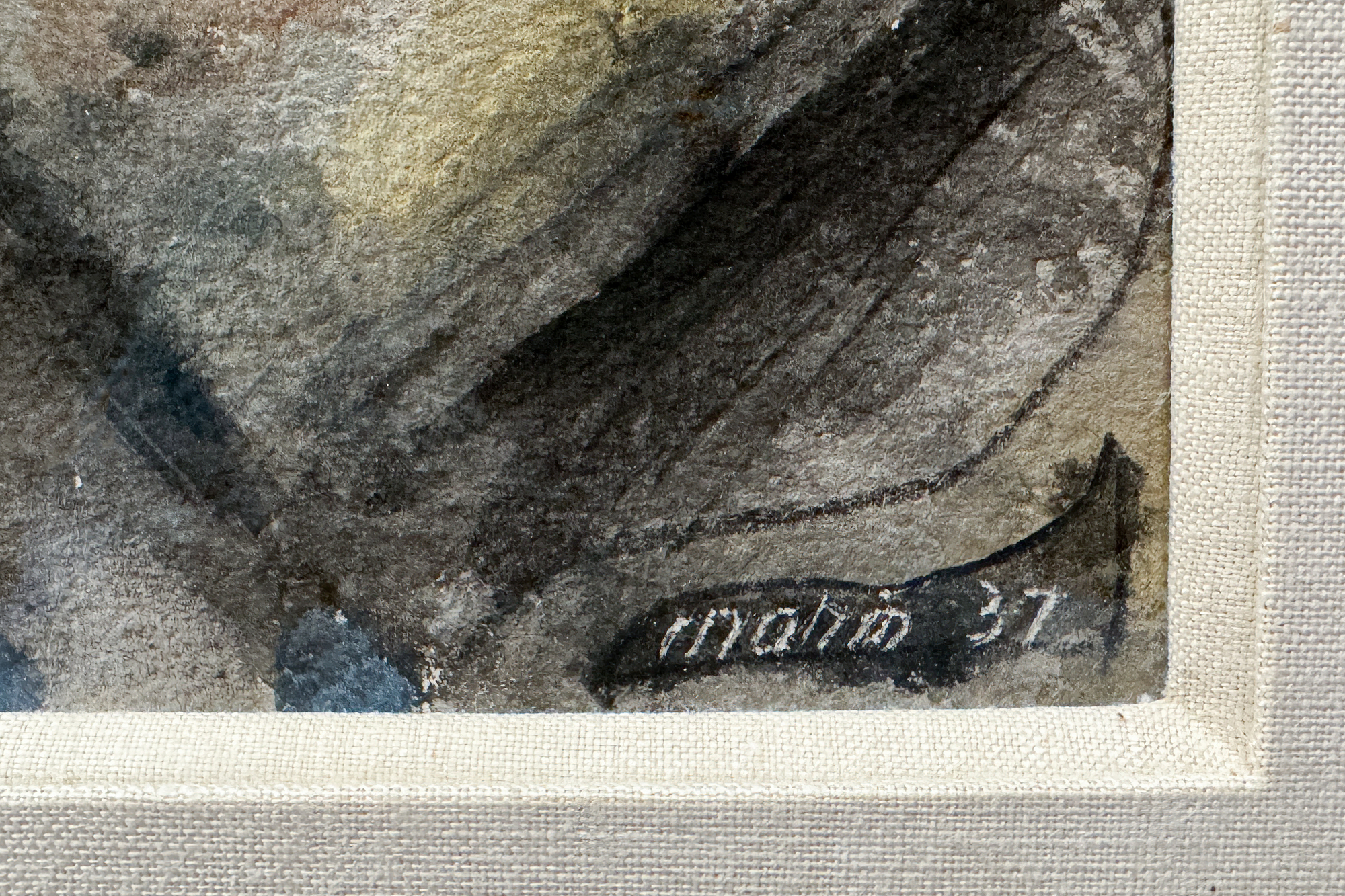
Seebewegung, Maine193715 1/2 x 20 1/2 Zoll(39,37 x 52,07 cm) Aquarell auf Papier
Provenienz
Nachlass des Künstlers
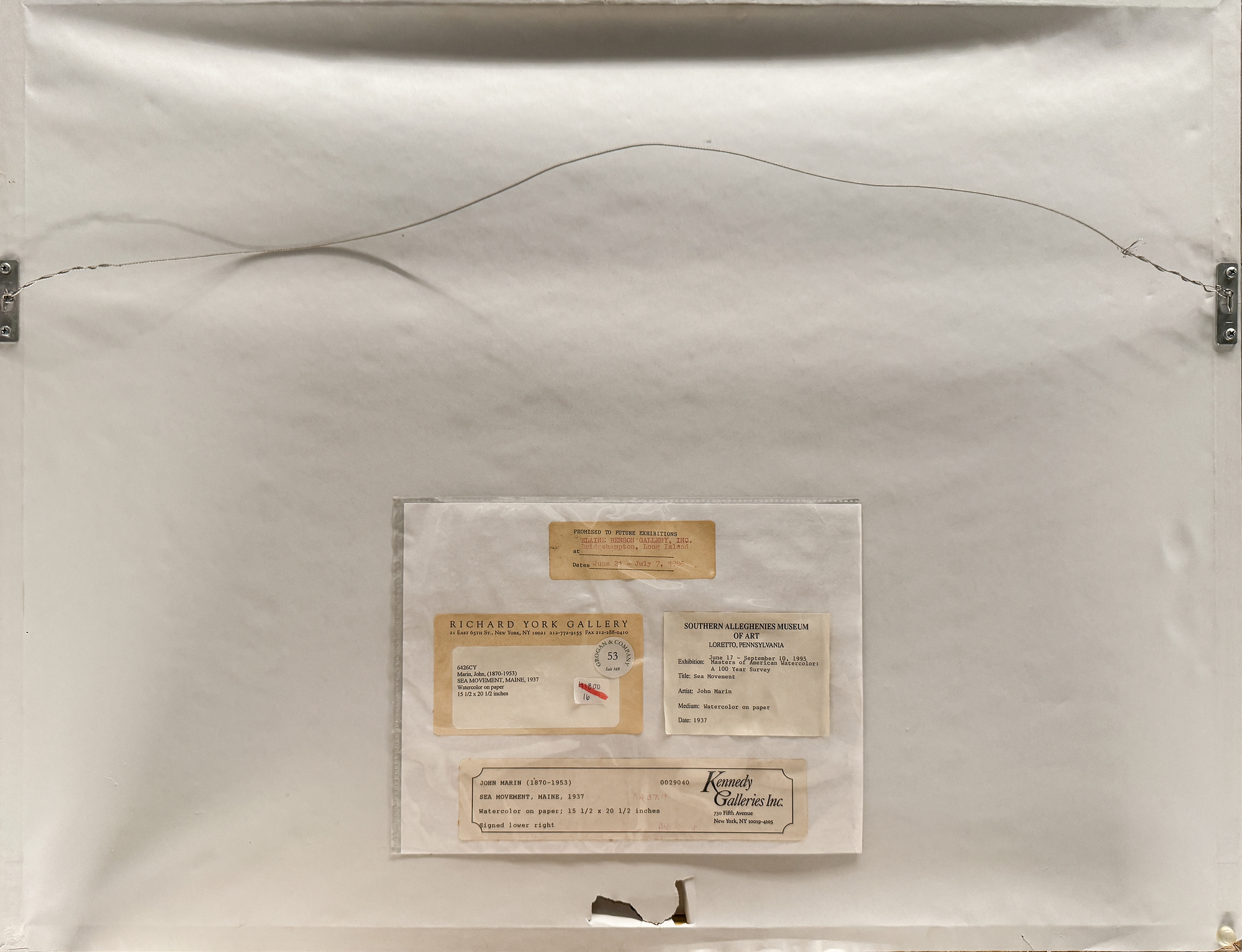
Kennedy Galleries, New York
Richard York Gallery, New York
A Maine Perspective: The Collection of a New England Gentleman
Grogan & Company, 17. November 2019, Los 53
Privatsammlung
Ausstellung
New York, The Willard Gallery, John Marin Paintings of the 1930s, 2. März bis 3. April 1965
Loretto, Pennsylvania, Southern Alleghenies Museum of Art, Masters of American Watercolor: A 100 Year Anniversary, 17. Juni bis 10. September 1995
Waterville, Maine, Colby College Museum of Art, John Marin in Maine
...Mehr....., 24. Juni bis 27. September 1998, Nr. 13
Literaturhinweise
Sheldon Reich, John Marin: Eine stilistische Analyse und Werkverzeichnis, 1970, Band 2, Nr. 37.19
...WENIGER.....
John Marins „Sea Movement, Maine“ (1937) ist ein Beispiel für seine dynamische Herangehensweise an die Aquarellmalerei, ein Medium, das er zu einem der ausdrucksstärksten Mittel der frühen amerikanischen Moderne machte. Das Werk entstand in seiner reifen Schaffensphase und fängt die unruhige Energie der Küste von Maine ein – ein Motiv, zu dem Marin immer wieder als Inspirationsquelle zurückkehrte. Schnelle, gestische Pinselstriche vermitteln das aufgewühlte Meer und die zerklüfteten Felsen, während tiefblaue, graue und schwarze Farbtöne sowohl Unmittelbarkeit als auch Atmosphäre hervorrufen. Marins charakteristische Fähigkeit, Abstraktion mit Beobachtung zu verbinden, wird hier deutlich: Die Komposition ist gleichzeitig dem Rhythmus der Natur treu und frei in ihrer Ausdruckskraft.


Die Bedeutung dieses Werks wird durch seine Aufnahme in Sheldon Reichs Werkverzeichnis von 1970 (Nr. 37.19) und seine Ausstellung in zwei Museen unterstrichen, was seinen Platz in Marins gefeierten Meereslandschaften von Maine bestätigt. „Sea Movement, Maine” ist ein lebendiges Zeugnis des lebenslangen Bestrebens des Künstlers, die Vitalität der Natur in malerische Form zu übertragen.
Fragen Sie