

Zurück

JULES CHERET(1836–1932)

$75,000

 
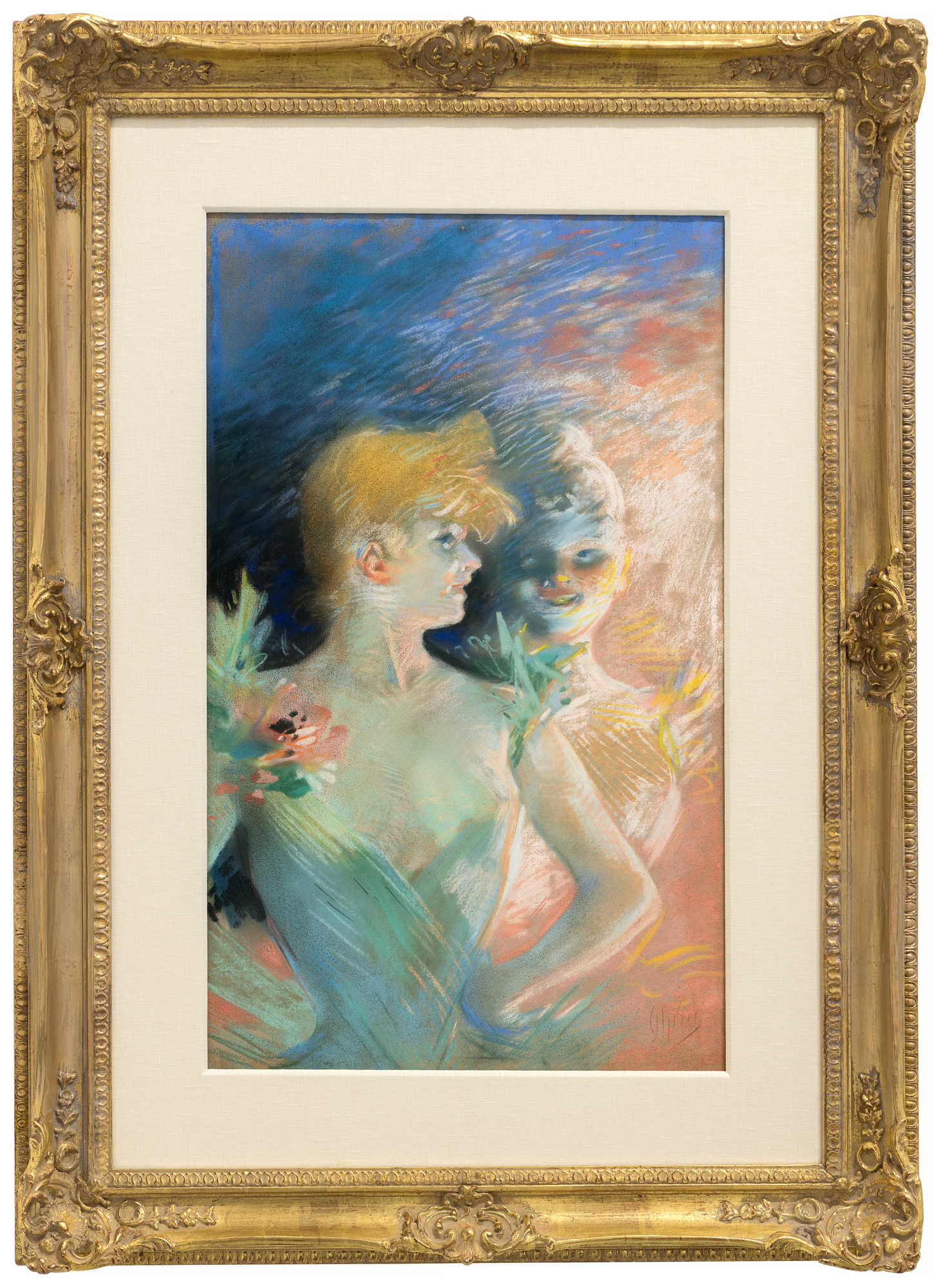
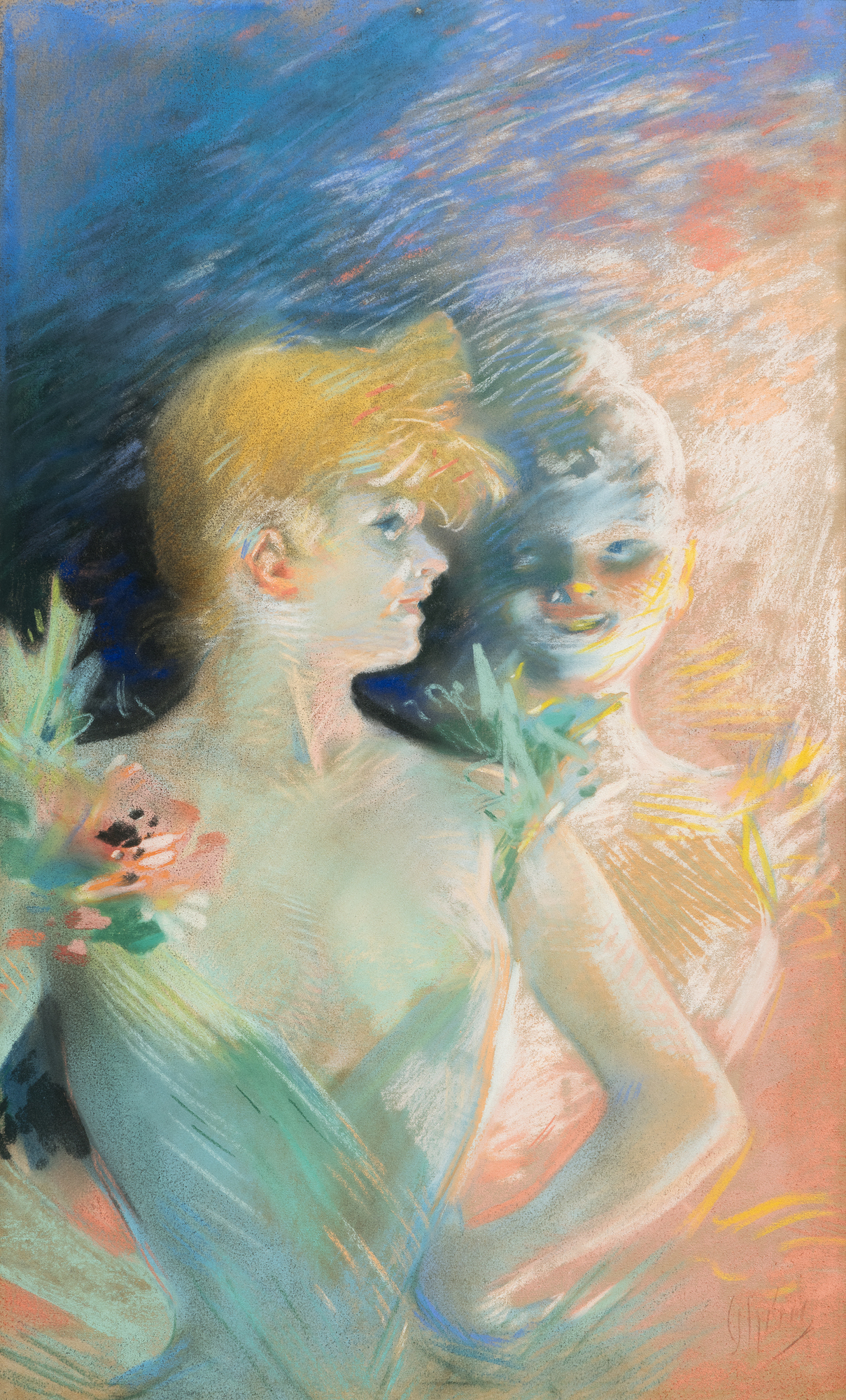
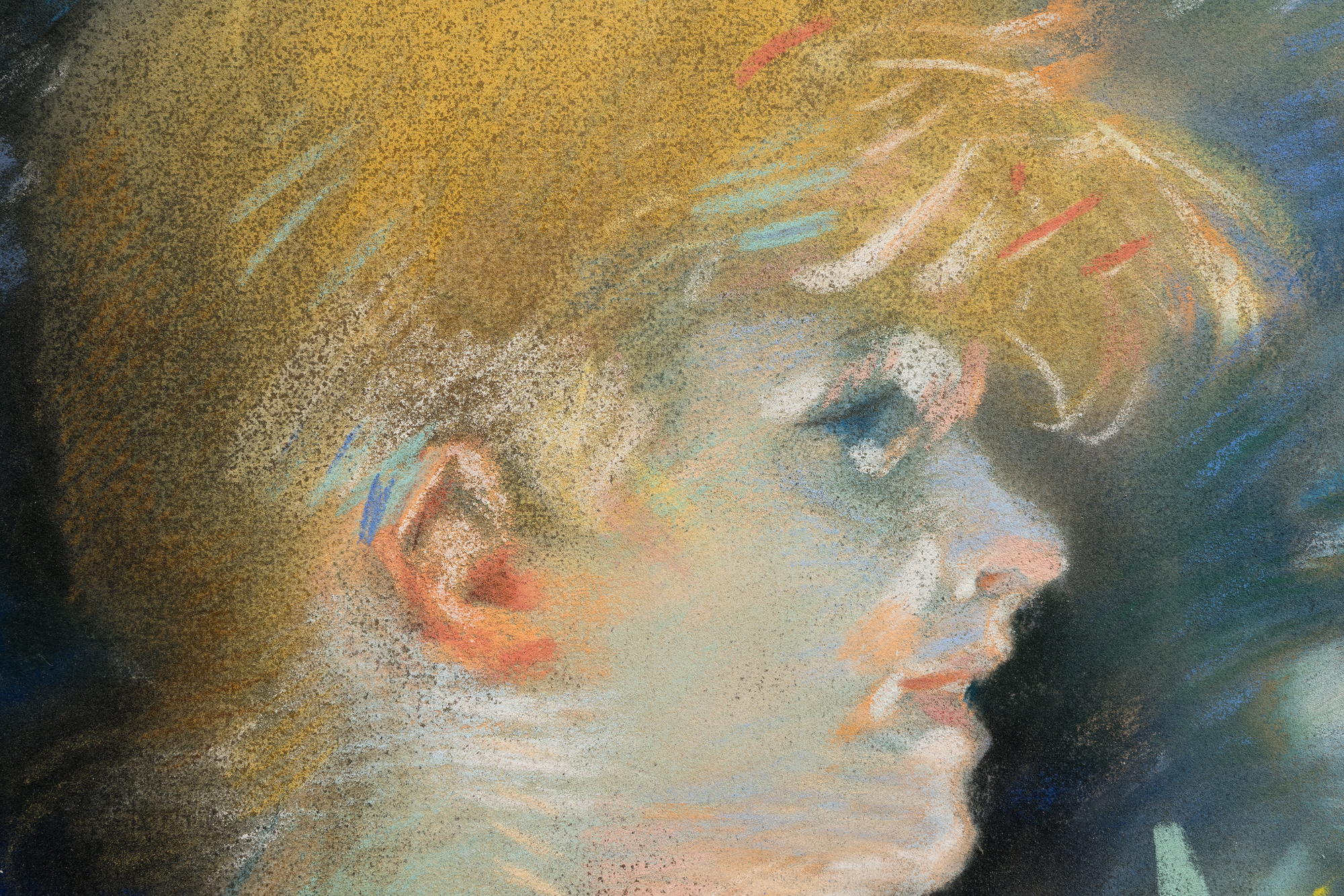
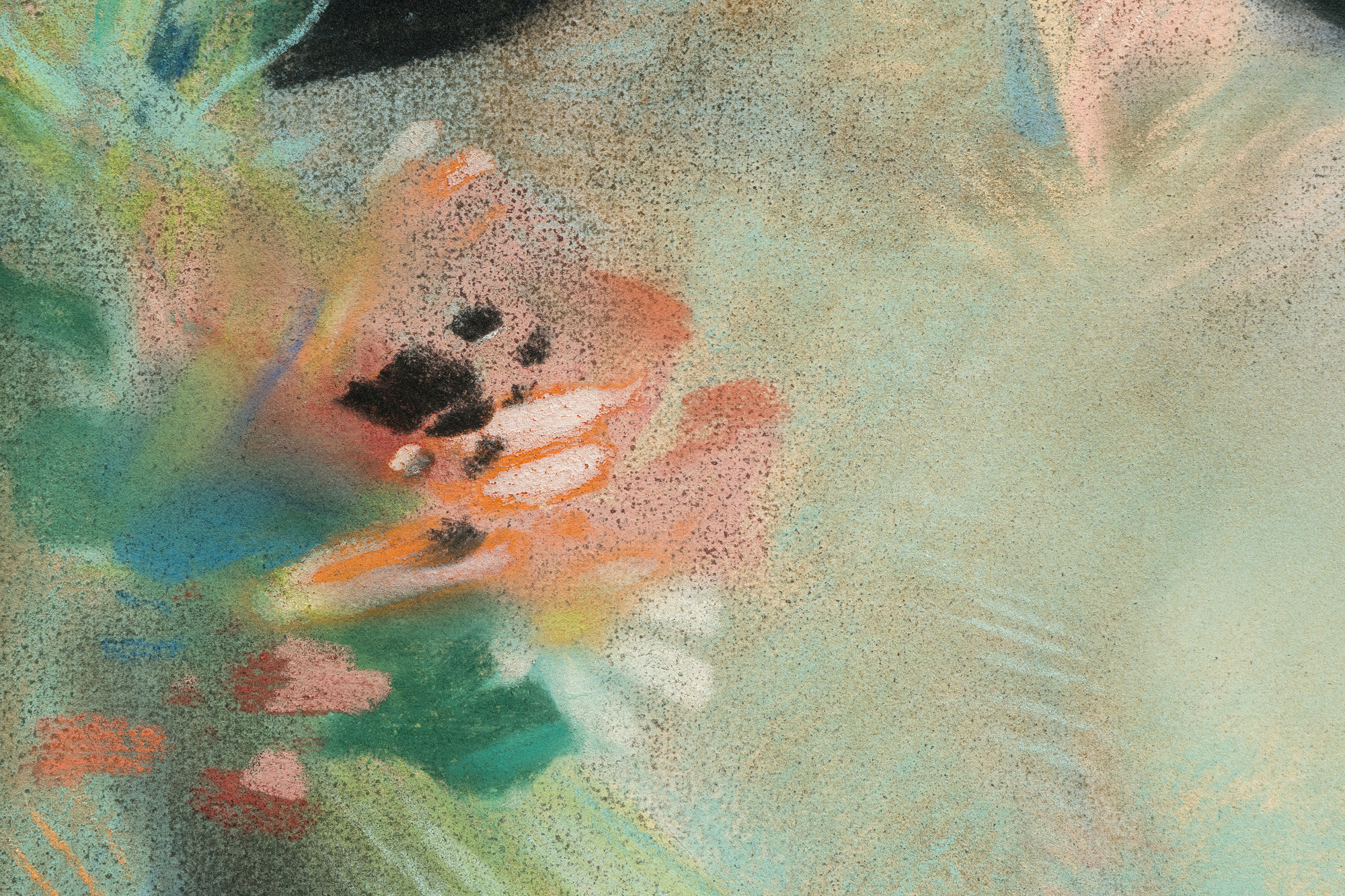
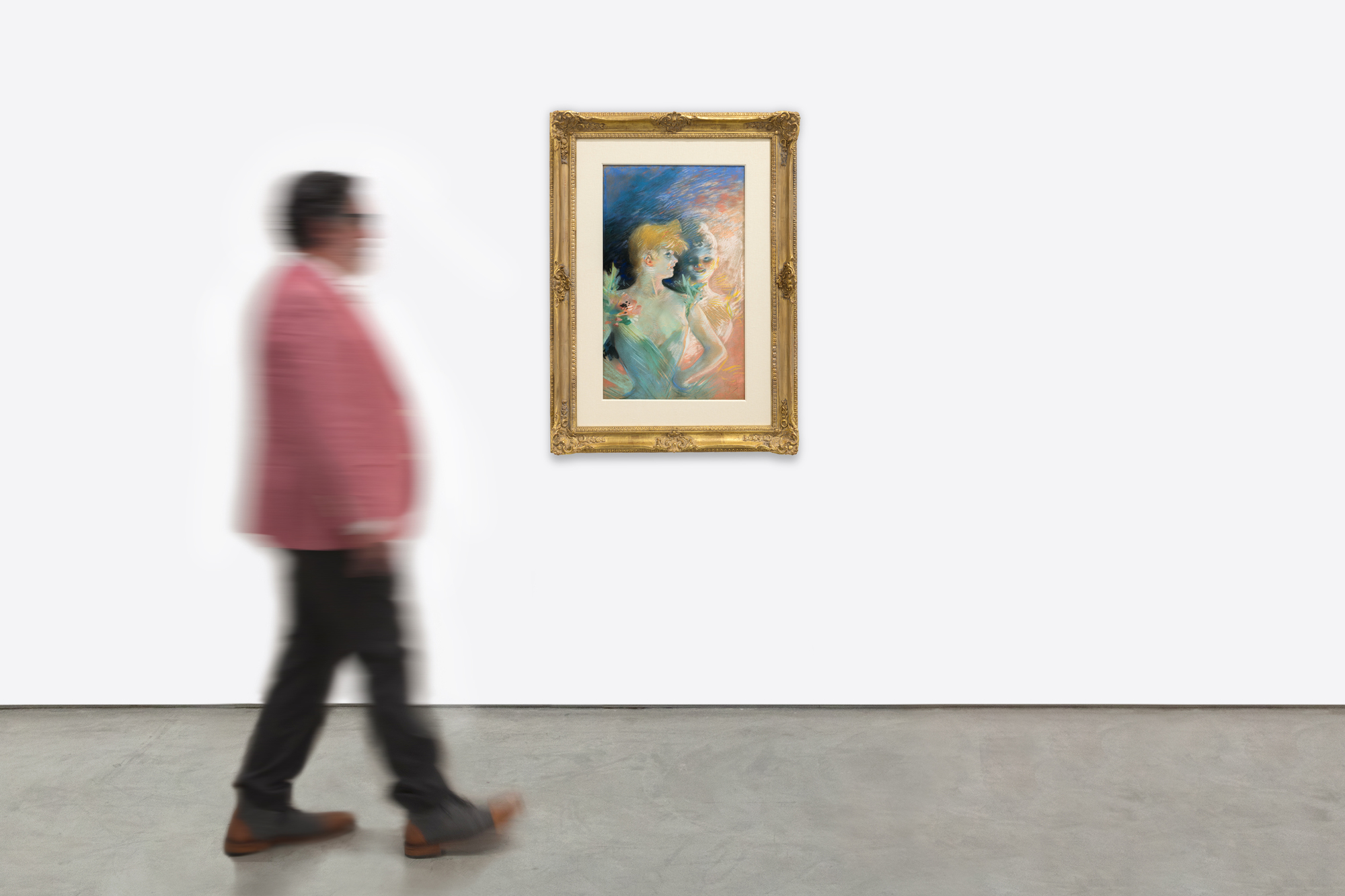
<div>Jules Chéret’s <em>Portrait</em> is a lively pastel chalk on canvas that reveals the painterly sensibility behind the artist best known as the master of Belle Époque poster art. In this composition, two female figures emerge from a whirlwind of color and light, their forms dissolving into strokes of turquoise, rose, and gold. The surface vibrates with movement, recalling the theatrical energy and fleeting glamour that defined fin-de-siècle Paris. Softly modeled yet animated by sweeping gestures, the figures seem caught mid-performance—at once intimate and exuberant. </div><br><br><div> </div><br><br><div>Though widely celebrated for his advertising posters, Chéret was deeply influenced by the Rococo masters, particularly Jean-Honoré Fragonard and Antoine Watteau. Their spirit of elegance, sensuality, and decorative flourish permeates this work, where lightness of touch and chromatic brilliance take precedence over strict realism. These same qualities made his vivid lithographic posters for the Eldorado, the Olympia, the Folies Bergère, the Théâtre de l’Opéra, the Alcazar d’Été, and the Moulin Rouge iconic emblems of Parisian modern life. </div><br><br><div> </div><br><br><div>Chéret’s success in poster design helped launch a new generation of artists, including Charles Gesmar and Henri de Toulouse-Lautrec, solidifying the poster as a legitimate artistic medium. While he achieved recognition as a painter, it was his advertising imagery—initially undertaken to earn a living but later pursued with conviction—that secured his legacy. Honored with a posthumous exhibition at the Salon d’Automne in 1933, Chéret’s works are now held in major institutions including The Museum of Modern Art, the Musée d’Orsay, the Hermitage Museum, and the Art Institute of Chicago, affirming his enduring place in the history of modern art. </div> <div>Jules Chéret’s <em>Portrait</em> is a lively pastel chalk on canvas that reveals the painterly sensibility behind the artist best known as the master of Belle Époque poster art. In this composition, two female figures emerge from a whirlwind of color and light, their forms dissolving into strokes of turquoise, rose, and gold. The surface vibrates with movement, recalling the theatrical energy and fleeting glamour that defined fin-de-siècle Paris. Softly modeled yet animated by sweeping gestures, the figures seem caught mid-performance—at once intimate and exuberant. </div><br><br><div> </div><br><br><div>Though widely celebrated for his advertising posters, Chéret was deeply influenced by the Rococo masters, particularly Jean-Honoré Fragonard and Antoine Watteau. Their spirit of elegance, sensuality, and decorative flourish permeates this work, where lightness of touch and chromatic brilliance take precedence over strict realism. These same qualities made his vivid lithographic posters for the Eldorado, the Olympia, the Folies Bergère, the Théâtre de l’Opéra, the Alcazar d’Été, and the Moulin Rouge iconic emblems of Parisian modern life. </div><br><br><div> </div><br><br><div>Chéret’s success in poster design helped launch a new generation of artists, including Charles Gesmar and Henri de Toulouse-Lautrec, solidifying the poster as a legitimate artistic medium. While he achieved recognition as a painter, it was his advertising imagery—initially undertaken to earn a living but later pursued with conviction—that secured his legacy. Honored with a posthumous exhibition at the Salon d’Automne in 1933, Chéret’s works are now held in major institutions including The Museum of Modern Art, the Musée d’Orsay, the Hermitage Museum, and the Art Institute of Chicago, affirming his enduring place in the history of modern art. </div> <div>Jules Chéret’s <em>Portrait</em> is a lively pastel chalk on canvas that reveals the painterly sensibility behind the artist best known as the master of Belle Époque poster art. In this composition, two female figures emerge from a whirlwind of color and light, their forms dissolving into strokes of turquoise, rose, and gold. The surface vibrates with movement, recalling the theatrical energy and fleeting glamour that defined fin-de-siècle Paris. Softly modeled yet animated by sweeping gestures, the figures seem caught mid-performance—at once intimate and exuberant. </div><br><br><div> </div><br><br><div>Though widely celebrated for his advertising posters, Chéret was deeply influenced by the Rococo masters, particularly Jean-Honoré Fragonard and Antoine Watteau. Their spirit of elegance, sensuality, and decorative flourish permeates this work, where lightness of touch and chromatic brilliance take precedence over strict realism. These same qualities made his vivid lithographic posters for the Eldorado, the Olympia, the Folies Bergère, the Théâtre de l’Opéra, the Alcazar d’Été, and the Moulin Rouge iconic emblems of Parisian modern life. </div><br><br><div> </div><br><br><div>Chéret’s success in poster design helped launch a new generation of artists, including Charles Gesmar and Henri de Toulouse-Lautrec, solidifying the poster as a legitimate artistic medium. While he achieved recognition as a painter, it was his advertising imagery—initially undertaken to earn a living but later pursued with conviction—that secured his legacy. Honored with a posthumous exhibition at the Salon d’Automne in 1933, Chéret’s works are now held in major institutions including The Museum of Modern Art, the Musée d’Orsay, the Hermitage Museum, and the Art Institute of Chicago, affirming his enduring place in the history of modern art. </div> <div>Jules Chéret’s <em>Portrait</em> is a lively pastel chalk on canvas that reveals the painterly sensibility behind the artist best known as the master of Belle Époque poster art. In this composition, two female figures emerge from a whirlwind of color and light, their forms dissolving into strokes of turquoise, rose, and gold. The surface vibrates with movement, recalling the theatrical energy and fleeting glamour that defined fin-de-siècle Paris. Softly modeled yet animated by sweeping gestures, the figures seem caught mid-performance—at once intimate and exuberant. </div><br><br><div> </div><br><br><div>Though widely celebrated for his advertising posters, Chéret was deeply influenced by the Rococo masters, particularly Jean-Honoré Fragonard and Antoine Watteau. Their spirit of elegance, sensuality, and decorative flourish permeates this work, where lightness of touch and chromatic brilliance take precedence over strict realism. These same qualities made his vivid lithographic posters for the Eldorado, the Olympia, the Folies Bergère, the Théâtre de l’Opéra, the Alcazar d’Été, and the Moulin Rouge iconic emblems of Parisian modern life. </div><br><br><div> </div><br><br><div>Chéret’s success in poster design helped launch a new generation of artists, including Charles Gesmar and Henri de Toulouse-Lautrec, solidifying the poster as a legitimate artistic medium. While he achieved recognition as a painter, it was his advertising imagery—initially undertaken to earn a living but later pursued with conviction—that secured his legacy. Honored with a posthumous exhibition at the Salon d’Automne in 1933, Chéret’s works are now held in major institutions including The Museum of Modern Art, the Musée d’Orsay, the Hermitage Museum, and the Art Institute of Chicago, affirming his enduring place in the history of modern art. </div> <div>Jules Chéret’s <em>Portrait</em> is a lively pastel chalk on canvas that reveals the painterly sensibility behind the artist best known as the master of Belle Époque poster art. In this composition, two female figures emerge from a whirlwind of color and light, their forms dissolving into strokes of turquoise, rose, and gold. The surface vibrates with movement, recalling the theatrical energy and fleeting glamour that defined fin-de-siècle Paris. Softly modeled yet animated by sweeping gestures, the figures seem caught mid-performance—at once intimate and exuberant. </div><br><br><div> </div><br><br><div>Though widely celebrated for his advertising posters, Chéret was deeply influenced by the Rococo masters, particularly Jean-Honoré Fragonard and Antoine Watteau. Their spirit of elegance, sensuality, and decorative flourish permeates this work, where lightness of touch and chromatic brilliance take precedence over strict realism. These same qualities made his vivid lithographic posters for the Eldorado, the Olympia, the Folies Bergère, the Théâtre de l’Opéra, the Alcazar d’Été, and the Moulin Rouge iconic emblems of Parisian modern life. </div><br><br><div> </div><br><br><div>Chéret’s success in poster design helped launch a new generation of artists, including Charles Gesmar and Henri de Toulouse-Lautrec, solidifying the poster as a legitimate artistic medium. While he achieved recognition as a painter, it was his advertising imagery—initially undertaken to earn a living but later pursued with conviction—that secured his legacy. Honored with a posthumous exhibition at the Salon d’Automne in 1933, Chéret’s works are now held in major institutions including The Museum of Modern Art, the Musée d’Orsay, the Hermitage Museum, and the Art Institute of Chicago, affirming his enduring place in the history of modern art. </div> <div>Jules Chéret’s <em>Portrait</em> is a lively pastel chalk on canvas that reveals the painterly sensibility behind the artist best known as the master of Belle Époque poster art. In this composition, two female figures emerge from a whirlwind of color and light, their forms dissolving into strokes of turquoise, rose, and gold. The surface vibrates with movement, recalling the theatrical energy and fleeting glamour that defined fin-de-siècle Paris. Softly modeled yet animated by sweeping gestures, the figures seem caught mid-performance—at once intimate and exuberant. </div><br><br><div> </div><br><br><div>Though widely celebrated for his advertising posters, Chéret was deeply influenced by the Rococo masters, particularly Jean-Honoré Fragonard and Antoine Watteau. Their spirit of elegance, sensuality, and decorative flourish permeates this work, where lightness of touch and chromatic brilliance take precedence over strict realism. These same qualities made his vivid lithographic posters for the Eldorado, the Olympia, the Folies Bergère, the Théâtre de l’Opéra, the Alcazar d’Été, and the Moulin Rouge iconic emblems of Parisian modern life. </div><br><br><div> </div><br><br><div>Chéret’s success in poster design helped launch a new generation of artists, including Charles Gesmar and Henri de Toulouse-Lautrec, solidifying the poster as a legitimate artistic medium. While he achieved recognition as a painter, it was his advertising imagery—initially undertaken to earn a living but later pursued with conviction—that secured his legacy. Honored with a posthumous exhibition at the Salon d’Automne in 1933, Chéret’s works are now held in major institutions including The Museum of Modern Art, the Musée d’Orsay, the Hermitage Museum, and the Art Institute of Chicago, affirming his enduring place in the history of modern art. </div> <div>Jules Chéret’s <em>Portrait</em> is a lively pastel chalk on canvas that reveals the painterly sensibility behind the artist best known as the master of Belle Époque poster art. In this composition, two female figures emerge from a whirlwind of color and light, their forms dissolving into strokes of turquoise, rose, and gold. The surface vibrates with movement, recalling the theatrical energy and fleeting glamour that defined fin-de-siècle Paris. Softly modeled yet animated by sweeping gestures, the figures seem caught mid-performance—at once intimate and exuberant. </div><br><br><div> </div><br><br><div>Though widely celebrated for his advertising posters, Chéret was deeply influenced by the Rococo masters, particularly Jean-Honoré Fragonard and Antoine Watteau. Their spirit of elegance, sensuality, and decorative flourish permeates this work, where lightness of touch and chromatic brilliance take precedence over strict realism. These same qualities made his vivid lithographic posters for the Eldorado, the Olympia, the Folies Bergère, the Théâtre de l’Opéra, the Alcazar d’Été, and the Moulin Rouge iconic emblems of Parisian modern life. </div><br><br><div> </div><br><br><div>Chéret’s success in poster design helped launch a new generation of artists, including Charles Gesmar and Henri de Toulouse-Lautrec, solidifying the poster as a legitimate artistic medium. While he achieved recognition as a painter, it was his advertising imagery—initially undertaken to earn a living but later pursued with conviction—that secured his legacy. Honored with a posthumous exhibition at the Salon d’Automne in 1933, Chéret’s works are now held in major institutions including The Museum of Modern Art, the Musée d’Orsay, the Hermitage Museum, and the Art Institute of Chicago, affirming his enduring place in the history of modern art. </div> <div>Jules Chéret’s <em>Portrait</em> is a lively pastel chalk on canvas that reveals the painterly sensibility behind the artist best known as the master of Belle Époque poster art. In this composition, two female figures emerge from a whirlwind of color and light, their forms dissolving into strokes of turquoise, rose, and gold. The surface vibrates with movement, recalling the theatrical energy and fleeting glamour that defined fin-de-siècle Paris. Softly modeled yet animated by sweeping gestures, the figures seem caught mid-performance—at once intimate and exuberant. </div><br><br><div> </div><br><br><div>Though widely celebrated for his advertising posters, Chéret was deeply influenced by the Rococo masters, particularly Jean-Honoré Fragonard and Antoine Watteau. Their spirit of elegance, sensuality, and decorative flourish permeates this work, where lightness of touch and chromatic brilliance take precedence over strict realism. These same qualities made his vivid lithographic posters for the Eldorado, the Olympia, the Folies Bergère, the Théâtre de l’Opéra, the Alcazar d’Été, and the Moulin Rouge iconic emblems of Parisian modern life. </div><br><br><div> </div><br><br><div>Chéret’s success in poster design helped launch a new generation of artists, including Charles Gesmar and Henri de Toulouse-Lautrec, solidifying the poster as a legitimate artistic medium. While he achieved recognition as a painter, it was his advertising imagery—initially undertaken to earn a living but later pursued with conviction—that secured his legacy. Honored with a posthumous exhibition at the Salon d’Automne in 1933, Chéret’s works are now held in major institutions including The Museum of Modern Art, the Musée d’Orsay, the Hermitage Museum, and the Art Institute of Chicago, affirming his enduring place in the history of modern art. </div> <div>Jules Chéret’s <em>Portrait</em> is a lively pastel chalk on canvas that reveals the painterly sensibility behind the artist best known as the master of Belle Époque poster art. In this composition, two female figures emerge from a whirlwind of color and light, their forms dissolving into strokes of turquoise, rose, and gold. The surface vibrates with movement, recalling the theatrical energy and fleeting glamour that defined fin-de-siècle Paris. Softly modeled yet animated by sweeping gestures, the figures seem caught mid-performance—at once intimate and exuberant. </div><br><br><div> </div><br><br><div>Though widely celebrated for his advertising posters, Chéret was deeply influenced by the Rococo masters, particularly Jean-Honoré Fragonard and Antoine Watteau. Their spirit of elegance, sensuality, and decorative flourish permeates this work, where lightness of touch and chromatic brilliance take precedence over strict realism. These same qualities made his vivid lithographic posters for the Eldorado, the Olympia, the Folies Bergère, the Théâtre de l’Opéra, the Alcazar d’Été, and the Moulin Rouge iconic emblems of Parisian modern life. </div><br><br><div> </div><br><br><div>Chéret’s success in poster design helped launch a new generation of artists, including Charles Gesmar and Henri de Toulouse-Lautrec, solidifying the poster as a legitimate artistic medium. While he achieved recognition as a painter, it was his advertising imagery—initially undertaken to earn a living but later pursued with conviction—that secured his legacy. Honored with a posthumous exhibition at the Salon d’Automne in 1933, Chéret’s works are now held in major institutions including The Museum of Modern Art, the Musée d’Orsay, the Hermitage Museum, and the Art Institute of Chicago, affirming his enduring place in the history of modern art. </div> <div>Jules Chéret’s <em>Portrait</em> is a lively pastel chalk on canvas that reveals the painterly sensibility behind the artist best known as the master of Belle Époque poster art. In this composition, two female figures emerge from a whirlwind of color and light, their forms dissolving into strokes of turquoise, rose, and gold. The surface vibrates with movement, recalling the theatrical energy and fleeting glamour that defined fin-de-siècle Paris. Softly modeled yet animated by sweeping gestures, the figures seem caught mid-performance—at once intimate and exuberant. </div><br><br><div> </div><br><br><div>Though widely celebrated for his advertising posters, Chéret was deeply influenced by the Rococo masters, particularly Jean-Honoré Fragonard and Antoine Watteau. Their spirit of elegance, sensuality, and decorative flourish permeates this work, where lightness of touch and chromatic brilliance take precedence over strict realism. These same qualities made his vivid lithographic posters for the Eldorado, the Olympia, the Folies Bergère, the Théâtre de l’Opéra, the Alcazar d’Été, and the Moulin Rouge iconic emblems of Parisian modern life. </div><br><br><div> </div><br><br><div>Chéret’s success in poster design helped launch a new generation of artists, including Charles Gesmar and Henri de Toulouse-Lautrec, solidifying the poster as a legitimate artistic medium. While he achieved recognition as a painter, it was his advertising imagery—initially undertaken to earn a living but later pursued with conviction—that secured his legacy. Honored with a posthumous exhibition at the Salon d’Automne in 1933, Chéret’s works are now held in major institutions including The Museum of Modern Art, the Musée d’Orsay, the Hermitage Museum, and the Art Institute of Chicago, affirming his enduring place in the history of modern art. </div>
PorträtEnde des 19. Jahrhunderts30 1/2 x 18 1/2 Zoll(77,47 x 46,99 cm) Pastellkreide auf Leinwand
Provenienz
Schweizer Immobilien
Germann Auktionshaus AG, Zürich, 23. Juni 2025, Los 00027
Privatsammlung, erworben bei der oben genannten Auktion
Ausstellung
Genf, Schweiz, Petit Palais de Genève, Trésors du Petit Palais de Genève, 18. Mai bis 23. August 1983, anschließend in Osaka Umeda, Tokio, Fukushima, Sapporo, Hakata
Rotterdam, Niederlande, Kunsthal Rotterdam, Schilders van Parijs Van Renoir tot Picasso – Verzameling Oscar Ghez, 2. Oktober 2004 bis 3. April 2005
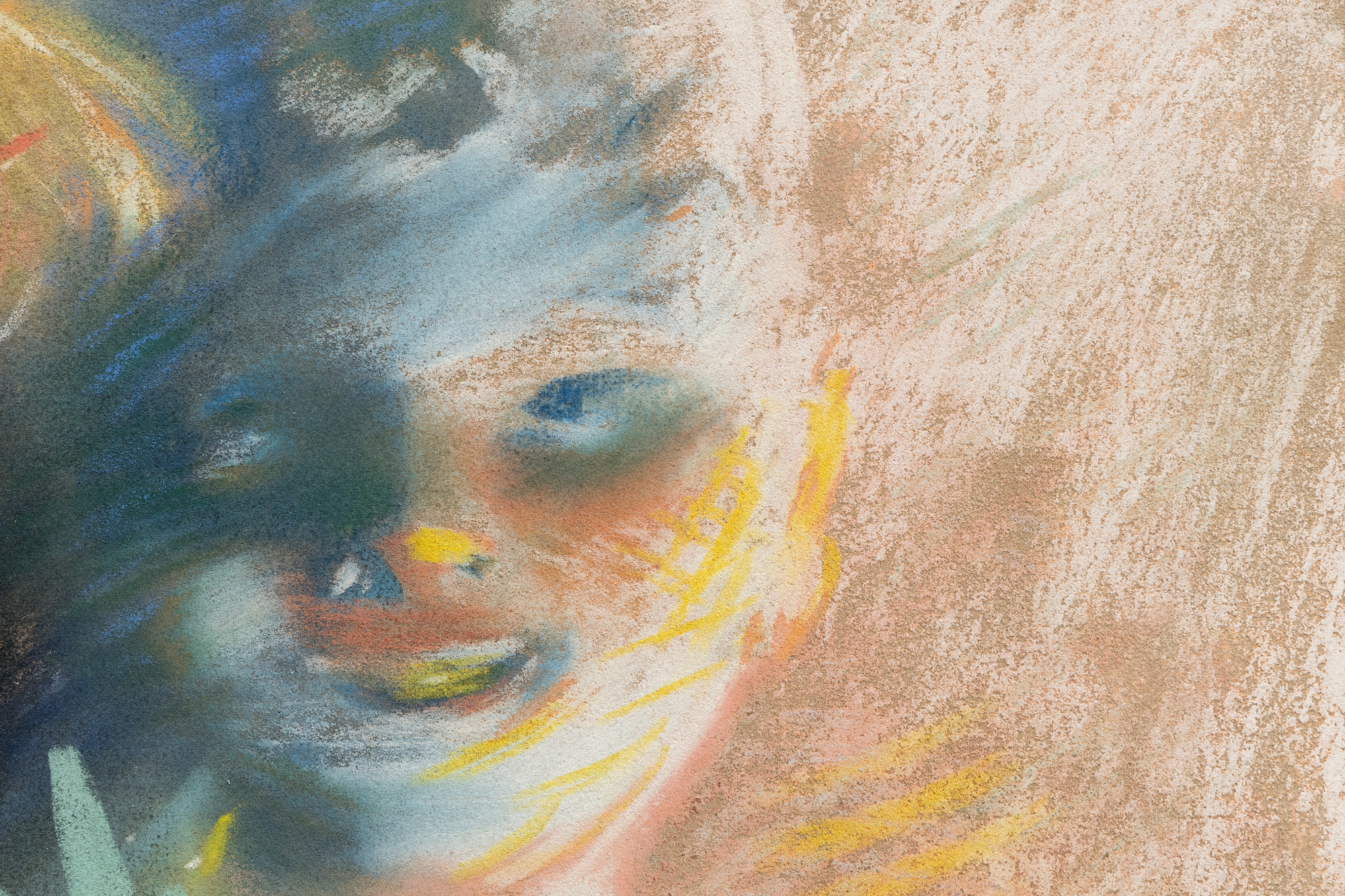
Jules Chérets Porträt ist ein lebhaftes Pastellgemälde auf Leinwand, das die malerische Sensibilität des Künstlers offenbart, der vor allem als Meister der Plakatkunst der Belle Époque bekannt ist. In dieser Komposition tauchen zwei weibliche Figuren aus einem Wirbelwind aus Farben und Licht auf, deren Formen sich in türkisfarbenen, rosafarbenen und goldenen Strichen auflösen. Die Oberfläche vibriert vor Bewegung und erinnert an die theatralische Energie und den flüchtigen Glamour, die das Paris der Jahrhundertwende prägten. Die Figuren sind sanft modelliert, aber durch schwungvolle Gesten belebt und wirken wie mitten in einer Darbietung eingefangen – gleichzeitig intim und überschwänglich.


Obwohl Chéret vor allem für seine Werbeplakate bekannt ist, wurde er stark von den Meistern des Rokoko beeinflusst, insbesondere von Jean-Honoré Fragonard und Antoine Watteau. Ihr Geist der Eleganz, Sinnlichkeit und dekorativen Pracht durchdringt dieses Werk, in dem Leichtigkeit und chromatische Brillanz Vorrang vor strengem Realismus haben. Dieselben Eigenschaften machten seine lebendigen Lithografieplakate für das Eldorado, das Olympia, die Folies Bergère, das Théâtre de l’Opéra, das Alcazar d’Été und das Moulin Rouge zu ikonischen Symbolen des modernen Pariser Lebens.


Chérets Erfolg im Plakatdesign trug dazu bei, eine neue Generation von Künstlern hervorzubringen, darunter Charles Gesmar und Henri de Toulouse-Lautrec, und festigte den Ruf des Plakats als legitimes künstlerisches Medium. Obwohl er als Maler Anerkennung fand, waren es seine Werbegrafiken – die er zunächst aus finanziellen Gründen schuf, später jedoch aus Überzeugung weiterverfolgte –, die sein Vermächtnis sicherten. Chérets Werke, die 1933 mit einer posthumen Ausstellung im Salon d'Automne geehrt wurden, befinden sich heute in bedeutenden Institutionen wie dem Museum of Modern Art, dem Musée d'Orsay, der Eremitage und dem Art Institute of Chicago und bestätigen seinen dauerhaften Platz in der Geschichte der modernen Kunst.
Fragen Sie