


Zurück
JAPANISCHE
$9,500
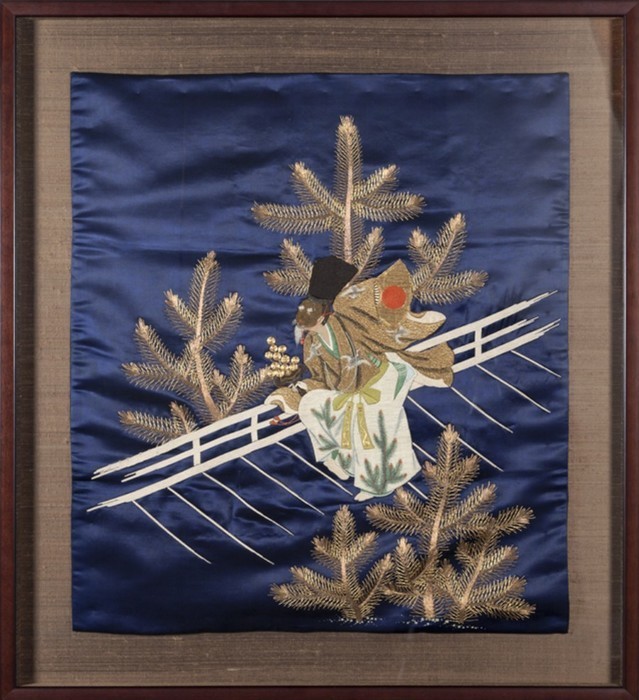
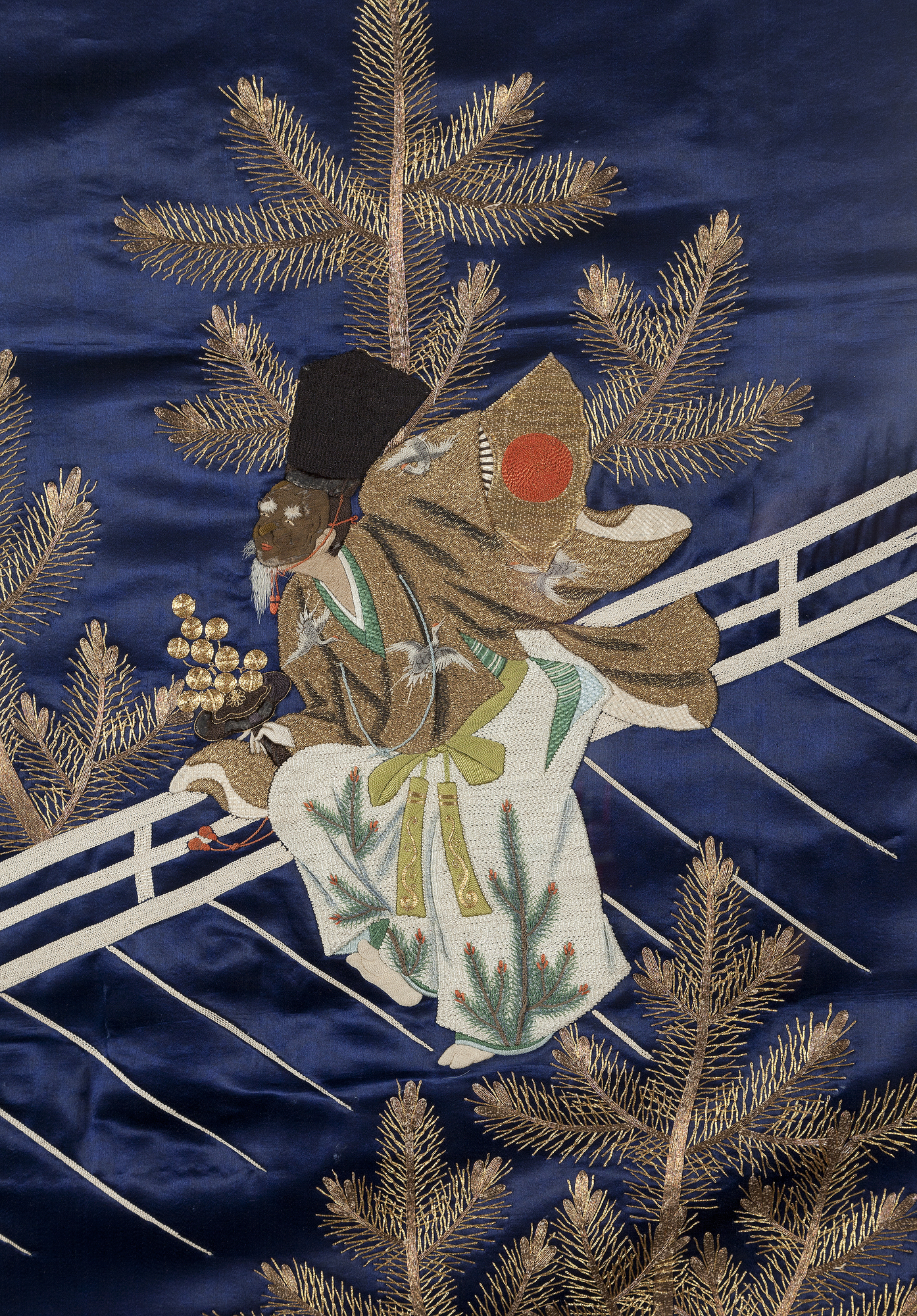
Noh-SchauspielerMeiji-Zeit (1868–1912)27 1/2 x 25 Zoll(69,85 x 63,5 cm) Seidenstickerei mit Gold und Seidenfäden
Provenienz
Heidekraut James Fine Art, KalifornienHier überquert ein Nō-Schauspieler in voller Kostümierung und Maske den Flügel einer Nō-Bühne. Die Bühne wird von Kiefern flankiert, und Kiefern sind auch ein Motiv auf seinem Kimono. Typischerweise ist auf der Rückwand von Nō-Bühnen eine Kiefer gemalt, um den Baum darzustellen, durch den diese Theaterform der Legende nach vom Himmel an die Menschheit weitergegeben wurde. In der japanischen Kultur ist die immergrüne Kiefer zu einem wichtigen Symbol für Langlebigkeit und Standhaftigkeit geworden.
Die Praxis, Fukusa über Geschenke zu legen, die auf Holz- oder Lacktabletts platziert sind, verbreitete sich während der Edo-Zeit (17. bis 19. Jahrhundert). Was als funktionale Praxis zum Schutz der Geschenke vor Witterungseinflüssen begann, entwickelte sich zu einer eigenständigen dekorativen Tradition. Wohlhabende Familien besaßen eine große Anzahl von Fukusa und beauftragten oft berühmte Künstler der
-Zeit, exklusiv für sie zu entwerfen. Die Zeichnungen wurden dann mit Techniken wie Batik, Schablonendruck, Schlitzstickerei, Wandteppich, Malerei mit Stickerei und Kombinationen aller Methoden angefertigt. Jedes Mal, wenn ein Fukusa benötigt wurde, wurde es nicht nur für den Anlass, sondern auch für die Jahreszeit, das Geschenk selbst und den Status des Schenkenden und des Beschenkten ausgewählt. Fukusa waren auch Teil der Aussteuer der Braut und konnten anlässlich einer Hochzeit verschenkt werden. Fukusa bestanden aus quadratischen oder länglichen Seidenstücken, die gefüttert und oft mit Quasten verziert waren und manchmal auf der Rückseite das Monogramm oder das Familienwappen trugen. Die Etikette schrieb vor, dass Fukusa in der Regel nicht als Teil des Geschenks selbst betrachtet wurden und zurückgegeben werden mussten, um ein symbolisches Geschenk oder eine Danksagung für das Geschenk zu umhüllen. Einige Empfänger, wie beispielsweise Beamte, die Geschenke von Menschen annahmen, die sich damit Vorteile verschaffen wollten, entschieden sich jedoch dafür, die Fukusa zusammen mit den Geschenken, die sie umhüllten, zu behalten und so ihren eigenen Vorrat an Geschenkverpackungen zu vergrößern.
Die Praxis, Fukusa über Geschenke zu legen, die auf Holz- oder Lacktabletts platziert sind, verbreitete sich während der Edo-Zeit (17. bis 19. Jahrhundert). Was als funktionale Praxis zum Schutz der Geschenke vor Witterungseinflüssen begann, entwickelte sich zu einer eigenständigen dekorativen Tradition. Wohlhabende Familien besaßen eine große Anzahl von Fukusa und beauftragten oft berühmte Künstler der
-Zeit, exklusiv für sie zu entwerfen. Die Zeichnungen wurden dann mit Techniken wie Batik, Schablonendruck, Schlitzstickerei, Wandteppich, Malerei mit Stickerei und Kombinationen aller Methoden angefertigt. Jedes Mal, wenn ein Fukusa benötigt wurde, wurde es nicht nur für den Anlass, sondern auch für die Jahreszeit, das Geschenk selbst und den Status des Schenkenden und des Beschenkten ausgewählt. Fukusa waren auch Teil der Aussteuer der Braut und konnten anlässlich einer Hochzeit verschenkt werden. Fukusa bestanden aus quadratischen oder länglichen Seidenstücken, die gefüttert und oft mit Quasten verziert waren und manchmal auf der Rückseite das Monogramm oder das Familienwappen trugen. Die Etikette schrieb vor, dass Fukusa in der Regel nicht als Teil des Geschenks selbst betrachtet wurden und zurückgegeben werden mussten, um ein symbolisches Geschenk oder eine Danksagung für das Geschenk zu umhüllen. Einige Empfänger, wie beispielsweise Beamte, die Geschenke von Menschen annahmen, die sich damit Vorteile verschaffen wollten, entschieden sich jedoch dafür, die Fukusa zusammen mit den Geschenken, die sie umhüllten, zu behalten und so ihren eigenen Vorrat an Geschenkverpackungen zu vergrößern.