
Zurück

JANE PETERSON(1876–1965)

$85,000

 
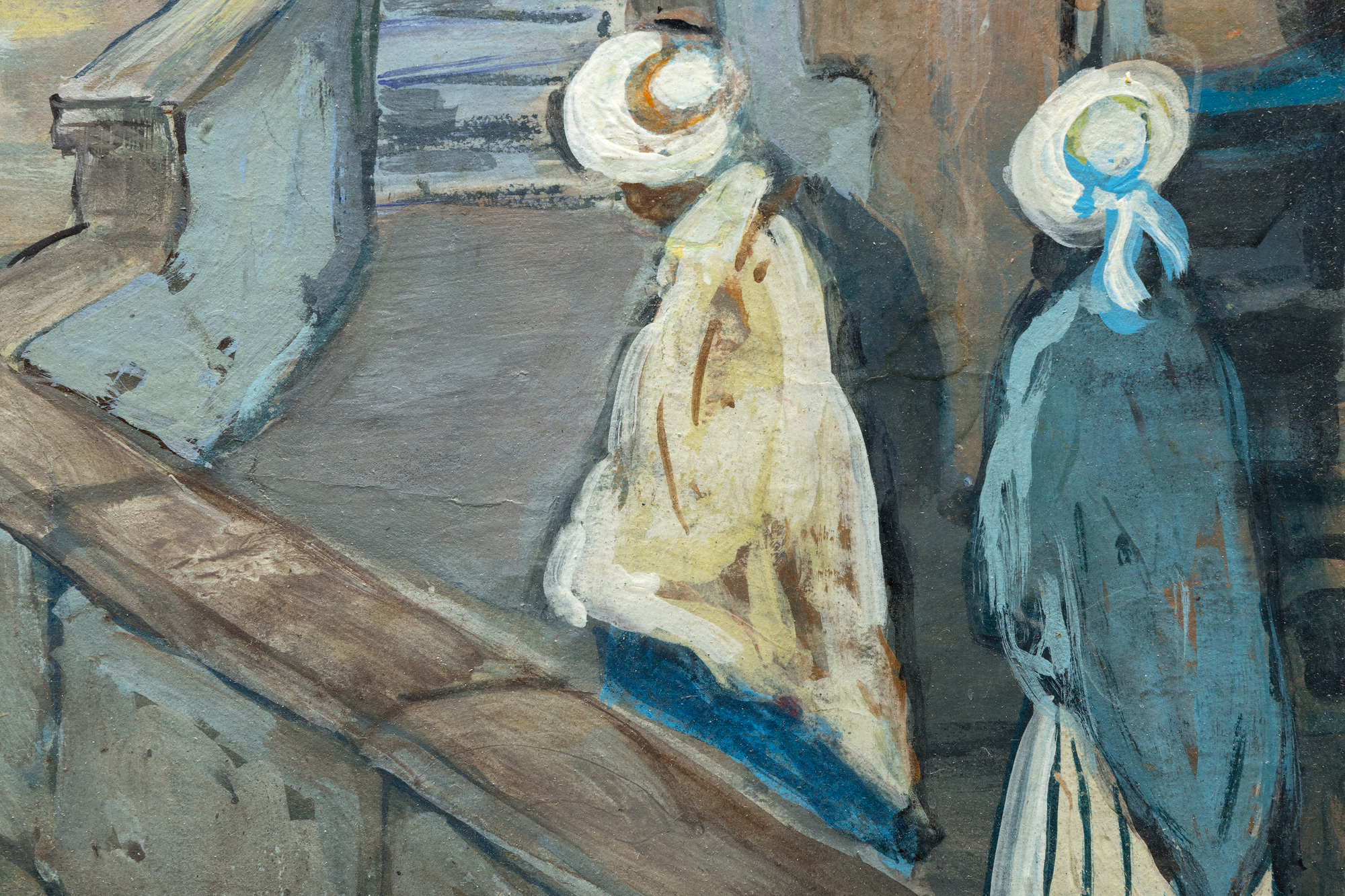
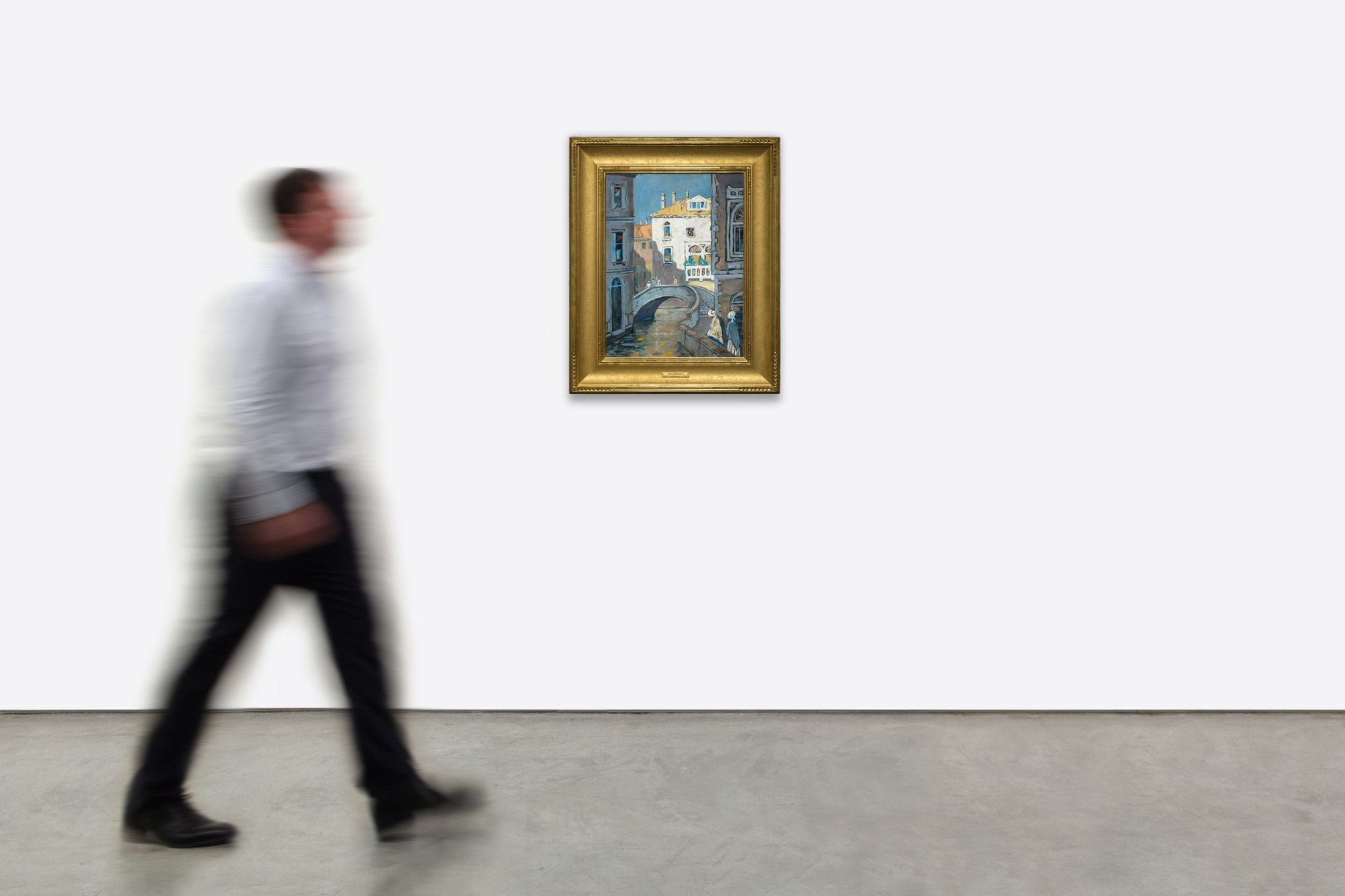
<div><font face=Lato size=3 color="#191919"><em>Figures Along a Venetian Canal, Summer </em>is a vibrant and characteristically bold example of Jane Peterson’s Venetian canal scenes, a subject that represents one of the most collected and widely recognized motifs within her body of work and is one she returned to repeatedly during her European travels. Peterson is known for combining academic draftsmanship with bold color and loose, expressive brushwork. Her work reflects the visual influence of Impressionism, Fauvism, and Art Nouveau. Previously held in the collection of the artist and her estate, this painting is a beautiful example of these influences and of her signature style.</font></div><br><br><div> </div><br><br><div><font face=Lato size=3 color="#191919">The medium and smaller format of this canvas was chosen for portability during Peterson’s travels and captures a serene moment with figures moving along the canals, approaching a bridge. Peterson uses saturated colors and broad, lively brushstrokes to animate the scene, as well as use of light to bring the scene to life and create a distinct mood. The painting relates closely to other Venetian scenes in major museum collections, including <em>St. Mark's in Venice</em>, circa 1920 in the permanent collection of The Norton Museum of Art.</font></div><br><br><div> </div><br><br><div><font face=Lato size=3 color="#191919">Peterson was known for choosing subjects beyond the conventional expectations for women artists of her time, favoring street scenes, travel, public life, and even wartime experience. <em>Figures Along a Venetian Canal, Summer </em>embodies this outward looking spirit, revealing her ability to transform everyday scenes into moments of vivid immediacy and enduring charm.</font></div> <div><font face=Lato size=3 color="#191919"><em>Figures Along a Venetian Canal, Summer </em>is a vibrant and characteristically bold example of Jane Peterson’s Venetian canal scenes, a subject that represents one of the most collected and widely recognized motifs within her body of work and is one she returned to repeatedly during her European travels. Peterson is known for combining academic draftsmanship with bold color and loose, expressive brushwork. Her work reflects the visual influence of Impressionism, Fauvism, and Art Nouveau. Previously held in the collection of the artist and her estate, this painting is a beautiful example of these influences and of her signature style.</font></div><br><br><div> </div><br><br><div><font face=Lato size=3 color="#191919">The medium and smaller format of this canvas was chosen for portability during Peterson’s travels and captures a serene moment with figures moving along the canals, approaching a bridge. Peterson uses saturated colors and broad, lively brushstrokes to animate the scene, as well as use of light to bring the scene to life and create a distinct mood. The painting relates closely to other Venetian scenes in major museum collections, including <em>St. Mark's in Venice</em>, circa 1920 in the permanent collection of The Norton Museum of Art.</font></div><br><br><div> </div><br><br><div><font face=Lato size=3 color="#191919">Peterson was known for choosing subjects beyond the conventional expectations for women artists of her time, favoring street scenes, travel, public life, and even wartime experience. <em>Figures Along a Venetian Canal, Summer </em>embodies this outward looking spirit, revealing her ability to transform everyday scenes into moments of vivid immediacy and enduring charm.</font></div> <div><font face=Lato size=3 color="#191919"><em>Figures Along a Venetian Canal, Summer </em>is a vibrant and characteristically bold example of Jane Peterson’s Venetian canal scenes, a subject that represents one of the most collected and widely recognized motifs within her body of work and is one she returned to repeatedly during her European travels. Peterson is known for combining academic draftsmanship with bold color and loose, expressive brushwork. Her work reflects the visual influence of Impressionism, Fauvism, and Art Nouveau. Previously held in the collection of the artist and her estate, this painting is a beautiful example of these influences and of her signature style.</font></div><br><br><div> </div><br><br><div><font face=Lato size=3 color="#191919">The medium and smaller format of this canvas was chosen for portability during Peterson’s travels and captures a serene moment with figures moving along the canals, approaching a bridge. Peterson uses saturated colors and broad, lively brushstrokes to animate the scene, as well as use of light to bring the scene to life and create a distinct mood. The painting relates closely to other Venetian scenes in major museum collections, including <em>St. Mark's in Venice</em>, circa 1920 in the permanent collection of The Norton Museum of Art.</font></div><br><br><div> </div><br><br><div><font face=Lato size=3 color="#191919">Peterson was known for choosing subjects beyond the conventional expectations for women artists of her time, favoring street scenes, travel, public life, and even wartime experience. <em>Figures Along a Venetian Canal, Summer </em>embodies this outward looking spirit, revealing her ability to transform everyday scenes into moments of vivid immediacy and enduring charm.</font></div> <div><font face=Lato size=3 color="#191919"><em>Figures Along a Venetian Canal, Summer </em>is a vibrant and characteristically bold example of Jane Peterson’s Venetian canal scenes, a subject that represents one of the most collected and widely recognized motifs within her body of work and is one she returned to repeatedly during her European travels. Peterson is known for combining academic draftsmanship with bold color and loose, expressive brushwork. Her work reflects the visual influence of Impressionism, Fauvism, and Art Nouveau. Previously held in the collection of the artist and her estate, this painting is a beautiful example of these influences and of her signature style.</font></div><br><br><div> </div><br><br><div><font face=Lato size=3 color="#191919">The medium and smaller format of this canvas was chosen for portability during Peterson’s travels and captures a serene moment with figures moving along the canals, approaching a bridge. Peterson uses saturated colors and broad, lively brushstrokes to animate the scene, as well as use of light to bring the scene to life and create a distinct mood. The painting relates closely to other Venetian scenes in major museum collections, including <em>St. Mark's in Venice</em>, circa 1920 in the permanent collection of The Norton Museum of Art.</font></div><br><br><div> </div><br><br><div><font face=Lato size=3 color="#191919">Peterson was known for choosing subjects beyond the conventional expectations for women artists of her time, favoring street scenes, travel, public life, and even wartime experience. <em>Figures Along a Venetian Canal, Summer </em>embodies this outward looking spirit, revealing her ability to transform everyday scenes into moments of vivid immediacy and enduring charm.</font></div> <div><font face=Lato size=3 color="#191919"><em>Figures Along a Venetian Canal, Summer </em>is a vibrant and characteristically bold example of Jane Peterson’s Venetian canal scenes, a subject that represents one of the most collected and widely recognized motifs within her body of work and is one she returned to repeatedly during her European travels. Peterson is known for combining academic draftsmanship with bold color and loose, expressive brushwork. Her work reflects the visual influence of Impressionism, Fauvism, and Art Nouveau. Previously held in the collection of the artist and her estate, this painting is a beautiful example of these influences and of her signature style.</font></div><br><br><div> </div><br><br><div><font face=Lato size=3 color="#191919">The medium and smaller format of this canvas was chosen for portability during Peterson’s travels and captures a serene moment with figures moving along the canals, approaching a bridge. Peterson uses saturated colors and broad, lively brushstrokes to animate the scene, as well as use of light to bring the scene to life and create a distinct mood. The painting relates closely to other Venetian scenes in major museum collections, including <em>St. Mark's in Venice</em>, circa 1920 in the permanent collection of The Norton Museum of Art.</font></div><br><br><div> </div><br><br><div><font face=Lato size=3 color="#191919">Peterson was known for choosing subjects beyond the conventional expectations for women artists of her time, favoring street scenes, travel, public life, and even wartime experience. <em>Figures Along a Venetian Canal, Summer </em>embodies this outward looking spirit, revealing her ability to transform everyday scenes into moments of vivid immediacy and enduring charm.</font></div> <div><font face=Lato size=3 color="#191919"><em>Figures Along a Venetian Canal, Summer </em>is a vibrant and characteristically bold example of Jane Peterson’s Venetian canal scenes, a subject that represents one of the most collected and widely recognized motifs within her body of work and is one she returned to repeatedly during her European travels. Peterson is known for combining academic draftsmanship with bold color and loose, expressive brushwork. Her work reflects the visual influence of Impressionism, Fauvism, and Art Nouveau. Previously held in the collection of the artist and her estate, this painting is a beautiful example of these influences and of her signature style.</font></div><br><br><div> </div><br><br><div><font face=Lato size=3 color="#191919">The medium and smaller format of this canvas was chosen for portability during Peterson’s travels and captures a serene moment with figures moving along the canals, approaching a bridge. Peterson uses saturated colors and broad, lively brushstrokes to animate the scene, as well as use of light to bring the scene to life and create a distinct mood. The painting relates closely to other Venetian scenes in major museum collections, including <em>St. Mark's in Venice</em>, circa 1920 in the permanent collection of The Norton Museum of Art.</font></div><br><br><div> </div><br><br><div><font face=Lato size=3 color="#191919">Peterson was known for choosing subjects beyond the conventional expectations for women artists of her time, favoring street scenes, travel, public life, and even wartime experience. <em>Figures Along a Venetian Canal, Summer </em>embodies this outward looking spirit, revealing her ability to transform everyday scenes into moments of vivid immediacy and enduring charm.</font></div> <div><font face=Lato size=3 color="#191919"><em>Figures Along a Venetian Canal, Summer </em>is a vibrant and characteristically bold example of Jane Peterson’s Venetian canal scenes, a subject that represents one of the most collected and widely recognized motifs within her body of work and is one she returned to repeatedly during her European travels. Peterson is known for combining academic draftsmanship with bold color and loose, expressive brushwork. Her work reflects the visual influence of Impressionism, Fauvism, and Art Nouveau. Previously held in the collection of the artist and her estate, this painting is a beautiful example of these influences and of her signature style.</font></div><br><br><div> </div><br><br><div><font face=Lato size=3 color="#191919">The medium and smaller format of this canvas was chosen for portability during Peterson’s travels and captures a serene moment with figures moving along the canals, approaching a bridge. Peterson uses saturated colors and broad, lively brushstrokes to animate the scene, as well as use of light to bring the scene to life and create a distinct mood. The painting relates closely to other Venetian scenes in major museum collections, including <em>St. Mark's in Venice</em>, circa 1920 in the permanent collection of The Norton Museum of Art.</font></div><br><br><div> </div><br><br><div><font face=Lato size=3 color="#191919">Peterson was known for choosing subjects beyond the conventional expectations for women artists of her time, favoring street scenes, travel, public life, and even wartime experience. <em>Figures Along a Venetian Canal, Summer </em>embodies this outward looking spirit, revealing her ability to transform everyday scenes into moments of vivid immediacy and enduring charm.</font></div>
Figuren entlang eines venezianischen Kanals, Sommer25 1/2 x 18 1/8 Zoll(64,77 x 46,04 cm) Öl auf Papier auf Leinwand
Provenienz
Peterson Estate bis 1969
Privatsammlung, Connecticut bis 2001
Privatsammlung
„Figuren entlang eines venezianischen Kanals, Sommer“ ist ein lebendiges und charakteristisch kühnes Beispiel für Jane Petersons venezianische Kanalszenen, ein Thema, das eines der meistgesammelten und bekanntesten Motive in ihrem Werk darstellt und zu dem sie während ihrer Europareisen immer wieder zurückkehrte. Peterson ist bekannt dafür, akademische Zeichenkunst mit kräftigen Farben und lockerer, ausdrucksstarker Pinselführung zu kombinieren. Ihre Arbeiten spiegeln den visuellen Einfluss des Impressionismus, Fauvismus und Jugendstils wider. Dieses Gemälde, das zuvor in der Sammlung der Künstlerin und ihres Nachlasses befand, ist ein wunderschönes Beispiel für diese Einflüsse und ihren unverkennbaren Stil.


Das mittlere und kleinere Format dieser Leinwand wurde aufgrund der Transportfähigkeit während Petersons Reisen gewählt und fängt einen ruhigen Moment ein, in dem sich Figuren entlang der Kanäle bewegen und sich einer Brücke nähern. Peterson verwendet satte Farben und breite, lebendige Pinselstriche, um die Szene zu beleben, sowie Licht, um die Szene zum Leben zu erwecken und eine besondere Stimmung zu schaffen. Das Gemälde steht in engem Zusammenhang mit anderen venezianischen Szenen in bedeutenden Museumssammlungen, darunter „St. Mark's in Venice, circa 1920“ in der ständigen Sammlung des Norton Museum of Art.


Peterson war dafür bekannt, dass sie Motive wählte, die über die konventionellen Erwartungen an Künstlerinnen ihrer Zeit hinausgingen, und bevorzugte Straßenszenen, Reisen, das öffentliche Leben und sogar Kriegserlebnisse. „Figuren an einem venezianischen Kanal, Sommer“ verkörpert diesen nach außen gerichteten Geist und offenbart ihre Fähigkeit, alltägliche Szenen in Momente von lebendiger Unmittelbarkeit und bleibendem Charme zu verwandeln.
Fragen Sie