Atrás

PAUL SIGNAC (1863-1935)

 
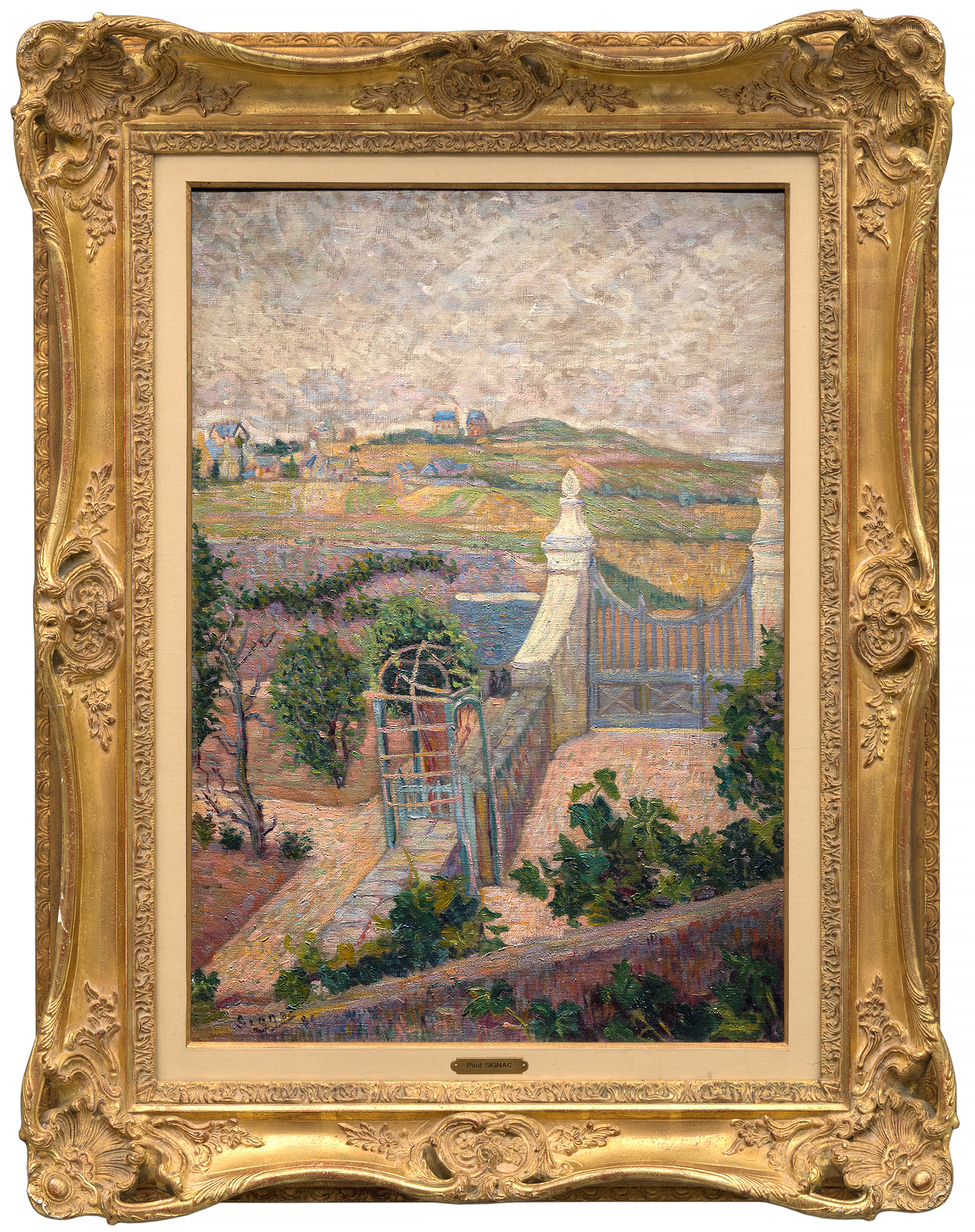
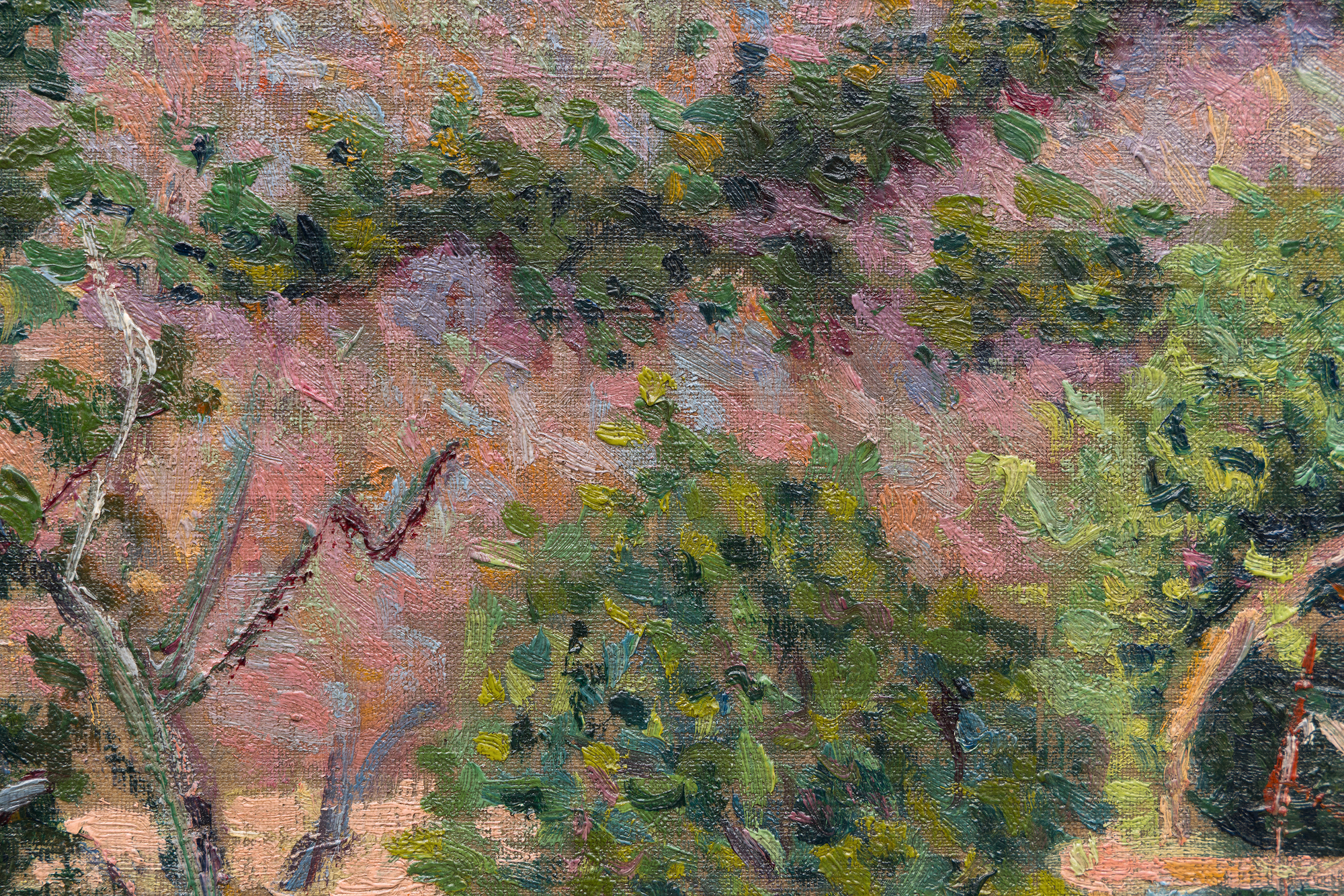
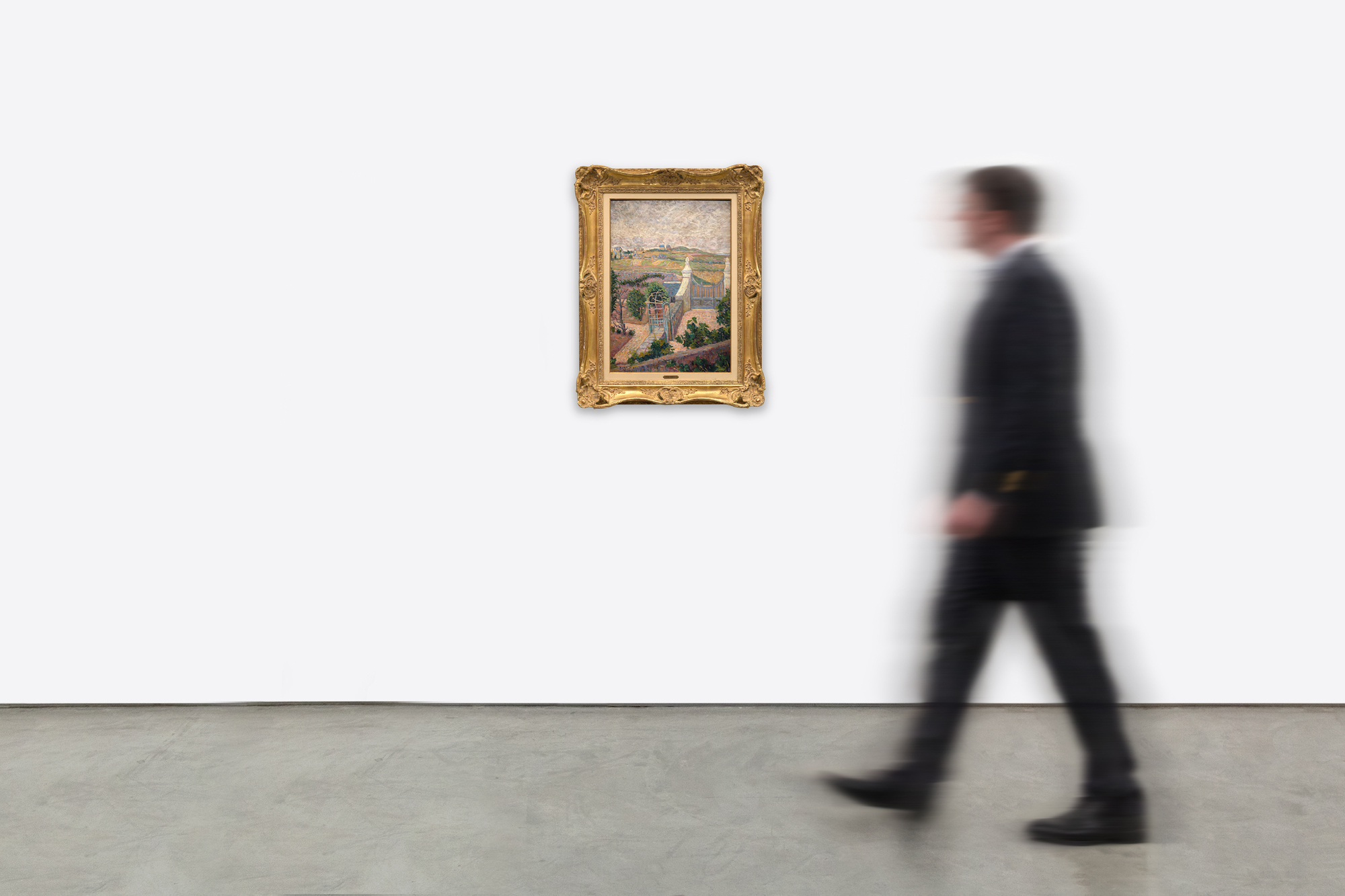
<div><font face=Lato size=3 color=black>Paul Signac’s <em>Saint-Briac. D’une fenêtre</em> (1885) captures the quiet beauty of the Breton landscape at a pivotal moment in the artist’s evolution from Impressionism to Neo-Impressionism. Painted during one of his frequent stays in Saint-Briac-sur-Mer, a coastal village in Brittany, this work reflects Signac’s early fascination with the play of light, color, and atmosphere before his full embrace of </font><font<br>face=HelveticaNeue size=3 color="#191919">Pointilist </font><font face=Lato<br>size=3 color=black>technique. The composition, framed as if viewed from a window, balances structured geometry with painterly spontaneity, suggesting the artist’s growing concern with order and harmony in nature.</font></div><br><br><div> </div><br><br><div><font face=Lato size=3 color=black>The work once belonged to the French composer and conductor Jules Rivière and has been discussed in major art historical texts, including <em>Connaissance des Arts</em> (1956), Sophie Monneret’s <em>L’Impressionisme et son époque</em> (1980), and Françoise Cachin’s <em>Signac: Catalogue raisonné de l’oeuvre peint</em> (2000), where it is illustrated as entry no. 102. Comparable examples from the same Saint-Briac series are housed in the Metropolitan Museum of Art, the Art Institute of Chicago, and the Carnegie Museum of Art. Collectively, these works reveal Signac’s transition toward the structured luminosity that would soon define Neo-Impressionism and secure his place among the leading innovators of modern painting.</font></div> <div><font face=Lato size=3 color=black>Paul Signac’s <em>Saint-Briac. D’une fenêtre</em> (1885) captures the quiet beauty of the Breton landscape at a pivotal moment in the artist’s evolution from Impressionism to Neo-Impressionism. Painted during one of his frequent stays in Saint-Briac-sur-Mer, a coastal village in Brittany, this work reflects Signac’s early fascination with the play of light, color, and atmosphere before his full embrace of </font><font<br>face=HelveticaNeue size=3 color="#191919">Pointilist </font><font face=Lato<br>size=3 color=black>technique. The composition, framed as if viewed from a window, balances structured geometry with painterly spontaneity, suggesting the artist’s growing concern with order and harmony in nature.</font></div><br><br><div> </div><br><br><div><font face=Lato size=3 color=black>The work once belonged to the French composer and conductor Jules Rivière and has been discussed in major art historical texts, including <em>Connaissance des Arts</em> (1956), Sophie Monneret’s <em>L’Impressionisme et son époque</em> (1980), and Françoise Cachin’s <em>Signac: Catalogue raisonné de l’oeuvre peint</em> (2000), where it is illustrated as entry no. 102. Comparable examples from the same Saint-Briac series are housed in the Metropolitan Museum of Art, the Art Institute of Chicago, and the Carnegie Museum of Art. Collectively, these works reveal Signac’s transition toward the structured luminosity that would soon define Neo-Impressionism and secure his place among the leading innovators of modern painting.</font></div> <div><font face=Lato size=3 color=black>Paul Signac’s <em>Saint-Briac. D’une fenêtre</em> (1885) captures the quiet beauty of the Breton landscape at a pivotal moment in the artist’s evolution from Impressionism to Neo-Impressionism. Painted during one of his frequent stays in Saint-Briac-sur-Mer, a coastal village in Brittany, this work reflects Signac’s early fascination with the play of light, color, and atmosphere before his full embrace of </font><font<br>face=HelveticaNeue size=3 color="#191919">Pointilist </font><font face=Lato<br>size=3 color=black>technique. The composition, framed as if viewed from a window, balances structured geometry with painterly spontaneity, suggesting the artist’s growing concern with order and harmony in nature.</font></div><br><br><div> </div><br><br><div><font face=Lato size=3 color=black>The work once belonged to the French composer and conductor Jules Rivière and has been discussed in major art historical texts, including <em>Connaissance des Arts</em> (1956), Sophie Monneret’s <em>L’Impressionisme et son époque</em> (1980), and Françoise Cachin’s <em>Signac: Catalogue raisonné de l’oeuvre peint</em> (2000), where it is illustrated as entry no. 102. Comparable examples from the same Saint-Briac series are housed in the Metropolitan Museum of Art, the Art Institute of Chicago, and the Carnegie Museum of Art. Collectively, these works reveal Signac’s transition toward the structured luminosity that would soon define Neo-Impressionism and secure his place among the leading innovators of modern painting.</font></div> <div><font face=Lato size=3 color=black>Paul Signac’s <em>Saint-Briac. D’une fenêtre</em> (1885) captures the quiet beauty of the Breton landscape at a pivotal moment in the artist’s evolution from Impressionism to Neo-Impressionism. Painted during one of his frequent stays in Saint-Briac-sur-Mer, a coastal village in Brittany, this work reflects Signac’s early fascination with the play of light, color, and atmosphere before his full embrace of </font><font<br>face=HelveticaNeue size=3 color="#191919">Pointilist </font><font face=Lato<br>size=3 color=black>technique. The composition, framed as if viewed from a window, balances structured geometry with painterly spontaneity, suggesting the artist’s growing concern with order and harmony in nature.</font></div><br><br><div> </div><br><br><div><font face=Lato size=3 color=black>The work once belonged to the French composer and conductor Jules Rivière and has been discussed in major art historical texts, including <em>Connaissance des Arts</em> (1956), Sophie Monneret’s <em>L’Impressionisme et son époque</em> (1980), and Françoise Cachin’s <em>Signac: Catalogue raisonné de l’oeuvre peint</em> (2000), where it is illustrated as entry no. 102. Comparable examples from the same Saint-Briac series are housed in the Metropolitan Museum of Art, the Art Institute of Chicago, and the Carnegie Museum of Art. Collectively, these works reveal Signac’s transition toward the structured luminosity that would soon define Neo-Impressionism and secure his place among the leading innovators of modern painting.</font></div> <div><font face=Lato size=3 color=black>Paul Signac’s <em>Saint-Briac. D’une fenêtre</em> (1885) captures the quiet beauty of the Breton landscape at a pivotal moment in the artist’s evolution from Impressionism to Neo-Impressionism. Painted during one of his frequent stays in Saint-Briac-sur-Mer, a coastal village in Brittany, this work reflects Signac’s early fascination with the play of light, color, and atmosphere before his full embrace of </font><font<br>face=HelveticaNeue size=3 color="#191919">Pointilist </font><font face=Lato<br>size=3 color=black>technique. The composition, framed as if viewed from a window, balances structured geometry with painterly spontaneity, suggesting the artist’s growing concern with order and harmony in nature.</font></div><br><br><div> </div><br><br><div><font face=Lato size=3 color=black>The work once belonged to the French composer and conductor Jules Rivière and has been discussed in major art historical texts, including <em>Connaissance des Arts</em> (1956), Sophie Monneret’s <em>L’Impressionisme et son époque</em> (1980), and Françoise Cachin’s <em>Signac: Catalogue raisonné de l’oeuvre peint</em> (2000), where it is illustrated as entry no. 102. Comparable examples from the same Saint-Briac series are housed in the Metropolitan Museum of Art, the Art Institute of Chicago, and the Carnegie Museum of Art. Collectively, these works reveal Signac’s transition toward the structured luminosity that would soon define Neo-Impressionism and secure his place among the leading innovators of modern painting.</font></div> <div><font face=Lato size=3 color=black>Paul Signac’s <em>Saint-Briac. D’une fenêtre</em> (1885) captures the quiet beauty of the Breton landscape at a pivotal moment in the artist’s evolution from Impressionism to Neo-Impressionism. Painted during one of his frequent stays in Saint-Briac-sur-Mer, a coastal village in Brittany, this work reflects Signac’s early fascination with the play of light, color, and atmosphere before his full embrace of </font><font<br>face=HelveticaNeue size=3 color="#191919">Pointilist </font><font face=Lato<br>size=3 color=black>technique. The composition, framed as if viewed from a window, balances structured geometry with painterly spontaneity, suggesting the artist’s growing concern with order and harmony in nature.</font></div><br><br><div> </div><br><br><div><font face=Lato size=3 color=black>The work once belonged to the French composer and conductor Jules Rivière and has been discussed in major art historical texts, including <em>Connaissance des Arts</em> (1956), Sophie Monneret’s <em>L’Impressionisme et son époque</em> (1980), and Françoise Cachin’s <em>Signac: Catalogue raisonné de l’oeuvre peint</em> (2000), where it is illustrated as entry no. 102. Comparable examples from the same Saint-Briac series are housed in the Metropolitan Museum of Art, the Art Institute of Chicago, and the Carnegie Museum of Art. Collectively, these works reveal Signac’s transition toward the structured luminosity that would soon define Neo-Impressionism and secure his place among the leading innovators of modern painting.</font></div> <div><font face=Lato size=3 color=black>Paul Signac’s <em>Saint-Briac. D’une fenêtre</em> (1885) captures the quiet beauty of the Breton landscape at a pivotal moment in the artist’s evolution from Impressionism to Neo-Impressionism. Painted during one of his frequent stays in Saint-Briac-sur-Mer, a coastal village in Brittany, this work reflects Signac’s early fascination with the play of light, color, and atmosphere before his full embrace of </font><font<br>face=HelveticaNeue size=3 color="#191919">Pointilist </font><font face=Lato<br>size=3 color=black>technique. The composition, framed as if viewed from a window, balances structured geometry with painterly spontaneity, suggesting the artist’s growing concern with order and harmony in nature.</font></div><br><br><div> </div><br><br><div><font face=Lato size=3 color=black>The work once belonged to the French composer and conductor Jules Rivière and has been discussed in major art historical texts, including <em>Connaissance des Arts</em> (1956), Sophie Monneret’s <em>L’Impressionisme et son époque</em> (1980), and Françoise Cachin’s <em>Signac: Catalogue raisonné de l’oeuvre peint</em> (2000), where it is illustrated as entry no. 102. Comparable examples from the same Saint-Briac series are housed in the Metropolitan Museum of Art, the Art Institute of Chicago, and the Carnegie Museum of Art. Collectively, these works reveal Signac’s transition toward the structured luminosity that would soon define Neo-Impressionism and secure his place among the leading innovators of modern painting.</font></div> <div><font face=Lato size=3 color=black>Paul Signac’s <em>Saint-Briac. D’une fenêtre</em> (1885) captures the quiet beauty of the Breton landscape at a pivotal moment in the artist’s evolution from Impressionism to Neo-Impressionism. Painted during one of his frequent stays in Saint-Briac-sur-Mer, a coastal village in Brittany, this work reflects Signac’s early fascination with the play of light, color, and atmosphere before his full embrace of </font><font<br>face=HelveticaNeue size=3 color="#191919">Pointilist </font><font face=Lato<br>size=3 color=black>technique. The composition, framed as if viewed from a window, balances structured geometry with painterly spontaneity, suggesting the artist’s growing concern with order and harmony in nature.</font></div><br><br><div> </div><br><br><div><font face=Lato size=3 color=black>The work once belonged to the French composer and conductor Jules Rivière and has been discussed in major art historical texts, including <em>Connaissance des Arts</em> (1956), Sophie Monneret’s <em>L’Impressionisme et son époque</em> (1980), and Françoise Cachin’s <em>Signac: Catalogue raisonné de l’oeuvre peint</em> (2000), where it is illustrated as entry no. 102. Comparable examples from the same Saint-Briac series are housed in the Metropolitan Museum of Art, the Art Institute of Chicago, and the Carnegie Museum of Art. Collectively, these works reveal Signac’s transition toward the structured luminosity that would soon define Neo-Impressionism and secure his place among the leading innovators of modern painting.</font></div> <div><font face=Lato size=3 color=black>Paul Signac’s <em>Saint-Briac. D’une fenêtre</em> (1885) captures the quiet beauty of the Breton landscape at a pivotal moment in the artist’s evolution from Impressionism to Neo-Impressionism. Painted during one of his frequent stays in Saint-Briac-sur-Mer, a coastal village in Brittany, this work reflects Signac’s early fascination with the play of light, color, and atmosphere before his full embrace of </font><font<br>face=HelveticaNeue size=3 color="#191919">Pointilist </font><font face=Lato<br>size=3 color=black>technique. The composition, framed as if viewed from a window, balances structured geometry with painterly spontaneity, suggesting the artist’s growing concern with order and harmony in nature.</font></div><br><br><div> </div><br><br><div><font face=Lato size=3 color=black>The work once belonged to the French composer and conductor Jules Rivière and has been discussed in major art historical texts, including <em>Connaissance des Arts</em> (1956), Sophie Monneret’s <em>L’Impressionisme et son époque</em> (1980), and Françoise Cachin’s <em>Signac: Catalogue raisonné de l’oeuvre peint</em> (2000), where it is illustrated as entry no. 102. Comparable examples from the same Saint-Briac series are housed in the Metropolitan Museum of Art, the Art Institute of Chicago, and the Carnegie Museum of Art. Collectively, these works reveal Signac’s transition toward the structured luminosity that would soon define Neo-Impressionism and secure his place among the leading innovators of modern painting.</font></div>
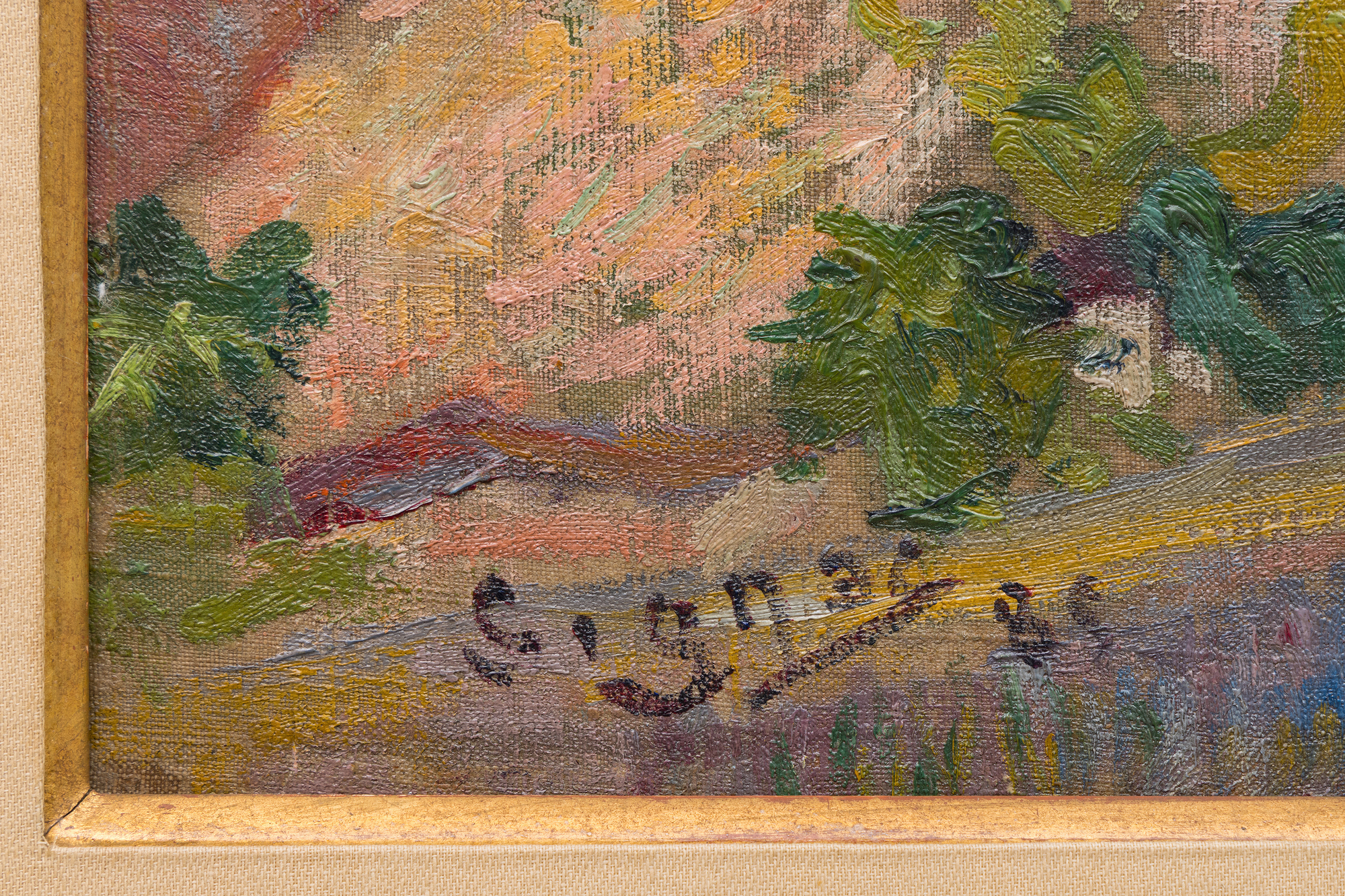
Saint-Briac. D'une fenetre188525 1/2 x 18 1/8 pulg.(64,77 x 46,04 cm) óleo sobre lienzo
Procedencia
Jules Rivière, Cagnes
Hôtel Drouot, París, 23 de marzo de 1956, lote 103
Colección privada, adquirida a la anterior
Hôtel Drouot, París, 19 de junio de 1990, lote 130
Colección particular, Suiza
Hampel Fine Art Auctions, Múnich, 29 de abril de 2017, lote 6
Colección privada, adquirida a la anterior
Hampel Fine Art Auctions, Múnich, 26 de septiembre de 2018, lote 602
Colección privada, adquirida a los anteriores
Sotheby's Nueva York: Martes, 14 de noviembre de 2023, lote 306
Colección privada, adquirida a
...Más....e arriba
Exposición
Nueva York, American Art Galleries, Works in Oil and Pastel by the Impressionists of Paris, 1886, nº 70, p. 18 (titulado From My Window)
Literatura
Francis Soar y Hachette, "Connaissance des Arts", París, 1956, p. 61
Sophie Monneret, L'Impressionisme et son époque, dictionnaire international, vol. II, París 1980, p. 255.
Hôtel Drouot, "La Gazette de l'Hôtel Drouot", vol. XLIV, París, 1990, nº 21.
Françoise Cachin, Signac. Catalogue raisonné de l'oeuvre peint, París, 2000, nº 102, p. 169, ilustrado
...MENOS....
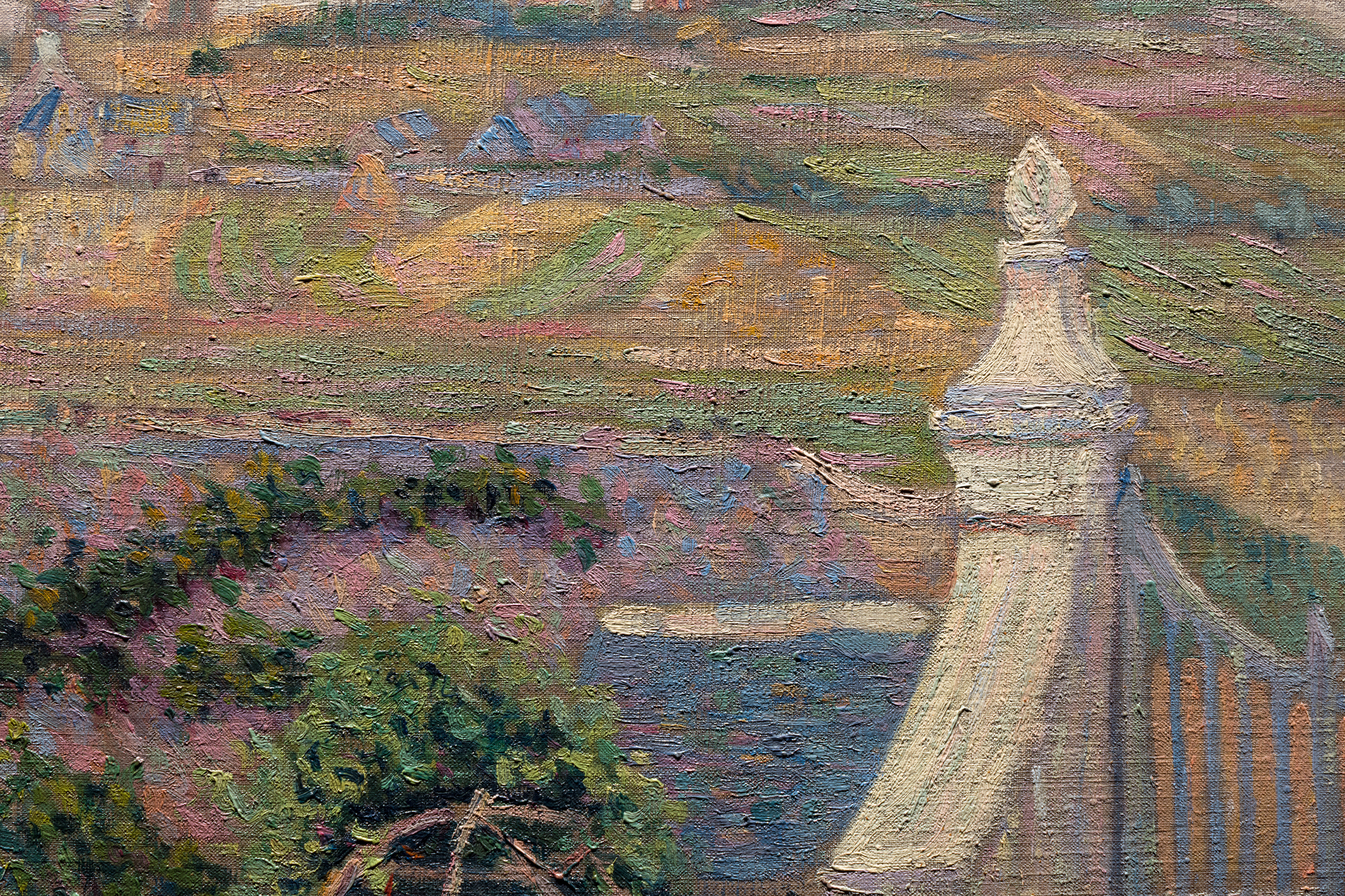
Saint-Briac. D'une fenêtre (1885) capta la tranquila belleza del paisaje bretón en un momento crucial de la evolución del artista del Impresionismo al Neoimpresionismo. Pintada durante una de sus frecuentes estancias en Saint-Briac-sur-Mer, un pueblo costero de Bretaña, esta obra refleja la temprana fascinación de Signac por los juegos de luz, color y atmósfera, antes de abrazar plenamente la técnica puntillista. La composición, enmarcada como si se viera desde una ventana, equilibra la geometría estructurada con la espontaneidad pictórica, sugiriendo la creciente preocupación del artista por el orden y la armonía en la naturaleza.


La obra perteneció en su día al compositor y director de orquesta francés Jules Rivière y ha sido comentada en importantes textos de historia del arte, como Connaissance des Arts (1956), L'Impressionisme et son époque (1980) de Sophie Monneret, y Signac: Catalogue raisonné de l'oeuvre peint (2000), de Françoise Cachin, donde figura con el nº 102. 102. Ejemplos comparables de la misma serie Saint-Briac se conservan en el Metropolitan Museum of Art, el Art Institute of Chicago y el Carnegie Museum of Art. En conjunto, estas obras revelan la transición de Signac hacia la luminosidad estructurada que pronto definiría el neoimpresionismo y aseguraría su lugar entre los principales innovadores de la pintura moderna.
Preguntar