Atrás

ALFRED SISLEY (1839-1899)

$1,350,000

 
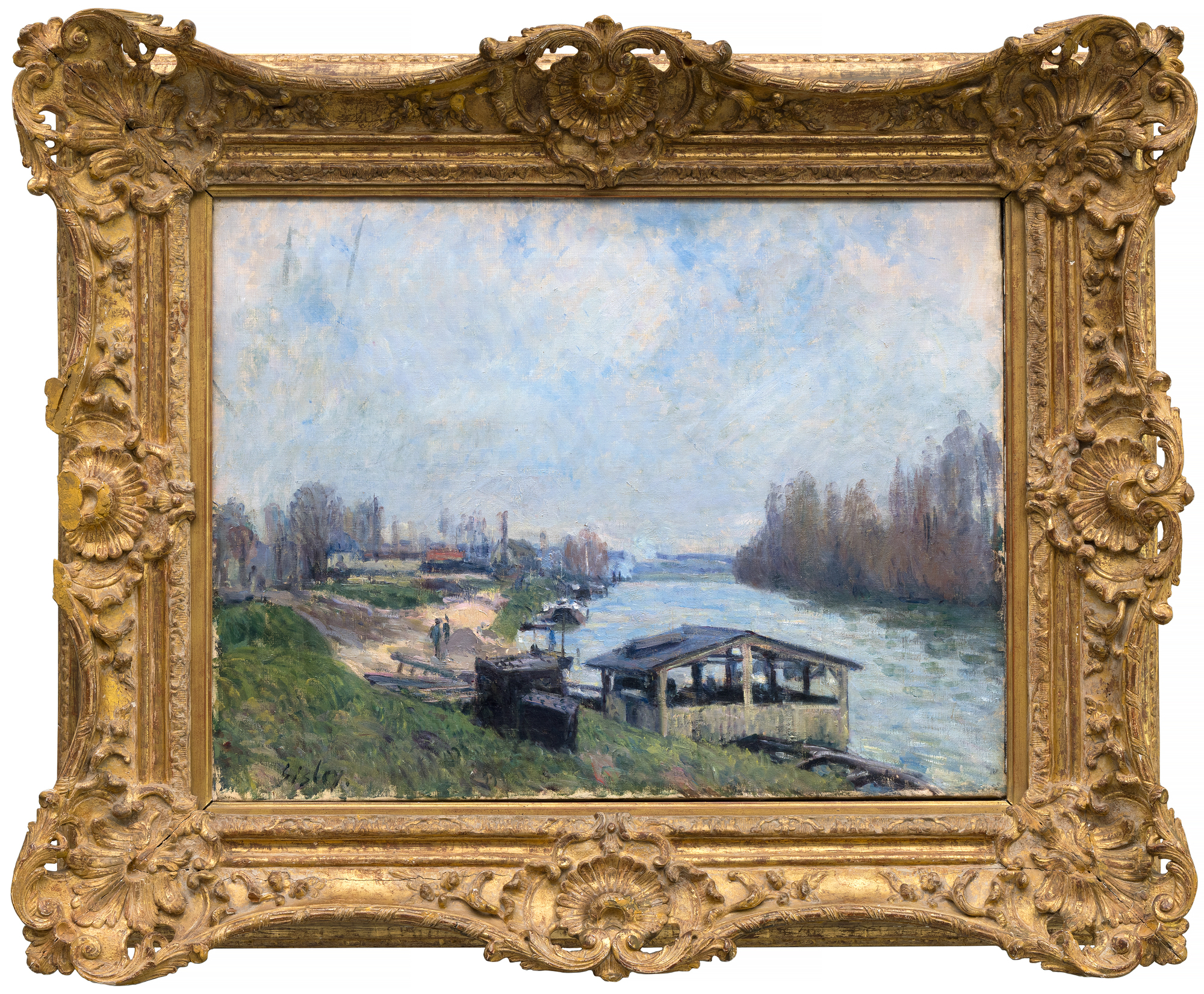
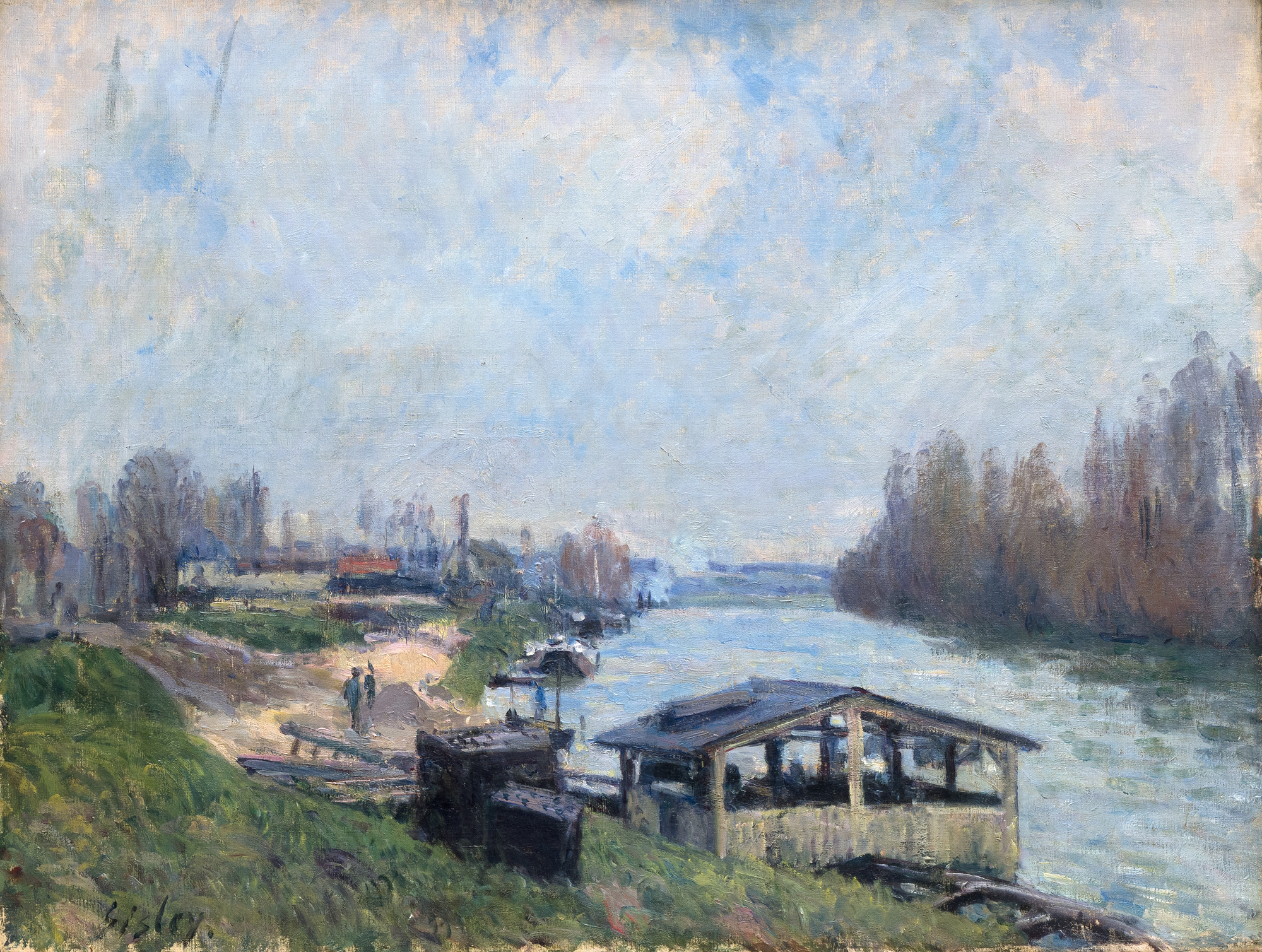
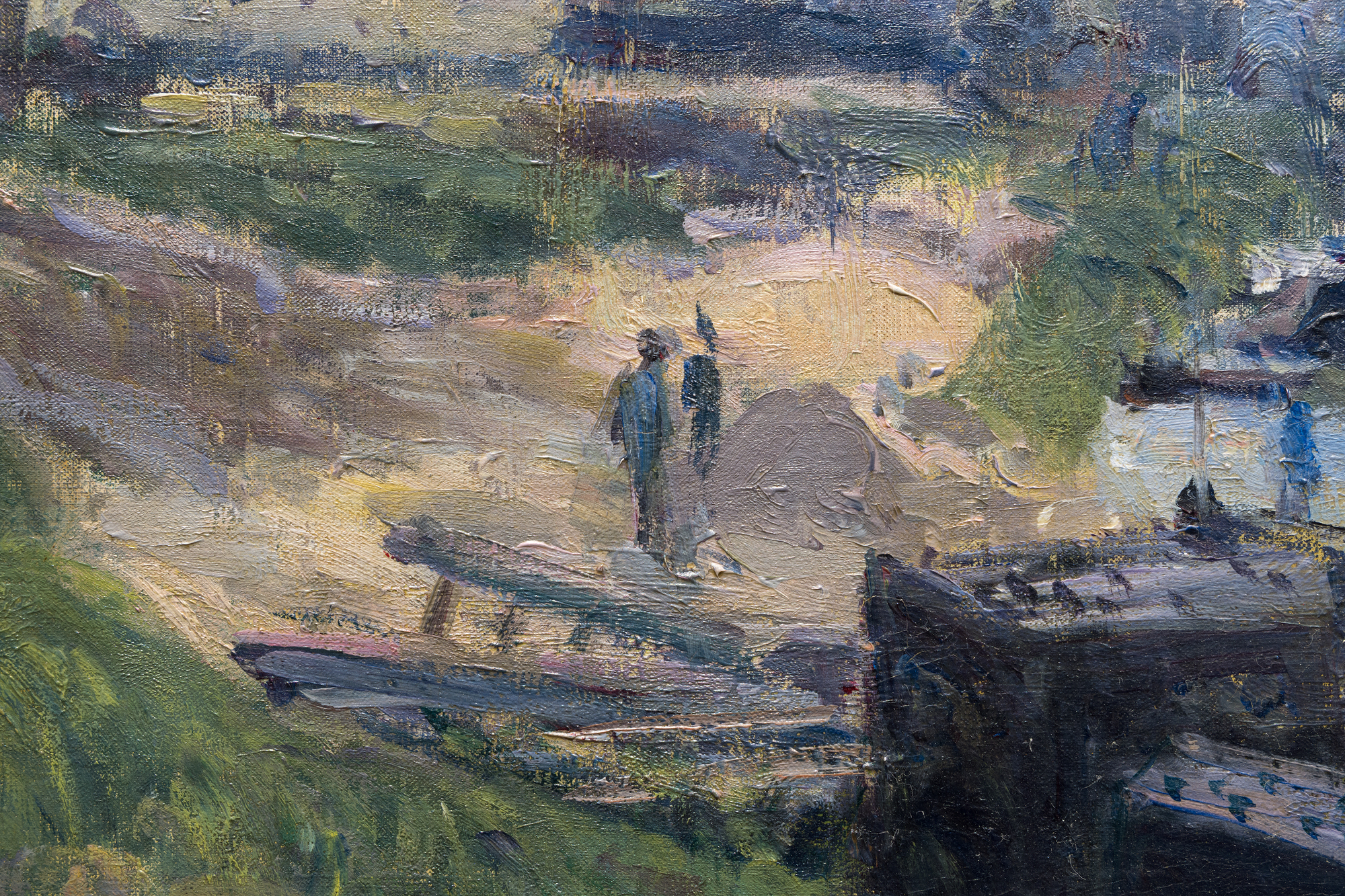
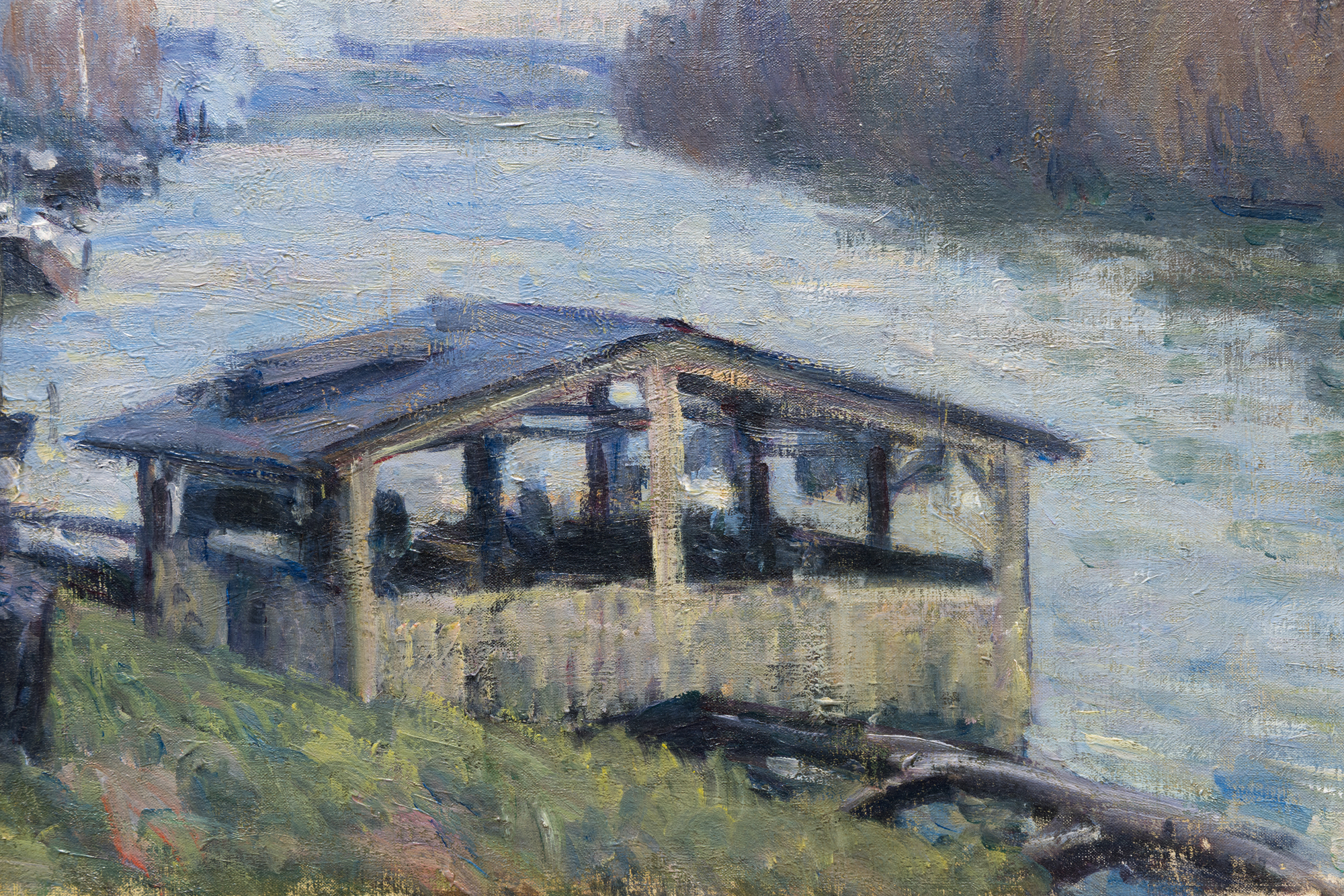
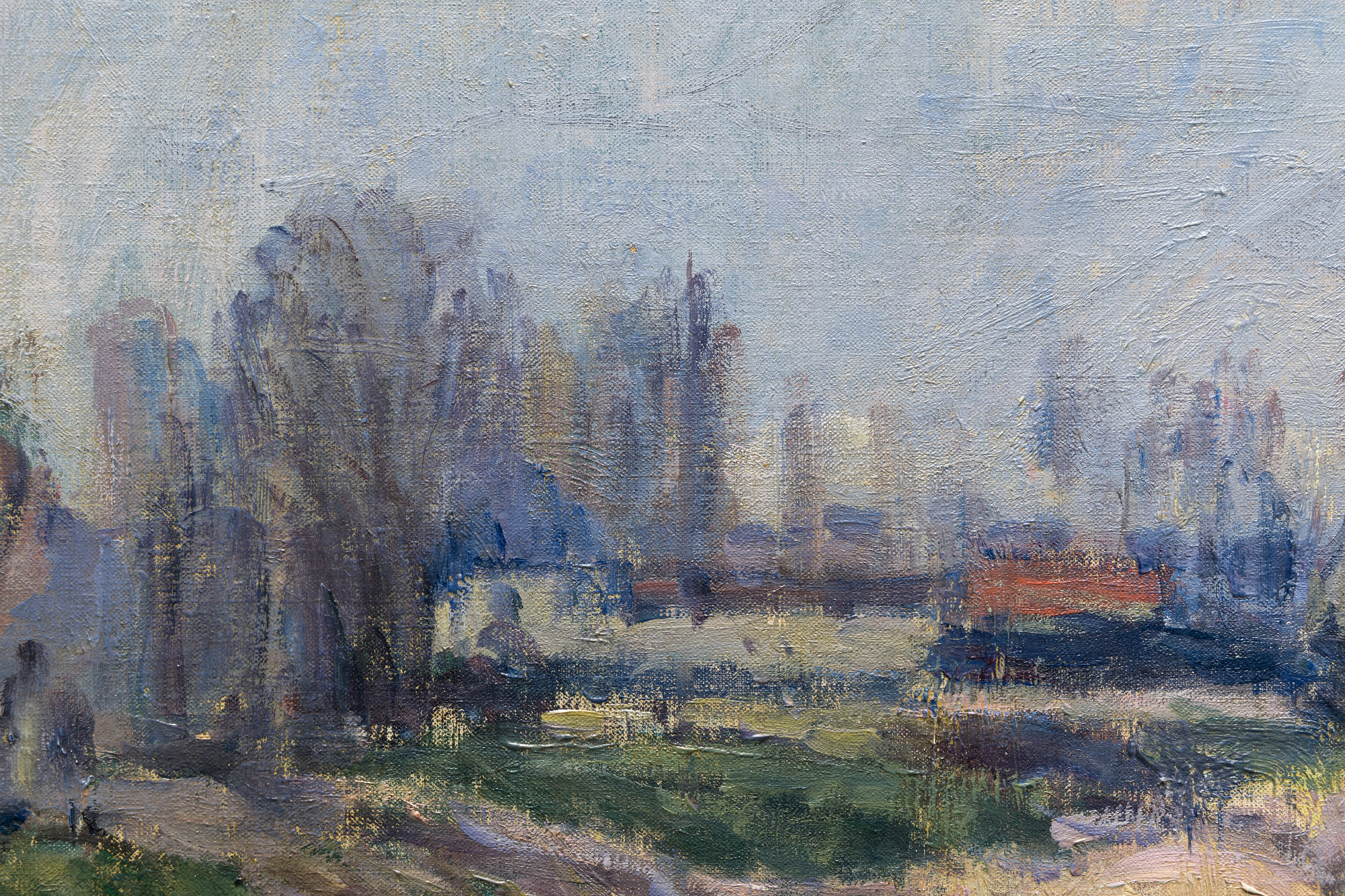
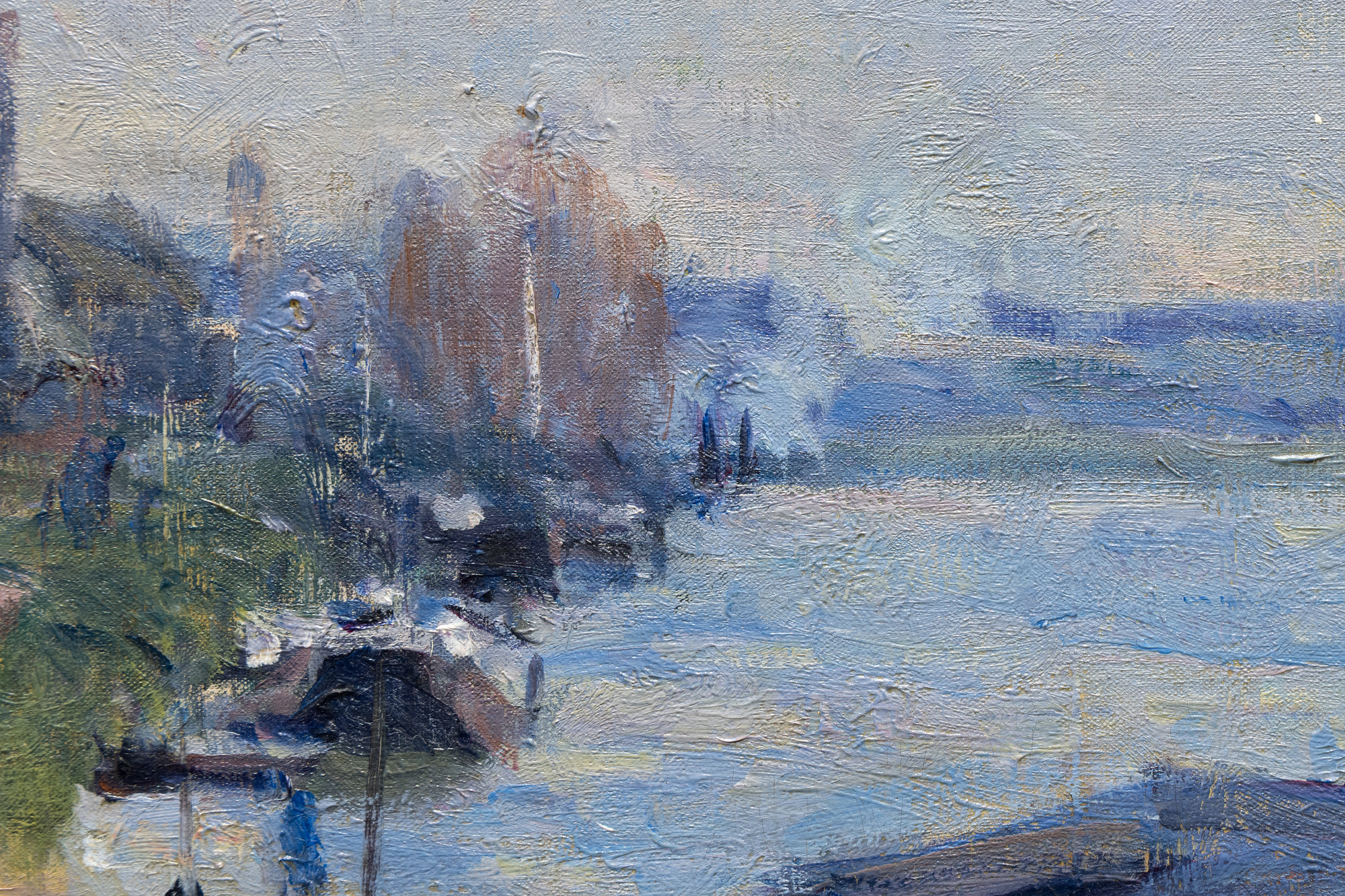
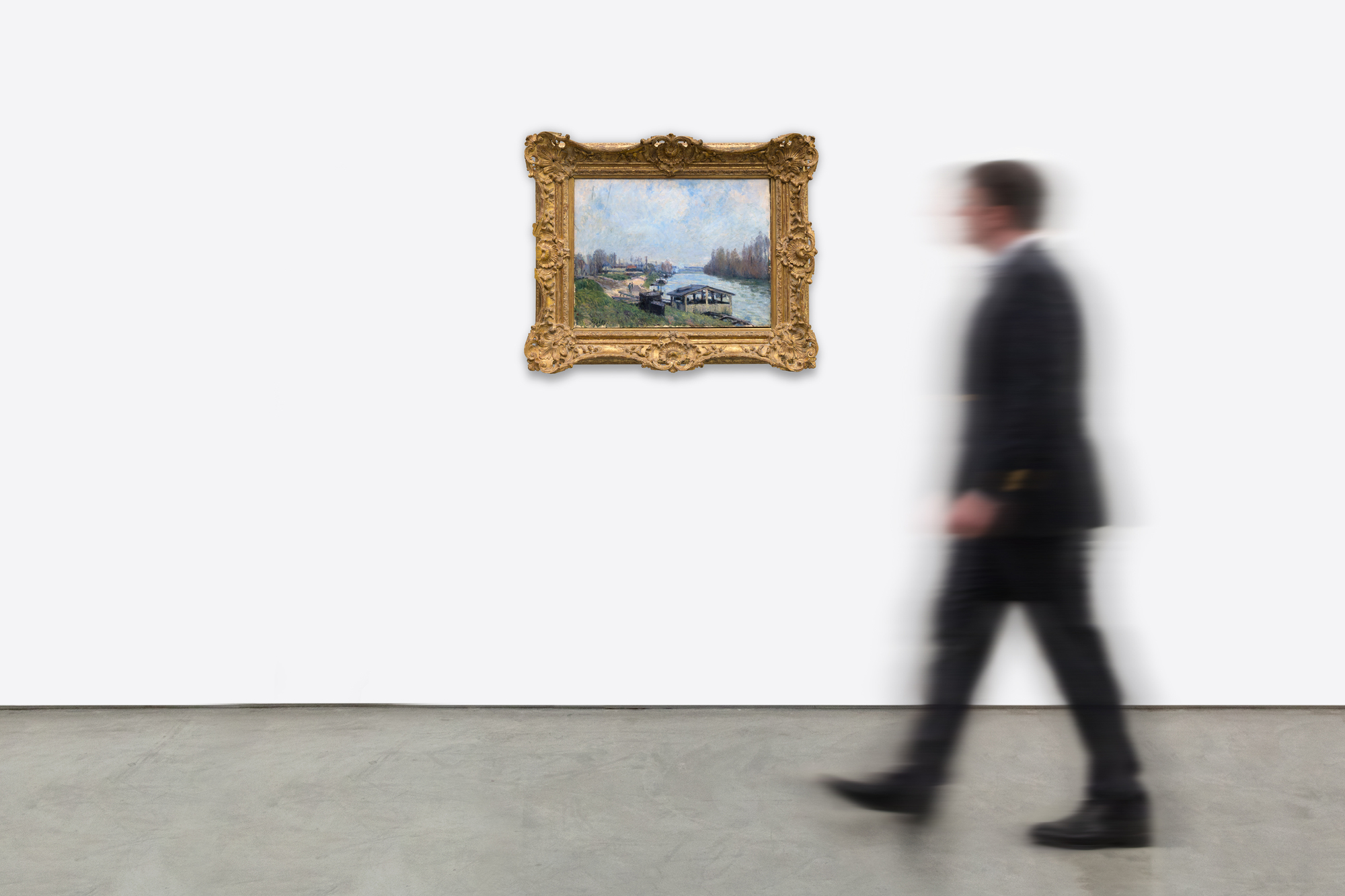
<div>Alfred Sisley’s <em>Le Lavoir de Billancourt</em> (1879) is a superb example of the artist’s lifelong devotion to painting directly before nature, and to the quiet drama of landscape in flux. Often described as the “purest” plein air painter of the Impressionist circle, Sisley maintained an almost exclusive relationship with landscape, attending to the subtlest changes of season, weather, and time of day. His river scenes in particular have long been compared to Monet’s for their sensitivity to water—its shifting reflections, softened edges, and the way light dissolves form into atmosphere. </div><br><br><div> </div><br><br><div>Painted along the Seine at Billancourt—an industrial town west of Paris—this work belongs to the sequence of views Sisley produced after the upheavals of 1871, when he moved his family first to Louveciennes and later to nearby Marly-le-Roi. The Seine valley offered him an ever-renewing motif: looping river bends, villages threaded along the banks, and a landscape marked by both history and modern life. Here, the floating washing house (a lavoir) sits low on the water, a practical structure where locals could wash clothes directly in the river for a small fee. Sisley transforms this everyday subject into an evocation of lived place, where human activity is integrated seamlessly into the broader rhythms of sky and current. </div><br><br><div> </div><br><br><div>The 1870s are widely recognized as Sisley’s “golden period”—when his work speaks in a distinctly personal voice rather than under the overt influence of Corot, Courbet, or even early Monet. After ceasing to exhibit at the Salon after 1877, his compositions grew more complex and less dependent on traditional recession and linear perspective, shifting instead toward interlocking patterns and the expressive energy of his brushwork. In<em> Le Lavoir de Billancourt</em>, layers of pigment are built up in quick, multidirectional strokes, creating a richly textured surface saturated with color and air. This heightened spontaneity aligns with contemporary praise for Sisley’s ability to seize passing moments—clouds, breeze, and trembling foliage—so that space and light feel inseparable, and the scene remains vibrantly in motion. The painting is recorded in the François Dault<em> Alfred Sisley: catalogue raisonné de l'oeuvre peint</em> (1959) as no. 315. </div> <div>Alfred Sisley’s <em>Le Lavoir de Billancourt</em> (1879) is a superb example of the artist’s lifelong devotion to painting directly before nature, and to the quiet drama of landscape in flux. Often described as the “purest” plein air painter of the Impressionist circle, Sisley maintained an almost exclusive relationship with landscape, attending to the subtlest changes of season, weather, and time of day. His river scenes in particular have long been compared to Monet’s for their sensitivity to water—its shifting reflections, softened edges, and the way light dissolves form into atmosphere. </div><br><br><div> </div><br><br><div>Painted along the Seine at Billancourt—an industrial town west of Paris—this work belongs to the sequence of views Sisley produced after the upheavals of 1871, when he moved his family first to Louveciennes and later to nearby Marly-le-Roi. The Seine valley offered him an ever-renewing motif: looping river bends, villages threaded along the banks, and a landscape marked by both history and modern life. Here, the floating washing house (a lavoir) sits low on the water, a practical structure where locals could wash clothes directly in the river for a small fee. Sisley transforms this everyday subject into an evocation of lived place, where human activity is integrated seamlessly into the broader rhythms of sky and current. </div><br><br><div> </div><br><br><div>The 1870s are widely recognized as Sisley’s “golden period”—when his work speaks in a distinctly personal voice rather than under the overt influence of Corot, Courbet, or even early Monet. After ceasing to exhibit at the Salon after 1877, his compositions grew more complex and less dependent on traditional recession and linear perspective, shifting instead toward interlocking patterns and the expressive energy of his brushwork. In<em> Le Lavoir de Billancourt</em>, layers of pigment are built up in quick, multidirectional strokes, creating a richly textured surface saturated with color and air. This heightened spontaneity aligns with contemporary praise for Sisley’s ability to seize passing moments—clouds, breeze, and trembling foliage—so that space and light feel inseparable, and the scene remains vibrantly in motion. The painting is recorded in the François Dault<em> Alfred Sisley: catalogue raisonné de l'oeuvre peint</em> (1959) as no. 315. </div> <div>Alfred Sisley’s <em>Le Lavoir de Billancourt</em> (1879) is a superb example of the artist’s lifelong devotion to painting directly before nature, and to the quiet drama of landscape in flux. Often described as the “purest” plein air painter of the Impressionist circle, Sisley maintained an almost exclusive relationship with landscape, attending to the subtlest changes of season, weather, and time of day. His river scenes in particular have long been compared to Monet’s for their sensitivity to water—its shifting reflections, softened edges, and the way light dissolves form into atmosphere. </div><br><br><div> </div><br><br><div>Painted along the Seine at Billancourt—an industrial town west of Paris—this work belongs to the sequence of views Sisley produced after the upheavals of 1871, when he moved his family first to Louveciennes and later to nearby Marly-le-Roi. The Seine valley offered him an ever-renewing motif: looping river bends, villages threaded along the banks, and a landscape marked by both history and modern life. Here, the floating washing house (a lavoir) sits low on the water, a practical structure where locals could wash clothes directly in the river for a small fee. Sisley transforms this everyday subject into an evocation of lived place, where human activity is integrated seamlessly into the broader rhythms of sky and current. </div><br><br><div> </div><br><br><div>The 1870s are widely recognized as Sisley’s “golden period”—when his work speaks in a distinctly personal voice rather than under the overt influence of Corot, Courbet, or even early Monet. After ceasing to exhibit at the Salon after 1877, his compositions grew more complex and less dependent on traditional recession and linear perspective, shifting instead toward interlocking patterns and the expressive energy of his brushwork. In<em> Le Lavoir de Billancourt</em>, layers of pigment are built up in quick, multidirectional strokes, creating a richly textured surface saturated with color and air. This heightened spontaneity aligns with contemporary praise for Sisley’s ability to seize passing moments—clouds, breeze, and trembling foliage—so that space and light feel inseparable, and the scene remains vibrantly in motion. The painting is recorded in the François Dault<em> Alfred Sisley: catalogue raisonné de l'oeuvre peint</em> (1959) as no. 315. </div> <div>Alfred Sisley’s <em>Le Lavoir de Billancourt</em> (1879) is a superb example of the artist’s lifelong devotion to painting directly before nature, and to the quiet drama of landscape in flux. Often described as the “purest” plein air painter of the Impressionist circle, Sisley maintained an almost exclusive relationship with landscape, attending to the subtlest changes of season, weather, and time of day. His river scenes in particular have long been compared to Monet’s for their sensitivity to water—its shifting reflections, softened edges, and the way light dissolves form into atmosphere. </div><br><br><div> </div><br><br><div>Painted along the Seine at Billancourt—an industrial town west of Paris—this work belongs to the sequence of views Sisley produced after the upheavals of 1871, when he moved his family first to Louveciennes and later to nearby Marly-le-Roi. The Seine valley offered him an ever-renewing motif: looping river bends, villages threaded along the banks, and a landscape marked by both history and modern life. Here, the floating washing house (a lavoir) sits low on the water, a practical structure where locals could wash clothes directly in the river for a small fee. Sisley transforms this everyday subject into an evocation of lived place, where human activity is integrated seamlessly into the broader rhythms of sky and current. </div><br><br><div> </div><br><br><div>The 1870s are widely recognized as Sisley’s “golden period”—when his work speaks in a distinctly personal voice rather than under the overt influence of Corot, Courbet, or even early Monet. After ceasing to exhibit at the Salon after 1877, his compositions grew more complex and less dependent on traditional recession and linear perspective, shifting instead toward interlocking patterns and the expressive energy of his brushwork. In<em> Le Lavoir de Billancourt</em>, layers of pigment are built up in quick, multidirectional strokes, creating a richly textured surface saturated with color and air. This heightened spontaneity aligns with contemporary praise for Sisley’s ability to seize passing moments—clouds, breeze, and trembling foliage—so that space and light feel inseparable, and the scene remains vibrantly in motion. The painting is recorded in the François Dault<em> Alfred Sisley: catalogue raisonné de l'oeuvre peint</em> (1959) as no. 315. </div> <div>Alfred Sisley’s <em>Le Lavoir de Billancourt</em> (1879) is a superb example of the artist’s lifelong devotion to painting directly before nature, and to the quiet drama of landscape in flux. Often described as the “purest” plein air painter of the Impressionist circle, Sisley maintained an almost exclusive relationship with landscape, attending to the subtlest changes of season, weather, and time of day. His river scenes in particular have long been compared to Monet’s for their sensitivity to water—its shifting reflections, softened edges, and the way light dissolves form into atmosphere. </div><br><br><div> </div><br><br><div>Painted along the Seine at Billancourt—an industrial town west of Paris—this work belongs to the sequence of views Sisley produced after the upheavals of 1871, when he moved his family first to Louveciennes and later to nearby Marly-le-Roi. The Seine valley offered him an ever-renewing motif: looping river bends, villages threaded along the banks, and a landscape marked by both history and modern life. Here, the floating washing house (a lavoir) sits low on the water, a practical structure where locals could wash clothes directly in the river for a small fee. Sisley transforms this everyday subject into an evocation of lived place, where human activity is integrated seamlessly into the broader rhythms of sky and current. </div><br><br><div> </div><br><br><div>The 1870s are widely recognized as Sisley’s “golden period”—when his work speaks in a distinctly personal voice rather than under the overt influence of Corot, Courbet, or even early Monet. After ceasing to exhibit at the Salon after 1877, his compositions grew more complex and less dependent on traditional recession and linear perspective, shifting instead toward interlocking patterns and the expressive energy of his brushwork. In<em> Le Lavoir de Billancourt</em>, layers of pigment are built up in quick, multidirectional strokes, creating a richly textured surface saturated with color and air. This heightened spontaneity aligns with contemporary praise for Sisley’s ability to seize passing moments—clouds, breeze, and trembling foliage—so that space and light feel inseparable, and the scene remains vibrantly in motion. The painting is recorded in the François Dault<em> Alfred Sisley: catalogue raisonné de l'oeuvre peint</em> (1959) as no. 315. </div> <div>Alfred Sisley’s <em>Le Lavoir de Billancourt</em> (1879) is a superb example of the artist’s lifelong devotion to painting directly before nature, and to the quiet drama of landscape in flux. Often described as the “purest” plein air painter of the Impressionist circle, Sisley maintained an almost exclusive relationship with landscape, attending to the subtlest changes of season, weather, and time of day. His river scenes in particular have long been compared to Monet’s for their sensitivity to water—its shifting reflections, softened edges, and the way light dissolves form into atmosphere. </div><br><br><div> </div><br><br><div>Painted along the Seine at Billancourt—an industrial town west of Paris—this work belongs to the sequence of views Sisley produced after the upheavals of 1871, when he moved his family first to Louveciennes and later to nearby Marly-le-Roi. The Seine valley offered him an ever-renewing motif: looping river bends, villages threaded along the banks, and a landscape marked by both history and modern life. Here, the floating washing house (a lavoir) sits low on the water, a practical structure where locals could wash clothes directly in the river for a small fee. Sisley transforms this everyday subject into an evocation of lived place, where human activity is integrated seamlessly into the broader rhythms of sky and current. </div><br><br><div> </div><br><br><div>The 1870s are widely recognized as Sisley’s “golden period”—when his work speaks in a distinctly personal voice rather than under the overt influence of Corot, Courbet, or even early Monet. After ceasing to exhibit at the Salon after 1877, his compositions grew more complex and less dependent on traditional recession and linear perspective, shifting instead toward interlocking patterns and the expressive energy of his brushwork. In<em> Le Lavoir de Billancourt</em>, layers of pigment are built up in quick, multidirectional strokes, creating a richly textured surface saturated with color and air. This heightened spontaneity aligns with contemporary praise for Sisley’s ability to seize passing moments—clouds, breeze, and trembling foliage—so that space and light feel inseparable, and the scene remains vibrantly in motion. The painting is recorded in the François Dault<em> Alfred Sisley: catalogue raisonné de l'oeuvre peint</em> (1959) as no. 315. </div> <div>Alfred Sisley’s <em>Le Lavoir de Billancourt</em> (1879) is a superb example of the artist’s lifelong devotion to painting directly before nature, and to the quiet drama of landscape in flux. Often described as the “purest” plein air painter of the Impressionist circle, Sisley maintained an almost exclusive relationship with landscape, attending to the subtlest changes of season, weather, and time of day. His river scenes in particular have long been compared to Monet’s for their sensitivity to water—its shifting reflections, softened edges, and the way light dissolves form into atmosphere. </div><br><br><div> </div><br><br><div>Painted along the Seine at Billancourt—an industrial town west of Paris—this work belongs to the sequence of views Sisley produced after the upheavals of 1871, when he moved his family first to Louveciennes and later to nearby Marly-le-Roi. The Seine valley offered him an ever-renewing motif: looping river bends, villages threaded along the banks, and a landscape marked by both history and modern life. Here, the floating washing house (a lavoir) sits low on the water, a practical structure where locals could wash clothes directly in the river for a small fee. Sisley transforms this everyday subject into an evocation of lived place, where human activity is integrated seamlessly into the broader rhythms of sky and current. </div><br><br><div> </div><br><br><div>The 1870s are widely recognized as Sisley’s “golden period”—when his work speaks in a distinctly personal voice rather than under the overt influence of Corot, Courbet, or even early Monet. After ceasing to exhibit at the Salon after 1877, his compositions grew more complex and less dependent on traditional recession and linear perspective, shifting instead toward interlocking patterns and the expressive energy of his brushwork. In<em> Le Lavoir de Billancourt</em>, layers of pigment are built up in quick, multidirectional strokes, creating a richly textured surface saturated with color and air. This heightened spontaneity aligns with contemporary praise for Sisley’s ability to seize passing moments—clouds, breeze, and trembling foliage—so that space and light feel inseparable, and the scene remains vibrantly in motion. The painting is recorded in the François Dault<em> Alfred Sisley: catalogue raisonné de l'oeuvre peint</em> (1959) as no. 315. </div> <div>Alfred Sisley’s <em>Le Lavoir de Billancourt</em> (1879) is a superb example of the artist’s lifelong devotion to painting directly before nature, and to the quiet drama of landscape in flux. Often described as the “purest” plein air painter of the Impressionist circle, Sisley maintained an almost exclusive relationship with landscape, attending to the subtlest changes of season, weather, and time of day. His river scenes in particular have long been compared to Monet’s for their sensitivity to water—its shifting reflections, softened edges, and the way light dissolves form into atmosphere. </div><br><br><div> </div><br><br><div>Painted along the Seine at Billancourt—an industrial town west of Paris—this work belongs to the sequence of views Sisley produced after the upheavals of 1871, when he moved his family first to Louveciennes and later to nearby Marly-le-Roi. The Seine valley offered him an ever-renewing motif: looping river bends, villages threaded along the banks, and a landscape marked by both history and modern life. Here, the floating washing house (a lavoir) sits low on the water, a practical structure where locals could wash clothes directly in the river for a small fee. Sisley transforms this everyday subject into an evocation of lived place, where human activity is integrated seamlessly into the broader rhythms of sky and current. </div><br><br><div> </div><br><br><div>The 1870s are widely recognized as Sisley’s “golden period”—when his work speaks in a distinctly personal voice rather than under the overt influence of Corot, Courbet, or even early Monet. After ceasing to exhibit at the Salon after 1877, his compositions grew more complex and less dependent on traditional recession and linear perspective, shifting instead toward interlocking patterns and the expressive energy of his brushwork. In<em> Le Lavoir de Billancourt</em>, layers of pigment are built up in quick, multidirectional strokes, creating a richly textured surface saturated with color and air. This heightened spontaneity aligns with contemporary praise for Sisley’s ability to seize passing moments—clouds, breeze, and trembling foliage—so that space and light feel inseparable, and the scene remains vibrantly in motion. The painting is recorded in the François Dault<em> Alfred Sisley: catalogue raisonné de l'oeuvre peint</em> (1959) as no. 315. </div> <div>Alfred Sisley’s <em>Le Lavoir de Billancourt</em> (1879) is a superb example of the artist’s lifelong devotion to painting directly before nature, and to the quiet drama of landscape in flux. Often described as the “purest” plein air painter of the Impressionist circle, Sisley maintained an almost exclusive relationship with landscape, attending to the subtlest changes of season, weather, and time of day. His river scenes in particular have long been compared to Monet’s for their sensitivity to water—its shifting reflections, softened edges, and the way light dissolves form into atmosphere. </div><br><br><div> </div><br><br><div>Painted along the Seine at Billancourt—an industrial town west of Paris—this work belongs to the sequence of views Sisley produced after the upheavals of 1871, when he moved his family first to Louveciennes and later to nearby Marly-le-Roi. The Seine valley offered him an ever-renewing motif: looping river bends, villages threaded along the banks, and a landscape marked by both history and modern life. Here, the floating washing house (a lavoir) sits low on the water, a practical structure where locals could wash clothes directly in the river for a small fee. Sisley transforms this everyday subject into an evocation of lived place, where human activity is integrated seamlessly into the broader rhythms of sky and current. </div><br><br><div> </div><br><br><div>The 1870s are widely recognized as Sisley’s “golden period”—when his work speaks in a distinctly personal voice rather than under the overt influence of Corot, Courbet, or even early Monet. After ceasing to exhibit at the Salon after 1877, his compositions grew more complex and less dependent on traditional recession and linear perspective, shifting instead toward interlocking patterns and the expressive energy of his brushwork. In<em> Le Lavoir de Billancourt</em>, layers of pigment are built up in quick, multidirectional strokes, creating a richly textured surface saturated with color and air. This heightened spontaneity aligns with contemporary praise for Sisley’s ability to seize passing moments—clouds, breeze, and trembling foliage—so that space and light feel inseparable, and the scene remains vibrantly in motion. The painting is recorded in the François Dault<em> Alfred Sisley: catalogue raisonné de l'oeuvre peint</em> (1959) as no. 315. </div> <div>Alfred Sisley’s <em>Le Lavoir de Billancourt</em> (1879) is a superb example of the artist’s lifelong devotion to painting directly before nature, and to the quiet drama of landscape in flux. Often described as the “purest” plein air painter of the Impressionist circle, Sisley maintained an almost exclusive relationship with landscape, attending to the subtlest changes of season, weather, and time of day. His river scenes in particular have long been compared to Monet’s for their sensitivity to water—its shifting reflections, softened edges, and the way light dissolves form into atmosphere. </div><br><br><div> </div><br><br><div>Painted along the Seine at Billancourt—an industrial town west of Paris—this work belongs to the sequence of views Sisley produced after the upheavals of 1871, when he moved his family first to Louveciennes and later to nearby Marly-le-Roi. The Seine valley offered him an ever-renewing motif: looping river bends, villages threaded along the banks, and a landscape marked by both history and modern life. Here, the floating washing house (a lavoir) sits low on the water, a practical structure where locals could wash clothes directly in the river for a small fee. Sisley transforms this everyday subject into an evocation of lived place, where human activity is integrated seamlessly into the broader rhythms of sky and current. </div><br><br><div> </div><br><br><div>The 1870s are widely recognized as Sisley’s “golden period”—when his work speaks in a distinctly personal voice rather than under the overt influence of Corot, Courbet, or even early Monet. After ceasing to exhibit at the Salon after 1877, his compositions grew more complex and less dependent on traditional recession and linear perspective, shifting instead toward interlocking patterns and the expressive energy of his brushwork. In<em> Le Lavoir de Billancourt</em>, layers of pigment are built up in quick, multidirectional strokes, creating a richly textured surface saturated with color and air. This heightened spontaneity aligns with contemporary praise for Sisley’s ability to seize passing moments—clouds, breeze, and trembling foliage—so that space and light feel inseparable, and the scene remains vibrantly in motion. The painting is recorded in the François Dault<em> Alfred Sisley: catalogue raisonné de l'oeuvre peint</em> (1959) as no. 315. </div>
El lavadero de Billancourt187950,8 x 65,09 cm(50,8 x 65,09 cm) Óleo sobre lienzo
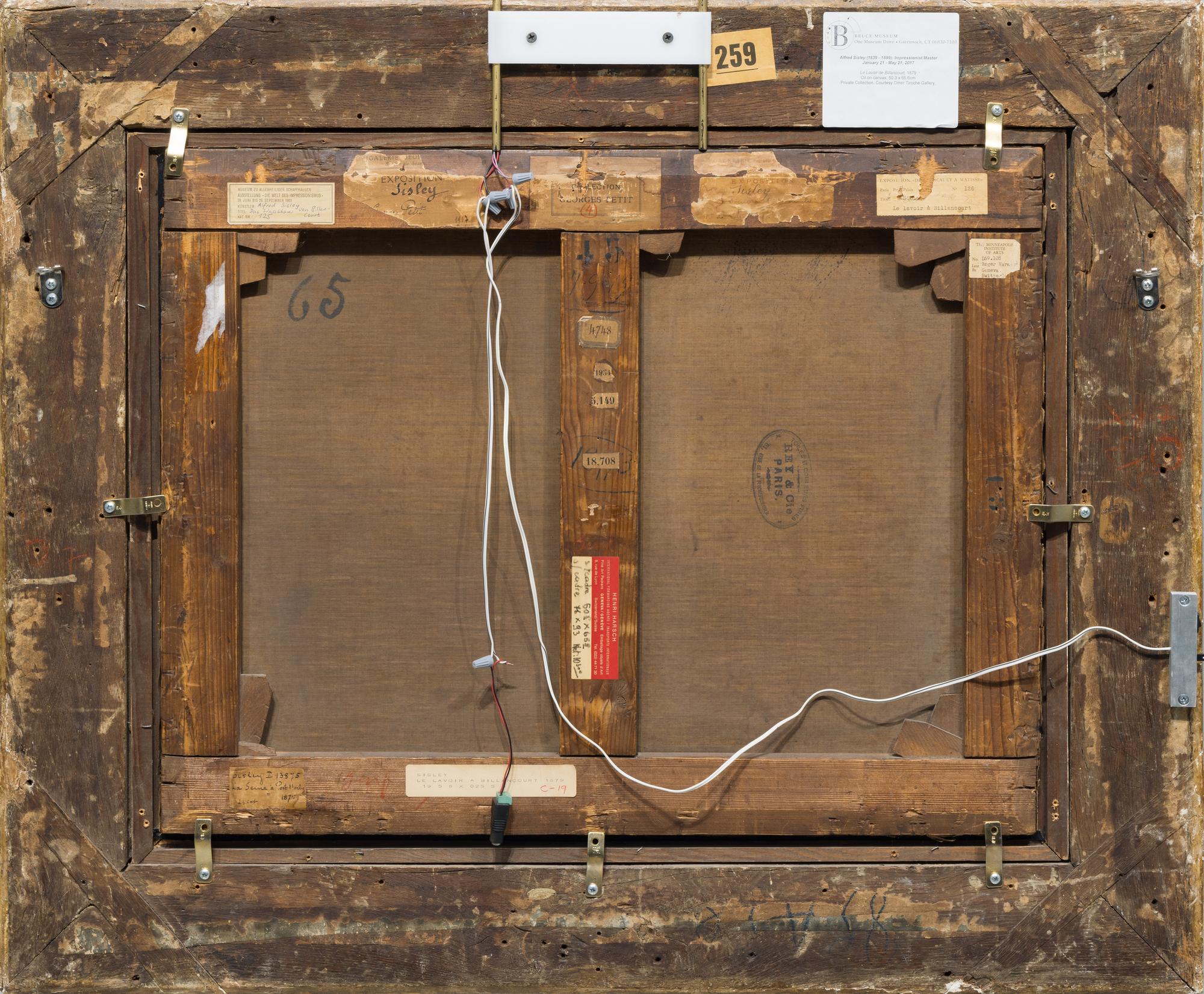
Procedencia
Henri Poidatz, París
Galerie Georges Petit, París, 27 de abril de 1900, lote 79
Georges Petit, adquirido en la subasta anterior
Subasta: Galerie Georges Petit, París, 4-5 de marzo de 1921, lote 113
Comte de Lanscay, París
Hôtel Drouot, París, 6 de abril de 1922, lote 16
Eugène Blot, París, adquirido en la subasta anterior
Dr. Arthur Charpentier, París
Colección privada, Suiza, adquirido hacia 1950
Colección privada, por descendencia de la anterior
Colección privada, Europa
Sotheby's Nueva York, 6 de mayo de 2015, lote
...Más....250
Colección privada, Londres, adquirida en la subasta mencionada anteriormente.
Exposición
París, Galerie Georges Petit, Alfred Sisley, 1917, n.º 83
París, Durand-Ruel, Cuadros de Sisley, 1930, n.º 23.
París, Galerie d'Art Braun, Sisley, 1933, n.º 13
Berna, Museo de Arte, Alfred Sisley, 1958, n.º 38
París, Musée du Petit-Palais, De Gericault à Matisse, Chefs-d'oeuvre des collections Suisse, 1959, n.º 126.
Schaffhausen, Museo Zu Allerheiligen, Die Welt des Impressionnismus, 1963, n.º 125.
Minneapolis, Instituto de Arte de Minneapolis, El pasado redescubierto: pintura francesa 1800-1900, 1969.
 
Literatura
Maximilien Gauthier, «Hommage à Sisley», en L'Art vivant, 1933, n.º 170, p. 116 (ilustrado).
François Daulte, Alfred Sisley, Catálogo razonado de la obra pictórica, París, 1959, n.º 315 (ilustrado).
Jacques Lassaigne y Slyvie Gache-Patin, Sisley, París, 1982, p. 31 (ilustrado).
Mary Anne Stevens, ed., Alfred Sisley, Londres, 1992, p. 154.
Sylvie Brame y François Lorenceau, Alfred Sisley: Catalogue Critique des Peintures et des Pastels, París, 2021, p. 155, 488 (ilustrado).
...MENOS....
Le Lavoir de Billancourt (1879), de Alfred Sisley, es un magnífico ejemplo de la devoción que el artista sintió durante toda su vida por pintar directamente ante la naturaleza y por el tranquilo dramatismo del paisaje en constante cambio. A menudo descrito como el pintor al aire libre «más puro» del círculo impresionista, Sisley mantuvo una relación casi exclusiva con el paisaje, atento a los cambios más sutiles de la estación, el clima y la hora del día. Sus escenas fluviales, en particular, se han comparado durante mucho tiempo con las de Monet por su sensibilidad hacia el agua: sus reflejos cambiantes, sus bordes suavizados y la forma en que la luz disuelve la forma en la atmósfera.


Pintada a orillas del Sena en Billancourt, una ciudad industrial al oeste de París, esta obra pertenece a la serie de vistas que Sisley produjo tras los disturbios de 1871, cuando trasladó a su familia primero a Louveciennes y más tarde a la cercana Marly-le-Roi. El valle del Sena le ofrecía un motivo siempre renovado: los meandros del río, los pueblos que se alineaban a lo largo de las orillas y un paisaje marcado tanto por la historia como por la vida moderna. Aquí, el lavadero flotante (un lavoir) se encuentra a ras del agua, una estructura práctica donde los lugareños podían lavar la ropa directamente en el río por una pequeña tarifa. Sisley transforma este tema cotidiano en una evocación del lugar vivido, donde la actividad humana se integra a la perfección en los ritmos más amplios del cielo y la corriente.


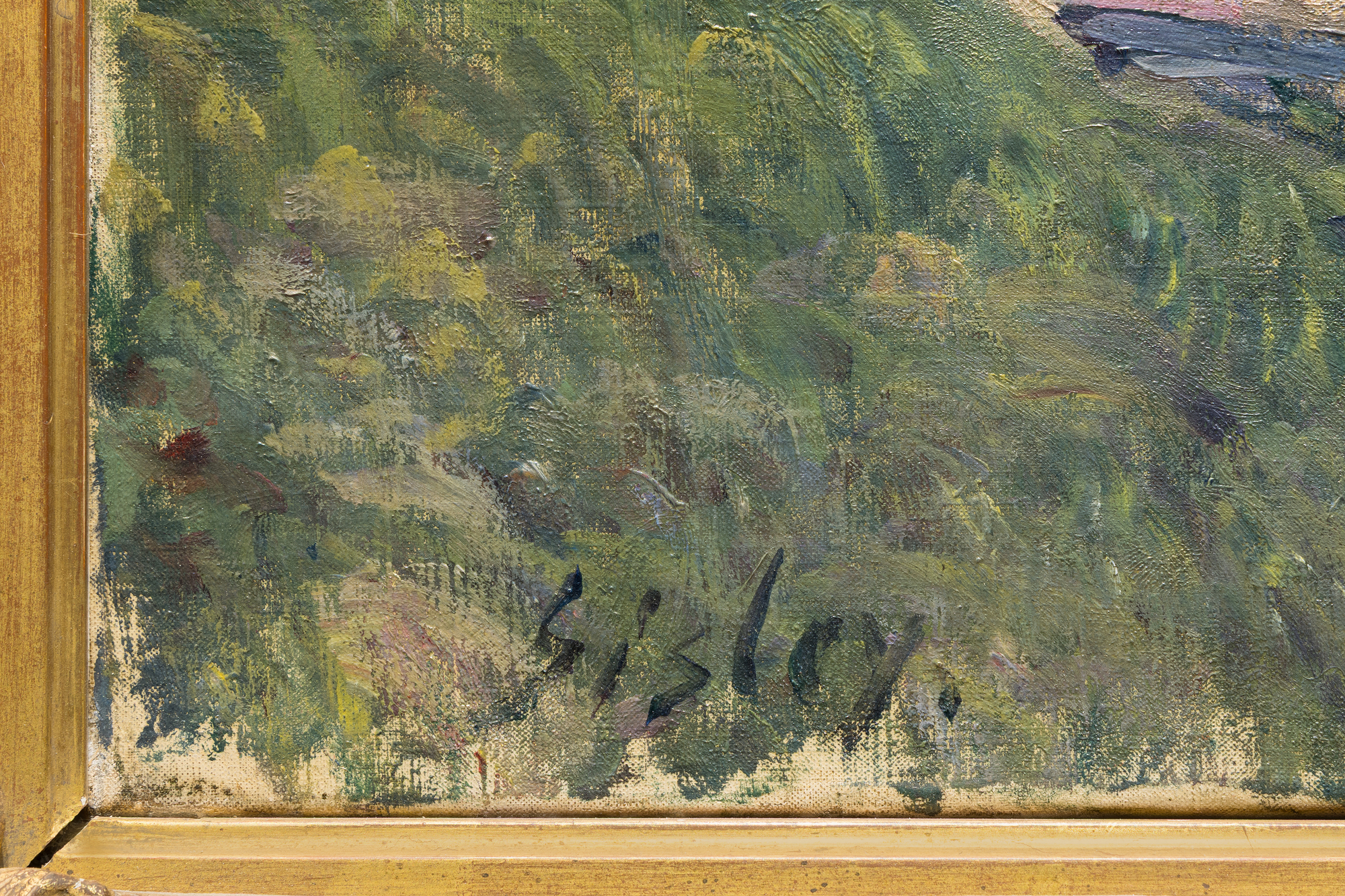
La década de 1870 es ampliamente reconocida como el «período dorado» de Sisley, cuando su obra habla con una voz claramente personal, en lugar de bajo la influencia manifiesta de Corot, Courbet o incluso del primer Monet. Tras dejar de exponer en el Salón después de 1877, sus composiciones se volvieron más complejas y menos dependientes de la perspectiva lineal y la recesión tradicionales, desplazándose en cambio hacia patrones entrelazados y la energía expresiva de su pincelada. En Le Lavoir de Billancourt, las capas de pigmento se acumulan en pinceladas rápidas y multidireccionales, creando una superficie ricamente texturizada, saturada de color y aire. Esta mayor espontaneidad concuerda con los elogios contemporáneos a la capacidad de Sisley para captar momentos fugaces —nubes, brisas y follaje tembloroso— de modo que el espacio y la luz parecen inseparables y la escena permanece vibrante en movimiento. La pintura figura en el catálogo François Dault Alfred Sisley: catalogue raisonné de l'oeuvre peint (1959) con el número 315.
Preguntar