OLGA DE AMARAL (née en 1932)

 
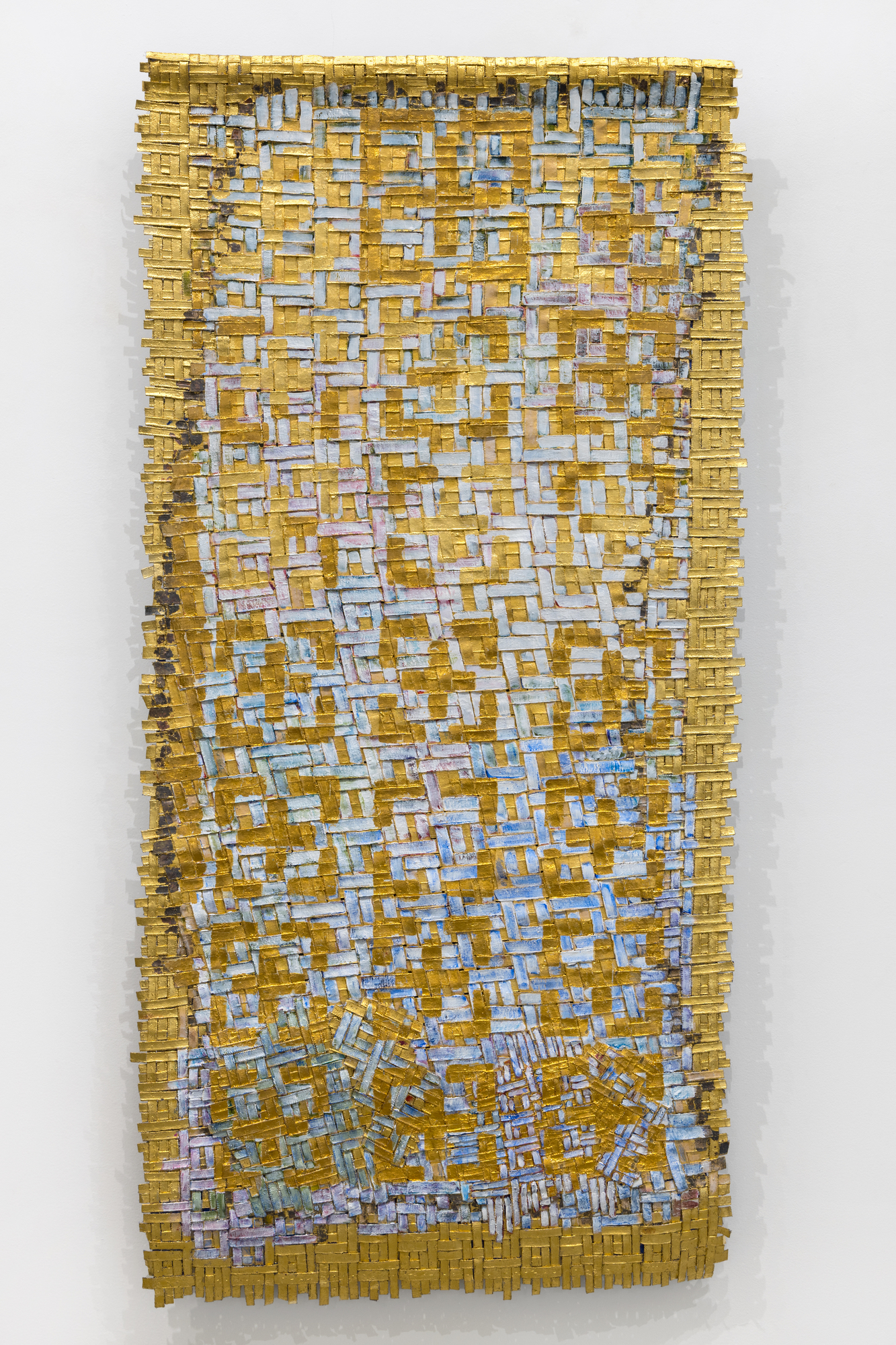
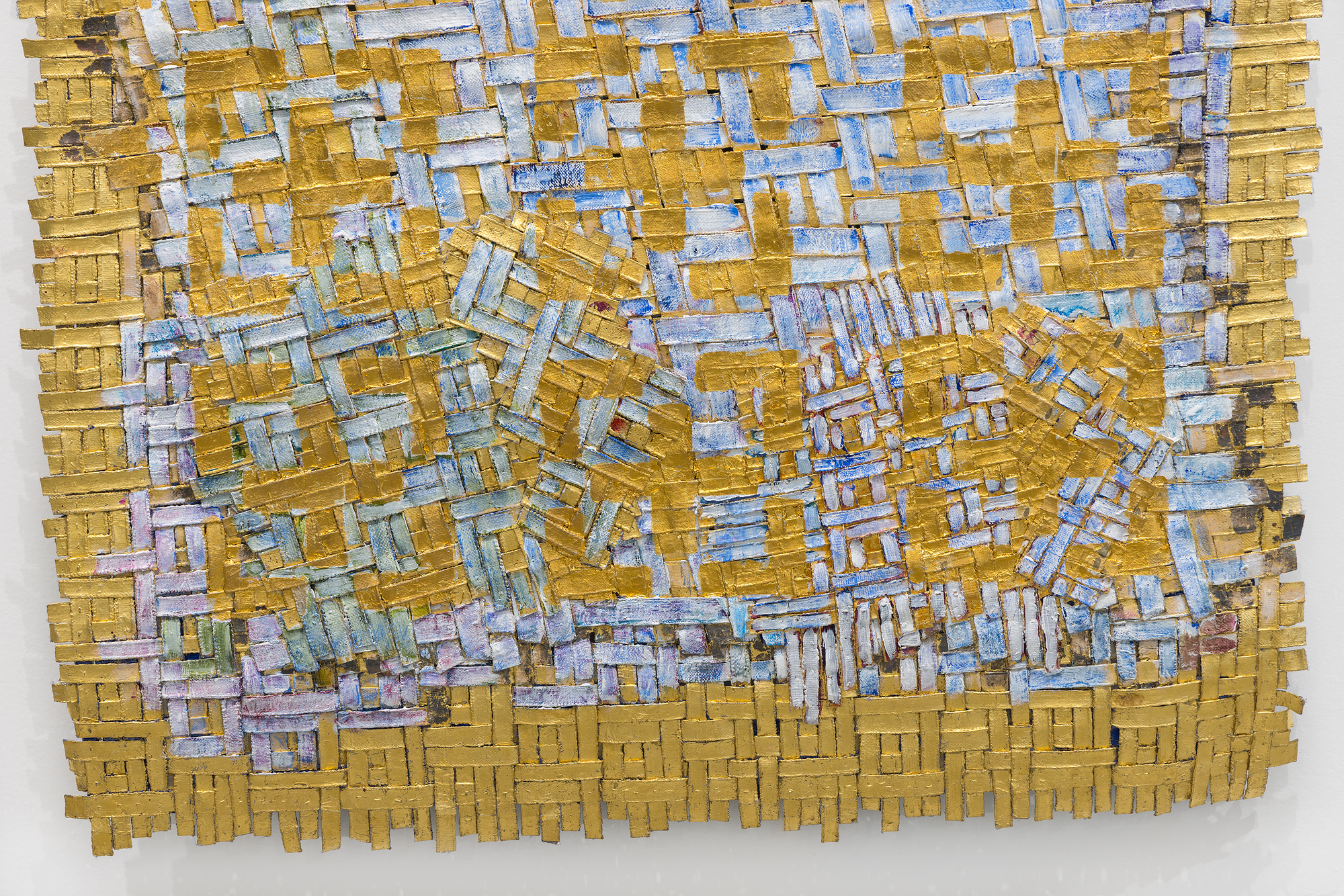
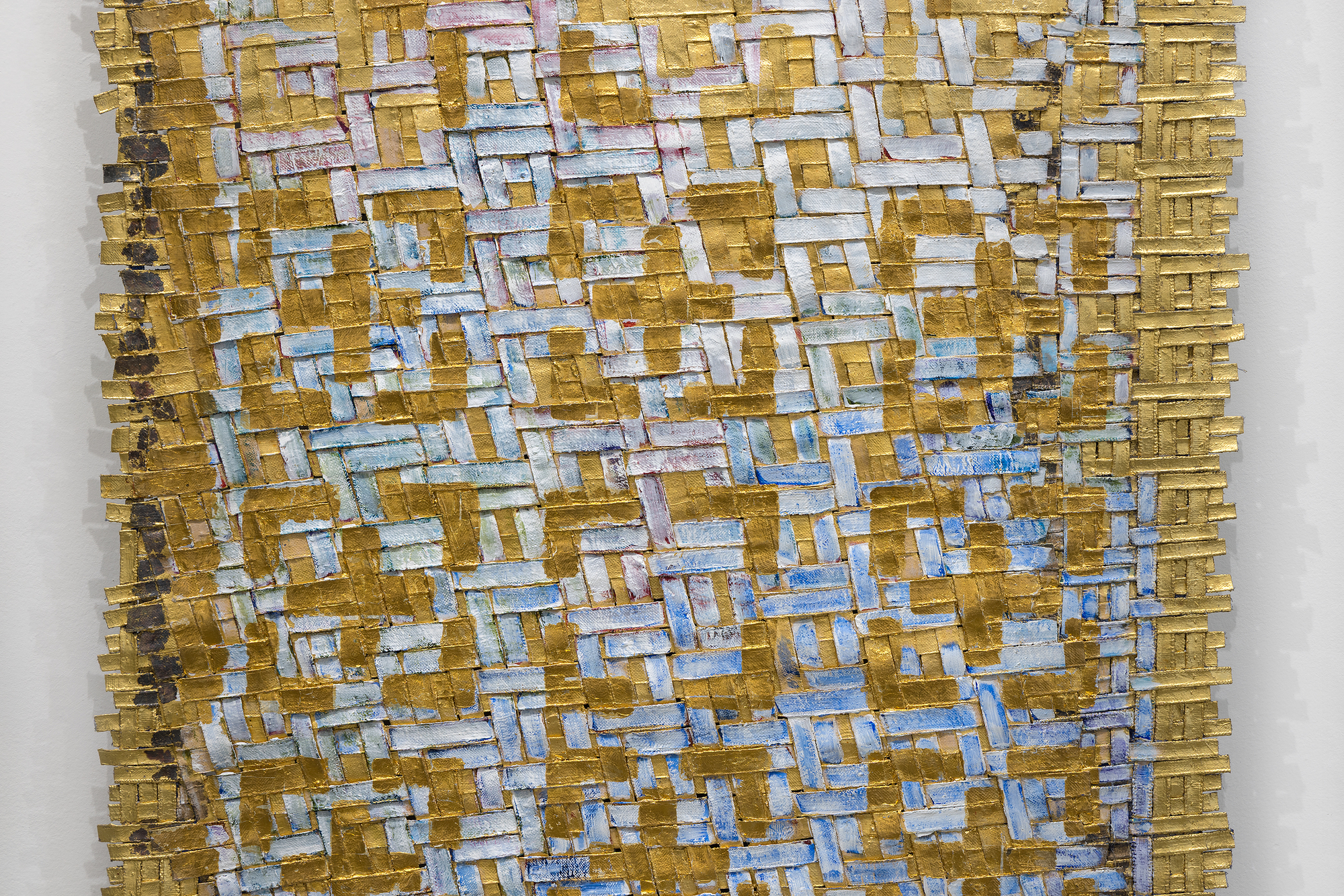
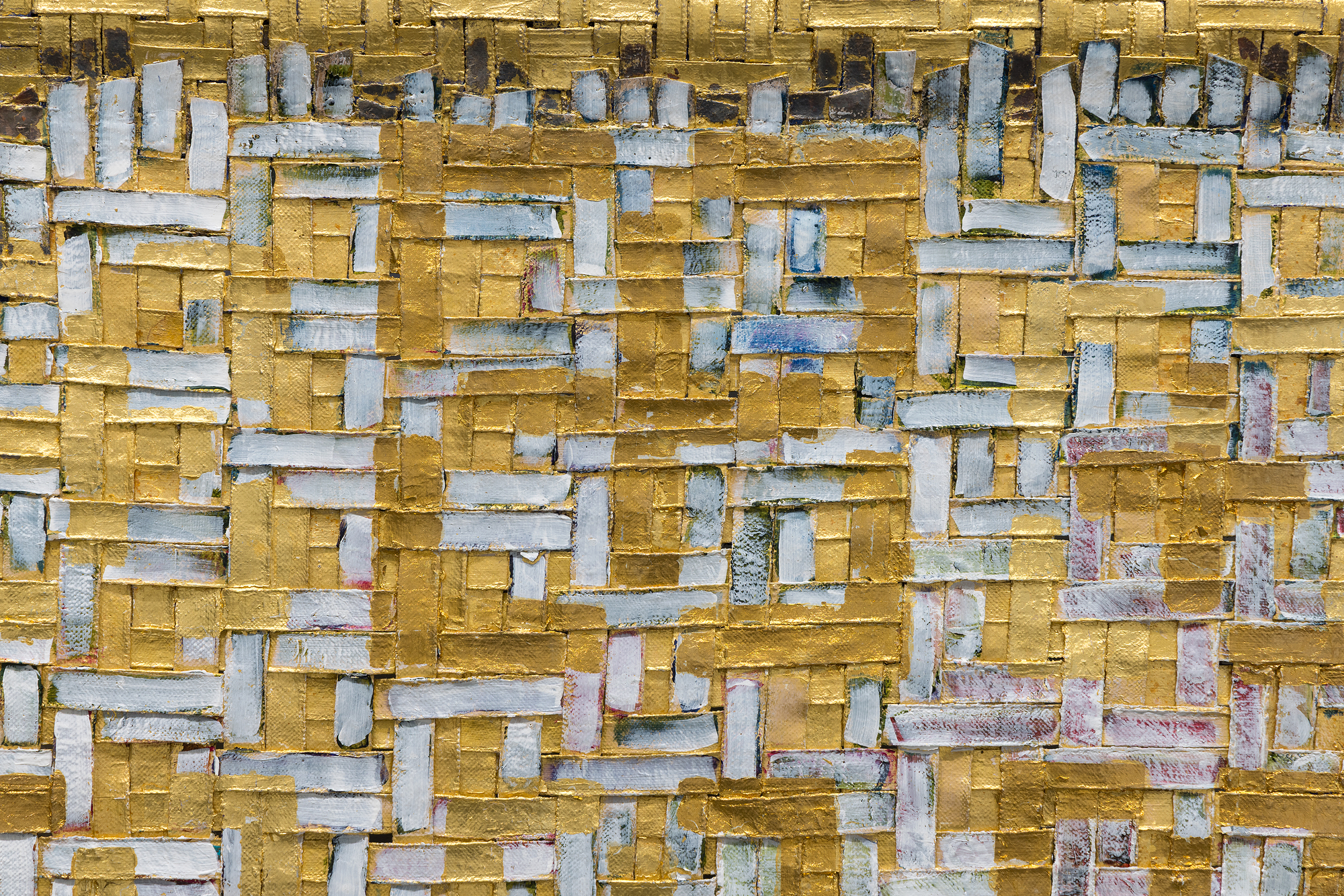
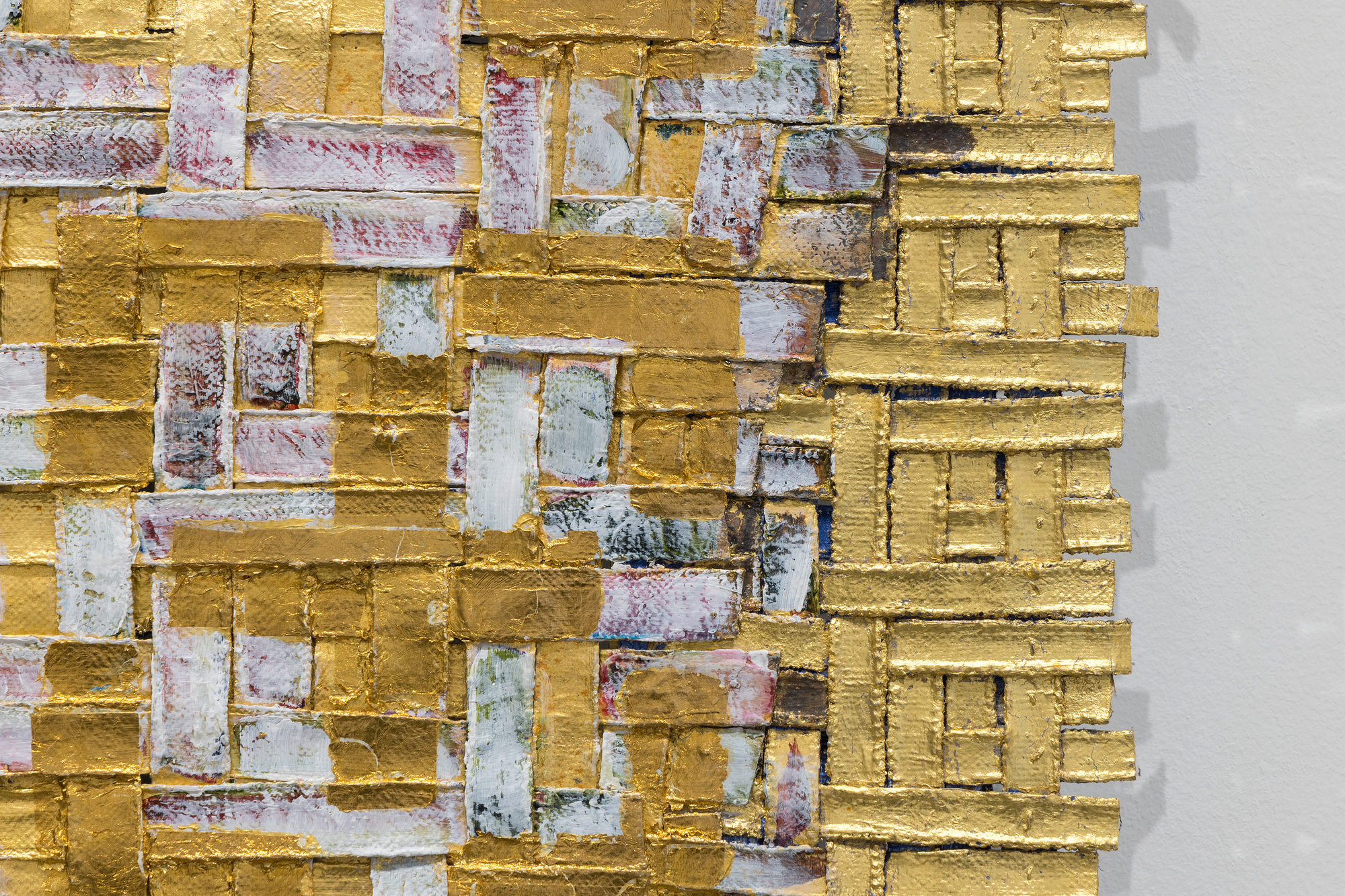
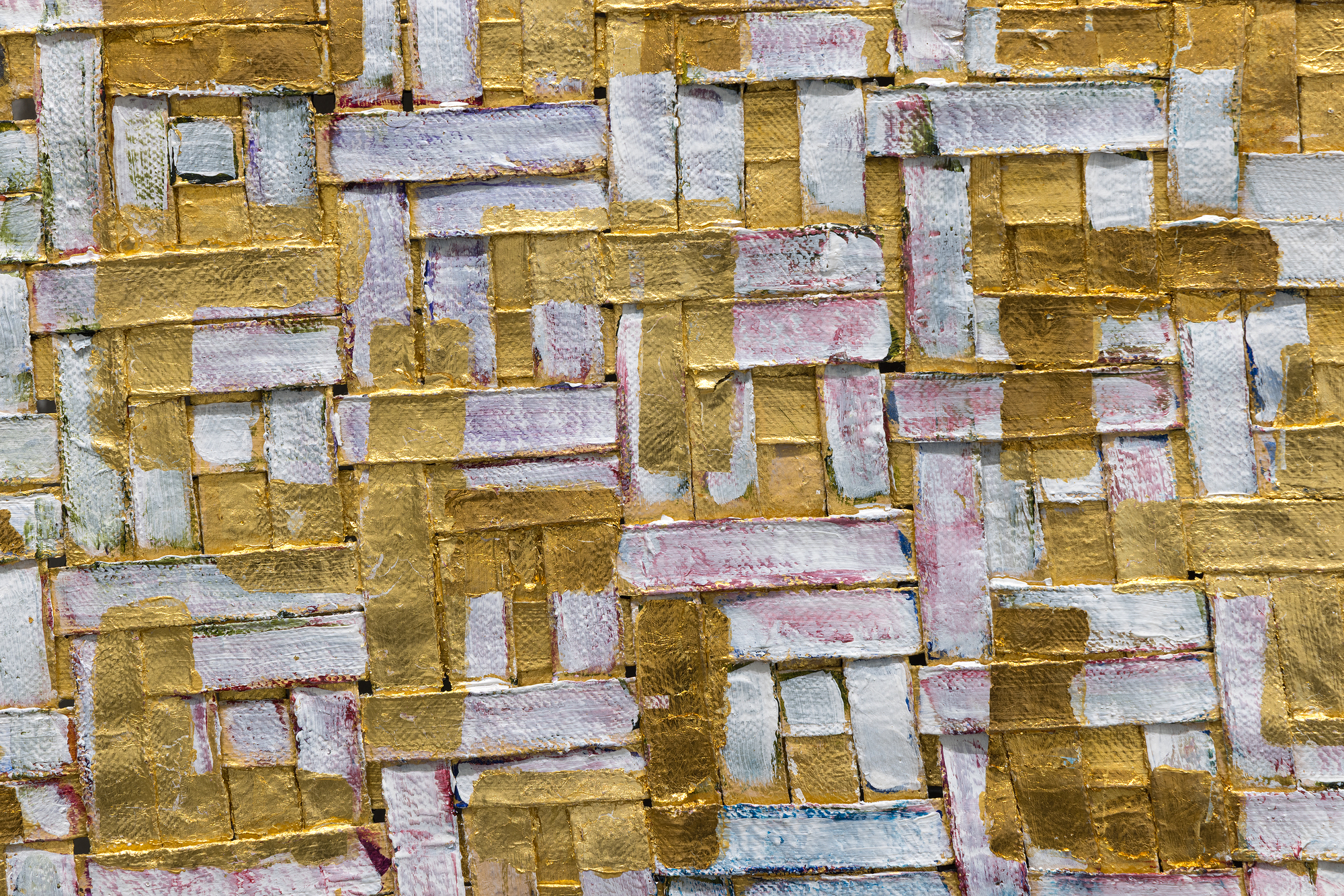
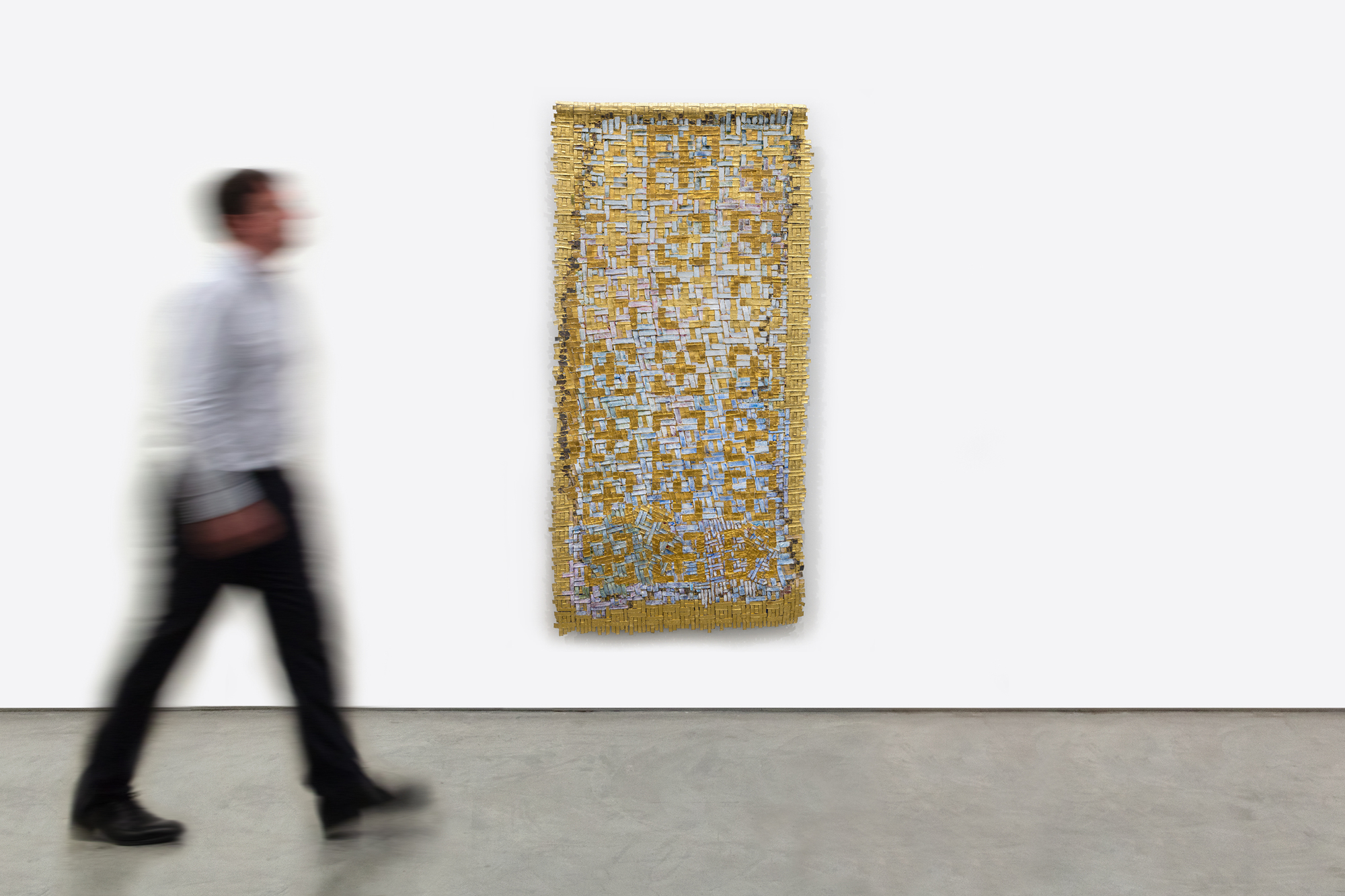
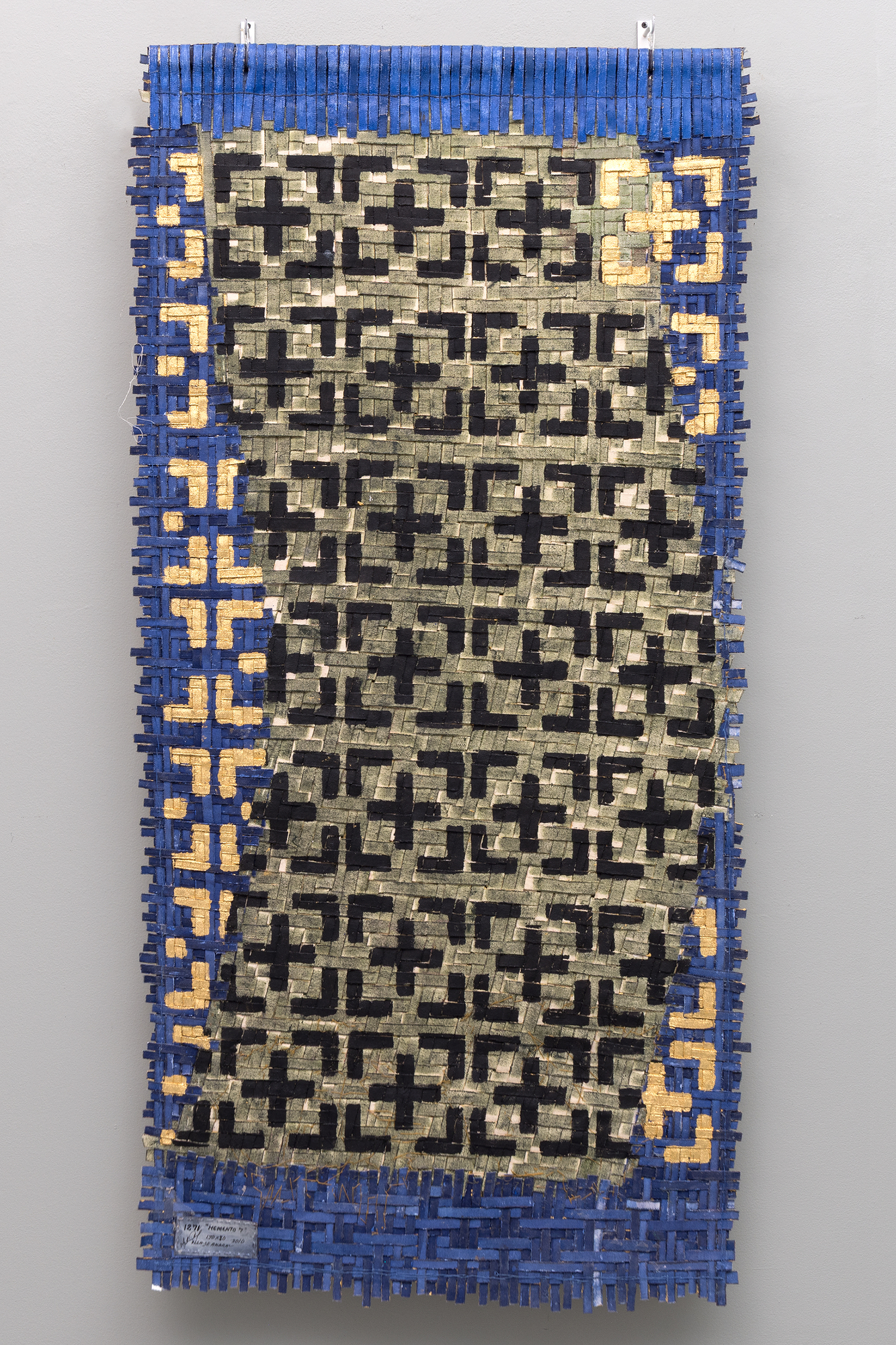
<div><font face=Lato size=3 color=black>Olga de Amaral’s <em>Memento 7</em> exemplifies the Colombian artist’s mastery in transforming textile into a medium of profound sculptural and symbolic resonance. Woven from natural fibers and coated with gesso, metallic leaf, and pigments, the work shimmers between material solidity and optical flux. Its surface glints with gold, refracting light in rhythmic intervals that shift as the viewer moves, evoking both the permanence of memory and its fragility.</font></div><br><br><div> </div><br><br><div><font face=Lato size=3 color=black>The <em>Memento</em> series, from which this piece belongs, explores memory as a layered, luminous presence. By embedding gold leaf within the weave, de Amaral connects her practice to pre-Columbian traditions in which gold was not a mere material but a carrier of spiritual and cultural meaning. In <em>Memento 7</em>, geometric patterning and a richly textured surface create a sense of sacred tapestry, collapsing distinctions between painting, sculpture, and textile.</font></div><br><br><div> </div><br><br><div><font face=Lato size=3 color=black>De Amaral’s work has been celebrated internationally for expanding the language of fiber art into realms of architecture and abstraction. <em>Memento 7</em> resonates with major institutional holdings of her work, including the Museum of Modern Art (New York), the Metropolitan Museum of Art, the Art Institute of Chicago, and the Musée d’Art Moderne de Paris. Within these collections, her gilded weavings stand as both objects of rare material beauty and meditations on history, place, and the metaphysics of light.</font></div><br><br><div> </div><br><br><div><font face=Lato size=3 color=black><em>Memento 7</em> thus embodies the artist’s unique synthesis of ancestral craft and modern abstraction, offering a powerful reflection on memory, time, and transformation.</font></div> <div><font face=Lato size=3 color=black>Olga de Amaral’s <em>Memento 7</em> exemplifies the Colombian artist’s mastery in transforming textile into a medium of profound sculptural and symbolic resonance. Woven from natural fibers and coated with gesso, metallic leaf, and pigments, the work shimmers between material solidity and optical flux. Its surface glints with gold, refracting light in rhythmic intervals that shift as the viewer moves, evoking both the permanence of memory and its fragility.</font></div><br><br><div> </div><br><br><div><font face=Lato size=3 color=black>The <em>Memento</em> series, from which this piece belongs, explores memory as a layered, luminous presence. By embedding gold leaf within the weave, de Amaral connects her practice to pre-Columbian traditions in which gold was not a mere material but a carrier of spiritual and cultural meaning. In <em>Memento 7</em>, geometric patterning and a richly textured surface create a sense of sacred tapestry, collapsing distinctions between painting, sculpture, and textile.</font></div><br><br><div> </div><br><br><div><font face=Lato size=3 color=black>De Amaral’s work has been celebrated internationally for expanding the language of fiber art into realms of architecture and abstraction. <em>Memento 7</em> resonates with major institutional holdings of her work, including the Museum of Modern Art (New York), the Metropolitan Museum of Art, the Art Institute of Chicago, and the Musée d’Art Moderne de Paris. Within these collections, her gilded weavings stand as both objects of rare material beauty and meditations on history, place, and the metaphysics of light.</font></div><br><br><div> </div><br><br><div><font face=Lato size=3 color=black><em>Memento 7</em> thus embodies the artist’s unique synthesis of ancestral craft and modern abstraction, offering a powerful reflection on memory, time, and transformation.</font></div> <div><font face=Lato size=3 color=black>Olga de Amaral’s <em>Memento 7</em> exemplifies the Colombian artist’s mastery in transforming textile into a medium of profound sculptural and symbolic resonance. Woven from natural fibers and coated with gesso, metallic leaf, and pigments, the work shimmers between material solidity and optical flux. Its surface glints with gold, refracting light in rhythmic intervals that shift as the viewer moves, evoking both the permanence of memory and its fragility.</font></div><br><br><div> </div><br><br><div><font face=Lato size=3 color=black>The <em>Memento</em> series, from which this piece belongs, explores memory as a layered, luminous presence. By embedding gold leaf within the weave, de Amaral connects her practice to pre-Columbian traditions in which gold was not a mere material but a carrier of spiritual and cultural meaning. In <em>Memento 7</em>, geometric patterning and a richly textured surface create a sense of sacred tapestry, collapsing distinctions between painting, sculpture, and textile.</font></div><br><br><div> </div><br><br><div><font face=Lato size=3 color=black>De Amaral’s work has been celebrated internationally for expanding the language of fiber art into realms of architecture and abstraction. <em>Memento 7</em> resonates with major institutional holdings of her work, including the Museum of Modern Art (New York), the Metropolitan Museum of Art, the Art Institute of Chicago, and the Musée d’Art Moderne de Paris. Within these collections, her gilded weavings stand as both objects of rare material beauty and meditations on history, place, and the metaphysics of light.</font></div><br><br><div> </div><br><br><div><font face=Lato size=3 color=black><em>Memento 7</em> thus embodies the artist’s unique synthesis of ancestral craft and modern abstraction, offering a powerful reflection on memory, time, and transformation.</font></div> <div><font face=Lato size=3 color=black>Olga de Amaral’s <em>Memento 7</em> exemplifies the Colombian artist’s mastery in transforming textile into a medium of profound sculptural and symbolic resonance. Woven from natural fibers and coated with gesso, metallic leaf, and pigments, the work shimmers between material solidity and optical flux. Its surface glints with gold, refracting light in rhythmic intervals that shift as the viewer moves, evoking both the permanence of memory and its fragility.</font></div><br><br><div> </div><br><br><div><font face=Lato size=3 color=black>The <em>Memento</em> series, from which this piece belongs, explores memory as a layered, luminous presence. By embedding gold leaf within the weave, de Amaral connects her practice to pre-Columbian traditions in which gold was not a mere material but a carrier of spiritual and cultural meaning. In <em>Memento 7</em>, geometric patterning and a richly textured surface create a sense of sacred tapestry, collapsing distinctions between painting, sculpture, and textile.</font></div><br><br><div> </div><br><br><div><font face=Lato size=3 color=black>De Amaral’s work has been celebrated internationally for expanding the language of fiber art into realms of architecture and abstraction. <em>Memento 7</em> resonates with major institutional holdings of her work, including the Museum of Modern Art (New York), the Metropolitan Museum of Art, the Art Institute of Chicago, and the Musée d’Art Moderne de Paris. Within these collections, her gilded weavings stand as both objects of rare material beauty and meditations on history, place, and the metaphysics of light.</font></div><br><br><div> </div><br><br><div><font face=Lato size=3 color=black><em>Memento 7</em> thus embodies the artist’s unique synthesis of ancestral craft and modern abstraction, offering a powerful reflection on memory, time, and transformation.</font></div> <div><font face=Lato size=3 color=black>Olga de Amaral’s <em>Memento 7</em> exemplifies the Colombian artist’s mastery in transforming textile into a medium of profound sculptural and symbolic resonance. Woven from natural fibers and coated with gesso, metallic leaf, and pigments, the work shimmers between material solidity and optical flux. Its surface glints with gold, refracting light in rhythmic intervals that shift as the viewer moves, evoking both the permanence of memory and its fragility.</font></div><br><br><div> </div><br><br><div><font face=Lato size=3 color=black>The <em>Memento</em> series, from which this piece belongs, explores memory as a layered, luminous presence. By embedding gold leaf within the weave, de Amaral connects her practice to pre-Columbian traditions in which gold was not a mere material but a carrier of spiritual and cultural meaning. In <em>Memento 7</em>, geometric patterning and a richly textured surface create a sense of sacred tapestry, collapsing distinctions between painting, sculpture, and textile.</font></div><br><br><div> </div><br><br><div><font face=Lato size=3 color=black>De Amaral’s work has been celebrated internationally for expanding the language of fiber art into realms of architecture and abstraction. <em>Memento 7</em> resonates with major institutional holdings of her work, including the Museum of Modern Art (New York), the Metropolitan Museum of Art, the Art Institute of Chicago, and the Musée d’Art Moderne de Paris. Within these collections, her gilded weavings stand as both objects of rare material beauty and meditations on history, place, and the metaphysics of light.</font></div><br><br><div> </div><br><br><div><font face=Lato size=3 color=black><em>Memento 7</em> thus embodies the artist’s unique synthesis of ancestral craft and modern abstraction, offering a powerful reflection on memory, time, and transformation.</font></div> <div><font face=Lato size=3 color=black>Olga de Amaral’s <em>Memento 7</em> exemplifies the Colombian artist’s mastery in transforming textile into a medium of profound sculptural and symbolic resonance. Woven from natural fibers and coated with gesso, metallic leaf, and pigments, the work shimmers between material solidity and optical flux. Its surface glints with gold, refracting light in rhythmic intervals that shift as the viewer moves, evoking both the permanence of memory and its fragility.</font></div><br><br><div> </div><br><br><div><font face=Lato size=3 color=black>The <em>Memento</em> series, from which this piece belongs, explores memory as a layered, luminous presence. By embedding gold leaf within the weave, de Amaral connects her practice to pre-Columbian traditions in which gold was not a mere material but a carrier of spiritual and cultural meaning. In <em>Memento 7</em>, geometric patterning and a richly textured surface create a sense of sacred tapestry, collapsing distinctions between painting, sculpture, and textile.</font></div><br><br><div> </div><br><br><div><font face=Lato size=3 color=black>De Amaral’s work has been celebrated internationally for expanding the language of fiber art into realms of architecture and abstraction. <em>Memento 7</em> resonates with major institutional holdings of her work, including the Museum of Modern Art (New York), the Metropolitan Museum of Art, the Art Institute of Chicago, and the Musée d’Art Moderne de Paris. Within these collections, her gilded weavings stand as both objects of rare material beauty and meditations on history, place, and the metaphysics of light.</font></div><br><br><div> </div><br><br><div><font face=Lato size=3 color=black><em>Memento 7</em> thus embodies the artist’s unique synthesis of ancestral craft and modern abstraction, offering a powerful reflection on memory, time, and transformation.</font></div> <div><font face=Lato size=3 color=black>Olga de Amaral’s <em>Memento 7</em> exemplifies the Colombian artist’s mastery in transforming textile into a medium of profound sculptural and symbolic resonance. Woven from natural fibers and coated with gesso, metallic leaf, and pigments, the work shimmers between material solidity and optical flux. Its surface glints with gold, refracting light in rhythmic intervals that shift as the viewer moves, evoking both the permanence of memory and its fragility.</font></div><br><br><div> </div><br><br><div><font face=Lato size=3 color=black>The <em>Memento</em> series, from which this piece belongs, explores memory as a layered, luminous presence. By embedding gold leaf within the weave, de Amaral connects her practice to pre-Columbian traditions in which gold was not a mere material but a carrier of spiritual and cultural meaning. In <em>Memento 7</em>, geometric patterning and a richly textured surface create a sense of sacred tapestry, collapsing distinctions between painting, sculpture, and textile.</font></div><br><br><div> </div><br><br><div><font face=Lato size=3 color=black>De Amaral’s work has been celebrated internationally for expanding the language of fiber art into realms of architecture and abstraction. <em>Memento 7</em> resonates with major institutional holdings of her work, including the Museum of Modern Art (New York), the Metropolitan Museum of Art, the Art Institute of Chicago, and the Musée d’Art Moderne de Paris. Within these collections, her gilded weavings stand as both objects of rare material beauty and meditations on history, place, and the metaphysics of light.</font></div><br><br><div> </div><br><br><div><font face=Lato size=3 color=black><em>Memento 7</em> thus embodies the artist’s unique synthesis of ancestral craft and modern abstraction, offering a powerful reflection on memory, time, and transformation.</font></div> <div><font face=Lato size=3 color=black>Olga de Amaral’s <em>Memento 7</em> exemplifies the Colombian artist’s mastery in transforming textile into a medium of profound sculptural and symbolic resonance. Woven from natural fibers and coated with gesso, metallic leaf, and pigments, the work shimmers between material solidity and optical flux. Its surface glints with gold, refracting light in rhythmic intervals that shift as the viewer moves, evoking both the permanence of memory and its fragility.</font></div><br><br><div> </div><br><br><div><font face=Lato size=3 color=black>The <em>Memento</em> series, from which this piece belongs, explores memory as a layered, luminous presence. By embedding gold leaf within the weave, de Amaral connects her practice to pre-Columbian traditions in which gold was not a mere material but a carrier of spiritual and cultural meaning. In <em>Memento 7</em>, geometric patterning and a richly textured surface create a sense of sacred tapestry, collapsing distinctions between painting, sculpture, and textile.</font></div><br><br><div> </div><br><br><div><font face=Lato size=3 color=black>De Amaral’s work has been celebrated internationally for expanding the language of fiber art into realms of architecture and abstraction. <em>Memento 7</em> resonates with major institutional holdings of her work, including the Museum of Modern Art (New York), the Metropolitan Museum of Art, the Art Institute of Chicago, and the Musée d’Art Moderne de Paris. Within these collections, her gilded weavings stand as both objects of rare material beauty and meditations on history, place, and the metaphysics of light.</font></div><br><br><div> </div><br><br><div><font face=Lato size=3 color=black><em>Memento 7</em> thus embodies the artist’s unique synthesis of ancestral craft and modern abstraction, offering a powerful reflection on memory, time, and transformation.</font></div> <div><font face=Lato size=3 color=black>Olga de Amaral’s <em>Memento 7</em> exemplifies the Colombian artist’s mastery in transforming textile into a medium of profound sculptural and symbolic resonance. Woven from natural fibers and coated with gesso, metallic leaf, and pigments, the work shimmers between material solidity and optical flux. Its surface glints with gold, refracting light in rhythmic intervals that shift as the viewer moves, evoking both the permanence of memory and its fragility.</font></div><br><br><div> </div><br><br><div><font face=Lato size=3 color=black>The <em>Memento</em> series, from which this piece belongs, explores memory as a layered, luminous presence. By embedding gold leaf within the weave, de Amaral connects her practice to pre-Columbian traditions in which gold was not a mere material but a carrier of spiritual and cultural meaning. In <em>Memento 7</em>, geometric patterning and a richly textured surface create a sense of sacred tapestry, collapsing distinctions between painting, sculpture, and textile.</font></div><br><br><div> </div><br><br><div><font face=Lato size=3 color=black>De Amaral’s work has been celebrated internationally for expanding the language of fiber art into realms of architecture and abstraction. <em>Memento 7</em> resonates with major institutional holdings of her work, including the Museum of Modern Art (New York), the Metropolitan Museum of Art, the Art Institute of Chicago, and the Musée d’Art Moderne de Paris. Within these collections, her gilded weavings stand as both objects of rare material beauty and meditations on history, place, and the metaphysics of light.</font></div><br><br><div> </div><br><br><div><font face=Lato size=3 color=black><em>Memento 7</em> thus embodies the artist’s unique synthesis of ancestral craft and modern abstraction, offering a powerful reflection on memory, time, and transformation.</font></div> <div><font face=Lato size=3 color=black>Olga de Amaral’s <em>Memento 7</em> exemplifies the Colombian artist’s mastery in transforming textile into a medium of profound sculptural and symbolic resonance. Woven from natural fibers and coated with gesso, metallic leaf, and pigments, the work shimmers between material solidity and optical flux. Its surface glints with gold, refracting light in rhythmic intervals that shift as the viewer moves, evoking both the permanence of memory and its fragility.</font></div><br><br><div> </div><br><br><div><font face=Lato size=3 color=black>The <em>Memento</em> series, from which this piece belongs, explores memory as a layered, luminous presence. By embedding gold leaf within the weave, de Amaral connects her practice to pre-Columbian traditions in which gold was not a mere material but a carrier of spiritual and cultural meaning. In <em>Memento 7</em>, geometric patterning and a richly textured surface create a sense of sacred tapestry, collapsing distinctions between painting, sculpture, and textile.</font></div><br><br><div> </div><br><br><div><font face=Lato size=3 color=black>De Amaral’s work has been celebrated internationally for expanding the language of fiber art into realms of architecture and abstraction. <em>Memento 7</em> resonates with major institutional holdings of her work, including the Museum of Modern Art (New York), the Metropolitan Museum of Art, the Art Institute of Chicago, and the Musée d’Art Moderne de Paris. Within these collections, her gilded weavings stand as both objects of rare material beauty and meditations on history, place, and the metaphysics of light.</font></div><br><br><div> </div><br><br><div><font face=Lato size=3 color=black><em>Memento 7</em> thus embodies the artist’s unique synthesis of ancestral craft and modern abstraction, offering a powerful reflection on memory, time, and transformation.</font></div>
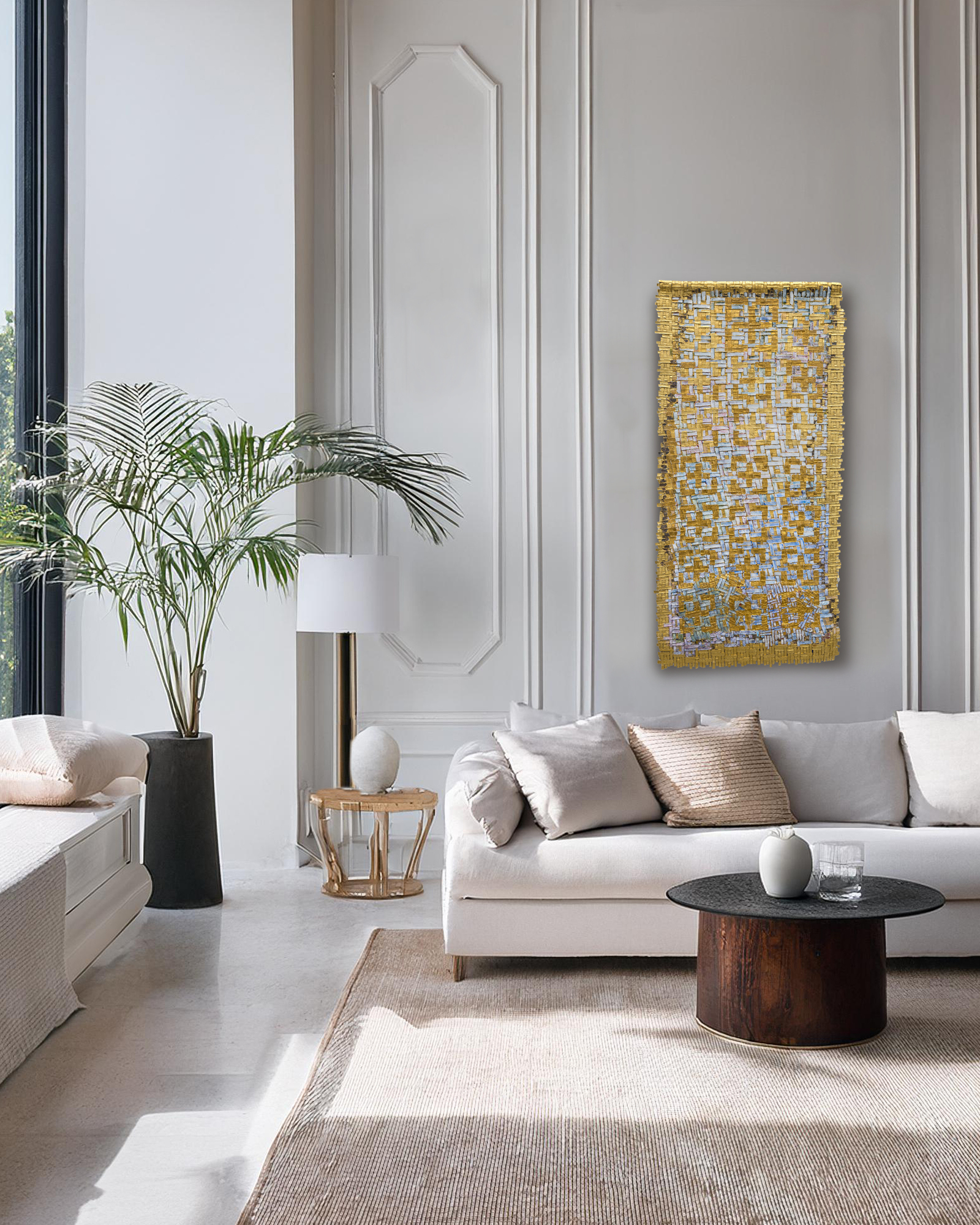
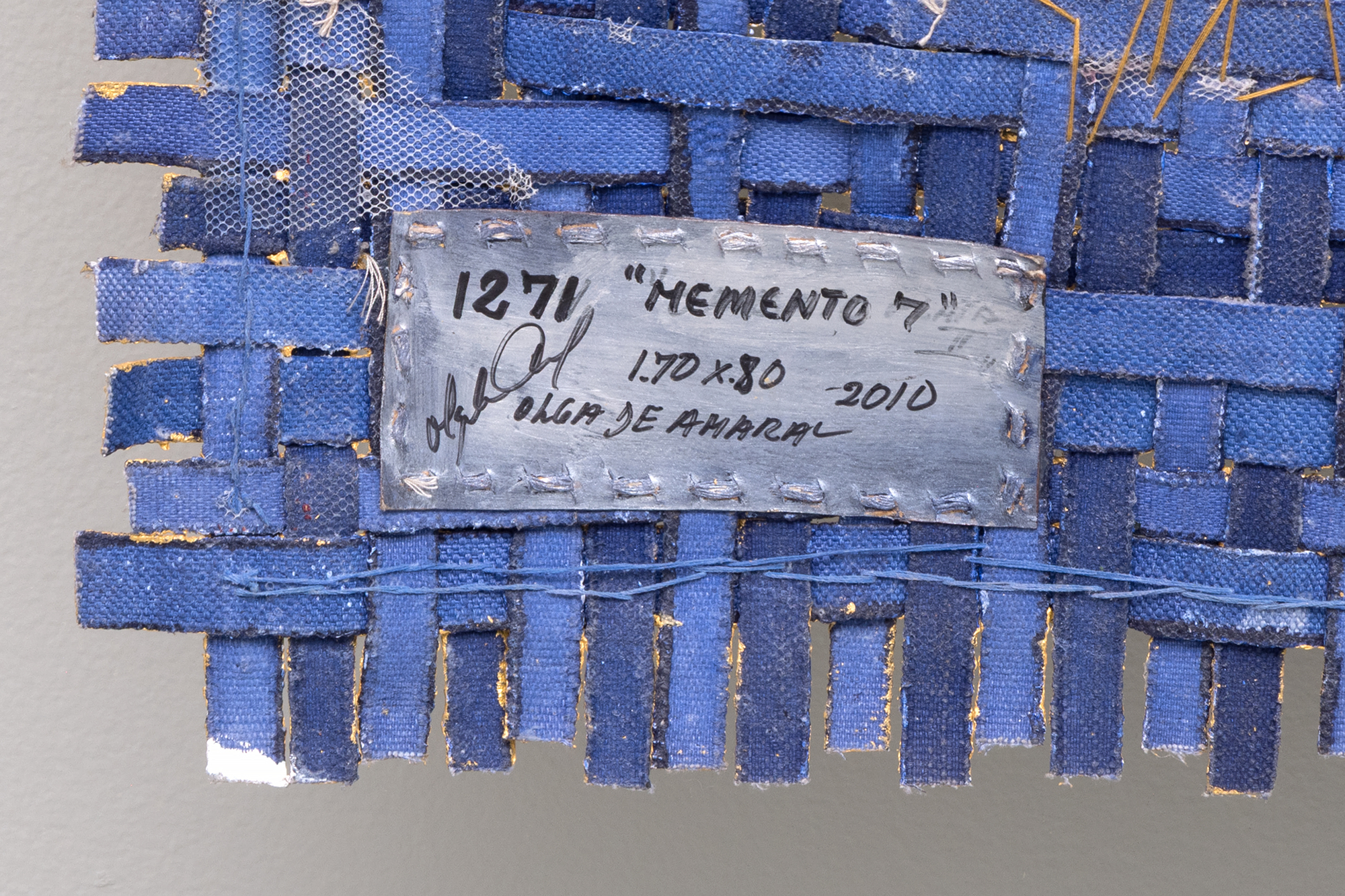
Memento 7201068 x 32 3/4 po(169,86 x 80,01 cm) lin, gesso, acrylique et feuille d'or
Provenance
Don de l'artiste via la Lisson Gallery au Museum of Fine Arts, Houston Latin American Experience Benefit Auction, 2022
Collection privée, acquise lors de la vente susmentionnée
Heather James Fine Art
Littérature
Houston, Texas, Musée des beaux-arts de Houston, Catalogue de la vente aux enchères caritative Latin American Experience 2022, 2022, illustré en couverture
Memento 7 d'Olga de Amaral illustre la maîtrise de l'artiste colombienne dans la transformation du textile en un médium à la résonance sculpturale et symbolique profonde. Tissée à partir de fibres naturelles et recouverte de gesso, de feuilles métalliques et de pigments, l'œuvre oscille entre la solidité matérielle et le flux optique. Sa surface scintille d'or, réfractant la lumière à intervalles rythmiques qui changent au fur et à mesure que le spectateur se déplace, évoquant à la fois la permanence de la mémoire et sa fragilité.


La série Memento, dont fait partie cette œuvre, explore la mémoire comme une présence lumineuse et stratifiée. En incorporant des feuilles d'or dans le tissage, de Amaral relie sa pratique aux traditions précolombiennes dans lesquelles l'or n'était pas un simple matériau, mais un vecteur de signification spirituelle et culturelle. Dans Memento 7, les motifs géométriques et la surface richement texturée créent une impression de tapisserie sacrée, effaçant les distinctions entre peinture, sculpture et textile.


Le travail de De Amaral a été salué internationalement pour avoir étendu le langage de l'art textile aux domaines de l'architecture et de l'abstraction. Memento 7 fait écho aux principales collections institutionnelles de son œuvre, notamment celles du Museum of Modern Art (New York), du Metropolitan Museum of Art, de l'Art Institute of Chicago et du Musée d'Art Moderne de Paris. Au sein de ces collections, ses tissages dorés sont à la fois des objets d'une rare beauté matérielle et des méditations sur l'histoire, le lieu et la métaphysique de la lumière.


Memento 7 incarne ainsi la synthèse unique de l'artiste entre l'artisanat ancestral et l'abstraction moderne, offrant une réflexion puissante sur la mémoire, le temps et la transformation.
demander