Précédent

RAY PARKER (1922-1990)

 
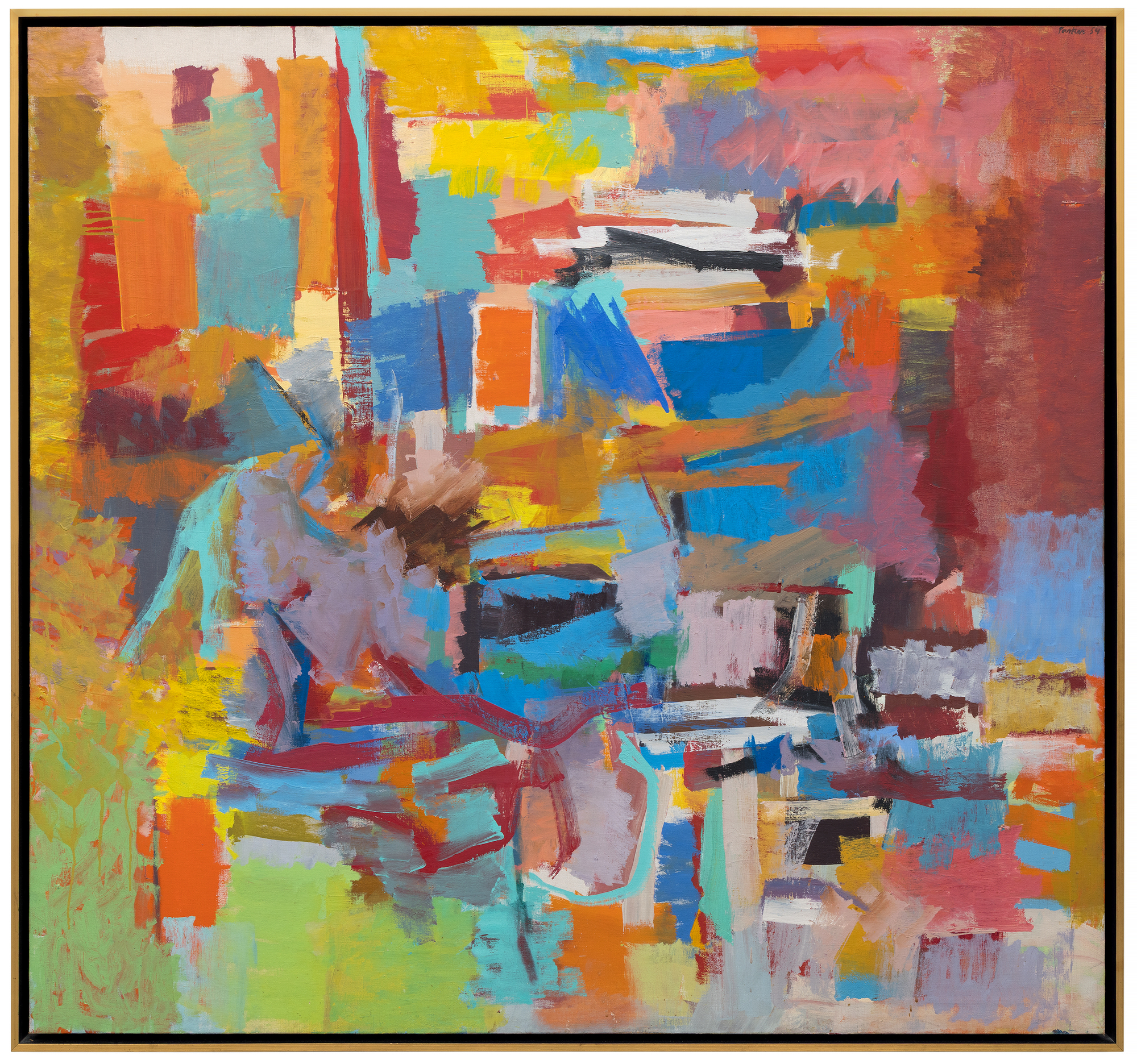
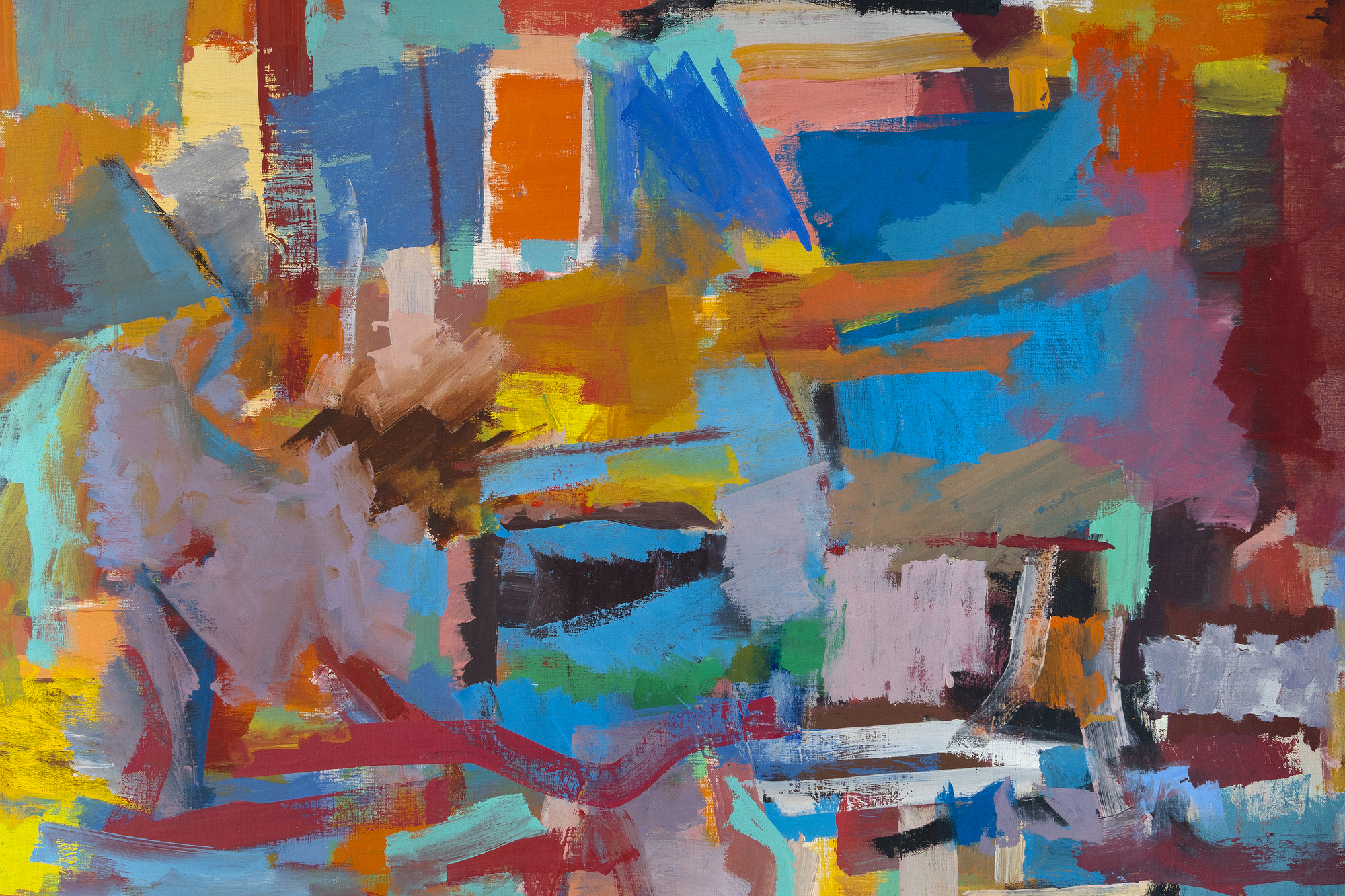
<div><font face=Lato size=3 color=black>Painted in 1954, this "Untitled" canvas exemplifies Ray Parker’s early engagement with Abstract Expressionism, a moment when he was forging a language of bold color and gestural immediacy. Parker worked directly on unstretched canvas, building the composition through broad, saturated brushstrokes that retain a sense of spontaneity and improvisation. The edges of form remain fluid, emphasizing the immediacy of his process. </font></div><br><br><div> </div><br><br><div><font face=Lato size=3 color=black>Although Parker would later become best known for his “Simple Paintings,” these early works are both rare and foundational, bridging the raw energy of Abstract Expressionism with the clarity of form that defined his mature style. With fewer than 310 works recorded at auction and very few from the 1950s, canvases of this scale and date seldom appear on the market. A related early abstraction, "Untitled" (1956), is in the collection of the Whitney Museum of American Art. "Untitled" (1954) represents a significant example of Parker’s innovative contribution to postwar American painting. </font></div> <div><font face=Lato size=3 color=black>Painted in 1954, this "Untitled" canvas exemplifies Ray Parker’s early engagement with Abstract Expressionism, a moment when he was forging a language of bold color and gestural immediacy. Parker worked directly on unstretched canvas, building the composition through broad, saturated brushstrokes that retain a sense of spontaneity and improvisation. The edges of form remain fluid, emphasizing the immediacy of his process. </font></div><br><br><div> </div><br><br><div><font face=Lato size=3 color=black>Although Parker would later become best known for his “Simple Paintings,” these early works are both rare and foundational, bridging the raw energy of Abstract Expressionism with the clarity of form that defined his mature style. With fewer than 310 works recorded at auction and very few from the 1950s, canvases of this scale and date seldom appear on the market. A related early abstraction, "Untitled" (1956), is in the collection of the Whitney Museum of American Art. "Untitled" (1954) represents a significant example of Parker’s innovative contribution to postwar American painting. </font></div> <div><font face=Lato size=3 color=black>Painted in 1954, this "Untitled" canvas exemplifies Ray Parker’s early engagement with Abstract Expressionism, a moment when he was forging a language of bold color and gestural immediacy. Parker worked directly on unstretched canvas, building the composition through broad, saturated brushstrokes that retain a sense of spontaneity and improvisation. The edges of form remain fluid, emphasizing the immediacy of his process. </font></div><br><br><div> </div><br><br><div><font face=Lato size=3 color=black>Although Parker would later become best known for his “Simple Paintings,” these early works are both rare and foundational, bridging the raw energy of Abstract Expressionism with the clarity of form that defined his mature style. With fewer than 310 works recorded at auction and very few from the 1950s, canvases of this scale and date seldom appear on the market. A related early abstraction, "Untitled" (1956), is in the collection of the Whitney Museum of American Art. "Untitled" (1954) represents a significant example of Parker’s innovative contribution to postwar American painting. </font></div> <div><font face=Lato size=3 color=black>Painted in 1954, this "Untitled" canvas exemplifies Ray Parker’s early engagement with Abstract Expressionism, a moment when he was forging a language of bold color and gestural immediacy. Parker worked directly on unstretched canvas, building the composition through broad, saturated brushstrokes that retain a sense of spontaneity and improvisation. The edges of form remain fluid, emphasizing the immediacy of his process. </font></div><br><br><div> </div><br><br><div><font face=Lato size=3 color=black>Although Parker would later become best known for his “Simple Paintings,” these early works are both rare and foundational, bridging the raw energy of Abstract Expressionism with the clarity of form that defined his mature style. With fewer than 310 works recorded at auction and very few from the 1950s, canvases of this scale and date seldom appear on the market. A related early abstraction, "Untitled" (1956), is in the collection of the Whitney Museum of American Art. "Untitled" (1954) represents a significant example of Parker’s innovative contribution to postwar American painting. </font></div> <div><font face=Lato size=3 color=black>Painted in 1954, this "Untitled" canvas exemplifies Ray Parker’s early engagement with Abstract Expressionism, a moment when he was forging a language of bold color and gestural immediacy. Parker worked directly on unstretched canvas, building the composition through broad, saturated brushstrokes that retain a sense of spontaneity and improvisation. The edges of form remain fluid, emphasizing the immediacy of his process. </font></div><br><br><div> </div><br><br><div><font face=Lato size=3 color=black>Although Parker would later become best known for his “Simple Paintings,” these early works are both rare and foundational, bridging the raw energy of Abstract Expressionism with the clarity of form that defined his mature style. With fewer than 310 works recorded at auction and very few from the 1950s, canvases of this scale and date seldom appear on the market. A related early abstraction, "Untitled" (1956), is in the collection of the Whitney Museum of American Art. "Untitled" (1954) represents a significant example of Parker’s innovative contribution to postwar American painting. </font></div> <div><font face=Lato size=3 color=black>Painted in 1954, this "Untitled" canvas exemplifies Ray Parker’s early engagement with Abstract Expressionism, a moment when he was forging a language of bold color and gestural immediacy. Parker worked directly on unstretched canvas, building the composition through broad, saturated brushstrokes that retain a sense of spontaneity and improvisation. The edges of form remain fluid, emphasizing the immediacy of his process. </font></div><br><br><div> </div><br><br><div><font face=Lato size=3 color=black>Although Parker would later become best known for his “Simple Paintings,” these early works are both rare and foundational, bridging the raw energy of Abstract Expressionism with the clarity of form that defined his mature style. With fewer than 310 works recorded at auction and very few from the 1950s, canvases of this scale and date seldom appear on the market. A related early abstraction, "Untitled" (1956), is in the collection of the Whitney Museum of American Art. "Untitled" (1954) represents a significant example of Parker’s innovative contribution to postwar American painting. </font></div> <div><font face=Lato size=3 color=black>Painted in 1954, this "Untitled" canvas exemplifies Ray Parker’s early engagement with Abstract Expressionism, a moment when he was forging a language of bold color and gestural immediacy. Parker worked directly on unstretched canvas, building the composition through broad, saturated brushstrokes that retain a sense of spontaneity and improvisation. The edges of form remain fluid, emphasizing the immediacy of his process. </font></div><br><br><div> </div><br><br><div><font face=Lato size=3 color=black>Although Parker would later become best known for his “Simple Paintings,” these early works are both rare and foundational, bridging the raw energy of Abstract Expressionism with the clarity of form that defined his mature style. With fewer than 310 works recorded at auction and very few from the 1950s, canvases of this scale and date seldom appear on the market. A related early abstraction, "Untitled" (1956), is in the collection of the Whitney Museum of American Art. "Untitled" (1954) represents a significant example of Parker’s innovative contribution to postwar American painting. </font></div> <div><font face=Lato size=3 color=black>Painted in 1954, this "Untitled" canvas exemplifies Ray Parker’s early engagement with Abstract Expressionism, a moment when he was forging a language of bold color and gestural immediacy. Parker worked directly on unstretched canvas, building the composition through broad, saturated brushstrokes that retain a sense of spontaneity and improvisation. The edges of form remain fluid, emphasizing the immediacy of his process. </font></div><br><br><div> </div><br><br><div><font face=Lato size=3 color=black>Although Parker would later become best known for his “Simple Paintings,” these early works are both rare and foundational, bridging the raw energy of Abstract Expressionism with the clarity of form that defined his mature style. With fewer than 310 works recorded at auction and very few from the 1950s, canvases of this scale and date seldom appear on the market. A related early abstraction, "Untitled" (1956), is in the collection of the Whitney Museum of American Art. "Untitled" (1954) represents a significant example of Parker’s innovative contribution to postwar American painting. </font></div> <div><font face=Lato size=3 color=black>Painted in 1954, this "Untitled" canvas exemplifies Ray Parker’s early engagement with Abstract Expressionism, a moment when he was forging a language of bold color and gestural immediacy. Parker worked directly on unstretched canvas, building the composition through broad, saturated brushstrokes that retain a sense of spontaneity and improvisation. The edges of form remain fluid, emphasizing the immediacy of his process. </font></div><br><br><div> </div><br><br><div><font face=Lato size=3 color=black>Although Parker would later become best known for his “Simple Paintings,” these early works are both rare and foundational, bridging the raw energy of Abstract Expressionism with the clarity of form that defined his mature style. With fewer than 310 works recorded at auction and very few from the 1950s, canvases of this scale and date seldom appear on the market. A related early abstraction, "Untitled" (1956), is in the collection of the Whitney Museum of American Art. "Untitled" (1954) represents a significant example of Parker’s innovative contribution to postwar American painting. </font></div> <div><font face=Lato size=3 color=black>Painted in 1954, this "Untitled" canvas exemplifies Ray Parker’s early engagement with Abstract Expressionism, a moment when he was forging a language of bold color and gestural immediacy. Parker worked directly on unstretched canvas, building the composition through broad, saturated brushstrokes that retain a sense of spontaneity and improvisation. The edges of form remain fluid, emphasizing the immediacy of his process. </font></div><br><br><div> </div><br><br><div><font face=Lato size=3 color=black>Although Parker would later become best known for his “Simple Paintings,” these early works are both rare and foundational, bridging the raw energy of Abstract Expressionism with the clarity of form that defined his mature style. With fewer than 310 works recorded at auction and very few from the 1950s, canvases of this scale and date seldom appear on the market. A related early abstraction, "Untitled" (1956), is in the collection of the Whitney Museum of American Art. "Untitled" (1954) represents a significant example of Parker’s innovative contribution to postwar American painting. </font></div>
Sans titre195452 1/4 x 56 x 1 po(132,72 x 142,24 x 2,54 cm) huile sur toile
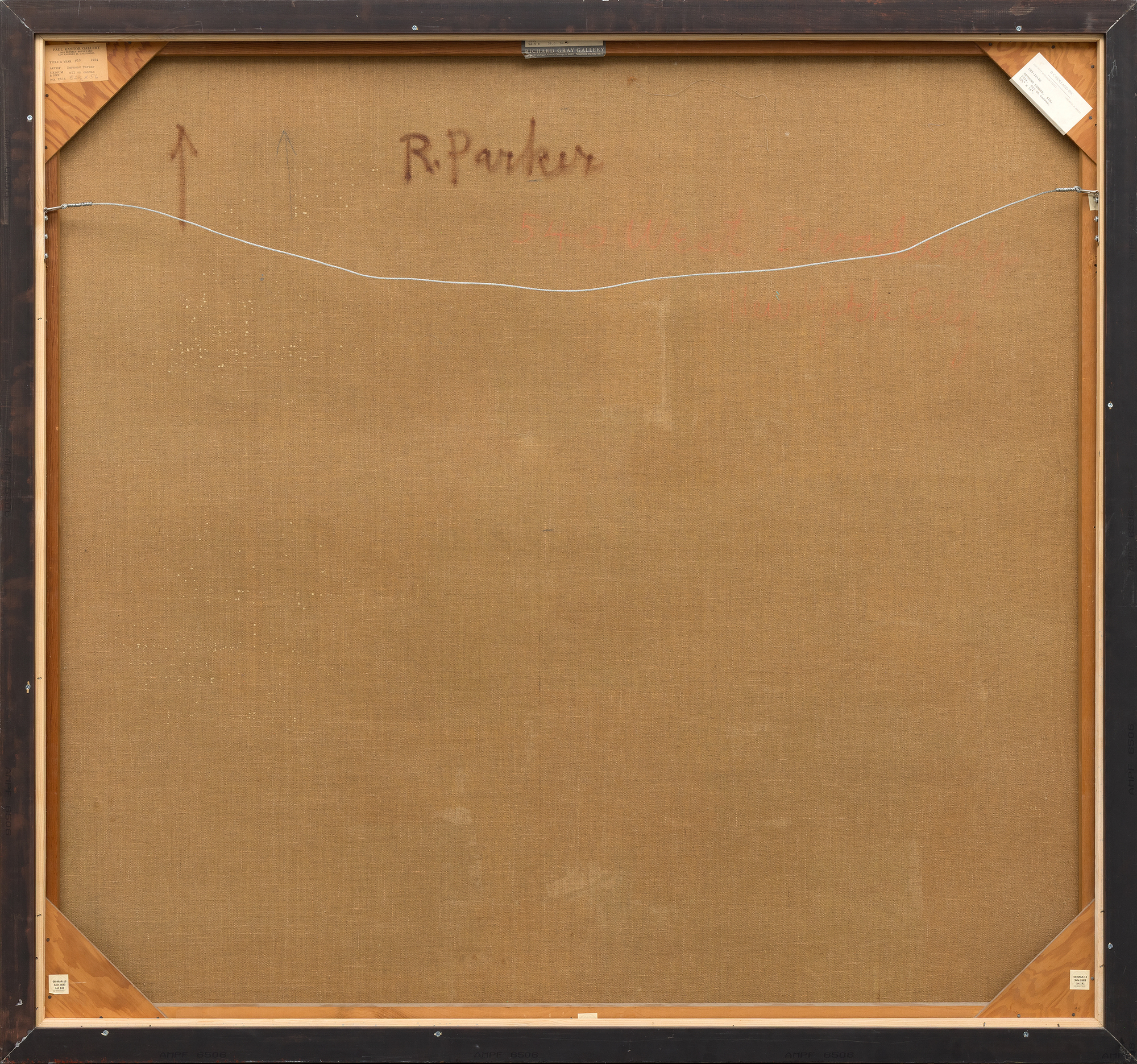
Provenance
Ventes privées Christie's
Collection privée, achetée auprès de la source ci-dessus
Peinte en 1954, cette toile « Sans titre » illustre l'intérêt précoce de Ray Parker pour l'expressionnisme abstrait, à une époque où il forgeait un langage fait de couleurs vives et d'immédiateté gestuelle. Parker travaillait directement sur une toile non tendue, construisant la composition à l'aide de larges coups de pinceau saturés qui conservent un sentiment de spontanéité et d'improvisation. Les contours des formes restent fluides, soulignant l'immédiateté de son processus.


Bien que Parker soit devenu plus tard célèbre pour ses « Simple Paintings », ces œuvres précoces sont à la fois rares et fondamentales, faisant le pont entre l'énergie brute de l'expressionnisme abstrait et la clarté des formes qui caractérise son style mature. Avec moins de 310 œuvres enregistrées aux enchères et très peu datant des années 1950, les toiles de cette taille et de cette date apparaissent rarement sur le marché. Une abstraction précoce apparentée, « Untitled » (1956), fait partie de la collection du Whitney Museum of American Art. « Untitled » (1954) représente un exemple significatif de la contribution innovante de Parker à la peinture américaine d'après-guerre.
demander