Précédent

WAYNE THIEBAUD (1920-2021)

 
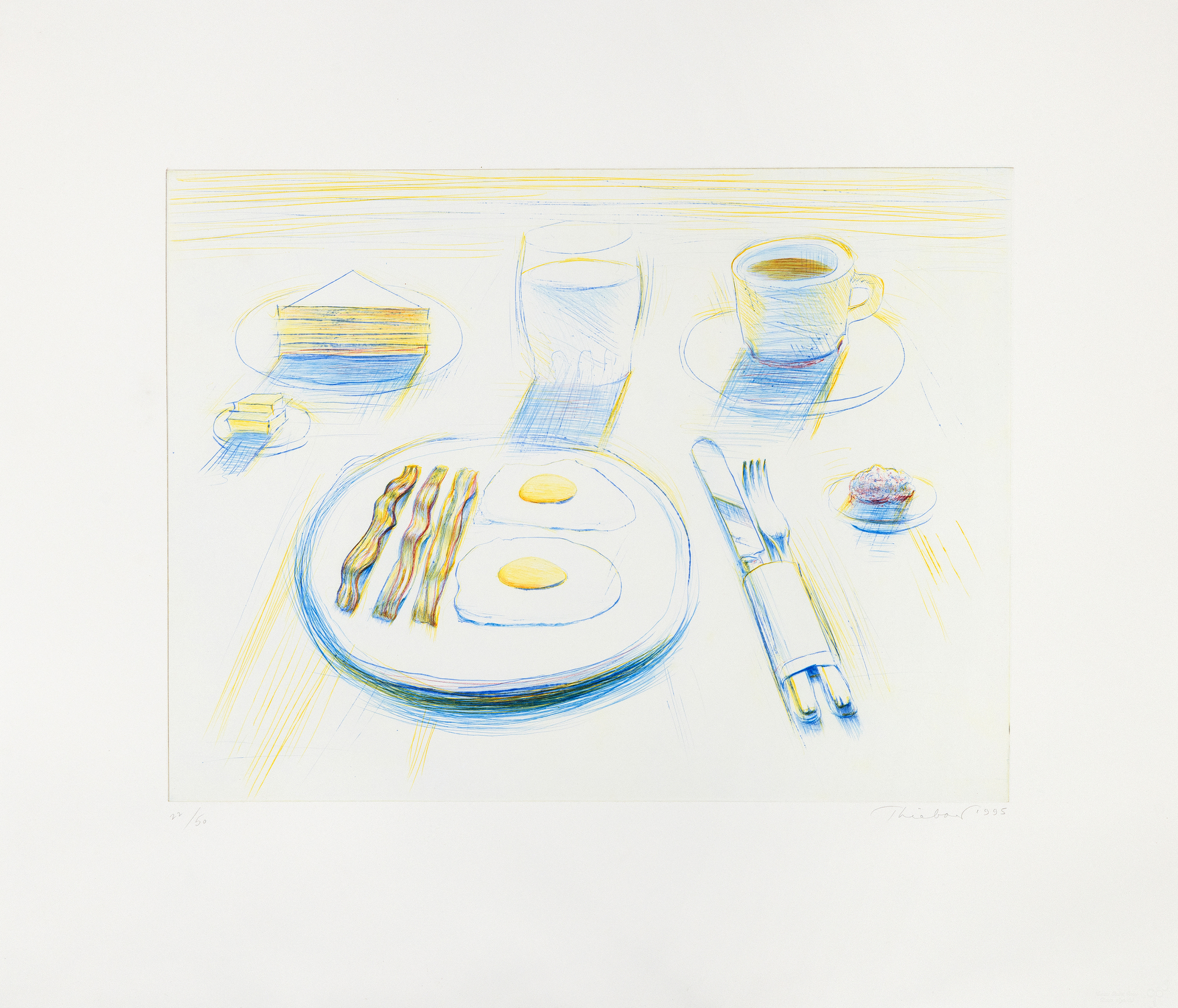
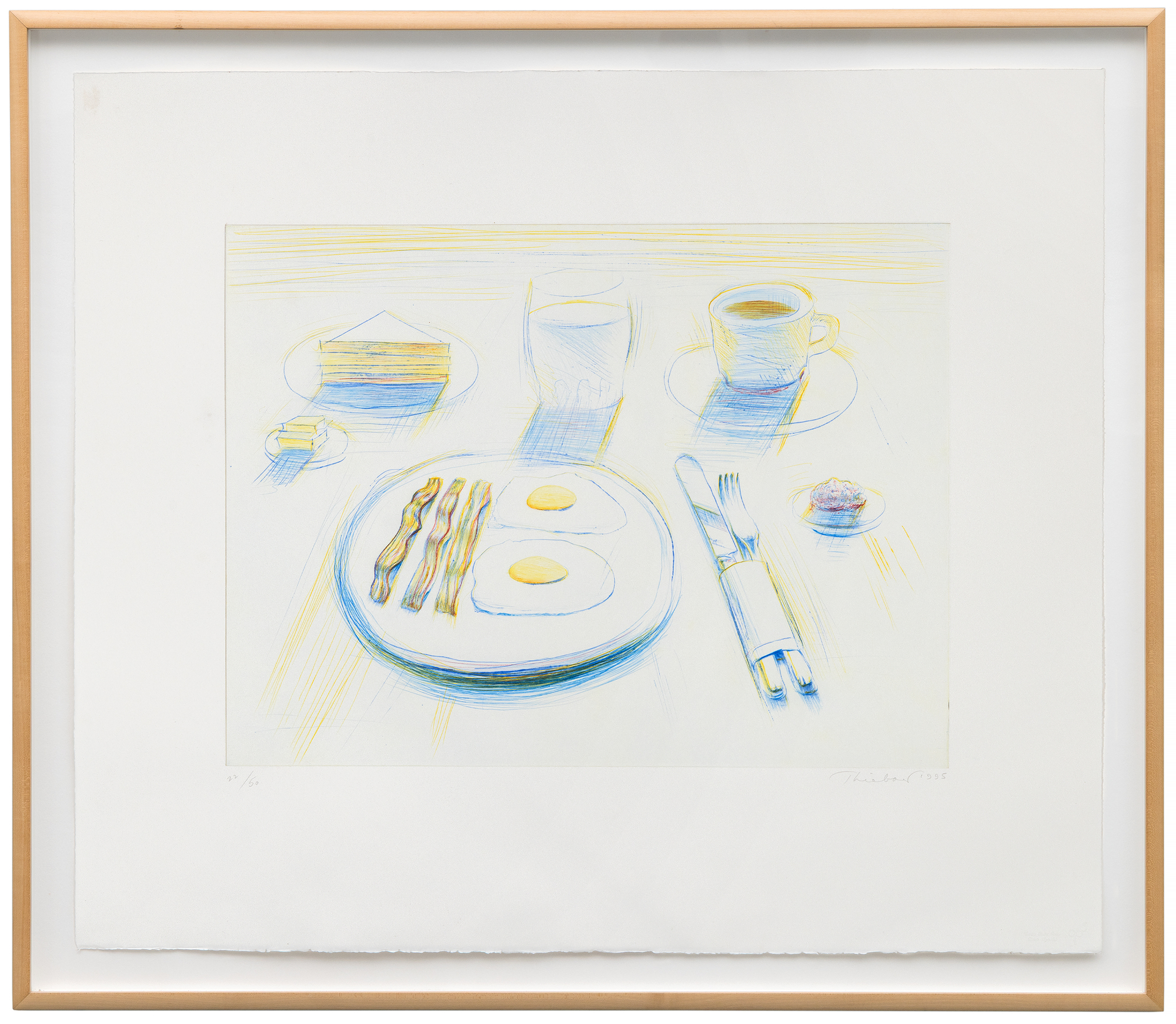
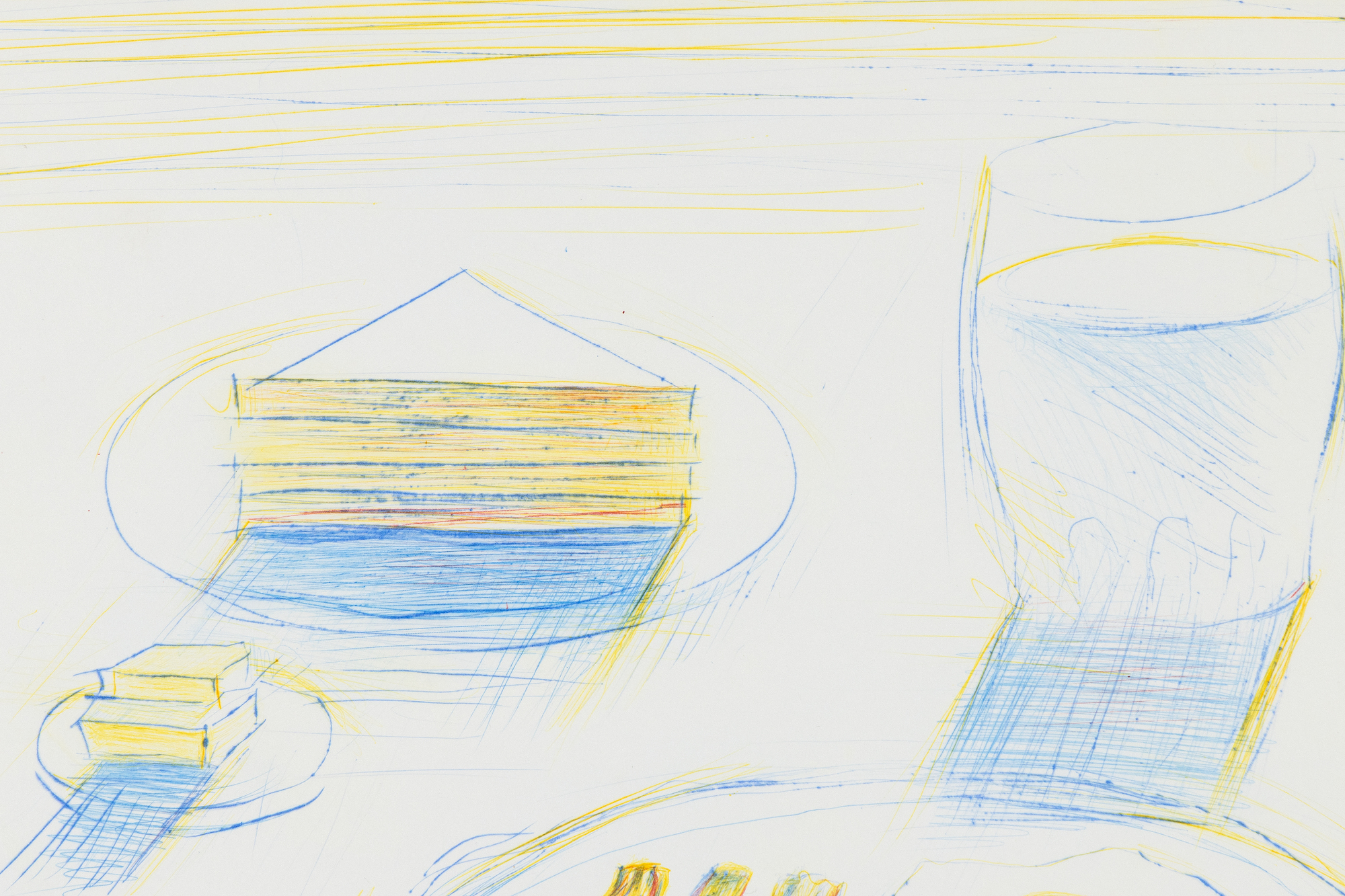
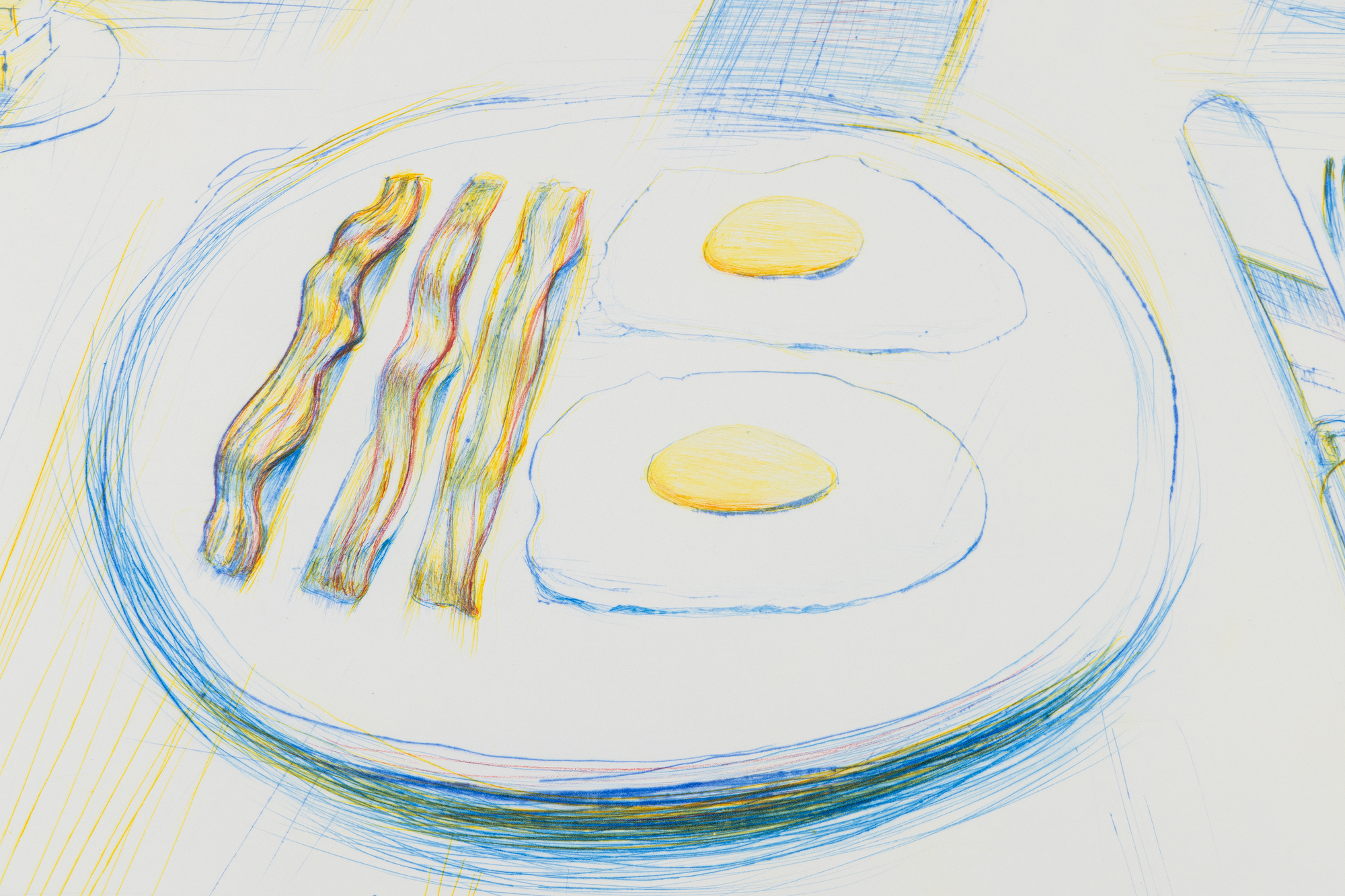
<div><font face=Lato size=3 color=black>Wayne Thiebaud’s <em>Breakfast</em>, from an edition of 50, demonstrates the artist’s signature blend of Pop-inflected realism and painterly intimacy. Executed in colored drypoint, the work captures the simple subject of a morning meal with a remarkable freshness: hatching lines soften and blur the composition, creating a pastel-like effect that distinguishes it from the crispness of commercial print design. Though slightly faded, the impression retains the playful chromatic sensibility and softly modeled shadowing that became hallmarks of Thiebaud’s style.</font></div><br><br><div><font face=Lato size=3> </font></div><br><br><div><font face=Lato size=3 color=black>Since the early 1960s, Thiebaud has been celebrated for his depictions of food—cakes, pies, gumball machines, and diner counters—rendered not as literal meals but as cultural icons, at once nostalgic and idealized. In <em>Breakfast</em>, the modest meal is transformed into a subject of contemplation and delight, celebrating the pleasures of everyday American life while evoking memory and desire. The combination of precision and informality speaks to Thiebaud’s ability to merge the immediacy of drawing with the enduring resonance of painting.</font></div><br><br><div><font face=Lato size=3> </font></div><br><br><div><font face=Lato size=3 color=black>Institutional recognition of the work’s importance is reflected in its inclusion within the National Gallery of Art, Washington, affirming its role within Thiebaud’s larger project of elevating common objects into images of enduring cultural significance.</font></div> <div><font face=Lato size=3 color=black>Wayne Thiebaud’s <em>Breakfast</em>, from an edition of 50, demonstrates the artist’s signature blend of Pop-inflected realism and painterly intimacy. Executed in colored drypoint, the work captures the simple subject of a morning meal with a remarkable freshness: hatching lines soften and blur the composition, creating a pastel-like effect that distinguishes it from the crispness of commercial print design. Though slightly faded, the impression retains the playful chromatic sensibility and softly modeled shadowing that became hallmarks of Thiebaud’s style.</font></div><br><br><div><font face=Lato size=3> </font></div><br><br><div><font face=Lato size=3 color=black>Since the early 1960s, Thiebaud has been celebrated for his depictions of food—cakes, pies, gumball machines, and diner counters—rendered not as literal meals but as cultural icons, at once nostalgic and idealized. In <em>Breakfast</em>, the modest meal is transformed into a subject of contemplation and delight, celebrating the pleasures of everyday American life while evoking memory and desire. The combination of precision and informality speaks to Thiebaud’s ability to merge the immediacy of drawing with the enduring resonance of painting.</font></div><br><br><div><font face=Lato size=3> </font></div><br><br><div><font face=Lato size=3 color=black>Institutional recognition of the work’s importance is reflected in its inclusion within the National Gallery of Art, Washington, affirming its role within Thiebaud’s larger project of elevating common objects into images of enduring cultural significance.</font></div> <div><font face=Lato size=3 color=black>Wayne Thiebaud’s <em>Breakfast</em>, from an edition of 50, demonstrates the artist’s signature blend of Pop-inflected realism and painterly intimacy. Executed in colored drypoint, the work captures the simple subject of a morning meal with a remarkable freshness: hatching lines soften and blur the composition, creating a pastel-like effect that distinguishes it from the crispness of commercial print design. Though slightly faded, the impression retains the playful chromatic sensibility and softly modeled shadowing that became hallmarks of Thiebaud’s style.</font></div><br><br><div><font face=Lato size=3> </font></div><br><br><div><font face=Lato size=3 color=black>Since the early 1960s, Thiebaud has been celebrated for his depictions of food—cakes, pies, gumball machines, and diner counters—rendered not as literal meals but as cultural icons, at once nostalgic and idealized. In <em>Breakfast</em>, the modest meal is transformed into a subject of contemplation and delight, celebrating the pleasures of everyday American life while evoking memory and desire. The combination of precision and informality speaks to Thiebaud’s ability to merge the immediacy of drawing with the enduring resonance of painting.</font></div><br><br><div><font face=Lato size=3> </font></div><br><br><div><font face=Lato size=3 color=black>Institutional recognition of the work’s importance is reflected in its inclusion within the National Gallery of Art, Washington, affirming its role within Thiebaud’s larger project of elevating common objects into images of enduring cultural significance.</font></div> <div><font face=Lato size=3 color=black>Wayne Thiebaud’s <em>Breakfast</em>, from an edition of 50, demonstrates the artist’s signature blend of Pop-inflected realism and painterly intimacy. Executed in colored drypoint, the work captures the simple subject of a morning meal with a remarkable freshness: hatching lines soften and blur the composition, creating a pastel-like effect that distinguishes it from the crispness of commercial print design. Though slightly faded, the impression retains the playful chromatic sensibility and softly modeled shadowing that became hallmarks of Thiebaud’s style.</font></div><br><br><div><font face=Lato size=3> </font></div><br><br><div><font face=Lato size=3 color=black>Since the early 1960s, Thiebaud has been celebrated for his depictions of food—cakes, pies, gumball machines, and diner counters—rendered not as literal meals but as cultural icons, at once nostalgic and idealized. In <em>Breakfast</em>, the modest meal is transformed into a subject of contemplation and delight, celebrating the pleasures of everyday American life while evoking memory and desire. The combination of precision and informality speaks to Thiebaud’s ability to merge the immediacy of drawing with the enduring resonance of painting.</font></div><br><br><div><font face=Lato size=3> </font></div><br><br><div><font face=Lato size=3 color=black>Institutional recognition of the work’s importance is reflected in its inclusion within the National Gallery of Art, Washington, affirming its role within Thiebaud’s larger project of elevating common objects into images of enduring cultural significance.</font></div> <div><font face=Lato size=3 color=black>Wayne Thiebaud’s <em>Breakfast</em>, from an edition of 50, demonstrates the artist’s signature blend of Pop-inflected realism and painterly intimacy. Executed in colored drypoint, the work captures the simple subject of a morning meal with a remarkable freshness: hatching lines soften and blur the composition, creating a pastel-like effect that distinguishes it from the crispness of commercial print design. Though slightly faded, the impression retains the playful chromatic sensibility and softly modeled shadowing that became hallmarks of Thiebaud’s style.</font></div><br><br><div><font face=Lato size=3> </font></div><br><br><div><font face=Lato size=3 color=black>Since the early 1960s, Thiebaud has been celebrated for his depictions of food—cakes, pies, gumball machines, and diner counters—rendered not as literal meals but as cultural icons, at once nostalgic and idealized. In <em>Breakfast</em>, the modest meal is transformed into a subject of contemplation and delight, celebrating the pleasures of everyday American life while evoking memory and desire. The combination of precision and informality speaks to Thiebaud’s ability to merge the immediacy of drawing with the enduring resonance of painting.</font></div><br><br><div><font face=Lato size=3> </font></div><br><br><div><font face=Lato size=3 color=black>Institutional recognition of the work’s importance is reflected in its inclusion within the National Gallery of Art, Washington, affirming its role within Thiebaud’s larger project of elevating common objects into images of enduring cultural significance.</font></div> <div><font face=Lato size=3 color=black>Wayne Thiebaud’s <em>Breakfast</em>, from an edition of 50, demonstrates the artist’s signature blend of Pop-inflected realism and painterly intimacy. Executed in colored drypoint, the work captures the simple subject of a morning meal with a remarkable freshness: hatching lines soften and blur the composition, creating a pastel-like effect that distinguishes it from the crispness of commercial print design. Though slightly faded, the impression retains the playful chromatic sensibility and softly modeled shadowing that became hallmarks of Thiebaud’s style.</font></div><br><br><div><font face=Lato size=3> </font></div><br><br><div><font face=Lato size=3 color=black>Since the early 1960s, Thiebaud has been celebrated for his depictions of food—cakes, pies, gumball machines, and diner counters—rendered not as literal meals but as cultural icons, at once nostalgic and idealized. In <em>Breakfast</em>, the modest meal is transformed into a subject of contemplation and delight, celebrating the pleasures of everyday American life while evoking memory and desire. The combination of precision and informality speaks to Thiebaud’s ability to merge the immediacy of drawing with the enduring resonance of painting.</font></div><br><br><div><font face=Lato size=3> </font></div><br><br><div><font face=Lato size=3 color=black>Institutional recognition of the work’s importance is reflected in its inclusion within the National Gallery of Art, Washington, affirming its role within Thiebaud’s larger project of elevating common objects into images of enduring cultural significance.</font></div> <div><font face=Lato size=3 color=black>Wayne Thiebaud’s <em>Breakfast</em>, from an edition of 50, demonstrates the artist’s signature blend of Pop-inflected realism and painterly intimacy. Executed in colored drypoint, the work captures the simple subject of a morning meal with a remarkable freshness: hatching lines soften and blur the composition, creating a pastel-like effect that distinguishes it from the crispness of commercial print design. Though slightly faded, the impression retains the playful chromatic sensibility and softly modeled shadowing that became hallmarks of Thiebaud’s style.</font></div><br><br><div><font face=Lato size=3> </font></div><br><br><div><font face=Lato size=3 color=black>Since the early 1960s, Thiebaud has been celebrated for his depictions of food—cakes, pies, gumball machines, and diner counters—rendered not as literal meals but as cultural icons, at once nostalgic and idealized. In <em>Breakfast</em>, the modest meal is transformed into a subject of contemplation and delight, celebrating the pleasures of everyday American life while evoking memory and desire. The combination of precision and informality speaks to Thiebaud’s ability to merge the immediacy of drawing with the enduring resonance of painting.</font></div><br><br><div><font face=Lato size=3> </font></div><br><br><div><font face=Lato size=3 color=black>Institutional recognition of the work’s importance is reflected in its inclusion within the National Gallery of Art, Washington, affirming its role within Thiebaud’s larger project of elevating common objects into images of enduring cultural significance.</font></div> <div><font face=Lato size=3 color=black>Wayne Thiebaud’s <em>Breakfast</em>, from an edition of 50, demonstrates the artist’s signature blend of Pop-inflected realism and painterly intimacy. Executed in colored drypoint, the work captures the simple subject of a morning meal with a remarkable freshness: hatching lines soften and blur the composition, creating a pastel-like effect that distinguishes it from the crispness of commercial print design. Though slightly faded, the impression retains the playful chromatic sensibility and softly modeled shadowing that became hallmarks of Thiebaud’s style.</font></div><br><br><div><font face=Lato size=3> </font></div><br><br><div><font face=Lato size=3 color=black>Since the early 1960s, Thiebaud has been celebrated for his depictions of food—cakes, pies, gumball machines, and diner counters—rendered not as literal meals but as cultural icons, at once nostalgic and idealized. In <em>Breakfast</em>, the modest meal is transformed into a subject of contemplation and delight, celebrating the pleasures of everyday American life while evoking memory and desire. The combination of precision and informality speaks to Thiebaud’s ability to merge the immediacy of drawing with the enduring resonance of painting.</font></div><br><br><div><font face=Lato size=3> </font></div><br><br><div><font face=Lato size=3 color=black>Institutional recognition of the work’s importance is reflected in its inclusion within the National Gallery of Art, Washington, affirming its role within Thiebaud’s larger project of elevating common objects into images of enduring cultural significance.</font></div> <div><font face=Lato size=3 color=black>Wayne Thiebaud’s <em>Breakfast</em>, from an edition of 50, demonstrates the artist’s signature blend of Pop-inflected realism and painterly intimacy. Executed in colored drypoint, the work captures the simple subject of a morning meal with a remarkable freshness: hatching lines soften and blur the composition, creating a pastel-like effect that distinguishes it from the crispness of commercial print design. Though slightly faded, the impression retains the playful chromatic sensibility and softly modeled shadowing that became hallmarks of Thiebaud’s style.</font></div><br><br><div><font face=Lato size=3> </font></div><br><br><div><font face=Lato size=3 color=black>Since the early 1960s, Thiebaud has been celebrated for his depictions of food—cakes, pies, gumball machines, and diner counters—rendered not as literal meals but as cultural icons, at once nostalgic and idealized. In <em>Breakfast</em>, the modest meal is transformed into a subject of contemplation and delight, celebrating the pleasures of everyday American life while evoking memory and desire. The combination of precision and informality speaks to Thiebaud’s ability to merge the immediacy of drawing with the enduring resonance of painting.</font></div><br><br><div><font face=Lato size=3> </font></div><br><br><div><font face=Lato size=3 color=black>Institutional recognition of the work’s importance is reflected in its inclusion within the National Gallery of Art, Washington, affirming its role within Thiebaud’s larger project of elevating common objects into images of enduring cultural significance.</font></div> <div><font face=Lato size=3 color=black>Wayne Thiebaud’s <em>Breakfast</em>, from an edition of 50, demonstrates the artist’s signature blend of Pop-inflected realism and painterly intimacy. Executed in colored drypoint, the work captures the simple subject of a morning meal with a remarkable freshness: hatching lines soften and blur the composition, creating a pastel-like effect that distinguishes it from the crispness of commercial print design. Though slightly faded, the impression retains the playful chromatic sensibility and softly modeled shadowing that became hallmarks of Thiebaud’s style.</font></div><br><br><div><font face=Lato size=3> </font></div><br><br><div><font face=Lato size=3 color=black>Since the early 1960s, Thiebaud has been celebrated for his depictions of food—cakes, pies, gumball machines, and diner counters—rendered not as literal meals but as cultural icons, at once nostalgic and idealized. In <em>Breakfast</em>, the modest meal is transformed into a subject of contemplation and delight, celebrating the pleasures of everyday American life while evoking memory and desire. The combination of precision and informality speaks to Thiebaud’s ability to merge the immediacy of drawing with the enduring resonance of painting.</font></div><br><br><div><font face=Lato size=3> </font></div><br><br><div><font face=Lato size=3 color=black>Institutional recognition of the work’s importance is reflected in its inclusion within the National Gallery of Art, Washington, affirming its role within Thiebaud’s larger project of elevating common objects into images of enduring cultural significance.</font></div>
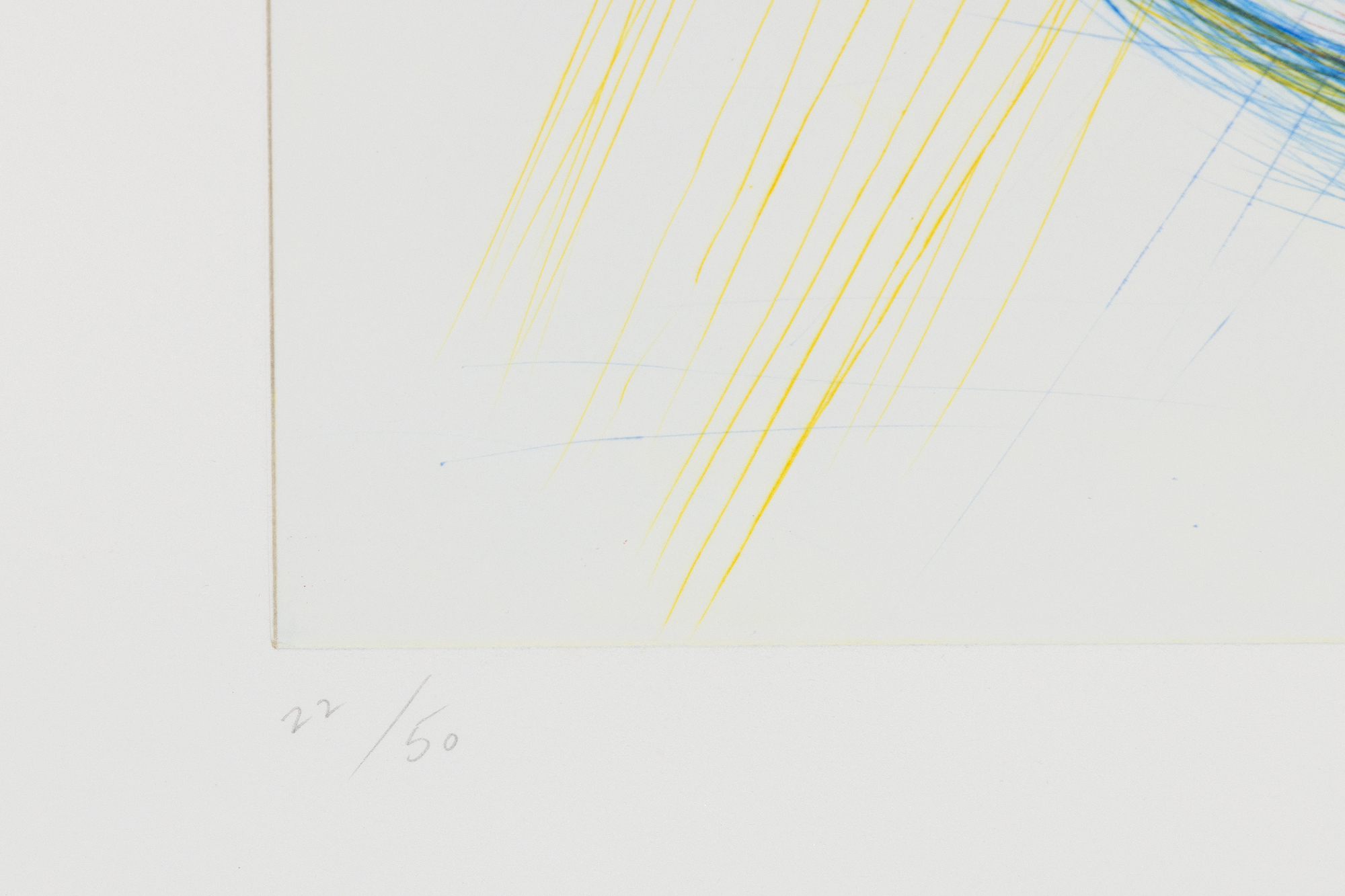
Petit déjeuner199518 x 23 5/8 po.(40.64 x 60.96 cm) gravure colorée et pointe sèche
Provenance
871 Galerie des beaux-arts
Collection privée
Heather James Fine Art
L'œuvre Breakfast de Wayne Thiebaud, tirée à 50 exemplaires, témoigne du mélange caractéristique de l'artiste entre réalisme influencé par le pop et intimité picturale. Exécutée à la pointe sèche colorée, l'œuvre saisit le sujet simple d'un repas matinal avec une fraîcheur remarquable : les lignes de hachures adoucissent et estompent la composition, créant un effet pastel qui la distingue de la netteté de l'impression commerciale. Bien que légèrement délavée, l'impression conserve la sensibilité chromatique ludique et les ombres doucement modelées qui sont devenues les marques du style de Thiebaud.


Depuis le début des années 1960, Thiebaud a été célébré pour ses représentations de nourriture - gâteaux, tartes, machines à gommes et comptoirs de restaurants - représentées non pas comme des repas littéraux, mais comme des icônes culturelles, à la fois nostalgiques et idéalisées. Dans Breakfast, le modeste repas est transformé en un sujet de contemplation et de plaisir, célébrant les plaisirs de la vie quotidienne américaine tout en évoquant la mémoire et le désir. La combinaison de la précision et de l'informalité témoigne de la capacité de Thiebaud à fusionner l'immédiateté du dessin avec la résonance durable de la peinture.


La reconnaissance institutionnelle de l'importance de l'œuvre se reflète dans son inclusion dans la National Gallery of Art, à Washington, affirmant son rôle dans le projet plus large de Thiebaud d'élever des objets communs au rang d'images d'une importance culturelle durable.
demander