
Précédent

JOHN SINGER SARGENT (1856-1925)

 
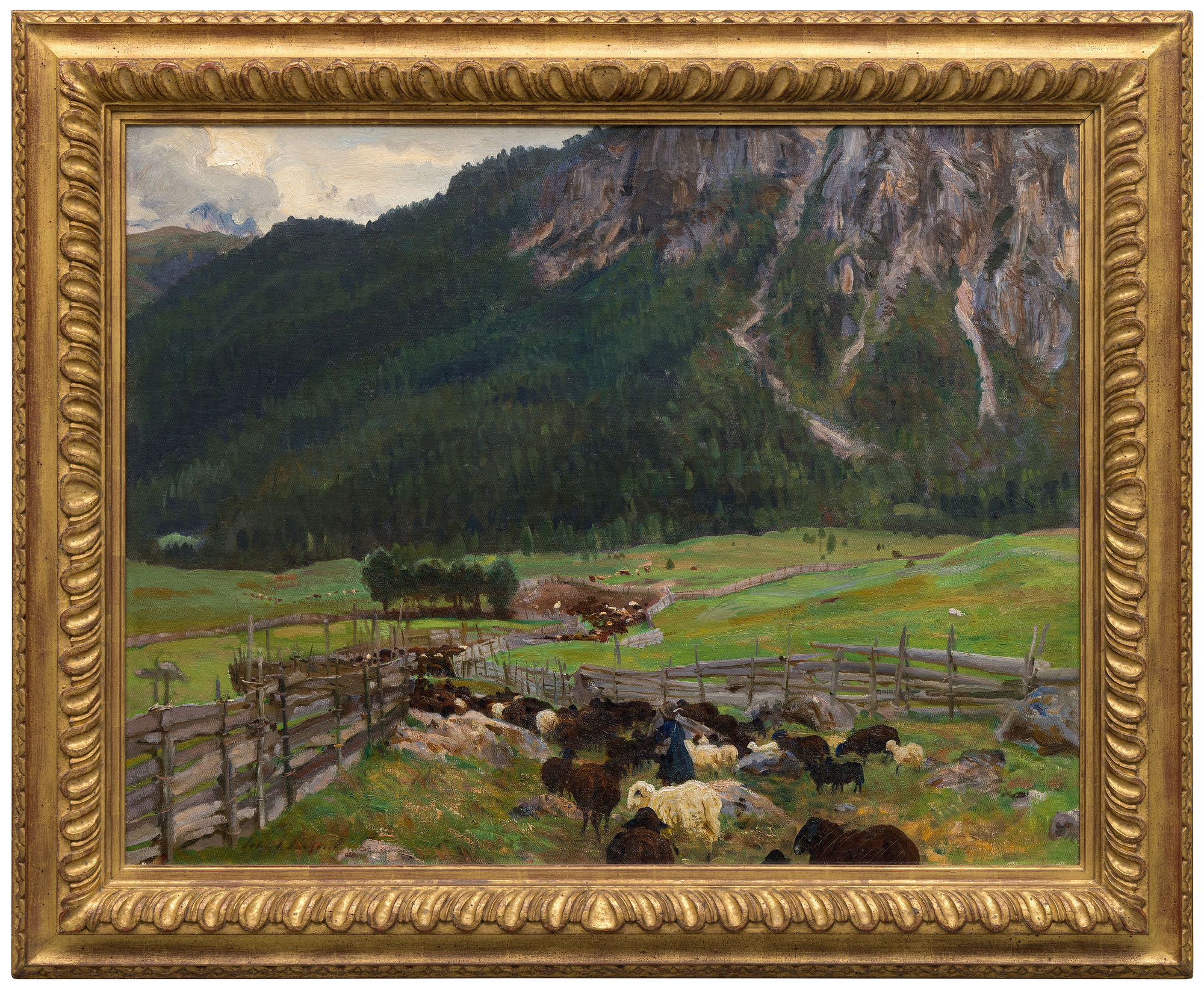
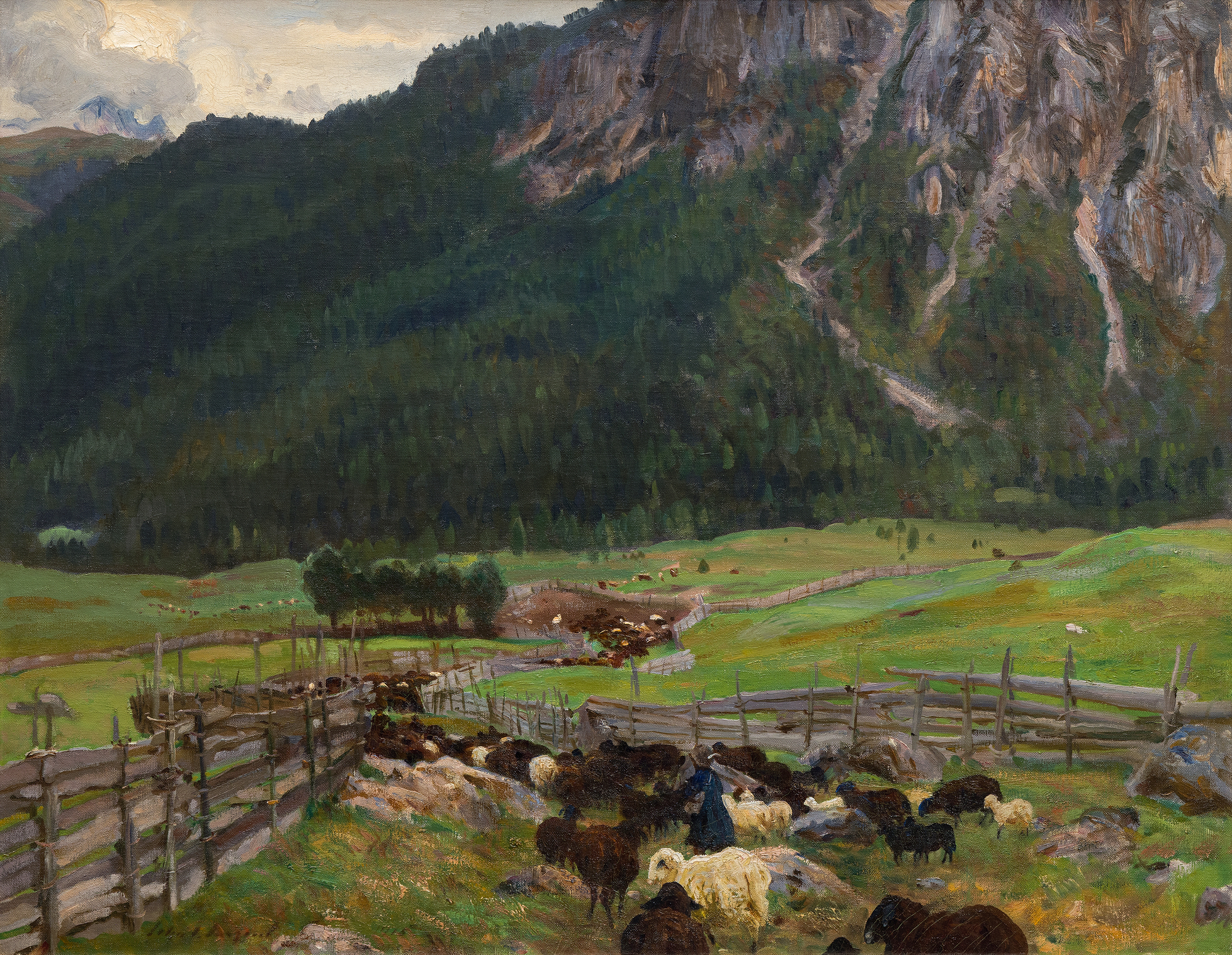
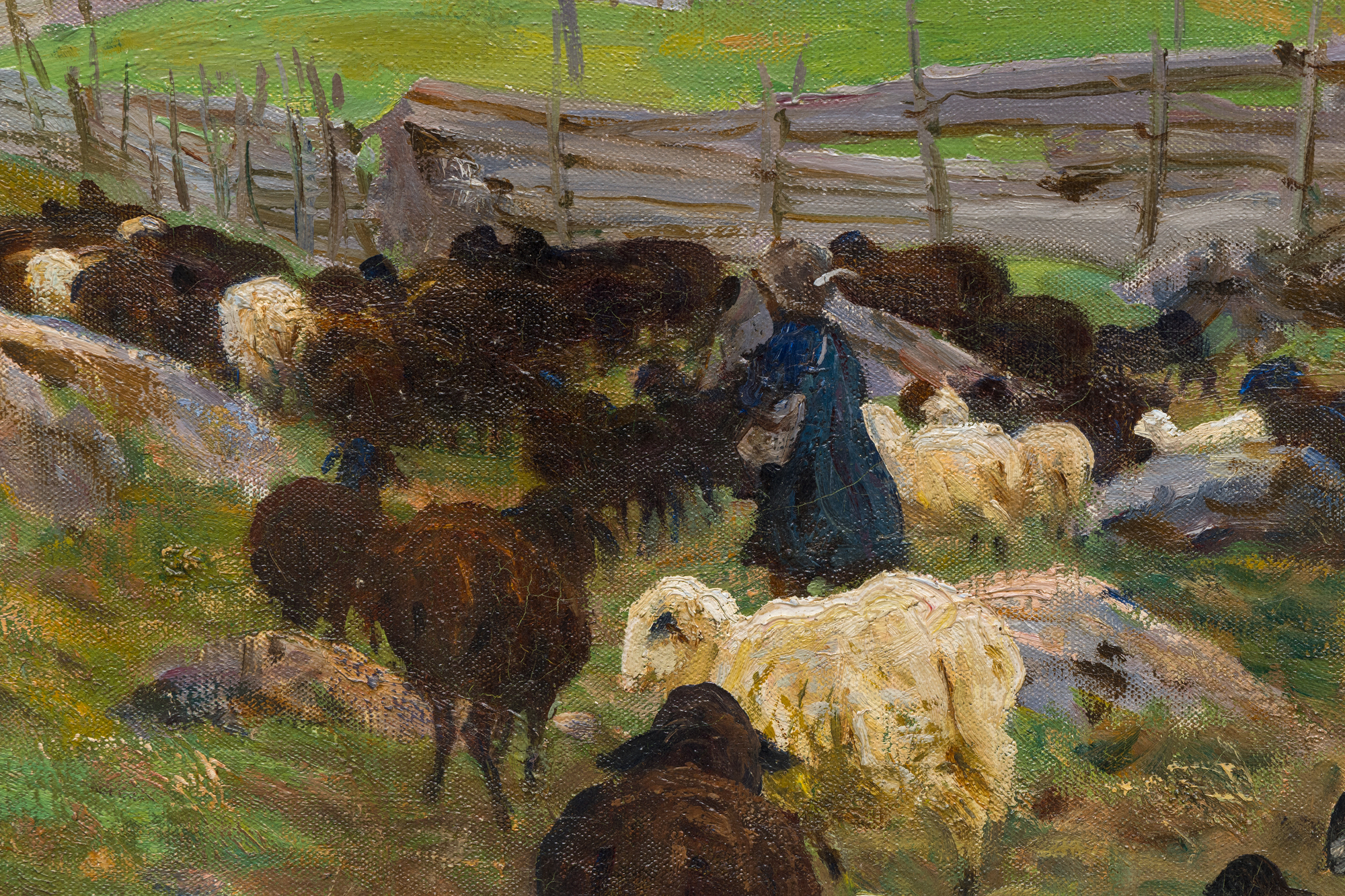
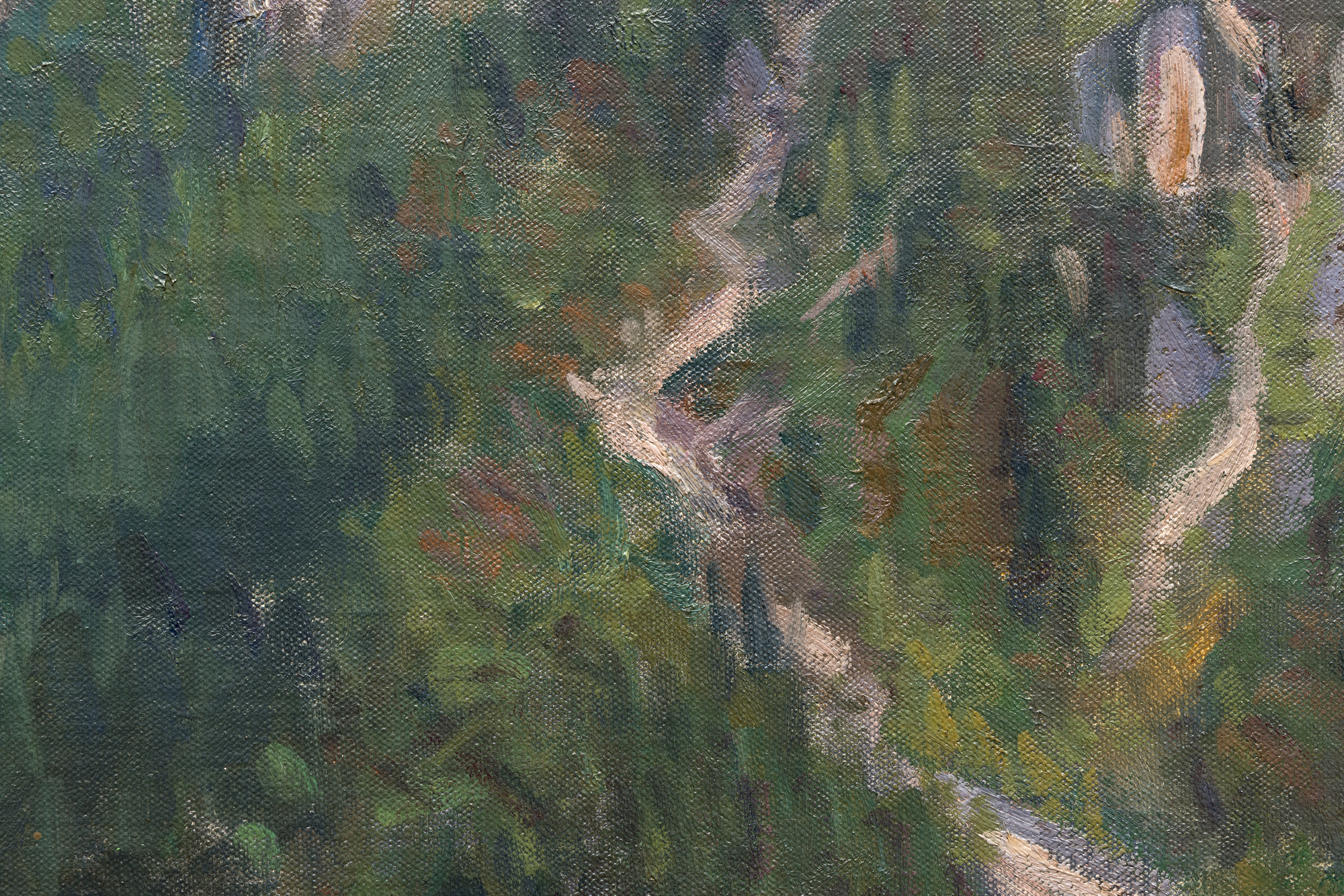
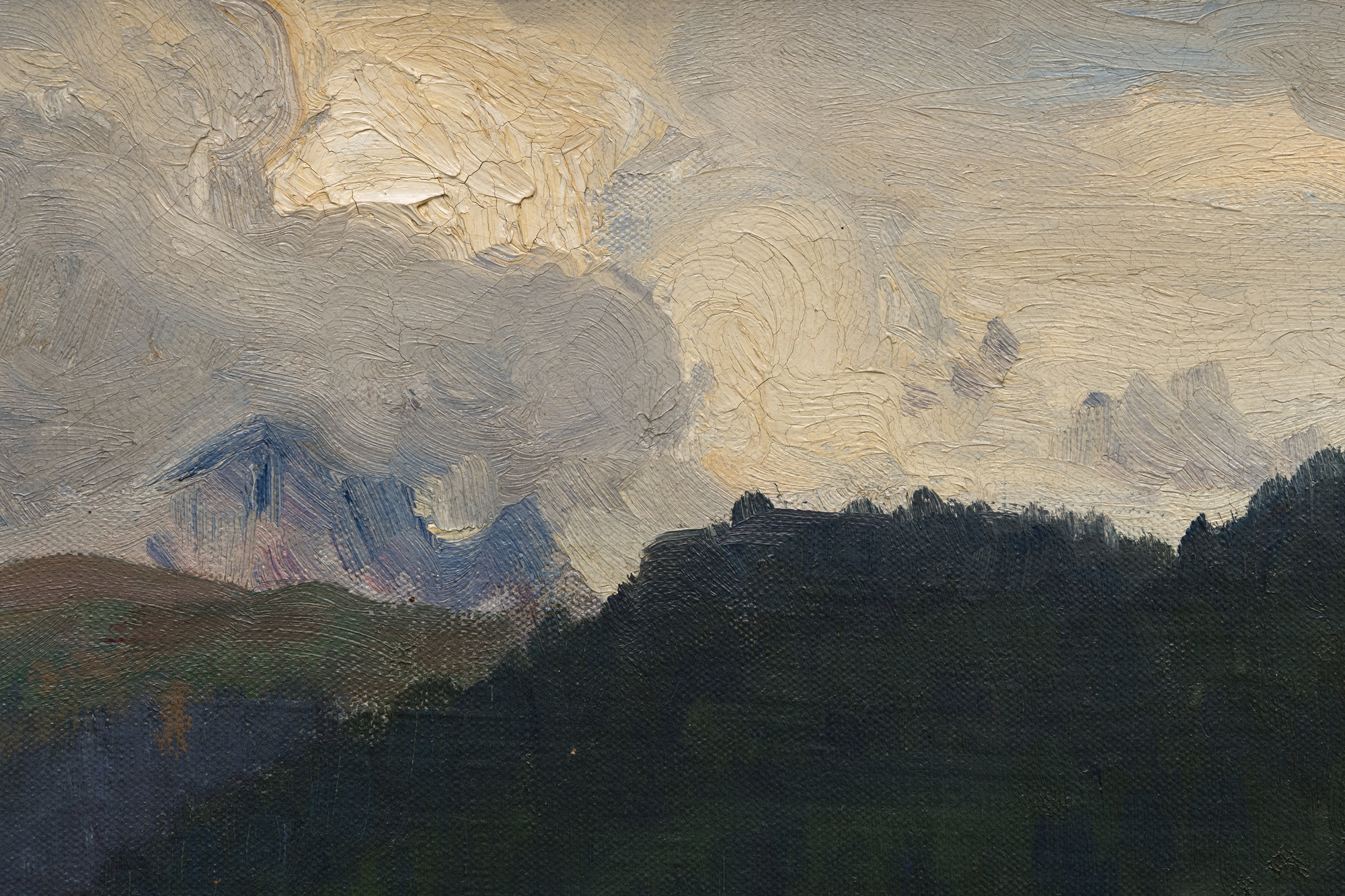
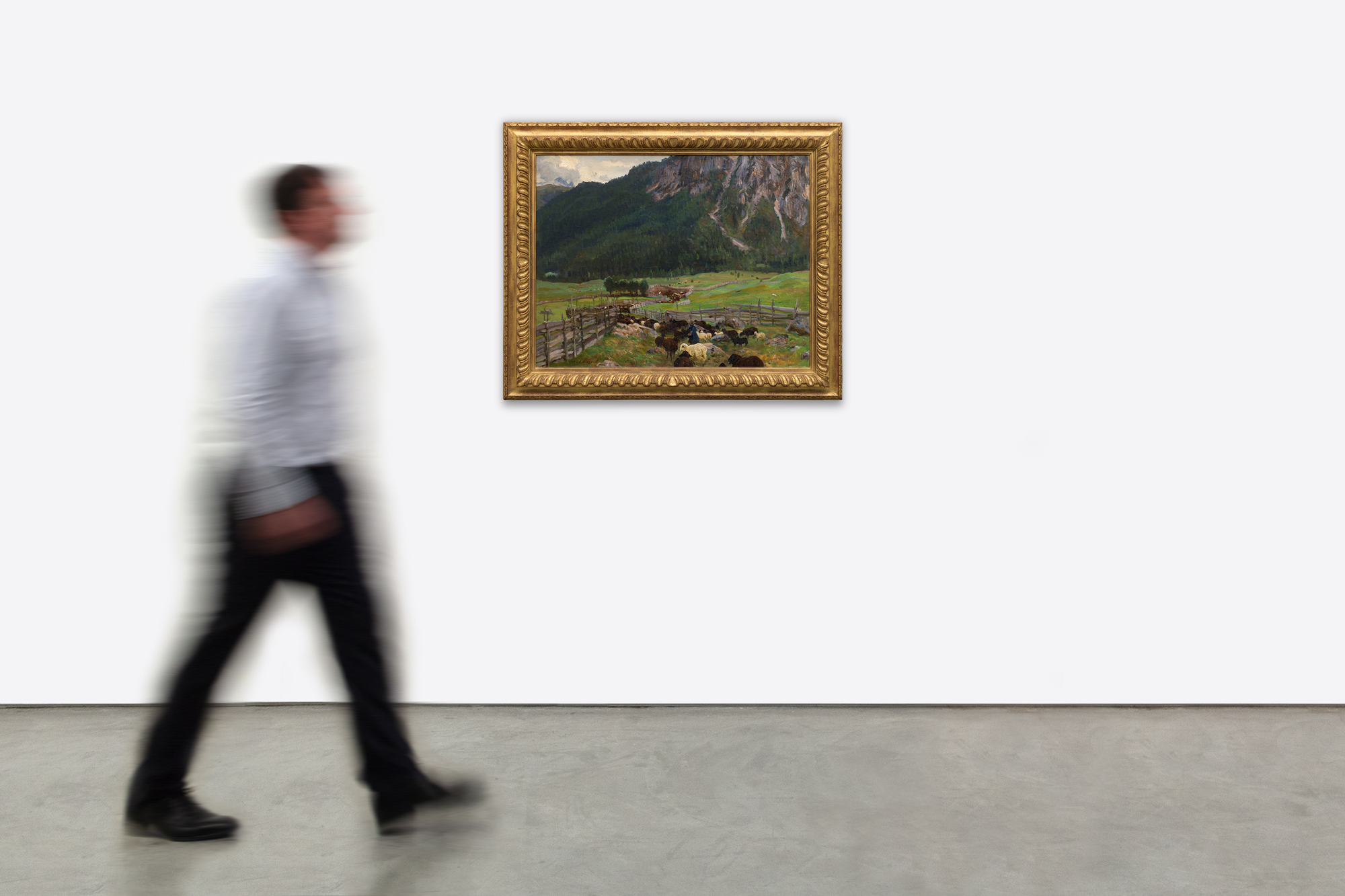
<div><font face=Lato size=3>Painted during John Singer Sargent's trip to the Austrian Tyrol in the summer of 1914, this work captures a moment of profound historical tension as Austria declared war on Serbia that July, placing Sargent at the threshold of the First World War. The painting offers a strikingly intimate and unexpected view of the Alpine landscape, framed from within a sheep pen with the mountain itself largely cropped from sight. This choice of vantage point shifts the viewers focus to the meeting point of the valley and the rising slope, where deep verdant greens anchor the composition and an overcast sky suggests a subtle sense of unease beyond the tranquil pastoral foreground.</font></div><br><br><div> </div><br><br><div><font face=Lato size=3>The work is included in the Sargent catalogue raisonne by Richard Ormond and Elaine Kilmurray, confirming its secure place within the artists documented production. Sargent created several related works during his 1914 stay in the Tyrol across both oil and watercolor, including <em>Tyrolese Interior </em>at The Metropolitan Museum of Art, <em>Woodsheds Tyrol</em> at the Art Institute of Chicago, and <em>Trout Stream</em> <em>in the Tyrol</em> at the de Young Museum. Together these works demonstrate Sargent's sustained engagement with the region and its distinctive light, atmosphere, and rural architecture during this pivotal year.</font></div><br><br><div> </div><br><br><div><font face=Lato size=3>This painting also carries distinguished provenance, having been previously held in the collection of Henry Clay Frick, the American industrialist and founder of the Frick Collection, before being given as a gift to his friend and lawyer Louis Cass Ledyard, who also served as counsel to J P Morgan. Its rarity within Sargents mature Tyrolean subjects is further underscored by the small number of comparable works that have reached the market, with only one closely related painting from this period, A Tyrolese Crucifix from 1915, having appeared at auction in recent decades.</font></div><br><br><div> </div><br><br><div><font face=Lato size=3>Sargents work continues to receive major institutional recognition, including the forthcoming exhibition Sargent Dazzling Paris at the Musee d Orsay in 2025 to 2026, reaffirming the ongoing relevance of his mature European landscapes within the broader narrative of early twentieth century art.</font></div> <div><font face=Lato size=3>Painted during John Singer Sargent's trip to the Austrian Tyrol in the summer of 1914, this work captures a moment of profound historical tension as Austria declared war on Serbia that July, placing Sargent at the threshold of the First World War. The painting offers a strikingly intimate and unexpected view of the Alpine landscape, framed from within a sheep pen with the mountain itself largely cropped from sight. This choice of vantage point shifts the viewers focus to the meeting point of the valley and the rising slope, where deep verdant greens anchor the composition and an overcast sky suggests a subtle sense of unease beyond the tranquil pastoral foreground.</font></div><br><br><div> </div><br><br><div><font face=Lato size=3>The work is included in the Sargent catalogue raisonne by Richard Ormond and Elaine Kilmurray, confirming its secure place within the artists documented production. Sargent created several related works during his 1914 stay in the Tyrol across both oil and watercolor, including <em>Tyrolese Interior </em>at The Metropolitan Museum of Art, <em>Woodsheds Tyrol</em> at the Art Institute of Chicago, and <em>Trout Stream</em> <em>in the Tyrol</em> at the de Young Museum. Together these works demonstrate Sargent's sustained engagement with the region and its distinctive light, atmosphere, and rural architecture during this pivotal year.</font></div><br><br><div> </div><br><br><div><font face=Lato size=3>This painting also carries distinguished provenance, having been previously held in the collection of Henry Clay Frick, the American industrialist and founder of the Frick Collection, before being given as a gift to his friend and lawyer Louis Cass Ledyard, who also served as counsel to J P Morgan. Its rarity within Sargents mature Tyrolean subjects is further underscored by the small number of comparable works that have reached the market, with only one closely related painting from this period, A Tyrolese Crucifix from 1915, having appeared at auction in recent decades.</font></div><br><br><div> </div><br><br><div><font face=Lato size=3>Sargents work continues to receive major institutional recognition, including the forthcoming exhibition Sargent Dazzling Paris at the Musee d Orsay in 2025 to 2026, reaffirming the ongoing relevance of his mature European landscapes within the broader narrative of early twentieth century art.</font></div> <div><font face=Lato size=3>Painted during John Singer Sargent's trip to the Austrian Tyrol in the summer of 1914, this work captures a moment of profound historical tension as Austria declared war on Serbia that July, placing Sargent at the threshold of the First World War. The painting offers a strikingly intimate and unexpected view of the Alpine landscape, framed from within a sheep pen with the mountain itself largely cropped from sight. This choice of vantage point shifts the viewers focus to the meeting point of the valley and the rising slope, where deep verdant greens anchor the composition and an overcast sky suggests a subtle sense of unease beyond the tranquil pastoral foreground.</font></div><br><br><div> </div><br><br><div><font face=Lato size=3>The work is included in the Sargent catalogue raisonne by Richard Ormond and Elaine Kilmurray, confirming its secure place within the artists documented production. Sargent created several related works during his 1914 stay in the Tyrol across both oil and watercolor, including <em>Tyrolese Interior </em>at The Metropolitan Museum of Art, <em>Woodsheds Tyrol</em> at the Art Institute of Chicago, and <em>Trout Stream</em> <em>in the Tyrol</em> at the de Young Museum. Together these works demonstrate Sargent's sustained engagement with the region and its distinctive light, atmosphere, and rural architecture during this pivotal year.</font></div><br><br><div> </div><br><br><div><font face=Lato size=3>This painting also carries distinguished provenance, having been previously held in the collection of Henry Clay Frick, the American industrialist and founder of the Frick Collection, before being given as a gift to his friend and lawyer Louis Cass Ledyard, who also served as counsel to J P Morgan. Its rarity within Sargents mature Tyrolean subjects is further underscored by the small number of comparable works that have reached the market, with only one closely related painting from this period, A Tyrolese Crucifix from 1915, having appeared at auction in recent decades.</font></div><br><br><div> </div><br><br><div><font face=Lato size=3>Sargents work continues to receive major institutional recognition, including the forthcoming exhibition Sargent Dazzling Paris at the Musee d Orsay in 2025 to 2026, reaffirming the ongoing relevance of his mature European landscapes within the broader narrative of early twentieth century art.</font></div> <div><font face=Lato size=3>Painted during John Singer Sargent's trip to the Austrian Tyrol in the summer of 1914, this work captures a moment of profound historical tension as Austria declared war on Serbia that July, placing Sargent at the threshold of the First World War. The painting offers a strikingly intimate and unexpected view of the Alpine landscape, framed from within a sheep pen with the mountain itself largely cropped from sight. This choice of vantage point shifts the viewers focus to the meeting point of the valley and the rising slope, where deep verdant greens anchor the composition and an overcast sky suggests a subtle sense of unease beyond the tranquil pastoral foreground.</font></div><br><br><div> </div><br><br><div><font face=Lato size=3>The work is included in the Sargent catalogue raisonne by Richard Ormond and Elaine Kilmurray, confirming its secure place within the artists documented production. Sargent created several related works during his 1914 stay in the Tyrol across both oil and watercolor, including <em>Tyrolese Interior </em>at The Metropolitan Museum of Art, <em>Woodsheds Tyrol</em> at the Art Institute of Chicago, and <em>Trout Stream</em> <em>in the Tyrol</em> at the de Young Museum. Together these works demonstrate Sargent's sustained engagement with the region and its distinctive light, atmosphere, and rural architecture during this pivotal year.</font></div><br><br><div> </div><br><br><div><font face=Lato size=3>This painting also carries distinguished provenance, having been previously held in the collection of Henry Clay Frick, the American industrialist and founder of the Frick Collection, before being given as a gift to his friend and lawyer Louis Cass Ledyard, who also served as counsel to J P Morgan. Its rarity within Sargents mature Tyrolean subjects is further underscored by the small number of comparable works that have reached the market, with only one closely related painting from this period, A Tyrolese Crucifix from 1915, having appeared at auction in recent decades.</font></div><br><br><div> </div><br><br><div><font face=Lato size=3>Sargents work continues to receive major institutional recognition, including the forthcoming exhibition Sargent Dazzling Paris at the Musee d Orsay in 2025 to 2026, reaffirming the ongoing relevance of his mature European landscapes within the broader narrative of early twentieth century art.</font></div> <div><font face=Lato size=3>Painted during John Singer Sargent's trip to the Austrian Tyrol in the summer of 1914, this work captures a moment of profound historical tension as Austria declared war on Serbia that July, placing Sargent at the threshold of the First World War. The painting offers a strikingly intimate and unexpected view of the Alpine landscape, framed from within a sheep pen with the mountain itself largely cropped from sight. This choice of vantage point shifts the viewers focus to the meeting point of the valley and the rising slope, where deep verdant greens anchor the composition and an overcast sky suggests a subtle sense of unease beyond the tranquil pastoral foreground.</font></div><br><br><div> </div><br><br><div><font face=Lato size=3>The work is included in the Sargent catalogue raisonne by Richard Ormond and Elaine Kilmurray, confirming its secure place within the artists documented production. Sargent created several related works during his 1914 stay in the Tyrol across both oil and watercolor, including <em>Tyrolese Interior </em>at The Metropolitan Museum of Art, <em>Woodsheds Tyrol</em> at the Art Institute of Chicago, and <em>Trout Stream</em> <em>in the Tyrol</em> at the de Young Museum. Together these works demonstrate Sargent's sustained engagement with the region and its distinctive light, atmosphere, and rural architecture during this pivotal year.</font></div><br><br><div> </div><br><br><div><font face=Lato size=3>This painting also carries distinguished provenance, having been previously held in the collection of Henry Clay Frick, the American industrialist and founder of the Frick Collection, before being given as a gift to his friend and lawyer Louis Cass Ledyard, who also served as counsel to J P Morgan. Its rarity within Sargents mature Tyrolean subjects is further underscored by the small number of comparable works that have reached the market, with only one closely related painting from this period, A Tyrolese Crucifix from 1915, having appeared at auction in recent decades.</font></div><br><br><div> </div><br><br><div><font face=Lato size=3>Sargents work continues to receive major institutional recognition, including the forthcoming exhibition Sargent Dazzling Paris at the Musee d Orsay in 2025 to 2026, reaffirming the ongoing relevance of his mature European landscapes within the broader narrative of early twentieth century art.</font></div> <div><font face=Lato size=3>Painted during John Singer Sargent's trip to the Austrian Tyrol in the summer of 1914, this work captures a moment of profound historical tension as Austria declared war on Serbia that July, placing Sargent at the threshold of the First World War. The painting offers a strikingly intimate and unexpected view of the Alpine landscape, framed from within a sheep pen with the mountain itself largely cropped from sight. This choice of vantage point shifts the viewers focus to the meeting point of the valley and the rising slope, where deep verdant greens anchor the composition and an overcast sky suggests a subtle sense of unease beyond the tranquil pastoral foreground.</font></div><br><br><div> </div><br><br><div><font face=Lato size=3>The work is included in the Sargent catalogue raisonne by Richard Ormond and Elaine Kilmurray, confirming its secure place within the artists documented production. Sargent created several related works during his 1914 stay in the Tyrol across both oil and watercolor, including <em>Tyrolese Interior </em>at The Metropolitan Museum of Art, <em>Woodsheds Tyrol</em> at the Art Institute of Chicago, and <em>Trout Stream</em> <em>in the Tyrol</em> at the de Young Museum. Together these works demonstrate Sargent's sustained engagement with the region and its distinctive light, atmosphere, and rural architecture during this pivotal year.</font></div><br><br><div> </div><br><br><div><font face=Lato size=3>This painting also carries distinguished provenance, having been previously held in the collection of Henry Clay Frick, the American industrialist and founder of the Frick Collection, before being given as a gift to his friend and lawyer Louis Cass Ledyard, who also served as counsel to J P Morgan. Its rarity within Sargents mature Tyrolean subjects is further underscored by the small number of comparable works that have reached the market, with only one closely related painting from this period, A Tyrolese Crucifix from 1915, having appeared at auction in recent decades.</font></div><br><br><div> </div><br><br><div><font face=Lato size=3>Sargents work continues to receive major institutional recognition, including the forthcoming exhibition Sargent Dazzling Paris at the Musee d Orsay in 2025 to 2026, reaffirming the ongoing relevance of his mature European landscapes within the broader narrative of early twentieth century art.</font></div> <div><font face=Lato size=3>Painted during John Singer Sargent's trip to the Austrian Tyrol in the summer of 1914, this work captures a moment of profound historical tension as Austria declared war on Serbia that July, placing Sargent at the threshold of the First World War. The painting offers a strikingly intimate and unexpected view of the Alpine landscape, framed from within a sheep pen with the mountain itself largely cropped from sight. This choice of vantage point shifts the viewers focus to the meeting point of the valley and the rising slope, where deep verdant greens anchor the composition and an overcast sky suggests a subtle sense of unease beyond the tranquil pastoral foreground.</font></div><br><br><div> </div><br><br><div><font face=Lato size=3>The work is included in the Sargent catalogue raisonne by Richard Ormond and Elaine Kilmurray, confirming its secure place within the artists documented production. Sargent created several related works during his 1914 stay in the Tyrol across both oil and watercolor, including <em>Tyrolese Interior </em>at The Metropolitan Museum of Art, <em>Woodsheds Tyrol</em> at the Art Institute of Chicago, and <em>Trout Stream</em> <em>in the Tyrol</em> at the de Young Museum. Together these works demonstrate Sargent's sustained engagement with the region and its distinctive light, atmosphere, and rural architecture during this pivotal year.</font></div><br><br><div> </div><br><br><div><font face=Lato size=3>This painting also carries distinguished provenance, having been previously held in the collection of Henry Clay Frick, the American industrialist and founder of the Frick Collection, before being given as a gift to his friend and lawyer Louis Cass Ledyard, who also served as counsel to J P Morgan. Its rarity within Sargents mature Tyrolean subjects is further underscored by the small number of comparable works that have reached the market, with only one closely related painting from this period, A Tyrolese Crucifix from 1915, having appeared at auction in recent decades.</font></div><br><br><div> </div><br><br><div><font face=Lato size=3>Sargents work continues to receive major institutional recognition, including the forthcoming exhibition Sargent Dazzling Paris at the Musee d Orsay in 2025 to 2026, reaffirming the ongoing relevance of his mature European landscapes within the broader narrative of early twentieth century art.</font></div> <div><font face=Lato size=3>Painted during John Singer Sargent's trip to the Austrian Tyrol in the summer of 1914, this work captures a moment of profound historical tension as Austria declared war on Serbia that July, placing Sargent at the threshold of the First World War. The painting offers a strikingly intimate and unexpected view of the Alpine landscape, framed from within a sheep pen with the mountain itself largely cropped from sight. This choice of vantage point shifts the viewers focus to the meeting point of the valley and the rising slope, where deep verdant greens anchor the composition and an overcast sky suggests a subtle sense of unease beyond the tranquil pastoral foreground.</font></div><br><br><div> </div><br><br><div><font face=Lato size=3>The work is included in the Sargent catalogue raisonne by Richard Ormond and Elaine Kilmurray, confirming its secure place within the artists documented production. Sargent created several related works during his 1914 stay in the Tyrol across both oil and watercolor, including <em>Tyrolese Interior </em>at The Metropolitan Museum of Art, <em>Woodsheds Tyrol</em> at the Art Institute of Chicago, and <em>Trout Stream</em> <em>in the Tyrol</em> at the de Young Museum. Together these works demonstrate Sargent's sustained engagement with the region and its distinctive light, atmosphere, and rural architecture during this pivotal year.</font></div><br><br><div> </div><br><br><div><font face=Lato size=3>This painting also carries distinguished provenance, having been previously held in the collection of Henry Clay Frick, the American industrialist and founder of the Frick Collection, before being given as a gift to his friend and lawyer Louis Cass Ledyard, who also served as counsel to J P Morgan. Its rarity within Sargents mature Tyrolean subjects is further underscored by the small number of comparable works that have reached the market, with only one closely related painting from this period, A Tyrolese Crucifix from 1915, having appeared at auction in recent decades.</font></div><br><br><div> </div><br><br><div><font face=Lato size=3>Sargents work continues to receive major institutional recognition, including the forthcoming exhibition Sargent Dazzling Paris at the Musee d Orsay in 2025 to 2026, reaffirming the ongoing relevance of his mature European landscapes within the broader narrative of early twentieth century art.</font></div> <div><font face=Lato size=3>Painted during John Singer Sargent's trip to the Austrian Tyrol in the summer of 1914, this work captures a moment of profound historical tension as Austria declared war on Serbia that July, placing Sargent at the threshold of the First World War. The painting offers a strikingly intimate and unexpected view of the Alpine landscape, framed from within a sheep pen with the mountain itself largely cropped from sight. This choice of vantage point shifts the viewers focus to the meeting point of the valley and the rising slope, where deep verdant greens anchor the composition and an overcast sky suggests a subtle sense of unease beyond the tranquil pastoral foreground.</font></div><br><br><div> </div><br><br><div><font face=Lato size=3>The work is included in the Sargent catalogue raisonne by Richard Ormond and Elaine Kilmurray, confirming its secure place within the artists documented production. Sargent created several related works during his 1914 stay in the Tyrol across both oil and watercolor, including <em>Tyrolese Interior </em>at The Metropolitan Museum of Art, <em>Woodsheds Tyrol</em> at the Art Institute of Chicago, and <em>Trout Stream</em> <em>in the Tyrol</em> at the de Young Museum. Together these works demonstrate Sargent's sustained engagement with the region and its distinctive light, atmosphere, and rural architecture during this pivotal year.</font></div><br><br><div> </div><br><br><div><font face=Lato size=3>This painting also carries distinguished provenance, having been previously held in the collection of Henry Clay Frick, the American industrialist and founder of the Frick Collection, before being given as a gift to his friend and lawyer Louis Cass Ledyard, who also served as counsel to J P Morgan. Its rarity within Sargents mature Tyrolean subjects is further underscored by the small number of comparable works that have reached the market, with only one closely related painting from this period, A Tyrolese Crucifix from 1915, having appeared at auction in recent decades.</font></div><br><br><div> </div><br><br><div><font face=Lato size=3>Sargents work continues to receive major institutional recognition, including the forthcoming exhibition Sargent Dazzling Paris at the Musee d Orsay in 2025 to 2026, reaffirming the ongoing relevance of his mature European landscapes within the broader narrative of early twentieth century art.</font></div> <div><font face=Lato size=3>Painted during John Singer Sargent's trip to the Austrian Tyrol in the summer of 1914, this work captures a moment of profound historical tension as Austria declared war on Serbia that July, placing Sargent at the threshold of the First World War. The painting offers a strikingly intimate and unexpected view of the Alpine landscape, framed from within a sheep pen with the mountain itself largely cropped from sight. This choice of vantage point shifts the viewers focus to the meeting point of the valley and the rising slope, where deep verdant greens anchor the composition and an overcast sky suggests a subtle sense of unease beyond the tranquil pastoral foreground.</font></div><br><br><div> </div><br><br><div><font face=Lato size=3>The work is included in the Sargent catalogue raisonne by Richard Ormond and Elaine Kilmurray, confirming its secure place within the artists documented production. Sargent created several related works during his 1914 stay in the Tyrol across both oil and watercolor, including <em>Tyrolese Interior </em>at The Metropolitan Museum of Art, <em>Woodsheds Tyrol</em> at the Art Institute of Chicago, and <em>Trout Stream</em> <em>in the Tyrol</em> at the de Young Museum. Together these works demonstrate Sargent's sustained engagement with the region and its distinctive light, atmosphere, and rural architecture during this pivotal year.</font></div><br><br><div> </div><br><br><div><font face=Lato size=3>This painting also carries distinguished provenance, having been previously held in the collection of Henry Clay Frick, the American industrialist and founder of the Frick Collection, before being given as a gift to his friend and lawyer Louis Cass Ledyard, who also served as counsel to J P Morgan. Its rarity within Sargents mature Tyrolean subjects is further underscored by the small number of comparable works that have reached the market, with only one closely related painting from this period, A Tyrolese Crucifix from 1915, having appeared at auction in recent decades.</font></div><br><br><div> </div><br><br><div><font face=Lato size=3>Sargents work continues to receive major institutional recognition, including the forthcoming exhibition Sargent Dazzling Paris at the Musee d Orsay in 2025 to 2026, reaffirming the ongoing relevance of his mature European landscapes within the broader narrative of early twentieth century art.</font></div>
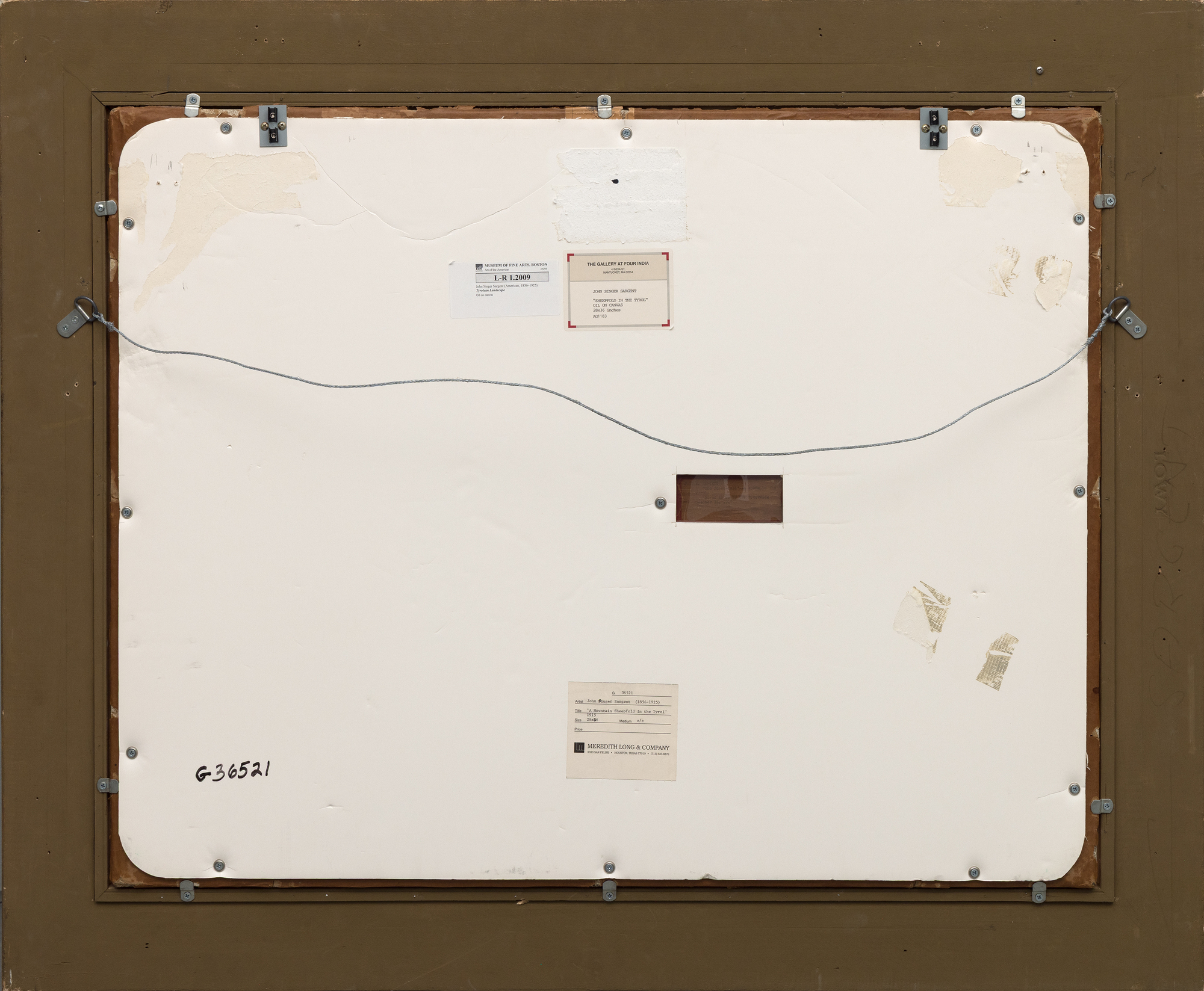
Une bergerie de montagne dans le Tyrol1914-191528 1/4 x 36 pouces(71,12 x 91,44 cm) huile sur toile
Provenance
Knoedler & Co., directement de l'artiste, 1915
Henry Clay Frick, New York, New York, 1916
Louis Cass Ledyard, don du ciel
Collection du Massachusetts, vers 1985
Collection privée
Exposition
New York, New York, M. Knoedler & Co., 1915, prêté par l'artiste
Houston, Texas, Meredith Long, années 1980
New York, New York, Adelson Galleries, vers 1990
Littérature
Nathaniel Pousette-Dart et Lee Woodward Ziegler, Distinguished American artists, John Singer Sargent, New York, 1924, n.p, illustré
William Howe Downes, John Singer Sargent
...Plus....., His Life and Works, Boston, 1925, p. 248, 300
Richard Ormond et Elaine Kilmurray, John Singer Sargent : Complete Paintings Volume 9 : Figures and Landscapes, 1914–1925, Londres, 2017, n° 1758
...MOINS.....
Peinte pendant le voyage de John Singer Sargent dans le Tyrol autrichien à l'été 1914, cette œuvre capture un moment de profonde tension historique, alors que l'Autriche déclarait la guerre à la Serbie en juillet, plaçant Sargent au seuil de la Première Guerre mondiale. Le tableau offre une vue étonnamment intime et inattendue du paysage alpin, cadrée depuis l'intérieur d'une bergerie, la montagne elle-même étant en grande partie coupée de la vue. Ce choix de point de vue déplace l'attention du spectateur vers le point de rencontre entre la vallée et la pente ascendante, où des verts profonds ancrent la composition et où un ciel couvert suggère un subtil sentiment de malaise au-delà du premier plan pastoral tranquille.


L'œuvre figure dans le catalogue raisonné de Sargent réalisé par Richard Ormond et Elaine Kilmurray, ce qui confirme sa place incontestable dans la production documentée de l'artiste. Sargent a créé plusieurs œuvres connexes pendant son séjour au Tyrol en 1914, tant à l'huile qu'à l'aquarelle, notamment Tyrolese Interior au Metropolitan Museum of Art, Woodsheds Tyrol à l'Art Institute of Chicago et Trout Stream in the Tyrol au de Young Museum. Ensemble, ces œuvres témoignent de l'intérêt soutenu de Sargent pour cette région et sa lumière, son atmosphère et son architecture rurale caractéristiques au cours de cette année charnière.


Ce tableau a également une provenance prestigieuse, puisqu'il a appartenu à la collection de Henry Clay Frick, industriel américain et fondateur de la Frick Collection, avant d'être offert à son ami et avocat Louis Cass Ledyard, qui était également conseiller juridique de J. P. Morgan. Sa rareté parmi les sujets tyroliens de Sargent à maturité est encore soulignée par le petit nombre d'œuvres comparables qui ont atteint le marché, avec un seul tableau étroitement lié à cette période, A Tyrolese Crucifix de 1915, ayant été mis aux enchères au cours des dernières décennies.


L'œuvre de Sargent continue de bénéficier d'une reconnaissance institutionnelle majeure, notamment avec la prochaine exposition Sargent Dazzling Paris au musée d'Orsay en 2025-2026, qui réaffirme la pertinence actuelle de ses paysages européens de maturité dans le contexte plus large de l'art du début du XXe siècle.
demander