


Précédent
JAPONAIS
$9,500
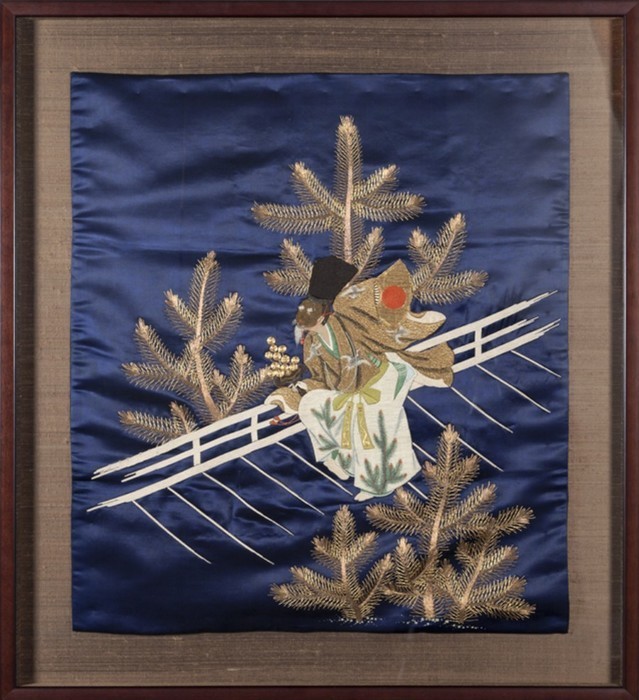
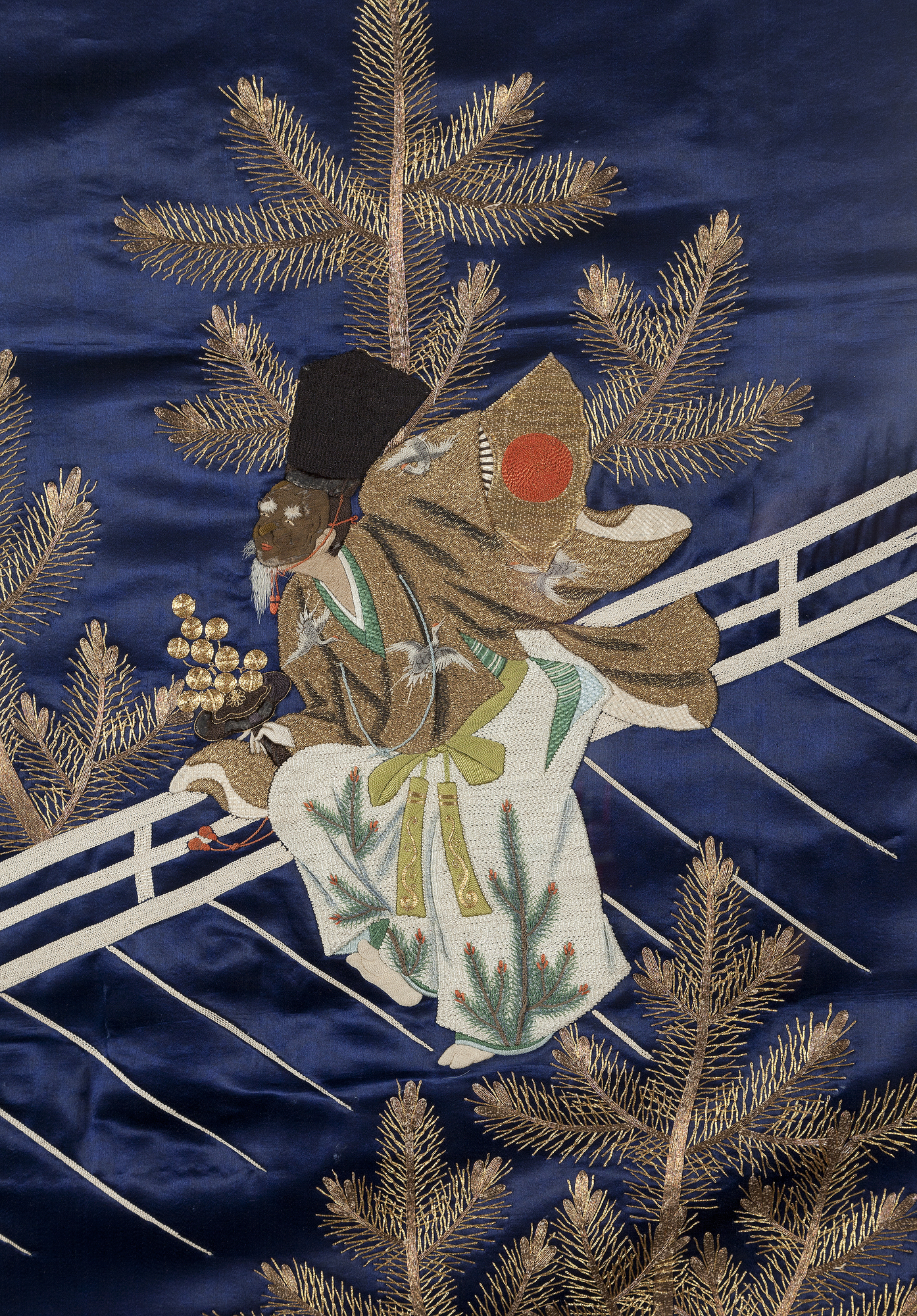
Acteur de théâtre NôPériode Meiji (1868-1912)27 1/2 x 25 po(69,85 x 63,5 cm) Broderie en soie avec fil d'or et soie
Provenance
Heather James Fine Art, CalifornieIci, un acteur de théâtre Nô, vêtu d'un costume complet et portant un masque, traverse l'aile d'une scène de théâtre Nô. La scène est flanquée de pins, qui sont également un motif sur son kimono. En général, un pin est peint sur le mur arrière des scènes de théâtre Nô pour représenter l'arbre à travers lequel, selon la légende, cette forme théâtrale a été transmise du ciel à l'humanité. Dans la culture japonaise, le pin à feuilles persistantes est devenu un symbole important de longévité et de constance.
La pratique consistant à poser un fukusa sur les cadeaux placés sur des plateaux en bois ou en laque s'est largement répandue pendant la période Edo (XVIIe-XIXe siècles). Ce qui était au départ une pratique fonctionnelle visant à protéger les cadeaux des intempéries a pris une dimension décorative à part entière. Les familles aisées possédaient un grand nombre de fukusa et commandaient souvent à des artistes célèbres de l'époque
des modèles exclusifs. Les dessins étaient ensuite réalisés à l'aide de techniques telles que la teinture par nouage, le pochoir, la broderie à fentes, la tapisserie, la peinture avec broderie et des combinaisons de toutes ces méthodes. Chaque fois qu'un fukusa était nécessaire, il était choisi non seulement en fonction de l'occasion, mais aussi de la saison, du cadeau lui-même et du statut du donateur et du destinataire. Les fukusa faisaient également partie du trousseau des mariées et pouvaient être offerts à l'occasion d'un mariage. Les fukusa étaient constitués de morceaux de soie carrés ou rectangulaires, doublés et souvent ornés de pompons, et portant parfois le monogramme ou les armoiries de la famille au verso. L'étiquette voulait que les fukusa ne soient généralement pas considérés comme faisant partie du cadeau lui-même et qu'ils soient rendus en recouvrant un cadeau symbolique ou un remerciement pour le cadeau. Cependant, certains destinataires, tels que les bureaucrates, qui acceptaient des cadeaux de personnes cherchant à obtenir des faveurs, choisissaient de conserver les fukusa avec les cadeaux qu'ils recouvraient, ajoutant ainsi à leur propre réserve d'emballages cadeaux.
La pratique consistant à poser un fukusa sur les cadeaux placés sur des plateaux en bois ou en laque s'est largement répandue pendant la période Edo (XVIIe-XIXe siècles). Ce qui était au départ une pratique fonctionnelle visant à protéger les cadeaux des intempéries a pris une dimension décorative à part entière. Les familles aisées possédaient un grand nombre de fukusa et commandaient souvent à des artistes célèbres de l'époque
des modèles exclusifs. Les dessins étaient ensuite réalisés à l'aide de techniques telles que la teinture par nouage, le pochoir, la broderie à fentes, la tapisserie, la peinture avec broderie et des combinaisons de toutes ces méthodes. Chaque fois qu'un fukusa était nécessaire, il était choisi non seulement en fonction de l'occasion, mais aussi de la saison, du cadeau lui-même et du statut du donateur et du destinataire. Les fukusa faisaient également partie du trousseau des mariées et pouvaient être offerts à l'occasion d'un mariage. Les fukusa étaient constitués de morceaux de soie carrés ou rectangulaires, doublés et souvent ornés de pompons, et portant parfois le monogramme ou les armoiries de la famille au verso. L'étiquette voulait que les fukusa ne soient généralement pas considérés comme faisant partie du cadeau lui-même et qu'ils soient rendus en recouvrant un cadeau symbolique ou un remerciement pour le cadeau. Cependant, certains destinataires, tels que les bureaucrates, qui acceptaient des cadeaux de personnes cherchant à obtenir des faveurs, choisissaient de conserver les fukusa avec les cadeaux qu'ils recouvraient, ajoutant ainsi à leur propre réserve d'emballages cadeaux.