ALSONクラーク (1876-1949)

$100,000
 
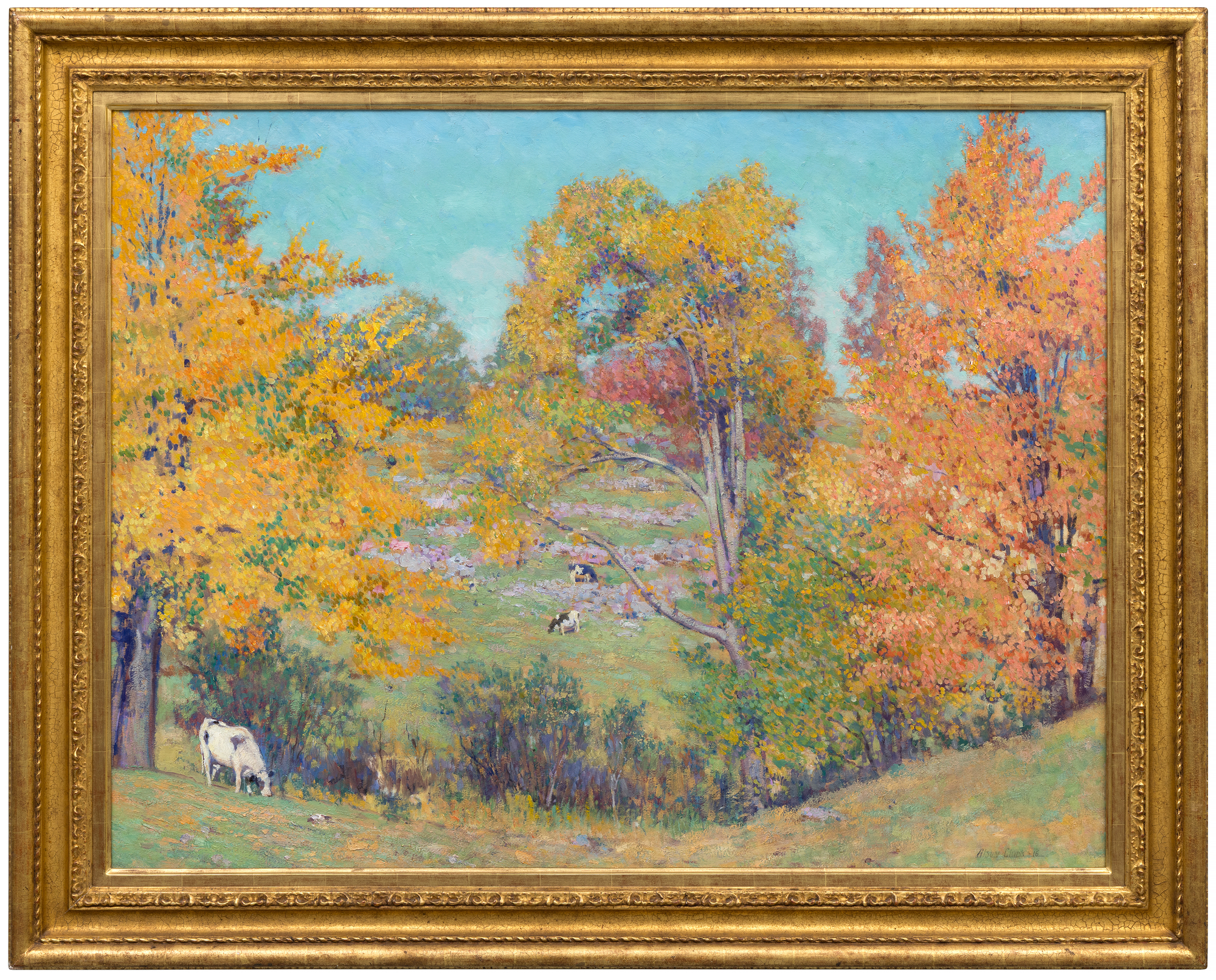
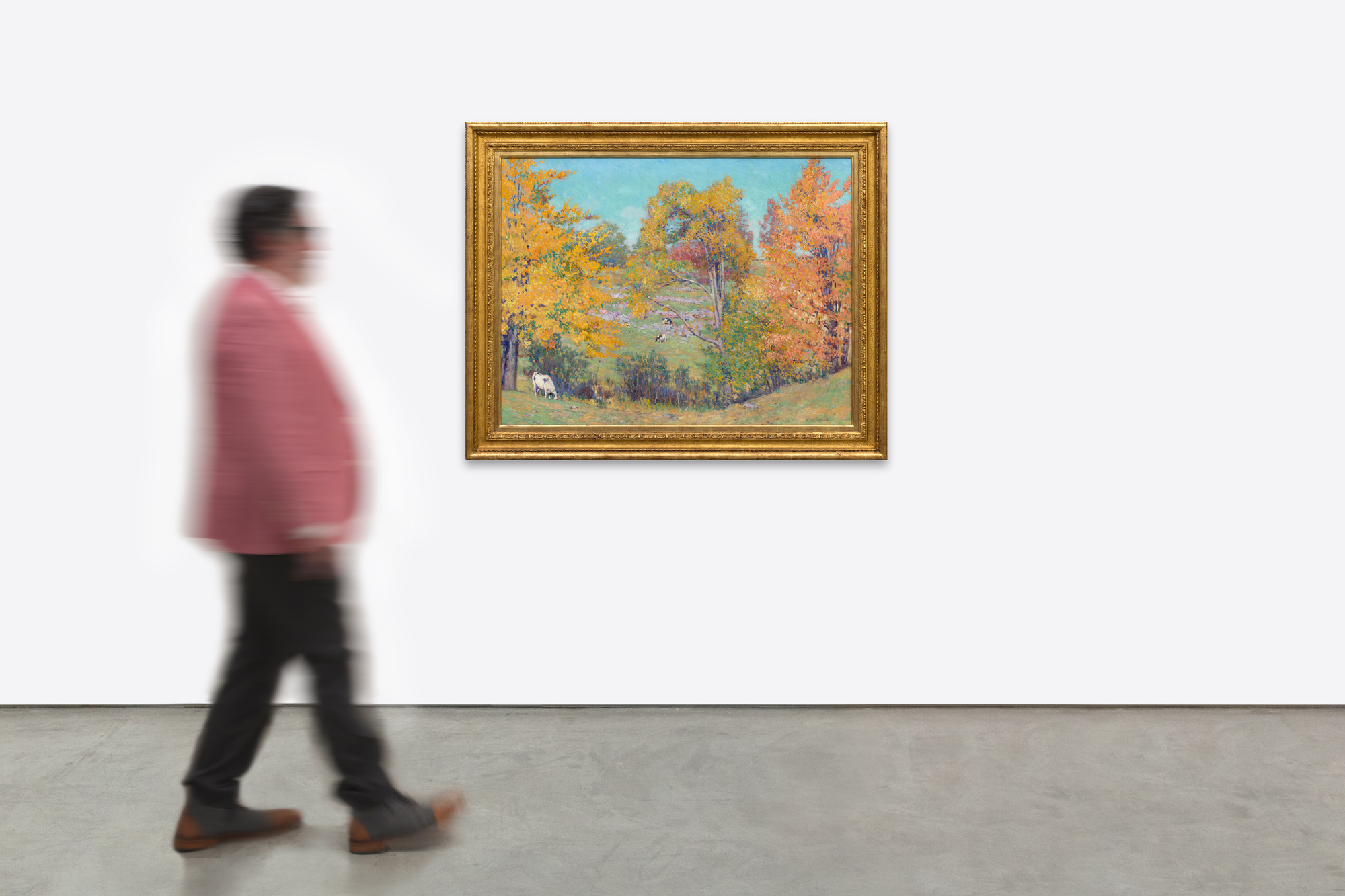
<div>Alson Clark’s <em>Autumn, St. Lawrence River</em> (1916) is a celebration of seasonal color and painterly assurance, created during a highly productive summer spent along the St. Lawrence River. Painted at a moment of peak confidence, the work follows closely on the artist’s major success at the Panama–Pacific International Exposition, where Clark filled an entire exhibition room with his paintings—an achievement that firmly established his reputation and momentum at this stage of his career. </div><br><br><div> </div><br><br><div>The composition unfolds across a gently rolling landscape animated by the brilliance of early autumn. Trees blaze with saturated yellows, oranges, and soft reds, their foliage rendered in broken, impressionistic strokes against a clear, luminous blue sky. Clark’s confident handling of paint allows color to carry form, creating a sense of depth through overlapping passages. Small grazing cattle dot the hillside, providing scale and a quiet note of pastoral life that anchors the composition without interrupting its chromatic rhythm. </div><br><br><div> </div><br><br><div>Clark was celebrated for his ability to fuse American landscape painting with lessons drawn from European Impressionism, and this work exemplifies that synthesis. The surface remains lively and tactile, with visible brushwork that conveys movement and atmosphere while maintaining compositional harmony. <em>Autumn, St. Lawrence River </em>reflects not only the artist’s mastery of color and light, but also the assured vision of a painter fully at ease with his subject, transforming a specific place and moment into a timeless expression of seasonal abundance. </div> <div>Alson Clark’s <em>Autumn, St. Lawrence River</em> (1916) is a celebration of seasonal color and painterly assurance, created during a highly productive summer spent along the St. Lawrence River. Painted at a moment of peak confidence, the work follows closely on the artist’s major success at the Panama–Pacific International Exposition, where Clark filled an entire exhibition room with his paintings—an achievement that firmly established his reputation and momentum at this stage of his career. </div><br><br><div> </div><br><br><div>The composition unfolds across a gently rolling landscape animated by the brilliance of early autumn. Trees blaze with saturated yellows, oranges, and soft reds, their foliage rendered in broken, impressionistic strokes against a clear, luminous blue sky. Clark’s confident handling of paint allows color to carry form, creating a sense of depth through overlapping passages. Small grazing cattle dot the hillside, providing scale and a quiet note of pastoral life that anchors the composition without interrupting its chromatic rhythm. </div><br><br><div> </div><br><br><div>Clark was celebrated for his ability to fuse American landscape painting with lessons drawn from European Impressionism, and this work exemplifies that synthesis. The surface remains lively and tactile, with visible brushwork that conveys movement and atmosphere while maintaining compositional harmony. <em>Autumn, St. Lawrence River </em>reflects not only the artist’s mastery of color and light, but also the assured vision of a painter fully at ease with his subject, transforming a specific place and moment into a timeless expression of seasonal abundance. </div> <div>Alson Clark’s <em>Autumn, St. Lawrence River</em> (1916) is a celebration of seasonal color and painterly assurance, created during a highly productive summer spent along the St. Lawrence River. Painted at a moment of peak confidence, the work follows closely on the artist’s major success at the Panama–Pacific International Exposition, where Clark filled an entire exhibition room with his paintings—an achievement that firmly established his reputation and momentum at this stage of his career. </div><br><br><div> </div><br><br><div>The composition unfolds across a gently rolling landscape animated by the brilliance of early autumn. Trees blaze with saturated yellows, oranges, and soft reds, their foliage rendered in broken, impressionistic strokes against a clear, luminous blue sky. Clark’s confident handling of paint allows color to carry form, creating a sense of depth through overlapping passages. Small grazing cattle dot the hillside, providing scale and a quiet note of pastoral life that anchors the composition without interrupting its chromatic rhythm. </div><br><br><div> </div><br><br><div>Clark was celebrated for his ability to fuse American landscape painting with lessons drawn from European Impressionism, and this work exemplifies that synthesis. The surface remains lively and tactile, with visible brushwork that conveys movement and atmosphere while maintaining compositional harmony. <em>Autumn, St. Lawrence River </em>reflects not only the artist’s mastery of color and light, but also the assured vision of a painter fully at ease with his subject, transforming a specific place and moment into a timeless expression of seasonal abundance. </div> <div>Alson Clark’s <em>Autumn, St. Lawrence River</em> (1916) is a celebration of seasonal color and painterly assurance, created during a highly productive summer spent along the St. Lawrence River. Painted at a moment of peak confidence, the work follows closely on the artist’s major success at the Panama–Pacific International Exposition, where Clark filled an entire exhibition room with his paintings—an achievement that firmly established his reputation and momentum at this stage of his career. </div><br><br><div> </div><br><br><div>The composition unfolds across a gently rolling landscape animated by the brilliance of early autumn. Trees blaze with saturated yellows, oranges, and soft reds, their foliage rendered in broken, impressionistic strokes against a clear, luminous blue sky. Clark’s confident handling of paint allows color to carry form, creating a sense of depth through overlapping passages. Small grazing cattle dot the hillside, providing scale and a quiet note of pastoral life that anchors the composition without interrupting its chromatic rhythm. </div><br><br><div> </div><br><br><div>Clark was celebrated for his ability to fuse American landscape painting with lessons drawn from European Impressionism, and this work exemplifies that synthesis. The surface remains lively and tactile, with visible brushwork that conveys movement and atmosphere while maintaining compositional harmony. <em>Autumn, St. Lawrence River </em>reflects not only the artist’s mastery of color and light, but also the assured vision of a painter fully at ease with his subject, transforming a specific place and moment into a timeless expression of seasonal abundance. </div> <div>Alson Clark’s <em>Autumn, St. Lawrence River</em> (1916) is a celebration of seasonal color and painterly assurance, created during a highly productive summer spent along the St. Lawrence River. Painted at a moment of peak confidence, the work follows closely on the artist’s major success at the Panama–Pacific International Exposition, where Clark filled an entire exhibition room with his paintings—an achievement that firmly established his reputation and momentum at this stage of his career. </div><br><br><div> </div><br><br><div>The composition unfolds across a gently rolling landscape animated by the brilliance of early autumn. Trees blaze with saturated yellows, oranges, and soft reds, their foliage rendered in broken, impressionistic strokes against a clear, luminous blue sky. Clark’s confident handling of paint allows color to carry form, creating a sense of depth through overlapping passages. Small grazing cattle dot the hillside, providing scale and a quiet note of pastoral life that anchors the composition without interrupting its chromatic rhythm. </div><br><br><div> </div><br><br><div>Clark was celebrated for his ability to fuse American landscape painting with lessons drawn from European Impressionism, and this work exemplifies that synthesis. The surface remains lively and tactile, with visible brushwork that conveys movement and atmosphere while maintaining compositional harmony. <em>Autumn, St. Lawrence River </em>reflects not only the artist’s mastery of color and light, but also the assured vision of a painter fully at ease with his subject, transforming a specific place and moment into a timeless expression of seasonal abundance. </div> <div>Alson Clark’s <em>Autumn, St. Lawrence River</em> (1916) is a celebration of seasonal color and painterly assurance, created during a highly productive summer spent along the St. Lawrence River. Painted at a moment of peak confidence, the work follows closely on the artist’s major success at the Panama–Pacific International Exposition, where Clark filled an entire exhibition room with his paintings—an achievement that firmly established his reputation and momentum at this stage of his career. </div><br><br><div> </div><br><br><div>The composition unfolds across a gently rolling landscape animated by the brilliance of early autumn. Trees blaze with saturated yellows, oranges, and soft reds, their foliage rendered in broken, impressionistic strokes against a clear, luminous blue sky. Clark’s confident handling of paint allows color to carry form, creating a sense of depth through overlapping passages. Small grazing cattle dot the hillside, providing scale and a quiet note of pastoral life that anchors the composition without interrupting its chromatic rhythm. </div><br><br><div> </div><br><br><div>Clark was celebrated for his ability to fuse American landscape painting with lessons drawn from European Impressionism, and this work exemplifies that synthesis. The surface remains lively and tactile, with visible brushwork that conveys movement and atmosphere while maintaining compositional harmony. <em>Autumn, St. Lawrence River </em>reflects not only the artist’s mastery of color and light, but also the assured vision of a painter fully at ease with his subject, transforming a specific place and moment into a timeless expression of seasonal abundance. </div> <div>Alson Clark’s <em>Autumn, St. Lawrence River</em> (1916) is a celebration of seasonal color and painterly assurance, created during a highly productive summer spent along the St. Lawrence River. Painted at a moment of peak confidence, the work follows closely on the artist’s major success at the Panama–Pacific International Exposition, where Clark filled an entire exhibition room with his paintings—an achievement that firmly established his reputation and momentum at this stage of his career. </div><br><br><div> </div><br><br><div>The composition unfolds across a gently rolling landscape animated by the brilliance of early autumn. Trees blaze with saturated yellows, oranges, and soft reds, their foliage rendered in broken, impressionistic strokes against a clear, luminous blue sky. Clark’s confident handling of paint allows color to carry form, creating a sense of depth through overlapping passages. Small grazing cattle dot the hillside, providing scale and a quiet note of pastoral life that anchors the composition without interrupting its chromatic rhythm. </div><br><br><div> </div><br><br><div>Clark was celebrated for his ability to fuse American landscape painting with lessons drawn from European Impressionism, and this work exemplifies that synthesis. The surface remains lively and tactile, with visible brushwork that conveys movement and atmosphere while maintaining compositional harmony. <em>Autumn, St. Lawrence River </em>reflects not only the artist’s mastery of color and light, but also the assured vision of a painter fully at ease with his subject, transforming a specific place and moment into a timeless expression of seasonal abundance. </div> <div>Alson Clark’s <em>Autumn, St. Lawrence River</em> (1916) is a celebration of seasonal color and painterly assurance, created during a highly productive summer spent along the St. Lawrence River. Painted at a moment of peak confidence, the work follows closely on the artist’s major success at the Panama–Pacific International Exposition, where Clark filled an entire exhibition room with his paintings—an achievement that firmly established his reputation and momentum at this stage of his career. </div><br><br><div> </div><br><br><div>The composition unfolds across a gently rolling landscape animated by the brilliance of early autumn. Trees blaze with saturated yellows, oranges, and soft reds, their foliage rendered in broken, impressionistic strokes against a clear, luminous blue sky. Clark’s confident handling of paint allows color to carry form, creating a sense of depth through overlapping passages. Small grazing cattle dot the hillside, providing scale and a quiet note of pastoral life that anchors the composition without interrupting its chromatic rhythm. </div><br><br><div> </div><br><br><div>Clark was celebrated for his ability to fuse American landscape painting with lessons drawn from European Impressionism, and this work exemplifies that synthesis. The surface remains lively and tactile, with visible brushwork that conveys movement and atmosphere while maintaining compositional harmony. <em>Autumn, St. Lawrence River </em>reflects not only the artist’s mastery of color and light, but also the assured vision of a painter fully at ease with his subject, transforming a specific place and moment into a timeless expression of seasonal abundance. </div> <div>Alson Clark’s <em>Autumn, St. Lawrence River</em> (1916) is a celebration of seasonal color and painterly assurance, created during a highly productive summer spent along the St. Lawrence River. Painted at a moment of peak confidence, the work follows closely on the artist’s major success at the Panama–Pacific International Exposition, where Clark filled an entire exhibition room with his paintings—an achievement that firmly established his reputation and momentum at this stage of his career. </div><br><br><div> </div><br><br><div>The composition unfolds across a gently rolling landscape animated by the brilliance of early autumn. Trees blaze with saturated yellows, oranges, and soft reds, their foliage rendered in broken, impressionistic strokes against a clear, luminous blue sky. Clark’s confident handling of paint allows color to carry form, creating a sense of depth through overlapping passages. Small grazing cattle dot the hillside, providing scale and a quiet note of pastoral life that anchors the composition without interrupting its chromatic rhythm. </div><br><br><div> </div><br><br><div>Clark was celebrated for his ability to fuse American landscape painting with lessons drawn from European Impressionism, and this work exemplifies that synthesis. The surface remains lively and tactile, with visible brushwork that conveys movement and atmosphere while maintaining compositional harmony. <em>Autumn, St. Lawrence River </em>reflects not only the artist’s mastery of color and light, but also the assured vision of a painter fully at ease with his subject, transforming a specific place and moment into a timeless expression of seasonal abundance. </div> <div>Alson Clark’s <em>Autumn, St. Lawrence River</em> (1916) is a celebration of seasonal color and painterly assurance, created during a highly productive summer spent along the St. Lawrence River. Painted at a moment of peak confidence, the work follows closely on the artist’s major success at the Panama–Pacific International Exposition, where Clark filled an entire exhibition room with his paintings—an achievement that firmly established his reputation and momentum at this stage of his career. </div><br><br><div> </div><br><br><div>The composition unfolds across a gently rolling landscape animated by the brilliance of early autumn. Trees blaze with saturated yellows, oranges, and soft reds, their foliage rendered in broken, impressionistic strokes against a clear, luminous blue sky. Clark’s confident handling of paint allows color to carry form, creating a sense of depth through overlapping passages. Small grazing cattle dot the hillside, providing scale and a quiet note of pastoral life that anchors the composition without interrupting its chromatic rhythm. </div><br><br><div> </div><br><br><div>Clark was celebrated for his ability to fuse American landscape painting with lessons drawn from European Impressionism, and this work exemplifies that synthesis. The surface remains lively and tactile, with visible brushwork that conveys movement and atmosphere while maintaining compositional harmony. <em>Autumn, St. Lawrence River </em>reflects not only the artist’s mastery of color and light, but also the assured vision of a painter fully at ease with his subject, transforming a specific place and moment into a timeless expression of seasonal abundance. </div>
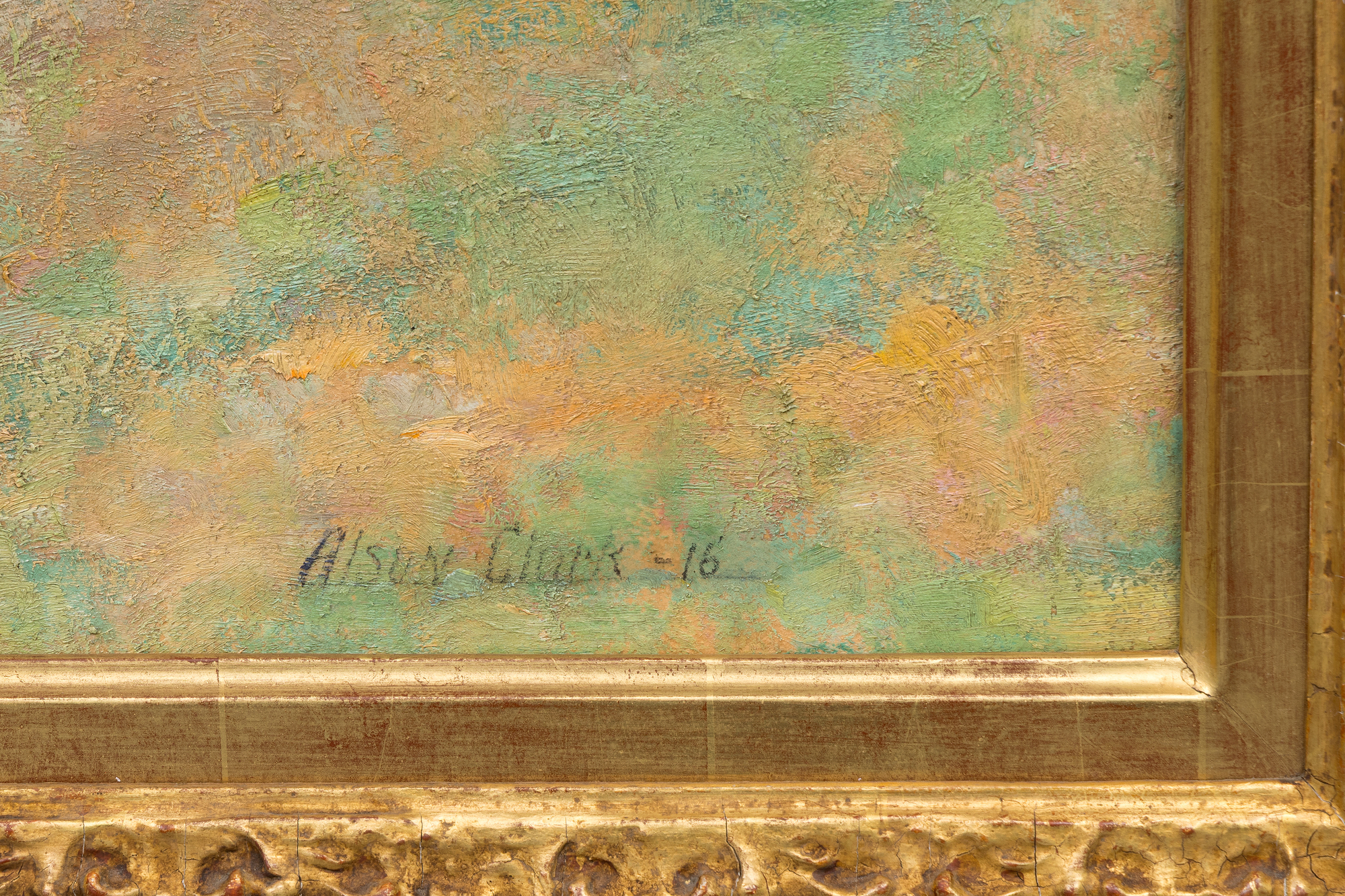
秋、セントローレンス川1916年35 x 46 インチ(88.9 x 116.84 cm) 板に油彩
出所
アーティストの遺産
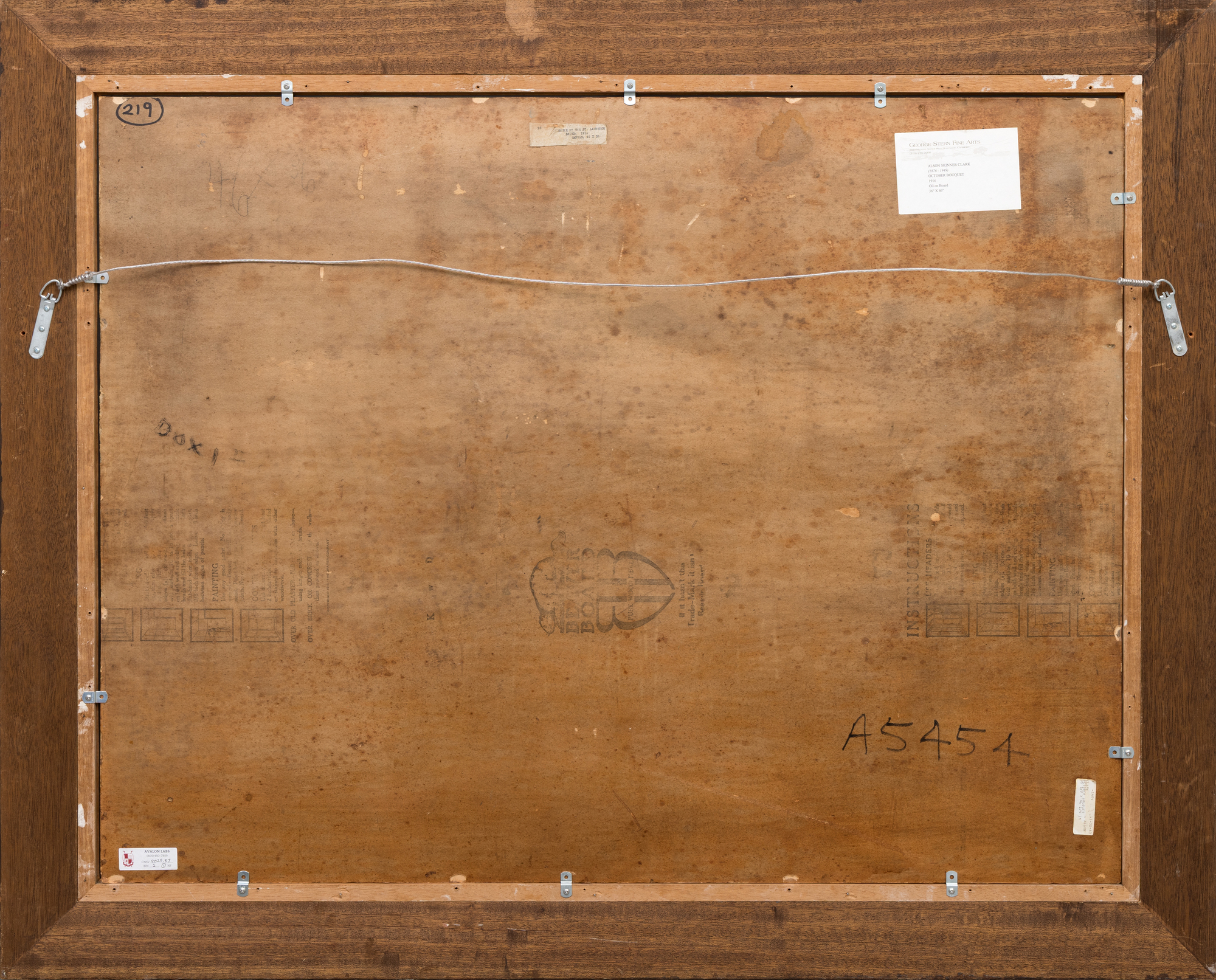
ピーターセン・ギャラリー、カリフォルニア州ビバリーヒルズ(「10月の花束」として)
ジョージ・スターン・ファインアート、カリフォルニア州ウェストハリウッド(「10月の花束」として)
ヘリテージ・オークションズ、カリフォルニア州ビバリーヒルズ、アート・シグネチャー・オークション、2012年3月20日、ロット87023
カリフォルニア州の個人コレクション、上記より取得
文学
ジャン・スターン、アルソン・S・クラーク、カリフォルニア州ビバリーヒルズ、1983年、p. 79、no. 33(図版付き)
アルソン・クラークの『秋、セントローレンス川』(1916年)は、季節の色彩と確かな画技を称える作品であり、セントローレンス川沿いで過ごした非常に生産的な夏に制作された。絶頂期の自信に満ちたこの作品は、パナマ・パシフィック国際博覧会での大成功直後に描かれた。同展ではクラークが展示室全体を自身の絵画で埋め尽くし、この功績が彼の評判と勢いを確固たるものにした。


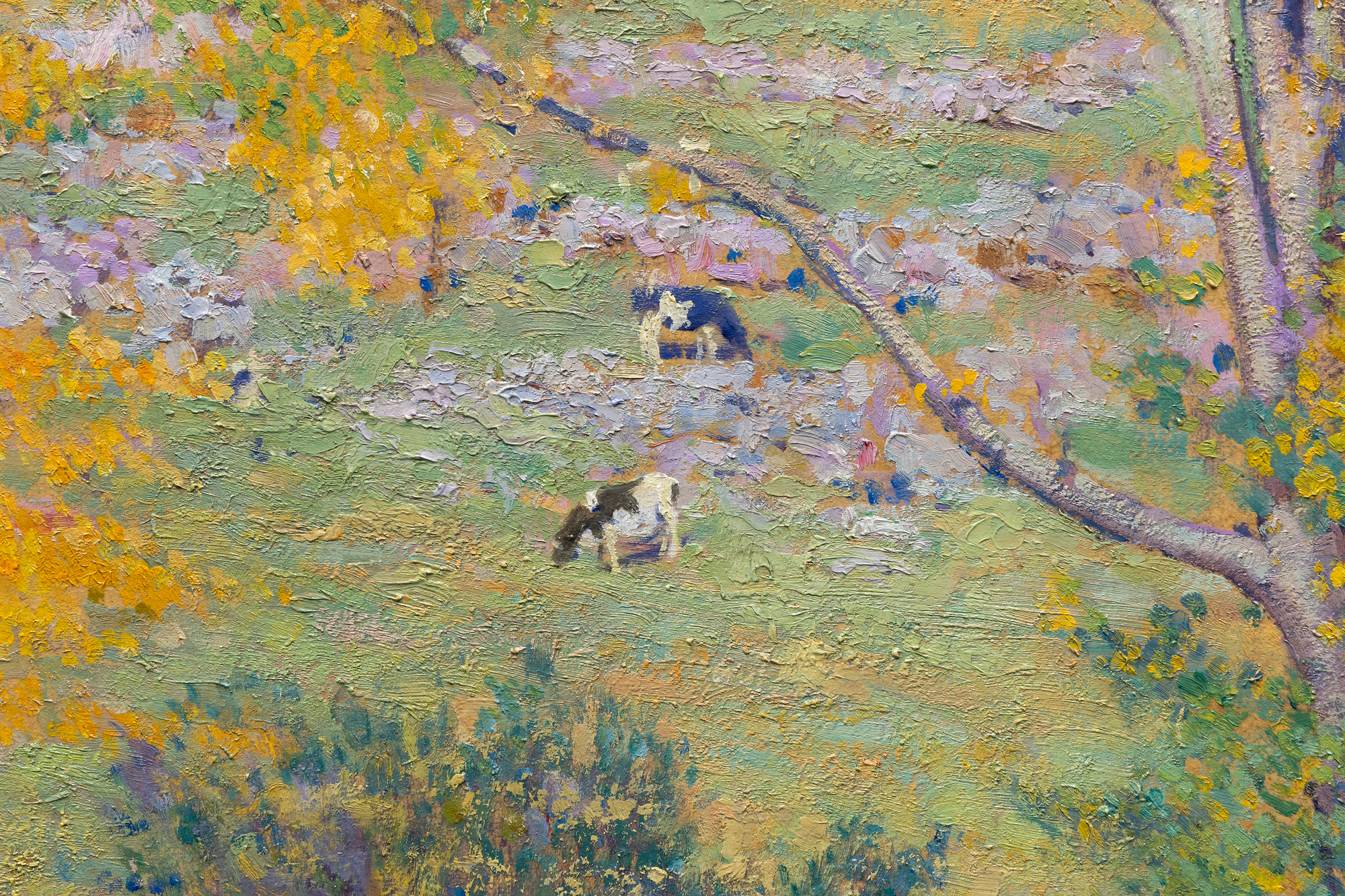
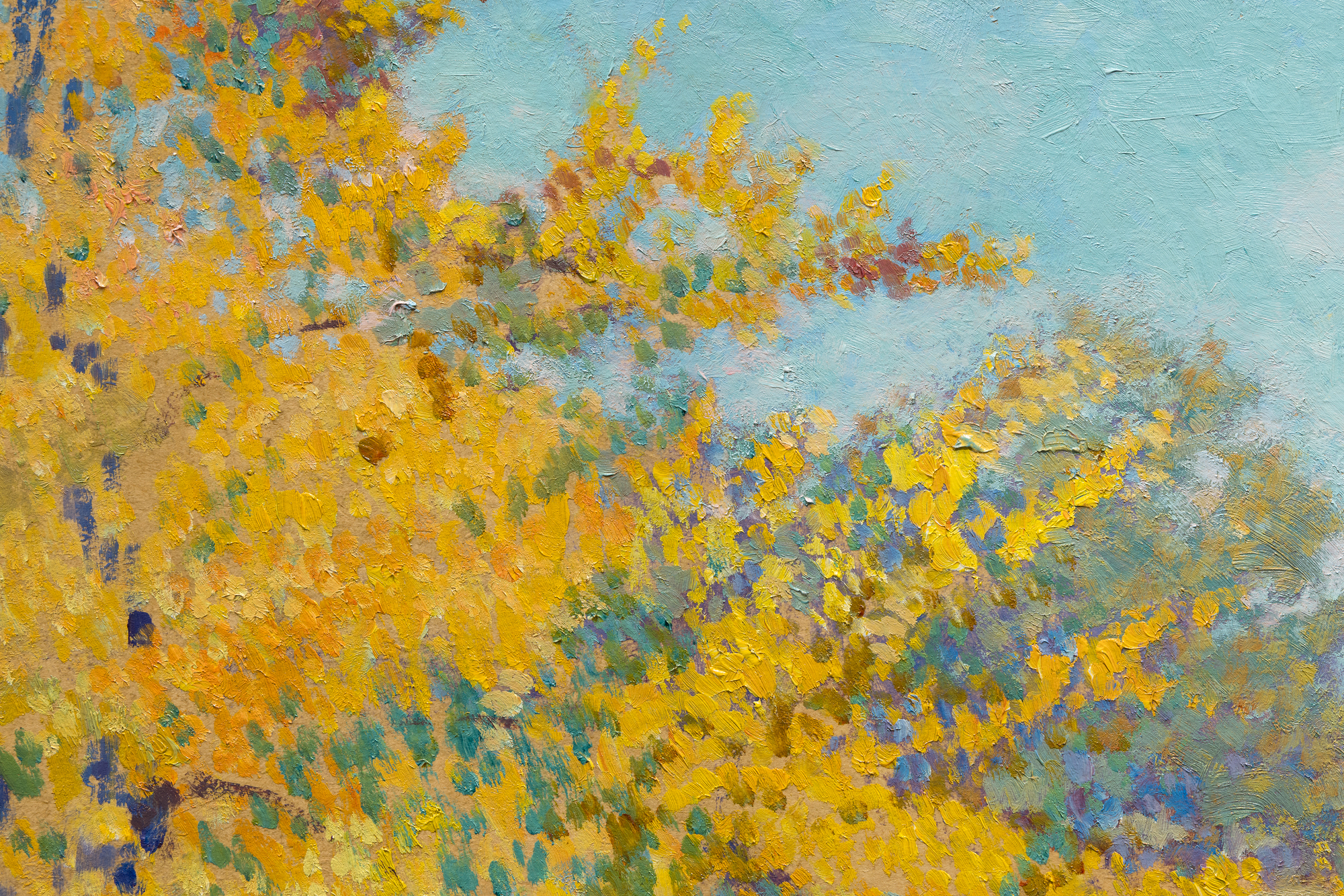
構図は、初秋の輝きに彩られたなだらかな起伏の風景に広がっている。木々は飽和した黄色、オレンジ、柔らかな赤で燃え上がり、その葉は澄み切った明るい青空を背景に、断続的な印象派的な筆致で描かれている。クラークの確かな筆致は色彩に形を帯びさせ、重なり合う筆致によって奥行き感を生み出している。 丘には小さな牛が点在し、スケール感と牧歌的な生活の静かな一節を提供している。色彩のリズムを乱すことなく、構図を安定させる役割を果たしている。


クラークは、アメリカの風景画とヨーロッパの印象派から得た教訓を融合させる能力で称賛されたが、この作品はまさにその融合を体現している。画面は生き生きとした触感に満ち、見える筆致が動きと雰囲気を伝えつつ、構図の調和を保っている。 『秋、セントローレンス川』は、色彩と光の掌握だけでなく、主題を完全に掌握した画家の確固たる視座を映し出している。特定の場所と瞬間を、季節の豊穣を表現する永遠の情景へと昇華させているのである。
お 問い合わせ