ジョン・シンガー・サージェント (1856-1925)

$1,300,000
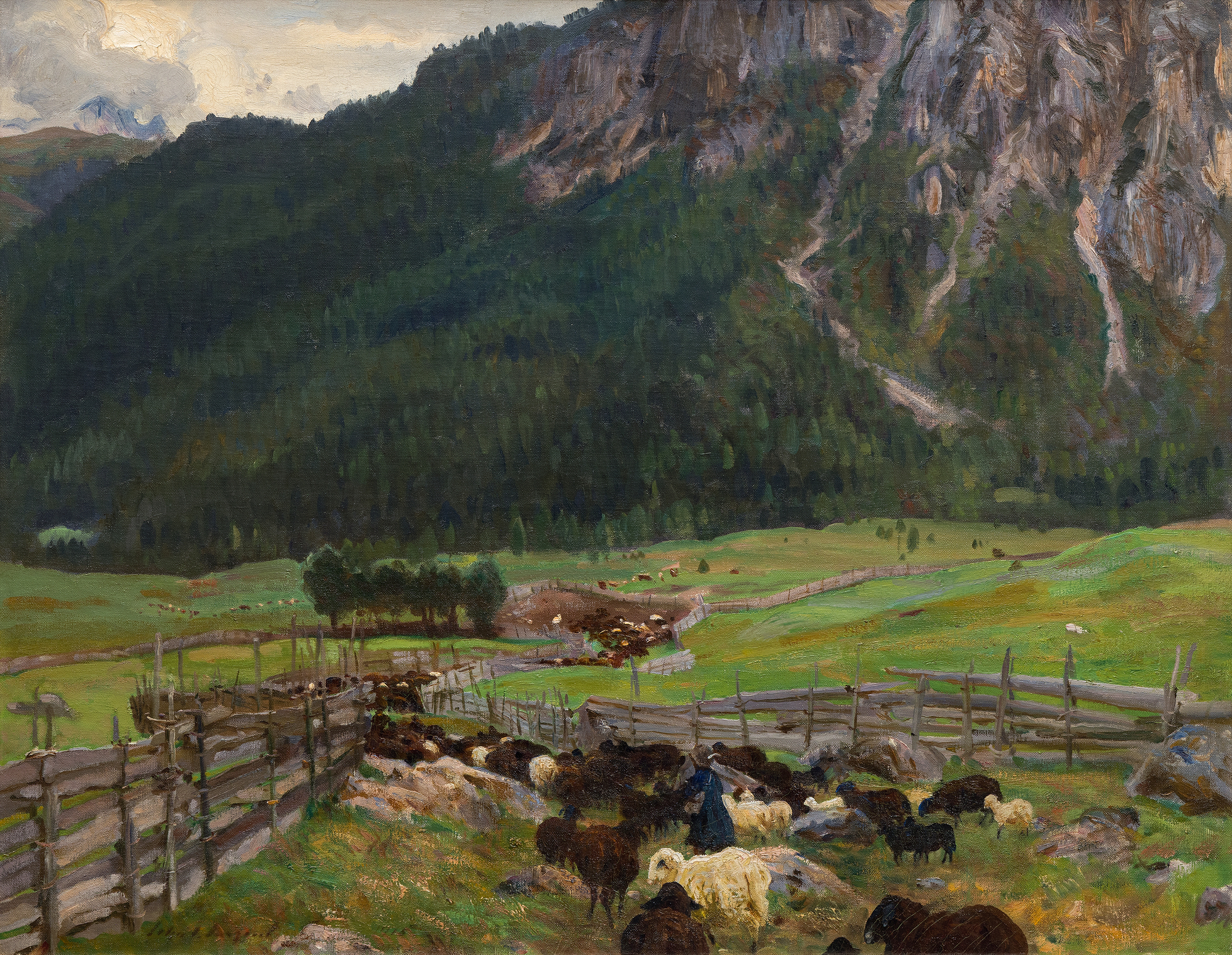
 
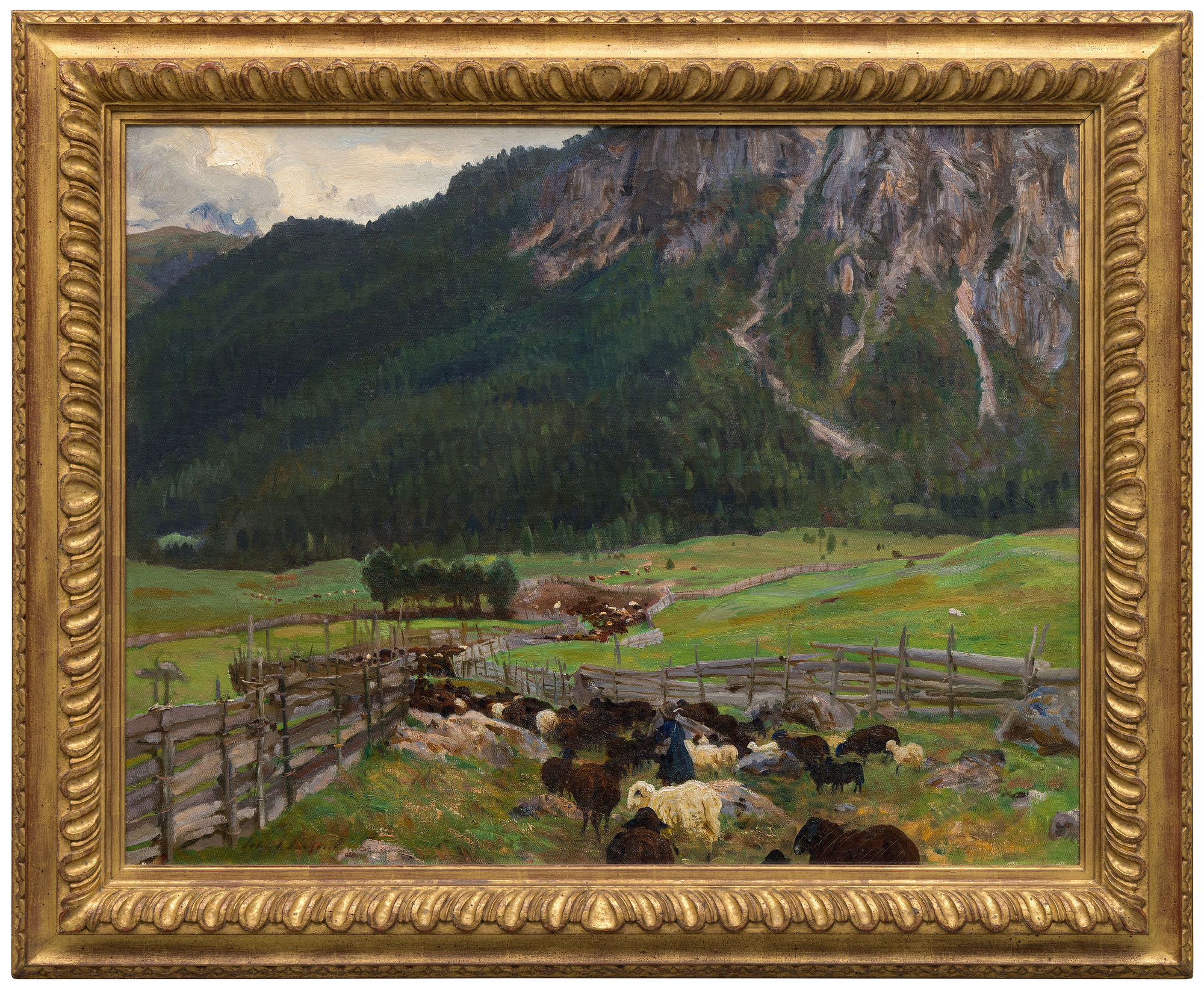
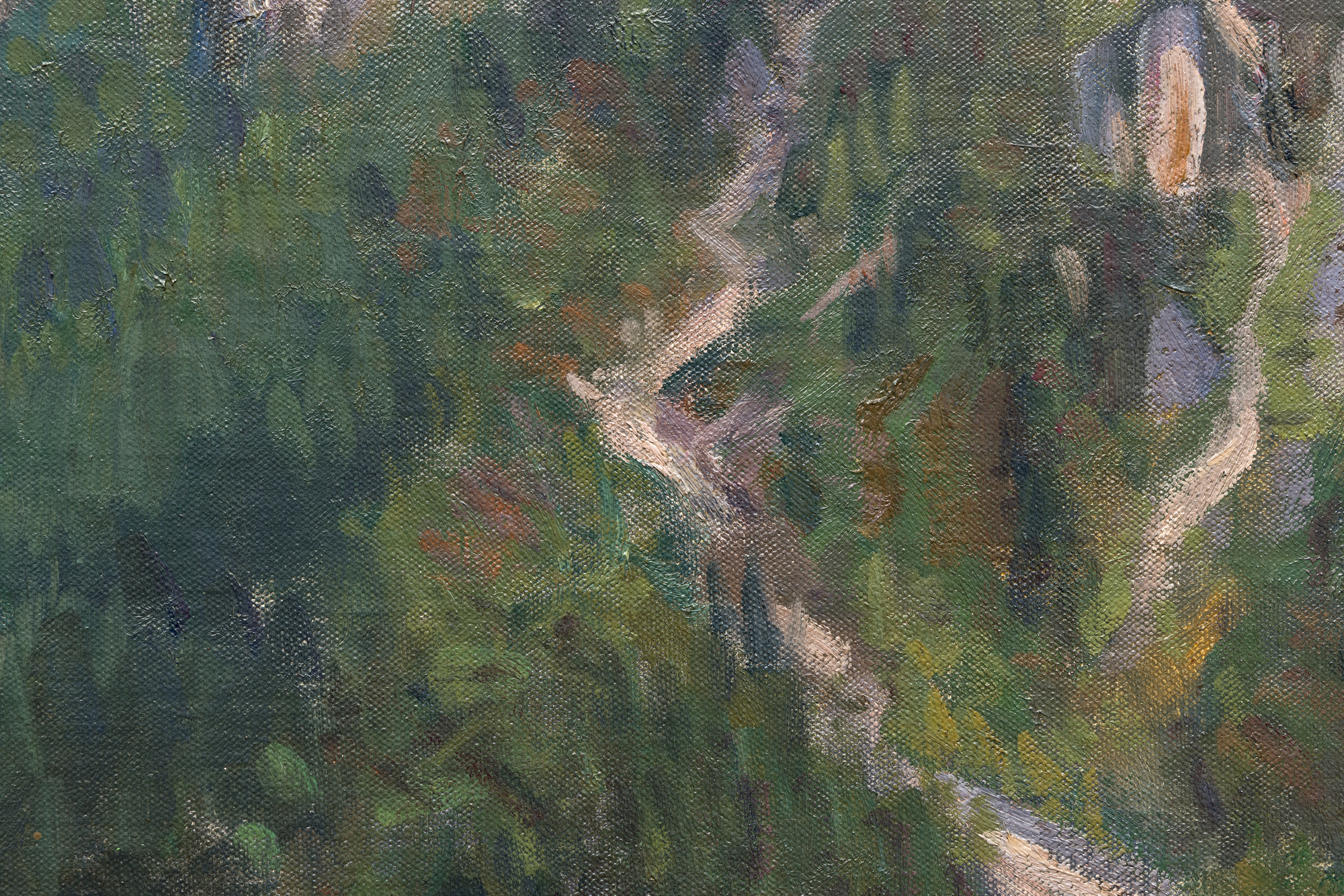
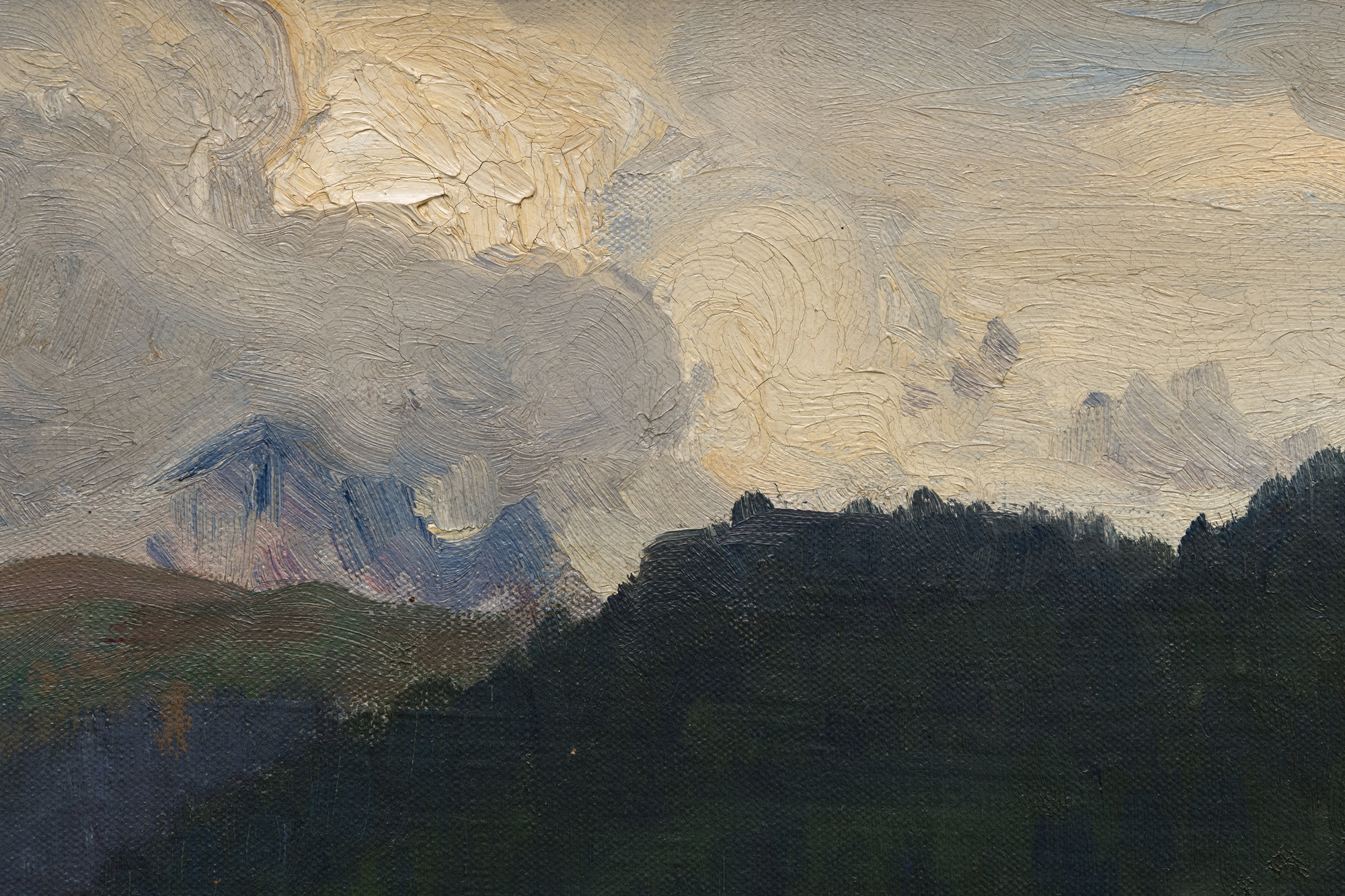
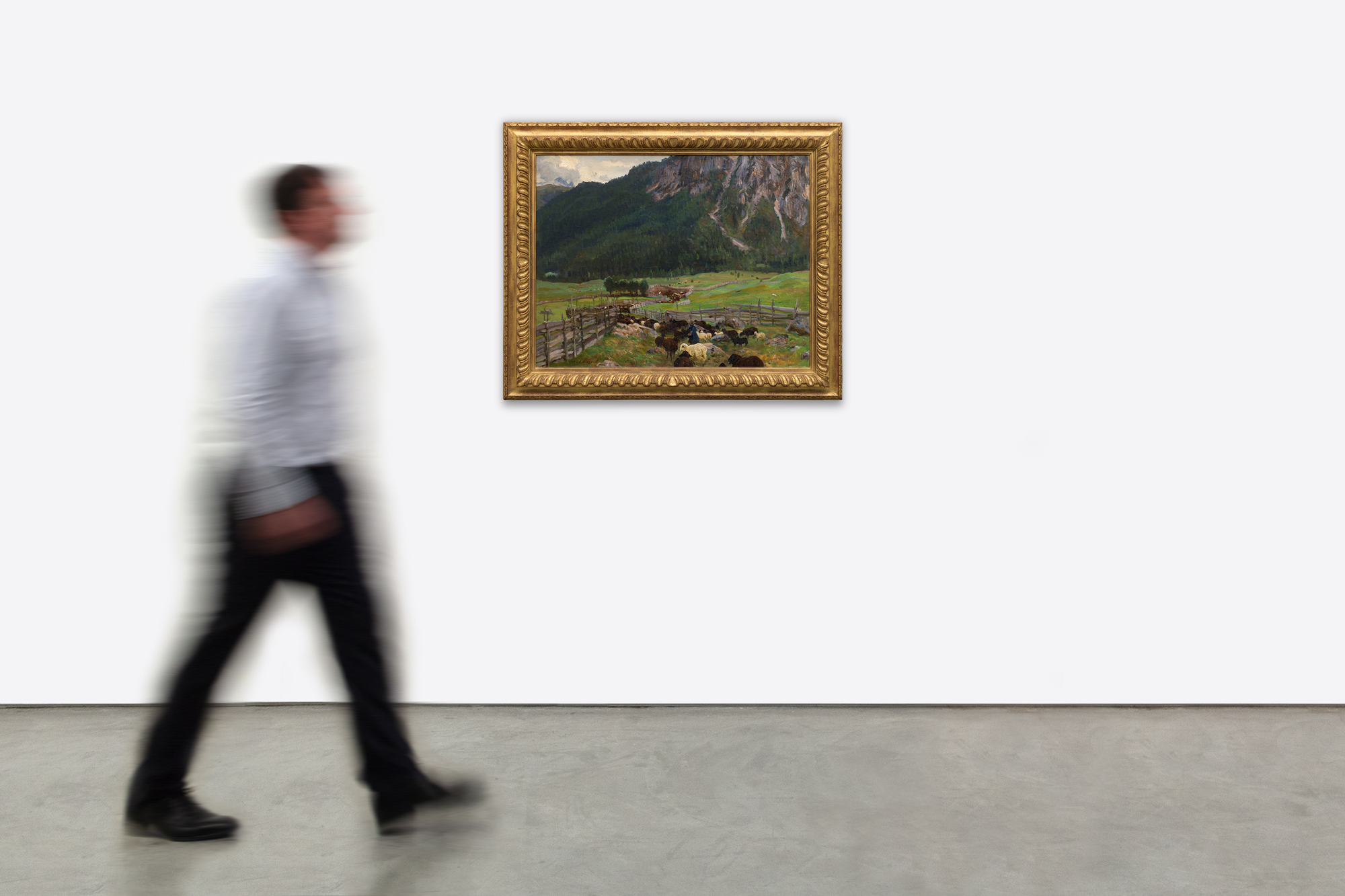
<div><font face=Lato size=3>Painted during John Singer Sargent's trip to the Austrian Tyrol in the summer of 1914, this work captures a moment of profound historical tension as Austria declared war on Serbia that July, placing Sargent at the threshold of the First World War. The painting offers a strikingly intimate and unexpected view of the Alpine landscape, framed from within a sheep pen with the mountain itself largely cropped from sight. This choice of vantage point shifts the viewers focus to the meeting point of the valley and the rising slope, where deep verdant greens anchor the composition and an overcast sky suggests a subtle sense of unease beyond the tranquil pastoral foreground.</font></div><br><br><div> </div><br><br><div><font face=Lato size=3>The work is included in the Sargent catalogue raisonne by Richard Ormond and Elaine Kilmurray, confirming its secure place within the artists documented production. Sargent created several related works during his 1914 stay in the Tyrol across both oil and watercolor, including <em>Tyrolese Interior </em>at The Metropolitan Museum of Art, <em>Woodsheds Tyrol</em> at the Art Institute of Chicago, and <em>Trout Stream</em> <em>in the Tyrol</em> at the de Young Museum. Together these works demonstrate Sargent's sustained engagement with the region and its distinctive light, atmosphere, and rural architecture during this pivotal year.</font></div><br><br><div> </div><br><br><div><font face=Lato size=3>This painting also carries distinguished provenance, having been previously held in the collection of Henry Clay Frick, the American industrialist and founder of the Frick Collection, before being given as a gift to his friend and lawyer Louis Cass Ledyard, who also served as counsel to J P Morgan. Its rarity within Sargents mature Tyrolean subjects is further underscored by the small number of comparable works that have reached the market, with only one closely related painting from this period, A Tyrolese Crucifix from 1915, having appeared at auction in recent decades.</font></div><br><br><div> </div><br><br><div><font face=Lato size=3>Sargents work continues to receive major institutional recognition, including the forthcoming exhibition Sargent Dazzling Paris at the Musee d Orsay in 2025 to 2026, reaffirming the ongoing relevance of his mature European landscapes within the broader narrative of early twentieth century art.</font></div> <div><font face=Lato size=3>Painted during John Singer Sargent's trip to the Austrian Tyrol in the summer of 1914, this work captures a moment of profound historical tension as Austria declared war on Serbia that July, placing Sargent at the threshold of the First World War. The painting offers a strikingly intimate and unexpected view of the Alpine landscape, framed from within a sheep pen with the mountain itself largely cropped from sight. This choice of vantage point shifts the viewers focus to the meeting point of the valley and the rising slope, where deep verdant greens anchor the composition and an overcast sky suggests a subtle sense of unease beyond the tranquil pastoral foreground.</font></div><br><br><div> </div><br><br><div><font face=Lato size=3>The work is included in the Sargent catalogue raisonne by Richard Ormond and Elaine Kilmurray, confirming its secure place within the artists documented production. Sargent created several related works during his 1914 stay in the Tyrol across both oil and watercolor, including <em>Tyrolese Interior </em>at The Metropolitan Museum of Art, <em>Woodsheds Tyrol</em> at the Art Institute of Chicago, and <em>Trout Stream</em> <em>in the Tyrol</em> at the de Young Museum. Together these works demonstrate Sargent's sustained engagement with the region and its distinctive light, atmosphere, and rural architecture during this pivotal year.</font></div><br><br><div> </div><br><br><div><font face=Lato size=3>This painting also carries distinguished provenance, having been previously held in the collection of Henry Clay Frick, the American industrialist and founder of the Frick Collection, before being given as a gift to his friend and lawyer Louis Cass Ledyard, who also served as counsel to J P Morgan. Its rarity within Sargents mature Tyrolean subjects is further underscored by the small number of comparable works that have reached the market, with only one closely related painting from this period, A Tyrolese Crucifix from 1915, having appeared at auction in recent decades.</font></div><br><br><div> </div><br><br><div><font face=Lato size=3>Sargents work continues to receive major institutional recognition, including the forthcoming exhibition Sargent Dazzling Paris at the Musee d Orsay in 2025 to 2026, reaffirming the ongoing relevance of his mature European landscapes within the broader narrative of early twentieth century art.</font></div> <div><font face=Lato size=3>Painted during John Singer Sargent's trip to the Austrian Tyrol in the summer of 1914, this work captures a moment of profound historical tension as Austria declared war on Serbia that July, placing Sargent at the threshold of the First World War. The painting offers a strikingly intimate and unexpected view of the Alpine landscape, framed from within a sheep pen with the mountain itself largely cropped from sight. This choice of vantage point shifts the viewers focus to the meeting point of the valley and the rising slope, where deep verdant greens anchor the composition and an overcast sky suggests a subtle sense of unease beyond the tranquil pastoral foreground.</font></div><br><br><div> </div><br><br><div><font face=Lato size=3>The work is included in the Sargent catalogue raisonne by Richard Ormond and Elaine Kilmurray, confirming its secure place within the artists documented production. Sargent created several related works during his 1914 stay in the Tyrol across both oil and watercolor, including <em>Tyrolese Interior </em>at The Metropolitan Museum of Art, <em>Woodsheds Tyrol</em> at the Art Institute of Chicago, and <em>Trout Stream</em> <em>in the Tyrol</em> at the de Young Museum. Together these works demonstrate Sargent's sustained engagement with the region and its distinctive light, atmosphere, and rural architecture during this pivotal year.</font></div><br><br><div> </div><br><br><div><font face=Lato size=3>This painting also carries distinguished provenance, having been previously held in the collection of Henry Clay Frick, the American industrialist and founder of the Frick Collection, before being given as a gift to his friend and lawyer Louis Cass Ledyard, who also served as counsel to J P Morgan. Its rarity within Sargents mature Tyrolean subjects is further underscored by the small number of comparable works that have reached the market, with only one closely related painting from this period, A Tyrolese Crucifix from 1915, having appeared at auction in recent decades.</font></div><br><br><div> </div><br><br><div><font face=Lato size=3>Sargents work continues to receive major institutional recognition, including the forthcoming exhibition Sargent Dazzling Paris at the Musee d Orsay in 2025 to 2026, reaffirming the ongoing relevance of his mature European landscapes within the broader narrative of early twentieth century art.</font></div> <div><font face=Lato size=3>Painted during John Singer Sargent's trip to the Austrian Tyrol in the summer of 1914, this work captures a moment of profound historical tension as Austria declared war on Serbia that July, placing Sargent at the threshold of the First World War. The painting offers a strikingly intimate and unexpected view of the Alpine landscape, framed from within a sheep pen with the mountain itself largely cropped from sight. This choice of vantage point shifts the viewers focus to the meeting point of the valley and the rising slope, where deep verdant greens anchor the composition and an overcast sky suggests a subtle sense of unease beyond the tranquil pastoral foreground.</font></div><br><br><div> </div><br><br><div><font face=Lato size=3>The work is included in the Sargent catalogue raisonne by Richard Ormond and Elaine Kilmurray, confirming its secure place within the artists documented production. Sargent created several related works during his 1914 stay in the Tyrol across both oil and watercolor, including <em>Tyrolese Interior </em>at The Metropolitan Museum of Art, <em>Woodsheds Tyrol</em> at the Art Institute of Chicago, and <em>Trout Stream</em> <em>in the Tyrol</em> at the de Young Museum. Together these works demonstrate Sargent's sustained engagement with the region and its distinctive light, atmosphere, and rural architecture during this pivotal year.</font></div><br><br><div> </div><br><br><div><font face=Lato size=3>This painting also carries distinguished provenance, having been previously held in the collection of Henry Clay Frick, the American industrialist and founder of the Frick Collection, before being given as a gift to his friend and lawyer Louis Cass Ledyard, who also served as counsel to J P Morgan. Its rarity within Sargents mature Tyrolean subjects is further underscored by the small number of comparable works that have reached the market, with only one closely related painting from this period, A Tyrolese Crucifix from 1915, having appeared at auction in recent decades.</font></div><br><br><div> </div><br><br><div><font face=Lato size=3>Sargents work continues to receive major institutional recognition, including the forthcoming exhibition Sargent Dazzling Paris at the Musee d Orsay in 2025 to 2026, reaffirming the ongoing relevance of his mature European landscapes within the broader narrative of early twentieth century art.</font></div> <div><font face=Lato size=3>Painted during John Singer Sargent's trip to the Austrian Tyrol in the summer of 1914, this work captures a moment of profound historical tension as Austria declared war on Serbia that July, placing Sargent at the threshold of the First World War. The painting offers a strikingly intimate and unexpected view of the Alpine landscape, framed from within a sheep pen with the mountain itself largely cropped from sight. This choice of vantage point shifts the viewers focus to the meeting point of the valley and the rising slope, where deep verdant greens anchor the composition and an overcast sky suggests a subtle sense of unease beyond the tranquil pastoral foreground.</font></div><br><br><div> </div><br><br><div><font face=Lato size=3>The work is included in the Sargent catalogue raisonne by Richard Ormond and Elaine Kilmurray, confirming its secure place within the artists documented production. Sargent created several related works during his 1914 stay in the Tyrol across both oil and watercolor, including <em>Tyrolese Interior </em>at The Metropolitan Museum of Art, <em>Woodsheds Tyrol</em> at the Art Institute of Chicago, and <em>Trout Stream</em> <em>in the Tyrol</em> at the de Young Museum. Together these works demonstrate Sargent's sustained engagement with the region and its distinctive light, atmosphere, and rural architecture during this pivotal year.</font></div><br><br><div> </div><br><br><div><font face=Lato size=3>This painting also carries distinguished provenance, having been previously held in the collection of Henry Clay Frick, the American industrialist and founder of the Frick Collection, before being given as a gift to his friend and lawyer Louis Cass Ledyard, who also served as counsel to J P Morgan. Its rarity within Sargents mature Tyrolean subjects is further underscored by the small number of comparable works that have reached the market, with only one closely related painting from this period, A Tyrolese Crucifix from 1915, having appeared at auction in recent decades.</font></div><br><br><div> </div><br><br><div><font face=Lato size=3>Sargents work continues to receive major institutional recognition, including the forthcoming exhibition Sargent Dazzling Paris at the Musee d Orsay in 2025 to 2026, reaffirming the ongoing relevance of his mature European landscapes within the broader narrative of early twentieth century art.</font></div> <div><font face=Lato size=3>Painted during John Singer Sargent's trip to the Austrian Tyrol in the summer of 1914, this work captures a moment of profound historical tension as Austria declared war on Serbia that July, placing Sargent at the threshold of the First World War. The painting offers a strikingly intimate and unexpected view of the Alpine landscape, framed from within a sheep pen with the mountain itself largely cropped from sight. This choice of vantage point shifts the viewers focus to the meeting point of the valley and the rising slope, where deep verdant greens anchor the composition and an overcast sky suggests a subtle sense of unease beyond the tranquil pastoral foreground.</font></div><br><br><div> </div><br><br><div><font face=Lato size=3>The work is included in the Sargent catalogue raisonne by Richard Ormond and Elaine Kilmurray, confirming its secure place within the artists documented production. Sargent created several related works during his 1914 stay in the Tyrol across both oil and watercolor, including <em>Tyrolese Interior </em>at The Metropolitan Museum of Art, <em>Woodsheds Tyrol</em> at the Art Institute of Chicago, and <em>Trout Stream</em> <em>in the Tyrol</em> at the de Young Museum. Together these works demonstrate Sargent's sustained engagement with the region and its distinctive light, atmosphere, and rural architecture during this pivotal year.</font></div><br><br><div> </div><br><br><div><font face=Lato size=3>This painting also carries distinguished provenance, having been previously held in the collection of Henry Clay Frick, the American industrialist and founder of the Frick Collection, before being given as a gift to his friend and lawyer Louis Cass Ledyard, who also served as counsel to J P Morgan. Its rarity within Sargents mature Tyrolean subjects is further underscored by the small number of comparable works that have reached the market, with only one closely related painting from this period, A Tyrolese Crucifix from 1915, having appeared at auction in recent decades.</font></div><br><br><div> </div><br><br><div><font face=Lato size=3>Sargents work continues to receive major institutional recognition, including the forthcoming exhibition Sargent Dazzling Paris at the Musee d Orsay in 2025 to 2026, reaffirming the ongoing relevance of his mature European landscapes within the broader narrative of early twentieth century art.</font></div> <div><font face=Lato size=3>Painted during John Singer Sargent's trip to the Austrian Tyrol in the summer of 1914, this work captures a moment of profound historical tension as Austria declared war on Serbia that July, placing Sargent at the threshold of the First World War. The painting offers a strikingly intimate and unexpected view of the Alpine landscape, framed from within a sheep pen with the mountain itself largely cropped from sight. This choice of vantage point shifts the viewers focus to the meeting point of the valley and the rising slope, where deep verdant greens anchor the composition and an overcast sky suggests a subtle sense of unease beyond the tranquil pastoral foreground.</font></div><br><br><div> </div><br><br><div><font face=Lato size=3>The work is included in the Sargent catalogue raisonne by Richard Ormond and Elaine Kilmurray, confirming its secure place within the artists documented production. Sargent created several related works during his 1914 stay in the Tyrol across both oil and watercolor, including <em>Tyrolese Interior </em>at The Metropolitan Museum of Art, <em>Woodsheds Tyrol</em> at the Art Institute of Chicago, and <em>Trout Stream</em> <em>in the Tyrol</em> at the de Young Museum. Together these works demonstrate Sargent's sustained engagement with the region and its distinctive light, atmosphere, and rural architecture during this pivotal year.</font></div><br><br><div> </div><br><br><div><font face=Lato size=3>This painting also carries distinguished provenance, having been previously held in the collection of Henry Clay Frick, the American industrialist and founder of the Frick Collection, before being given as a gift to his friend and lawyer Louis Cass Ledyard, who also served as counsel to J P Morgan. Its rarity within Sargents mature Tyrolean subjects is further underscored by the small number of comparable works that have reached the market, with only one closely related painting from this period, A Tyrolese Crucifix from 1915, having appeared at auction in recent decades.</font></div><br><br><div> </div><br><br><div><font face=Lato size=3>Sargents work continues to receive major institutional recognition, including the forthcoming exhibition Sargent Dazzling Paris at the Musee d Orsay in 2025 to 2026, reaffirming the ongoing relevance of his mature European landscapes within the broader narrative of early twentieth century art.</font></div> <div><font face=Lato size=3>Painted during John Singer Sargent's trip to the Austrian Tyrol in the summer of 1914, this work captures a moment of profound historical tension as Austria declared war on Serbia that July, placing Sargent at the threshold of the First World War. The painting offers a strikingly intimate and unexpected view of the Alpine landscape, framed from within a sheep pen with the mountain itself largely cropped from sight. This choice of vantage point shifts the viewers focus to the meeting point of the valley and the rising slope, where deep verdant greens anchor the composition and an overcast sky suggests a subtle sense of unease beyond the tranquil pastoral foreground.</font></div><br><br><div> </div><br><br><div><font face=Lato size=3>The work is included in the Sargent catalogue raisonne by Richard Ormond and Elaine Kilmurray, confirming its secure place within the artists documented production. Sargent created several related works during his 1914 stay in the Tyrol across both oil and watercolor, including <em>Tyrolese Interior </em>at The Metropolitan Museum of Art, <em>Woodsheds Tyrol</em> at the Art Institute of Chicago, and <em>Trout Stream</em> <em>in the Tyrol</em> at the de Young Museum. Together these works demonstrate Sargent's sustained engagement with the region and its distinctive light, atmosphere, and rural architecture during this pivotal year.</font></div><br><br><div> </div><br><br><div><font face=Lato size=3>This painting also carries distinguished provenance, having been previously held in the collection of Henry Clay Frick, the American industrialist and founder of the Frick Collection, before being given as a gift to his friend and lawyer Louis Cass Ledyard, who also served as counsel to J P Morgan. Its rarity within Sargents mature Tyrolean subjects is further underscored by the small number of comparable works that have reached the market, with only one closely related painting from this period, A Tyrolese Crucifix from 1915, having appeared at auction in recent decades.</font></div><br><br><div> </div><br><br><div><font face=Lato size=3>Sargents work continues to receive major institutional recognition, including the forthcoming exhibition Sargent Dazzling Paris at the Musee d Orsay in 2025 to 2026, reaffirming the ongoing relevance of his mature European landscapes within the broader narrative of early twentieth century art.</font></div> <div><font face=Lato size=3>Painted during John Singer Sargent's trip to the Austrian Tyrol in the summer of 1914, this work captures a moment of profound historical tension as Austria declared war on Serbia that July, placing Sargent at the threshold of the First World War. The painting offers a strikingly intimate and unexpected view of the Alpine landscape, framed from within a sheep pen with the mountain itself largely cropped from sight. This choice of vantage point shifts the viewers focus to the meeting point of the valley and the rising slope, where deep verdant greens anchor the composition and an overcast sky suggests a subtle sense of unease beyond the tranquil pastoral foreground.</font></div><br><br><div> </div><br><br><div><font face=Lato size=3>The work is included in the Sargent catalogue raisonne by Richard Ormond and Elaine Kilmurray, confirming its secure place within the artists documented production. Sargent created several related works during his 1914 stay in the Tyrol across both oil and watercolor, including <em>Tyrolese Interior </em>at The Metropolitan Museum of Art, <em>Woodsheds Tyrol</em> at the Art Institute of Chicago, and <em>Trout Stream</em> <em>in the Tyrol</em> at the de Young Museum. Together these works demonstrate Sargent's sustained engagement with the region and its distinctive light, atmosphere, and rural architecture during this pivotal year.</font></div><br><br><div> </div><br><br><div><font face=Lato size=3>This painting also carries distinguished provenance, having been previously held in the collection of Henry Clay Frick, the American industrialist and founder of the Frick Collection, before being given as a gift to his friend and lawyer Louis Cass Ledyard, who also served as counsel to J P Morgan. Its rarity within Sargents mature Tyrolean subjects is further underscored by the small number of comparable works that have reached the market, with only one closely related painting from this period, A Tyrolese Crucifix from 1915, having appeared at auction in recent decades.</font></div><br><br><div> </div><br><br><div><font face=Lato size=3>Sargents work continues to receive major institutional recognition, including the forthcoming exhibition Sargent Dazzling Paris at the Musee d Orsay in 2025 to 2026, reaffirming the ongoing relevance of his mature European landscapes within the broader narrative of early twentieth century art.</font></div> <div><font face=Lato size=3>Painted during John Singer Sargent's trip to the Austrian Tyrol in the summer of 1914, this work captures a moment of profound historical tension as Austria declared war on Serbia that July, placing Sargent at the threshold of the First World War. The painting offers a strikingly intimate and unexpected view of the Alpine landscape, framed from within a sheep pen with the mountain itself largely cropped from sight. This choice of vantage point shifts the viewers focus to the meeting point of the valley and the rising slope, where deep verdant greens anchor the composition and an overcast sky suggests a subtle sense of unease beyond the tranquil pastoral foreground.</font></div><br><br><div> </div><br><br><div><font face=Lato size=3>The work is included in the Sargent catalogue raisonne by Richard Ormond and Elaine Kilmurray, confirming its secure place within the artists documented production. Sargent created several related works during his 1914 stay in the Tyrol across both oil and watercolor, including <em>Tyrolese Interior </em>at The Metropolitan Museum of Art, <em>Woodsheds Tyrol</em> at the Art Institute of Chicago, and <em>Trout Stream</em> <em>in the Tyrol</em> at the de Young Museum. Together these works demonstrate Sargent's sustained engagement with the region and its distinctive light, atmosphere, and rural architecture during this pivotal year.</font></div><br><br><div> </div><br><br><div><font face=Lato size=3>This painting also carries distinguished provenance, having been previously held in the collection of Henry Clay Frick, the American industrialist and founder of the Frick Collection, before being given as a gift to his friend and lawyer Louis Cass Ledyard, who also served as counsel to J P Morgan. Its rarity within Sargents mature Tyrolean subjects is further underscored by the small number of comparable works that have reached the market, with only one closely related painting from this period, A Tyrolese Crucifix from 1915, having appeared at auction in recent decades.</font></div><br><br><div> </div><br><br><div><font face=Lato size=3>Sargents work continues to receive major institutional recognition, including the forthcoming exhibition Sargent Dazzling Paris at the Musee d Orsay in 2025 to 2026, reaffirming the ongoing relevance of his mature European landscapes within the broader narrative of early twentieth century art.</font></div>
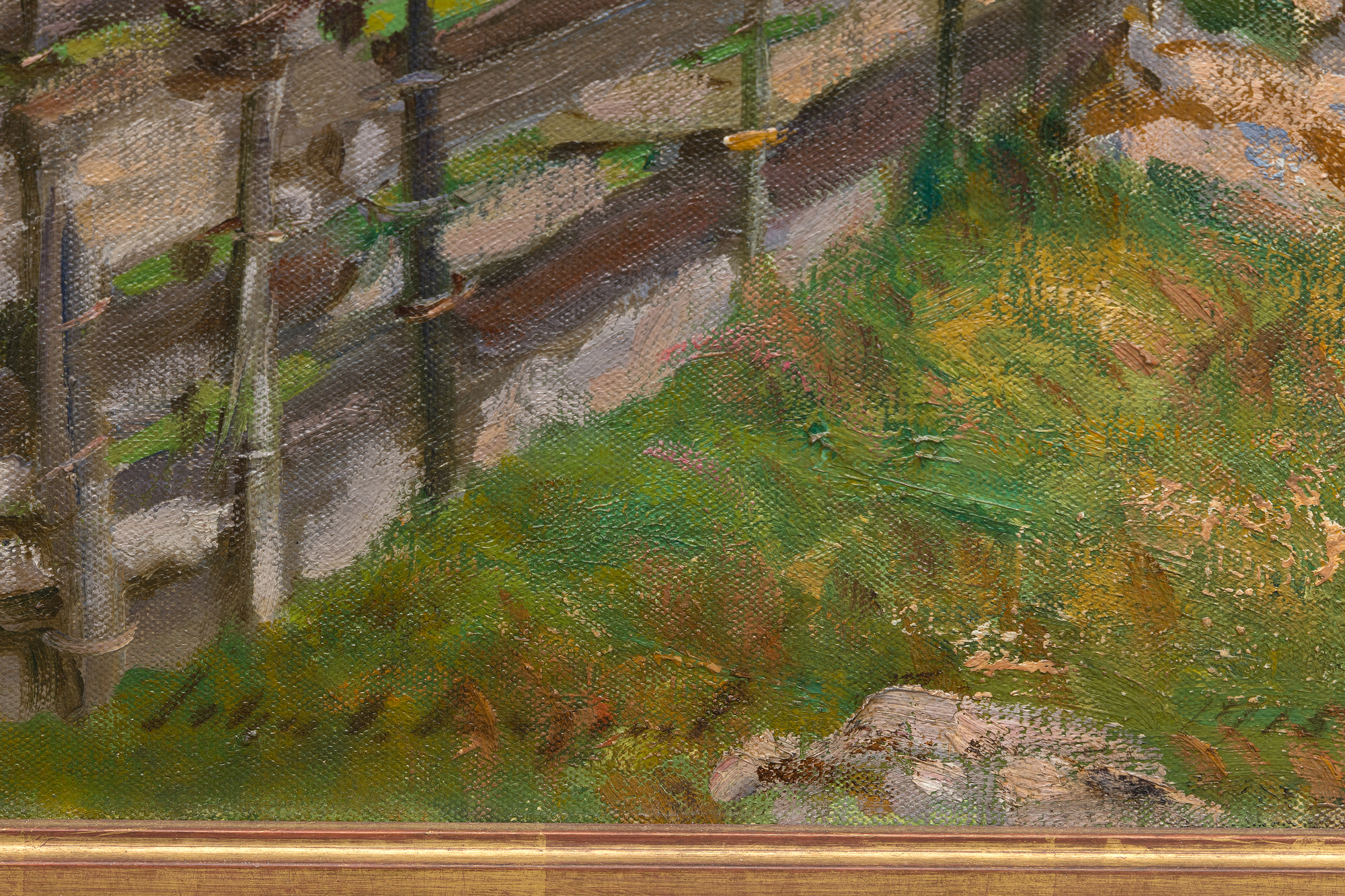
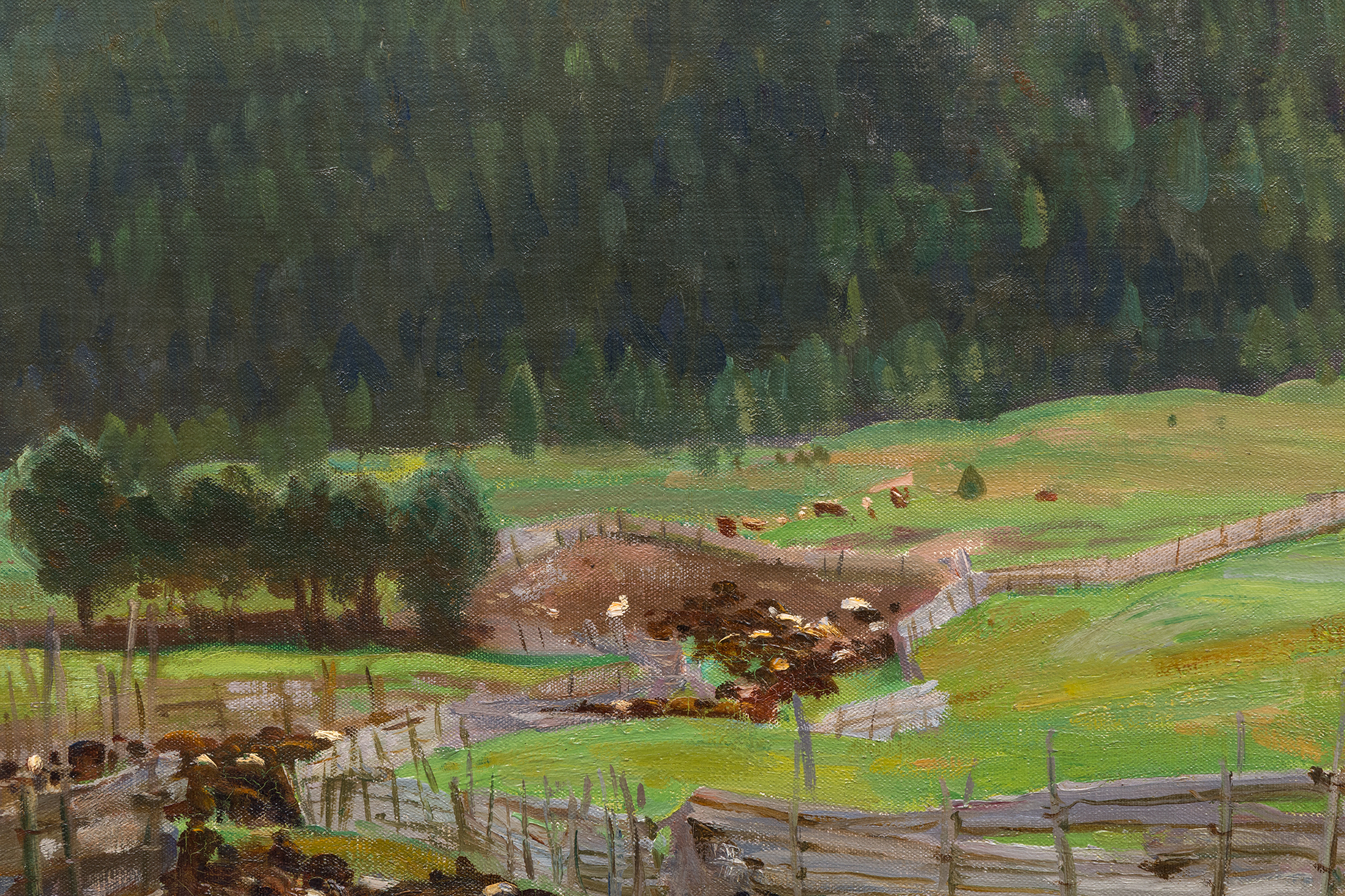
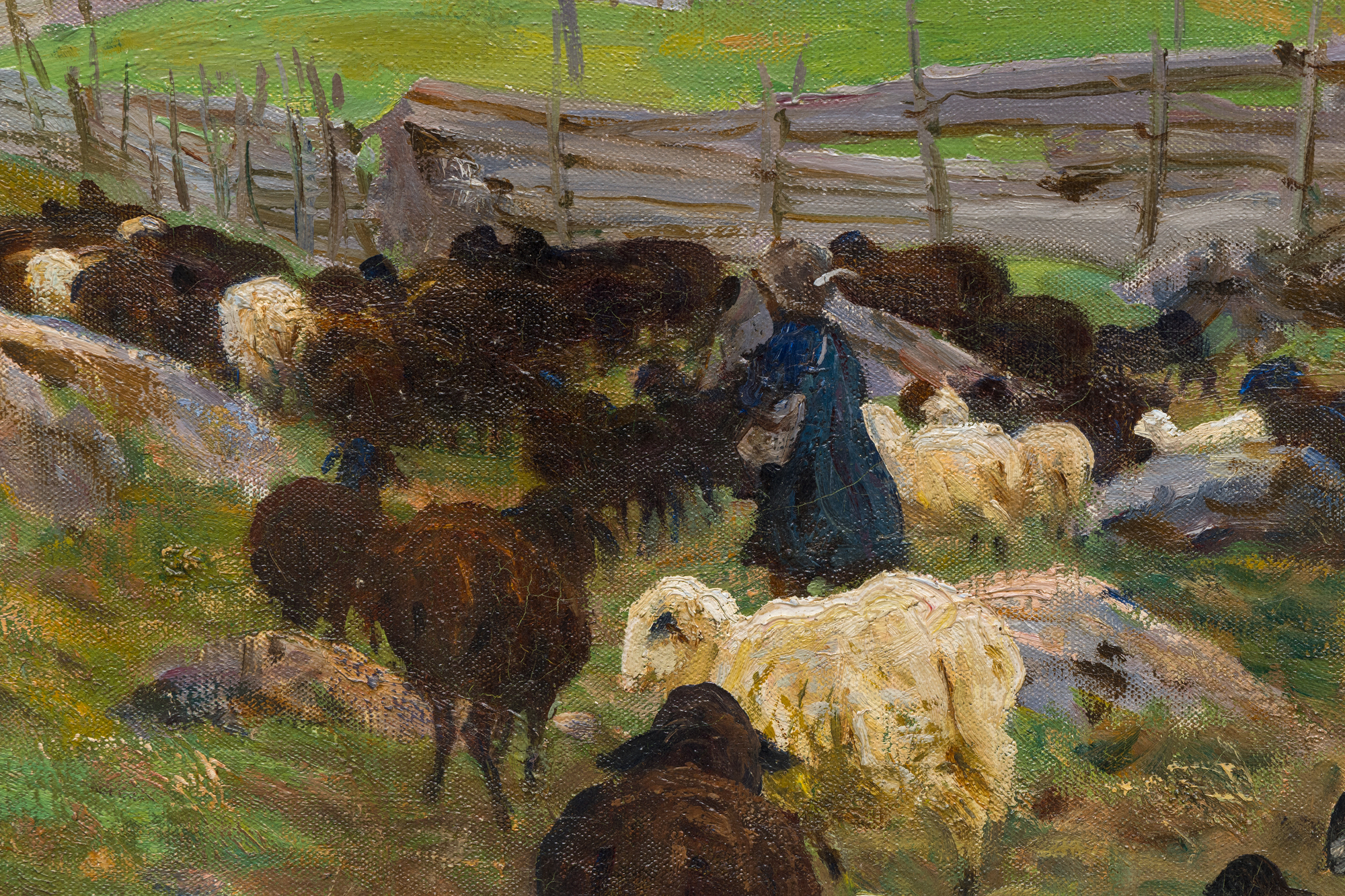
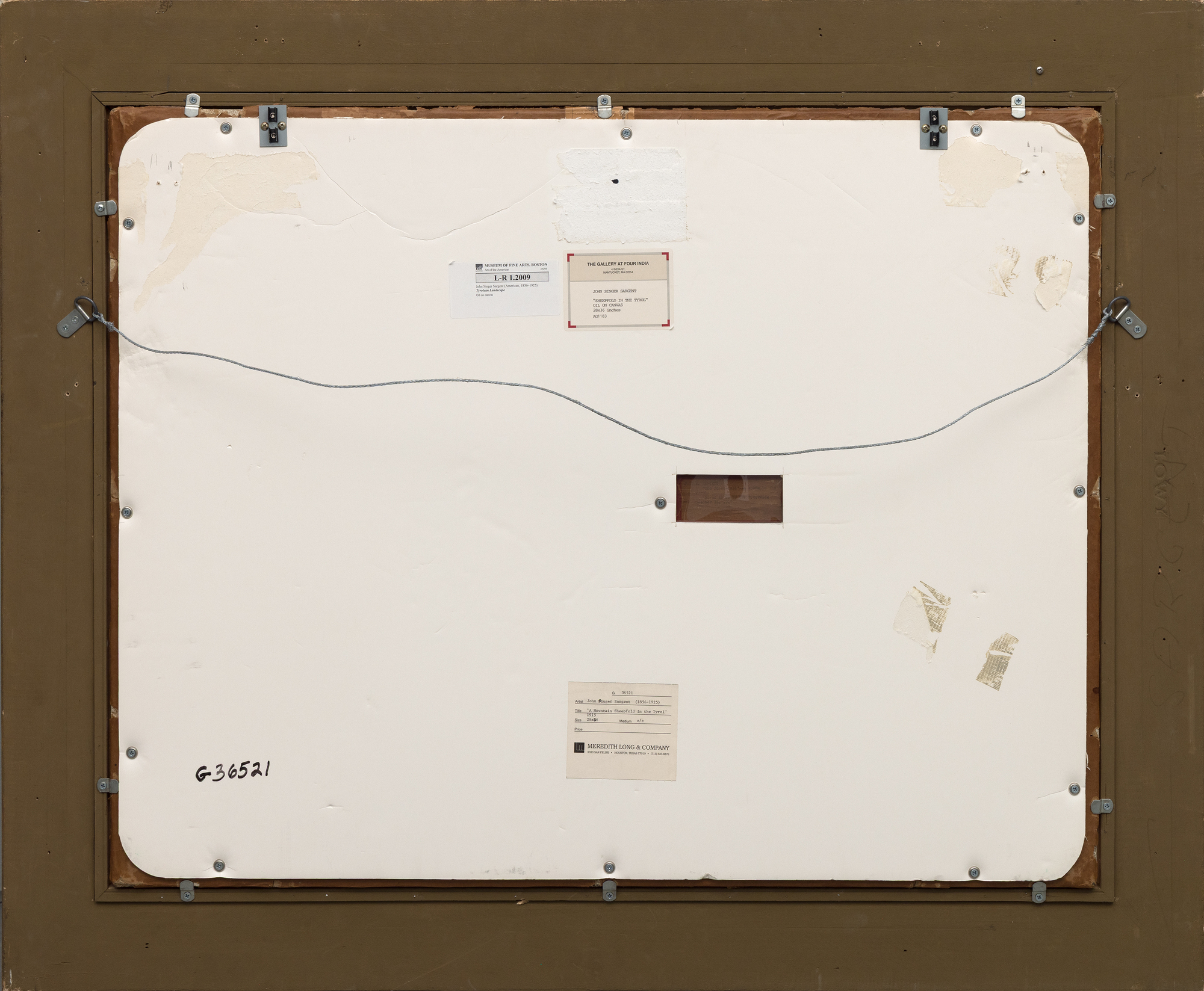
チロルの山羊小屋1914-15年28 1/4 x 36 インチ(71.76 x 91.44 cm) 油彩・キャンバス
出所
クノードラー社、作家直売、1915年
ヘンリー・クレイ・フリック、ニューヨーク州ニューヨーク市、1916年
ルイス・キャス・レディアード、天より授かりし
マサチューセッツ州コレクション、1985年頃
個人コレクション
展示会
ニューヨーク、ニューヨーク、M. Knoedler & Co.、1915年、作家より貸与
ヒューストン、テキサス、Meredith Long、1980年代
ニューヨーク、ニューヨーク、Adelson Galleries、1990年頃
文学
ナサニエル・プセット=ダートとリー・ウッドワード・ジーグラー著『著名なアメリカ人芸術家たち』ジョン・シンガー・サージェント、ニューヨーク、1924年、発行所不明、図版付き
ウィリアム・ハウ・ダウンズ著『ジョン・シンガー・サージェント』
...もっとその。。。, ジョン・シンガー・サージェント:その生涯と作品, ボストン, 1925年, p. 248, 300
リチャード・オーモンドとエレイン・キルマレー, ジョン・シンガー・サージェント:全絵画作品 第9巻:人物と風景画, 1914–1925年, ロンドン, 2017年, 作品番号 1758
...少ない。。。
ジョン・シンガー・サージェントが1914年夏にオーストリア・チロル地方を訪れた際に描かれた本作は、同年7月にオーストリアがセルビアに宣戦布告した歴史的緊張の高まりを捉えており、サージェント自身を第一次世界大戦の瀬戸際に立たせた瞬間を映し出している。 この絵画は、羊の囲いの中から構図を組み、山そのものをほとんど視界から切り取るという手法で、アルプスの風景を驚くほど親密かつ意外な視点から提示している。この視点の選択は、観者の焦点を谷と登り坂の交わる地点へと移す。そこでは深い緑が構図を安定させ、曇り空が牧歌的な前景の向こうに微かな不安感をほのめかしている。


本作はリチャード・オーモンドとエレイン・キルマレーによるサージェント作品総覧に掲載されており、作家の記録された制作活動における確固たる位置付けが確認されている。サージェントは1914年のチロル滞在中に油彩と水彩の両方で複数の関連作品を手掛けており、メトロポリタン美術館所蔵の『チロルの室内』、シカゴ美術館所蔵の『チロルの薪小屋』、デ・ヤング美術館所蔵の『チロルの鱒の流れる小川』などが含まれる。 これらの作品は、この重要な年にサージェントが同地域とその独特の光、雰囲気、田園建築に持続的に取り組んだことを示している。


本作品はまた、卓越した来歴を有する。アメリカの産業家でありフリック・コレクション創設者であるヘンリー・クレイ・フリックのコレクションに所蔵された後、友人であり弁護士でもあったルイ・キャス・レディアード(J・P・モルガンの顧問弁護士も務めた)への贈与品となった。 サージェントの成熟期におけるチロル地方を題材とした作品の中でも稀少性を帯びており、市場に出回った類似作品が極めて少ないことがこれを裏付けている。近年のオークションでは、この時代に関連する作品として1915年の『チロルの十字架』が1点出品されたのみである。


サージェントの作品は主要機関による評価を継続的に受けており、2025年から2026年にオルセー美術館で開催予定の展覧会『サージェント 眩しいパリ』もその一例である。これは20世紀初頭の美術史における彼の成熟期ヨーロッパ風景画の持続的な重要性を改めて確認するものだ。
お 問い合わせ