マリノ・マリーニ (1901-1980)

$55,000

 
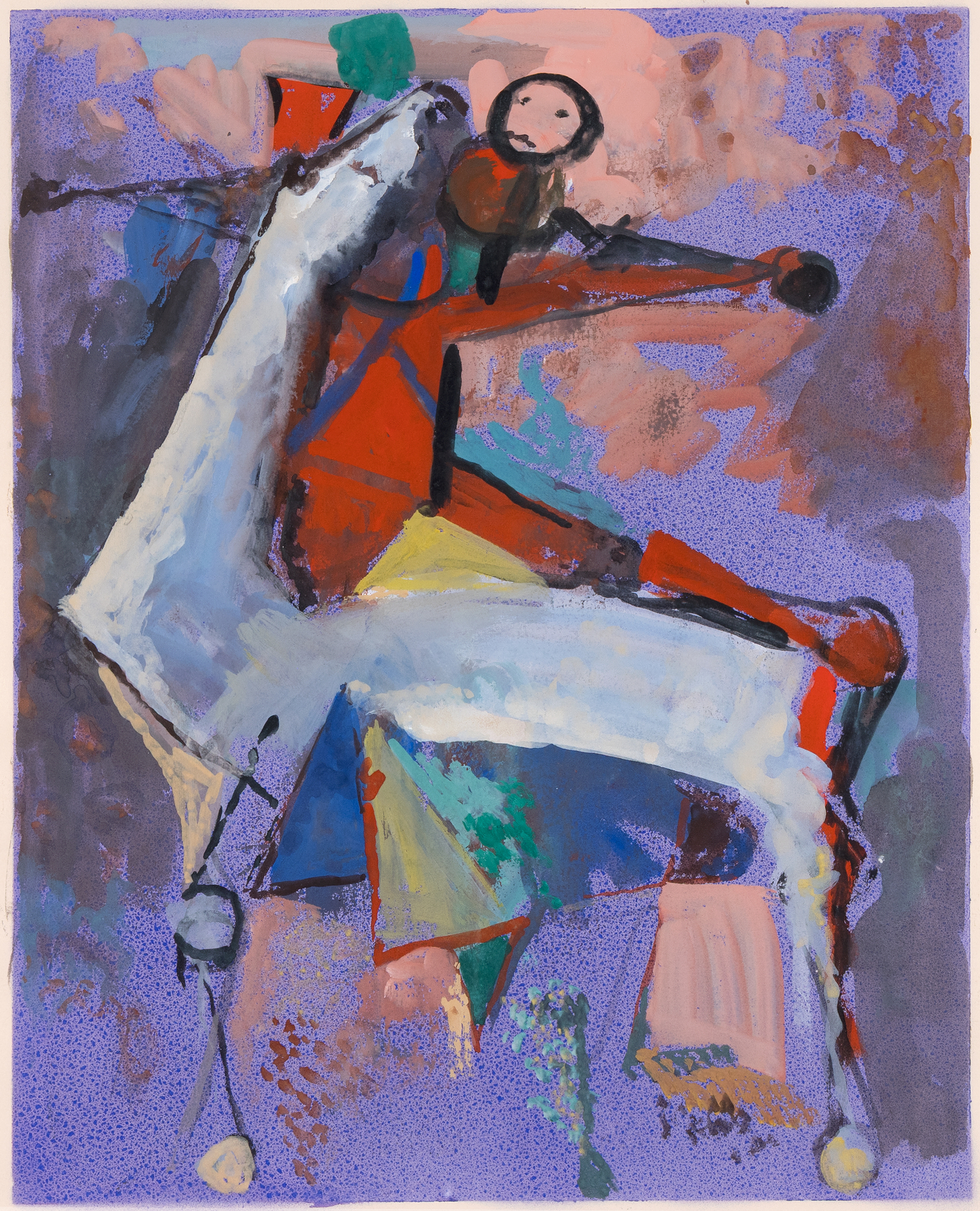
<div>Marino Marini’s <em>Marino from Shakespeare I</em> (1977) is a vivid and psychologically charged work on paper, executed in tempera over aquatint and drawn from the artist’s celebrated Marino from Shakespeare portfolio. In this variation, the equestrian figure is pushed to the foreground, its white, angular horse rearing across the composition with a sense of precarious motion. The rider is pared down to a mask-like head and simplified body, a formal reduction that places the figure in a state of fragile balance between control and collapse. </div><br><br><div> </div><br><br><div>The chromatic structure is bold and instinctive. Fields of violet, coral, and blue form a textured ground, against which the stark white of the horse and the warm reds and oranges of the rider assert themselves with dramatic clarity. Marini’s use of tempera over aquatint allows him to combine tonal depth with painterly immediacy: granular passages of aquatint dissolve into expressive sweeps of color, while linear accents stabilize the composition just enough to prevent it from tipping into chaos. </div><br><br><div> </div><br><br><div>As in many of his most significant works, the equestrian motif functions symbolically rather than narratively. Though inspired in spirit by Shakespeare, the image does not illustrate a specific text, instead channeling the emotional intensity and existential unease associated with tragic drama. Marini famously described his horse-and-rider figures as expressions of modern anxiety, stating, “My equestrian figures are symbols of the anguish that I feel when I survey contemporary events.” Here, that anguish is palpable in the strained geometry, unstable balance, and urgent movement of the forms. The print stands as a compelling demonstration of Marini’s ability to translate his sculptural language into graphic form, using color and gesture to confront the fragility of human authority and control. </div> <div>Marino Marini’s <em>Marino from Shakespeare I</em> (1977) is a vivid and psychologically charged work on paper, executed in tempera over aquatint and drawn from the artist’s celebrated Marino from Shakespeare portfolio. In this variation, the equestrian figure is pushed to the foreground, its white, angular horse rearing across the composition with a sense of precarious motion. The rider is pared down to a mask-like head and simplified body, a formal reduction that places the figure in a state of fragile balance between control and collapse. </div><br><br><div> </div><br><br><div>The chromatic structure is bold and instinctive. Fields of violet, coral, and blue form a textured ground, against which the stark white of the horse and the warm reds and oranges of the rider assert themselves with dramatic clarity. Marini’s use of tempera over aquatint allows him to combine tonal depth with painterly immediacy: granular passages of aquatint dissolve into expressive sweeps of color, while linear accents stabilize the composition just enough to prevent it from tipping into chaos. </div><br><br><div> </div><br><br><div>As in many of his most significant works, the equestrian motif functions symbolically rather than narratively. Though inspired in spirit by Shakespeare, the image does not illustrate a specific text, instead channeling the emotional intensity and existential unease associated with tragic drama. Marini famously described his horse-and-rider figures as expressions of modern anxiety, stating, “My equestrian figures are symbols of the anguish that I feel when I survey contemporary events.” Here, that anguish is palpable in the strained geometry, unstable balance, and urgent movement of the forms. The print stands as a compelling demonstration of Marini’s ability to translate his sculptural language into graphic form, using color and gesture to confront the fragility of human authority and control. </div> <div>Marino Marini’s <em>Marino from Shakespeare I</em> (1977) is a vivid and psychologically charged work on paper, executed in tempera over aquatint and drawn from the artist’s celebrated Marino from Shakespeare portfolio. In this variation, the equestrian figure is pushed to the foreground, its white, angular horse rearing across the composition with a sense of precarious motion. The rider is pared down to a mask-like head and simplified body, a formal reduction that places the figure in a state of fragile balance between control and collapse. </div><br><br><div> </div><br><br><div>The chromatic structure is bold and instinctive. Fields of violet, coral, and blue form a textured ground, against which the stark white of the horse and the warm reds and oranges of the rider assert themselves with dramatic clarity. Marini’s use of tempera over aquatint allows him to combine tonal depth with painterly immediacy: granular passages of aquatint dissolve into expressive sweeps of color, while linear accents stabilize the composition just enough to prevent it from tipping into chaos. </div><br><br><div> </div><br><br><div>As in many of his most significant works, the equestrian motif functions symbolically rather than narratively. Though inspired in spirit by Shakespeare, the image does not illustrate a specific text, instead channeling the emotional intensity and existential unease associated with tragic drama. Marini famously described his horse-and-rider figures as expressions of modern anxiety, stating, “My equestrian figures are symbols of the anguish that I feel when I survey contemporary events.” Here, that anguish is palpable in the strained geometry, unstable balance, and urgent movement of the forms. The print stands as a compelling demonstration of Marini’s ability to translate his sculptural language into graphic form, using color and gesture to confront the fragility of human authority and control. </div> <div>Marino Marini’s <em>Marino from Shakespeare I</em> (1977) is a vivid and psychologically charged work on paper, executed in tempera over aquatint and drawn from the artist’s celebrated Marino from Shakespeare portfolio. In this variation, the equestrian figure is pushed to the foreground, its white, angular horse rearing across the composition with a sense of precarious motion. The rider is pared down to a mask-like head and simplified body, a formal reduction that places the figure in a state of fragile balance between control and collapse. </div><br><br><div> </div><br><br><div>The chromatic structure is bold and instinctive. Fields of violet, coral, and blue form a textured ground, against which the stark white of the horse and the warm reds and oranges of the rider assert themselves with dramatic clarity. Marini’s use of tempera over aquatint allows him to combine tonal depth with painterly immediacy: granular passages of aquatint dissolve into expressive sweeps of color, while linear accents stabilize the composition just enough to prevent it from tipping into chaos. </div><br><br><div> </div><br><br><div>As in many of his most significant works, the equestrian motif functions symbolically rather than narratively. Though inspired in spirit by Shakespeare, the image does not illustrate a specific text, instead channeling the emotional intensity and existential unease associated with tragic drama. Marini famously described his horse-and-rider figures as expressions of modern anxiety, stating, “My equestrian figures are symbols of the anguish that I feel when I survey contemporary events.” Here, that anguish is palpable in the strained geometry, unstable balance, and urgent movement of the forms. The print stands as a compelling demonstration of Marini’s ability to translate his sculptural language into graphic form, using color and gesture to confront the fragility of human authority and control. </div> <div>Marino Marini’s <em>Marino from Shakespeare I</em> (1977) is a vivid and psychologically charged work on paper, executed in tempera over aquatint and drawn from the artist’s celebrated Marino from Shakespeare portfolio. In this variation, the equestrian figure is pushed to the foreground, its white, angular horse rearing across the composition with a sense of precarious motion. The rider is pared down to a mask-like head and simplified body, a formal reduction that places the figure in a state of fragile balance between control and collapse. </div><br><br><div> </div><br><br><div>The chromatic structure is bold and instinctive. Fields of violet, coral, and blue form a textured ground, against which the stark white of the horse and the warm reds and oranges of the rider assert themselves with dramatic clarity. Marini’s use of tempera over aquatint allows him to combine tonal depth with painterly immediacy: granular passages of aquatint dissolve into expressive sweeps of color, while linear accents stabilize the composition just enough to prevent it from tipping into chaos. </div><br><br><div> </div><br><br><div>As in many of his most significant works, the equestrian motif functions symbolically rather than narratively. Though inspired in spirit by Shakespeare, the image does not illustrate a specific text, instead channeling the emotional intensity and existential unease associated with tragic drama. Marini famously described his horse-and-rider figures as expressions of modern anxiety, stating, “My equestrian figures are symbols of the anguish that I feel when I survey contemporary events.” Here, that anguish is palpable in the strained geometry, unstable balance, and urgent movement of the forms. The print stands as a compelling demonstration of Marini’s ability to translate his sculptural language into graphic form, using color and gesture to confront the fragility of human authority and control. </div> <div>Marino Marini’s <em>Marino from Shakespeare I</em> (1977) is a vivid and psychologically charged work on paper, executed in tempera over aquatint and drawn from the artist’s celebrated Marino from Shakespeare portfolio. In this variation, the equestrian figure is pushed to the foreground, its white, angular horse rearing across the composition with a sense of precarious motion. The rider is pared down to a mask-like head and simplified body, a formal reduction that places the figure in a state of fragile balance between control and collapse. </div><br><br><div> </div><br><br><div>The chromatic structure is bold and instinctive. Fields of violet, coral, and blue form a textured ground, against which the stark white of the horse and the warm reds and oranges of the rider assert themselves with dramatic clarity. Marini’s use of tempera over aquatint allows him to combine tonal depth with painterly immediacy: granular passages of aquatint dissolve into expressive sweeps of color, while linear accents stabilize the composition just enough to prevent it from tipping into chaos. </div><br><br><div> </div><br><br><div>As in many of his most significant works, the equestrian motif functions symbolically rather than narratively. Though inspired in spirit by Shakespeare, the image does not illustrate a specific text, instead channeling the emotional intensity and existential unease associated with tragic drama. Marini famously described his horse-and-rider figures as expressions of modern anxiety, stating, “My equestrian figures are symbols of the anguish that I feel when I survey contemporary events.” Here, that anguish is palpable in the strained geometry, unstable balance, and urgent movement of the forms. The print stands as a compelling demonstration of Marini’s ability to translate his sculptural language into graphic form, using color and gesture to confront the fragility of human authority and control. </div> <div>Marino Marini’s <em>Marino from Shakespeare I</em> (1977) is a vivid and psychologically charged work on paper, executed in tempera over aquatint and drawn from the artist’s celebrated Marino from Shakespeare portfolio. In this variation, the equestrian figure is pushed to the foreground, its white, angular horse rearing across the composition with a sense of precarious motion. The rider is pared down to a mask-like head and simplified body, a formal reduction that places the figure in a state of fragile balance between control and collapse. </div><br><br><div> </div><br><br><div>The chromatic structure is bold and instinctive. Fields of violet, coral, and blue form a textured ground, against which the stark white of the horse and the warm reds and oranges of the rider assert themselves with dramatic clarity. Marini’s use of tempera over aquatint allows him to combine tonal depth with painterly immediacy: granular passages of aquatint dissolve into expressive sweeps of color, while linear accents stabilize the composition just enough to prevent it from tipping into chaos. </div><br><br><div> </div><br><br><div>As in many of his most significant works, the equestrian motif functions symbolically rather than narratively. Though inspired in spirit by Shakespeare, the image does not illustrate a specific text, instead channeling the emotional intensity and existential unease associated with tragic drama. Marini famously described his horse-and-rider figures as expressions of modern anxiety, stating, “My equestrian figures are symbols of the anguish that I feel when I survey contemporary events.” Here, that anguish is palpable in the strained geometry, unstable balance, and urgent movement of the forms. The print stands as a compelling demonstration of Marini’s ability to translate his sculptural language into graphic form, using color and gesture to confront the fragility of human authority and control. </div> <div>Marino Marini’s <em>Marino from Shakespeare I</em> (1977) is a vivid and psychologically charged work on paper, executed in tempera over aquatint and drawn from the artist’s celebrated Marino from Shakespeare portfolio. In this variation, the equestrian figure is pushed to the foreground, its white, angular horse rearing across the composition with a sense of precarious motion. The rider is pared down to a mask-like head and simplified body, a formal reduction that places the figure in a state of fragile balance between control and collapse. </div><br><br><div> </div><br><br><div>The chromatic structure is bold and instinctive. Fields of violet, coral, and blue form a textured ground, against which the stark white of the horse and the warm reds and oranges of the rider assert themselves with dramatic clarity. Marini’s use of tempera over aquatint allows him to combine tonal depth with painterly immediacy: granular passages of aquatint dissolve into expressive sweeps of color, while linear accents stabilize the composition just enough to prevent it from tipping into chaos. </div><br><br><div> </div><br><br><div>As in many of his most significant works, the equestrian motif functions symbolically rather than narratively. Though inspired in spirit by Shakespeare, the image does not illustrate a specific text, instead channeling the emotional intensity and existential unease associated with tragic drama. Marini famously described his horse-and-rider figures as expressions of modern anxiety, stating, “My equestrian figures are symbols of the anguish that I feel when I survey contemporary events.” Here, that anguish is palpable in the strained geometry, unstable balance, and urgent movement of the forms. The print stands as a compelling demonstration of Marini’s ability to translate his sculptural language into graphic form, using color and gesture to confront the fragility of human authority and control. </div> <div>Marino Marini’s <em>Marino from Shakespeare I</em> (1977) is a vivid and psychologically charged work on paper, executed in tempera over aquatint and drawn from the artist’s celebrated Marino from Shakespeare portfolio. In this variation, the equestrian figure is pushed to the foreground, its white, angular horse rearing across the composition with a sense of precarious motion. The rider is pared down to a mask-like head and simplified body, a formal reduction that places the figure in a state of fragile balance between control and collapse. </div><br><br><div> </div><br><br><div>The chromatic structure is bold and instinctive. Fields of violet, coral, and blue form a textured ground, against which the stark white of the horse and the warm reds and oranges of the rider assert themselves with dramatic clarity. Marini’s use of tempera over aquatint allows him to combine tonal depth with painterly immediacy: granular passages of aquatint dissolve into expressive sweeps of color, while linear accents stabilize the composition just enough to prevent it from tipping into chaos. </div><br><br><div> </div><br><br><div>As in many of his most significant works, the equestrian motif functions symbolically rather than narratively. Though inspired in spirit by Shakespeare, the image does not illustrate a specific text, instead channeling the emotional intensity and existential unease associated with tragic drama. Marini famously described his horse-and-rider figures as expressions of modern anxiety, stating, “My equestrian figures are symbols of the anguish that I feel when I survey contemporary events.” Here, that anguish is palpable in the strained geometry, unstable balance, and urgent movement of the forms. The print stands as a compelling demonstration of Marini’s ability to translate his sculptural language into graphic form, using color and gesture to confront the fragility of human authority and control. </div> <div>Marino Marini’s <em>Marino from Shakespeare I</em> (1977) is a vivid and psychologically charged work on paper, executed in tempera over aquatint and drawn from the artist’s celebrated Marino from Shakespeare portfolio. In this variation, the equestrian figure is pushed to the foreground, its white, angular horse rearing across the composition with a sense of precarious motion. The rider is pared down to a mask-like head and simplified body, a formal reduction that places the figure in a state of fragile balance between control and collapse. </div><br><br><div> </div><br><br><div>The chromatic structure is bold and instinctive. Fields of violet, coral, and blue form a textured ground, against which the stark white of the horse and the warm reds and oranges of the rider assert themselves with dramatic clarity. Marini’s use of tempera over aquatint allows him to combine tonal depth with painterly immediacy: granular passages of aquatint dissolve into expressive sweeps of color, while linear accents stabilize the composition just enough to prevent it from tipping into chaos. </div><br><br><div> </div><br><br><div>As in many of his most significant works, the equestrian motif functions symbolically rather than narratively. Though inspired in spirit by Shakespeare, the image does not illustrate a specific text, instead channeling the emotional intensity and existential unease associated with tragic drama. Marini famously described his horse-and-rider figures as expressions of modern anxiety, stating, “My equestrian figures are symbols of the anguish that I feel when I survey contemporary events.” Here, that anguish is palpable in the strained geometry, unstable balance, and urgent movement of the forms. The print stands as a compelling demonstration of Marini’s ability to translate his sculptural language into graphic form, using color and gesture to confront the fragility of human authority and control. </div>
シェイクスピア I のマリーノ1977年画像:19 1/8 x 15 1/2 インチ(48.58 x 39.37 cm) 紙上のアクアチント、テンペラ
出所
フォンダツィオーネ・マリーノ・マリーニ、ピストイア
個人コレクション、上記より取得、2006年
サザビーズ、ニューヨーク、2023年11月14日、ロット117
個人コレクション、上記より取得
文学
ピエール・カゼ編、マリーノ・マリーニ、ミラノ、1999年、94ページ、図版掲載
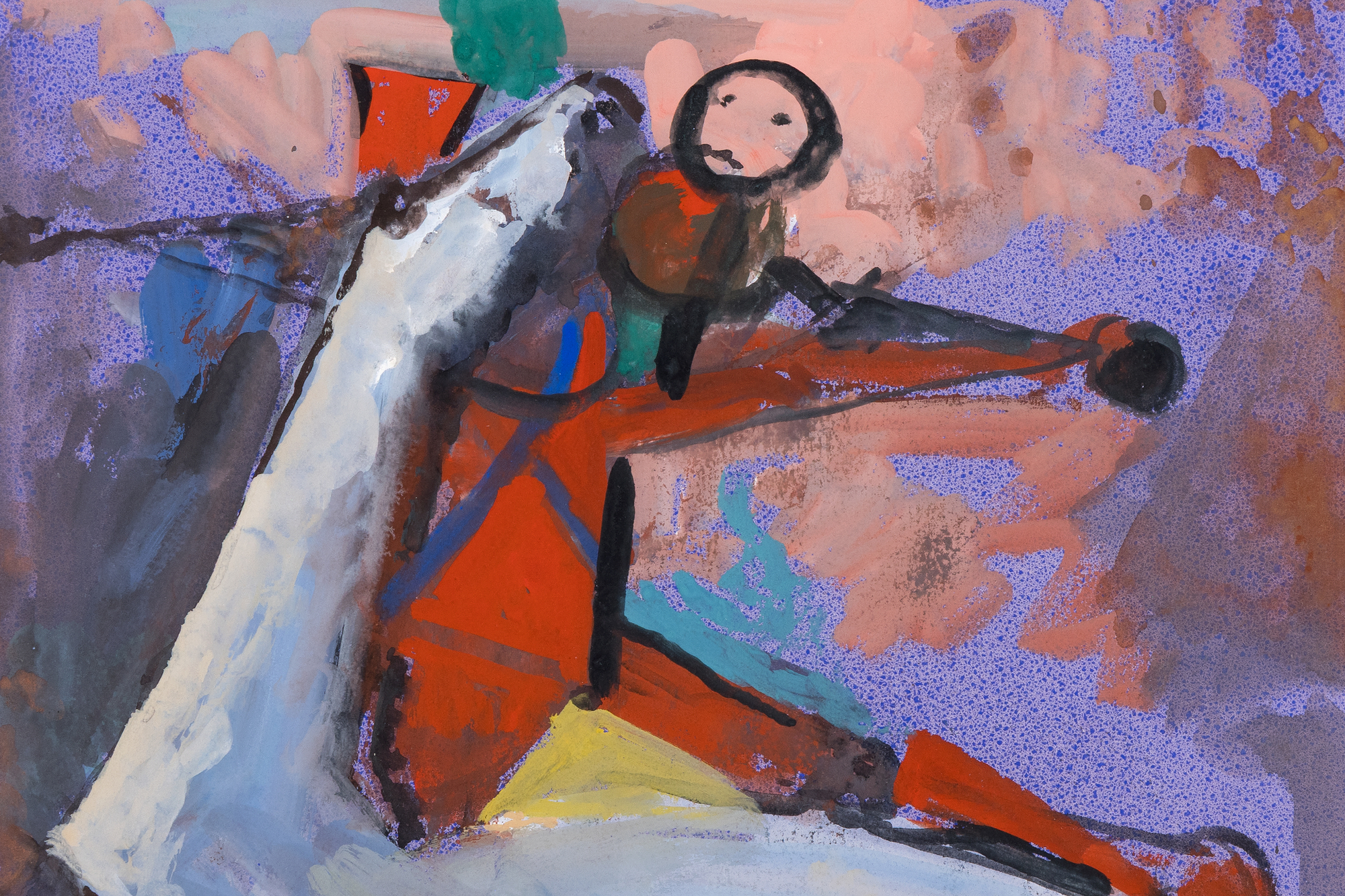
マリーノ・マリーニの『シェイクスピアのマリーノ I』(1977 年)は、アクアチントの上にテンペラで描かれた、鮮やかで心理的な緊張感に満ちた紙作品であり、この作家が発表した有名な『シェイクスピアのマリーノ』ポートフォリオから抜粋したものです。 このバリエーションでは、騎馬像が前景に押し出され、その白く角ばった馬が、不安定な動きを感じさせる構図の中で立ち上がっています。騎手は、仮面のような頭と単純化された体へと簡略化されており、その形式的な縮小によって、この人物は、制御と崩壊の間の不安定なバランス状態に置かれています。


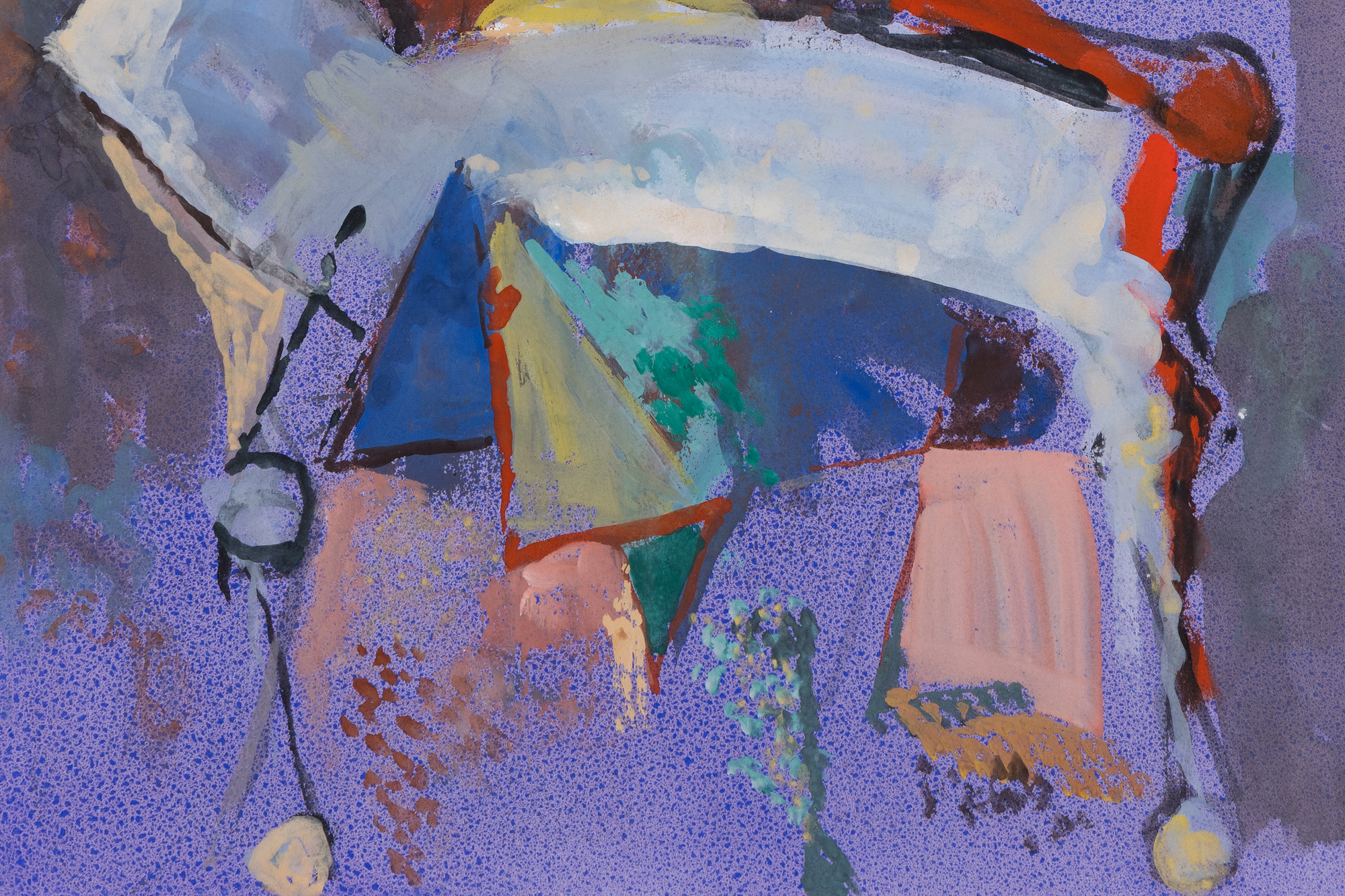
色彩構造は大胆で本能的です。 紫、珊瑚色、青のフィールドが質感のある地を形作り、その背景に対して馬の純白と騎手の暖かな赤・橙色が劇的な明瞭さで主張する。マリーニがアクアティントの上にテンペラを用いることで、階調の深みと絵画的な即時性を両立させている:アクアティントの粒状の筆致が表現豊かな色彩の広がりに溶け込み、線的なアクセントが構図を安定させ、混沌へと転落するのをかろうじて防いでいる。


彼の最も重要な作品の多くと同様に、騎馬像のモチーフは物語的というより象徴的に機能する。精神的にはシェイクスピアに触発されているものの、この画像は特定のテキストを説明しているわけではなく、むしろ悲劇的ドラマに伴う感情的な強度と実存的な不安を伝えている。マリーニは自身の騎馬像を現代の不安の表現として有名に説明し、「私の騎馬像は、現代の出来事を眺めたときに感じる苦悩の象徴である」と述べている。 ここでは、その苦悩が、歪んだ幾何学、不安定な均衡、そして形態の切迫した動きに如実に表れている。この版画は、マリニが彫刻的言語をグラフィック形式へと変換する能力を力強く示しており、色彩とジェスチャーを用いて人間の権威と支配の脆さと向き合っている。
お 問い合わせ