ロバート・インディアナ (1928-2018)

 
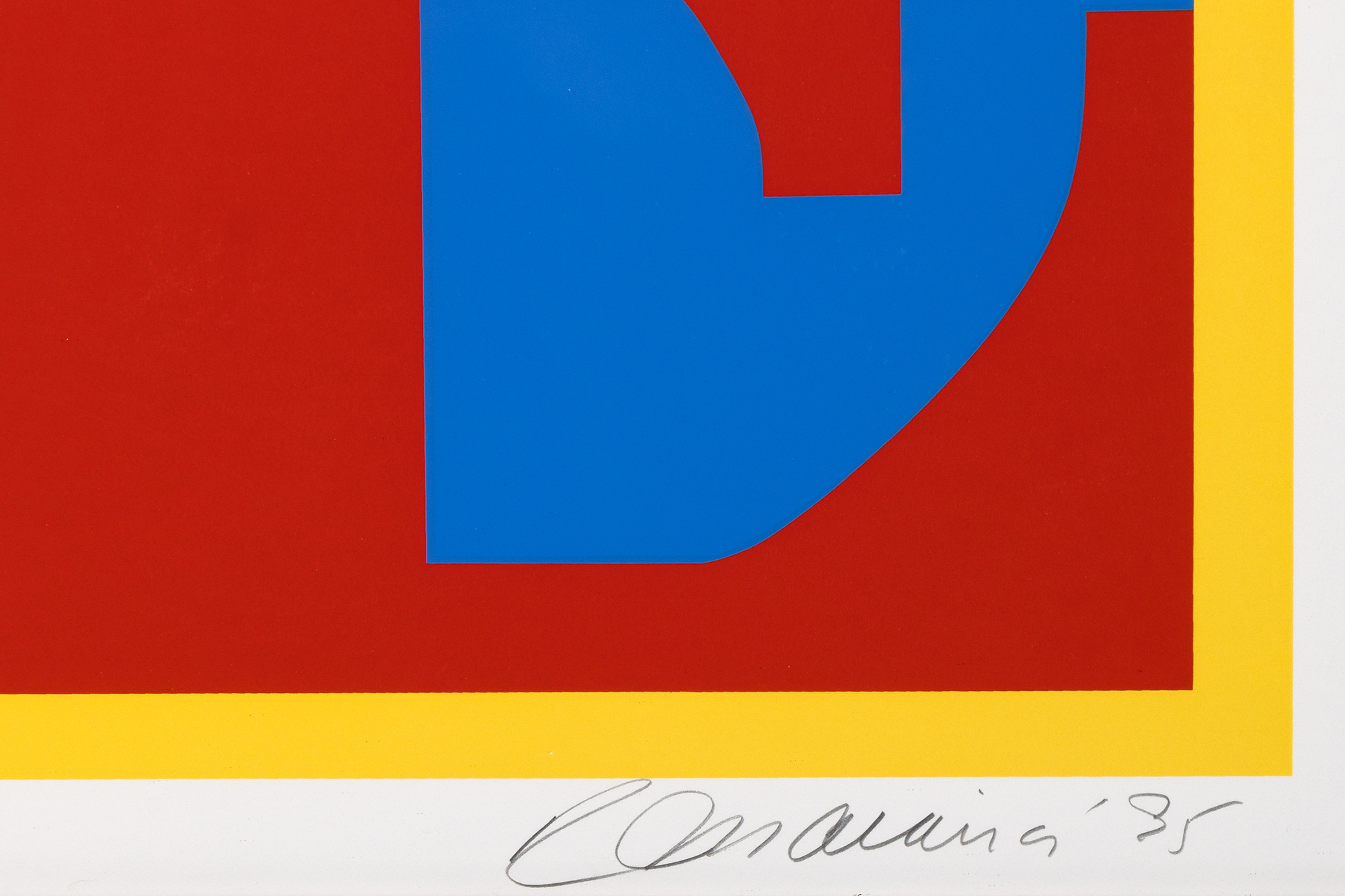
<div><font face=Lato size=3 color="#191919">Robert Indiana’s <em>Heliotherapy</em> reimagines his iconic <em>LOVE</em> motif through a vision of renewal and optimism. Created in 1995, the title refers to sunlight as a source of healing, reflecting Indiana’s desire late in life to revisit his 1960s antiwar symbol with a message of hope and compassion. He enriched the original reds, greens, and blues with radiant bands of yellow, transforming his emblem of love into one of light, warmth, and restoration.</font></div><br><br><div> </div><br><br><div><font face=Lato size=3 color="#191919">The composition echoes Indiana’s celebrated 1965 <em>LOVE</em> Christmas card for the Museum of Modern Art, the image that made him a household name. With its vivid palette and spiritual depth, <em>Heliotherapy</em> stands as a late reflection on love as both universal and curative. Comparable works are held in the collections of the Museum of Modern Art and the Smithsonian American Art Museum, underscoring the enduring legacy of Indiana’s most iconic image.</font></div> <div><font face=Lato size=3 color="#191919">Robert Indiana’s <em>Heliotherapy</em> reimagines his iconic <em>LOVE</em> motif through a vision of renewal and optimism. Created in 1995, the title refers to sunlight as a source of healing, reflecting Indiana’s desire late in life to revisit his 1960s antiwar symbol with a message of hope and compassion. He enriched the original reds, greens, and blues with radiant bands of yellow, transforming his emblem of love into one of light, warmth, and restoration.</font></div><br><br><div> </div><br><br><div><font face=Lato size=3 color="#191919">The composition echoes Indiana’s celebrated 1965 <em>LOVE</em> Christmas card for the Museum of Modern Art, the image that made him a household name. With its vivid palette and spiritual depth, <em>Heliotherapy</em> stands as a late reflection on love as both universal and curative. Comparable works are held in the collections of the Museum of Modern Art and the Smithsonian American Art Museum, underscoring the enduring legacy of Indiana’s most iconic image.</font></div> <div><font face=Lato size=3 color="#191919">Robert Indiana’s <em>Heliotherapy</em> reimagines his iconic <em>LOVE</em> motif through a vision of renewal and optimism. Created in 1995, the title refers to sunlight as a source of healing, reflecting Indiana’s desire late in life to revisit his 1960s antiwar symbol with a message of hope and compassion. He enriched the original reds, greens, and blues with radiant bands of yellow, transforming his emblem of love into one of light, warmth, and restoration.</font></div><br><br><div> </div><br><br><div><font face=Lato size=3 color="#191919">The composition echoes Indiana’s celebrated 1965 <em>LOVE</em> Christmas card for the Museum of Modern Art, the image that made him a household name. With its vivid palette and spiritual depth, <em>Heliotherapy</em> stands as a late reflection on love as both universal and curative. Comparable works are held in the collections of the Museum of Modern Art and the Smithsonian American Art Museum, underscoring the enduring legacy of Indiana’s most iconic image.</font></div> <div><font face=Lato size=3 color="#191919">Robert Indiana’s <em>Heliotherapy</em> reimagines his iconic <em>LOVE</em> motif through a vision of renewal and optimism. Created in 1995, the title refers to sunlight as a source of healing, reflecting Indiana’s desire late in life to revisit his 1960s antiwar symbol with a message of hope and compassion. He enriched the original reds, greens, and blues with radiant bands of yellow, transforming his emblem of love into one of light, warmth, and restoration.</font></div><br><br><div> </div><br><br><div><font face=Lato size=3 color="#191919">The composition echoes Indiana’s celebrated 1965 <em>LOVE</em> Christmas card for the Museum of Modern Art, the image that made him a household name. With its vivid palette and spiritual depth, <em>Heliotherapy</em> stands as a late reflection on love as both universal and curative. Comparable works are held in the collections of the Museum of Modern Art and the Smithsonian American Art Museum, underscoring the enduring legacy of Indiana’s most iconic image.</font></div> <div><font face=Lato size=3 color="#191919">Robert Indiana’s <em>Heliotherapy</em> reimagines his iconic <em>LOVE</em> motif through a vision of renewal and optimism. Created in 1995, the title refers to sunlight as a source of healing, reflecting Indiana’s desire late in life to revisit his 1960s antiwar symbol with a message of hope and compassion. He enriched the original reds, greens, and blues with radiant bands of yellow, transforming his emblem of love into one of light, warmth, and restoration.</font></div><br><br><div> </div><br><br><div><font face=Lato size=3 color="#191919">The composition echoes Indiana’s celebrated 1965 <em>LOVE</em> Christmas card for the Museum of Modern Art, the image that made him a household name. With its vivid palette and spiritual depth, <em>Heliotherapy</em> stands as a late reflection on love as both universal and curative. Comparable works are held in the collections of the Museum of Modern Art and the Smithsonian American Art Museum, underscoring the enduring legacy of Indiana’s most iconic image.</font></div> <div><font face=Lato size=3 color="#191919">Robert Indiana’s <em>Heliotherapy</em> reimagines his iconic <em>LOVE</em> motif through a vision of renewal and optimism. Created in 1995, the title refers to sunlight as a source of healing, reflecting Indiana’s desire late in life to revisit his 1960s antiwar symbol with a message of hope and compassion. He enriched the original reds, greens, and blues with radiant bands of yellow, transforming his emblem of love into one of light, warmth, and restoration.</font></div><br><br><div> </div><br><br><div><font face=Lato size=3 color="#191919">The composition echoes Indiana’s celebrated 1965 <em>LOVE</em> Christmas card for the Museum of Modern Art, the image that made him a household name. With its vivid palette and spiritual depth, <em>Heliotherapy</em> stands as a late reflection on love as both universal and curative. Comparable works are held in the collections of the Museum of Modern Art and the Smithsonian American Art Museum, underscoring the enduring legacy of Indiana’s most iconic image.</font></div> <div><font face=Lato size=3 color="#191919">Robert Indiana’s <em>Heliotherapy</em> reimagines his iconic <em>LOVE</em> motif through a vision of renewal and optimism. Created in 1995, the title refers to sunlight as a source of healing, reflecting Indiana’s desire late in life to revisit his 1960s antiwar symbol with a message of hope and compassion. He enriched the original reds, greens, and blues with radiant bands of yellow, transforming his emblem of love into one of light, warmth, and restoration.</font></div><br><br><div> </div><br><br><div><font face=Lato size=3 color="#191919">The composition echoes Indiana’s celebrated 1965 <em>LOVE</em> Christmas card for the Museum of Modern Art, the image that made him a household name. With its vivid palette and spiritual depth, <em>Heliotherapy</em> stands as a late reflection on love as both universal and curative. Comparable works are held in the collections of the Museum of Modern Art and the Smithsonian American Art Museum, underscoring the enduring legacy of Indiana’s most iconic image.</font></div> <div><font face=Lato size=3 color="#191919">Robert Indiana’s <em>Heliotherapy</em> reimagines his iconic <em>LOVE</em> motif through a vision of renewal and optimism. Created in 1995, the title refers to sunlight as a source of healing, reflecting Indiana’s desire late in life to revisit his 1960s antiwar symbol with a message of hope and compassion. He enriched the original reds, greens, and blues with radiant bands of yellow, transforming his emblem of love into one of light, warmth, and restoration.</font></div><br><br><div> </div><br><br><div><font face=Lato size=3 color="#191919">The composition echoes Indiana’s celebrated 1965 <em>LOVE</em> Christmas card for the Museum of Modern Art, the image that made him a household name. With its vivid palette and spiritual depth, <em>Heliotherapy</em> stands as a late reflection on love as both universal and curative. Comparable works are held in the collections of the Museum of Modern Art and the Smithsonian American Art Museum, underscoring the enduring legacy of Indiana’s most iconic image.</font></div> <div><font face=Lato size=3 color="#191919">Robert Indiana’s <em>Heliotherapy</em> reimagines his iconic <em>LOVE</em> motif through a vision of renewal and optimism. Created in 1995, the title refers to sunlight as a source of healing, reflecting Indiana’s desire late in life to revisit his 1960s antiwar symbol with a message of hope and compassion. He enriched the original reds, greens, and blues with radiant bands of yellow, transforming his emblem of love into one of light, warmth, and restoration.</font></div><br><br><div> </div><br><br><div><font face=Lato size=3 color="#191919">The composition echoes Indiana’s celebrated 1965 <em>LOVE</em> Christmas card for the Museum of Modern Art, the image that made him a household name. With its vivid palette and spiritual depth, <em>Heliotherapy</em> stands as a late reflection on love as both universal and curative. Comparable works are held in the collections of the Museum of Modern Art and the Smithsonian American Art Museum, underscoring the enduring legacy of Indiana’s most iconic image.</font></div> <div><font face=Lato size=3 color="#191919">Robert Indiana’s <em>Heliotherapy</em> reimagines his iconic <em>LOVE</em> motif through a vision of renewal and optimism. Created in 1995, the title refers to sunlight as a source of healing, reflecting Indiana’s desire late in life to revisit his 1960s antiwar symbol with a message of hope and compassion. He enriched the original reds, greens, and blues with radiant bands of yellow, transforming his emblem of love into one of light, warmth, and restoration.</font></div><br><br><div> </div><br><br><div><font face=Lato size=3 color="#191919">The composition echoes Indiana’s celebrated 1965 <em>LOVE</em> Christmas card for the Museum of Modern Art, the image that made him a household name. With its vivid palette and spiritual depth, <em>Heliotherapy</em> stands as a late reflection on love as both universal and curative. Comparable works are held in the collections of the Museum of Modern Art and the Smithsonian American Art Museum, underscoring the enduring legacy of Indiana’s most iconic image.</font></div>
ヘリオセラピー・ラブ199537 x 37 1/2 インチ(93.98 x 95.25 cm) カラー・シルクスクリーン
出所
アートブローカレッジ
より プライベート・コレクション(コロラド州)、上記より取得、2012年
ロバート・インディアナの『ヘリオセラピー』は、再生と楽観のビジョンを通じて、彼の象徴的なLOVEモチーフを再解釈した作品である。 1995年に制作された本作のタイトルは、癒しの源としての太陽光を意味し、晩年のインディアナが1960年代の反戦シンボルを、希望と思いやりのメッセージと共に再解釈したいという願いを反映している。彼は原色の赤・緑・青に輝く黄色の帯を加え、愛の象徴を光と温もり、再生の象徴へと昇華させた。


この構図は、1965年にニューヨーク近代美術館(MoMA)のために制作され、彼を世に知らしめた名作「LOVE」クリスマスカードを想起させる。鮮やかな色彩と精神的な深みを備えた『ヘリオセラピー』は、普遍的かつ癒しの力を持つ愛についての晩年の考察として位置づけられる。同等の作品はニューヨーク近代美術館とスミソニアン・アメリカン・アート・ミュージアムのコレクションに所蔵されており、インディアナが遺した最も象徴的なイメージの不朽の遺産を裏付けている。
お 問い合わせ