戻る

モーリス・ド・フラミンコ(1876-1958)

 
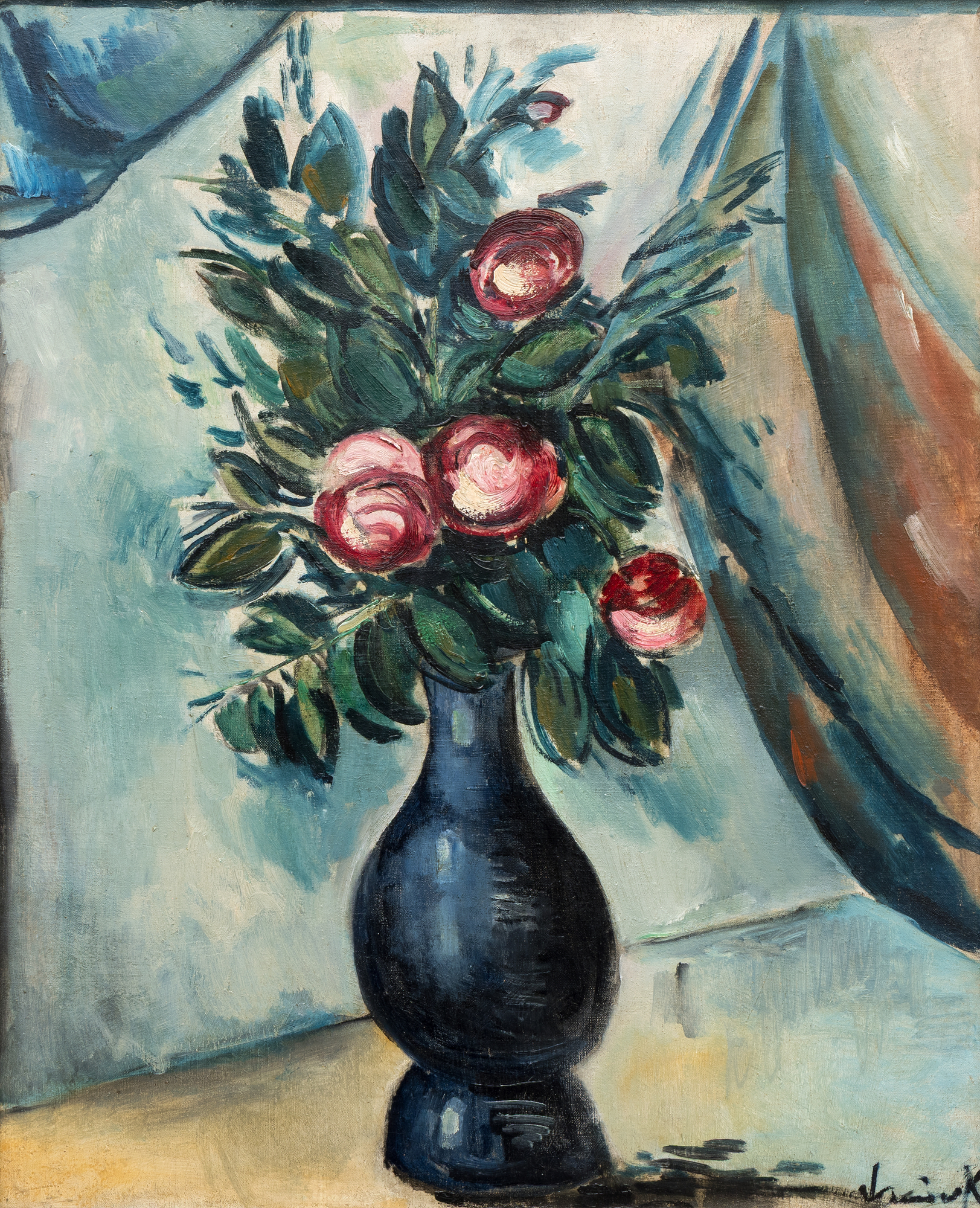
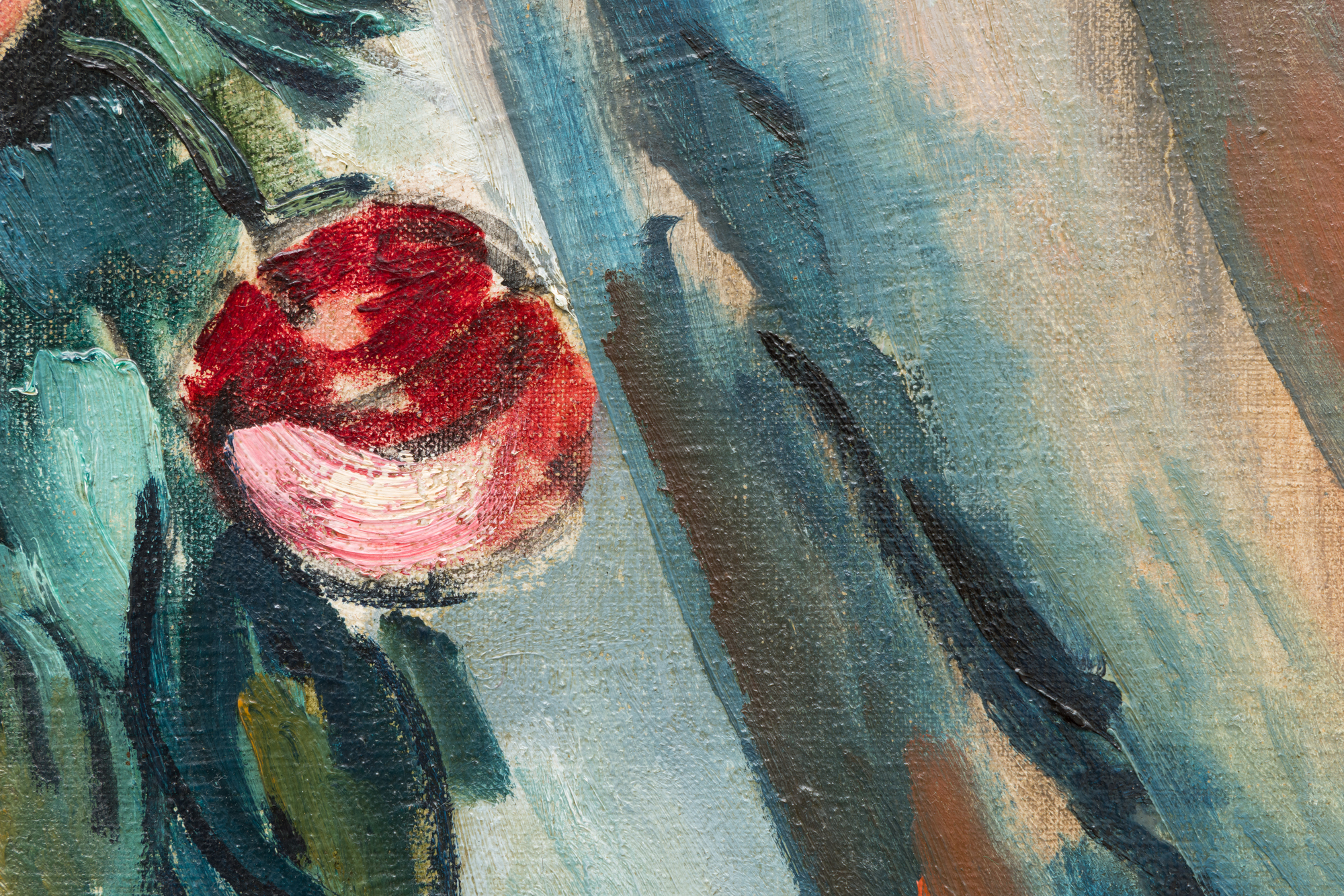
<div>Maurice de Vlaminck’s <em>Bouquet de Pivoines dans un Vase Bleu</em> (1913–14) is a prime-period still life that channels the artist’s Fauvist audacity into an image of exuberant, painterly force. A dense spray of peonies—painted as spiraling bursts of pinks, reds, and creamy whites—pushes outward from a deep blue vase, its rounded form anchoring the composition. With vigorous, directional brushstrokes, Vlaminck animates petals and foliage into a rhythmic surge, turning a traditional tabletop motif into a study of movement, texture, and chromatic intensity. </div><br><br><div> </div><br><br><div>As one of the core founders of Fauvism, Vlaminck was celebrated for his radical, non-naturalistic use of color, and this work retains that avant-garde approach. Cool blues and sea-greens collide with hot, saturated reds, while the background drapery and angled planes are simplified into sweeping passages that heighten contrast and speed. The paint surface remains boldly worked, emphasizing the physicality of oil on canvas and the immediacy of the artist’s hand. A prominent signature reinforces the picture’s assertive presence and its sense of completed statement. </div><br><br><div> </div><br><br><div>The painting will be included in the forthcoming critical catalogue of Maurice de Vlaminck’s works, currently being prepared by Maïté Vallès-Bled and Godeliève de Vlaminck under the auspices of the Wildenstein Institute. Renewed international attention to Vlaminck’s achievements—including a recent retrospective at Museum Barberini in Potsdam, the first in nearly a century—has reaffirmed his vital role in the development of modern painting. <em>Bouquet de Pivoines dans un Vase Bleu </em>captures that legacy: unapologetically modern and powered by color as expression. </div> <div>Maurice de Vlaminck’s <em>Bouquet de Pivoines dans un Vase Bleu</em> (1913–14) is a prime-period still life that channels the artist’s Fauvist audacity into an image of exuberant, painterly force. A dense spray of peonies—painted as spiraling bursts of pinks, reds, and creamy whites—pushes outward from a deep blue vase, its rounded form anchoring the composition. With vigorous, directional brushstrokes, Vlaminck animates petals and foliage into a rhythmic surge, turning a traditional tabletop motif into a study of movement, texture, and chromatic intensity. </div><br><br><div> </div><br><br><div>As one of the core founders of Fauvism, Vlaminck was celebrated for his radical, non-naturalistic use of color, and this work retains that avant-garde approach. Cool blues and sea-greens collide with hot, saturated reds, while the background drapery and angled planes are simplified into sweeping passages that heighten contrast and speed. The paint surface remains boldly worked, emphasizing the physicality of oil on canvas and the immediacy of the artist’s hand. A prominent signature reinforces the picture’s assertive presence and its sense of completed statement. </div><br><br><div> </div><br><br><div>The painting will be included in the forthcoming critical catalogue of Maurice de Vlaminck’s works, currently being prepared by Maïté Vallès-Bled and Godeliève de Vlaminck under the auspices of the Wildenstein Institute. Renewed international attention to Vlaminck’s achievements—including a recent retrospective at Museum Barberini in Potsdam, the first in nearly a century—has reaffirmed his vital role in the development of modern painting. <em>Bouquet de Pivoines dans un Vase Bleu </em>captures that legacy: unapologetically modern and powered by color as expression. </div> <div>Maurice de Vlaminck’s <em>Bouquet de Pivoines dans un Vase Bleu</em> (1913–14) is a prime-period still life that channels the artist’s Fauvist audacity into an image of exuberant, painterly force. A dense spray of peonies—painted as spiraling bursts of pinks, reds, and creamy whites—pushes outward from a deep blue vase, its rounded form anchoring the composition. With vigorous, directional brushstrokes, Vlaminck animates petals and foliage into a rhythmic surge, turning a traditional tabletop motif into a study of movement, texture, and chromatic intensity. </div><br><br><div> </div><br><br><div>As one of the core founders of Fauvism, Vlaminck was celebrated for his radical, non-naturalistic use of color, and this work retains that avant-garde approach. Cool blues and sea-greens collide with hot, saturated reds, while the background drapery and angled planes are simplified into sweeping passages that heighten contrast and speed. The paint surface remains boldly worked, emphasizing the physicality of oil on canvas and the immediacy of the artist’s hand. A prominent signature reinforces the picture’s assertive presence and its sense of completed statement. </div><br><br><div> </div><br><br><div>The painting will be included in the forthcoming critical catalogue of Maurice de Vlaminck’s works, currently being prepared by Maïté Vallès-Bled and Godeliève de Vlaminck under the auspices of the Wildenstein Institute. Renewed international attention to Vlaminck’s achievements—including a recent retrospective at Museum Barberini in Potsdam, the first in nearly a century—has reaffirmed his vital role in the development of modern painting. <em>Bouquet de Pivoines dans un Vase Bleu </em>captures that legacy: unapologetically modern and powered by color as expression. </div> <div>Maurice de Vlaminck’s <em>Bouquet de Pivoines dans un Vase Bleu</em> (1913–14) is a prime-period still life that channels the artist’s Fauvist audacity into an image of exuberant, painterly force. A dense spray of peonies—painted as spiraling bursts of pinks, reds, and creamy whites—pushes outward from a deep blue vase, its rounded form anchoring the composition. With vigorous, directional brushstrokes, Vlaminck animates petals and foliage into a rhythmic surge, turning a traditional tabletop motif into a study of movement, texture, and chromatic intensity. </div><br><br><div> </div><br><br><div>As one of the core founders of Fauvism, Vlaminck was celebrated for his radical, non-naturalistic use of color, and this work retains that avant-garde approach. Cool blues and sea-greens collide with hot, saturated reds, while the background drapery and angled planes are simplified into sweeping passages that heighten contrast and speed. The paint surface remains boldly worked, emphasizing the physicality of oil on canvas and the immediacy of the artist’s hand. A prominent signature reinforces the picture’s assertive presence and its sense of completed statement. </div><br><br><div> </div><br><br><div>The painting will be included in the forthcoming critical catalogue of Maurice de Vlaminck’s works, currently being prepared by Maïté Vallès-Bled and Godeliève de Vlaminck under the auspices of the Wildenstein Institute. Renewed international attention to Vlaminck’s achievements—including a recent retrospective at Museum Barberini in Potsdam, the first in nearly a century—has reaffirmed his vital role in the development of modern painting. <em>Bouquet de Pivoines dans un Vase Bleu </em>captures that legacy: unapologetically modern and powered by color as expression. </div> <div>Maurice de Vlaminck’s <em>Bouquet de Pivoines dans un Vase Bleu</em> (1913–14) is a prime-period still life that channels the artist’s Fauvist audacity into an image of exuberant, painterly force. A dense spray of peonies—painted as spiraling bursts of pinks, reds, and creamy whites—pushes outward from a deep blue vase, its rounded form anchoring the composition. With vigorous, directional brushstrokes, Vlaminck animates petals and foliage into a rhythmic surge, turning a traditional tabletop motif into a study of movement, texture, and chromatic intensity. </div><br><br><div> </div><br><br><div>As one of the core founders of Fauvism, Vlaminck was celebrated for his radical, non-naturalistic use of color, and this work retains that avant-garde approach. Cool blues and sea-greens collide with hot, saturated reds, while the background drapery and angled planes are simplified into sweeping passages that heighten contrast and speed. The paint surface remains boldly worked, emphasizing the physicality of oil on canvas and the immediacy of the artist’s hand. A prominent signature reinforces the picture’s assertive presence and its sense of completed statement. </div><br><br><div> </div><br><br><div>The painting will be included in the forthcoming critical catalogue of Maurice de Vlaminck’s works, currently being prepared by Maïté Vallès-Bled and Godeliève de Vlaminck under the auspices of the Wildenstein Institute. Renewed international attention to Vlaminck’s achievements—including a recent retrospective at Museum Barberini in Potsdam, the first in nearly a century—has reaffirmed his vital role in the development of modern painting. <em>Bouquet de Pivoines dans un Vase Bleu </em>captures that legacy: unapologetically modern and powered by color as expression. </div> <div>Maurice de Vlaminck’s <em>Bouquet de Pivoines dans un Vase Bleu</em> (1913–14) is a prime-period still life that channels the artist’s Fauvist audacity into an image of exuberant, painterly force. A dense spray of peonies—painted as spiraling bursts of pinks, reds, and creamy whites—pushes outward from a deep blue vase, its rounded form anchoring the composition. With vigorous, directional brushstrokes, Vlaminck animates petals and foliage into a rhythmic surge, turning a traditional tabletop motif into a study of movement, texture, and chromatic intensity. </div><br><br><div> </div><br><br><div>As one of the core founders of Fauvism, Vlaminck was celebrated for his radical, non-naturalistic use of color, and this work retains that avant-garde approach. Cool blues and sea-greens collide with hot, saturated reds, while the background drapery and angled planes are simplified into sweeping passages that heighten contrast and speed. The paint surface remains boldly worked, emphasizing the physicality of oil on canvas and the immediacy of the artist’s hand. A prominent signature reinforces the picture’s assertive presence and its sense of completed statement. </div><br><br><div> </div><br><br><div>The painting will be included in the forthcoming critical catalogue of Maurice de Vlaminck’s works, currently being prepared by Maïté Vallès-Bled and Godeliève de Vlaminck under the auspices of the Wildenstein Institute. Renewed international attention to Vlaminck’s achievements—including a recent retrospective at Museum Barberini in Potsdam, the first in nearly a century—has reaffirmed his vital role in the development of modern painting. <em>Bouquet de Pivoines dans un Vase Bleu </em>captures that legacy: unapologetically modern and powered by color as expression. </div> <div>Maurice de Vlaminck’s <em>Bouquet de Pivoines dans un Vase Bleu</em> (1913–14) is a prime-period still life that channels the artist’s Fauvist audacity into an image of exuberant, painterly force. A dense spray of peonies—painted as spiraling bursts of pinks, reds, and creamy whites—pushes outward from a deep blue vase, its rounded form anchoring the composition. With vigorous, directional brushstrokes, Vlaminck animates petals and foliage into a rhythmic surge, turning a traditional tabletop motif into a study of movement, texture, and chromatic intensity. </div><br><br><div> </div><br><br><div>As one of the core founders of Fauvism, Vlaminck was celebrated for his radical, non-naturalistic use of color, and this work retains that avant-garde approach. Cool blues and sea-greens collide with hot, saturated reds, while the background drapery and angled planes are simplified into sweeping passages that heighten contrast and speed. The paint surface remains boldly worked, emphasizing the physicality of oil on canvas and the immediacy of the artist’s hand. A prominent signature reinforces the picture’s assertive presence and its sense of completed statement. </div><br><br><div> </div><br><br><div>The painting will be included in the forthcoming critical catalogue of Maurice de Vlaminck’s works, currently being prepared by Maïté Vallès-Bled and Godeliève de Vlaminck under the auspices of the Wildenstein Institute. Renewed international attention to Vlaminck’s achievements—including a recent retrospective at Museum Barberini in Potsdam, the first in nearly a century—has reaffirmed his vital role in the development of modern painting. <em>Bouquet de Pivoines dans un Vase Bleu </em>captures that legacy: unapologetically modern and powered by color as expression. </div> <div>Maurice de Vlaminck’s <em>Bouquet de Pivoines dans un Vase Bleu</em> (1913–14) is a prime-period still life that channels the artist’s Fauvist audacity into an image of exuberant, painterly force. A dense spray of peonies—painted as spiraling bursts of pinks, reds, and creamy whites—pushes outward from a deep blue vase, its rounded form anchoring the composition. With vigorous, directional brushstrokes, Vlaminck animates petals and foliage into a rhythmic surge, turning a traditional tabletop motif into a study of movement, texture, and chromatic intensity. </div><br><br><div> </div><br><br><div>As one of the core founders of Fauvism, Vlaminck was celebrated for his radical, non-naturalistic use of color, and this work retains that avant-garde approach. Cool blues and sea-greens collide with hot, saturated reds, while the background drapery and angled planes are simplified into sweeping passages that heighten contrast and speed. The paint surface remains boldly worked, emphasizing the physicality of oil on canvas and the immediacy of the artist’s hand. A prominent signature reinforces the picture’s assertive presence and its sense of completed statement. </div><br><br><div> </div><br><br><div>The painting will be included in the forthcoming critical catalogue of Maurice de Vlaminck’s works, currently being prepared by Maïté Vallès-Bled and Godeliève de Vlaminck under the auspices of the Wildenstein Institute. Renewed international attention to Vlaminck’s achievements—including a recent retrospective at Museum Barberini in Potsdam, the first in nearly a century—has reaffirmed his vital role in the development of modern painting. <em>Bouquet de Pivoines dans un Vase Bleu </em>captures that legacy: unapologetically modern and powered by color as expression. </div> <div>Maurice de Vlaminck’s <em>Bouquet de Pivoines dans un Vase Bleu</em> (1913–14) is a prime-period still life that channels the artist’s Fauvist audacity into an image of exuberant, painterly force. A dense spray of peonies—painted as spiraling bursts of pinks, reds, and creamy whites—pushes outward from a deep blue vase, its rounded form anchoring the composition. With vigorous, directional brushstrokes, Vlaminck animates petals and foliage into a rhythmic surge, turning a traditional tabletop motif into a study of movement, texture, and chromatic intensity. </div><br><br><div> </div><br><br><div>As one of the core founders of Fauvism, Vlaminck was celebrated for his radical, non-naturalistic use of color, and this work retains that avant-garde approach. Cool blues and sea-greens collide with hot, saturated reds, while the background drapery and angled planes are simplified into sweeping passages that heighten contrast and speed. The paint surface remains boldly worked, emphasizing the physicality of oil on canvas and the immediacy of the artist’s hand. A prominent signature reinforces the picture’s assertive presence and its sense of completed statement. </div><br><br><div> </div><br><br><div>The painting will be included in the forthcoming critical catalogue of Maurice de Vlaminck’s works, currently being prepared by Maïté Vallès-Bled and Godeliève de Vlaminck under the auspices of the Wildenstein Institute. Renewed international attention to Vlaminck’s achievements—including a recent retrospective at Museum Barberini in Potsdam, the first in nearly a century—has reaffirmed his vital role in the development of modern painting. <em>Bouquet de Pivoines dans un Vase Bleu </em>captures that legacy: unapologetically modern and powered by color as expression. </div> <div>Maurice de Vlaminck’s <em>Bouquet de Pivoines dans un Vase Bleu</em> (1913–14) is a prime-period still life that channels the artist’s Fauvist audacity into an image of exuberant, painterly force. A dense spray of peonies—painted as spiraling bursts of pinks, reds, and creamy whites—pushes outward from a deep blue vase, its rounded form anchoring the composition. With vigorous, directional brushstrokes, Vlaminck animates petals and foliage into a rhythmic surge, turning a traditional tabletop motif into a study of movement, texture, and chromatic intensity. </div><br><br><div> </div><br><br><div>As one of the core founders of Fauvism, Vlaminck was celebrated for his radical, non-naturalistic use of color, and this work retains that avant-garde approach. Cool blues and sea-greens collide with hot, saturated reds, while the background drapery and angled planes are simplified into sweeping passages that heighten contrast and speed. The paint surface remains boldly worked, emphasizing the physicality of oil on canvas and the immediacy of the artist’s hand. A prominent signature reinforces the picture’s assertive presence and its sense of completed statement. </div><br><br><div> </div><br><br><div>The painting will be included in the forthcoming critical catalogue of Maurice de Vlaminck’s works, currently being prepared by Maïté Vallès-Bled and Godeliève de Vlaminck under the auspices of the Wildenstein Institute. Renewed international attention to Vlaminck’s achievements—including a recent retrospective at Museum Barberini in Potsdam, the first in nearly a century—has reaffirmed his vital role in the development of modern painting. <em>Bouquet de Pivoines dans un Vase Bleu </em>captures that legacy: unapologetically modern and powered by color as expression. </div>
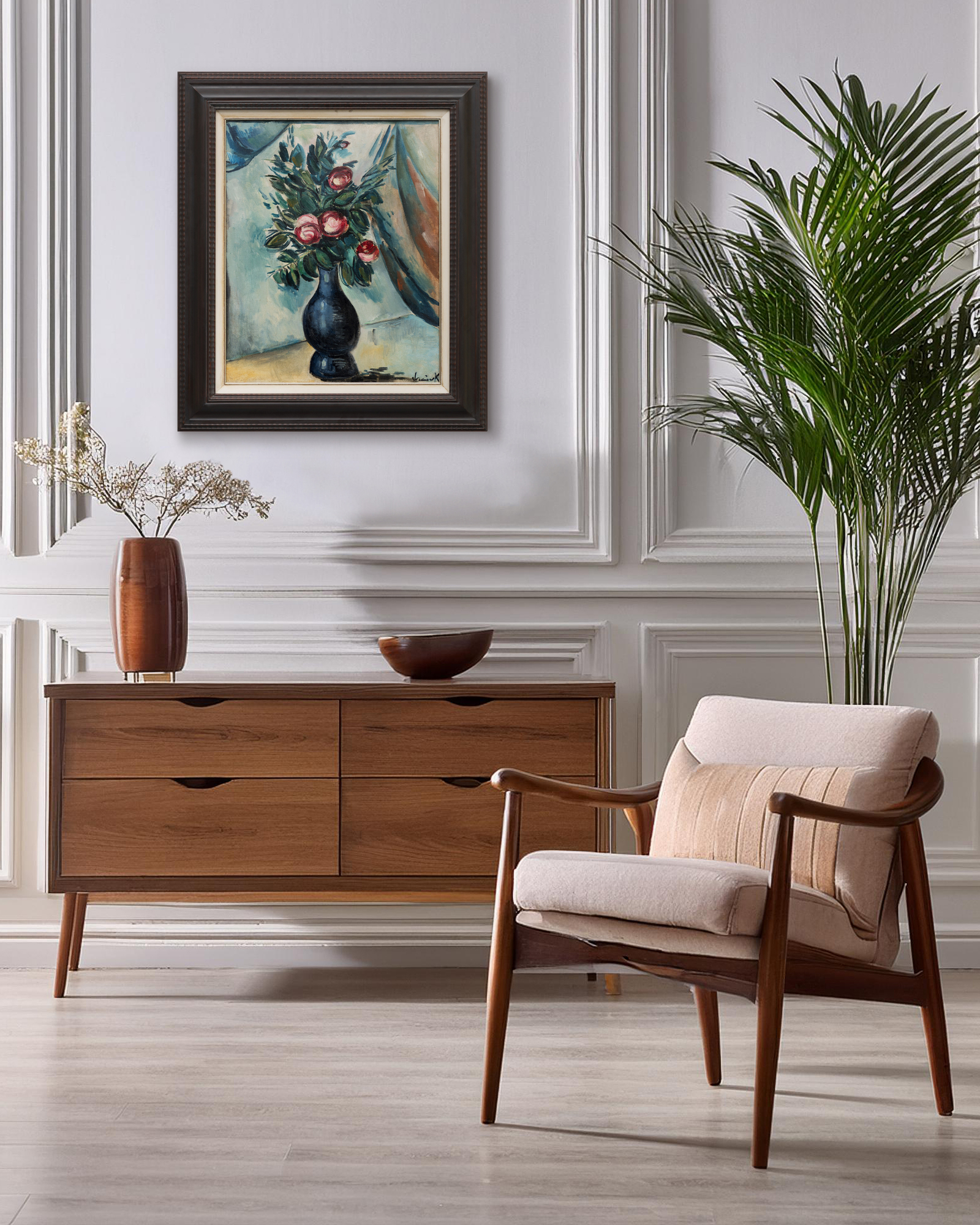
青い花瓶の牡丹の花束1913-191425 3/4 x 21 1/2 インチ(65.41 x 54.61 cm) 油彩・キャンバス
出所
パリ、ガレリー・ショワズール
フランス、個人コレクション
ヨーロッパ、個人コレクション(上記より取得)
展示会
韓国・ソウル芸術センター「ヴラミンク展」2017年6月4日~8月21日;巡回先
山梨県立美術館、広島市美術館、北九州市立美術館、熊本県立美術館、静岡市美術館
文学
マイス・ヴァレス=ブレド、モーリス・ド・ヴラミンク:作品と芸術家への視線。1907-1958、ソウル、2017年、p. 35-36、図版14(図版付き)
マイス・ヴァレス=ブレンド、ヴラミンク:視線
...もっとその。。。作品と作家について、1907-1958年、広島、2017年、p. 28(図版付き)
...少ない。。。
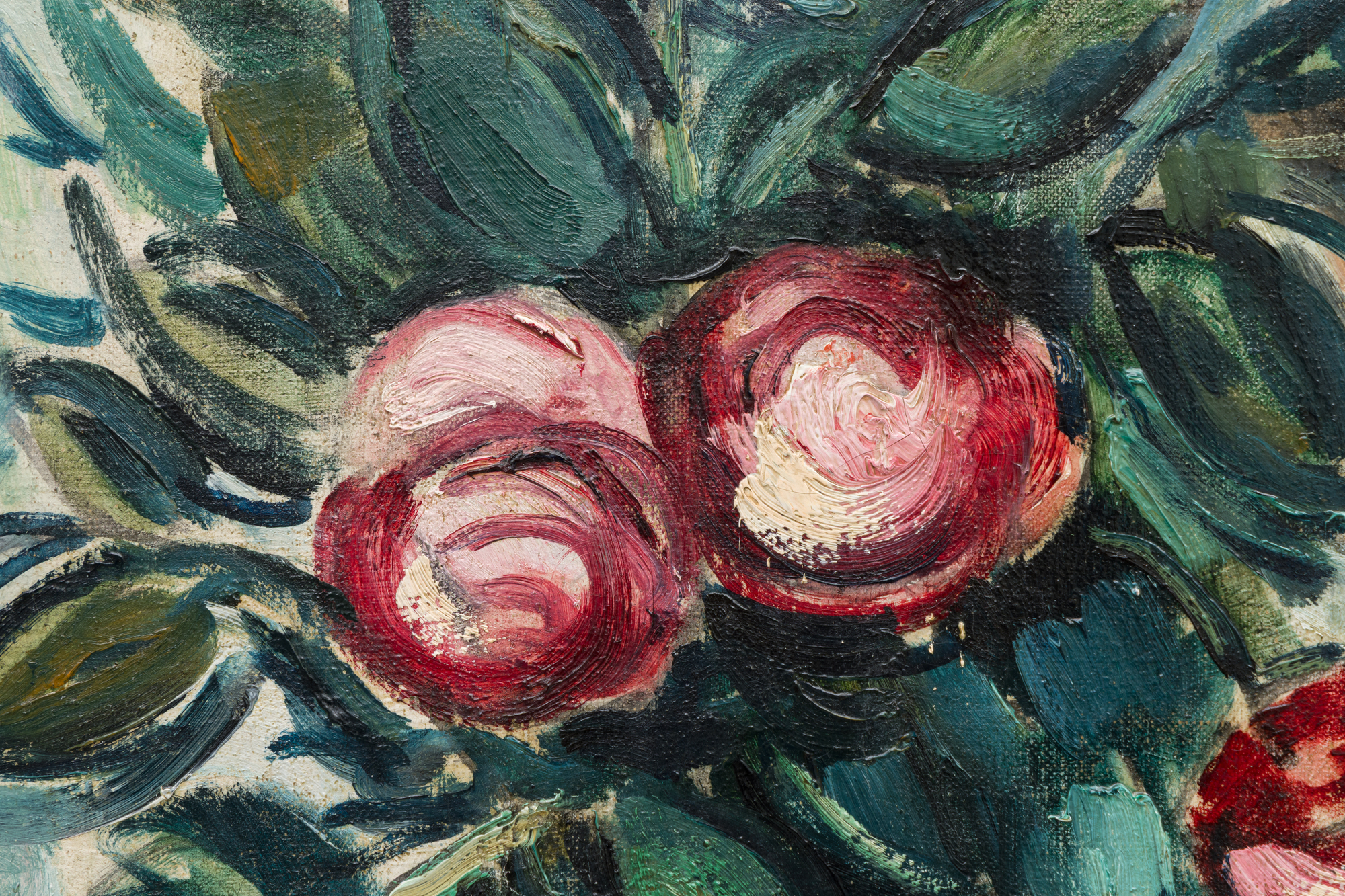
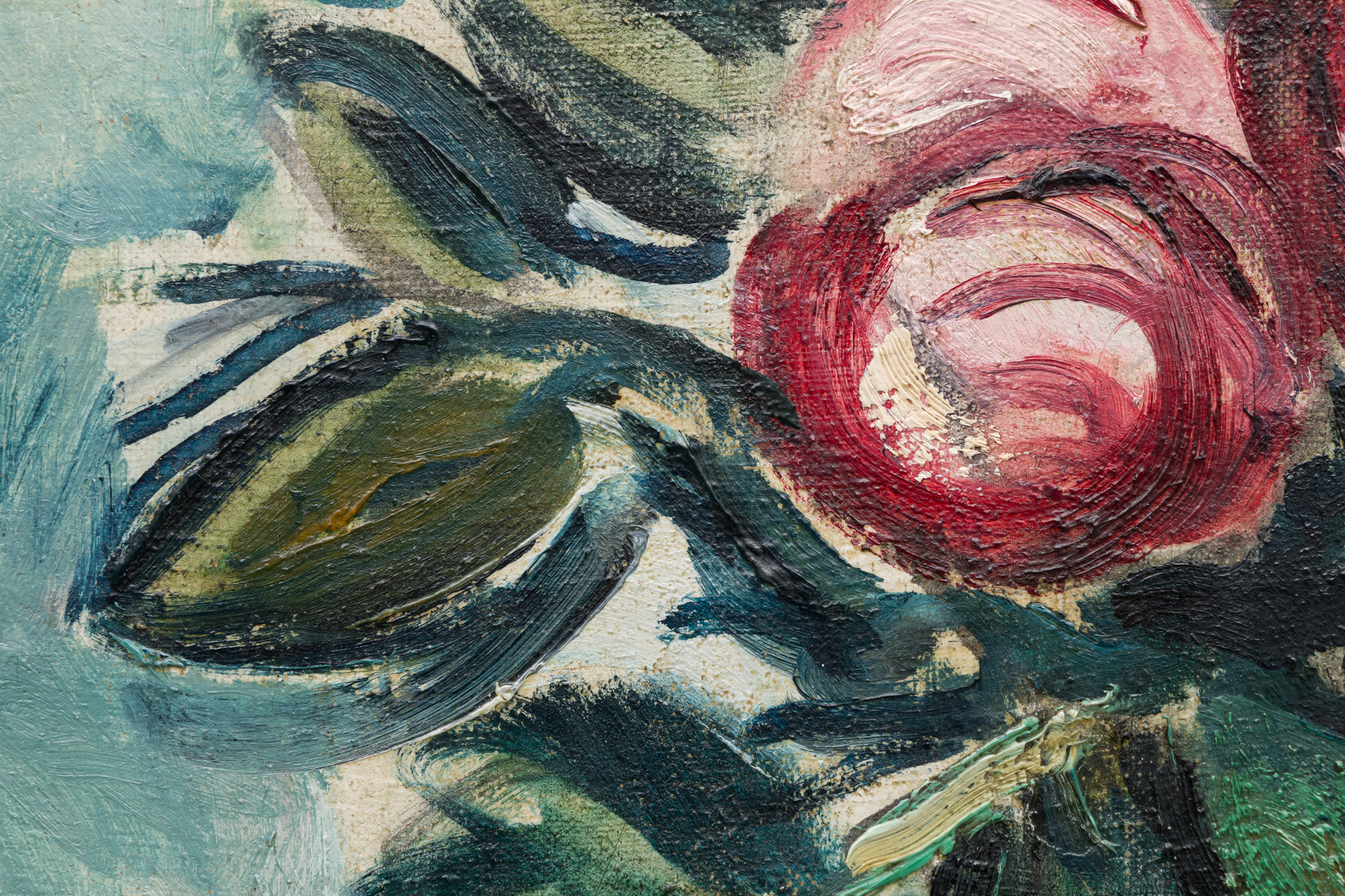
モーリス・ド・ヴラマンクの『青い花瓶の牡丹の花束』(1913–14年)は、初期の代表的な静物画であり、画家のフォーヴィスム的な大胆さを、奔放で絵画的な力強さのイメージへと昇華させている。 深藍の花瓶から外へと押し出されるように、ピンク、赤、クリーム色の白が渦巻くように爆発したような密な牡丹の花束が描かれている。丸みを帯びた花瓶の形状が構図の基盤となっている。力強く方向性のある筆致で、ヴラミンクは花弁と葉をリズミカルな奔流へと躍動させ、伝統的な卓上モチーフを動き、質感、色彩の強度に関する研究へと変容させている。


フォーヴィスムの核心的創始者の一人として、フラマンクはその過激で非自然主義的な色彩使用で称賛され、本作もその前衛的アプローチを継承している。 冷たい青と海緑が熱く飽和した赤と衝突し、背景のドレープや斜めの平面は対比と速度を高める大胆な筆致へと簡略化されている。絵具の表面は大胆に仕上げられ、キャンバス上の油彩の物質性と画家の手による即時性を強調している。目立つ署名は、作品の主張的な存在感と完成された表現の感覚をさらに強めている。


本作は、ワイルデンシュタイン研究所の監修のもと、マイテ・ヴァレス=ブレッドとゴデリエヴ・ド・ヴラマンクが編纂中のモーリス・ド・ヴラマンク作品批評カタログに掲載予定である。 ヴラミンクの業績に対する国際的な関心の高まり——ポツダムのバルベリーニ美術館での近年の回顧展(約1世紀ぶりの開催)を含む——は、彼が近代絵画の発展において果たした重要な役割を再確認させた。『青い花瓶の牡丹の花束』はその遺産を体現している:臆することなく現代的であり、色彩を表現手段として駆使した作品である。
お 問い合わせ